Eyes are often called the windows to the soul. Their colors can make a person look mysterious, warm, confident, gentle, or intense. From deep brown and bright blue to rare green and golden amber, every eye color has a unique appearance that people have connected with different meanings throughout history.
The topic of different eye color meanings combines biology, psychology, culture, beauty, and symbolism. Some people associate blue eyes with calmness, green eyes with mystery, brown eyes with warmth, and gray eyes with wisdom. However, these associations are cultural interpretations rather than proven personality traits.
Furthermore, eye color is not simply a matter of appearance. It develops through genetics and the amount and distribution of melanin in the iris. Lighting, surroundings, and even clothing can also change how an eye color appears.
Understanding these differences helps explain why certain eye colors have become symbols of particular emotions and qualities. In this guide, we explore the meanings of major eye colors, their psychological associations, cultural interpretations, personality symbolism, and their influence on fashion, beauty, and everyday life.
Quick Answer: What Do Different Eye Colors Mean?
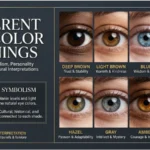
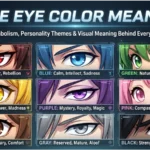
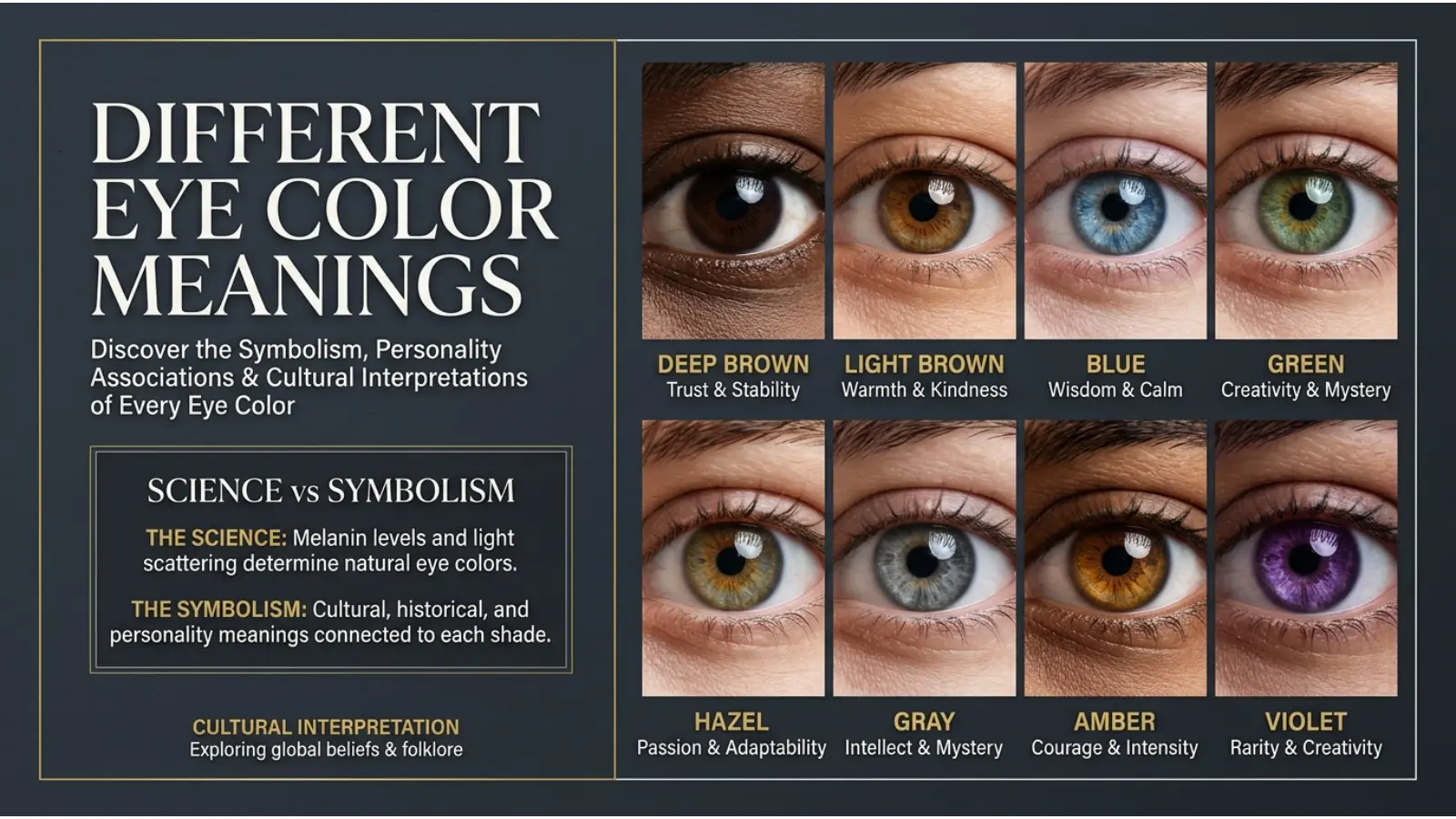
Different eye colors have different symbolic associations. Blue eyes commonly represent calmness and openness, green eyes symbolize mystery and nature, brown eyes suggest warmth and reliability, hazel eyes represent adaptability, gray eyes are associated with wisdom, and amber eyes symbolize energy and confidence.
These meanings are symbolic rather than scientific personality descriptions. A person’s eye color does not determine their character, intelligence, emotions, or behavior.
What Determines a Person’s Eye Color?
Before exploring symbolism, it helps to understand why human eyes have different colors.
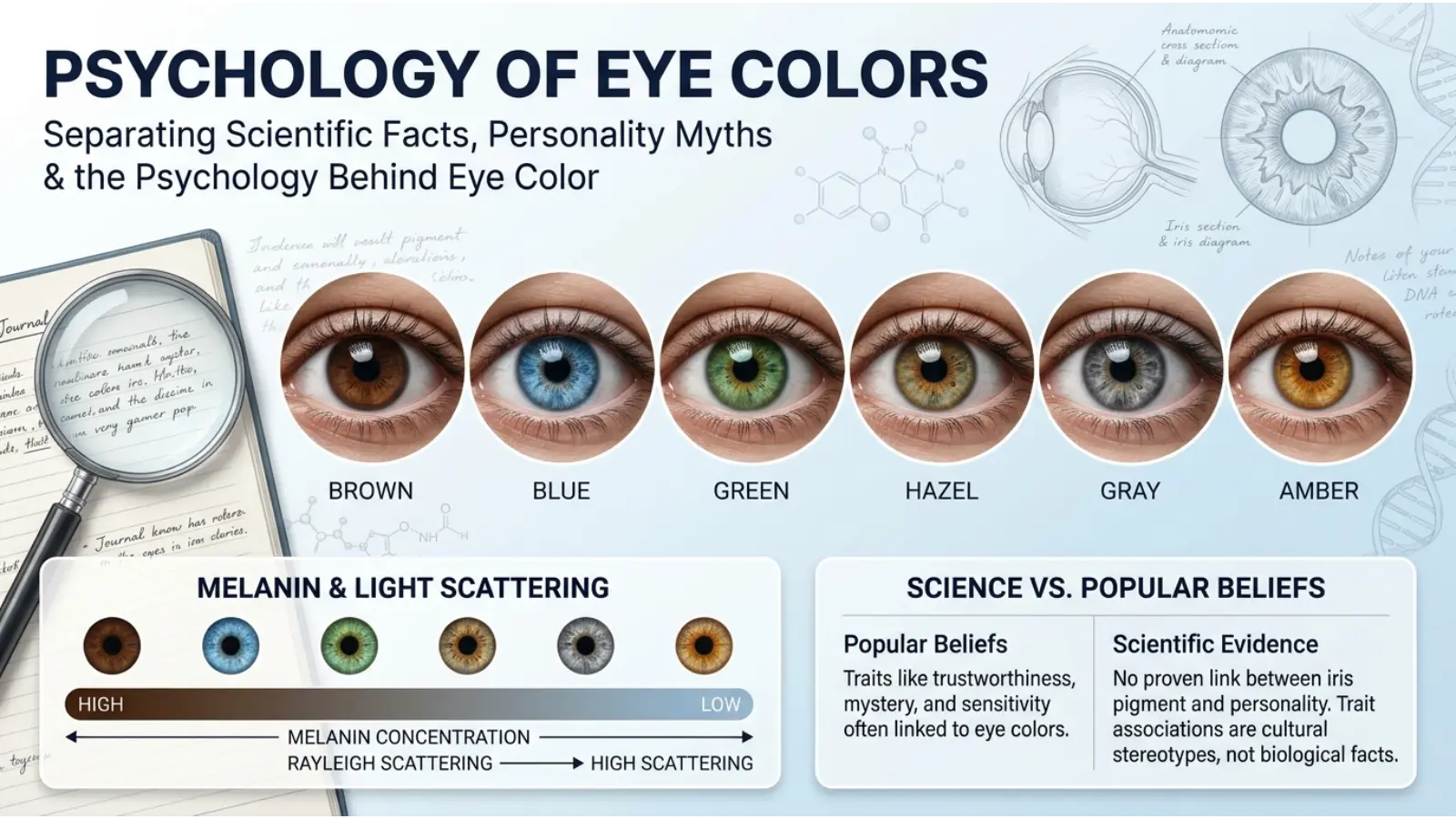
Eye color is mainly determined by genetics and the amount of melanin in the iris. Melanin is a natural pigment that also contributes to the color of skin and hair.
However, eye color is more complex than simply having more or less pigment. The way light interacts with the structures of the iris also influences its appearance.
For example, blue eyes do not contain blue pigment in the same way that brown eyes contain brown melanin. Instead, their appearance is largely caused by how light scatters within the iris.
Genetics also plays a major role. Several genes influence eye color, which explains why parents with similar eye colors can sometimes have children with different-looking eyes.
Why Eye Colors Look Different in Various Lighting
Eye color can appear slightly different depending on the environment.
- Natural sunlight: Often makes lighter eyes look brighter and reveals subtle details.
- Indoor lighting: Can make eyes appear darker or warmer.
- Warm lighting: May bring out golden and amber tones.
- Cool lighting: Can emphasize blue, gray, and green shades.
- Clothing: Certain colors create contrast that makes the iris appear more noticeable.
Therefore, someone with hazel eyes might appear to have green eyes in one photograph and golden-brown eyes in another.
Different Eye Color Meanings
Human eyes come in several natural color variations. Although brown and blue are among the most familiar, green, gray, hazel, and amber eyes also have distinctive appearances.
The following chart summarizes their common symbolic associations.
Colorful Eye Color Meaning Chart
| Eye Color | Main Symbolism | Common Emotional Association |
|---|---|---|
| 🟤 Brown | Warmth and stability | Comfort and trust |
| 🔵 Blue | Calmness and openness | Peace and freedom |
| 🟢 Green | Mystery and nature | Growth and curiosity |
| 🟡 Amber | Energy and confidence | Passion and vitality |
| 🩶 Gray | Wisdom and mystery | Thoughtfulness |
| 🟠 Hazel | Adaptability and balance | Creativity and flexibility |
| 🟣 Violet Appearance | Uniqueness and fantasy | Imagination |
Note: Violet is not generally recognized as a distinct natural human iris color. Some eyes can appear violet-like under certain lighting or photographic conditions.
Blue Eye Color Meaning: Calmness, Peace, and Freedom
Blue eyes are commonly associated with peacefulness, openness, intelligence, and emotional sensitivity.
Their cool appearance often reminds people of the sky, oceans, and clear water. Consequently, blue eyes have become a popular symbol of tranquility and freedom in literature, art, and popular culture.
Psychological Associations of Blue Eyes
Blue is often connected with calmness and relaxation in color symbolism. Therefore, blue eyes may create impressions of gentleness or approachability.
Common symbolic associations include:
- Peace and emotional calmness
- Honesty and openness
- Intelligence and curiosity
- Freedom and independence
- Sensitivity and kindness
However, these impressions are not reliable ways to judge someone’s personality. Eye color does not establish whether a person is honest, intelligent, or emotionally sensitive.
Spiritual Meaning of Blue Eyes
In some modern spiritual interpretations, blue eyes are associated with truth, protection, communication, and inner peace.
The color blue is also connected with the sky and water, which can represent openness, cleansing, and emotional balance.
These interpretations differ between spiritual communities and are not universal religious beliefs.
Blue Eyes in Fashion and Beauty
Blue eyes can look especially striking with warm clothing colors.
Some attractive combinations include:
- Navy blue with silver accessories
- Copper and bronze makeup
- Soft brown and beige clothing
- Burgundy and dark purple
- Warm peach and rose shades
Warm colors create contrast against blue, helping the eyes stand out naturally.
Green Eye Color Meaning: Mystery, Nature, and Growth
Green eyes are often associated with nature, renewal, creativity, and mystery.
Their connection with forests, plants, and fresh landscapes gives them a natural symbolic quality. In fiction and traditional storytelling, green eyes are also sometimes used to create mysterious or unusual characters.
Psychology of Green Eyes
Green is often associated with balance, freshness, and renewal.
As a result, people may connect green eyes with:
- Creativity
- Curiosity
- Independence
- Growth
- Harmony
- Mystery
However, these qualities are symbolic associations. There is no reliable scientific evidence that people with green eyes naturally possess these personality traits.
Spiritual Meaning of Green Eyes
In modern spiritual symbolism, green eyes are sometimes connected with healing, compassion, personal development, and the heart chakra.
Green also represents the natural cycle of growth. For this reason, some people use it as a symbol of new beginnings and emotional renewal.
Interpretations vary between traditions, and these meanings should not be treated as universal beliefs.
Green Eyes in Fashion
Green eyes work beautifully with earthy and contrasting colors.
Popular combinations include:
- Burgundy and wine red
- Warm brown and chocolate
- Plum and purple
- Gold and bronze
- Forest green and cream
Burgundy is especially effective because it creates a strong contrast with green.
Brown Eye Color Meaning: Warmth, Strength, and Reliability
Brown is one of the most common human eye colors. It ranges from light honey brown to deep chocolate and almost black.
Symbolically, brown eyes are frequently associated with warmth, stability, comfort, and strength.
Because brown is an earthy color, it is often connected with soil, wood, and natural materials.
Psychological Associations of Brown Eyes
Brown eyes may create impressions of warmth and familiarity.
Their common symbolic meanings include:
- Reliability
- Strength
- Comfort
- Practical thinking
- Stability
- Emotional warmth
These associations are influenced by the symbolism of the color brown rather than established differences in personality.
Spiritual Meaning of Brown Eyes
Some modern spiritual interpretations connect brown eyes with grounding, protection, connection to nature, and emotional stability.
Brown is an earthy shade, making it a natural symbol of roots, security, and belonging.
Brown Eyes in Fashion and Beauty
The Brown eyes are highly versatile because they work with many clothing and makeup colors.
Try these combinations:
- Gold and bronze
- Emerald green
- Navy blue
- Burgundy
- Warm beige
- Copper and terracotta
Gold eyeshadow can bring out golden undertones, while navy and emerald create noticeable contrast.
Hazel Eye Color Meaning: Balance, Creativity, and Adaptability
Hazel eyes are known for their mixture of colors. They often contain combinations of brown, green, gold, and sometimes amber.
This variation makes hazel eyes particularly interesting because their appearance can change depending on lighting and surroundings.
Psychology of Hazel Eyes
The combination of warm and cool tones gives hazel eyes a distinctive appearance.
Their symbolic associations include:
- Flexibility
- Curiosity
- Creativity
- Balance
- Individuality
- Independence
However, there is no scientific evidence that hazel-eyed people are naturally more adaptable or creative than people with other eye colors.
Spiritual Meaning of Hazel Eyes
In some contemporary spiritual interpretations, hazel eyes symbolize balance between different energies.
Their mixture of green and brown can represent the connection between nature, stability, and personal growth.
Some people also associate them with transformation because their appearance can seem different under changing light.
Hazel Eyes in Fashion
Hazel eyes look particularly attractive with colors that emphasize their different undertones.
Recommended combinations include:
- Olive green
- Bronze and copper
- Deep purple
- Warm burgundy
- Mustard yellow
- Chocolate brown
For example, olive clothing can highlight green tones, while bronze makeup can emphasize golden details.
Amber Eye Color Meaning: Energy, Confidence, and Warmth
Amber eyes have a distinctive golden, yellowish, or copper appearance.
They are relatively uncommon and can look especially bright under natural light. Unlike hazel eyes, which usually contain a mixture of colors, amber eyes generally have a more consistent golden or copper tone.
Psychological Associations of Amber Eyes
The golden appearance of amber eyes can remind people of sunlight, fire, and precious stones.
Common symbolic associations include:
- Confidence
- Passion
- Energy
- Courage
- Creativity
- Warmth
These are visual and cultural associations rather than scientifically established personality characteristics.
Spiritual Meaning of Amber Eyes
In modern spiritual symbolism, amber eyes may represent vitality, courage, personal power, and transformation.
Amber Eyes in Fashion
Amber eyes look attractive with rich, warm colors.
Consider these combinations:
- Dark brown
- Burgundy
- Deep green
- Copper
- Cream
- Navy blue
Gold accessories can also complement the natural warmth of amber eyes.
Gray Eye Color Meaning: Wisdom, Independence, and Mystery
Gray eyes have a cool appearance that can range from light silver to darker charcoal.
They sometimes appear blue or green depending on lighting and the surrounding colors.
Psychological Associations of Gray Eyes
Gray is a neutral color that can symbolize balance, restraint, and sophistication.
Therefore, gray eyes may be associated symbolically with:
- Wisdom
- Thoughtfulness
- Independence
- Mystery
- Self-control
- Sophistication
However, these qualities cannot be determined by looking at someone’s eyes.
Spiritual Meaning of Gray Eyes
Some modern spiritual interpretations connect gray eyes with intuition, neutrality, protection, and inner wisdom.
Their neutral appearance can also represent balance between opposing forces.
Nevertheless, these interpretations are symbolic and vary between communities.
Gray Eyes in Fashion
Gray eyes work well with both cool and warm shades.
Try:
- Silver and charcoal
- Navy blue
- Dusty rose
- Burgundy
- Lavender
- Deep purple
Silver accessories can emphasize their cool appearance, while burgundy adds warmth and contrast.
Black Eyes Meaning: Strength, Depth, and Intensity
What people commonly call black eyes are usually extremely dark brown eyes.
Their deep appearance can create a strong visual impression, especially when the pupil and iris are difficult to distinguish.
Psychological and Symbolic Associations
Common interpretations include:
- Confidence
- Strength
- Determination
- Mystery
- Protection
- Intensity
These meanings come from visual symbolism and storytelling rather than scientific evidence about personality.
Black Eyes in Fashion
Dark brown eyes pair well with almost every clothing color.
However, certain shades can make them especially noticeable:
- Gold
- Emerald green
- Burgundy
- Royal blue
- Cream
- Copper
Bright accessories and contrasting makeup can create a striking appearance.
Rare Eye Colors and Unusual Eye Color Appearances
Some people have eye colors or patterns that appear especially unusual. However, not every unusual-looking eye represents a separate natural eye color.
Violet-Looking Eyes
Violet-looking eyes are extremely uncommon as a natural appearance.
Some eyes may look violet because of a combination of low pigmentation, lighting, surrounding colors, and photographic effects.
In fantasy and symbolic art, violet eyes often represent imagination, royalty, mystery, and supernatural qualities.
Heterochromia: Two Different Eye Colors
Heterochromia is a condition in which the eyes have different colors or different-colored areas within the same iris.
There are three commonly described forms:
- Complete heterochromia: Each eye has a different overall color.
- Sectoral heterochromia: One section of an iris has a different color.
- Central heterochromia: A ring of a different color surrounds the pupil.
For example, someone might have one blue eye and one brown eye. Another person might have green eyes with a golden ring around the pupil.
Colorful Chart: Different Eye Colors and Their Symbolic Meanings
The following visual chart offers a simple comparison of common eye colors and their traditional symbolic associations.
| Eye Color | Symbolic Meaning | Associated Feeling | Visual Impression |
|---|---|---|---|
| 🟤 Brown | Stability | Warmth | Natural |
| 🔵 Blue | Peace | Calmness | Gentle |
| 🟢 Green | Growth | Freshness | Mysterious |
| 🟡 Amber | Energy | Confidence | Radiant |
| 🩶 Gray | Wisdom | Thoughtfulness | Sophisticated |
| 🟠 Hazel | Balance | Creativity | Changeable |
| ⚫ Dark Brown | Strength | Intensity | Deep |
| 🟣 Violet-Looking | Imagination | Wonder | Unusual |
These descriptions summarize common symbolic interpretations, not scientifically verified psychological characteristics.
Why Do Different Eye Color Meanings ?
Eye color symbolism developed through a combination of nature, cultural traditions, artistic expression, and human perception.
People naturally connect colors with familiar objects and experiences.
For example, blue reminds many people of water and sky. Green brings to mind plants and forests. Brown suggests soil, wood, and other natural materials.
Over time, these connections became part of storytelling, literature, fashion, and popular culture.
The Influence of Nature
Nature provides some of the strongest visual associations.
- Blue connects with oceans and clear skies.
- Green connects with plants and renewal.
- Brown connects with earth and natural materials.
- Amber connects with sunlight and fire.
- Gray connects with stones, clouds, and metal.
These familiar connections help explain why certain meanings appear repeatedly in different forms of art.
The Influence of Culture
Different communities may interpret the same eye color differently.
For example, blue eyes may be viewed as attractive or unusual in one cultural setting, while another community may have different beauty ideals.
The Influence of Movies and Literature
Writers and filmmakers often use eye color to communicate character impressions.
These are creative decisions rather than biological rules.
Psychology of Different Eye Color Meanings: What Science Actually Says
Color psychology explores how colors influence perception, emotions, and associations.
However, studying the psychology of eye color requires a different approach from studying the psychology of colored objects.
An eye’s appearance may influence someone’s first impression, but this does not mean that the iris color reveals the person’s actual character.
Eye Color and First Impressions
People sometimes make quick judgments based on facial appearance.
Eye color can contribute to the overall visual impression, alongside facial expressions, eye contact, lighting, and other features.
For example, bright eyes may attract attention because of their contrast with the surrounding face.
Does Eye Color Affect Personality?
There is no reliable scientific basis for assigning a person’s personality to their eye color.
A person with brown eyes is not automatically more trustworthy than someone with blue eyes. Similarly, green eyes do not prove that someone is more creative or mysterious.
Personality develops through many influences, including genetics, upbringing, life experiences, relationships, and environment.
Does Eye Color Affect Emotions?
Eye color does not provide a dependable way to identify someone’s emotional state.
Facial expressions, behavior, tone of voice, and the situation provide much more useful information.
Consequently, it is better to understand someone’s feelings through communication rather than making assumptions based on eye color.
Spiritual Different Eye Color Meanings
In contemporary spiritual communities, eye colors sometimes receive symbolic meanings connected with personal energy, intuition, protection, and emotional balance.
However, there is no universal spiritual system that assigns the same meaning to every natural eye color.
The following interpretations are examples of modern symbolic associations.
| Eye Color | Modern Spiritual Association |
|---|---|
| 🔵 Blue | Peace, truth, and communication |
| 🟢 Green | Growth, healing, and renewal |
| 🟤 Brown | Grounding, protection, and stability |
| 🟡 Amber | Vitality, courage, and energy |
| 🩶 Gray | Wisdom, balance, and intuition |
| 🟠 Hazel | Transformation and harmony |
| ⚫ Dark Brown | Strength and inner depth |
Some people use these associations for meditation, personal reflection, or creative expression.
Cultural Different Eye Color Meanings
Eye color can carry different meanings depending on cultural history, beauty standards, and artistic traditions.
It is important to avoid treating entire regions as if they share one interpretation.
Western Cultural Interpretations
In many Western artistic and literary traditions, blue eyes have often been used to suggest innocence, beauty, openness, or emotional depth.
Green eyes sometimes appear in stories about mystery, enchantment, or unusual characters.
These patterns are common creative conventions, not fixed cultural rules.
Eastern Cultural Interpretations
Across East Asia, traditional symbolism often focuses more strongly on broader color meanings than on assigning personality traits to natural iris colors.
For example, red, white, black, and yellow have important symbolic roles in different East Asian cultural settings.
Natural eye-color differences may also attract attention because their frequency varies across populations.
However, modern beauty standards are diverse and continue to change.
Middle Eastern Cultural Interpretations
In different Middle Eastern communities, eye appearance has been represented through poetry, beauty traditions, and artistic expression.
Dark eyes are often celebrated in poetry and popular culture, while lighter eyes can also be admired.
African Cultural Interpretations
Africa contains many different societies, languages, and cultural traditions.
Therefore, there is no single African interpretation of eye color.
In many artistic settings, eye expression and facial features communicate emotion and identity more directly than natural iris color.
Contemporary fashion and media also present a wide range of eye appearances.
Modern Global Culture
Today, social media, beauty photography, movies, and fashion influence how people interpret eye colors.
Colored contact lenses have also made it possible to experiment with different appearances.
As a result, eye color can be used as a form of personal style rather than simply a natural physical feature.
Personality Associations: What Your Favorite Eye Color Symbolizes
Although natural eye color does not determine personality, people sometimes connect their favorite eye colors with personal qualities.
These associations can be useful for self-expression, creative writing, and character development.
People Who Love Blue Eyes
Blue is often associated with peace, openness, and freedom.
Someone who loves blue eyes might appreciate calm visual styles, cool colors, and peaceful surroundings.
People Who Love Green Eyes
Green often symbolizes nature, creativity, and renewal.
People who prefer green may enjoy earthy palettes, natural environments, and fresh design styles.
People Who Love Brown Eyes
Brown represents warmth, comfort, and stability.
Those who like brown eyes may appreciate natural beauty, warm colors, and timeless fashion.
People Who Love Hazel Eyes
Hazel can symbolize individuality and flexibility.
Its changing appearance makes it appealing to people who enjoy unusual color combinations and distinctive styles.
People Who Love Gray Eyes
Gray is associated with sophistication, balance, and mystery.
It works particularly well in minimalist designs and understated fashion.
Remember: A person’s favorite eye color is a personal preference, not a personality test.
Different Eye Color Meanings in Art and Photography
Eye color is an important visual detail in portrait photography, painting, illustration, and character design.
Artists often use the iris to create contrast, draw attention, and communicate a particular mood.
Eye Color in Portrait Photography
Photographers use lighting to reveal the details of the iris.
Natural window light can create soft reflections, while carefully positioned studio lights can make eye colors look more vivid.
However, photographers should avoid excessive editing that changes a person’s natural appearance without making that alteration clear.
Eye Color in Painting
Painters use eye color to support the mood of a portrait.
For example:
- Blue eyes can support a cool, peaceful palette.
- Green eyes can create contrast with warm backgrounds.
- Brown eyes can complement earthy colors.
- Gray eyes can add a restrained, dramatic effect.
- Amber eyes can create warmth and visual intensity.
The background matters just as much as the iris itself.
Eye Color in Character Design
Illustrators and game designers often use eye color to make fictional characters recognizable.
A character with violet-looking eyes might belong to a fantasy world, while a character with golden eyes might be designed to look supernatural.
These choices help establish a visual identity.
Different Eye Color Meanings in Fashion and Beauty
Eye color can be a helpful starting point when choosing makeup, clothing, and accessories.
However, skin undertone, hair color, personal taste, and the occasion also matter.
Makeup for Blue Eyes
Warm shades create contrast with blue eyes.
Try bronze, copper, peach, and warm brown eyeshadows.
Makeup for Green Eyes
Purple and burgundy shades can create an attractive contrast with green eyes.
Gold and bronze also bring out warmer details.
Makeup for Brown Eyes
Brown eyes work with many makeup colors.
Emerald, navy, gold, and plum are particularly useful choices.
Makeup for Hazel Eyes
Bronze, olive, purple, and warm brown can emphasize different parts of hazel eyes.
Makeup for Gray Eyes
Silver, charcoal, lavender, and dusty rose can complement the cool appearance of gray eyes.
Clothing Colors That Highlight Eye Color
| Natural Eye Color | Clothing Colors to Try |
|---|---|
| Blue | Copper, burgundy, navy |
| Green | Plum, burgundy, cream |
| Brown | Emerald, gold, royal blue |
| Hazel | Olive, bronze, purple |
| Amber | Navy, forest green, cream |
| Gray | Burgundy, lavender, charcoal |
| Dark Brown | Gold, emerald, cobalt |
These combinations are suggestions rather than strict fashion rules.
Different Eye Color Meanings in Branding and Marketing
Eye colors also appear in advertising, product photography, cosmetics, and brand storytelling.
Beauty brands frequently use close-up eye photography because the iris can create a strong focal point.
Blue Eyes in Advertising
Blue eyes can support a clean, fresh, and calm visual direction.
Beauty campaigns may use blue-eyed models alongside cool backgrounds to create a consistent appearance.
Green Eyes in Advertising
Green eyes can work well in campaigns focused on natural beauty, freshness, or individuality.
They can also create a distinctive visual identity in cosmetics photography.
Brown Eyes in Advertising
Brown eyes are versatile and often work well in campaigns promoting natural makeup, everyday beauty, and inclusive product ranges.
Amber and Hazel Eyes in Advertising
Amber and hazel eyes offer visual variety because their tones can change under different lighting.
Consequently, they can be useful in creative campaigns that focus on individuality and distinctive beauty.
For marketers, the most important lesson is that visual context matters more than assumptions about a model’s personality.

Common Misconceptions About Different Eye Color Meanings
Several myths about eye colors continue to circulate online.
Understanding the difference between symbolism and scientific evidence helps avoid misleading claims.
Myth 1: Blue-Eyed People Are More Intelligent
There is no reliable evidence that blue eyes indicate higher intelligence.
Intelligence is influenced by many complex factors, not iris pigmentation.
Myth 2: Green Eyes Mean Someone Is Jealous
The association between green and jealousy is a cultural expression, particularly familiar in English-language literature.
It does not mean that green-eyed people are naturally jealous.
Myth 3: Brown-Eyed People Are More Trustworthy
Brown eyes are sometimes symbolically associated with warmth and reliability.
However, eye color cannot establish whether someone is honest or trustworthy.
Myth 4: Black Eyes Are a Separate Common Natural Eye Color
What people call black eyes are generally very dark brown eyes.
The iris contains enough pigment to appear almost black.
Myth 5: Hazel Eyes Change Color Completely
Hazel eyes can appear different under changing lighting conditions.
However, the actual pigmentation of the iris does not normally change every time someone enters a different room.
Myth 6: Rare Eye Colors Have Special Powers
Some fictional stories connect rare eye colors with supernatural abilities.
These ideas belong to fantasy and storytelling rather than established science.
Real-World Uses of Eye Color Symbolism
Eye color meanings are not limited to personal appearance. They can also be useful in several creative and practical areas.
Everyday Life
People often notice eye color when meeting someone, choosing photographs, or discussing beauty.
However, eye color should never replace genuine understanding of a person’s character.
Business and Beauty Marketing
Cosmetics companies use eye-color categories to organize makeup recommendations.
For example, product collections may include eyeshadow suggestions for blue, green, brown, and hazel eyes.
This makes product selection easier for customers.
Art and Illustration
Artists use eye color to create visual contrast and communicate character moods.
Different shades can help make a portrait look warmer, cooler, softer, or more dramatic.
Photography
Photographers may use lighting, camera angles, and background colors to highlight natural iris patterns.
A dark background can make lighter eyes stand out, while warm surroundings can complement brown and amber tones.
Fashion
Clothing colors and accessories can emphasize natural eye colors.
Choosing complementary shades creates contrast, while similar colors create a softer and more coordinated appearance.
Entertainment and Gaming
Fictional characters often receive unusual eye colors to distinguish them from ordinary characters.
Fantasy games, animated films, and science-fiction stories use unusual eye appearances to communicate magical powers, unusual origins, or special identities.
Frequently Asked Questions About Different Eye Color Meanings
1. What is the rarest natural eye color?
Green eyes are commonly described as one of the rarest natural eye colors worldwide. However, estimates vary because eye-color categories are not always classified consistently.
2. What do blue eyes symbolize?
Blue eyes commonly symbolize peace, openness, freedom, and calmness. These meanings come from cultural and artistic associations rather than proven personality differences.
3. What do green eyes mean spiritually?
In modern spiritual interpretations, green eyes are sometimes associated with growth, healing, renewal, and balance. These meanings vary across spiritual communities.
4. What do brown eyes symbolize?
Brown eyes are commonly associated with warmth, stability, comfort, and reliability. Their earthy appearance helps explain these symbolic connections.
5. What do hazel eyes represent?
Hazel eyes often symbolize adaptability, creativity, individuality, and balance. Their mixture of green, brown, and golden tones gives them a distinctive appearance.
6. What does amber eye color mean?
Amber eyes are often associated with confidence, energy, warmth, and vitality. Their golden appearance also connects them symbolically with sunlight and fire.
7. Can eye color reveal someone’s personality?
No. Eye color cannot reliably reveal someone’s personality, intelligence, honesty, or emotional characteristics. Personality develops through many biological and environmental influences.
8. Why do some people’s eyes appear to change color?
Lighting, surrounding colors, clothing, and pupil size can influence how an eye color appears. However, the underlying iris pigmentation usually remains the same.
9. What does having two different eye colors mean?
Having two different eye colors is called complete heterochromia. It is a variation in iris pigmentation that can be inherited or develop for other reasons. It does not indicate a particular personality or spiritual ability.
10. Which eye color is considered the most attractive?
There is no universally most attractive eye color. Beauty preferences differ between individuals, cultures, and generations. Blue, green, brown, gray, and hazel eyes can all be considered attractive for different reasons.
Conclusion: Understanding the Meaning Behind Every Eye Color
Different eye colors offer more than visual variety. They provide inspiration for art, fashion, photography, storytelling, and cultural symbolism.
Blue eyes are commonly associated with calmness, green eyes with mystery and growth, brown eyes with warmth, hazel eyes with adaptability, amber eyes with energy, and gray eyes with wisdom.
Nevertheless, these meanings should be understood as symbolic interpretations rather than scientific facts about personality.
Every person’s eyes are unique, and their appearance reflects a combination of genetics, pigmentation, and light. More importantly, no eye color defines someone’s character or worth.
The next time you notice someone’s eyes, consider the colors, patterns, and details that make them distinctive. Sometimes, the most interesting meaning is not what a particular eye color symbolizes but the individuality it reveals.

Emma Wilson is a dedicated comparison writer and product researcher at ColorMystiic.com. She specializes in creating unbiased product comparisons, detailed reviews, and helpful buying guides. Her goal is to help readers make smarter purchasing decisions with confidence.