The Japanese Lucky Cat Color Meanings, known as Maneki-neko, is one of the most recognizable symbols of good fortune in Japanese culture. With its raised paw, welcoming expression, and colorful appearance, this small cat figurine is often displayed in homes, shops, restaurants, and businesses. However, its colors are more than decorative choices.
Understanding Japanese lucky cat color meanings helps explain why people choose particular figurines for their homes or workplaces.
However, these meanings are not always fixed. Interpretations can vary between manufacturers, regions, modern gift traditions, and individual beliefs. Therefore, understanding the cultural background makes each color more interesting.
In this guide, we explore the symbolism, cultural background, popular interpretations, and practical uses of different Maneki-neko colors. We also explain how to choose a lucky cat based on the kind of good fortune you want to celebrate.
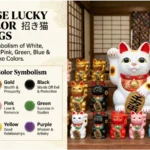
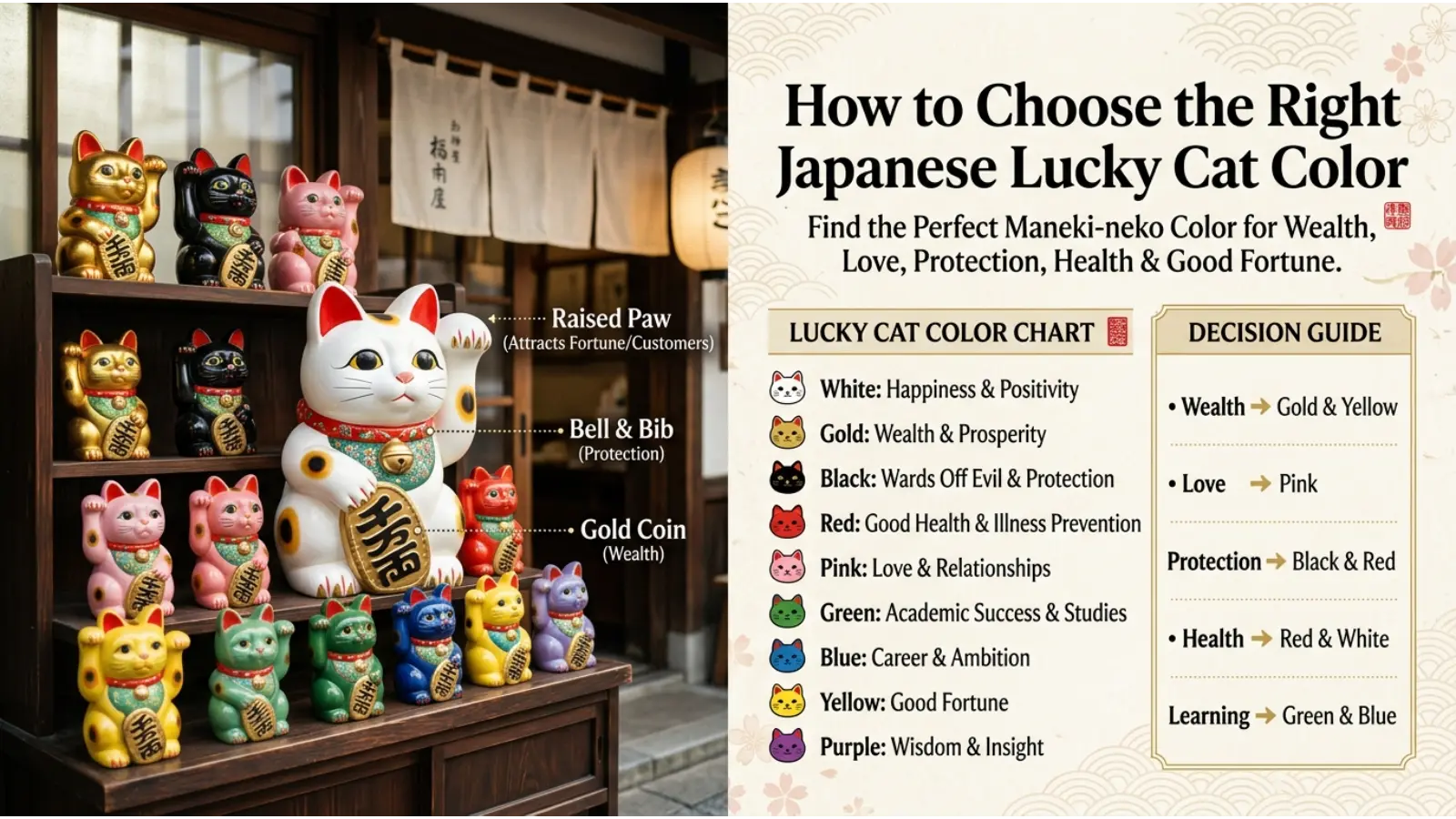
Quick Answer: What Do Japanese Lucky Cat Colors Mean?
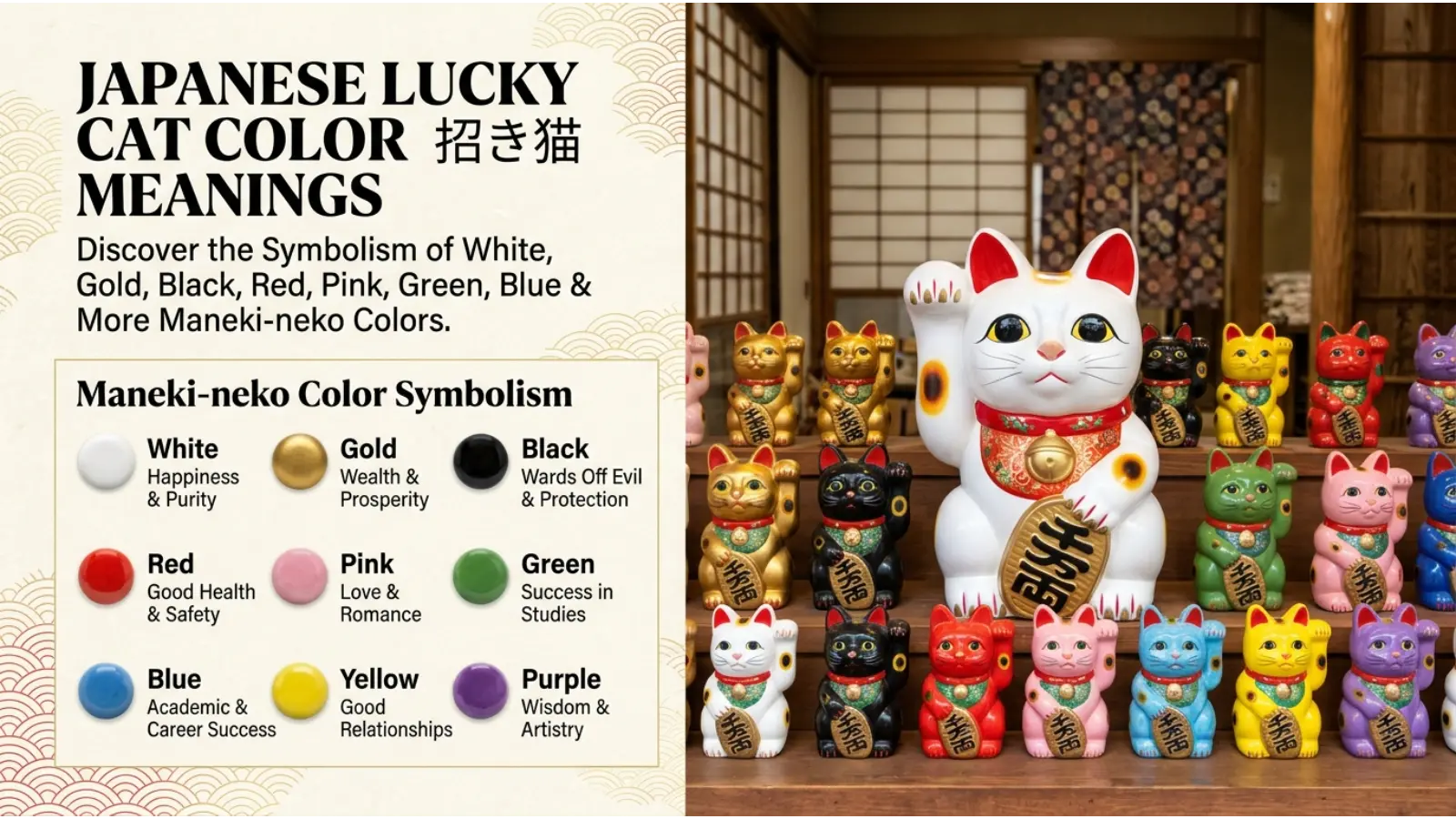
Japanese lucky cat colors are commonly associated with different types of good fortune:
- White: Purity, happiness, and general good luck.
- Black: Protection, safety, and keeping away misfortune.
- Gold: Wealth, money, and financial prosperity.
- Red: Protection, health, and positive energy.
- Pink: Love, romance, and relationships.
- Green: Education, learning, and family well-being.
- Blue: Success, wisdom, and academic achievement.
- Yellow: Happiness, stability, and prosperity.
- Purple: Wisdom, creativity, and personal growth.
- Silver: Success, elegance, and long-term prosperity.
These are popular modern color associations rather than a single official Japanese color chart.
Japanese Lucky Cat Color Meanings Chart
Different Maneki-neko colors communicate different symbolic wishes. This chart provides a quick overview of their commonly recognized modern meanings.
| Lucky Cat Color | Symbolic Meaning | Represents |
|---|---|---|
| ⚪ White | Purity and happiness | General good fortune |
| ⚫ Black | Protection and safety | Security |
| 🟡 Gold | Wealth and prosperity | Financial success |
| 🔴 Red | Health and protection | Well-being |
| 🩷 Pink | Love and romance | Relationships |
| 🟢 Green | Education and family | Learning and growth |
| 🔵 Blue | Wisdom and success | Achievement |
| 🟨 Yellow | Happiness and stability | Prosperity |
| 🟣 Purple | Wisdom and creativity | Personal growth |
| 🩶 Silver | Elegance and success | Long-term prosperity |
These interpretations are useful starting points, although individual figurines may have additional meanings based on their designs and inscriptions.
What Is a Japanese Lucky Cat (Maneki-neko)?
The Maneki-neko is a traditional Japanese figurine depicting a cat with one paw raised in a welcoming gesture. Its name is commonly translated as “beckoning cat.”
Consequently, it has become a familiar decoration in Japanese shops, restaurants, homes, and businesses.
Although it looks simple, several details can carry symbolic meaning.
What Does the Raised Paw Mean?
The raised paw is one of the most important features of the Maneki-neko.
- Left paw raised: Commonly associated with attracting customers, visitors, and social connections.
- Right paw raised: Commonly associated with attracting money, wealth, and good fortune.
- Both paws raised: Often interpreted as inviting protection and multiple forms of good luck.
However, these interpretations can vary. There is no universal rule followed by every manufacturer or household.
Why Does the Lucky Cat Wear a Collar and Bell?
Traditional-looking Maneki-neko figurines sometimes feature a collar, bell, and decorative bib.
These details reflect the historical association between cats and domestic life in Japan.
Over time, decorative collars and bells became recognizable features of the lucky cat.
What Does the Coin Mean?
Many Maneki-neko figurines hold a large gold-colored coin called a koban.
As a result, a gold coin makes the figurine’s prosperity symbolism especially clear.
Japanese Lucky Cat Colors and Their Meanings

White Lucky Cat Meaning: Purity and Happiness
Main symbolism: Purity, happiness, good fortune, and positive beginnings.
The white Maneki-neko is one of the classic lucky cat designs. Its clean appearance makes it a popular choice for people who want a general symbol of happiness and good fortune.
In Japanese culture, white also has important connections with purity and ritual practices.
A white lucky cat can therefore represent the wish for a peaceful household, positive experiences, and a fresh start.
Why choose a white lucky cat?
- To celebrate a new home.
- To symbolize a fresh beginning.
- To encourage happiness and harmony.
- To give someone a meaningful good-luck gift.
White is especially suitable for minimalist interiors because it works naturally with neutral colors and simple furniture.
Black Lucky Cat Meaning: Protection and Safety
Main symbolism: Protection, safety, and keeping away misfortune.
A black Maneki-neko has a different symbolic purpose from many other lucky cat colors.
In popular interpretations, they represent the wish to keep away negative influences, danger, and misfortune.
This association is particularly interesting because black has different meanings across cultures.
Why choose a black lucky cat?
- To symbolize personal safety.
- To represent protection for a household.
- To give someone encouragement during a difficult period.
- To express confidence and security.
A black lucky cat can also look attractive in modern interiors, especially when paired with gold, white, or natural wood.
Gold Lucky Cat Meaning: Wealth and Financial Prosperity
Main symbolism: Money, abundance, business success, and financial opportunity.
Gold is one of the most recognizable colors associated with the Maneki-neko.
A gold lucky cat is especially popular in shops, offices, restaurants, and business spaces because its color represents financial prosperity. The association becomes even stronger when the figurine holds a koban coin.
Therefore, it communicates abundance even before someone understands the figurine’s cultural background.
Why choose a gold lucky cat?
- To celebrate a new business.
- To represent financial goals.
- To mark a promotion or career achievement.
- To give an entrepreneur a good-luck gift.
Gold also works well with black, red, and white decorations. These combinations create a rich appearance without making a space feel overly colorful.
Red Lucky Cat Meaning: Health and Protection
Main symbolism: Health, vitality, protection, and positive energy.
Red is a powerful color in many cultural traditions.
Its strong appearance also communicates energy, confidence, and vitality.
However, red’s meaning depends on the cultural setting. It can represent celebration, passion, danger, or warning in different situations.
Why choose a red lucky cat?
- To symbolize health and well-being.
- To express a wish for protection.
- To celebrate a personal milestone.
- To add a bright decorative accent.
Red looks especially striking beside white, gold, and black.
Pink Lucky Cat Meaning: Love and Romance
Main symbolism: Love, affection, romance, and emotional connection.
Pink lucky cats are popular modern designs associated with relationships and affection.
Consequently, a pink Maneki-neko can represent a wish for a loving relationship or stronger connections with family and friends.
Unlike gold, which focuses on material prosperity, pink emphasizes emotional happiness.
Why choose a pink lucky cat?
- As a romantic gift.
- To celebrate an anniversary.
- To express affection toward someone.
- To symbolize friendship and kindness.
Pink also works beautifully with white, lavender, cream, and light gray in bedrooms and personal spaces.
Green Lucky Cat Meaning: Education and Family Happiness
Main symbolism: Learning, growth, family well-being, and stability.
The association with growth makes sense visually. Green reminds people of healthy plants, new leaves, and the natural process of development.
A green Maneki-neko can therefore symbolize the wish for steady progress rather than immediate success.
Why choose a green lucky cat?
- To encourage academic success.
- To celebrate a student’s achievements.
- To represent family harmony.
- To symbolize personal development.
Green looks natural with white, brown, beige, and wooden furniture.
Blue Lucky Cat Meaning: Wisdom and Success
Main symbolism: Wisdom, knowledge, confidence, and achievement.
Blue is frequently connected with calmness and reliability in modern color psychology. In lucky cat designs, these associations can support the idea of thoughtful decisions and steady progress.
A blue Maneki-neko is therefore a meaningful decorative choice for students, professionals, and people working toward long-term goals.
Why choose a blue lucky cat?
- To symbolize academic achievement.
- To celebrate professional development.
- To encourage thoughtful decisions.
- To represent confidence and ambition.
Blue combines especially well with white, silver, and light gray.
Yellow Lucky Cat Meaning: Happiness and Stability
Main symbolism: Happiness, optimism, stability, and prosperity.
Yellow is associated with sunshine, warmth, and positive feelings. In modern Maneki-neko designs, it is sometimes linked with prosperity and stability.
Although yellow and gold can look similar, their visual messages are slightly different. Gold often suggests wealth and luxury, while yellow can communicate optimism and everyday happiness.
Why choose a yellow lucky cat?
- To represent happiness at home.
- To celebrate a positive life change.
- To symbolize hope and optimism.
- To add warmth to a decorative space.
Yellow looks attractive beside white, green, brown, and muted blue.
Purple Lucky Cat Meaning: Wisdom and Creativity
Main symbolism: Wisdom, imagination, creativity, and personal growth.
Purple has associations with royalty, luxury, mystery, and spirituality in different cultural settings.
It can represent the desire to explore new ideas, improve personal skills, and develop a deeper understanding of life.
Purple is also less common than white, gold, or red in traditional-looking lucky cat designs. This makes it an interesting choice for people who prefer unusual decorations.
Why choose a purple lucky cat?
- To represent creativity.
- To celebrate artistic achievements.
- To symbolize personal development.
- To express individuality.
Purple looks particularly attractive with white, silver, lavender, and gold.
Silver Lucky Cat Meaning: Success and Elegance
Main symbolism: Elegance, achievement, stability, and prosperity.
Silver lucky cats have a modern and refined appearance.
In contemporary decorative interpretations, it can also represent success and long-term prosperity.
Unlike gold, which often communicates visible wealth, silver has a cooler and more understated appearance.
Why choose a silver lucky cat?
- To celebrate professional success.
- To represent long-term goals.
- To decorate a modern office.
- To give someone an elegant good-luck gift.
Silver works especially well with black, white, blue, and dark gray.
Colorful Chart: Japanese Lucky Cat Color Meanings
The following chart organizes common color interpretations by the kind of wish they represent.
| Color | Main Wish | Symbolic Feeling |
|---|---|---|
| ⚪ White | Happiness | Peaceful and fresh |
| ⚫ Black | Protection | Safe and secure |
| 🟡 Gold | Wealth | Abundant and successful |
| 🔴 Red | Health | Energetic and protected |
| 🩷 Pink | Love | Warm and affectionate |
| 🟢 Green | Growth | Balanced and hopeful |
| 🔵 Blue | Knowledge | Calm and confident |
| 🟨 Yellow | Happiness | Cheerful and optimistic |
| 🟣 Purple | Creativity | Imaginative and thoughtful |
| 🩶 Silver | Achievement | Refined and ambitious |
Cultural Japanese Lucky Cat Color Meanings
The Maneki-neko has become a familiar symbol around the world.
The Lucky Cat in Japan
In Japan, the Maneki-neko is traditionally connected with good fortune, business prosperity, and welcoming customers.
It is particularly recognizable in shops and restaurants. Its raised paw creates the impression of inviting people inside.
Different figurine designs may include coins, bells, decorative collars, and inscriptions that communicate specific wishes.
The Lucky Cat in Chinese Culture
The Maneki-neko is Japanese in origin, but it is also popular in Chinese communities and businesses.
Its welcoming gesture and association with prosperity make it an appealing decorative symbol. In some settings, it is displayed alongside other symbols of wealth and good fortune.
Their histories and cultural backgrounds are different.
The Lucky Cat in Western Countries
In Western countries, Maneki-neko figurines are often used as decorative objects, collectibles, and gifts.
Many people choose colors based on their popular symbolic meanings.
In addition, modern manufacturers create colorful variations to appeal to different tastes and interior styles.
Historical Background of the Maneki-neko
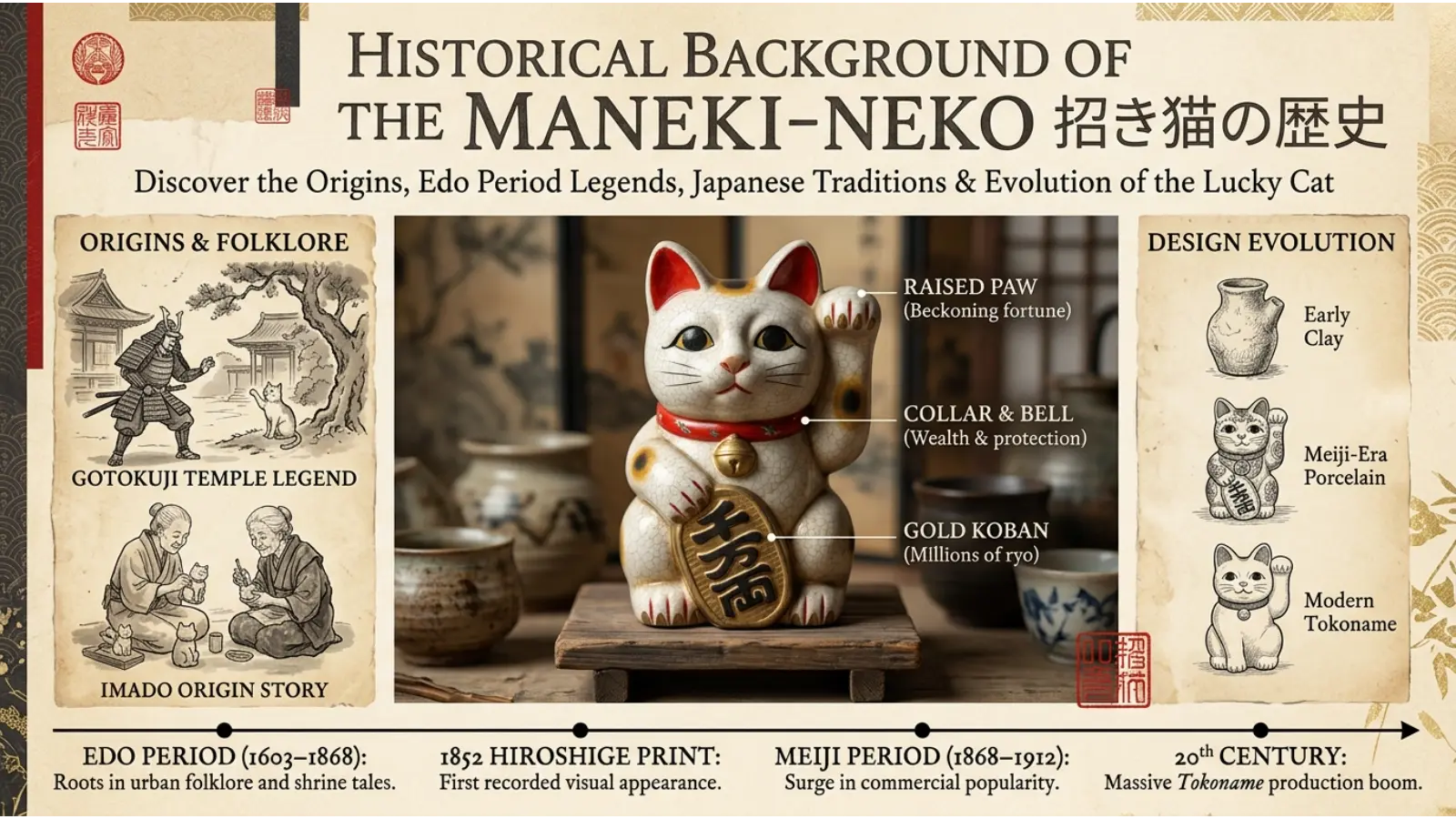
The exact origin of the Maneki-neko is debated. However, the figurine is strongly associated with Japan’s Edo period (1603–1868).
Several popular legends attempt to explain its beginnings.
One well-known story involves a cat associated with Gotokuji Temple in Tokyo. According to the legend, a cat beckoned a passing lord toward shelter, helping him avoid danger during a storm. The story became connected with the temple’s reputation for lucky cat figurines.
Other stories connect the Maneki-neko with the Imado area of Tokyo.
Over time, the figurine developed into a widely recognized symbol of prosperity and good fortune. Its modern colorful versions expanded the range of wishes represented by the design.
What Does a Maneki-neko’s Paw Position Mean?
The color is only one part of the lucky cat’s symbolism. Its raised paw can also influence how people interpret the figurine.
| Paw Position | Common Meaning | Popular Use |
|---|---|---|
| Left paw raised | Attracting customers and visitors | Shops and restaurants |
| Right paw raised | Attracting money and good fortune | Homes and businesses |
| Both paws raised | Protection and multiple blessings | General decoration |
These meanings are common interpretations rather than strict historical rules.
Psychology Behind Japanese Lucky Cat Color Meanings
The popularity of different lucky cat colors is connected partly to the way people respond to color.
Color psychology studies how colors influence perception, emotion, and associations. However, responses depend on personal experience, culture, lighting, and context.
For example, gold can remind people of coins and precious metals. Meanwhile, green can suggest nature and growth because people frequently see it in plants and landscapes.
Why Gold Suggests Wealth
Gold is visually associated with precious metals, jewelry, coins, and luxury objects.
Therefore, a gold lucky cat can communicate prosperity even without its traditional cultural meaning.
Why White Suggests Purity
White is frequently used in clean, simple, and peaceful visual environments.
Its association with fresh beginnings makes it a natural choice for a general good-luck symbol.
Why Red Attracts Attention
Red is visually strong and often stands out against neutral backgrounds.
Consequently, designers use red when they want a decorative object to become a noticeable focal point.
Why Blue Feels Calm
Blue is often associated with the sky, water, and open spaces.
These familiar natural connections can encourage impressions of calmness and reliability, although individual reactions vary.
Why Pink Suggests Affection
Pink is commonly used in romantic gifts, greeting cards, and decorations connected with affection.
Repeated exposure to these cultural uses helps strengthen its association with love and tenderness.
Personality Associations of Lucky Cat Colors
People sometimes choose a Maneki-neko based on the color they personally enjoy.
Although color preferences do not determine personality, they can reflect aesthetic taste, cultural associations, or the feelings someone wants to express.
| Favorite Lucky Cat Color | Common Personality Association |
|---|---|
| White | Simple, peaceful, and organized |
| Black | Independent, confident, and protective |
| Gold | Ambitious, optimistic, and achievement-focused |
| Red | Energetic, passionate, and bold |
| Pink | Caring, affectionate, and romantic |
| Green | Balanced, thoughtful, and growth-oriented |
| Blue | Calm, focused, and practical |
| Yellow | Cheerful, creative, and optimistic |
| Purple | Imaginative, expressive, and curious |
| Silver | Modern, refined, and detail-oriented |
These are symbolic impressions, not psychological assessments. A person’s favorite color cannot reliably reveal their character.
Japanese Lucky Cat Color Meanings in Business and Marketing
Maneki-neko figurines are especially popular in commercial environments because they combine recognizable cultural symbolism with an inviting appearance.
Businesses often display them near entrances, counters, and reception areas.
Why Businesses Choose Gold Lucky Cats
Gold is a natural choice for businesses that want to communicate financial success and prosperity.
It is especially popular in shops, restaurants, and small businesses.
Why Shops Display Cats With Raised Left Paws
The left-paw-raised design is commonly associated with attracting customers and visitors.
Therefore, shop owners may place this version near the entrance as a welcoming symbol.
Why Black Lucky Cats Suit Modern Businesses
Black offers a simple and elegant appearance.
It can complement modern office interiors while carrying the popular symbolic association with protection.
Why Color Matters in Gift Marketing
Different colors help manufacturers create products for different occasions.
For example:
- Gold versions are suitable for business-opening gifts.
- Pink versions are popular for romantic occasions.
- White versions work well as housewarming gifts.
- Blue versions can make thoughtful gifts for students.
- Red versions can represent wishes for health and protection.
The symbolic message gives the product an emotional meaning beyond its decorative value.
Japanese Lucky Cat Color Meanings in Interior Design
However, its color should work with the room’s overall style.
Living Room
A white or gold lucky cat can look attractive on a shelf, side table, or display cabinet.
White creates a simple appearance, while gold adds a decorative focal point.
Bedroom
Pink, lavender, and white versions can complement softer bedroom designs.
Office
Blue, black, and silver lucky cats work well in modern office environments.
Blue can complement a calm workspace, while silver and black provide a more professional appearance.
Shop and Restaurant
Gold and red are common decorative choices for commercial spaces.
They create a noticeable display and communicate popular associations with prosperity and good fortune.
Lighting and Color Appearance
Lighting changes how a lucky cat’s color appears.
Warm lighting can make gold and yellow look richer. Meanwhile, cool lighting may make white and silver appear slightly blue.
Therefore, consider the lighting in your room before choosing a figurine.
Japanese Lucky Cat Color Meanings in Fashion and Accessories
Maneki-neko symbolism has also influenced modern accessories and gift products.
Its recognizable shape makes it suitable for small decorative designs.
Common examples include:
- Lucky cat necklaces.
- Keychains and bag charms.
- Printed T-shirts.
- Phone cases.
- Decorative pins.
- Bracelets and pendants.
- Collectible miniature figures.
Color selection can change the message of an accessory.
For instance, a pink lucky cat pendant may communicate affection, while a gold charm may represent prosperity and ambition.
These meanings are personal and symbolic rather than guaranteed outcomes.
Best Color Combinations for Japanese Lucky Cat Color Meanings
The colors surrounding a lucky cat can change its overall appearance and visual message.
Some combinations create a traditional look, while others produce a modern decorative style.
| Color Combination | Visual Effect | Suitable Setting |
|---|---|---|
| Gold + Red | Rich and festive | Business displays |
| White + Gold | Elegant and clean | Living rooms |
| Black + Gold | Bold and luxurious | Offices |
| Pink + White | Soft and romantic | Bedrooms |
| Blue + Silver | Modern and calm | Study spaces |
| Green + Beige | Natural and balanced | Family rooms |
| Purple + Silver | Creative and refined | Artistic spaces |
| Yellow + White | Bright and cheerful | Kitchens |
Gold and Red
Gold and red create a rich, traditional-looking combination.
They are particularly effective for festive displays and business decorations.
Black and Gold
Black provides a strong background for gold details.
As a result, this combination looks elegant and works well in contemporary interiors.
Pink and White
Pink and white create a gentle, friendly appearance.
They are suitable for personal spaces, romantic gifts, and soft decorative themes.
Blue and Silver
Blue and silver produce a clean and modern visual effect.
They are especially useful in offices and study areas.
Green and Beige
Green and beige reflect natural color combinations.
Together, they create a relaxed appearance that works well with wood and neutral furniture.
How to Choose the Right Japanese Lucky Cat Color Meanings
Choosing a Maneki-neko becomes easier when you think about the purpose behind the gift or decoration.
Choose Gold for Financial Goals
If you want to celebrate a new business or financial ambition, gold is a popular choice.
It is one of the clearest visual symbols of prosperity.
Choose White for General Good Fortune
White is a versatile option for people who want a simple symbol of happiness and positive beginnings.
Choose Black for Protection
A black lucky cat is a meaningful decorative choice when protection and security are the main symbolic wishes.
Choose Pink for Love
Pink is suitable for anniversaries, romantic gifts, and celebrations of close relationships.
Choose Blue or Green for Education
Blue is commonly associated with knowledge and achievement, while green is linked with learning and growth.
Choose Red for Health and Well-Being
Red is a popular choice when expressing wishes for health, vitality, and protection.
Real-World Uses of Japanese Lucky Cats
Maneki-neko figurines have moved beyond traditional shop decorations. Today, people use them in several practical and creative ways.
| Where It Is Used | Popular Color | Symbolic Purpose |
|---|---|---|
| Shops | Gold | Business prosperity |
| Restaurants | White or gold | Welcoming customers |
| Homes | White | Happiness and good fortune |
| Offices | Blue or black | Success and protection |
| Bedrooms | Pink | Love and affection |
| Study areas | Blue or green | Learning and achievement |
| Gift shops | Multiple colors | Personalized wishes |
| Art and collectibles | Multiple colors | Cultural expression |
Artists also use Maneki-neko designs in illustrations, ceramics, paintings, and contemporary decorative objects.
Its recognizable raised paw makes it easy to identify, even when artists change its colors, patterns, and facial expressions.
Common Misconceptions About Japanese Lucky Cat Colors
Misconception 1: Every Lucky Cat Color Has an Ancient Japanese Meaning
Not every modern color association comes from ancient Japanese tradition.
Some meanings developed through contemporary gift culture, product design, and international interpretations.
Misconception 2: Gold Is the Only Lucky Cat That Attracts Wealth
Gold is strongly associated with prosperity. However, the Maneki-neko itself is a good-fortune symbol, and different figurines can represent different wishes.
Misconception 3: A Black Lucky Cat Represents Bad Luck
Black cats have different associations around the world.
In popular Maneki-neko interpretations, black is commonly connected with protection rather than misfortune.
Misconception 4: The Raised Paw Has One Universal Meaning
The left and right paws are often assigned different meanings. However, these interpretations are not completely standardized.
Misconception 5: Owning a Lucky Cat Guarantees Success
The Maneki-neko is a cultural and symbolic object.
It can represent hope, encouragement, and positive intentions, but it cannot guarantee money, health, or success.
FAQ: Japanese Lucky Cat Color Meanings
1. What is the luckiest color for a Japanese lucky cat?
Gold is one of the most popular lucky cat colors because it represents wealth, money, and financial prosperity. However, the best color depends on the kind of good fortune someone wants to symbolize.
2. What does a white Japanese lucky cat mean?
A white Maneki-neko commonly symbolizes purity, happiness, and general good fortune. It is a popular choice for homes, gifts, and new beginnings.
3. What does a black lucky cat symbolize?
A black lucky cat is commonly associated with protection, safety, and keeping away misfortune. Its meaning differs from negative associations sometimes given to black cats in other cultures.
4. What does a gold Maneki-neko mean?
A gold Maneki-neko represents wealth, financial prosperity, abundance, and business success. It is particularly popular in shops and commercial spaces.
5. What does a pink lucky cat mean?
A pink lucky cat is commonly associated with love, romance, affection, and positive relationships. It is also a popular gift for anniversaries and special occasions.
6. What does a red Japanese lucky cat represent?
A red lucky cat is often connected with health, protection, vitality, and positive energy. It is commonly chosen as a symbolic gift for well-being.
7. What does a blue lucky cat mean?
A blue Maneki-neko commonly symbolizes wisdom, knowledge, academic achievement, and success. It can be a meaningful gift for students and professionals.
8. What does a green lucky cat symbolize?
A green lucky cat is commonly associated with education, personal growth, family happiness, and learning. Its symbolism connects naturally with the color’s association with renewal and development.
9. Which paw should a Japanese lucky cat raise?
A left paw is commonly associated with attracting customers and visitors, while a right paw is associated with money and good fortune. Both raised paws are sometimes interpreted as inviting multiple blessings and protection.
10. Where should you place a Japanese lucky cat?
People commonly place Maneki-neko figurines near shop entrances, reception desks, counters, shelves, and home display areas. The best location depends on personal preference and the decorative purpose of the figurine.
Conclusion: The Meaning Behind Every Lucky Cat Color
Japanese lucky cat color meanings reveal how a simple decorative figurine can communicate different wishes and cultural ideas. From the prosperity of gold to the protection associated with black, every popular color offers a different symbolic message.
White represents happiness and purity, while pink celebrates love and affection. Similarly, blue is connected with knowledge, green with growth, and red with health and protection.
However, these meanings are not strict rules. Modern interpretations continue to develop as Maneki-neko designs become popular around the world.
Ultimately, the most meaningful lucky cat is the one whose color represents something important to you. Whether you display one at home, give it as a gift, or place it in a business, the Maneki-neko remains a charming symbol of hope, welcome, and good fortune.
Remove repeated sections and tighten the articleClarify traditional versus modern meanings

Emma Wilson is a dedicated comparison writer and product researcher at ColorMystiic.com. She specializes in creating unbiased product comparisons, detailed reviews, and helpful buying guides. Her goal is to help readers make smarter purchasing decisions with confidence.