Japanese Peony Tattoo Color Meanings are admired for their detailed petals, bold colors, and deep symbolic meanings. Known as botan (牡丹) in Japanese, the peony is traditionally associated with wealth, honor, beauty, prosperity, and strength. However, its meaning can change depending on the color, artistic style, and other elements included in the tattoo.
In Japanese art, peonies have appeared in paintings, textiles, decorative objects, and traditional tattoo designs. Their large, layered petals create a powerful visual statement. Moreover, they are often combined with koi fish, dragons, tigers, waves, and Japanese leaves to create meaningful compositions.
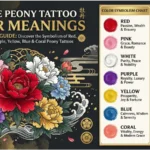
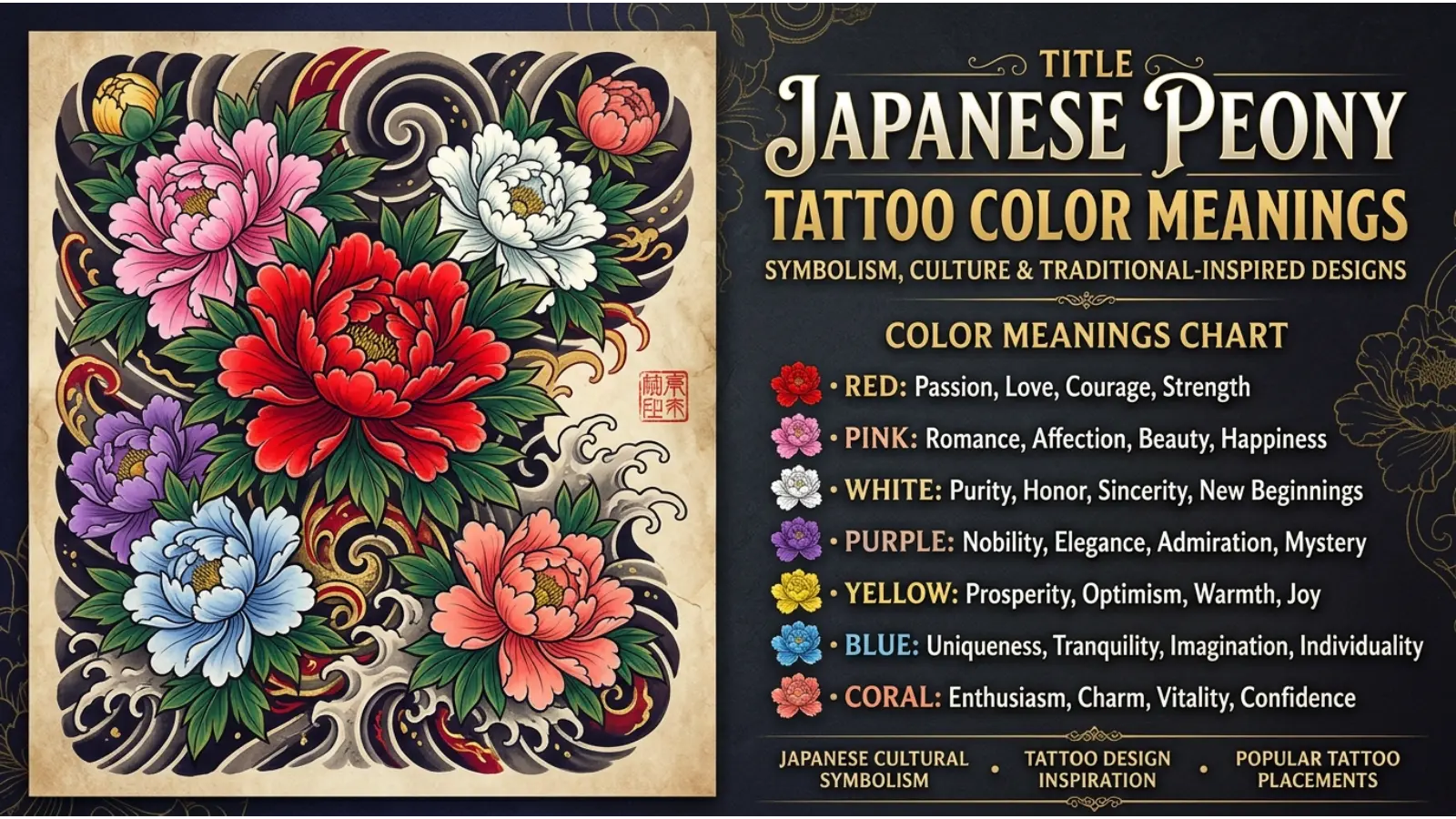
Each peony color can communicate a different emotion. Red often represents passion and courage, while pink suggests romance and affection. White can express purity and elegance, whereas purple is associated with dignity, mystery, and luxury. Similarly, yellow and orange create warmer impressions, while blue offers a more unusual interpretation.
Understanding Japanese peony tattoo color meanings helps people select designs that reflect their personality, experiences, and personal beliefs.
This guide explores the symbolism of different peony colors, their cultural background, historical influences, traditional tattoo meanings, and practical design ideas.
Quick Answer: What Do Japanese Peony Tattoo Colors Mean?
Japanese peony tattoo colors commonly represent different emotions and symbolic ideas:
| Color | Tattoo Meaning | Symbolic Association |
|---|---|---|
| Red | Passion and courage | Strength, love, prosperity |
| Pink | Romance and affection | Beauty, tenderness |
| White | Purity and peace | Elegance, remembrance |
| Purple | Dignity and mystery | Luxury, wisdom |
| Yellow | Happiness and success | Optimism, abundance |
| Orange | Energy and creativity | Confidence, enthusiasm |
| Blue | Calmness and individuality | Depth, mystery |
| Black and Grey | Strength and elegance | Balance, maturity |
These are common symbolic interpretations rather than universal Japanese rules. Personal experiences, cultural backgrounds, and artistic choices can give the same color different meanings.
What Does a Japanese Peony Tattoo Symbolize?
The Japanese peony is widely recognized as a flower associated with beauty, prosperity, honor, and good fortune. Its traditional Japanese name is botan.
Unlike flowers that are mainly associated with fragility, the peony has a bold and impressive appearance. Its full petals create a sense of richness and abundance. Consequently, it can symbolize someone who values beauty while maintaining confidence and inner strength.
Wealth and Prosperity
One of the best-known symbolic associations of the peony is wealth.
Its large, generous bloom creates an impression of abundance. In East Asian decorative traditions, peonies have frequently represented prosperity, good fortune, and an elevated lifestyle.
Therefore, a Japanese peony tattoo may express ambitions, financial hopes, professional success, or appreciation for the good things in life.
Honor and Respect
Peonies can also communicate dignity, status, and respect.
Their impressive appearance has made them popular decorative motifs in traditional Asian art. As a tattoo, the flower may represent self-respect, personal achievements, and the desire to live with honor.
Courage and Strength
Although peonies look soft and delicate, their visual presence can communicate power.
Traditional Japanese tattoo compositions often combine flowers with powerful animals, including tigers and dragons. This contrast creates an interesting message: beauty does not mean weakness.
As a result, the peony can represent courage, resilience, and the ability to remain graceful during difficult experiences.
Love and Beauty
Peonies are also associated with romance, admiration, and beauty.
Pink and red versions are particularly suitable for expressing affection, emotional connections, and appreciation for someone special.
However, these meanings are not limited to romantic relationships. A peony can also represent self-love, family connections, or respect for personal growth.
Japanese Peony Tattoo Color Meanings
Color changes the emotional impression of a Japanese peony tattoo. Although the flower’s traditional symbolism remains recognizable, different shades can communicate different personal messages.
Red Japanese Peony Tattoo Meaning
Red Japanese peonies commonly symbolize passion, courage, love, strength, and prosperity.
The Red is a powerful color in traditional Japanese tattoo art. Its strong appearance makes floral designs stand out, especially when combined with dark outlines, green leaves, and black background patterns.
Common symbolic meanings include:
- Passion and intense emotions.
- Courage and determination.
- Romantic love and devotion.
- Strength during difficult experiences.
- Prosperity and good fortune.
A red peony tattoo can be meaningful for someone who values confidence and determination. For example, a large red flower on the shoulder may represent the courage to overcome personal challenges.
Furthermore, combining red petals with black-and-grey shading creates a classic Japanese tattoo appearance.
Pink Japanese Peony Tattoo Meaning
Pink Japanese peonies commonly represent romance, tenderness, affection, admiration, and graceful beauty.
Compared with red, pink creates a softer impression. It communicates emotional warmth without the same intensity.
Common symbolic meanings include:
- Romance and emotional connection.
- Kindness and affection.
- Beauty and elegance.
- Gentleness and compassion.
- Appreciation and admiration.
A pink peony tattoo can represent an important relationship, a loving personality, or appreciation for life’s beautiful moments.
Additionally, pink petals work beautifully with dark outlines and green leaves, creating a balanced floral composition.
White Japanese Peony Tattoo Meaning
White peonies often represent purity, elegance, peace, sincerity, and remembrance.
Their light appearance creates a beautiful contrast against darker Japanese tattoo elements. Consequently, white flowers are popular in designs that focus on simplicity and visual balance.
Common symbolic meanings include:
- Purity and sincerity.
- Peace and calmness.
- Elegance and refinement.
- Remembrance of meaningful experiences.
- Fresh beginnings.
A white peony tattoo may honor someone important or represent a desire for peace after a difficult period.
However, tattoo artists often use grey shading and carefully planned skin breaks to keep white petals visible as the tattoo ages.
Purple Japanese Peony Tattoo Meaning
Purple Japanese peonies are commonly interpreted as symbols of dignity, mystery, luxury, wisdom, and individuality.
The Purple has historical associations with rank and prestige in several cultures, including Japan. Therefore, it creates a sophisticated appearance in traditional floral tattoo designs.
Common symbolic meanings include:
- Dignity and self-respect.
- Luxury and refinement.
- Mystery and individuality.
- Wisdom and maturity.
- Personal ambition.
A deep purple peony can express confidence and individuality. Meanwhile, lavender shades create a softer and more delicate appearance.
Purple is especially effective when paired with black outlines and dark green leaves.
Yellow Japanese Peony Tattoo Meaning
Yellow peonies commonly represent happiness, optimism, friendship, abundance, and success.
Their warm appearance gives a tattoo a cheerful personality. Golden-yellow shades can also create an impression of richness and prosperity.
Common symbolic meanings include:
- Happiness and joy.
- Success and achievement.
- Abundance and good fortune.
- Friendship and appreciation.
- Hope and optimism.
A yellow peony tattoo may represent a positive outlook or an important personal achievement.
Furthermore, golden petals work naturally with red, orange, green, and black in traditional Japanese compositions.
Orange Japanese Peony Tattoo Meaning
Orange peonies can symbolize energy, enthusiasm, creativity, confidence, and transformation.
Although orange is less traditional than red or pink in many peony tattoo designs, it offers an attractive modern interpretation.
Common symbolic meanings include:
- Energy and enthusiasm.
- Creativity and imagination.
- Confidence and courage.
- Personal transformation.
- Warmth and friendliness.
An orange peony can represent someone who enjoys expressing individuality and approaching life with enthusiasm.
Combining orange petals with deep green leaves creates a lively but balanced color palette.
Blue Japanese Peony Tattoo Meaning
Blue peonies are often used in artistic tattoo interpretations to communicate calmness, mystery, individuality, and emotional depth.
Naturally occurring peonies are not commonly true blue. Therefore, blue peony tattoos generally represent an artistic color choice rather than a standard natural flower variety.
Common symbolic meanings include:
- Calmness and emotional balance.
- Mystery and imagination.
- Depth and thoughtful emotions.
- Originality and individuality.
- Peace and reflection.
A blue peony tattoo is suitable for someone who wants a distinctive floral design.
Dark blue petals with lighter highlights can create depth, while navy and black shading help maintain a traditional Japanese appearance.
Black and Grey Japanese Peony Tattoo Meaning
Black-and-grey Japanese peony tattoos focus on shape, texture, shadow, and contrast instead of bright colors.
They are commonly interpreted as symbols of strength, maturity, elegance, balance, and timeless beauty.
Common symbolic meanings include:
- Strength and resilience.
- Maturity and experience.
- Balance between light and darkness.
- Elegance and simplicity.
- Respect and remembrance.
This style is especially suitable for larger Japanese tattoo compositions featuring koi fish, dragons, tigers, and waves.
Historical Background of Japanese Peony Tattoo Color Meanings
The peony has a long history in East Asian decorative culture. Although its earlier cultural associations developed across China and other parts of East Asia, the flower became an important subject in Japanese visual art.
In Japan, peonies appeared in decorative paintings, textiles, woodblock prints, and ornamental designs.
Their impressive flowers made them attractive subjects for artists who wanted to communicate prosperity, beauty, and refinement.
Peonies in Traditional Japanese Art
Japanese artists often used flowers to communicate ideas beyond their natural appearance.
A peony could decorate a garment, painting, or decorative object while also suggesting abundance and elegance.
Over time, its detailed petals and rounded shape made it suitable for large decorative compositions.
Peonies in Irezumi
Irezumi refers broadly to Japanese tattooing, although traditional Japanese tattoo styles include several artistic approaches.
The peony became a recognizable floral subject in Japanese tattoo compositions.
Artists use its layered petals to create movement and visual balance. Moreover, its shape works well around larger subjects such as dragons, koi fish, and tigers.
The flower can soften an otherwise powerful composition while maintaining a strong visual presence.
Japanese Peony Tattoo Color Meanings in Traditional Japanese Culture
Japanese cultural symbolism is not always identical to modern tattoo interpretations.
The peony is commonly connected with wealth, beauty, and honor. However, the meaning of a particular flower depends on the artistic setting and the other elements surrounding it.
Peony and Japanese Aesthetics
Japanese visual art often values balance, movement, natural beauty, and carefully arranged details.
The peony fits this aesthetic because its petals create a combination of softness and structure.
Artists can use open flowers, curved stems, and overlapping leaves to guide the viewer’s attention throughout a design.
Peony and Seasonal Beauty
Peonies are associated with spring and early summer flowering periods, depending on the variety and climate.
Their seasonal appearance can add another layer of meaning to a tattoo.
For some people, the flower represents renewal, beauty, and the enjoyment of life.
However, the peony should not automatically be treated as a universal symbol of every Japanese seasonal philosophy.
Spiritual japanese peony tattoo color meanings
Japanese peony tattoos can carry personal spiritual meanings, particularly when the flower represents growth, prosperity, and inner strength.
However, these interpretations should be understood as symbolic choices rather than fixed religious teachings.
Growth and Transformation
A fully opened peony can represent personal development.
Its layered petals may suggest the different experiences that shape a person’s identity. Consequently, the flower can become a reminder of learning, growing, and becoming more confident.
Protection and Strength
When paired with powerful Japanese tattoo elements, the peony can communicate strength and protection.
For example, a peony combined with a dragon may express a balance between beauty and power.
This is an artistic interpretation rather than a universal religious rule.
Abundance and Good Fortune
Because peonies are widely associated with prosperity, some people choose them to express hopes for a successful future.
The design may represent financial goals, family happiness, personal achievements, or appreciation for abundance.
Peace and Emotional Balance
White, blue, and soft pink peonies can create a peaceful visual impression.
Their meaning may reflect emotional healing, calmness, or the desire to maintain balance during challenging periods.

Japanese Peony Tattoo Color Meanings Psychology
Color psychology helps explain why different peony shades create different emotional impressions.
However, psychological responses to color are influenced by personal experiences, surroundings, culture, and individual preferences. A tattoo color does not automatically determine someone’s emotions or personality.
How Red Influences Perception
Red attracts attention and is commonly associated with energy, excitement, and strong emotions.
In a tattoo, red petals can create an impression of confidence and intensity.
How Pink Influences Perception
Pink often creates associations with warmth, tenderness, and affection.
Its softer appearance makes it suitable for floral designs that communicate romance or gentleness.
How White Influences Perception
White is frequently connected with simplicity, cleanliness, and peace in many contemporary design settings.
However, cultural traditions can change its interpretation, particularly when white is associated with mourning.
How Purple Influences Perception
Purple often creates associations with creativity, luxury, and individuality.
Deep purple can feel dramatic, while lighter lavender shades create a more delicate impression.
How Yellow Influences Perception
Yellow is visually bright and often communicates warmth, optimism, and attention.
In tattoo art, it can make floral designs feel cheerful and energetic.
How Blue Influences Perception
Blue is frequently associated with calmness, stability, and depth.
As a result, blue peonies can create a quieter emotional impression than red or orange designs.
Japanese Peony Tattoo Meanings by Color: Comparison Chart
The following chart provides a quick visual comparison of the symbolic impressions commonly used in modern tattoo interpretations.
| Color | Main Meaning | Emotional Impression |
|---|---|---|
| Red | Courage | Powerful |
| Pink | Affection | Gentle |
| White | Purity | Peaceful |
| Purple | Dignity | Mysterious |
| Yellow | Prosperity | Cheerful |
| Orange | Creativity | Energetic |
| Blue | Calmness | Reflective |
| Black/Grey | Strength | Timeless |
These emotional descriptions are general design associations, not scientifically measured personality scores.
Japanese Peony Tattoo Combinations and Their Meanings
Japanese tattoo artists often combine peonies with other traditional subjects. These combinations create more detailed stories than a flower alone.
Peony and Dragon Tattoo
A dragon and peony combination brings together powerful imagery and floral beauty.
The dragon is associated with strength, wisdom, and power in many East Asian artistic traditions. Meanwhile, the peony often represents prosperity and elegance.
Together, they can communicate strength accompanied by beauty and good fortune.
Peony and Koi Fish Tattoo
Koi fish are widely associated with perseverance, determination, and success in Japanese-inspired tattoo art.
When paired with peonies, they can represent ambition, personal growth, and prosperity.
A koi swimming through flowing water beneath colorful peonies also creates a sense of movement.
Peony and Tiger Tattoo
The tiger represents courage, power, and protection in various East Asian artistic traditions.
A peony and tiger tattoo creates an interesting contrast between softness and strength.
This design may symbolize someone who values both kindness and determination.
Peony and Snake Tattoo
A snake can represent transformation, renewal, danger, or wisdom depending on the cultural and artistic context.
Combined with a peony, it can communicate the relationship between beauty and change.
Peony and Cherry Blossom Tattoo
Cherry blossoms are strongly associated with the temporary nature of life in Japanese aesthetics.
Peonies, by comparison, are often connected with abundance and prosperity.
Together, they can suggest an appreciation of beauty, the passage of time, and the importance of enjoying life.
Japanese Peony Tattoo Placement and Its Meaning
Tattoo placement influences the overall appearance and personal experience of a design.
Although there are no universal rules assigning a fixed symbolic meaning to every body location, different placements offer different artistic possibilities.
Japanese Peony Shoulder Tattoo
The shoulder provides a rounded surface that works naturally with the shape of a large peony.
It is suitable for designs featuring open petals and surrounding leaves.
A red or purple peony can create a strong visual statement in this location.
Japanese Peony Sleeve Tattoo
A sleeve allows artists to build a larger composition.
Multiple flowers, leaves, waves, and traditional Japanese subjects can create a connected design.
Furthermore, the natural curves of the arm help create movement.
Japanese Peony Back Tattoo
The back provides a large area for detailed floral artwork.
It allows artists to include several peonies with different colors and surrounding elements.
A full-back composition can represent an important personal story or artistic vision.
Japanese Peony Chest Tattoo
The chest is suitable for bold and symmetrical floral arrangements.
A central peony can be surrounded by leaves, clouds, or traditional Japanese patterns.
Because of its location, this design may carry a deeply personal meaning for the wearer.
Japanese Peony Leg Tattoo
The thigh and calf offer enough space for detailed petals and flowing stems.
A thigh tattoo can accommodate a large composition, while a calf tattoo can create a more vertical arrangement.
Japanese Peony Tattoos in Fashion and Personal Style
Japanese peony tattoos can complement different fashion preferences.
Their detailed petals and strong colors create a decorative appearance that works with both traditional and modern clothing styles.
Traditional Style
Traditional Japanese tattoo designs often feature bold outlines, strong color contrasts, and flowing backgrounds.
Red, pink, and purple peonies are popular artistic choices for this appearance.
Minimalist Style
A minimalist peony uses fewer details and a simpler outline.
Black-and-grey shading or a single accent color can create an elegant design.
This approach is useful for people who prefer understated tattoos.
Modern Colorful Style
Modern interpretations may use unusual shades, including blue, lavender, and orange.
These choices create more individual designs while retaining the recognizable shape of the peony.
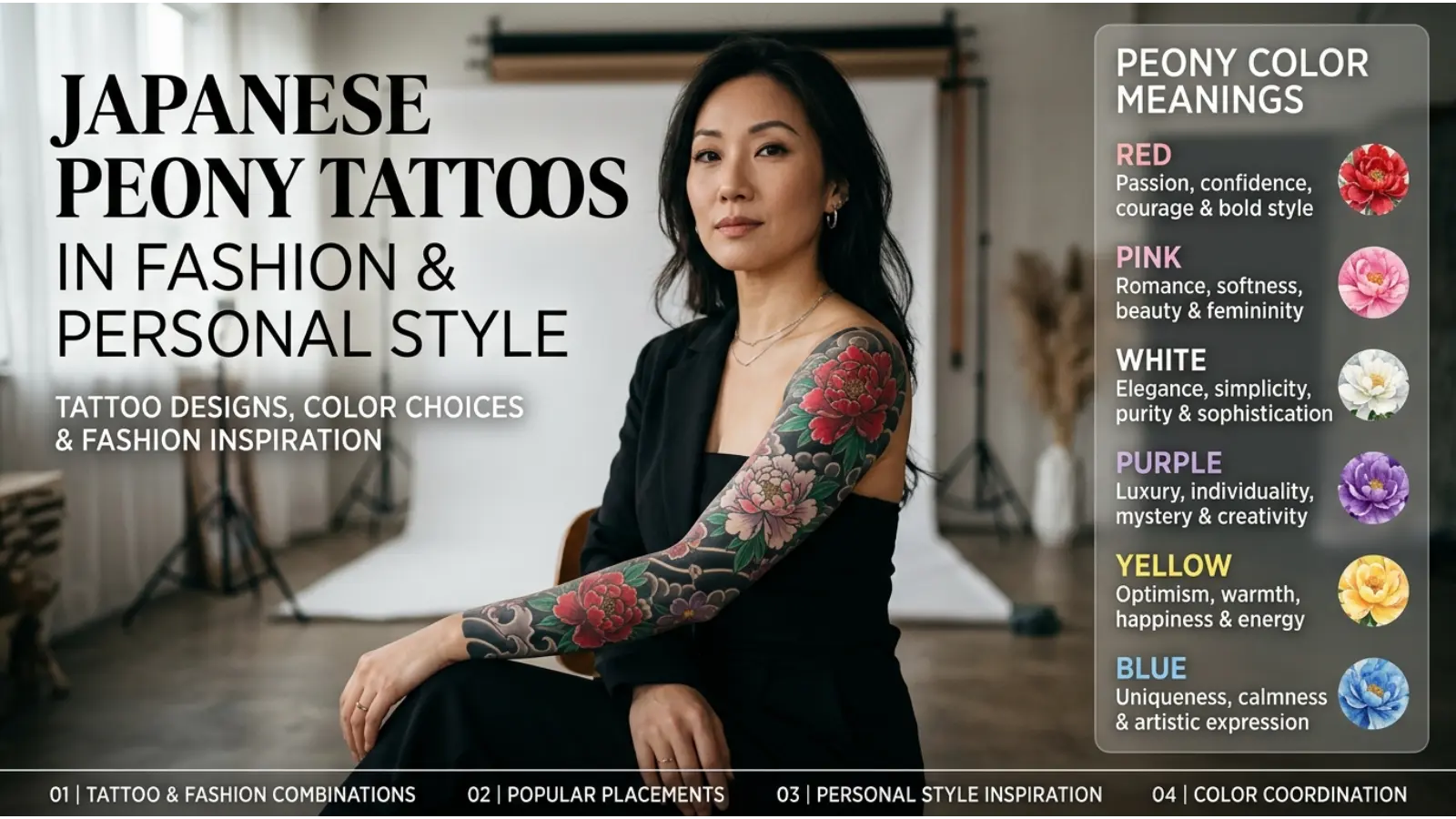
Best Color Combinations for Japanese Peony Tattoos
Choosing the right color combination helps create visual balance and makes the flower stand out.
| Color Combination | Visual Effect | Suitable Meaning |
|---|---|---|
| Red + Green | Strong natural contrast | Courage and prosperity |
| Pink + Grey | Soft and elegant | Affection and beauty |
| White + Black | Classic contrast | Peace and strength |
| Purple + Gold | Rich and luxurious | Dignity and abundance |
| Yellow + Green | Warm and natural | Happiness and growth |
| Blue + Grey | Cool and balanced | Calmness and depth |
| Orange + Black | Bold and dramatic | Energy and confidence |
The best combinations depend on the tattoo’s size, skin tone, artistic style, and surrounding elements.
How Lighting and Skin Tone Affect Japanese Peony Tattoo Color Meanings
Tattoo colors do not appear exactly the same on every person.
Skin tone, undertones, pigment selection, healing, and lighting can all influence how the final design looks.
Lighting Effects
Natural daylight usually provides a clearer view of tattoo colors.
However, warm indoor lighting can make red, orange, and yellow shades appear stronger. Cooler lighting may make blue and purple shades look more prominent.
Therefore, it is helpful to evaluate tattoo designs under different lighting conditions before choosing a final palette.
Skin Tone Considerations
Tattoo pigments interact visually with the skin underneath them.
For example, lighter shades may need careful contrast planning, while darker and more saturated colors can create stronger visual separation.
An experienced tattoo artist can recommend suitable pigment choices based on the individual’s skin and the desired design.
Long-Term Color Appearance
Tattoo pigments naturally change in appearance as the skin ages and is exposed to sunlight.
Fine details and pale highlights may become less distinct over time.
Consequently, bold outlines, suitable spacing, proper aftercare, and sun protection can help maintain the overall appearance.
Common Misconceptions About Japanese Peony Tattoo Colors
Several misunderstandings can make tattoo symbolism seem more complicated than it really is.
Every Peony Color Has One Fixed Japanese Meaning
This is incorrect.
Although traditional associations exist, many specific color meanings used in modern tattoo designs are personal or contemporary interpretations.
A blue peony, for example, may represent individuality for one person and calmness for another.
Peonies Are Only for Women
Peonies are flowers, but their symbolism is not limited by gender.
In Japanese tattoo art, flowers frequently appear alongside powerful subjects such as dragons, tigers, and koi fish.
Anyone can choose a peony to express strength, prosperity, beauty, or personal values.
Every Japanese Peony Tattoo Is Traditional Irezumi
Not necessarily.
Some designs follow traditional Japanese tattoo conventions, while others use modern, minimalist, watercolor, or illustrative techniques.
A flower inspired by Japanese art does not automatically follow the rules of traditional irezumi.
White Always Means Purity
White can communicate purity and peace in some settings. However, it is also connected with mourning and remembrance in various cultures.
Its meaning depends on cultural context and personal experience.
Tattoo Color Determines Personality
A person’s tattoo choice does not scientifically establish their personality.
Someone may choose red because they love its appearance rather than because they consider themselves passionate or courageous.
Symbolism is a personal way of expressing meaning, not a personality test.
Real-World Applications of Japanese Peony Symbolism
Japanese peony imagery appears beyond tattooing.
Its recognizable shape and cultural associations make it useful in several creative fields.
Japanese Art and Illustration
Artists use peonies to create decorative compositions, explore natural forms, and communicate prosperity or beauty.
Their layered petals also provide opportunities to experiment with light, shadow, and color.
Fashion and Textiles
Peony patterns appear in Japanese-inspired clothing, fabric designs, accessories, and decorative prints.
Red and pink flowers create romantic impressions, while darker purple and gold combinations suggest luxury.
Interior Decoration
Peony-inspired artwork can bring floral detail into home decoration.
Large floral prints work well as decorative focal points, while smaller motifs create a more subtle appearance.
Branding and Packaging
Peony illustrations can communicate beauty, luxury, abundance, and refinement.
For this reason, floral motifs can work well in beauty, skincare, gift, and lifestyle branding.
However, the final impression depends on typography, color palette, and overall brand identity.
Photography
Photographers often use peonies to explore color contrast, petal texture, and natural light.
Red and purple flowers create dramatic compositions, while pink and white varieties offer a softer visual effect.
How to Choose the Right Japanese Peony Tattoo Color
Choosing a color should involve more than selecting the prettiest flower.
Think about the message you want the tattoo to communicate and how the color will work with the rest of the composition.
Consider these practical suggestions:
- Choose red if you want to express passion, courage, and strength.
- Choose pink if romance, affection, and beauty are important to you.
- Choose white if you prefer purity, elegance, and peaceful symbolism.
- Choose purple if you appreciate dignity, mystery, and individuality.
- Choose yellow if you want to communicate happiness and prosperity.
- Choose orange if creativity and confidence inspire your design.
- Choose blue if you prefer calmness and an unusual artistic appearance.
- Choose black and grey if you value timeless artwork and strong contrast.
Also, discuss your ideas with an experienced Japanese tattoo artist. They can help you select suitable colors, arrange the flowers, and create a composition that works with your chosen body placement.
Frequently Asked Questions About Japanese Peony Tattoo Color Meanings
1. What does a Japanese peony tattoo symbolize?
A Japanese peony tattoo commonly symbolizes wealth, prosperity, honor, beauty, courage, and good fortune. Its meaning can change depending on its color and the other elements in the design.
2. What does a red Japanese peony tattoo mean?
A red Japanese peony tattoo commonly represents passion, courage, love, strength, and prosperity. Its bold appearance makes it a popular choice for powerful traditional Japanese floral designs.
3. What does a pink peony tattoo symbolize?
A pink peony tattoo often symbolizes romance, tenderness, affection, admiration, and beauty. It can also represent meaningful relationships and appreciation for loved ones.
4. What does a white Japanese peony tattoo mean?
A white Japanese peony tattoo can represent purity, elegance, peace, sincerity, and remembrance. Its meaning depends on the wearer’s personal beliefs and cultural background.
5. What does a purple peony tattoo represent?
Purple peonies are commonly associated with dignity, luxury, mystery, wisdom, and individuality. Their rich appearance makes them suitable for dramatic and sophisticated tattoo designs.
6. Are Japanese peony tattoos considered lucky?
Peonies are commonly associated with prosperity, abundance, and good fortune in East Asian artistic traditions. Therefore, some people choose them as symbols of luck and success.
7. What does a peony tattoo with a dragon mean?
A peony and dragon tattoo can symbolize a balance between beauty and power. The dragon represents strength and wisdom in many East Asian traditions, while the peony commonly represents prosperity and elegance.
8. What does a peony tattoo with a koi fish symbolize?
A peony combined with a koi fish can represent perseverance, success, ambition, and prosperity. The combination brings together floral beauty and the koi’s associations with determination.
9. Which color is best for a Japanese peony tattoo?
There is no single best color. Red is suitable for passion and courage, pink for affection, white for peace, purple for dignity, and black and grey for timeless elegance. The right choice depends on your preferred appearance and personal meaning.
Conclusion
Japanese peony tattoos combine floral beauty with a rich tradition of artistic symbolism. Their meanings extend beyond appearance, representing prosperity, honor, courage, affection, and personal strength.
Each color adds another layer of expression. Red creates a bold impression, pink communicates tenderness, white suggests peace, and purple expresses dignity. Meanwhile, yellow, orange, and blue offer additional ways to create a distinctive design.
Furthermore, combining peonies with dragons, koi fish, tigers, or cherry blossoms can create a more personal story.
Ultimately, the most meaningful Japanese peony tattoo is one that reflects your own values and experiences. Understanding its cultural background and color symbolism allows you to choose a design that is not only visually beautiful but also personally significant.

Emma Wilson is a dedicated comparison writer and product researcher at ColorMystiic.com. She specializes in creating unbiased product comparisons, detailed reviews, and helpful buying guides. Her goal is to help readers make smarter purchasing decisions with confidence.