Gemstone Color Meanings have fascinated people for thousands of years. Their beauty comes from more than their sparkle. A deep blue sapphire, a bright green emerald, and a soft pink rose quartz can each create a different feeling and carry a different symbolic message. Throughout history, people have connected gemstone colors with emotions, spiritual ideas, personal qualities, and cultural traditions.
Understanding gemstone color meanings can help explain why certain stones are associated with love, wisdom, protection, wealth, peace, or personal transformation. However, these meanings are not universal. A gemstone may represent good fortune in one tradition while carrying a different association somewhere else.
Color also influences how people experience gemstones. For example, blue often creates impressions of calmness, while red can suggest passion and energy. Similarly, green gemstones are commonly connected with nature and growth, whereas purple stones are often associated with wisdom and mystery.
This guide explores the symbolism, psychology, cultural associations, historical background, and practical uses of different gemstone colors. It also explains how gemstone color affects jewelry choices, personal style, interior decoration, and branding.
Quick Answer: What Do Gemstone Color Meanings?
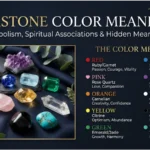
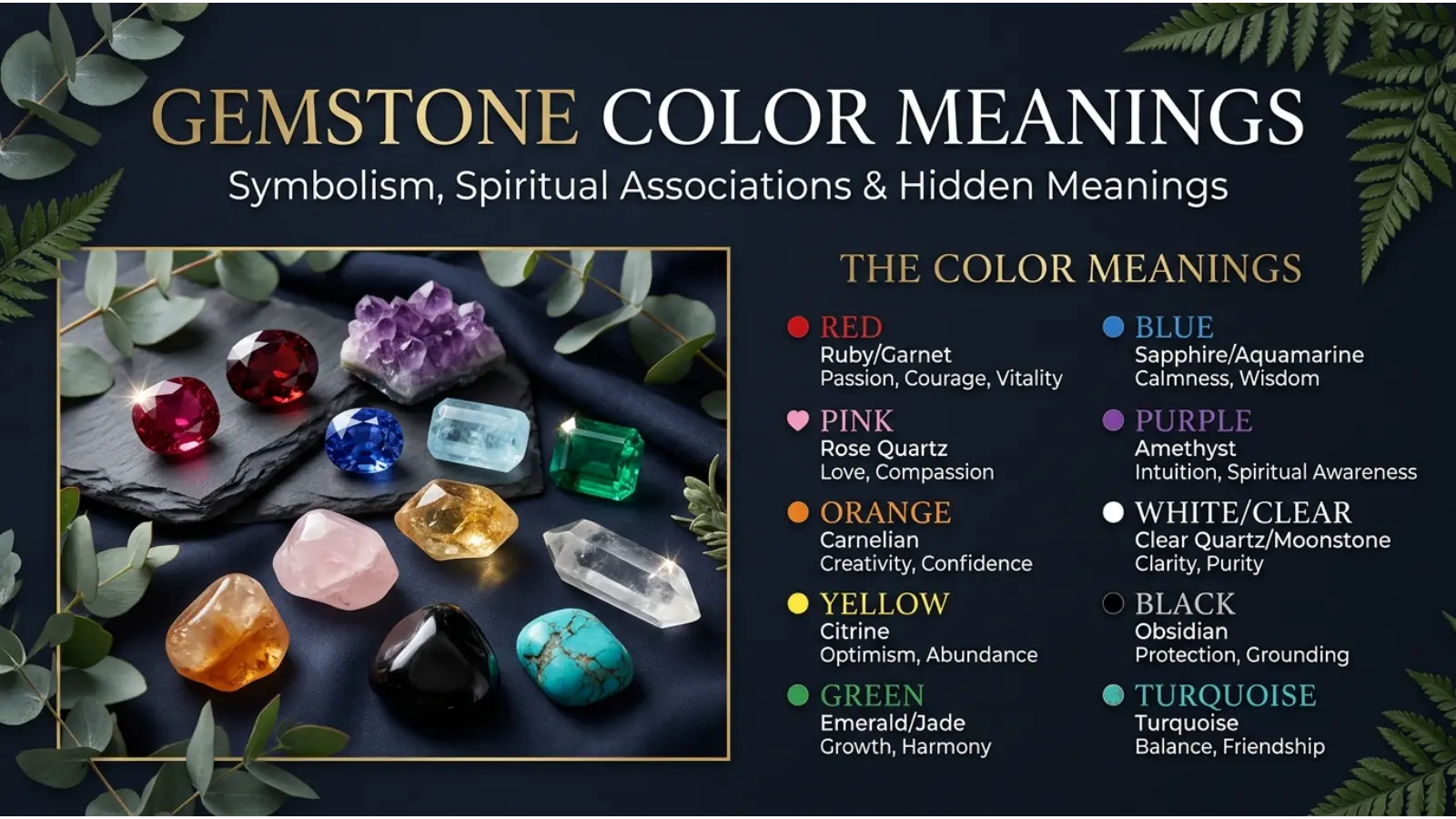
Gemstone colors traditionally represent different emotions, qualities, and symbolic ideas.
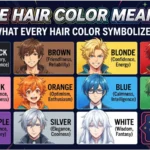
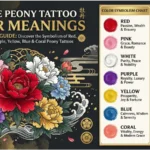
- Red gemstones: Love, passion, courage, and vitality.
- Pink gemstones: Romance, compassion, tenderness, and affection.
- Orange gemstones: Creativity, enthusiasm, confidence, and warmth.
- Yellow gemstones: Happiness, optimism, intelligence, and prosperity.
- Green gemstones: Growth, renewal, nature, and abundance.
- Blue gemstones: Peace, wisdom, trust, and communication.
- Purple gemstones: Spirituality, imagination, mystery, and royalty.
- White gemstones: Purity, clarity, innocence, and new beginnings.
- Black gemstones: Strength, protection, elegance, and mystery.
- Brown gemstones: Stability, grounding, reliability, and connection to nature.
These are common symbolic associations rather than scientifically proven properties of gemstones.
What Do Different Gemstone Colors Symbolize?
Every gemstone color creates a distinctive visual impression. Although the mineral itself determines its physical properties, its color often shapes the meaning people give it.
Here is a closer look at the most recognized gemstone colors.
Red Gemstone Color Meaning: Love, Passion, and Courage
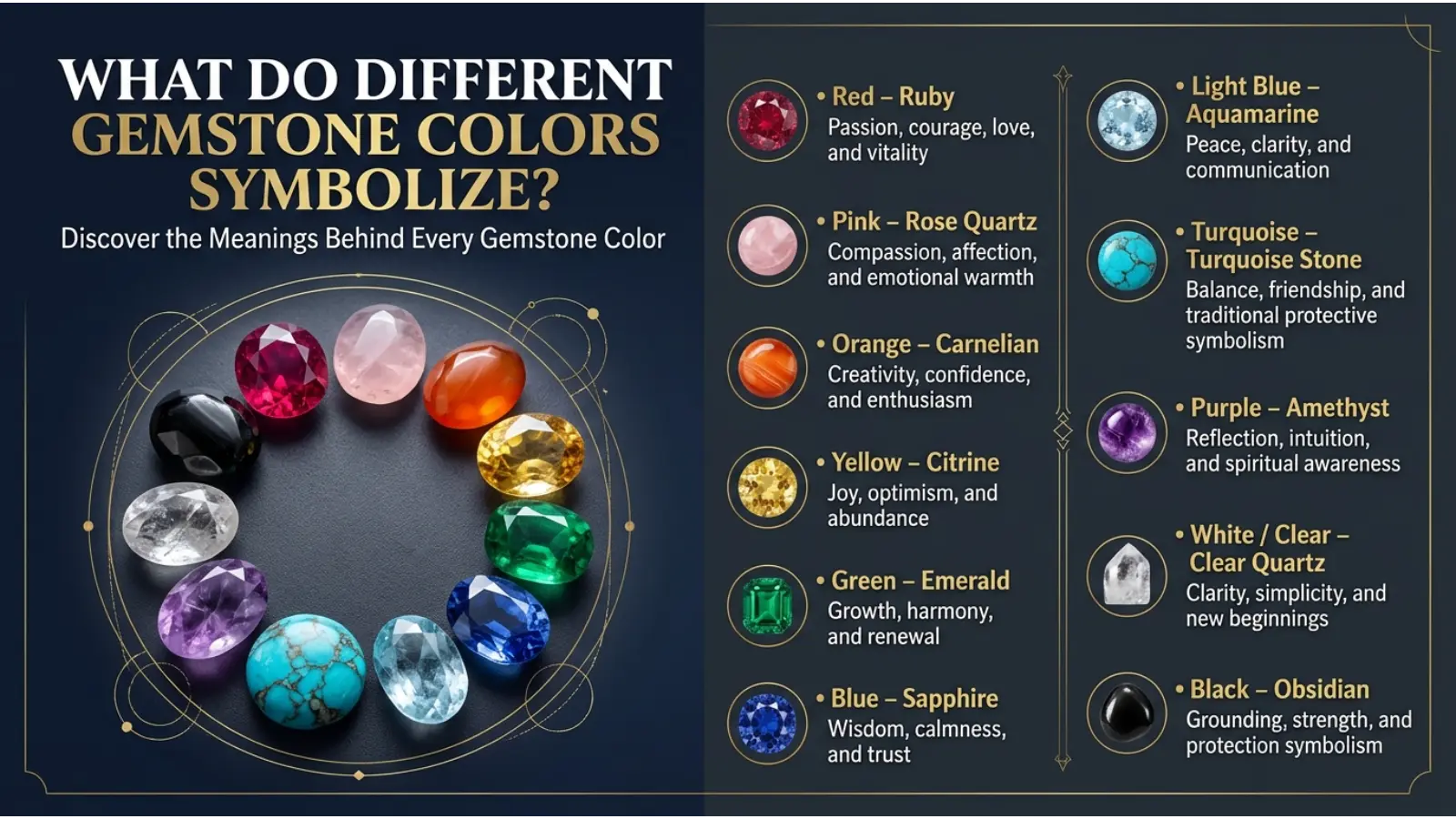
Red gemstones are among the most powerful symbols of love and emotional intensity. Their rich appearance attracts attention and often communicates confidence, strength, and determination.
Common red gemstones include:
- Ruby
- Red garnet
- Red spinel
- Red tourmaline
- Red zircon
Symbolism of Red Gemstones
Red traditionally represents romantic love, courage, passion, and vitality. Because it resembles the color of blood and fire, it has also been connected with life, energy, and bravery.
Ruby, in particular, has a long history of association with royalty, wealth, and powerful status.
However, red can also represent anger, danger, or aggression depending on the situation. Therefore, its meaning is not always positive.
Spiritual Associations
In modern crystal traditions, red gemstones are often associated with grounding, courage, motivation, and physical energy.
For example, red garnet is commonly selected as a symbolic reminder of determination and commitment.
These associations belong to spiritual and cultural traditions rather than established medical science.
When to Choose Red Gemstones
Red stones work particularly well for:
- Romantic gifts.
- Anniversary jewelry.
- Statement rings.
- Bold fashion accessories.
- Gifts representing courage and determination.
Pink Gemstone Color Meaning: Love, Compassion, and Kindness
Pink gemstones communicate softness, affection, and emotional warmth. Unlike the intensity of red, pink usually creates a gentler impression.
Popular pink gemstones include:
- Rose quartz
- Pink sapphire
- Morganite
- Pink tourmaline
- Rhodochrosite
Symbolism of Pink Gemstones
Pink commonly represents romantic affection, kindness, friendship, compassion, and tenderness.
Rose quartz is especially well known for its association with unconditional love and emotional connection in modern crystal traditions.
Furthermore, pink gemstones can represent self-respect and appreciation, making them meaningful personal gifts.
Emotional Associations
In color psychology, pink is often associated with gentleness, warmth, and care. However, individual experiences and cultural expectations can change these impressions.
Practical Uses
Pink gemstones are popular in:
- Engagement rings.
- Valentine’s Day gifts.
- Friendship jewelry.
- Feminine fashion designs.
- Meaningful personal accessories.
Orange Gemstone Color Meaning: Creativity, Joy, and Confidence
Orange gemstones combine the visual energy of red with the warmth of yellow. As a result, they often symbolize enthusiasm, creativity, and optimism.
Examples include:
- Citrine with orange tones.
- Fire opal.
- Spessartine garnet.
- Orange sapphire.
- Carnelian.
Symbolism of Orange Gemstones
Orange is frequently connected with:
- Creativity.
- Adventure.
- Happiness.
- Social connection.
- Confidence.
- Enthusiasm.
Carnelian, for example, has traditionally been valued as an ornamental stone and is associated in modern crystal symbolism with courage and motivation.
Spiritual Meaning
Some contemporary spiritual traditions connect orange gemstones with creativity, personal expression, and the sacral chakra.
However, these beliefs vary among practitioners and are not universal religious teachings.
Best Uses
Orange gemstones can add warmth to everyday jewelry. They are also excellent choices for people who enjoy distinctive colors and expressive accessories.
Yellow Gemstone Color Meaning: Happiness, Wisdom, and Prosperity
Yellow gemstones are associated with sunlight, brightness, and optimism. Their appearance often creates impressions of happiness, intelligence, and confidence.
Popular yellow gemstones include:
- Yellow sapphire.
- Citrine.
- Yellow topaz.
- Heliodor.
- Yellow beryl.
Symbolism of Yellow Gemstones
Yellow traditionally represents:
- Happiness.
- Mental clarity.
- Knowledge.
- Success.
- Abundance.
- Optimism.
Citrine is particularly popular in modern crystal culture because of its association with prosperity and positive thinking.
Yellow sapphire, meanwhile, has important associations with traditional astrology and spiritual practices in parts of South Asia.
Psychology of Yellow
Yellow is visually noticeable and can create a cheerful, energetic impression. However, very bright yellow may also feel intense when used in large amounts.
Consequently, designers often balance yellow gemstones with neutral metals or darker stones.
Practical Applications
Yellow gemstones are excellent for:
- Graduation gifts.
- Celebration jewelry.
- Professional accessories.
- Birthstone-inspired designs.
- Gifts representing success and encouragement.
Green Gemstone Color Meaning: Growth, Healing, and Abundance
Green gemstones are strongly connected with nature, renewal, and life. Their appearance resembles leaves, forests, and growing plants, making them natural symbols of development and balance.
Popular green gemstones include:
- Emerald.
- Jade.
- Peridot.
- Green tourmaline.
- Tsavorite garnet.
- Malachite.
Symbolism of Green Gemstones
Green commonly represents:
- Growth.
- Renewal.
- Prosperity.
- Harmony.
- Fertility.
- Nature.
- Fresh beginnings.
Emeralds have historically been associated with wealth, beauty, and royalty. Jade also holds deep cultural importance in Chinese history, where it has been valued for qualities such as virtue, refinement, and status.
Spiritual Meaning
In modern chakra-based crystal traditions, green gemstones are frequently associated with the heart chakra.
They may symbolically represent compassion, forgiveness, emotional balance, and love.
However, these interpretations should not be confused with proven medical healing effects.
Green Gemstones in Everyday Life
Green stones are especially suitable for:
- Nature-inspired jewelry.
- Anniversary gifts.
- Professional accessories.
- Elegant formal outfits.
- Gifts representing personal growth.
Blue Gemstone Color Meaning: Peace, Wisdom, and Trust
Blue gemstones are often associated with calmness, intelligence, loyalty, and clear communication.
Their appearance resembles the sky and ocean, which helps explain their connection with peacefulness and openness.
Popular blue gemstones include:
- Sapphire.
- Aquamarine.
- Blue topaz.
- Tanzanite.
- Lapis lazuli.
- Blue zircon.
Symbolism of Blue Gemstones
Blue commonly represents:
- Peace.
- Wisdom.
- Trust.
- Loyalty.
- Honesty.
- Patience.
- Communication.
Sapphire has long been associated with royalty, wisdom, and spiritual significance in different historical traditions.
Aquamarine, meanwhile, has been connected with the sea and maritime symbolism.
Psychology of Blue
Blue is commonly associated with calmness and reliability. This explains why blue appears frequently in professional clothing, business identities, and formal jewelry.
Nevertheless, dark blue may create a serious impression, while pale blue often feels lighter and more relaxed.
Best Uses
Blue gemstones work beautifully in:
- Engagement rings.
- Business accessories.
- Formal jewelry.
- Graduation gifts.
- Jewelry representing loyalty and friendship.
Purple Gemstone Color Meaning: Wisdom, Mystery, and Spirituality
Purple gemstones have an elegant and distinctive appearance. Historically, purple dyes were expensive in some societies, helping establish an association between purple and wealth or royal status.
Common purple gemstones include:
- Amethyst.
- Purple sapphire.
- Charoite.
- Sugilite.
- Purple fluorite.
- Purple spinel.
Symbolism of Purple Gemstones
Purple traditionally represents:
- Wisdom.
- Royalty.
- Imagination.
- Mystery.
- Creativity.
- Spiritual reflection.
Amethyst is particularly recognized for its historical associations with sobriety, protection, and religious symbolism.
Spiritual Associations
Modern crystal traditions often connect purple gemstones with meditation, intuition, and spiritual awareness.
Amethyst is frequently used as a symbolic reminder of reflection and inner peace.
However, these interpretations differ across traditions and are not scientifically established properties.
Fashion and Jewelry
Purple gemstones are excellent for:
- Elegant evening jewelry.
- Artistic fashion styles.
- Special occasion gifts.
- Statement necklaces.
- Vintage-inspired accessories.
White Gemstone Color Meaning: Purity, Clarity, and New Beginnings
White gemstones create a clean, bright, and timeless appearance. They are often connected with innocence, honesty, simplicity, and fresh starts.
Examples include:
- Diamond.
- White sapphire.
- Moonstone.
- White opal.
- White topaz.
- White zircon.
Symbolism of White Gemstones
White commonly represents:
- Purity.
- Clarity.
- Innocence.
- Peace.
- Simplicity.
- New beginnings.
Diamonds are particularly popular in engagement jewelry because of their associations with commitment, permanence, and lasting love.
Moonstone, on the other hand, is associated with femininity, cycles, and lunar symbolism in various modern spiritual traditions.
Cultural Interpretations
White does not mean the same thing everywhere.
In many Western wedding traditions, white represents celebration and purity. However, in several East Asian cultural traditions, white has also been associated with mourning and funerals.
Therefore, cultural context matters when selecting white gemstone jewelry as a gift.
Black Gemstone Color Meaning: Protection, Strength, and Mystery
Black gemstones have a bold appearance and are often associated with elegance, independence, authority, and protection.
Popular black gemstones include:
- Black onyx.
- Black tourmaline.
- Obsidian.
- Black spinel.
- Black sapphire.
- Hematite.
Symbolism of Black Gemstones
Black traditionally represents:
- Strength.
- Mystery.
- Authority.
- Protection.
- Independence.
- Elegance.
Black onyx has been used in decorative objects and jewelry for centuries. Obsidian, a naturally occurring volcanic glass, has also been shaped into tools and ornaments in different historical societies.
Spiritual Meaning
Some modern crystal practices associate black tourmaline and obsidian with grounding and symbolic protection.
These beliefs can provide personal meaning, but there is no reliable scientific evidence that these stones block negative energy or protect against physical harm.
Practical Uses
Black gemstones are especially popular in:
- Men’s jewelry.
- Minimalist rings.
- Modern fashion.
- Formal accessories.
- Gothic-inspired designs.
Brown Gemstone Color Meaning: Stability, Grounding, and Reliability
Brown gemstones have earthy tones that connect naturally with soil, wood, and the natural environment.
Examples include:
- Smoky quartz.
- Tiger’s eye.
- Brown zircon.
- Brown tourmaline.
- Bronzite.
Symbolism of Brown Gemstones
Brown commonly symbolizes:
- Stability.
- Reliability.
- Practicality.
- Strength.
- Nature.
- Grounded thinking.
Smoky quartz is frequently associated with grounding in modern crystal traditions. Tiger’s eye is often connected with courage, confidence, and protection.
Everyday Applications
Brown gemstones work especially well in:
- Leather accessories.
- Rustic jewelry.
- Everyday rings.
- Natural fashion styles.
- Earth-inspired designs.
Multicolored Gemstone Meaning: Balance, Diversity, and Transformation
Some gemstones display several colors or change their appearance under different lighting conditions.
These stones are especially interesting because they do not communicate just one visual impression.
Examples include:
- Opal.
- Tourmaline.
- Fluorite.
- Labradorite.
- Alexandrite.
- Multicolored sapphire.
Symbolism of Multicolored Gemstones
Multicolored gemstones are often interpreted as symbols of:
- Diversity.
- Transformation.
- Creativity.
- Individuality.
- Balance.
- Personal growth.
Opal, for example, can display multiple colors across its surface. Its changing appearance makes it popular in jewelry that celebrates individuality.
Alexandrite is particularly interesting because it can appear greenish in daylight and reddish or purplish under incandescent lighting.
This color-changing effect gives it a strong association with transformation and adaptability in modern symbolic interpretations.
Colorful Gemstone Color Meanings Chart
The following chart provides a quick comparison of common gemstone colors and their symbolic associations.
| Gemstone Color | Main Meaning | Emotional Association | Example Gemstone |
|---|---|---|---|
| 🔴 Red | Passion | Love and courage | Ruby |
| 🩷 Pink | Compassion | Affection | Rose Quartz |
| 🟠 Orange | Creativity | Enthusiasm | Carnelian |
| 🟡 Yellow | Happiness | Optimism | Citrine |
| 🟢 Green | Growth | Renewal | Emerald |
| 🔵 Blue | Wisdom | Peace | Sapphire |
| 🟣 Purple | Spirituality | Reflection | Amethyst |
| ⚪ White | Purity | Clarity | Diamond |
| ⚫ Black | Strength | Confidence | Black Onyx |
| 🟤 Brown | Stability | Security | Smoky Quartz |
| 🌈 Multicolored | Transformation | Individuality | Opal |
Gemstone Color Meanings in Spiritual Traditions
Gemstones appear in many spiritual and cultural practices. Their colors often influence how people interpret their symbolic value.
However, spiritual gemstone meanings are not identical across religions or cultures. Some interpretations are ancient, while others come from more recent crystal traditions.
Gemstones and the Chakra System
In modern chakra-based practices, gemstones are sometimes matched with particular energy centers.
The following chart shows common contemporary associations.
| Chakra | Common Color | Associated Gemstones | Symbolic Theme |
|---|---|---|---|
| Root | 🔴 Red | Red Jasper, Garnet | Stability |
| Sacral | 🟠 Orange | Carnelian, Orange Calcite | Creativity |
| Solar Plexus | 🟡 Yellow | Citrine, Yellow Jasper | Confidence |
| Heart | 🟢 Green | Emerald, Green Aventurine | Compassion |
| Throat | 🔵 Blue | Aquamarine, Blue Lace Agate | Communication |
| Third Eye | 🟣 Indigo | Lapis Lazuli, Iolite | Intuition |
| Crown | ⚪ Violet/White | Amethyst, Clear Quartz | Spiritual awareness |
These are common modern correspondences, not universal rules shared by every spiritual tradition.
Can Gemstones Provide Spiritual Healing?
Some people use gemstones as meditation objects, personal reminders, or symbols of hope.
For example, someone might wear rose quartz to represent self-love or sapphire to symbolize wisdom.
Their symbolic value can still be meaningful as part of personal reflection and cultural practice.
Cultural Gemstone Color Meanings Colors Around the World
Gemstone colors have different meanings across societies. These differences often come from religion, historical events, local materials, traditional clothing, and social customs.
Gemstone Colors in Western Cultures
In many Western traditions, diamonds are associated with engagement, marriage, and lasting commitment.
Similarly, rubies are connected with passion and luxury, while sapphires often symbolize loyalty and wisdom.
Gemstone Colors in South Asian Cultures
Gemstones have a particularly important place in traditional South Asian jewelry and astrology.
For example, yellow sapphire is associated with Jupiter in some Vedic astrological practices. Ruby is associated with the Sun, while blue sapphire is connected with Saturn.
These beliefs influence gemstone selection among people who follow traditional astrology.
Gemstone Colors in Chinese Culture
Jade has a long and respected history in Chinese culture.
Green jade is particularly admired, although jade can occur in several colors. Historically, jade objects have represented qualities such as virtue, refinement, status, and social importance.
Red is also a significant cultural color associated with celebration and good fortune in many Chinese traditions.
Gemstone Colors in Middle Eastern Traditions
Turquoise has been valued in several Middle Eastern and neighboring regional traditions for its striking blue-green appearance.
It has been used in jewelry, decorative objects, and traditional craftsmanship.
Its symbolic associations can include beauty, protection, and good fortune, although interpretations vary by community and historical period.
Gemstone Colors in African Traditions
Africa has a rich history of beadwork, minerals, and decorative stone use.
Materials such as agate, quartz, carnelian, and turquoise have appeared in different regional artistic traditions.
However, there is no single African gemstone color system. Meanings differ greatly among communities, languages, and historical settings.
Gemstone Colors in Modern Global Culture
Today, gemstone colors are influenced by fashion, social media, celebrity jewelry, and personal expression.
For example, colored engagement rings have become a way for couples to choose something different from traditional white diamonds.
Consequently, gemstones are increasingly selected for their individual appearance and personal meaning rather than following one fixed symbolic system.
Historical Significance of Gemstone Color Meanings
Gemstones have been valued for their beauty, rarity, and practical uses since ancient times.
Their colors often influenced how people used them in jewelry, religious objects, royal decorations, and personal ornaments.
Ancient Egypt
Ancient Egyptians used colorful stones such as turquoise, carnelian, lapis lazuli, and green stones in jewelry and decorative objects.
Lapis lazuli was especially valued for its intense blue appearance and association with prestige.
Turquoise and carnelian also appeared in amulets and ornaments.
Ancient Greece and Rome
Colored gemstones were used in rings, seals, decorative objects, and personal jewelry.
Amethyst was particularly well known in ancient Greek culture because of its association with protection against intoxication.
Roman elites also valued precious stones as signs of wealth and social position.
Medieval Europe
During the medieval period, gemstones appeared in royal jewelry, religious objects, and ceremonial decorations.
Different stones carried religious, social, and symbolic associations.
Their value depended not only on color but also on rarity, craftsmanship, and access to trade networks.
Modern Gemstone Jewelry
Today, gemstone meanings are influenced by historical symbolism, birthstone traditions, fashion, and personal taste.
For example, the modern popularity of colored engagement rings allows people to select stones based on beauty, durability, and individual significance.
Gemstone Color Meanings and Personality Associations
People sometimes choose gemstones because their colors reflect qualities they admire or want to express.
However, gemstone preferences cannot reliably determine someone’s personality.
A person who loves blue sapphire is not automatically calm or intelligent. Instead, the choice may reflect personal memories, fashion preferences, cultural traditions, or simply an appreciation of the stone.
Here are some common symbolic personality associations.
| Gemstone Color | Common Personality Association |
|---|---|
| 🔴 Red | Confident, passionate, courageous |
| 🩷 Pink | Caring, gentle, affectionate |
| 🟠 Orange | Creative, energetic, adventurous |
| 🟡 Yellow | Optimistic, curious, cheerful |
| 🟢 Green | Balanced, practical, growth-oriented |
| 🔵 Blue | Thoughtful, loyal, peaceful |
| 🟣 Purple | Imaginative, reflective, artistic |
| ⚪ White | Simple, organized, clear-minded |
| ⚫ Black | Independent, strong, mysterious |
| 🟤 Brown | Reliable, grounded, practical |
These are cultural and symbolic associations rather than personality assessments.
Gemstone Color Meanings in Branding and Marketing
Gemstone colors play an important role in luxury branding, jewelry marketing, and product design.
Because gemstones are connected with rarity and beauty, their colors can help businesses communicate a particular brand identity.
Red for Passion and Luxury
Red gemstones such as ruby are frequently used in premium jewelry campaigns.
Their rich color communicates intensity, confidence, and romance.
Blue for Trust and Elegance
Blue sapphire is commonly used in luxury jewelry because it creates a refined and timeless appearance.
Its association with loyalty and wisdom also makes it suitable for meaningful gift campaigns.
Green for Nature and Sustainability
Green gemstones can communicate natural beauty, renewal, and exclusivity.
Jewelry brands may use emerald imagery when promoting heritage collections or nature-inspired designs.
However, a green gemstone does not automatically mean that a product is environmentally sustainable.
Purple for Creativity and Exclusivity
Purple gemstones can help create a distinctive identity for luxury and artistic collections.
Amethyst is particularly suitable for brands that want to communicate sophistication and individuality.
Black for Modern Luxury
Black gemstones create a bold and contemporary impression.
The Black onyx and black diamonds are popular choices for minimalist, modern, and statement jewelry.
Gemstone Color Meanings in Interior Design
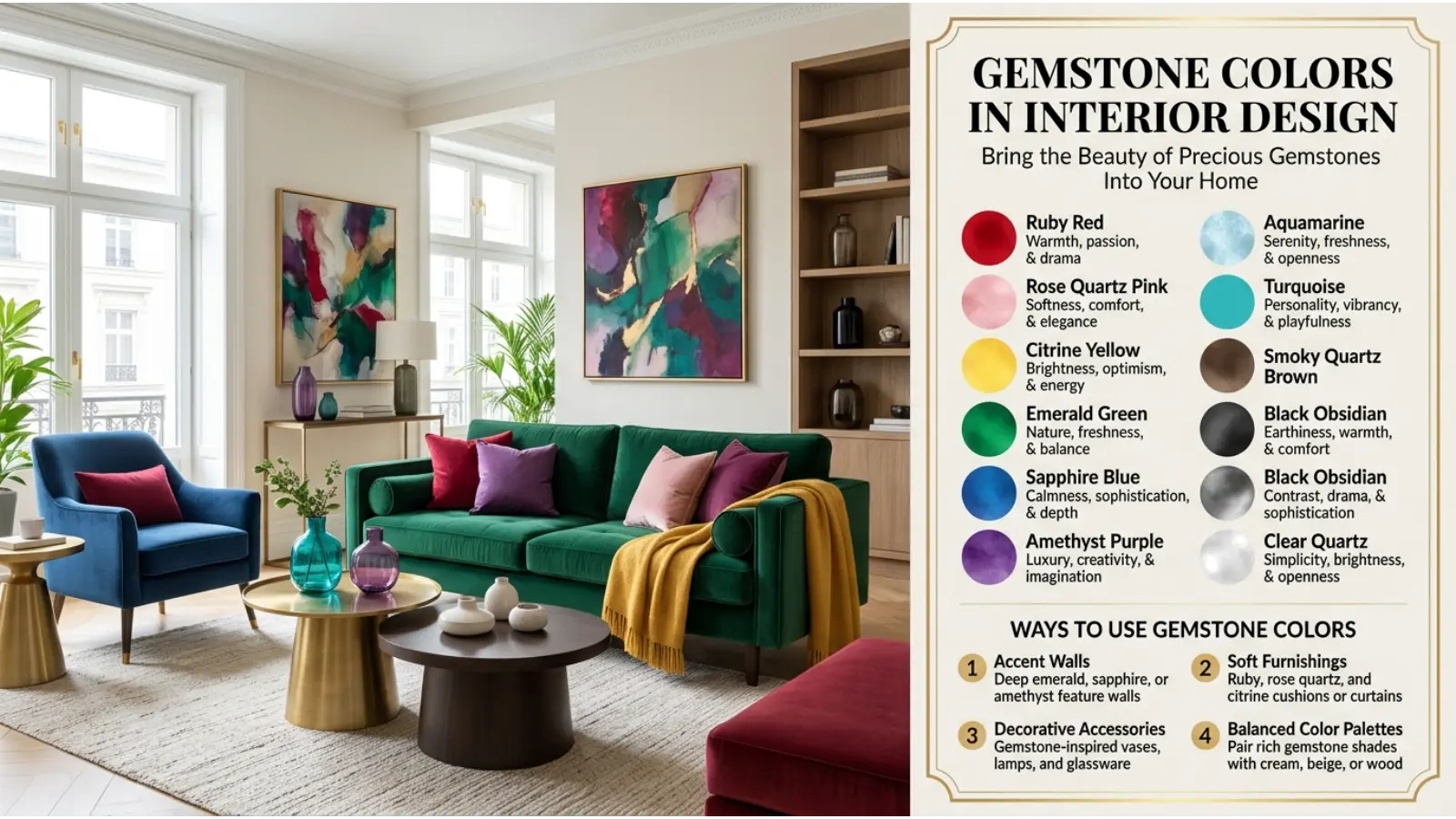
Gemstones can inspire beautiful interior color palettes.
Even when actual gemstones are not used as decoration, their colors can influence paint, furniture, lighting, and fabric choices.
Emerald Green Interiors
Emerald-inspired green works well in rooms that need depth and richness.
Consider using it in:
- Accent walls.
- Velvet sofas.
- Decorative cushions.
- Curtains.
- Small furniture pieces.
Pair emerald green with cream, gold, or warm wood for an elegant appearance.
Sapphire Blue Interiors
Sapphire blue creates a strong and sophisticated atmosphere.
It works particularly well with:
- White walls.
- Brass lighting.
- Light gray furniture.
- Natural wood.
- Cream-colored fabrics.
For smaller rooms, use sapphire as an accent rather than covering every wall.
Amethyst Purple Interiors
Amethyst-inspired purple can create an artistic and luxurious mood.
However, darker purple may feel overwhelming in a small space.
Therefore, balance it with pale gray, white, or soft beige.
Rose Quartz Pink Interiors
Soft pink can create a gentle and welcoming appearance.
It works well in bedrooms, reading corners, and decorative spaces.
Pair it with white, natural wood, or muted green for a balanced look.
Gemstone Colors in Fashion and Personal Style
Gemstone colors are popular in fashion because they offer more variety than traditional neutral jewelry.
They can also help create different impressions without changing an entire outfit.
Red Gemstones for Bold Fashion
Ruby and red garnet jewelry can add intensity to neutral clothing.
They look particularly attractive with black, navy, cream, and white outfits.
Blue Gemstones for Classic Style
Sapphire and aquamarine complement professional clothing and formal wear.
For example, a blue gemstone necklace can add color to a simple white shirt or dark business suit.
Green Gemstones for Natural Elegance
Emerald and peridot jewelry work well with earthy colors, beige, cream, and brown.
They are also beautiful additions to spring and summer outfits.
Pink Gemstones for Soft Style
Morganite and rose quartz offer a delicate appearance.
They pair naturally with pastel clothing, white dresses, and neutral accessories.
Black Gemstones for Modern Fashion
Black onyx and black spinel are excellent choices for contemporary jewelry.
They create strong contrast and work well with almost any clothing color.
Best Gemstone Color Combinations
Combining gemstone colors can create beautiful visual effects.
The most successful combinations usually balance contrast, brightness, and undertones.
| Gemstone Combination | Visual Effect | Best Use |
|---|---|---|
| 🔴 Red + ⚪ White | Bold and elegant | Formal jewelry |
| 🟢 Green + 🟡 Yellow | Natural and luxurious | Statement rings |
| 🔵 Blue + ⚪ White | Fresh and classic | Everyday jewelry |
| 🟣 Purple + 🩷 Pink | Soft and romantic | Decorative jewelry |
| ⚫ Black + 🔴 Red | Dramatic and powerful | Modern accessories |
| 🟢 Green + 🟤 Brown | Earthy and natural | Rustic designs |
| 🟡 Yellow + 🟠 Orange | Warm and cheerful | Artistic jewelry |
| 🔵 Blue + 🟣 Purple | Rich and creative | Luxury accessories |
How to Choose a Gemstone Color Combination
First, decide what kind of appearance you want.
For an elegant design, choose sapphire with white stones. For a bold look, combine ruby with black onyx.
Alternatively, choose emerald with champagne-colored stones for a warm, luxurious appearance.
Also consider the metal. Yellow gold can enhance warm gemstone colors, while white gold and platinum often create a clean contrast with cool-toned stones.
How Lighting Changes Gemstone Color Meanings
A gemstone may look different depending on the light surrounding it.
This happens because gemstones interact with light through reflection, refraction, absorption, and other optical effects.
Natural Daylight
Natural daylight can reveal a gemstone’s color more clearly.
For example, a blue sapphire may appear brighter or more vivid under daylight than under dim indoor lighting.
Warm Indoor Lighting
Warm lighting can make yellow, orange, and red gemstones appear richer.
However, it may also make cool blue or green stones appear slightly warmer.
Cool LED Lighting
Cool lighting can emphasize blue and green tones.
As a result, a gemstone may look different in a jewelry store than it does outdoors.
Color-Changing Gemstones
Some gemstones display noticeable changes under different lighting conditions.
Alexandrite is a well-known example. It can appear greenish in daylight and reddish or purplish under incandescent light.
Therefore, always inspect an expensive gemstone under more than one lighting condition before purchasing it.
What Determines a Gemstone’s Natural Color?
Gemstone color is not simply decoration. It comes from the stone’s physical and chemical structure.
Several factors influence the final appearance.
Chemical Elements
Certain elements can create distinctive colors within minerals.
For example:
- Chromium contributes to the green color of many emeralds and the red color of rubies.
- Iron can create green, yellow, brown, and other colors in different minerals.
- Manganese can contribute to pink and purple coloration in some gemstones.
- Copper is responsible for the blue and green colors of turquoise.
The exact result depends on the mineral structure and the conditions under which the stone formed.
Crystal Structure
The arrangement of atoms inside a gemstone affects how it interacts with light.
Even when two stones contain similar elements, differences in their crystal structures can produce different colors.
Natural Inclusions
Some gemstones contain small internal features called inclusions.
These can influence transparency, appearance, and sometimes the way light travels through the stone.
Inclusions are not always defects. In certain gemstones, they are part of the stone’s natural character.
Treatments and Enhancements
Gemstones may be heated, dyed, irradiated, or treated in other ways to improve or change their appearance.
Therefore, buyers should ask whether a gemstone has received any treatments.
A treated gemstone is not automatically worthless, but treatment can affect its price, care requirements, and market value.
How to Choose a Gemstone Based on Its Color Meaning
Choosing a gemstone becomes easier when you understand both its appearance and symbolism.
Consider these practical steps.
1. Decide What the Gemstone Represents
Think about the message you want the stone to communicate.
For example, choose ruby for passion, sapphire for loyalty, or emerald for growth.
2. Consider Your Personal Style
A gemstone should suit the person who will wear it.
Someone who prefers simple clothing may enjoy a small aquamarine pendant, while someone who likes bold fashion may prefer a large garnet ring.
3. Check the Gemstone’s Durability
Color is only one part of choosing a gemstone.
For everyday rings, hardness, toughness, and resistance to scratches are also important.
For example, ruby and sapphire are both very hard gemstones, while softer stones may require more careful handling.
4. Understand the Natural and Treated Color
Ask whether the stone is natural, laboratory-grown, or treated.
These differences affect its origin, value, and sometimes its care requirements.
5. Match the Gemstone With the Occasion
Different gemstone colors suit different occasions.
- Red: Romantic celebrations.
- Pink: Friendship and affection.
- Blue: Professional and formal gifts.
- Green: Anniversaries and personal milestones.
- Yellow: Graduation and achievements.
- White: Weddings and new beginnings.
- Black: Modern statement jewelry.
Ultimately, the best gemstone is one that combines beauty, quality, and personal meaning.
Common Misconceptions About Gemstone Color Meanings
Several misunderstandings surround gemstone symbolism.
Understanding the facts helps separate traditional beliefs from scientific information.
Myth 1: Every Gemstone Color Has One Universal Meaning
Reality: Meanings differ across cultures, religions, and historical periods. A gemstone can have several interpretations.
Myth 2: Gemstone Colors Can Predict Personality
Reality: There is no reliable scientific evidence that someone’s favorite gemstone color determines their personality.
Myth 3: Every Gemstone Has Healing Powers
Reality: Gemstones are not scientifically proven medical treatments. Their symbolic use should not replace professional healthcare.
Myth 4: Natural Gemstones Always Have Perfect Colors
Reality: Natural gemstones can display color zoning, inclusions, and variations. These features are part of their natural formation.
Myth 5: More Color Means Higher Value
Reality: Gemstone value depends on several factors, including color quality, clarity, cut, carat weight, rarity, origin, and treatment.
Myth 6: All Green Gemstones Are Emeralds
Reality: Many minerals can appear green, including peridot, jade, tourmaline, and garnet. Each has different physical and chemical properties.
Real-World Uses of Gemstone Color Meanings
Gemstone colors are used in many areas beyond traditional jewelry.
Jewelry and Personal Gifts
People often select gemstones according to birthstone traditions, anniversaries, or personal symbolism.
A sapphire may represent loyalty, while a pink gemstone may communicate affection.
Art and Creative Design
Artists use gemstone-inspired colors to create visual depth and emotional contrast.
For instance, deep sapphire blue can create a sense of mystery, while emerald green can suggest natural richness.
Photography
Photographers use lighting and background colors to highlight gemstone features.
A dark background can make bright stones stand out, while a neutral background helps reveal their actual color.
Fashion and Accessories
Gemstone colors influence clothing collections, watches, handbags, and decorative accessories.
They offer designers a way to add strong visual character without relying on complicated patterns.
Business and Product Packaging
Luxury brands often use gemstone-inspired color palettes in packaging and product displays.
Gold, emerald, sapphire, and ruby tones can help communicate exclusivity and craftsmanship.
However, color alone cannot establish product quality or authenticity.
Sports and Entertainment
Gemstone colors also appear in team designs, costumes, fictional characters, and entertainment branding.
For example, ruby red may suggest strength, sapphire blue may communicate loyalty, and emerald green may represent growth or power.
These meanings depend on the story or visual setting.
Frequently Asked Questions About Gemstone Color Meanings
1. What is the most powerful gemstone color?
There is no scientifically established most powerful gemstone color.
2. Which gemstone color represents love?
Pink and red are the most common symbolic colors of love.
3. What gemstone color represents wealth and prosperity?
Green and yellow gemstones are commonly connected with prosperity and abundance. Emerald and citrine are popular examples, although these associations are symbolic rather than guarantees of financial success.
4. Which gemstone color represents protection?
Black gemstones such as black tourmaline and obsidian are often associated with protection in modern crystal traditions. However, they have no scientifically proven ability to provide supernatural protection.
5. What gemstone color represents peace and calmness?
Blue gemstones are commonly associated with peace, patience, and calmness. Aquamarine and blue sapphire are popular choices for these symbolic qualities.
6. Which gemstone represents wisdom?
Blue and purple gemstones are frequently associated with wisdom and knowledge.
7. What gemstone color represents new beginnings?
White and green gemstones commonly symbolize new beginnings. White suggests clarity and fresh starts, while green represents renewal, growth, and development.
8. Are gemstone colors scientifically connected to emotions?
Colors can influence visual perception and emotional associations, but their effects vary between people and situations. There is no scientific evidence that gemstone colors produce fixed emotional or spiritual effects.
9. Do natural and laboratory-grown gemstones have the same color meanings?
They can have the same symbolic meanings when they share the same gemstone variety and appearance. However, natural and laboratory-grown gemstones differ in origin, and buyers should understand that distinction.
10. How do I choose the right gemstone color?
Choose a color that you personally enjoy, fits your style, and represents something meaningful to you. Also consider durability, authenticity, gemstone treatments, and your budget before purchasing.
Conclusion: Understanding the Meaning Behind Gemstone Color Meanings
Gemstone colors carry a fascinating combination of natural beauty, cultural history, personal symbolism, and visual psychology.
Red gemstones communicate passion and courage, while pink stones suggest affection and kindness.
Nevertheless, these meanings are not fixed rules. Cultural traditions, personal experiences, historical beliefs, and modern fashion all influence how people interpret gemstones.
Furthermore, a gemstone’s natural color comes from its mineral composition and interaction with light, not from its symbolic meaning.
The next time you choose a gemstone, look beyond its sparkle. Consider its color, history, quality, and the personal message you want it to represent. Sometimes, the most meaningful gemstone is simply the one whose beauty and symbolism connect with you.

Emma Wilson is a dedicated comparison writer and product researcher at ColorMystiic.com. She specializes in creating unbiased product comparisons, detailed reviews, and helpful buying guides. Her goal is to help readers make smarter purchasing decisions with confidence.