Colors in Japan carry meanings that go far beyond appearance. They reflect centuries of history, religious traditions, seasonal celebrations, art, and daily life. A single color can represent happiness in one situation, mourning in another, or even social status depending on the context.Many people search for color meanings in Japan because they want to understand Japanese culture more deeply, choose appropriate colors for travel or design, create authentic artwork, or simply appreciate the symbolism found in kimono, festivals, anime, temples, and traditional crafts.
Japanese color symbolism is shaped by influences from Shinto, Buddhism, Chinese philosophy, imperial history, and modern popular culture. This means there is rarely one universal interpretation. Context always matters.
Quick Answer: In Japan, white often symbolizes purity and sacredness, red represents life and protection, black suggests formality and mystery, blue conveys cleanliness and trust, green reflects nature and harmony, while gold and purple traditionally symbolize nobility, wealth, and prestige.
Quick Answer
Japanese colors combine historical traditions with modern meanings. While some interpretations overlap with Western symbolism, many are unique to Japan’s culture, religion, and seasonal customs. Understanding the context helps explain why the same color may symbolize celebration, spirituality, respect, or elegance.
Why Colors Matter in Japanese Culture
Japan has one of the world’s richest traditions of color symbolism.
Historically, colors indicated social rank, political authority, spiritual beliefs, and even the changing seasons. Traditional textiles, architecture, poetry, gardens, and paintings all relied on carefully chosen colors to communicate emotion without words.
Even today, colors influence:
- Weddings
- Festivals
- Business branding
- Packaging
- Food presentation
- Fashion
- Interior design
- Anime and manga
- Sports uniforms
- National celebrations
Rather than focusing on bright contrasts, Japanese aesthetics often value harmony, balance, and subtle shades inspired by nature.
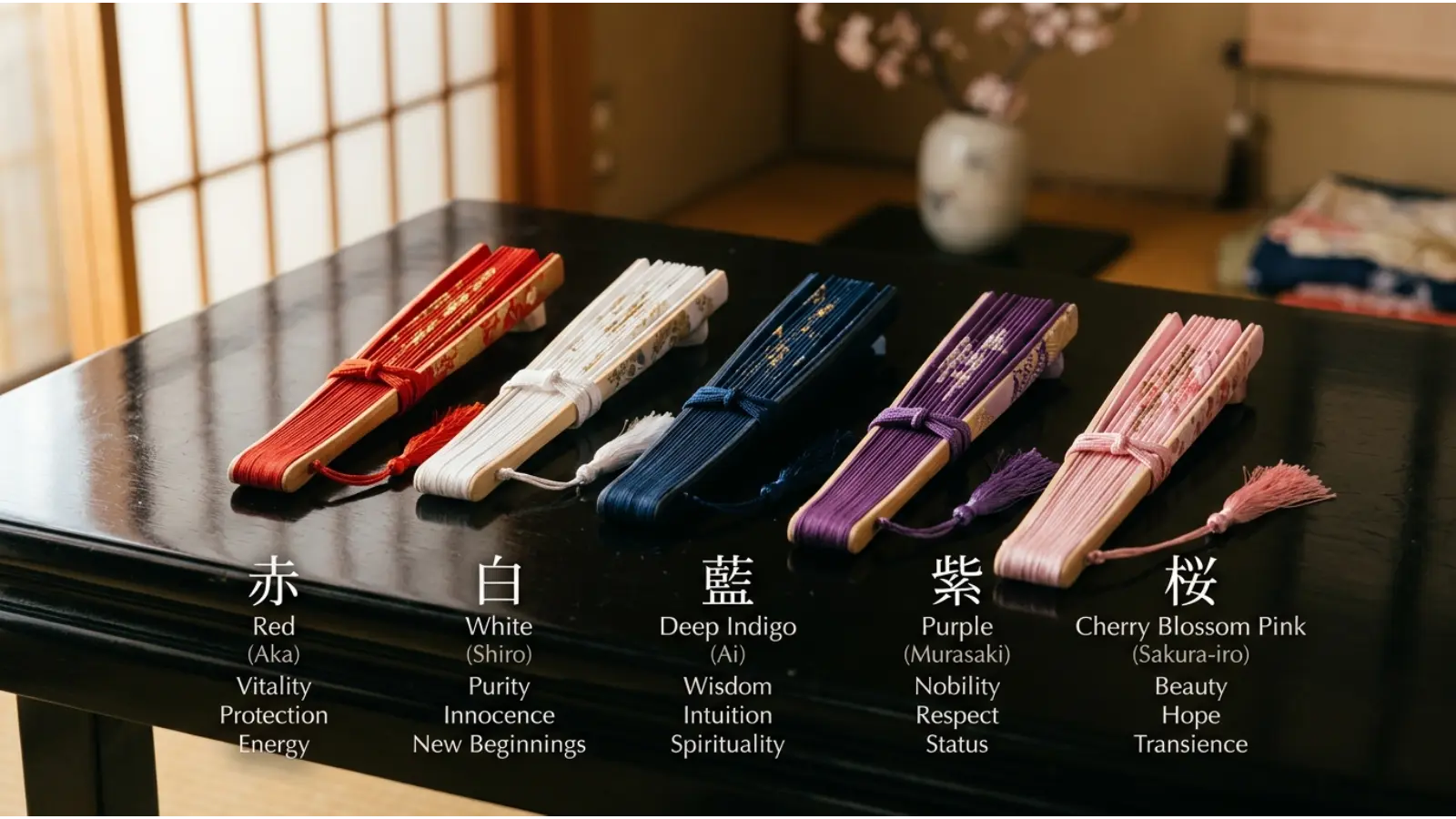
Japanese Color Meanings Chart
| Color | Traditional Meaning | Modern Associations | Common Uses |
|---|---|---|---|
| White | Purity, spirituality, sacredness | Simplicity, cleanliness | Weddings, shrines, uniforms |
| Red | Life, protection, happiness | Energy, passion, celebration | Shrines, festivals, national flag |
| Black | Formality, mystery, experience | Luxury, elegance, authority | Formal clothing, branding |
| Blue | Purity, honesty, calmness | Trust, safety, professionalism | Corporate branding, uniforms |
| Green | Nature, growth, harmony | Health, freshness, sustainability | Parks, eco brands |
| Purple | Nobility, wisdom | Luxury, creativity | Traditional clothing, premium products |
| Gold | Wealth, prosperity, divinity | Prestige, success | Temples, gifts, luxury goods |
| Pink | Spring, youth, cherry blossoms | Romance, kindness | Fashion, seasonal products |
| Yellow | Courage, sunshine | Happiness, optimism | Children’s products, accents |
| Gray | Humility, maturity | Balance, sophistication | Interior design, business wear |
What Does White Symbolize in Japan?
White is among Japan’s most spiritually significant colors.
It commonly represents:
- Purity
- Truth
- Sacred spaces
- New beginnings
- Honesty
- Simplicity
Shinto priests traditionally wear white because it symbolizes ritual cleanliness. Brides also wear white during traditional weddings to represent entering a new stage of life.
Unlike many Western cultures, white is also connected with funerals and mourning in some traditional Japanese customs. This dual symbolism shows how purity can relate both to beginnings and the transition after death.
What Does Red Symbolize in Japan?
Red is one of Japan’s most recognizable colors.
It commonly represents:
- Happiness
- Life
- Strength
- Celebration
- Good fortune
- Protection against evil
The bright vermilion gates of many Shinto shrines are believed to protect sacred places from harmful influences.
Red also appears in:
- The Japanese flag
- Festival decorations
- Traditional architecture
- Lucky charms
- Children’s celebrations
Its energetic appearance naturally attracts attention while carrying centuries of cultural meaning.
Blue Color Meaning in Japan
Japanese blue traditionally symbolizes:
- Cleanliness
- Calmness
- Honesty
- Stability
- Reliability
Historically, indigo blue became deeply connected with Japanese textiles. Indigo-dyed clothing was practical, durable, and beautiful.
Today blue is widely used by:
- Banks
- Transportation companies
- Technology brands
- Government organizations
The color communicates trust without appearing overly aggressive.
Green Color Meaning
Green reflects Japan’s strong connection with nature.
Common meanings include:
- Renewal
- Peace
- Harmony
- Health
- Freshness
- Balance
Because Japan celebrates changing seasons so deeply, green often reminds people of spring forests, tea fields, bamboo groves, and mountain landscapes.
Modern eco-friendly brands frequently choose green to communicate sustainability.
Purple Color Meaning
Purple once represented privilege because purple dyes were rare and expensive.
Traditional symbolism includes:
- Nobility
- Wisdom
- Respect
- Spiritual depth
- High social rank
Today purple continues to communicate elegance and refinement while also appealing to creative industries.
Black Color Meaning
Black has multiple meanings depending on context.
Positive meanings include:
- Sophistication
- Experience
- Authority
- Formality
- Luxury
Negative associations may include:
- Mystery
- Grief
- Fear
- Misfortune
Formal black clothing remains common for ceremonies, business, and elegant occasions.
Gold and Silver in Japanese Symbolism
Gold traditionally represents:
- Prosperity
- Success
- Divine light
- Wealth
- Celebration
Silver often symbolizes:
- Precision
- Modernity
- Calm elegance
- Craftsmanship
Together they frequently appear in premium packaging and traditional decorative arts.
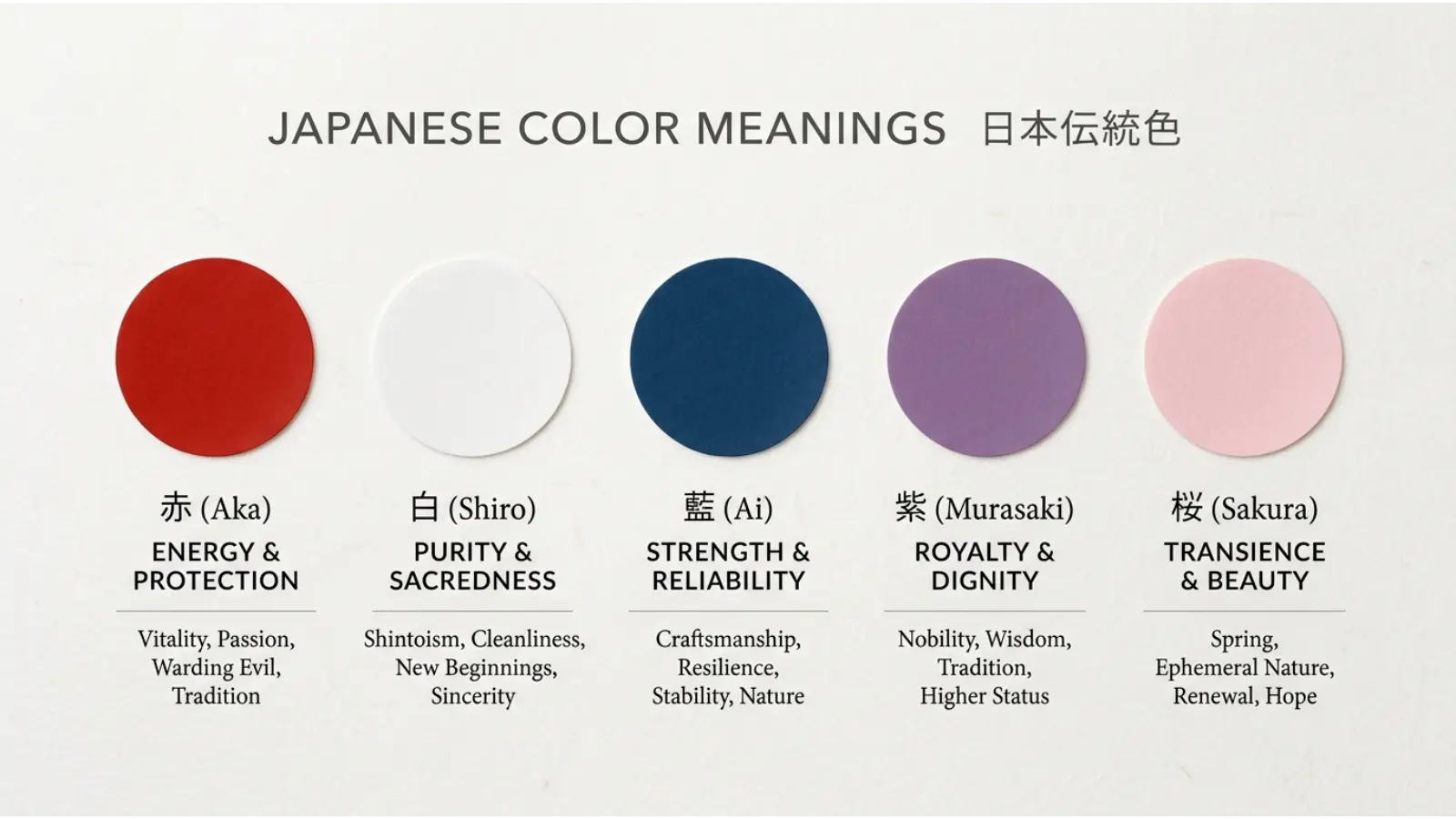
Pink and Cherry Blossom Symbolism
Pink has a uniquely Japanese identity because of cherry blossoms.
It represents:
- Spring
- Renewal
- Gentle beauty
- Youth
- Romance
- The temporary nature of life
Cherry blossoms bloom beautifully for only a short time, reminding people to appreciate life’s fleeting moments.
Psychology of Color Meanings in Japan
Scientific research generally supports that colors can influence mood, attention, and perception. However, emotional responses also depend on culture and personal experience.
In Japan:
- Blue often creates feelings of trust and cleanliness.
- Green encourages relaxation through its association with nature.
- Red captures attention and signals celebration.
- White promotes simplicity and order.
- Black suggests authority and sophistication.
These reactions are influenced by both psychology and cultural learning.
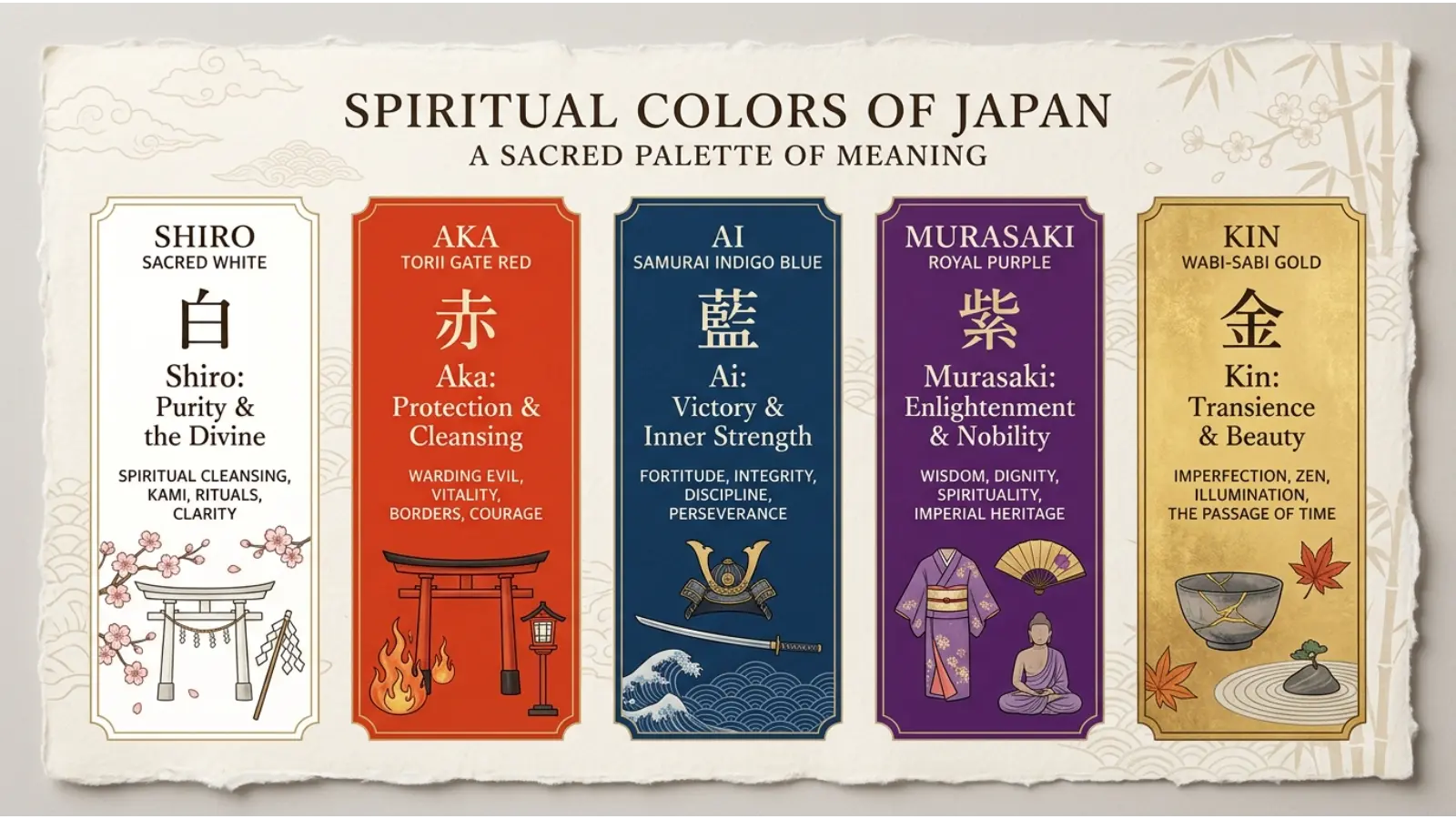
Spiritual Color Meanings in Japan
Japanese spiritual symbolism comes mainly from Shinto and Buddhism.
Common interpretations include:
White
Purification before entering sacred spaces.
Red
Protection from harmful influences.
Gold
Enlightenment and sacred importance.
Purple
Wisdom and spiritual maturity.
These meanings vary across traditions and should not be viewed as universal religious rules.
Historical Development of Japanese Color Symbolism
Japanese color traditions evolved over centuries.
Important influences include:
Imperial Court
Specific colors once reflected rank and political authority.
Buddhism
Temple art introduced symbolic uses of gold, purple, and red.
Shinto
Natural colors became linked with purification and sacred rituals.
Edo Period
Textiles, kimono, and dyeing techniques expanded the cultural language of color.
Today these historical meanings continue to influence design and fashion.
Color Meanings in Japan Fashion
Fashion in Japan balances tradition with innovation.
Examples include:
- White for ceremonial elegance.
- Black for timeless sophistication.
- Soft pink during cherry blossom season.
- Earth tones for natural simplicity.
- Indigo for traditional craftsmanship.
Seasonal colors remain especially important in kimono design.
Japanese Colors in Interior Design
Japanese interiors often favor calming color palettes.
Popular combinations include:
- White with natural wood
- Beige with green plants
- Gray with black accents
- Indigo with warm wood
- Soft earth tones
These choices support peaceful, uncluttered living spaces inspired by nature.
Branding and Marketing in Japan
Japanese companies often use color carefully to build trust and communicate values.
Examples include:
Blue
Trust, professionalism, safety.
Red
Energy, excitement, national identity.
Green
Environmental responsibility.
Black
Premium quality.
Gold
Luxury products and celebrations.
Packaging frequently reflects seasonal colors to connect emotionally with consumers.
Popular Japanese Color Combinations
Some timeless combinations include:
- White + Red — Traditional celebrations and national symbolism
- Indigo + White — Classic craftsmanship
- Black + Gold — Luxury and prestige
- Green + Brown — Nature-inspired harmony
- Pink + White — Spring elegance
- Gray + Wood Tones — Modern minimalism
Each combination balances contrast while maintaining visual harmony.
Everyday Uses of Color Symbolism in Japan
Color meanings appear throughout daily life.
Examples include:
- Bento box presentation
- Tea ceremonies
- Seasonal decorations
- Festival clothing
- Gift wrapping
- Company logos
- Public transportation signage
- Sports uniforms
- Product packaging
- Traditional architecture
Color often communicates meaning before words are even spoken.
Common Misconceptions About Japanese Color Meanings
Every color has one fixed meaning
False. Meanings change with history, religion, season, and situation.
White only symbolizes happiness
Not entirely. White can also relate to mourning in traditional customs.
Black always represents sadness
Black frequently symbolizes elegance, professionalism, and luxury.
Red is only about love
In Japan, red is more strongly associated with life, celebration, and protection.
Frequently Asked Questions
What is the luckiest color in Japan?
Red is commonly considered one of the luckiest colors because it symbolizes happiness, celebration, and protection.
Why is white important in Japanese culture?
White represents purity, sacredness, honesty, and ceremonial cleanliness. It also has traditional connections with mourning.
What does blue symbolize in Japan?
Blue usually represents trust, calmness, honesty, cleanliness, and stability.
Why is purple associated with royalty?
Historically, purple dyes were expensive and reserved for high-ranking members of society.
Is black considered unlucky?
Not always. Black often represents elegance, authority, luxury, and formality.
Why are cherry blossoms pink?
Pink cherry blossoms symbolize beauty, renewal, spring, and life’s temporary nature.
Which colors are popular in Japanese homes?
White, beige, soft gray, natural wood tones, and muted greens are widely used to create calm, balanced interiors.
Do Japanese businesses use color psychology?
Yes. Companies use colors strategically to communicate trust, quality, innovation, luxury, or sustainability.
Are Japanese color meanings the same as Western meanings?
Some overlap exists, but many meanings differ because of Japan’s unique history, religion, and cultural traditions.
Why do traditional Japanese colors often appear muted?
Many traditional colors were inspired by natural materials, seasonal landscapes, plant dyes, and the aesthetic value of subtle beauty.
Conclusion
Understanding color meanings in Japan reveals how deeply color is woven into the country’s history, spirituality, design, and everyday life. A shade is rarely chosen by chance—it may reflect the changing seasons, express respect for tradition, communicate trust in a business setting, or capture the quiet beauty of nature.
While some meanings are widely recognized, there is no single interpretation that applies in every situation. Historical context, regional customs, personal experiences, and modern influences all shape how colors are understood. By appreciating these layers of meaning, you can better interpret Japanese art, fashion, branding, architecture, and cultural traditions while making more thoughtful choices in your own creative work.

Emma Wilson is a dedicated comparison writer and product researcher at ColorMystiic.com. She specializes in creating unbiased product comparisons, detailed reviews, and helpful buying guides. Her goal is to help readers make smarter purchasing decisions with confidence.