Colors can feel personal. One person may always choose blue, another may reach for red, while someone else feels most comfortable around green, purple, or black. That simple preference is one reason personality test color meanings are so popular.
However, color personality tests should be treated as a tool for reflection rather than a scientific way to diagnose personality. Research does show that people form recognizable associations between colors and emotions, but those associations are not one-to-one personality rules. A large systematic review covering 132 studies and more than 42,000 participants found consistent color-emotion patterns, while also showing that hue, lightness, saturation, and context matter.
So, what might your favorite color say about you? The answer depends on the color, the situation, your experiences, and your culture.
Quick Answer
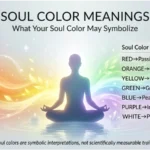
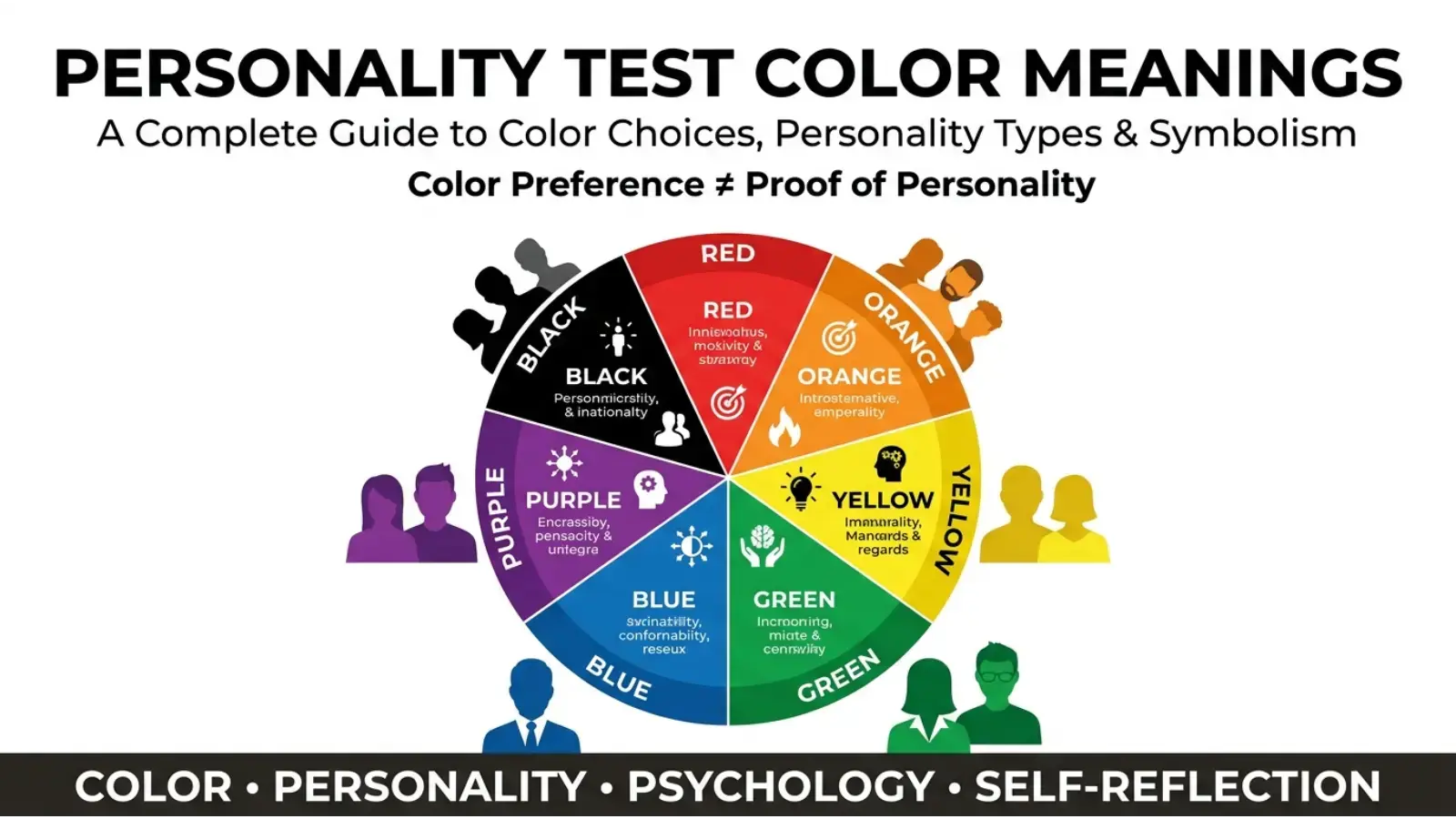
Personality test color meanings are common interpretations that connect color preferences with personality traits, emotions, or behavioral tendencies. Red is often associated with energy and intensity, blue with calmness and stability, green with balance and growth, yellow with optimism, purple with creativity, orange with enthusiasm, black with strength or sophistication, and white with simplicity or cleanliness.
These meanings are associations, not personality diagnoses. Your favorite color does not prove that you have a particular personality type.
Personality Test Color Meanings Chart
The chart below summarizes common personality-test interpretations. These are best understood as symbolic associations rather than fixed psychological facts.
| Color | Common personality association | Emotional tone | Common symbolic themes |
|---|---|---|---|
| 🟥 Red | Bold, energetic, assertive | Intense, active | Passion, courage, urgency |
| 🟧 Orange | Social, enthusiastic, adventurous | Warm, lively | Creativity, excitement, friendliness |
| 🟨 Yellow | Optimistic, curious, expressive | Bright, uplifting | Joy, ideas, hope |
| 🟩 Green | Balanced, patient, grounded | Calm, refreshing | Growth, nature, harmony |
| 🟦 Blue | Calm, dependable, thoughtful | Peaceful, cool | Trust, stability, loyalty |
| 🟪 Purple | Imaginative, independent, expressive | Mysterious, rich | Creativity, imagination, spirituality |
| 🩷 Pink | Caring, gentle, affectionate | Soft, warm | Compassion, romance, tenderness |
| 🟫 Brown | Practical, steady, reliable | Earthy, secure | Stability, simplicity, nature |
| ⚫ Black | Independent, serious, sophisticated | Strong, dramatic | Power, elegance, mystery |
| ⚪ White | Organized, clean, minimalist | Clear, peaceful | Simplicity, purity, openness |
| 🩶 Gray | Reserved, balanced, controlled | Neutral, subdued | Practicality, restraint |
| 🩵 Turquoise | Open, refreshing, expressive | Light, energetic | Communication, creativity, freshness |
The same color can carry several meanings at once. For example, red can represent love in one situation and danger in another. Research supports this broader pattern: color-emotion associations are systematic, but they are not simple one-color/one-emotion formulas.
What Is a Color Personality Test?
A color personality test asks people to choose, rank, or react to colors and then connects those choices with personality descriptions.
Some tests ask for a favorite color. Others present several colors and ask which one feels most attractive, comfortable, exciting, or unpleasant.
The basic idea is easy to understand: people develop preferences, and those preferences can reflect aspects of their experiences, emotions, environment, or identity.
Still, preference is not the same thing as personality.
Someone might love black because it fits their clothing style. Another person might choose black because it feels visually simple. Someone else may dislike it because of a cultural association. The same choice can therefore have very different personal reasons.
That is why a responsible color personality test should encourage reflection rather than make absolute statements such as “You chose blue, therefore you are this type of person.”
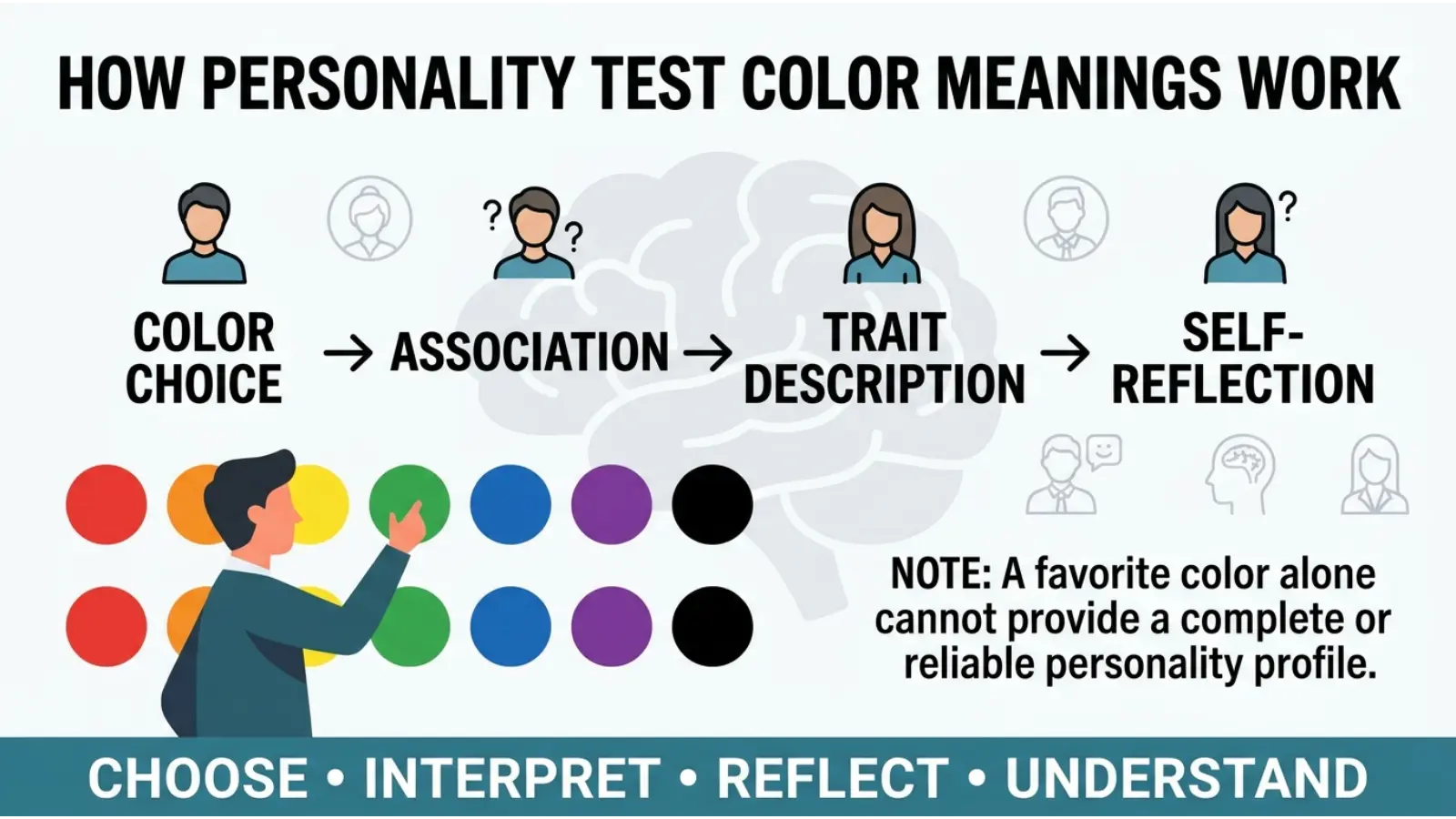
How Personality Test Color Meanings Work
Color meanings usually come from several overlapping sources.
First, there are emotional associations. People repeatedly connect colors with certain feelings and experiences. Scientific research has found systematic relationships between colors and emotional concepts across many studies.
Second, there is culture. A color used for celebration in one setting may have a completely different meaning somewhere else.
Third, there is personal experience. A person may associate a color with a favorite place, childhood memory, sports team, family member, or important event.
Finally, there is context. A blue wall, blue sports uniform, blue logo, and blue evening dress can create different impressions even though the hue is similar.
Therefore, color personality interpretations work best when they are viewed as clues for reflection rather than strict rules.
Red Personality Meaning 🟥
Red is commonly connected with energy, intensity, action, passion, confidence, and attention.
In personality-style interpretations, people who strongly prefer red may be described as energetic, expressive, competitive, courageous, or comfortable making an impact.
The emotional side of red is especially interesting. Research frequently finds red associated with high-arousal emotions, including both positive and negative ones. In other words, red does not simply mean “good energy.” It can communicate excitement, love, anger, danger, or urgency depending on context.
Possible strengths associated with red
- Energy
- Confidence
- Determination
- Assertiveness
- Passion
- Willingness to act
Possible challenges
An intense preference for red may sometimes be interpreted symbolically as impatience, impulsiveness, aggression, or a desire for attention.
However, these are interpretations, not conclusions about an individual’s character.
Orange Personality Meaning 🟧
Orange combines some of the visual warmth of red with the brightness of yellow.
Personality tests often connect orange with friendliness, enthusiasm, creativity, social energy, adventure, and spontaneity.
People who enjoy orange may simply prefer warm, noticeable colors. Nevertheless, the color’s emotional associations can make it useful when someone wants a design or outfit to feel energetic without being as intense as strong red.
Orange is also frequently associated with positive, high-arousal emotions in color-emotion research.
Orange may symbolically suggest
Social energy → Creativity → Adventure → Warmth → Playfulness
Its strongest practical effect often comes from context. A small orange accent can feel lively, while a large amount of saturated orange can become visually demanding.
Yellow Personality Meaning 🟨
Yellow is often associated with optimism, happiness, curiosity, mental energy, and communication.
In personality-test descriptions, yellow lovers are sometimes portrayed as imaginative, expressive, playful, hopeful, or intellectually curious.
Research also finds yellow associated with positive, high-arousal emotional concepts.
Yet yellow is not universally interpreted as cheerful. Depending on the shade and context, it can also communicate caution, jealousy, anxiety, or warning.
Yellow works especially well when you want to suggest
- Optimism
- Fresh ideas
- Youthfulness
- Energy
- Creativity
- Visibility
Because bright yellow reflects a great deal of light, it can also become tiring when used excessively in interiors or digital interfaces.
Green Personality Meaning 🟩
Green has strong connections with nature, plants, renewal, health, balance, and growth.
Personality interpretations often associate green preferences with patience, harmony, practicality, stability, and a desire for balance.
Green also tends to appear among colors associated with positive, lower-arousal emotions in systematic research.
Green personality associations
Positive: balanced, patient, caring, grounded, dependable.
Possible negative interpretation: overly cautious, resistant to change, possessive, or emotionally guarded.
These negative interpretations come mainly from symbolism and language rather than a reliable way to diagnose personality.
Green is particularly useful when the goal is to create a natural or restorative visual atmosphere.
Blue Personality Meaning 🟦
Blue is one of the most widely discussed colors in personality and branding psychology.
It is commonly associated with calmness, trust, stability, loyalty, reliability, and reflection.
Scientific research also frequently places blue among colors associated with positive, lower-arousal emotional states.
For that reason, personality tests may describe blue-preferring people as calm, thoughtful, dependable, organized, or emotionally controlled.
However, blue has another important association: sadness. Expressions such as “feeling blue” demonstrate how language can give a color more than one emotional meaning. Research also finds cultural variation in specific color-emotion associations.
Blue may symbolize
| Positive association | Context-dependent association |
|---|---|
| Trust | Sadness |
| Calm | Distance |
| Loyalty | Coldness |
| Stability | Formality |
| Reliability | Reserve |
Purple Personality Meaning 🟪
Purple has long been connected symbolically with imagination, creativity, mystery, luxury, individuality, and spirituality.
Personality tests often describe purple-preferring people as imaginative, unconventional, artistic, independent, or emotionally expressive.
Modern research supports an association between purple and empowering emotional concepts, but it does not establish purple as a reliable test for creativity or personality type.
Purple also changes dramatically with shade.
Lavender tends to feel lighter and softer. Deep violet can feel dramatic and luxurious. Electric purple can feel modern and energetic.
Therefore, saying “I like purple” gives less information than asking which purple and why?
Pink Personality Meaning 🩷
Pink is commonly associated with affection, softness, romance, compassion, playfulness, and tenderness.
Personality interpretations sometimes connect pink preferences with warmth, sensitivity, caring behavior, and emotional openness.
Research has found pink associated with positive emotional concepts, although individual responses still vary.
Importantly, pink is not inherently a “feminine personality color.” Gender associations can be influenced by fashion, advertising, family expectations, and cultural history.
Black Personality Meaning ⚫
Black can communicate very different ideas depending on how and where it is used.
Personality tests may associate a strong preference for black with independence, seriousness, sophistication, privacy, control, or confidence.
In fashion, however, black can appear elegant and professional. The graphic design, it can create contrast and visual authority. In photography, it can produce depth and drama.
So black demonstrates an important rule of color psychology:
White Personality Meaning ⚪
White commonly symbolizes simplicity, cleanliness, openness, peace, and order.
Personality-test interpretations may describe white-preferring people as organized, independent, clear-minded, minimalist, or drawn to simplicity.
Research has found white associated with positive, lower-arousal emotional concepts in many color-emotion studies.
However, cultural meaning can change significantly. White may symbolize celebration in one cultural setting and mourning in another.
That difference is a useful reminder that color symbolism is never completely universal.
Brown Personality Meaning 🟫
Brown is strongly connected with earth, wood, soil, warmth, reliability, and practicality.
Personality interpretations often describe brown-preferring people as grounded, dependable, realistic, traditional, or comfort-oriented.
Brown can also communicate warmth in interiors because it resembles natural materials such as wood and leather.
Its weaker presence in popular color-emotion discussions does not make it meaningless. Instead, brown often works through environmental associations: earth, shelter, natural materials, food, and physical comfort.
Gray Personality Meaning 🩶
Gray sits between strong visual extremes, so it often symbolizes neutrality, restraint, maturity, balance, and practicality.
But gray can also feel dull, distant, or emotionally subdued.
Research has found gray associated with negative, lower-arousal emotional concepts in systematic color-emotion data, although that does not mean gray automatically produces negative feelings.
What Does Your Favorite Color Really Say About You?
The most useful approach is to ask why you prefer a color.
For example:
- Do you like blue because it makes you feel calm?
- Do you choose black because it matches almost everything?
- Do you prefer green because you enjoy nature?
- Do you choose yellow because it feels cheerful?
- Do you love purple because it feels unusual?
- Do you wear red because you enjoy strong visual impact?
The reason behind the preference can tell you more than the color itself.
A better color-personality reflection
Color → Preference → Reason → Context → Personal experience
This gives a richer picture than simply assigning someone a personality label.
Personality Test Color Meanings vs. Scientific Psychology
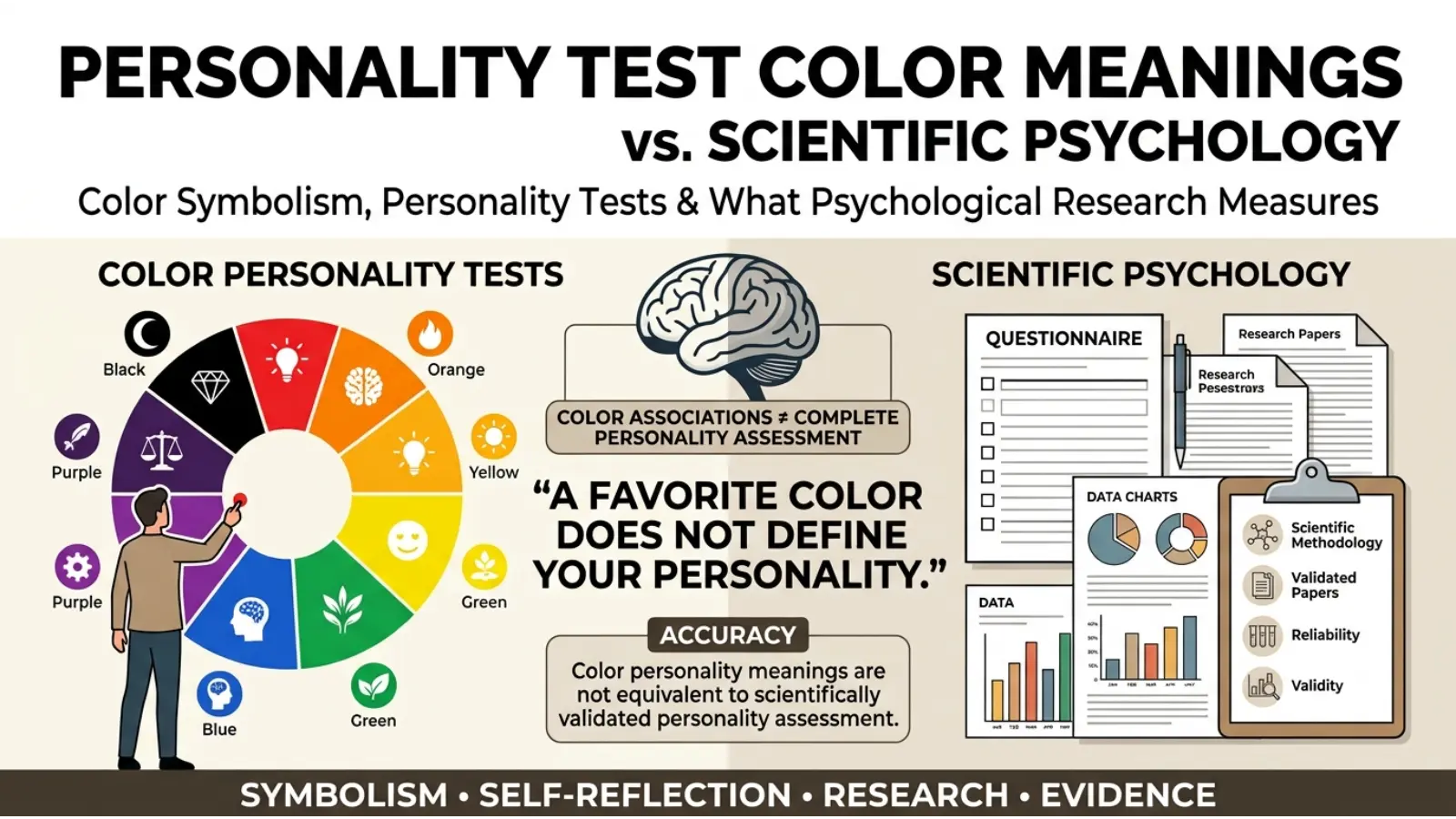
This distinction matters.
Scientific research supports the existence of color-emotion associations. A major systematic review found patterns across 128 years of research, involving 132 relevant peer-reviewed studies and 42,266 participants from 64 countries.
However, that does not mean scientists can look at someone’s favorite color and accurately determine their complete personality.
Color-emotion association and personality prediction are different questions.
Similarly, a person who loves red is not automatically aggressive, and someone who prefers black is not automatically mysterious or independent.
The responsible interpretation is therefore:
Color preference can provide a prompt for self-reflection, but it should not be treated as a personality diagnosis.
Why Color Meanings Differ Across Cultures
Color symbolism develops through language, traditions, religion, history, fashion, nature, politics, ceremonies, and everyday experience.
Researchers studying color-emotion associations have found both shared patterns and cultural differences. A study involving participants from China, Germany, Greece, and the United Kingdom found that color-emotion associations had both common features and country-specific differences.
Another cross-cultural study found differences in implicit red-green associations between Western and Chinese participant groups.
Culture Can Change the Question
Consider white.
A Western wedding may commonly use white clothing to communicate celebration or purity. In other cultural contexts, white can have strong associations with mourning.
Neither interpretation makes the other “wrong.” They come from different cultural systems.
This is why responsible color interpretation uses phrases such as “often associated with” rather than “always means.”
Spiritual Personality Test Color Meanings
Color also appears in spiritual and symbolic traditions.
However, spiritual meanings should be kept separate from scientific psychology.
For example, saying that purple represents spiritual awareness can be a valid description of a symbolic tradition. Saying that purple scientifically proves someone has spiritual abilities would be a different claim and would require evidence.
Symbolic color themes
| Color | Common symbolic theme |
|---|---|
| 🟥 Red | Vitality, passion, courage |
| 🟧 Orange | Energy, creativity, enthusiasm |
| 🟨 Yellow | Light, hope, optimism |
| 🟩 Green | Growth, nature, renewal |
| 🟦 Blue | Peace, trust, reflection |
| 🟪 Purple | Mystery, spirituality, imagination |
| ⚪ White | Purity, simplicity, peace |
| ⚫ Black | Mystery, authority, protection |
Personality Colors in Branding and Marketing
Color becomes especially powerful when it is used repeatedly.
Brands use color to create recognition and establish a visual mood. A company might choose blue to support a stable or trustworthy visual identity, green to connect with nature or sustainability, orange to create energy, or black to create a premium appearance.
However, color alone does not determine consumer behavior.
Typography, imagery, product category, language, pricing, cultural expectations, and previous brand experience all contribute to perception.
Practical branding chart
| Desired visual impression | Colors often considered |
|---|---|
| Trust and stability | 🟦 Blue |
| Natural and sustainable | 🟩 Green |
| Energy and urgency | 🟥 Red |
| Friendly and energetic | 🟧 Orange |
| Optimistic and youthful | 🟨 Yellow |
| Luxury and imagination | 🟪 Purple |
| Minimal and clean | ⚪ White |
| Premium and dramatic | ⚫ Black |
These are design associations, not guaranteed psychological outcomes.
Personality Test Color Meanings in Interior Design
Personality color choices can also influence how people decorate their homes.
Someone who prefers blue might enjoy cool walls, navy furniture, or blue accents. A green lover may prefer plants, natural wood, and botanical colors. Someone drawn to warm colors might choose terracotta, orange, or red accents.
Yet room size and lighting matter.
A dark color can absorb more visual light and make a room feel enclosed, while a lighter color can create a more open appearance. Natural daylight can also make a color look very different from the same paint under warm artificial lighting.
Room-by-Room Color Ideas
Bedroom
Soft blue, green, lavender, or neutral shades can create a quieter visual atmosphere.
Living Room
Warm neutrals, green, blue, terracotta, or carefully controlled accent colors can create different moods without overwhelming the room.
Office
Blue, green, gray, white, or muted earth tones can support a clean visual environment.
Kitchen
White, cream, green, yellow, blue, and natural wood tones can work well, depending on the overall design.
The key is not simply choosing your “personality color.” Instead, consider how the shade interacts with lighting, furniture, wall size, and nearby colors.
Personality Test Color Meanings in Fashion
Clothing color can influence the impression an outfit creates, although observers also respond to style, fit, fabric, grooming, and cultural expectations.
Red can create a strong visual statement. Blue can appear dependable and polished. Black is highly versatile and can look formal or casual. Green can create a natural or refreshing impression, while purple can make an outfit feel more distinctive.
Simple fashion combinations
- 🟥 Red + ⚪ White = high contrast and energetic
- 🟦 Blue + ⚪ White = clean and classic
- 🟩 Green + 🟫 Brown = natural and earthy
- 🟪 Purple + ⚪ White = soft and elegant
- ⚫ Black + 🩶 Gray = understated and modern
- 🟧 Orange + 🟦 Navy = warm/cool contrast
The exact result depends on shade, saturation, fabric, lighting, and proportions.
Color Combinations and Personality
Colors rarely appear alone.
A bright red next to black can feel much more dramatic than the same red beside pale gray. Similarly, lavender beside white feels different from lavender beside deep purple.
The surrounding colors change how we perceive the focal color.
Easy Color Pairing Guide
| Main color | Useful supporting colors | General effect |
|---|---|---|
| 🟥 Red | White, black, navy | Strong contrast |
| 🟧 Orange | Navy, cream, brown | Warm and balanced |
| 🟨 Yellow | Gray, navy, white | Bright and clean |
| 🟩 Green | Brown, cream, blue | Natural and calm |
| 🟦 Blue | White, gray, green | Calm and dependable |
| 🟪 Purple | White, lavender, gray | Elegant and creative |
| 🩷 Pink | White, gray, burgundy | Soft to sophisticated |
| ⚫ Black | White, gray, gold | Dramatic and polished |
How Lighting Changes Color Meaning
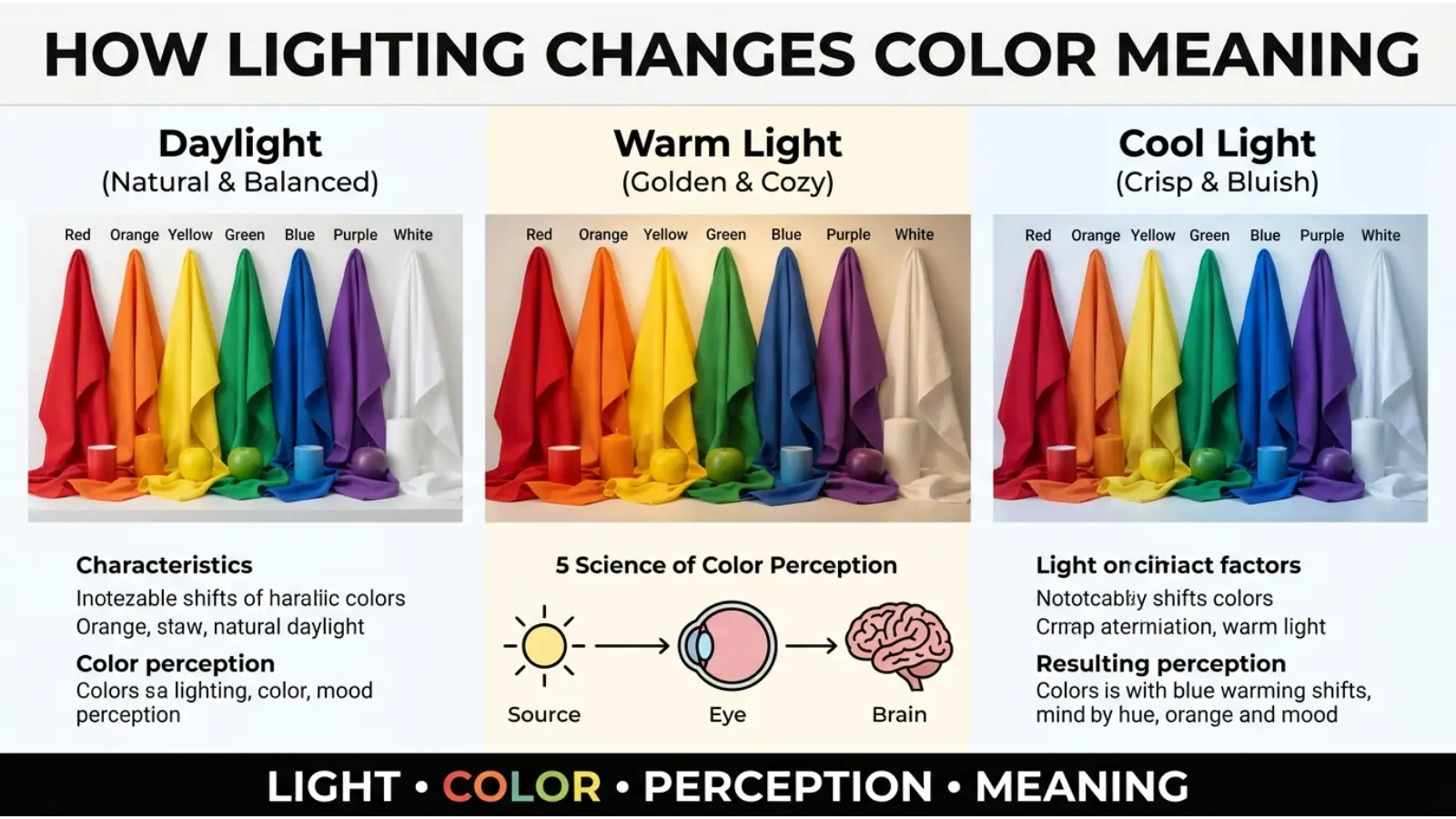
Lighting can completely change how a color looks.
A warm light source can make white appear creamier. Cool lighting can make some whites look blue. A dark room can make saturated colors appear different from how they look in daylight.
This matters for personality tests too.
If someone views colors on a phone screen, laptop, printed card, or painted wall, the color may not look identical.
Screen brightness, display settings, surrounding colors, and ambient light can all affect perception.
Therefore, a precise personality interpretation should never depend on a tiny difference between similar shades.
Age and Personal Experience Matter
Color preference can change over time.
A child may prefer bright yellow or orange, while an adult may later prefer navy, gray, green, or neutral colors. That change does not necessarily indicate a complete personality transformation.
Instead, preferences can respond to clothing trends, social roles, environment, memories, work settings, relationships, and changing tastes.
Personal experience matters too.
If someone associates blue with a peaceful childhood home, they may love blue for reasons that have nothing to do with a generic personality description.
Common Misconceptions About Color Personality Tests
Myth 1: Your favorite color reveals your exact personality
It does not.
Color preference is only one small part of a person’s experience and behavior.
Myth 2: Every color has one fixed meaning
It does not.
Research shows many-to-many color-emotion relationships rather than a simple one-color/one-emotion system.
Myth 3: Color psychology is completely universal
Not exactly.
Studies have found both cross-cultural similarities and meaningful differences.
Myth 4: Dark colors mean negative personalities
No.
Black, gray, navy, brown, and other dark shades can be used for fashion, professionalism, minimalism, comfort, elegance, or personal taste.
Myth 5: Color tests can diagnose mental health
A casual color personality test is not a clinical diagnostic tool.
Psychological diagnosis requires appropriate professional assessment rather than a color preference.
How to Use a Personality Color Test Responsibly
If you enjoy color tests, use them as a conversation starter.
Instead of asking, “What does my color prove about me?”, try asking:
- Why am I attracted to this color?
- Does my preference change with my mood?
- Do I like the color itself or what it represents?
- Would I choose the same color for clothing, walls, and branding?
- Did my preference change as I grew older?
- Does my culture give this color a special meaning?
- Do I prefer the color in bright, muted, dark, or pastel shades?
These questions turn a simple quiz into a more useful form of self-reflection.
Personality Test Color Meanings in Everyday Life
Color interpretation appears in more places than quizzes.
You may encounter it when choosing:
Clothing: A color can change the visual impression of an outfit.
Home décor: Wall and furniture colors influence the atmosphere of a room.
Branding: Businesses use color to build recognizable visual identities.
Photography: Photographers use warm and cool colors to create different moods.
Art: Artists use contrast, saturation, and symbolism to guide attention.
Sports: Team colors can create identity and group recognition.
Entertainment: Film and game designers use palettes to support atmosphere and storytelling.
Digital design: Buttons, warnings, backgrounds, and icons often use color to communicate information quickly.
The important lesson is that color meaning is usually contextual communication, not a secret code for personality.
A Better Way to Read Your Color Personality
Rather than assigning yourself a single label, look for patterns.
For example, suppose someone chooses blue, green, and gray.
A simplistic test might call that person “calm.”
A more thoughtful interpretation would ask whether the person prefers cool, low-saturation colors, whether they enjoy minimalist spaces, whether their clothing choices are practical, or whether they simply dislike bright colors.
Now consider someone who chooses red, orange, and yellow.
That combination may suggest an attraction to warm, bright, high-energy colors. But it still does not prove that the person is outgoing, adventurous, or impulsive.
The richer interpretation comes from preference + context + personal explanation.
Frequently Asked Questions
What is the most common personality color?
There is no scientifically established single color that represents one universal personality type. Different color tests use different systems, and preferences vary across individuals and cultures.
What does blue mean in a personality test?
Blue is commonly interpreted as calm, dependable, thoughtful, loyal, and stable. Research also finds blue associated with positive and lower-arousal emotional concepts, but liking blue does not prove someone has those traits.
What does red mean in a personality test?
Red is commonly linked with energy, passion, confidence, action, and intensity. Research also connects red with high-arousal emotions, including both positive and negative emotional states.
What does green say about your personality?
Green is often symbolically connected with balance, nature, growth, patience, and stability. These are common associations rather than scientifically guaranteed personality traits.
What does purple mean in personality tests?
Purple is often associated with imagination, individuality, creativity, mystery, luxury, and spirituality. The specific meaning can change with the shade and cultural setting.
Does your favorite color really show your personality?
Not reliably by itself. A favorite color can reflect personal taste, emotional associations, memories, culture, fashion, or environment. It should not be treated as a complete personality assessment.
Can your favorite color change?
Yes. Preferences can change with age, experiences, trends, environment, and circumstances. A changing favorite color does not necessarily mean your personality has changed.
Are color personality tests scientifically proven?
Color-emotion associations are supported by a substantial research literature, but that is different from proving that a favorite color can accurately identify a person’s complete personality. A systematic review found consistent color-emotion associations while also emphasizing complexity and context.
Why do different websites give different color meanings?
Because color symbolism comes from multiple sources, including psychological research, cultural traditions, language, design practices, religion, history, and popular interpretations. Different systetherefore use different meanings.
Final Thoughts
Personality test color meanings are most useful when they make you curious rather than when they try to put you in a box.
Red can suggest intensity. Blue can suggest calmness. Green can suggest balance. Yellow can suggest optimism. Purple can suggest imagination. Black can suggest sophistication or mystery. White can suggest simplicity. Yet none of these associations can fully describe a human being.
Research shows that people do share many color-emotion associations, but those relationships are influenced by hue, brightness, saturation, context, culture, and experience.
So, if a color personality test says you are “the blue type” or “the red type,” treat it as a starting point for reflection.
Your color preference may tell an interesting story. The reason you chose it tells a much more personal one.
Emma Wilson is a dedicated comparison writer and product researcher at ColorMystiic.com. She specializes in creating unbiased product comparisons, detailed reviews, and helpful buying guides. Her goal is to help readers make smarter purchasing decisions with confidence.