Red is one of the most noticeable colors in everyday life. It can suggest love, passion, danger, courage, energy, power, urgency, or celebration, depending on where and how it appears. That range is what makes red color meanings so interesting: red does not carry one universal message.
People often search for the meaning of red when choosing clothing, decorating a room, creating a brand, interpreting artwork, or exploring color symbolism. However, meaning changes with culture, history, personal experience, and context. A deep burgundy does not create the same impression as bright scarlet, while red in a wedding may communicate something very different from red on a warning sign.
This guide explores the symbolism, psychology, emotional associations, cultural meanings, spiritual interpretations, history, personality associations, branding, fashion, interior design, color combinations, and everyday uses of red. It also separates established ideas about color perception from symbolic interpretations that vary between traditions.
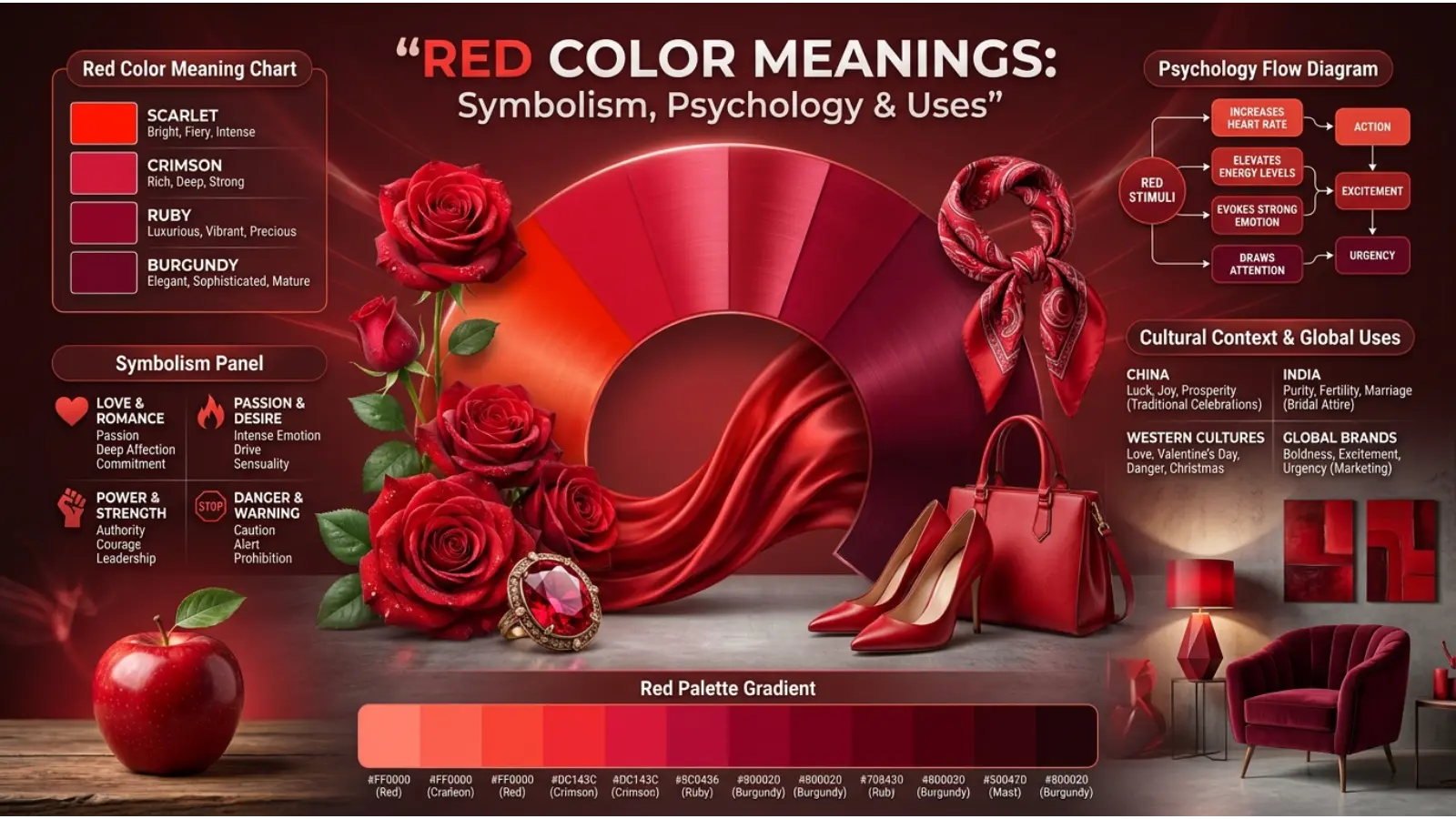
Quick Answer: Red commonly symbolizes passion, love, energy, strength, courage, danger, urgency, and power. Its meaning depends strongly on shade, context, culture, lighting, and the other colors surrounding it.
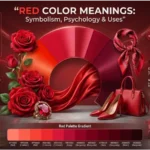
Red Color Meanings at a Glance
| Red shade or use | Common association | Typical impression |
|---|---|---|
| 🔴 Bright red | Energy, urgency, passion | Bold and attention-grabbing |
| ❤️ Classic red | Love, romance, emotion | Warm and expressive |
| 🟥 Dark red | Power, seriousness, wealth | Sophisticated and strong |
| 🍷 Burgundy | Luxury, maturity, elegance | Refined and formal |
| 🌹 Crimson | Passion, importance, intensity | Dramatic and emotional |
| 🍒 Cherry red | Youth, confidence, playfulness | Lively and fashionable |
| 🧱 Brick red | Earthiness, warmth, stability | Natural and grounded |
| 🩸 Deep blood red | Life, sacrifice, danger | Intense and symbolic |
| 🚨 Warning red | Danger, prohibition, urgency | Immediate attention |
These associations are useful starting points, not fixed rules. A person’s response to red can change with experience, culture, age, setting, and personal preference.
What Does Red Symbolize?
Red is traditionally associated with strong human experiences. Love and anger, celebration and danger, courage and aggression can all be represented through the same basic hue.
Its symbolism often comes from things people encounter in nature and daily life. Fire suggests heat and energy. Blood can represent life, injury, sacrifice, or mortality. Ripe fruit may suggest vitality and abundance. A red sunset can feel dramatic and beautiful. Because of these associations, red has developed a powerful symbolic vocabulary across art, language, clothing, advertising, and ceremonies.
Positive Meanings of Red
Red can represent:
- Love
- Passion
- Courage
- Confidence
- Strength
- Energy
- Vitality
- Determination
- Celebration
- Leadership
- Excitement
- Desire
- Warmth
For example, a red dress may communicate confidence, while a red heart is widely understood as a symbol of romantic love.
Negative Meanings of Red
Red can also suggest:
- Anger
- Aggression
- Violence
- Danger
- Warning
- Conflict
- Pressure
- Jealousy
- Impulsiveness
- Excess
Therefore, red is rarely emotionally neutral. It tends to make a visual statement, although the exact message depends on its setting.
Psychology of Red Color Meanings
Color psychology examines how colors can influence perception, emotion, attention, and behavior. However, color psychology is not a simple formula in which one color produces the same response in every person.
Red is especially interesting because it is visually prominent and often connected with high-arousal situations. Bright red can attract attention quickly, which helps explain its frequent use in warning systems, signs, alerts, and calls to action.
Research into color and behavior suggests that context matters greatly. A red object can be interpreted differently depending on its surroundings, cultural meaning, brightness, saturation, and the task a person is performing.
Red and Emotion
Red is frequently connected with intense emotions. Love and passion are among its most familiar positive associations. Anger and aggression are among its stronger negative associations.
The connection is partly reinforced by everyday language. People describe themselves as “seeing red” when angry, while red roses and red hearts are commonly associated with romance.
Still, these associations should not be treated as universal psychological laws. A person’s response to red can be shaped by memories, culture, personality, and circumstances.
Red and Attention
One practical reason designers use red is visibility.
A saturated red element can stand out strongly against neutral backgrounds. Consequently, red is common in:
- Warning signs
- Emergency indicators
- Stop signals
- Buttons
- Sale labels
- Sports graphics
- Packaging
- Advertisements
However, using too much bright red can make a design feel visually demanding. For that reason, designers often use red as an accent rather than covering an entire interface with it.
Red, Energy, and Arousal
Red is often perceived as energetic and stimulating. This makes it useful when a design needs movement, excitement, or urgency.
Nevertheless, “stimulating” does not mean that red automatically makes everyone more active or aggressive. Scientific findings about color and behavior are often dependent on the situation, and broad claims should be treated carefully.
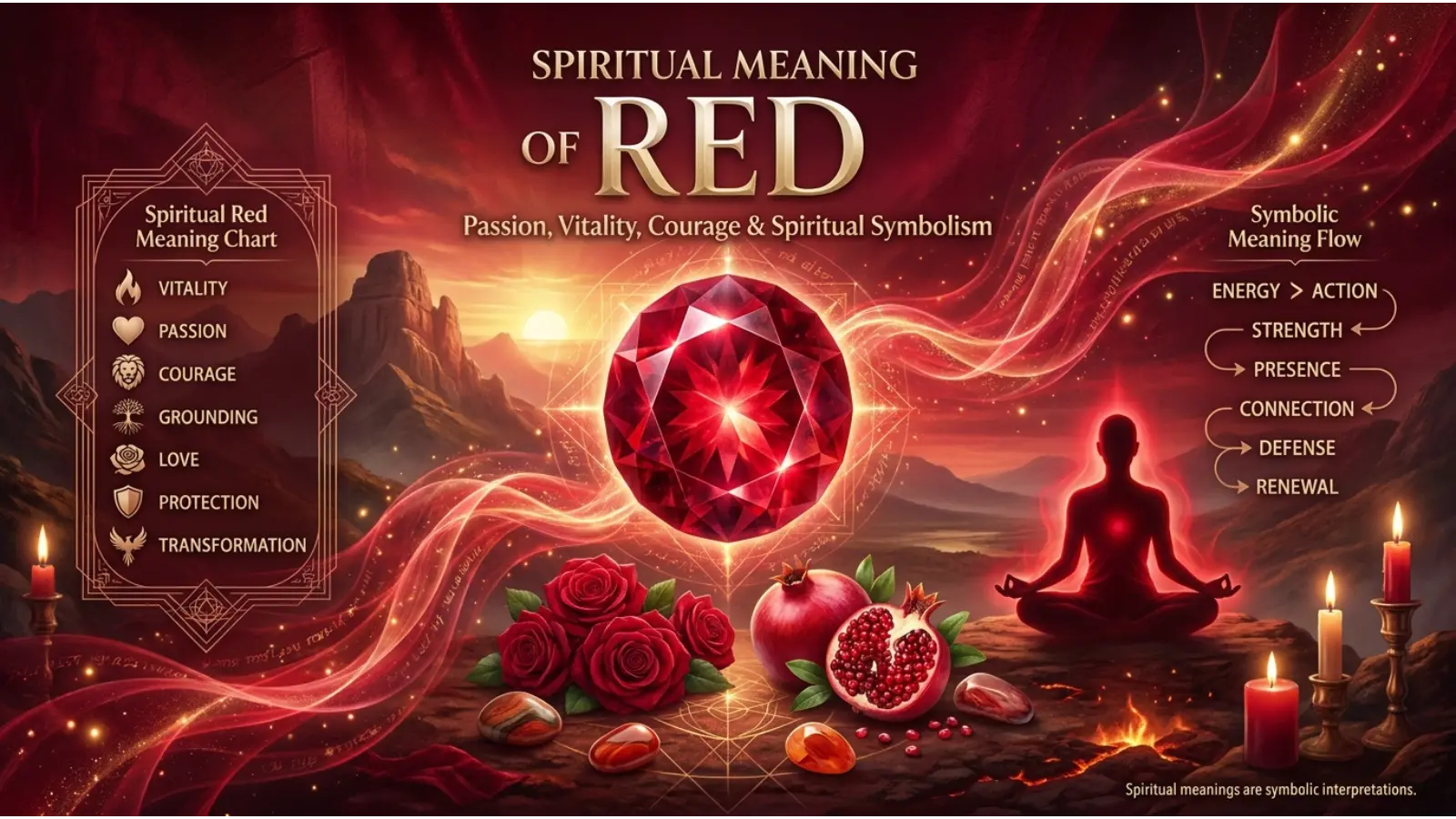
Spiritual Red Color Meanings
Spiritual interpretations of red vary widely between cultures, religions, and personal belief systems. There is no single spiritual meaning that applies to everyone.
Symbolically, red may represent life, vitality, courage, strength, passion, protection, transformation, or physical energy.
In some spiritual systems, red is associated with grounding and physical existence. In other traditions, it can symbolize sacrifice, sacred power, celebration, warning, or divine significance.
Because these meanings are tradition-specific, red should not be assigned one universal religious interpretation.
Red as a Symbol of Energy
Red is naturally connected with warmth, movement, and physical vitality. Symbolically, some people therefore use it to represent personal strength or determination.
Red as Protection
In certain cultural and spiritual practices, red objects, threads, garments, or symbols have been used for protective purposes. The meaning depends on the particular tradition rather than on a universal property of the color.
Red and Transformation
Fire provides a powerful symbolic connection between red and transformation. Fire can destroy, reshape, purify, or create. As a result, red can represent periods of change, intensity, or renewal in symbolic artwork.
Cultural Red Color Meanings
Red has some of the richest cultural symbolism of any color. However, its meaning changes considerably around the world.
Red in Western Cultures
In many Western settings, red is associated with romance, Valentine’s Day, passion, danger, warnings, and Christmas.
It is also prominent in traffic and safety systems. A red traffic light generally means stop, making red strongly associated with prohibition and immediate attention.
Red in East Asian Cultures
Red has important positive associations in several East Asian cultural traditions. In China, for example, red is strongly connected with celebration, good fortune, prosperity, and festive occasions.
Red is commonly visible during Lunar New Year celebrations and other important events. Because of this cultural context, red can communicate happiness and good fortune rather than danger.
Red in South Asian Culture
Across South Asia, red can carry associations with love, marriage, celebration, fertility, strength, and auspiciousness. Its use in weddings and traditional clothing can give it a very different emotional meaning from the red used on a warning sign.
However, South Asian cultures are diverse, so interpretations differ between communities, regions, religions, and occasions.
Red in Latin American Cultures
Red can appear in celebrations, religious imagery, political symbolism, sports identities, and traditional art throughout Latin America. Its meaning depends heavily on the specific country and context.
Red in Africa and Other Regions
Red has also carried different meanings in African societies, including associations with sacrifice, struggle, mourning, power, or political movements in particular contexts.
The key lesson is simple: never assume that a color has one cultural meaning everywhere.
Historical Red Color Meanings
Red has an unusually long history because naturally occurring red pigments were available to early humans.
Red ochre was used in prehistoric art and burial practices, making red one of the earliest colors used intentionally by humans. Later civilizations developed additional red pigments for painting, textiles, decoration, manuscripts, and ceremonial objects.
Historically, red pigments could also be difficult or expensive to produce. Certain valuable red dyes therefore became associated with wealth, status, or authority.
Over time, red developed several seemingly opposite meanings. It could represent royalty and power while also appearing in images of blood, warfare, sacrifice, and danger.
This historical flexibility helps explain why red can feel both luxurious and threatening today.
Red and Personality Associations
People sometimes associate red lovers with confidence, passion, courage, ambition, or outgoing behavior.
These associations can be useful when discussing symbolic personality types, but they should not be treated as personality tests.
Choosing red does not prove that someone is aggressive, romantic, confident, or energetic. People choose colors for many reasons, including fashion trends, memories, cultural traditions, mood, and simple personal taste.
Instead, red preference can be viewed as a possible expression of style or identity, rather than evidence of a fixed personality.
Common Symbolic Red Personality Traits
In popular color symbolism, red is often connected with people who appear:
- Bold
- Passionate
- Determined
- Competitive
- Energetic
- Expressive
- Confident
- Adventurous
The negative side of the same symbolism can include impulsiveness, impatience, intensity, or confrontational behavior.
Red Color Meanings in Branding and Marketing
Red is one of the most recognizable colors in branding. Its visual strength makes it useful for companies that want to communicate energy, excitement, urgency, appetite, or boldness.
A brand may use red to create a strong visual identity, attract attention on packaging, or make a call to action more noticeable.
Red and Consumer Psychology
Red can create a sense of visual urgency. That is one reason it frequently appears in promotional graphics, discounts, alerts, and calls to action.
However, color alone does not determine whether consumers trust or buy a product. Brand reputation, product quality, typography, imagery, pricing, culture, and personal preference all matter.
Red in Food Branding
Red is frequently used in food and beverage branding because it is visually energetic and can communicate warmth, boldness, or excitement.
It is especially common in products designed around strong flavors, fast service, celebrations, or indulgence.
Red and Luxury
Dark reds such as burgundy, oxblood, and wine-red can create a very different impression from bright scarlet.
When paired with restrained typography, dark neutrals, metallic accents, and generous spacing, deep red can feel mature and luxurious.
Red in Advertising
Advertisers often use red to make an element visually prominent. A red sale label, button, or headline can immediately attract attention.
Still, effective advertising uses red strategically. If everything is red, nothing feels especially important.
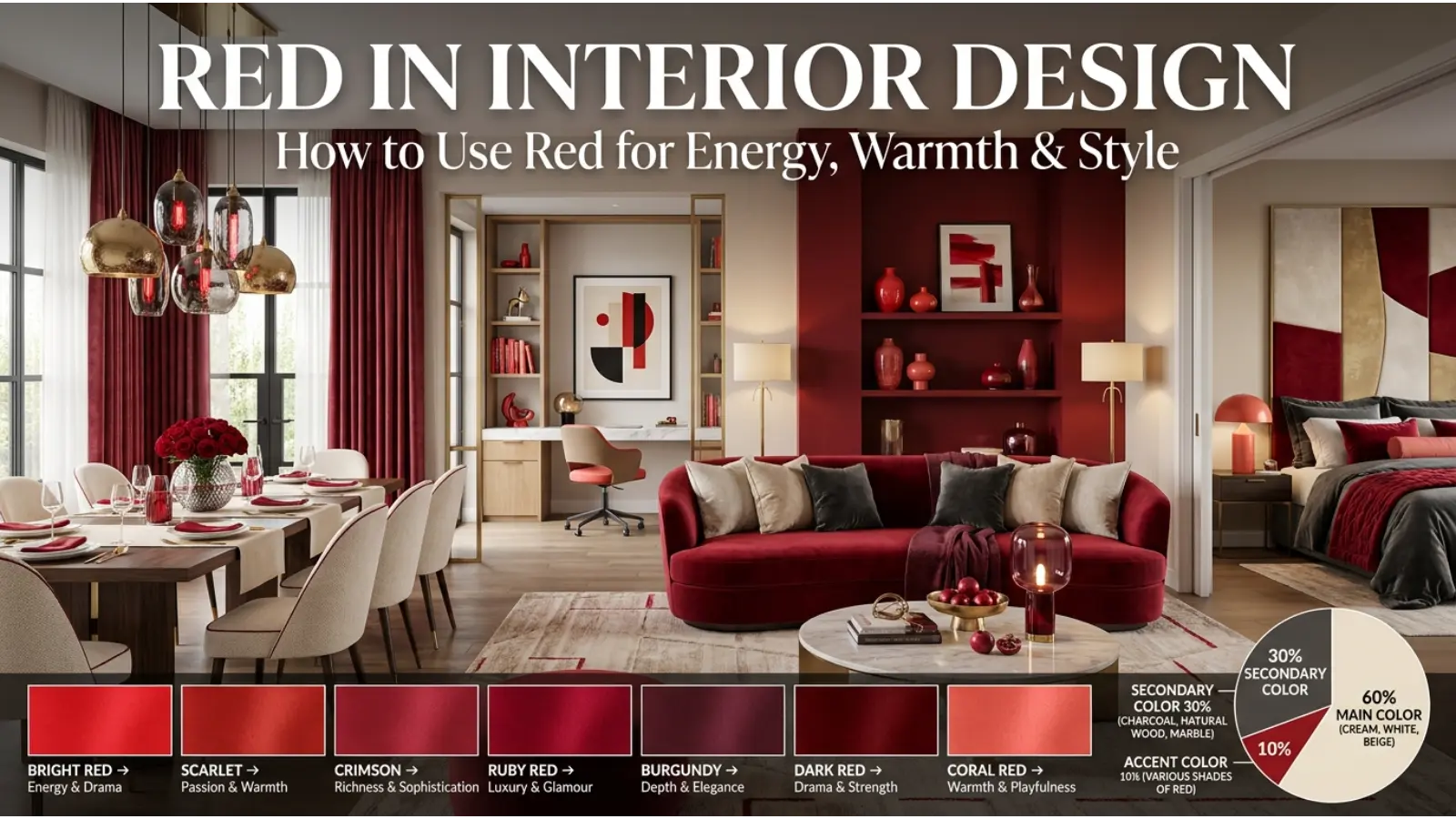
Red in Interior Design
Red can transform a room quickly because of its visual intensity. Instead of treating it only as a wall color, consider it as a tool for controlling emphasis.
Red in a Living Room
A few red elements can create warmth and energy without overwhelming the room.
Try:
- Red cushions
- An accent chair
- Artwork
- A patterned rug
- Decorative objects
- Curtains
Neutral walls can make these accents more noticeable.
Red in a Bedroom
Red can create a romantic and dramatic atmosphere, but large amounts of saturated red may feel intense.
For a calmer result, consider burgundy, muted terracotta, dusty red, or warm wine tones.
Red in an Office
A small amount of red can add visual energy to a workspace. A chair, desk accessory, artwork, or small feature wall may be enough.
For long work sessions, softer or darker reds can be easier to balance than highly saturated scarlet.
Red in a Kitchen
Red works particularly well as an accent in kitchens. Appliances, bar stools, cabinets, tiles, or small accessories can introduce warmth without making the entire room visually heavy.
Lighting Changes Red
Lighting can dramatically change how red appears.
Warm lighting may make red look deeper and warmer, while cool lighting can change its appearance and make some reds appear less rich. Natural daylight also varies throughout the day.
Therefore, always test a paint or fabric sample under the actual lighting used in the room.
Red Color Meanings in Fashion
Red is a powerful fashion color because it can become the visual focus of an outfit.
A red garment may communicate confidence, drama, romance, energy, or celebration. The shade matters considerably.
Bright red tends to feel energetic and noticeable, while burgundy can appear more sophisticated and restrained.
Red for Formal Wear
Deep red, wine, burgundy, and crimson can work well for formal clothing. They provide more visual depth than very bright red while still creating a strong impression.
Red for Casual Wear
A red shirt, sweater, sneakers, jacket, or accessory can add energy to a simple outfit.
For everyday styling, neutral colors such as black, white, gray, beige, and denim make red easier to balance.
Red Accessories
If wearing a full red outfit feels too bold, use red through:
- Shoes
- Bags
- Watches
- Scarves
- Jewelry
- Belts
- Sunglasses
- Nail color
This approach creates a focal point without making red dominate the entire look.
Red Color Combinations
Red can work with many colors, but the result changes depending on saturation and proportion.
| Combination | Overall effect | Good uses |
|---|---|---|
| Red + White | Clean and energetic | Branding, interiors, fashion |
| Red + Black | Dramatic and powerful | Fashion, graphics, entertainment |
| Red + Gray | Modern and balanced | Websites, offices, interiors |
| Red + Navy | Classic and confident | Fashion, corporate design |
| Red + Beige | Warm and sophisticated | Interiors, fashion |
| Red + Gold | Rich and celebratory | Luxury, events, packaging |
| Red + Green | Festive and high contrast | Holidays, seasonal designs |
| Red + Pink | Romantic and expressive | Beauty, fashion, celebrations |
| Red + Brown | Earthy and warm | Interiors, natural themes |
| Red + Cream | Soft and elegant | Branding, home décor |
The best combinations usually depend on proportion. A small amount of strong red against a neutral background often feels more controlled than using equal amounts of several intense colors.
How Different Red Shades Change the Meaning
Not all reds communicate the same message.
Bright Red
Bright red feels energetic, immediate, youthful, and highly visible. It works well when attention matters.
Crimson
Crimson has a deeper, more dramatic character. It can suggest passion, importance, dignity, or intensity.
Burgundy
Burgundy is darker and more restrained. It often communicates maturity, sophistication, richness, and elegance.
Scarlet
Scarlet is vivid and warm. It can feel passionate, bold, luxurious, or dramatic.
Brick Red
Brick red contains earthy qualities. Consequently, it can feel warmer, more grounded, and more natural than highly saturated red.
Coral Red
Coral-red shades combine red with warmer orange or pink qualities. They often feel friendly, lively, and approachable.
Red in Art and Photography
Artists can use red to guide attention through a composition.
A small red object placed within a muted scene may become the visual focal point. Conversely, a large red field can create emotional intensity and dominate the composition.
In photography, red can also create contrast against blue, green, gray, or neutral backgrounds.
For example, a red umbrella in a muted city scene can immediately direct the viewer’s eye toward the subject.
Red can also symbolize blood, desire, danger, warmth, rebellion, love, or political power. The surrounding imagery determines which interpretation becomes strongest.
Red Color Meanings in Sports and Entertainment
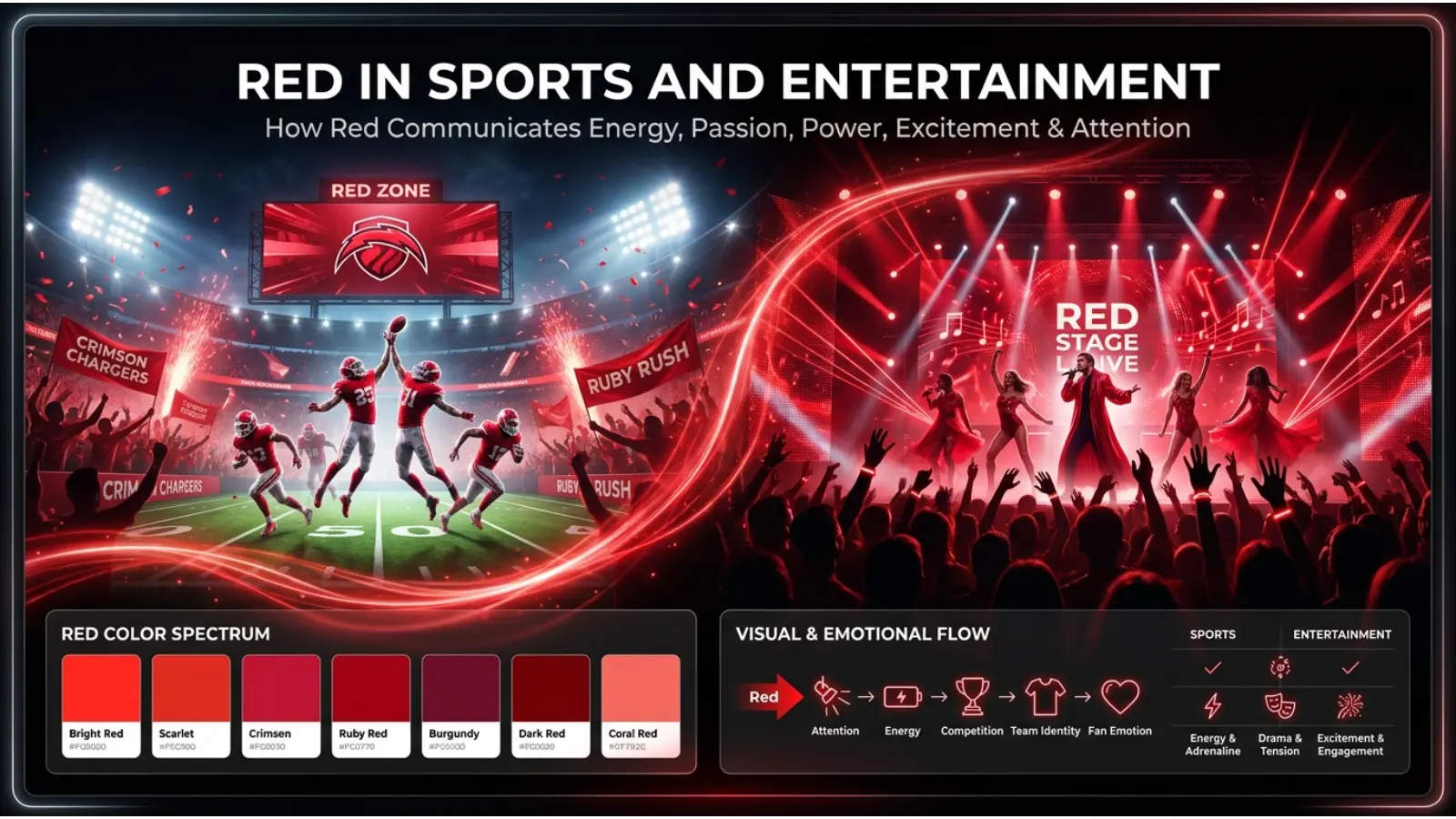
Red is common in sports because it is bold, recognizable, and easy to incorporate into uniforms, logos, stadium graphics, and fan merchandise.
It can symbolize strength, competition, aggression, courage, or team identity.
Entertainment media also uses red to create drama. Red lighting can make a scene feel dangerous, romantic, mysterious, intense, or emotionally charged.
The same red light can therefore communicate completely different ideas depending on music, setting, facial expressions, and narrative context.
Red in Everyday Life
Red appears in many practical systems because it is visually prominent and culturally familiar.
You may see red used for:
- Stop signals
- Emergency indicators
- Warning labels
- Fire-related equipment
- Error messages
- Sale signs
- Sports teams
- Holiday decorations
- Food packaging
- Traffic systems
- Promotional displays
In these situations, red often functions less as a poetic symbol and more as a visual communication tool.
Why Context Changes Red’s Meaning
A color never exists in isolation.
A red heart communicates affection because the symbol and color work together. A red warning sign communicates danger because the color is supported by a standardized visual system.
Likewise, a red wedding garment can communicate tradition or celebration, while a red emergency light communicates urgency.
This is why interpreting color requires more than memorizing lists of meanings. Look at the object, audience, culture, setting, shade, and surrounding colors.
How Lighting Changes the Meaning of Red
Red is particularly sensitive to lighting conditions.
Under warm light, a red surface may appear richer or more orange. Under cool light, it can appear darker or visually different. Digital screens create another variable because brightness, contrast, and display calibration affect color.
Consequently, a designer should test red in the environment where it will actually be seen.
A color that looks elegant on a computer screen may appear much stronger when printed, painted on a large wall, or viewed under artificial lighting.
Common Misconceptions About Red
“Red Always Means Love”
Not necessarily. Red can represent love, but it can also communicate danger, anger, power, celebration, urgency, or courage.
“Red Makes Everyone Aggressive”
This is an oversimplification. Red can be associated with aggression in certain contexts, but human behavior cannot be predicted from color alone.
“Everyone Sees Red the Same Way”
Cultural experience and personal associations can change color interpretation significantly.
“Dark Red Has the Same Meaning as Bright Red”
Shade matters. Burgundy can feel mature and luxurious, while bright scarlet can feel energetic and urgent.
“Red Has One Universal Spiritual Meaning”
It does not. Spiritual symbolism depends on the tradition, community, and belief system being discussed.
Practical Ways to Use Red
If you want red to feel energetic, choose a bright, saturated shade and use it as an accent.
You want red to feel elegant, consider burgundy, wine, or deep crimson with neutral colors.
If you want red to feel warm, combine it with cream, beige, brown, or natural wood.
You want red to feel dramatic, pair it with black or another deep neutral.
If you want red to feel friendly, softer coral-red or warm red tones can be easier to approach than intense scarlet.
If you want red to communicate urgency, use a clear, high-contrast red and reserve it for the information that actually needs attention.
Frequently Asked Questions
What is the main meaning of the color red?
Red commonly represents love, passion, energy, courage, strength, power, danger, and urgency. The exact meaning depends on context and culture.
What does red symbolize emotionally?
Emotionally, red is often linked with strong feelings such as love, desire, excitement, anger, confidence, and intensity.
Is red a positive or negative color?
Red can be either. It may symbolize love, courage, celebration, and vitality, but it can also represent danger, aggression, anger, or conflict.
What does red mean spiritually?
Spiritual interpretations vary. Red may symbolize life, strength, courage, protection, passion, transformation, or physical energy in different traditions.
What does red say about personality?
In popular color symbolism, red is associated with confidence, passion, energy, ambition, and boldness. However, color preference cannot reliably determine someone’s personality.
Why is red used for warnings?
Red is visually prominent and has become strongly associated with stopping, danger, and urgency through widely used safety and traffic systems.
Why is red associated with love?
The association developed through a combination of cultural symbolism, romantic traditions, red roses, hearts, and the broader connection between red and strong emotion.
What color goes best with red?
White, black, navy, gray, beige, cream, brown, and gold can all work well with red. The best choice depends on the desired mood and the particular red shade.
Is red good for interior design?
Yes. Red can add warmth, energy, and drama to an interior. However, highly saturated red is often easier to manage as an accent than as a dominant wall color.
Does red always attract attention?
Red can be visually prominent, especially when it contrasts strongly with its surroundings. However, attention also depends on size, brightness, placement, contrast, and the overall design.
Conclusion
Red is powerful precisely because it does not have just one meaning. It can express tenderness through a rose, urgency through a warning sign, confidence through clothing, celebration through cultural traditions, and drama through art.
Its interpretation becomes clearer when you look beyond the color itself. Shade, lighting, surrounding colors, cultural background, historical setting, and personal experience all influence what red communicates.
Ultimately, understanding red color meanings is less about memorizing a fixed list and more about learning how visual context shapes perception. Used thoughtfully, red can bring warmth, energy, attention, elegance, passion, or strength to almost any visual experience.

Emma Wilson is a dedicated comparison writer and product researcher at ColorMystiic.com. She specializes in creating unbiased product comparisons, detailed reviews, and helpful buying guides. Her goal is to help readers make smarter purchasing decisions with confidence.