Crystals have fascinated humans for thousands of years because of their natural beauty, unique formations, and wide range of colors. From deep purple amethyst to clear quartz and vibrant green emerald, each crystal color carries different symbolic meanings across cultures, spiritual traditions, art, and modern designPeople search for crystal color meanings because they want to understand what different crystal colors represent, how colors influence emotions, and why certain stones are associated with ideas like protection, love, balance, or transformation.
While many crystal meanings come from cultural traditions and personal beliefs rather than scientific proof, color psychology does show that colors can influence human perception, mood, and emotional responses.This guide explores crystal colors from multiple perspectives, including symbolism, psychology, spirituality, history, culture, fashion, branding, interior design, and everyday use.
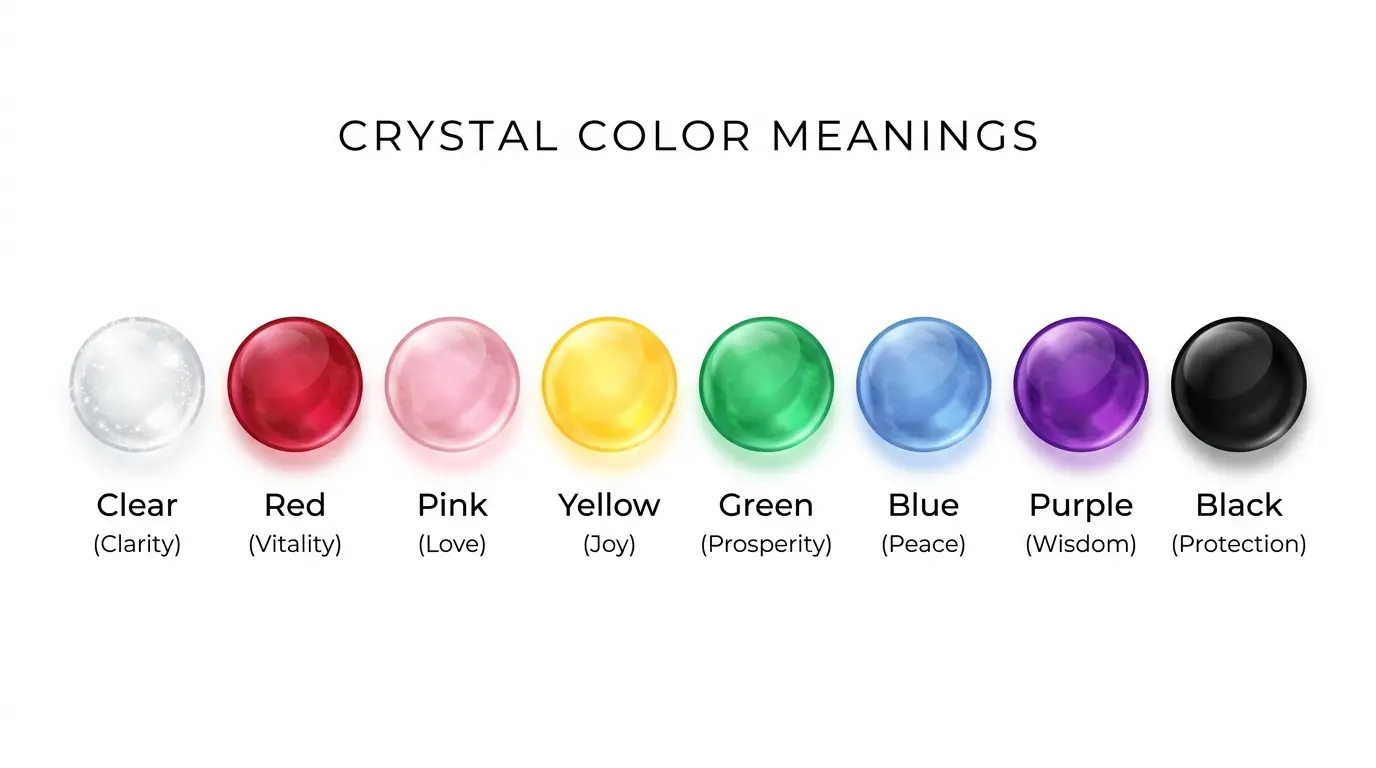
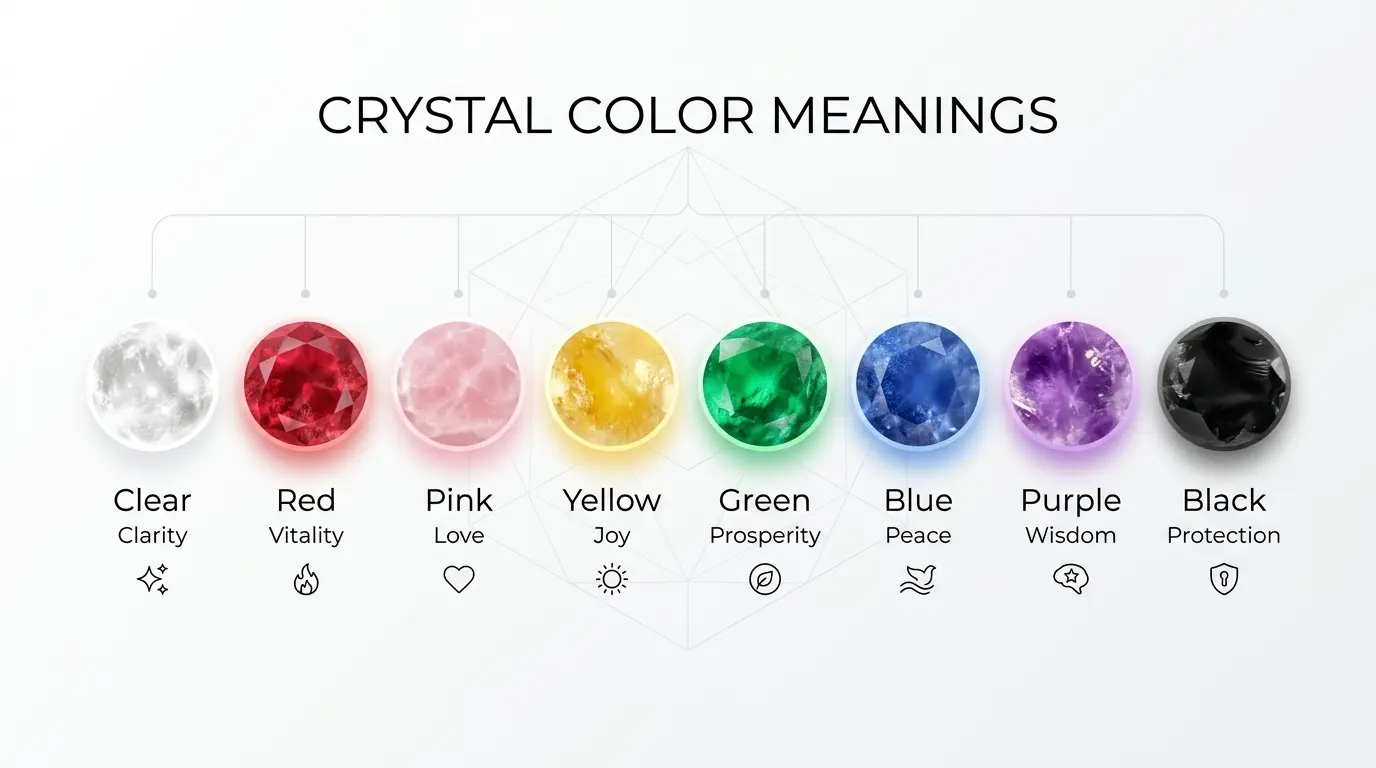
Quick Answer: Crystal color meanings are symbolic interpretations connected to the appearance of gemstones. Common associations include purple with wisdom, green with growth and renewal, blue with calmness, pink with love, black with protection, and clear crystals with clarity and purity. These meanings vary by culture, tradition, and personal experience.
What Are Crystal Color Meanings?
Crystal color meanings describe the symbolic ideas, emotions, and qualities people associate with the colors found in natural stones and gemstones. A crystal’s color often comes from minerals, chemical elements, light interaction, and its internal structure.
For centuries, people have connected crystal colors with emotions, spiritual practices, and personal intentions. For example, a person may choose a blue crystal because they associate blue with peace and communication, while another may prefer green because it represents nature and renewal.
The meaning of a crystal color is not fixed. Context matters. A red crystal used in jewelry may represent confidence and passion, while a red crystal displayed in a meditation space may symbolize energy and motivation.
How Crystal Colors Get Their Appearance
Crystal colors are created through natural processes inside the Earth. Different minerals and elements affect how light passes through a crystal.
Examples include:
- Iron can create green, yellow, or red tones.
- Copper can produce blue and green shades.
- Manganese may create pink or purple colors.
- Quartz impurities can create many different appearances.
The same mineral can sometimes appear in different colors, and the same color can appear in different minerals. This is why crystal color meanings often focus on symbolism rather than strict scientific categories.
What Do Different Crystal Colors Symbolize?
Clear and White Crystal Meaning
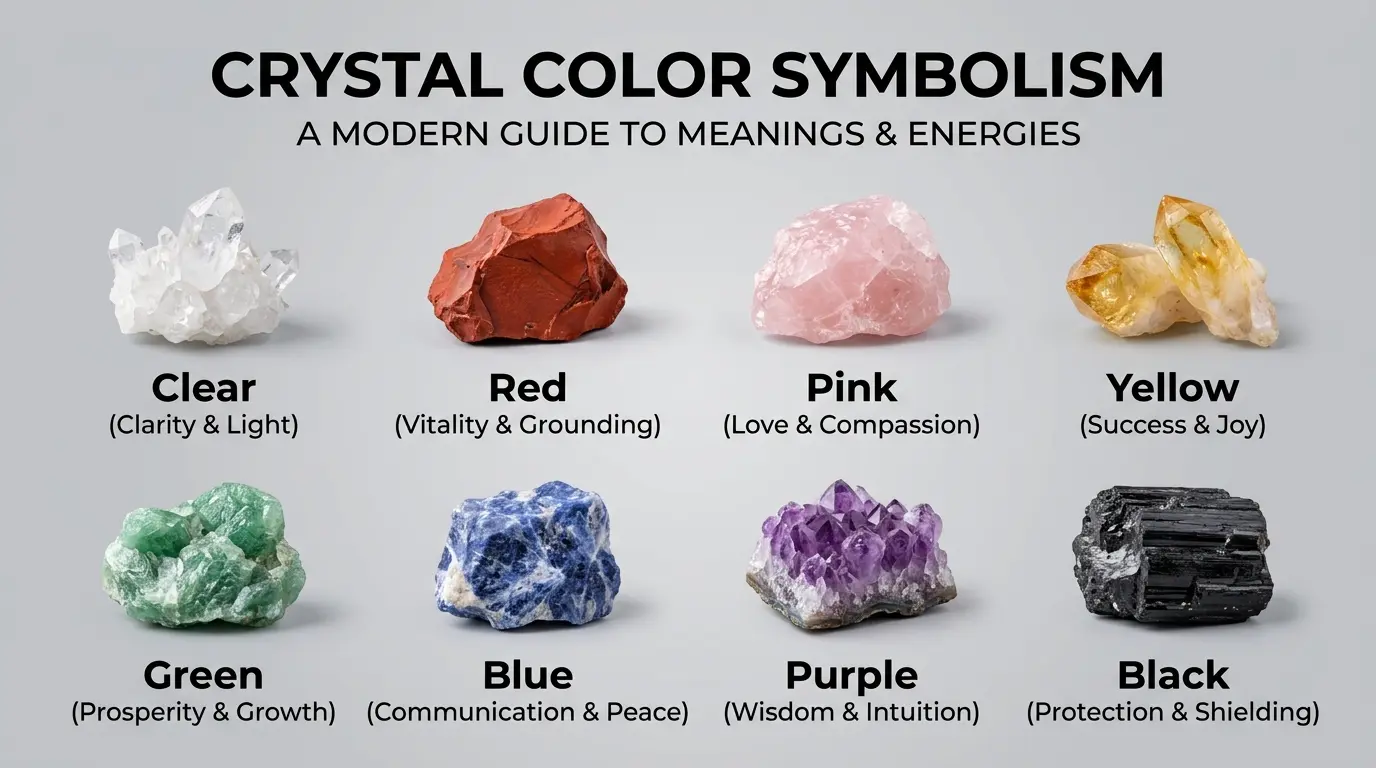
Clear and white crystals are commonly associated with purity, clarity, peace, and new beginnings.
Popular examples include clear quartz, selenite, and white calcite.
Symbolic meanings often include:
- Mental clarity
- Spiritual awareness
- Fresh starts
- Balance
- Simplicity
In design, white crystals create a feeling of cleanliness and openness. They are often used in spaces where people want a calm and minimal atmosphere.
However, white does not always represent only positivity. In some cultures, white is connected with mourning or remembrance, showing how meanings change depending on traditions.
Purple Crystal Meaning
Purple crystals are often linked with wisdom, imagination, spirituality, and intuition.
Examples include amethyst and purple fluorite.
Common symbolic associations:
- Inner reflection
- Creativity
- Higher thinking
- Transformation
- Mystery
Purple has historically been connected with royalty because purple dyes were once rare and expensive. This connection helped create associations with luxury, power, and importance.
Blue Crystal Meaning
Blue crystals are commonly associated with calmness, communication, trust, and emotional balance.
Examples include turquoise, blue lace agate, and blue calcite.
Symbolic meanings include:
- Peace
- Honesty
- Relaxation
- Expression
- Stability
Blue is also widely studied in color psychology because many people perceive it as calming and trustworthy. This is one reason blue appears frequently in professional branding.
Green Crystal Meaning
Green crystals represent nature, growth, renewal, and harmony.
Examples include emerald, jade, and green aventurine.
Common meanings:
- Healing symbolism
- Prosperity
- Fresh energy
- Connection with nature
- Emotional balance
Because green is strongly connected with plants and natural environments, it often creates feelings of freshness and restoration.
Pink Crystal Meaning
Pink crystals are usually associated with love, kindness, compassion, and emotional warmth.
Examples include rose quartz and pink tourmaline.
Symbolic meanings:
- Romance
- Friendship
- Self-care
- Gentleness
- Emotional comfort
Pink is often used in designs that aim to create a soft, welcoming feeling.
Red Crystal Meaning
Red crystals symbolize energy, passion, strength, and confidence.
Examples include ruby, garnet, and red jasper.
Common associations:
- Motivation
- Courage
- Action
- Vitality
- Determination
Red is a powerful visual color. It naturally attracts attention, which is why it is often used in advertising, sports branding, and warning signs.
Black Crystal Meaning
Black crystals are often associated with protection, grounding, mystery, and strength.
Examples include obsidian, black tourmaline, and onyx.
Symbolic meanings:
- Security
- Stability
- Personal power
- Protection
- Deep reflection
Black can create a feeling of elegance and seriousness in fashion and interior design.
Yellow and Gold Crystal Meaning
Yellow and gold crystals are linked with confidence, optimism, success, and creativity.
Examples include citrine and golden topaz.
Symbolic associations:
- Happiness
- Abundance
- Inspiration
- Personal confidence
- Achievement
Gold tones often create impressions of luxury and value.
Psychology of Crystal Colors
Color psychology studies how colors influence human perception and emotional responses. It does not prove that crystals themselves create specific psychological effects, but it explains why people may feel drawn to certain colors.
How Colors Influence Feelings
Humans naturally respond to visual colors. Bright colors may feel energetic, while softer shades may feel relaxing.
Examples:
- Blue environments may feel peaceful.
- Green spaces may feel refreshing.
- Warm colors like red and orange may feel energetic.
- Neutral colors may feel balanced.
When people choose crystals, the color itself may influence their emotional experience through personal association
The Role of Personal Experience
A crystal color can have different meanings for different people.
Someone may view purple as spiritual because of personal beliefs, while another person may simply enjoy its beauty. Memories, culture, and personal preferences all shape color interpretation.
Spiritual Meaning of Crystal Colors
Many spiritual traditions use crystals and colors as symbols for intention, meditation, and personal reflection.
These interpretations vary widely and are based on belief systems rather than scientific evidence.
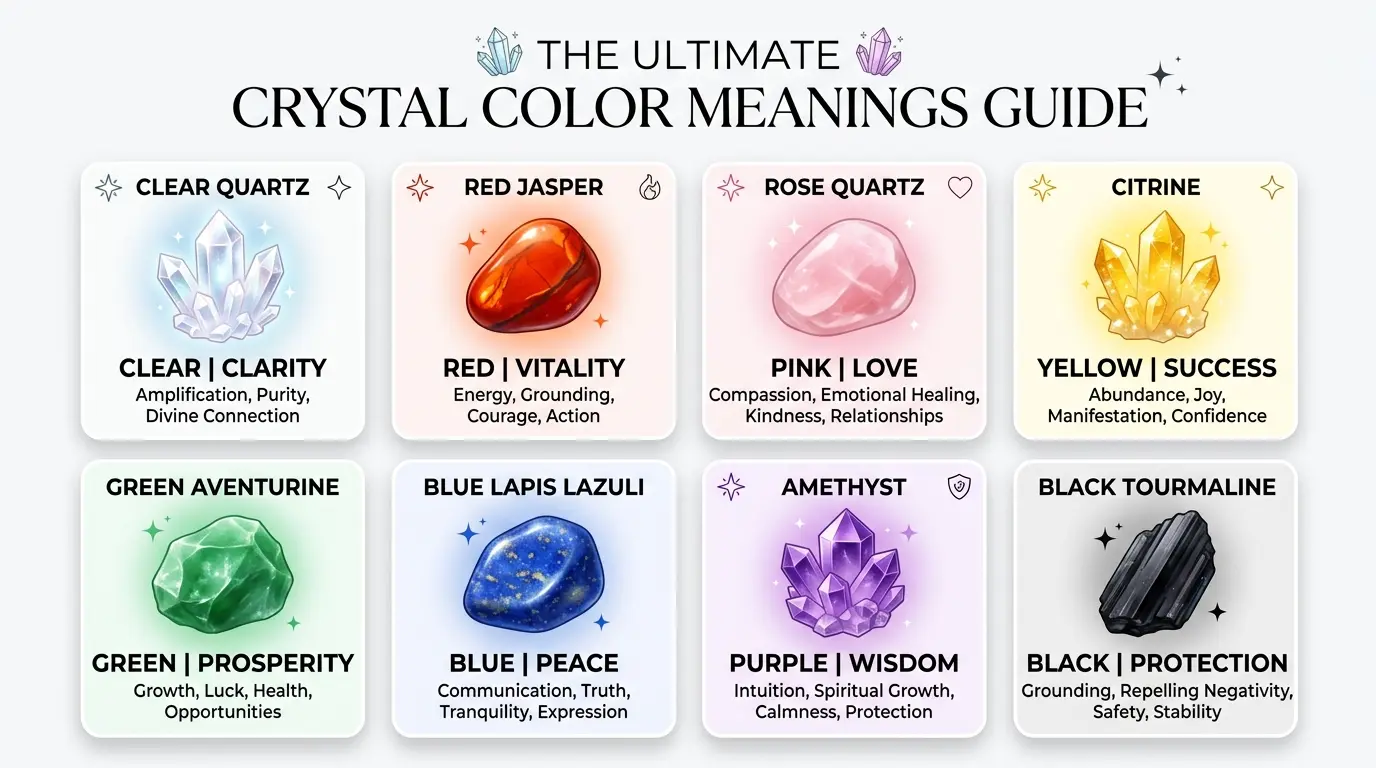
Common spiritual associations include:
- Purple: wisdom and spiritual awareness
- Green: growth and renewal
- Blue: peace and communication
- Pink: compassion and emotional connection
- Black: grounding and protection
- Clear: clarity and focus
Different traditions may assign different meanings to the same color.
Cultural Meaning of Crystal Colors
Western Interpretations
In many Western cultures, crystal colors are often connected with modern symbolism:
- Green represents nature and prosperity.
- Blue represents trust and calmness.
- Purple represents luxury and creativity.
Eastern Interpretations
Some Eastern traditions connect colors with balance, energy systems, and spiritual concepts.
For example, jade’s green color has been valued in many Asian cultures and is often associated with harmony, beauty, and prosperity.
Indigenous and Traditional Views
Many indigenous cultures have unique relationships with stones, minerals, and natural colors. Meanings often depend on the specific community, history, and spiritual practices.
It is important to avoid assuming that all cultures share the same crystal symbolism.
Historical Meaning of Crystal Colors
Throughout history, colorful gemstones have represented wealth, status, religion, and artistic expression.
Examples:
- Purple gemstones were historically connected with royalty.
- Red gemstones were valued for their bold appearance and rarity.
- Green stones such as jade have held cultural importance in various societies.
Ancient civilizations often used gemstones in jewelry, decoration, and ceremonial objects because their colors made them visually meaningful.
Personality Associations With Crystal Colors
People often connect crystal preferences with personality traits.
Someone attracted to:
- Blue crystals may enjoy calm and peaceful environments.
- Red crystals may appreciate energy and confidence.
- Green crystals may feel connected to nature.
- Purple crystals may enjoy creativity and imagination.
However, color preference does not determine personality. A person may choose a crystal simply because they like its appearance.\
Crystal Colors in Branding and Marketing
Brands use colors carefully because colors influence perception.
Crystal-inspired colors are often used in industries such as:
- Beauty
- Wellness
- Luxury products
- Jewelry
- Lifestyle brands
Examples:
- Purple can suggest creativity and premium quality.
- Green can communicate natural and eco-friendly values.
- Blue can create feelings of reliability.
- Black can suggest elegance.
Companies choose colors based on their audience, message, and industry rather than symbolism alone.
Crystal Colors in Interior Design
Crystals are often used as decorative objects because their colors add personality to spaces.
Living Room
Colorful crystals can become accent pieces.
Ideas:
- Purple crystals for a creative atmosphere
- Green crystals for a natural feeling
- Clear crystals for a minimalist style
Bedroom
Soft-colored crystals may complement relaxing spaces.
Popular choices:
- Pink tones for warmth
- Blue tones for calm decoration
- White tones for simplicity
Office
Crystal colors can influence the visual mood of a workspace.
Examples:
- Blue accents for a professional look
- Green accents for freshness
- Yellow accents for energy
Lighting also changes crystal appearance. A crystal may look completely different under sunlight, warm lamps, or LED lighting.
Crystal Colors in Fashion
Crystal colors influence jewelry and personal style.
Professional Style
Blue, clear, and neutral crystals often create a clean and elegant appearance.
Luxury Fashion
Purple, black, and gold tones can create a sophisticated impression.
Casual Style
Green, pink, and colorful crystal combinations can add personality and creativity.
Accessories allow people to express mood and identity without needing words.
Best Crystal Color Combinations
Purple and Clear
Creates a balance between mystery and simplicity.
Good for:
- Elegant jewelry
- Creative spaces
- Modern decoration
Green and Gold
Combines natural energy with luxury.
Good for:
- Fashion accessories
- Interior accents
Blue and White
Creates a peaceful and clean appearance.
Good for:
- Relaxing environments
- Minimal designs
Pink and Clear
Creates a soft, romantic style.
Good for:
- Jewelry
- Gift designs
Common Misconceptions About Crystal Color Meanings
“Every crystal color has one universal meaning”
Not true. Meanings change across cultures, beliefs, and personal experiences.
“Crystal colors scientifically control emotions”
Scientific research supports that colors influence perception, but claims about crystals creating specific physical effects are not scientifically proven.
“The rarest color always has the strongest meaning”
Rarity affects value, but symbolism depends on culture and personal interpretation
Real-World Applications of Crystal Colors
Daily Life
People use crystal colors as reminders of personal goals, memories, or intentions.
Business
Companies use crystal-inspired colors in logos, packaging, and product design.
Art and Photography
Artists use crystal colors to create visual emotions, from calm blue scenes to dramatic red compositions.
Home Decoration
Crystal colors add natural beauty and create different visual moods.
Fashion
Gemstone colors help people express style, personality, and creativity.
Frequently Asked Questions About Crystal Color Meanings
What is the most popular crystal color meaning?
Clear, purple, green, blue, and pink crystals are among the most commonly discussed. Their meanings often relate to clarity, spirituality, growth, peace, and love.
Do crystal colors really have meanings?
Crystal meanings are mostly based on symbolism, tradition, and personal beliefs. Scientific evidence supports the psychological impact of colors but not supernatural effects.
What does a purple crystal symbolize?
Purple crystals are commonly associated with wisdom, creativity, spirituality, and transformation.
What does a green crystal mean?
Green crystals often symbolize growth, nature, renewal, and balance.
What is the meaning of a black crystal?
Black crystals are commonly linked with grounding, protection symbolism, strength, and mystery.
Why are blue crystals considered calming?
Blue is often perceived as a peaceful and trustworthy color, which influences why people associate blue crystals with calmness.
Can crystal colors affect mood?
Colors can influence feelings and perceptions, but the effect depends on personal experience, culture, and context.
How do I choose a crystal color?
Many people choose crystals based on personal connection, appearance, symbolism, or the feeling the color creates.
Why do crystal meanings differ between cultures?
Colors develop meanings through history, religion, environment, and social traditions, so interpretations naturally vary.
Conclusion
Crystal color meanings offer a fascinating way to explore the relationship between nature, symbolism, psychology, and human creativity. From purple crystals representing imagination to green crystals reflecting growth and renewal, each color carries layers of meaning shaped by history and culture.
While crystal symbolism is based largely on tradition and personal belief, the emotional impact of color is a real part of human experience. The colors people choose for jewelry, homes, art, and personal spaces often reflect their memories, preferences, and the feelings they want to create.
Understanding crystal colors is not about finding one perfect definition. It is about appreciating how colors communicate ideas, inspire creativity, and add meaning to everyday life.

Emma Wilson is a dedicated comparison writer and product researcher at ColorMystiic.com. She specializes in creating unbiased product comparisons, detailed reviews, and helpful buying guides. Her goal is to help readers make smarter purchasing decisions with confidence.