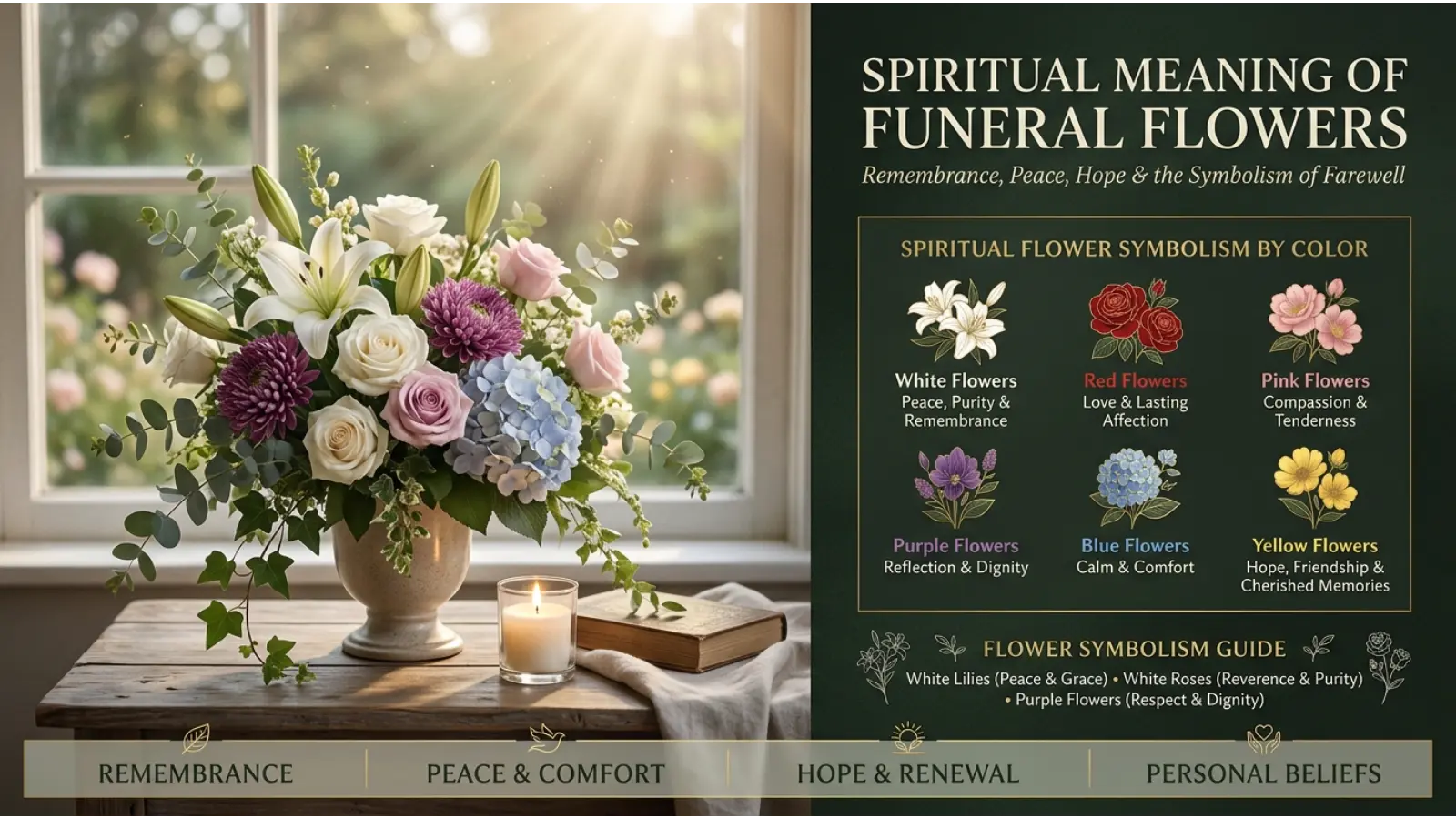
Flowers offer a gentle way to express feelings when words are difficult to find. At funerals and memorial services, their colors can communicate love, respect, sympathy, gratitude, and remembrance. However, funeral flower color meanings are not the same everywhere. White flowers often suggest peace, while red flowers may express deep love, and yellow flowers can represent friendship or celebrate a life filled with happiness.
The meaning also depends on the flower type, family traditions, religious beliefs, and the relationship you shared with the person who died. Therefore, choosing funeral flowers involves more than selecting an attractive arrangement. It means considering the message you want to convey and the comfort it may bring to grieving loved ones.
This guide explains the symbolism of popular funeral flower colors, their cultural interpretations, suitable combinations, and practical ways to choose a thoughtful arrangement.
Quick Answer: White funeral flowers commonly symbolize peace, purity, and remembrance. Red represents love and respect, pink expresses affection and gratitude, purple suggests dignity and honor, blue conveys calm and comfort, and yellow often celebrates friendship and a life well lived. Meanings vary by culture, religion, and personal preference.
What Do Funeral Flower Color Meanings Symbolize?
Funeral flowers help families, friends, and colleagues express emotions that may be difficult to put into words. While each flower has its own symbolism, color adds another layer of meaning.
For example, white lilies may suggest peace and remembrance, while red roses can express enduring love. Similarly, purple flowers can communicate dignity, and soft pink arrangements may offer a message of tenderness.
Nevertheless, these meanings are general associations rather than universal rules. A family may choose bright flowers because the person who died loved color, gardening, or cheerful surroundings. In that case, the arrangement celebrates personal memories rather than following traditional funeral symbolism.
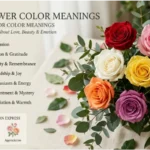
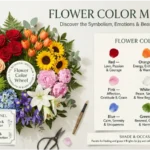
Colorful Chart: Funeral Flower Color Meanings at a Glance
| Flower color | Common symbolism | Best suited for |
|---|---|---|
| ⚪ White | Peace, purity, remembrance | Traditional funerals and memorials |
| 🔴 Red | Love, devotion, respect | Partners, close relatives, and loved ones |
| 🌸 Pink | Tenderness, gratitude, affection | Friends, relatives, and expressions of sympathy |
| 🟣 Purple | Dignity, honor, admiration | Formal tributes and respected individuals |
| 🔵 Blue | Calm, comfort, serenity | Peaceful memorial arrangements |
| 🟡 Yellow | Friendship, warmth, celebration | Remembering a cheerful life or close friendship |
| 🟠 Orange | Energy, warmth, individuality | Celebrations of a vibrant personality |
| 🟢 Green | Renewal, nature, hope | Natural arrangements and garden-inspired tributes |
| 🟤 Cream | Grace, warmth, understated respect | Elegant, gentle floral displays |
These meanings can guide your choice. However, consider the family’s wishes first, particularly when a funeral follows specific religious or cultural customs.
White Funeral Flowers: Peace, Purity, and Remembrance
White is one of the most widely recognized colors for funeral flowers. Its clean, gentle appearance makes it suitable for traditional services, memorial ceremonies, and sympathy arrangements.
White flowers often represent peace, innocence, reverence, and the hope that grieving people will find comfort. In some religious settings, white may also carry spiritual associations with eternal life or resurrection. Those interpretations depend on the faith and traditions involved.
Best white flowers for funerals
- White lilies: Often chosen for their graceful appearance and associations with peace and remembrance.
- White roses: Express respect, sincere affection, and a quiet sense of farewell.
- White chrysanthemums: Used in funeral and remembrance traditions in several countries.
- White carnations: Offer a gentle, classic way to show sympathy.
- White orchids: Create an elegant tribute that communicates respect and admiration.
White flowers work particularly well in wreaths, casket sprays, standing arrangements, and smaller bouquets. Moreover, they pair naturally with greenery, cream roses, or pale pink flowers.
When to choose white: Select white when you want a peaceful, respectful, and understated arrangement, especially if you are unsure which colors the family prefers.
Red Funeral Flowers: Love, Devotion, and Respect
Red flowers communicate strong feelings. They are commonly associated with romantic love, deep affection, courage, and devotion. Consequently, they can be meaningful when remembering a spouse, partner, parent, or another person with whom you shared a close bond.
Red roses are especially associated with love. Red carnations and other red blooms can also create a dignified tribute when balanced with softer colors.
However, red does not always represent romance. It can express family loyalty, admiration, or respect for someone who made a lasting difference in your life.
How to use red flowers at a funeral
A bouquet of red roses paired with white flowers can balance affection with peace. Similarly, a red-and-green arrangement can feel natural and dignified without becoming overly formal.
If the funeral is particularly traditional, check whether bright red arrangements are appropriate. Some families may prefer softer colors or white flowers.
When to choose red: Red is a thoughtful choice when you want to emphasize love, devotion, or the strength of your relationship with the person who died.
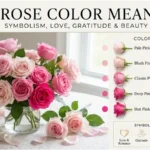
Pink Funeral Flowers: Compassion, Gratitude, and Tenderness
Pink flowers express warmth without the intensity often associated with deep red. Their softer appearance makes them suitable for many relationships, including family members, friends, teachers, colleagues, and mentors.
Light pink commonly suggests tenderness and gentleness. Deeper pink shades can communicate gratitude, admiration, and appreciation.
Pink flowers may also help create a comforting atmosphere at a memorial service. For example, pink roses combined with white lilies can express affection while keeping the overall arrangement calm and respectful.
Popular pink funeral flowers
- Pink roses for affection and appreciation.
- Pink carnations for remembrance and gratitude.
- Pink chrysanthemums for a meaningful, traditional floral tribute where culturally appropriate.
- Pink tulips for gentle affection and a simple, graceful appearance.
Pink is not limited to funerals for women or children. Anyone may be honored with pink flowers if the color suits their personality or the family’s preferences.
When to choose pink: Use pink to express sympathy, appreciation, and loving memories without relying on a strongly romantic message.
Purple Funeral Flowers: Dignity, Honor, and Admiration
Purple has long been associated in some historical and cultural settings with royalty, prestige, and status. In funeral arrangements, it can convey dignity, respect, admiration, and a sense of solemn beauty.
Dark purple often creates a formal appearance, while lavender and lilac feel softer and more comforting. As a result, purple offers a flexible option for both traditional ceremonies and modern celebrations of life.
Suitable purple flowers
- Purple orchids: Offer an elegant tribute to someone deeply admired.
- Purple irises: Can symbolize hope, faith, or wisdom in some traditions.
- Lavender flowers: Create a gentle, calming appearance.
- Purple chrysanthemums: May be suitable where their use aligns with local funeral customs.
- Purple roses: Provide a distinctive way to honor someone remembered for their individuality.
Purple combines especially well with white, cream, pale pink, or green foliage. A purple-and-white wreath, for instance, can feel dignified without appearing too dark.
When to choose purple: Consider purple when honoring someone you respected greatly, celebrating an accomplished life, or creating a formal and elegant tribute.
Blue Funeral Flowers: Calm, Comfort, and Serenity
Blue is often associated with the sky, water, openness, and tranquility. These associations make blue flowers a natural choice when you want a memorial arrangement to feel peaceful and reassuring.
Light blue tends to create a softer impression, whereas deep blue or blue-violet flowers can look more formal. Still, blue does not have one fixed funeral meaning, and its symbolism may differ between families and cultures.
True blue flowers can also be less common than white, pink, or red varieties. Florists may use blue delphiniums, hydrangeas, or irises, depending on the season and availability.
Creating a blue funeral arrangement
Blue hydrangeas paired with white roses can produce a peaceful, balanced display. Alternatively, blue delphiniums combined with cream flowers and greenery can create a graceful standing arrangement.
Remember that some blue flowers sold commercially have been dyed. If natural flower colors matter to the family, ask your florist about the variety being used.
When to choose blue: Blue can be appropriate when expressing calm, comfort, and a wish for peace during a difficult time.
Yellow Funeral Flowers: Friendship, Warmth, and Celebration
Yellow flowers are often linked with sunshine, optimism, friendship, and happy memories. Although some people associate funerals mainly with subdued colors, yellow can be a meaningful choice when the purpose is to celebrate a person’s life.
For example, yellow roses may express friendship, while yellow chrysanthemums or seasonal flowers can reflect warmth and appreciation. A bright arrangement may also honor someone who loved gardening, enjoyed cheerful colors, or brought happiness to others.
Nevertheless, yellow has different meanings in different settings. In some cultures, particular yellow flowers are strongly associated with mourning or remembrance. In others, they are more commonly used to express happiness or friendship.
How to use yellow flowers respectfully
Rather than choosing a completely bright arrangement by default, consider combining yellow blooms with white flowers and greenery. This creates a balanced tribute that feels warm without losing its respectful tone.
When to choose yellow: Yellow is worth considering when celebrating a life, honoring a close friendship, or reflecting the personality and favorite colors of the person being remembered.
Orange Funeral Flower Color Meanings: Energy, Courage, and Individuality
Orange flowers bring warmth and vivid color to memorial arrangements. They may suggest enthusiasm, vitality, courage, and a lively personality.
Although orange is less traditional in some formal funeral settings, it can be especially meaningful for someone remembered as adventurous, energetic, creative, or outgoing.
Orange roses, gerberas, and seasonal flowers can make a celebration-of-life arrangement feel personal. Moreover, orange can add warmth to a display dominated by white or cream flowers.
When orange flowers are appropriate
Choose orange when the family welcomes colorful tributes or when the arrangement reflects the person’s preferences. For a more understated appearance, combine orange flowers with white blooms and dark green foliage.
When to choose orange: Orange works best when you want to celebrate individuality, energy, and the positive memories someone left behind.
Green Funeral Flower Color Meanings and Foliage: Renewal, Nature, and Hope
Green has a special role in funeral arrangements because it appears naturally in leaves, stems, and many garden plants. It often suggests nature, growth, renewal, and continuity.
Green foliage also helps other flower colors stand out. For example, white lilies surrounded by fresh greenery can look peaceful, while pink roses and eucalyptus create a softer, garden-inspired design.
Some people interpret green spiritually as a sign of renewal or hope. These are symbolic interpretations, however, rather than meanings shared by every religion or culture.
Plants and greenery for memorials
Ferns, eucalyptus, ruscus, and other suitable foliage can add texture to arrangements. Potted plants may also offer a lasting alternative to cut flowers when the family has space to care for them.
However, check the venue’s rules before sending plants. Hospitals, funeral homes, cemeteries, and memorial locations may have restrictions on particular arrangements or containers.
When to choose green: Green works well when honoring a nature lover, creating a natural floral tribute, or adding a sense of freshness and continuity to other colors.
Cream Funeral Flower Color Meanings: Grace, Warmth, and Quiet Respect
Cream flowers offer a softer alternative to bright white. Their warm undertones can make an arrangement feel gentle, elegant, and welcoming.
Cream roses, carnations, and chrysanthemums are particularly useful in understated funeral designs. They also blend well with white, champagne, pale pink, and muted greenery.
Unlike a high-contrast arrangement, cream flowers can create a unified look without drawing attention away from the purpose of the tribute.
When to choose cream: Consider cream when you want a refined arrangement that communicates respect and affection in a subtle way.
Funeral Flower Color Meanings by Flower Type
Color is only one part of a flower’s message. The flower itself can add another layer of meaning. Therefore, consider both the bloom and its color before choosing an arrangement.
Colorful Chart: Popular Funeral Flowers and Their Meanings
| Flower | Common symbolic association | Best use |
|---|---|---|
| ⚪ Lily | Peace, purity, remembrance | Traditional funeral displays |
| 🌹 Rose | Love, respect, affection | Personal tributes |
| 🌸 Carnation | Love, admiration, remembrance | Bouquets and wreaths |
| 🟣 Chrysanthemum | Mourning or remembrance in some cultures | Traditional memorials |
| 💜 Orchid | Elegance, admiration, respect | Formal sympathy arrangements |
| 🔵 Iris | Hope, faith, wisdom in some traditions | Personal memorial bouquets |
| 🌼 Daisy | Innocence, simplicity, remembrance | Gentle, informal tributes |
| 🌷 Tulip | Affection, care, and renewal | Modern sympathy bouquets |
| 🌺 Gladiolus | Strength, character, and integrity | Standing funeral arrangements |
| 🌿 Eucalyptus | Natural beauty and freshness | Greenery and floral designs |
These associations are not universal. In particular, chrysanthemums have a strong connection with mourning in several European and Asian countries, while they may have different meanings elsewhere.
Likewise, the symbolism of lilies, roses, and other flowers depends on their color and local customs. When in doubt, ask the florist or funeral director which flowers are customary in the family’s community.
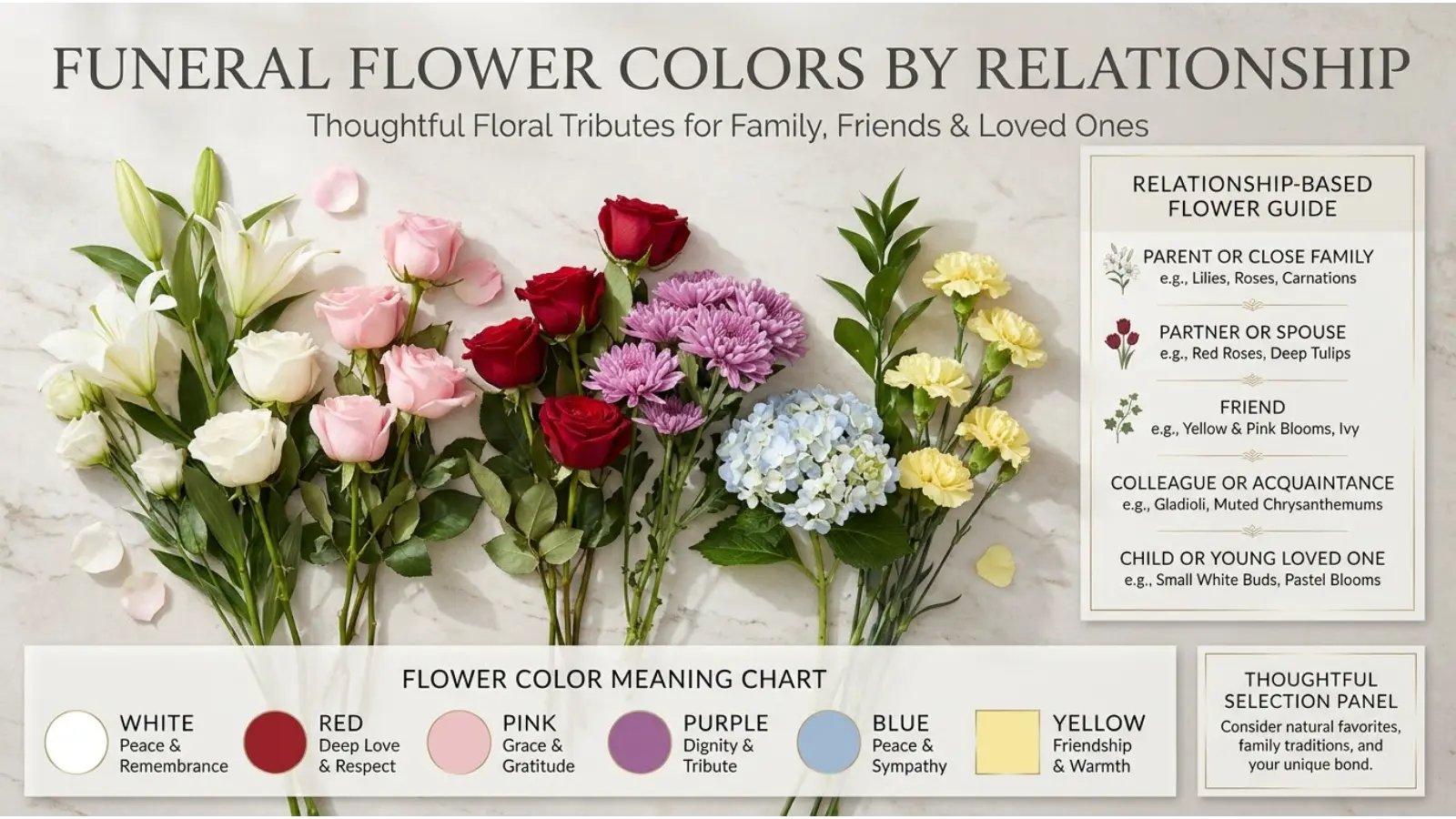
Funeral Flower Color Meanings for Different Relationships
The relationship you shared with the deceased can help guide your choice. For example, a partner may want to express enduring love, while a colleague may prefer a more formal message of respect.
Flowers for a spouse or romantic partner
Red roses can express deep love and devotion. However, white roses may be more suitable when you want to emphasize peace and remembrance. A combination of red and white can communicate both affection and respect.
Flowers for parents and grandparents
White lilies, cream roses, and soft pink carnations can create a thoughtful tribute. Similarly, flowers in a parent’s favorite color may bring back comforting memories of their personality and home.
Flowers for a friend
Yellow roses may symbolize friendship, while pink flowers can express affection and gratitude. If your friend loved bright colors, a cheerful arrangement may be more personal than a traditional all-white bouquet.
Flowers for a colleague or employer
White, cream, and purple arrangements often create a formal appearance. For a workplace tribute, a tasteful wreath or shared arrangement from colleagues may be appropriate.
Flowers for a child
Soft white, pale pink, lavender, or other colors chosen by the family may be suitable. However, there is no single correct color for remembering a child. The family’s wishes and cultural practices should guide the decision.
Flowers for someone who loved nature
Green foliage, seasonal garden flowers, and natural arrangements can reflect a person’s interests. In addition, potted plants may be a thoughtful option when the family welcomes them.
How Culture and Religion Influence Funeral Flower Color Meanings
Funeral traditions differ across the world. Consequently, a color that feels appropriate in one community may have a different meaning in another.
The most respectful approach is to consider the family’s customs instead of assuming that one color has the same meaning everywhere.
Western funeral traditions
In many Western settings, white flowers are associated with peace and remembrance. Red roses may express love, while pink flowers offer a gentle expression of sympathy.
However, modern memorial services often include bright colors, favorite flowers, and personalized displays. As a result, traditional white arrangements are no longer the only option.
East Asian traditions
In several East Asian communities, white flowers and chrysanthemums are associated with mourning and remembrance. Nevertheless, practices vary by country, religion, region, and family.
For example, chrysanthemums are strongly connected with funerals in Japan. In other settings, the same flower may also appear in gardens, seasonal celebrations, or everyday floral arrangements.
South Asian traditions
Funeral and mourning customs across South Asia vary significantly among Hindu, Muslim, Christian, Sikh, Buddhist, and other communities.
Some families use flowers extensively, while others prefer simpler ceremonies. In Muslim communities, practices differ, and flowers may be accepted in some settings but not customary in others. Therefore, ask the family or a trusted community representative before arranging a floral tribute.
Middle Eastern traditions
There is no single funeral flower tradition across the Middle East. Religious practices, national customs, and family preferences all influence whether flowers are used and which colors are appropriate.
Some families welcome white flowers as a gesture of sympathy, while others prefer donations, visits, prayers, or practical support instead.
African traditions
African funeral customs are diverse because the continent includes many nations, languages, religions, and cultural groups. Flowers may be part of some ceremonies, while other communities place greater emphasis on clothing, music, communal gatherings, or specific rituals.
Therefore, avoid assuming that one color represents mourning throughout Africa.
Latin American traditions
In many Latin American communities, flowers play an important role in remembrance. However, traditions differ between countries and families.
For example, marigolds are especially significant during Mexico’s Día de los Muertos, a remembrance tradition that honors deceased loved ones. Their use in this context should not be confused with a universal rule for every funeral.
Indigenous traditions
Indigenous communities have their own distinct beliefs, ceremonies, and relationships with plants and flowers. These traditions should not be grouped into one general system of color symbolism.
If a funeral follows an Indigenous cultural tradition, consult the family’s guidance rather than applying meanings from unrelated cultures.
Practical tip: If you are unsure about cultural expectations, ask a family member, funeral director, or trusted community representative. A simple, respectful arrangement is usually better than a highly symbolic choice based on an assumption.
Spiritual Funeral Flower Color Meanings
Flowers often appear in religious ceremonies and personal acts of remembrance. Their beauty, seasonal changes, and natural life cycles can inspire reflections on love, mortality, renewal, and hope.
Nevertheless, spiritual meanings differ between traditions. A flower may represent eternal life in one religious context and serve mainly as a sign of affection in another.
White flowers and spiritual peace
Some people connect white flowers with purity, peace, or the hope of spiritual rest. In certain Christian settings, flowers may also be used to express hope in resurrection.
However, white does not carry precisely the same religious meaning in every faith. Its significance should be understood within the family’s beliefs.
Purple flowers and spiritual reflection
Purple may be associated with dignity, contemplation, or spiritual reflection in some traditions. It can therefore suit a memorial intended to honor a person’s character, faith, or life achievements.
Still, the presence of purple flowers does not automatically indicate a particular religious belief.
Green flowers and renewal
Green foliage can serve as a natural reminder of growth and the changing seasons. For some people, this creates a personal sense of continuity and hope.
That interpretation is symbolic rather than scientific. People may find comfort in nature without assigning it a specific spiritual meaning.
Flowers as a personal expression of remembrance
A meaningful floral tribute does not need to communicate a complex spiritual message. Sometimes, a person’s favorite flower or the blooms that grew in their garden can provide the strongest connection to their memory.
The Psychology of Funeral Flower Color Meanings
Color psychology explores how people perceive and respond to colors. However, it does not provide a universal code that predicts every person’s emotions.
Color preferences can be influenced by personal experiences, learned associations, culture, surroundings, and the way colors appear together. Therefore, the emotional effect of a funeral arrangement depends on more than the color alone.
Why white can feel peaceful
White often creates a clean, simple visual impression. When paired with greenery and soft lighting, it can make a floral display feel quiet and uncluttered.
Nevertheless, white may remind some people of hospitals, loss, or particular mourning traditions. Its effect depends on individual experience.
Why red can feel emotionally powerful
Red is visually prominent and can attract attention. In a funeral arrangement, this quality makes red roses stand out and helps communicate a strong personal tribute.
However, red can also be associated with celebration, danger, or cultural rituals. Its meaning comes from the setting as well as the color itself.
Why blue can create a calm impression
Blue is often associated with water, open skies, and peaceful landscapes. These familiar connections may contribute to its calming impression.
Even so, blue flowers cannot guarantee a particular emotional response. A person may find blue comforting, while another may prefer warmer colors.
Why yellow can bring back happy memories
Yellow often reminds people of sunshine, flowers, and bright outdoor spaces. In a celebration of life, these associations may help express friendship and positive memories.
Yet yellow is not always cheerful to everyone. Personal memories and cultural traditions can change how the color is understood.
Lighting changes the appearance of funeral flowers
Lighting can significantly affect a flower’s appearance. For example, cream flowers may look nearly white under bright lighting, while deep purple flowers may appear almost black in a dim room.
Similarly, photographs can change how colors appear because of camera settings, screens, and surrounding colors. If the arrangement will be photographed or displayed indoors, consider how the flowers will look under the venue’s lighting.
How to Choose Funeral Flower Color Meanings
The right arrangement should suit the occasion, the family’s wishes, and the message you want to convey. Fortunately, you do not need expert knowledge of symbolism to make a thoughtful choice.
1. Consider the family’s wishes
First, check whether the family has requested particular flowers, colors, or donations instead of flowers. Their preferences should take priority over general symbolism.
2. Think about the person being remembered
Next, consider their personality. Did they love roses, enjoy gardening, or prefer bright colors? A personal detail can make an arrangement more meaningful than a traditional color choice.
3. Match the arrangement to the service
A formal funeral may call for a wreath, casket spray, or standing arrangement. By contrast, a small bouquet may be more suitable for a private memorial or a personal visit.
4. Choose colors that work together
Rather than using too many competing colors, select two or three main shades. White and green create a natural appearance, while pink and cream feel gentle and warm.
5. Consider flower availability and season
Seasonal flowers are often easier to source and may offer better value. Ask the florist which suitable varieties are available locally instead of insisting on a flower that is out of season.
6. Check delivery and venue rules
Some funeral homes and religious venues have specific requirements for flower placement, containers, or delivery times. Confirm these details before ordering.
7. Include a simple sympathy message
A short message can explain your intention more clearly than the flowers alone. For example, you might write, “With heartfelt sympathy and loving memories,” or “Thinking of your family during this difficult time.”
Colorful Chart: Best Funeral Flower Color Combinations
Combining colors allows you to communicate more than one sentiment at a time. In addition, a balanced palette can make an arrangement look more natural and visually pleasing.
| Color combination | Overall impression | Suggested flowers |
|---|---|---|
| ⚪ White + 🟢 Green | Peaceful and natural | White lilies, white roses, foliage |
| 🔴 Red + ⚪ White | Love and respect | Red roses, white carnations |
| 🌸 Pink + ⚪ Cream | Gentle and affectionate | Pink roses, cream chrysanthemums |
| 🟣 Purple + ⚪ White | Dignified and elegant | Purple irises, white roses |
| 🔵 Blue + ⚪ White | Calm and serene | Blue hydrangeas, white roses |
| 🟡 Yellow + 🟢 Green | Friendship and warm memories | Yellow roses, fresh foliage |
| 🟠 Orange + ⚪ Cream | Warm and individual | Orange gerberas, cream flowers |
| 🟣 Lavender + 🌸 Pink | Soft and reflective | Lavender-toned blooms, pink roses |
These combinations are starting points rather than strict rules. For instance, a person who loved orange may appreciate an arrangement built around orange flowers, even if a more traditional palette would use white.
Funeral Flower Color Meanings for Different Occasions
Not every floral tribute serves the same purpose. Therefore, the type of event can help determine the most suitable colors and arrangement.
Funeral service
White, cream, and restrained combinations are often suitable for a traditional service. However, follow the family’s preferences if they have requested a celebration of life or a particular theme.
Memorial service
A memorial service may allow greater flexibility because its purpose can include both mourning and celebrating a person’s life. Favorite flowers, colorful bouquets, and personal touches may be appropriate.
Sympathy flowers sent to a home
Soft pink, white, cream, and green arrangements can express care without being overly formal. Moreover, a manageable bouquet may be more practical than a large standing display.
Cemetery or graveside tribute
Choose flowers that suit the location and its rules. Some cemeteries restrict certain arrangements, containers, or artificial decorations, so check beforehand.
Anniversary of a death
On a remembrance anniversary, a favorite flower or color may be more meaningful than a traditional funeral arrangement. For example, yellow roses might recall a friendship, while white flowers may suit a quiet act of remembrance.
Funeral Flower Color Meanings in Art, Photography, and Design
Funeral flowers also communicate through their visual arrangement. Florists and designers consider color contrast, shape, texture, and balance to create a tribute that feels appropriate to the occasion.
How florists use color
Florists often use a dominant color to establish the overall mood, then add smaller amounts of contrasting colors to create visual interest.
For example, white flowers may form the main arrangement, while purple blooms add depth. Likewise, greenery separates individual flowers and helps the design look balanced.
How photographers capture funeral flowers
White flowers against a dark background can create a strong visual contrast. On the other hand, pale flowers photographed against a light background may look softer and less dramatic.
Lighting also affects the result. Diffused daylight can preserve delicate color differences, whereas strong artificial lighting may alter the appearance of cream, pink, and purple petals.
How to make a personal tribute
A personalized arrangement can include a favorite flower, a color connected with a shared memory, or greenery from a type of garden the person loved.
However, personal touches should remain appropriate to the family’s wishes and the setting. The goal is to honor the person, not to create a display that distracts from the ceremony.
Common Misconceptions About Funeral Flower Color Meanings
Several common assumptions can make choosing funeral flowers more confusing than necessary.
Myth 1: White is the only appropriate funeral flower color
White is a traditional choice in many settings, but it is not the only respectful option. Red, pink, purple, yellow, and other colors can all be suitable when they reflect the occasion and the family’s preferences.
Myth 2: Bright flowers are disrespectful
Bright colors are not automatically inappropriate. In fact, they may be welcome at a celebration of life or when remembering someone who loved vivid colors.
Myth 3: Every flower color has one fixed meaning
Flower symbolism varies across cultures, generations, and personal experiences. Therefore, no single color dictionary can explain what every arrangement means to every person.
Myth 4: Red flowers are only for romantic partners
Red flowers can express romantic love, but they can also represent devotion, family affection, or respect. The relationship and message determine how the arrangement is likely to be understood.
Myth 5: Funeral flowers must be expensive
A meaningful tribute does not depend on price. A small bouquet of seasonal flowers or a single flower chosen with care may be just as thoughtful as a large arrangement.
Myth 6: Flower colors can reliably determine emotions
There is no reliable universal rule that a particular flower color will create the same emotional response in everyone. Color associations can influence perception, but personal memories and cultural context matter too.
Frequently Asked Questions About Funeral Flower Color Meanings
1. What is the best color for funeral flowers?
White is a widely recognized choice because it often symbolizes peace, purity, and remembrance. However, pink, purple, red, and other colors can also be appropriate. The best option depends on the family’s traditions, the relationship, and the message you want to convey.
2. What color flowers are best for sympathy?
White, cream, and soft pink are common choices for sympathy flowers because they create a gentle, respectful impression. Nevertheless, a person’s favorite flowers or colors can be equally meaningful when chosen thoughtfully.
3. What do white funeral flowers mean?
White funeral flowers commonly represent peace, purity, respect, and remembrance. In some religious settings, they may also symbolize spiritual hope. However, their meaning varies across traditions and individual beliefs.
4. Are red roses appropriate for a funeral?
Yes. Red roses can express deep love, devotion, and respect. They are particularly meaningful for a close family member or partner, although red flowers can also honor other important relationships.
5. What do yellow funeral flowers mean?
Yellow flowers often symbolize friendship, warmth, and happy memories. They can be a thoughtful choice for a celebration of life, especially when the deceased enjoyed bright colors. However, their meaning differs across cultures.
6. What flower color represents grief and mourning?
There is no universal color for grief. White is associated with mourning in many communities, while black, purple, and other colors may have mourning-related meanings in particular traditions. The appropriate choice depends on the cultural and religious setting.
7. What color flowers should I send to a grieving family?
White, cream, or soft pink flowers are generally versatile choices for expressing sympathy. However, you should check the family’s wishes and consider whether flowers are customary in their community. A thoughtful message can also provide comfort.
8. Are purple flowers suitable for a funeral?
Yes. Purple flowers can convey dignity, honor, and admiration. Lavender shades create a softer appearance, while deep purple can produce a more formal design. Combine purple with white or cream for a balanced arrangement.
9. Is it appropriate to send colorful flowers to a funeral?
Yes, when the family and ceremony allow it. Bright flowers can celebrate the deceased’s personality and the happy memories they left behind. If you are unsure, choose a balanced arrangement or ask the family what they prefer.
10. Should funeral flowers match the deceased person’s favorite color?
They can, especially when the arrangement is intended to celebrate the person’s life. A favorite color can make the tribute personal and memorable. However, consider the family’s preferences and the formality of the service before making your choice.
Conclusion
Funeral flower color meanings offer a thoughtful way to express love, sympathy, respect, and remembrance. White often suggests peace, red communicates strong affection, pink expresses tenderness, purple conveys dignity, and yellow can celebrate friendship and happy memories.
However, the most meaningful arrangement is not necessarily the one that follows traditional symbolism most closely. Instead, consider the person being remembered, the family’s customs, and the message you hope to share.
A favorite flower, a carefully chosen color combination, or a simple seasonal bouquet can all honor a life with sincerity. Ultimately, funeral flowers matter because of the care behind the gesture and the memories they help keep alive.

Emma Wilson is a dedicated comparison writer and product researcher at ColorMystiic.com. She specializes in creating unbiased product comparisons, detailed reviews, and helpful buying guides. Her goal is to help readers make smarter purchasing decisions with confidence.