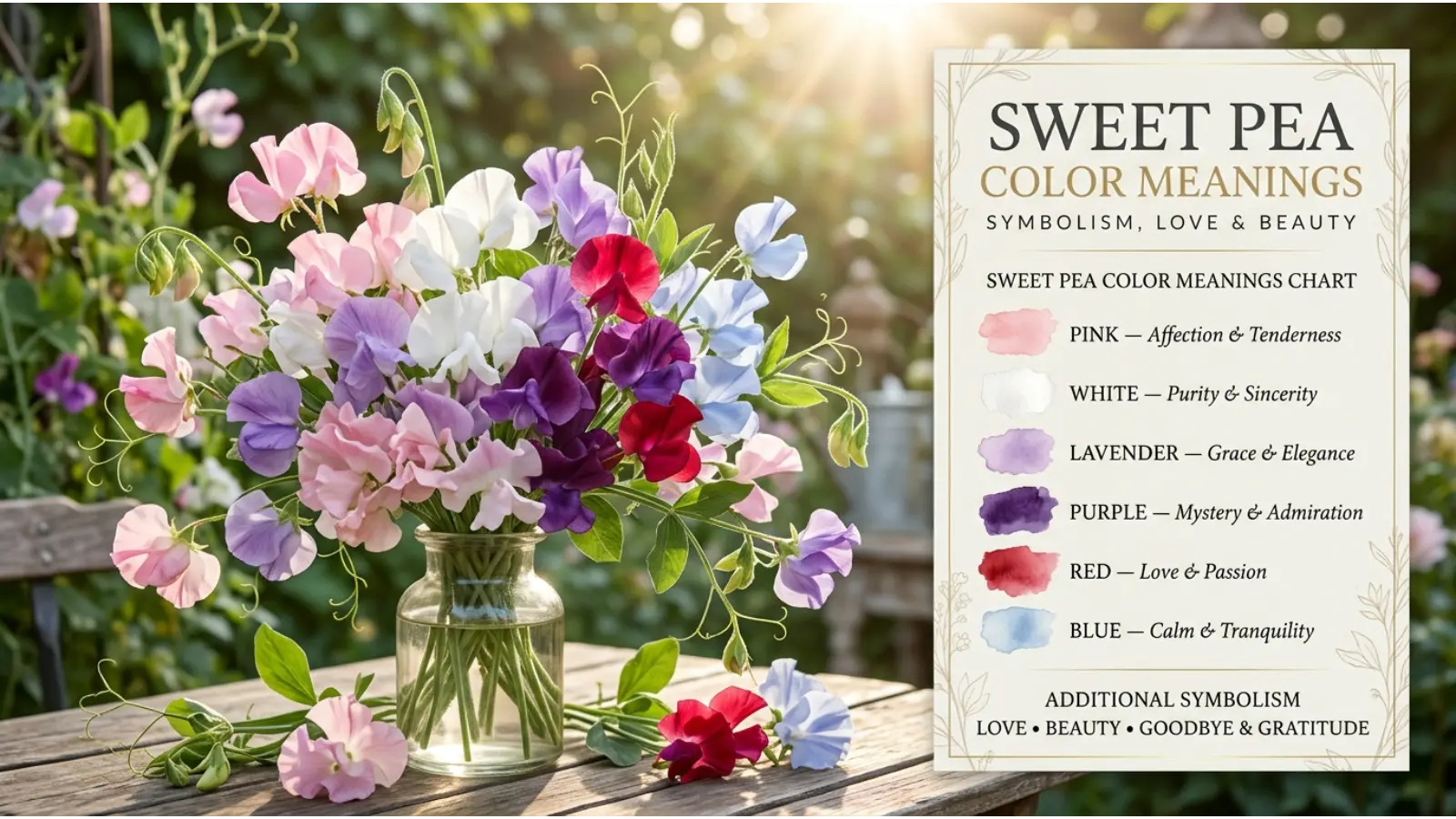
Sweet peas are delicate, fragrant flowers known for their soft petals, climbing vines, and romantic appearance. However, their beauty means more than decoration. Different sweet pea colors can express affection, gratitude, happiness, admiration, and gentle romance. That is why people search for sweet pea color meanings when choosing flowers for gifts, weddings, gardens, or special occasions.
Unlike a standardized color code, flower symbolism depends on tradition, personal experience, and the message a person wants to express. In addition, the sweet pea flower has its own history and associations that distinguish it from roses, tulips, and other popular blooms. This guide explores the symbolism of different sweet pea colors, their emotional associations, and practical ways to use them in everyday life.
Quick Answer: Sweet pea flowers commonly symbolize blissful pleasure, appreciation, gratitude, and gentle affection. Pink sweet peas suggest tenderness, purple represents elegance and admiration, white conveys purity and simplicity, and red or deeper shades can express romance and passion. These color meanings are symbolic rather than universal rules.
What Do Sweet Pea Flowers Symbolize?
Sweet peas are best known for their association with pleasure, gratitude, and appreciation. Their delicate appearance and sweet fragrance make them a natural choice for expressing warm feelings without an overly dramatic message.
Furthermore, sweet peas are often associated with thoughtful gestures and happy memories. A bouquet can communicate that someone is appreciated, remembered, or valued.
The flower’s symbolism also connects with its graceful growth. Sweet peas are climbing plants, so their twisting stems and delicate tendrils can inspire ideas of connection, growth, and reaching toward something beautiful. These are personal interpretations, however, rather than established meanings shared by every culture.
The Main Symbolic Meanings of Sweet Peas
| Symbol | What it can express |
|---|---|
| 🌸 Pleasure | Happiness, enjoyment, and life’s small joys |
| 💗 Affection | Tender feelings and emotional warmth |
| 🎁 Gratitude | Appreciation for someone’s kindness |
| 🦋 Beauty | Grace, softness, and delicate charm |
| 🌿 Growth | New experiences and personal development |
| 💐 Remembrance | Cherished moments and meaningful connections |
These meanings are useful when selecting flowers for a particular person. For example, sweet peas can make a thoughtful thank-you gift, while a pastel bouquet can create a gentle and romantic atmosphere.
Sweet Pea Color Meanings: What Each Shade Represents
Although sweet peas come in many colors, each shade creates a different visual impression. The meanings below reflect common color associations and flower-gifting traditions, not a fixed botanical language.
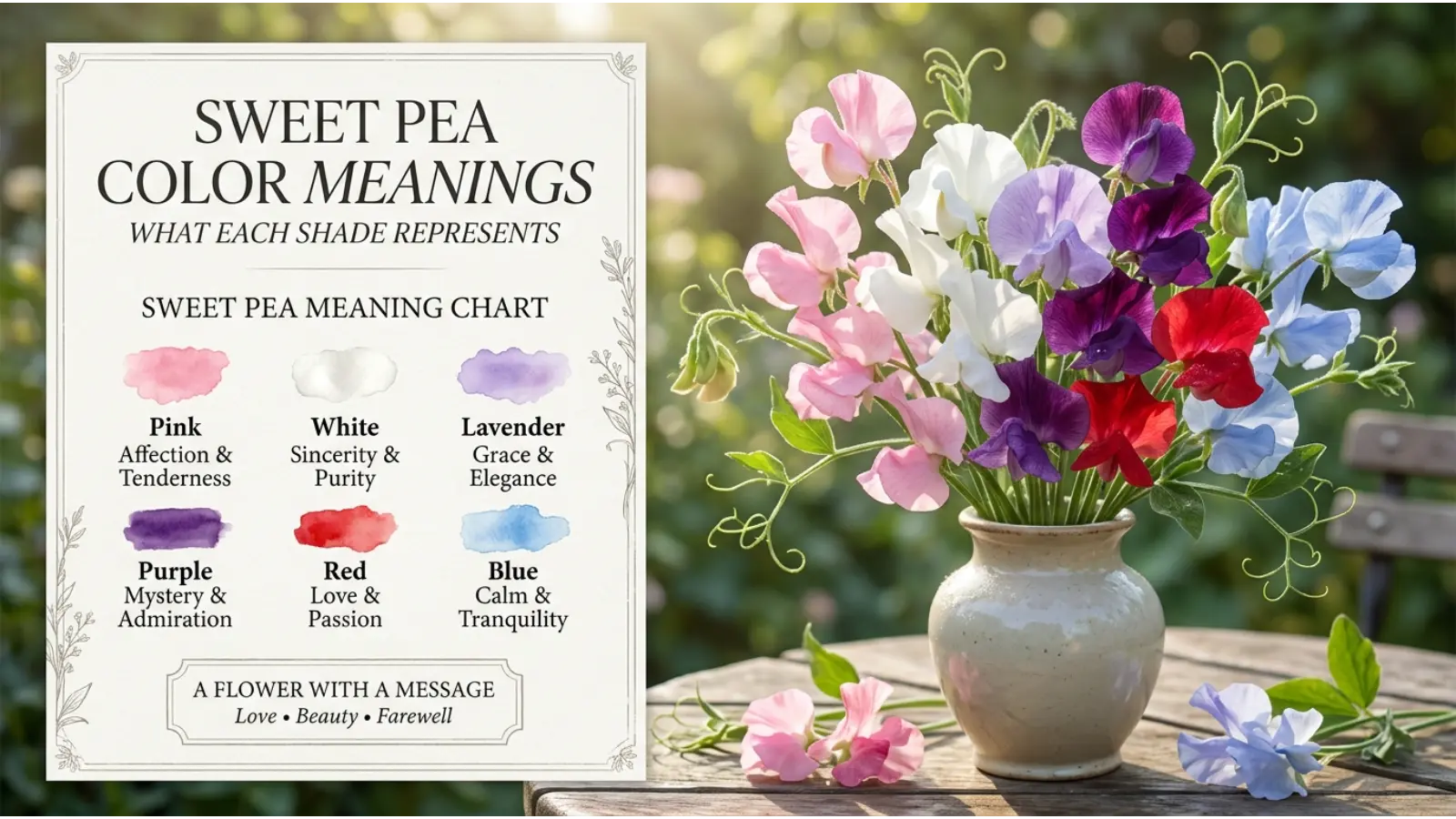
Pink Sweet Pea Color Meaning
Pink sweet peas are associated with tenderness, affection, kindness, and gentle romance. Their soft appearance makes them especially suitable for expressing care without the intensity often connected with bright red flowers.
🌸 Pink — Tenderness, affection, and warmth</text>
Pink varieties work beautifully in birthday bouquets, bridal arrangements, and gifts for friends or family members. Pale pink suggests softness and sweetness, whereas a stronger pink can create a more cheerful and noticeable effect.
In addition, pink sweet peas pair well with white flowers and fresh greenery. This combination creates a graceful arrangement that feels welcoming rather than dramatic.
Purple Sweet Pea Color Meaning
Purple sweet peas can symbolize elegance, admiration, creativity, and mystery. Since purple has long been associated in various settings with richness and distinction, it often gives floral arrangements a more refined appearance.
💜 Purple — Elegance, admiration, and creativity
Light lavender shades feel calm and dreamy, while deep purple varieties create a stronger, more dramatic impression. Therefore, purple sweet peas are useful for sophisticated celebrations, artistic floral displays, and gifts for someone whose individuality you admire.
However, purple does not always mean royalty or spirituality. The final impression depends on the shade, surrounding colors, and the recipient’s own associations.
White Sweet Pea Color Meaning
White sweet peas are commonly associated with simplicity, sincerity, peace, and purity. Their clean appearance makes them versatile because they complement almost any other flower color.
🤍 White — Simplicity, sincerity, and peace
White sweet peas are suitable for weddings, elegant table arrangements, and understated gifts. They can also soften a colorful bouquet by giving the eye a quiet place to rest.
Moreover, white flowers look different under warm and cool lighting. Warm light can make their petals appear creamy, while cool daylight may emphasize a crisp, almost silvery white.
Red Sweet Pea Color Meaning
Red sweet peas can suggest passion, romantic interest, courage, and strong affection. These associations come mainly from the broader symbolism of red rather than from a universal sweet pea tradition.
❤️ Red — Passion, romance, and strong feelings
A red sweet pea arrangement can make a bold statement, particularly when paired with white or pale pink blooms. Nevertheless, red sweet pea varieties are less common than many pastel shades, so check the actual flower color when ordering a bouquet.
For a romantic gift, the surrounding colors matter too. A red-and-white arrangement feels more balanced, whereas red combined with deep purple creates a richer and more dramatic display.
Blue Sweet Pea Color Meaning
Blue sweet peas, when available, may suggest calmness, trust, peace, and openness. These associations are linked to blue’s wider cultural and visual meanings.
💙 Blue — Calmness, trust, and tranquility
True blue sweet peas are not a standard, widely available natural color range. Some varieties sold with blue-related names appear more violet, lavender, or mauve in person. Therefore, examine photographs and descriptions carefully before buying.
Blue-toned floral arrangements can look refreshing with white flowers and silver-green foliage. They are particularly useful when you want a cool, peaceful color palette.
Lavender Sweet Pea Color Meaning
Lavender sweet peas are associated with gentleness, grace, calmness, and delicate beauty. Their pale purple tones create a softer impression than deep violet.
Lavender — Grace, calmness, and gentle beauty
Lavender sweet peas work especially well in spring bouquets, romantic decorations, and relaxed bedroom or event arrangements. In addition, they complement blush pink, cream, and pale green.
Because lavender sits between purple and a lighter pastel appearance, it can feel both elegant and friendly. This balance makes it a useful choice when a bouquet needs to look special without feeling formal.
Peach and Apricot Sweet Pea Color Meaning
Peach and apricot sweet peas can express warmth, appreciation, friendliness, and optimism. Their orange-pink undertones create a welcoming impression that is often less intense than bright orange or red.
🍑 Peach — Warmth, friendliness, and appreciation
These colors suit thank-you gifts, spring celebrations, and arrangements for someone who enjoys warm, cheerful tones. Pair them with cream flowers and soft greenery for a natural appearance.
Although peach is often used to represent appreciation, its meaning is not exclusive to sweet peas. The recipient’s taste and the occasion should guide the final choice.
White and Pink Sweet Pea Color Meaning
A combination of white and pink sweet peas can express tenderness, sincerity, and thoughtful affection.
🌷 Pink and white — Gentle affection and sincerity
This pairing is especially useful for bridal showers, birthdays, anniversaries, and friendly gifts. White balances the warmth of pink, while pink keeps the arrangement from appearing too plain.
Mixed-Color Sweet Pea Meaning
A mixed-color sweet pea bouquet can symbolize happiness, appreciation, variety, and celebration. Since it includes several shades, it can communicate a broader feeling instead of one specific emotion.
🌈 Mixed colors — Joy, variety, and celebration
For instance, pink, lavender, and white create a romantic pastel palette. By contrast, purple, peach, and deep pink feel richer and more energetic.
Mixed bouquets are ideal when you are unsure which single color best expresses your feelings. Even so, keeping the palette coordinated usually creates a more attractive result.
Colorful Chart: Sweet Pea Color Meanings at a Glance
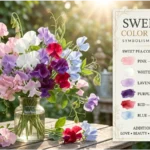
Use this simple chart to compare common sweet pea color associations before choosing flowers.
| Flower color | Main meaning | Best suited for |
|---|---|---|
| 🌸 Pink | Tender affection | Birthdays and romantic gifts |
| 💜 Purple | Admiration and elegance | Special celebrations |
| 🤍 White | Sincerity and simplicity | Weddings and formal arrangements |
| ❤️ Red | Passion and romance | Romantic occasions |
| 💙 Blue-toned | Calmness and trust | Cool-toned floral designs |
| 🪻 Lavender | Grace and tranquility | Spring bouquets |
| 🍑 Peach | Warmth and appreciation | Thank-you gifts |
| 🌈 Mixed | Joy and celebration | Parties and cheerful gifts |
Remember that these are suggested interpretations. There is no universal chart that assigns one official meaning to every sweet pea shade.
Sweet Pea Color Meanings Psychology: How Colors Shape Perception
Sweet pea color meanings are influenced by general color psychology, personal memories, and the way flowers look in their surroundings. However, the psychological effects of color should not be confused with proven effects of a particular flower.
Why Pink Feels Gentle
Pink is often connected with softness, affection, and friendliness. Its lighter shades may look less forceful than bright red, making pink sweet peas suitable for settings where warmth and tenderness are the intended impressions.
Nevertheless, people do not all respond to pink in the same way. Personal taste, age, cultural expectations, and previous experiences can change how a person interprets the color.
Why Purple Can Feel Sophisticated
Purple often appears distinctive because it combines visual qualities associated with red and blue. Depending on its shade, it may feel rich and dramatic or soft and peaceful.
Consequently, purple sweet peas can make a bouquet appear elegant without requiring many additional flowers. Deep shades create contrast, while lavender tones produce a more delicate effect.
Why White Creates Visual Simplicity
White provides contrast against darker colors and can make a floral arrangement feel open and uncluttered. It also reflects a large amount of visible light, which helps explain why white petals stand out against green foliage.
However, white does not automatically make a room or bouquet feel peaceful. Bright artificial lighting, sharp contrasts, and surrounding objects can change the overall impression.
What Research Can and Cannot Tell Us
Research on color perception shows that context, learned associations, and individual differences affect how people interpret colors. However, it would be inaccurate to claim that a pink sweet pea reliably produces a specific emotion or that purple flowers have a measurable spiritual effect.
In practice, use color psychology as a design guide rather than a strict scientific rule. Observe how a particular combination looks, consider the occasion, and choose the colors that best fit the message.
Spiritual Sweet Pea Color Meanings
Sweet peas can carry personal spiritual meanings because of their delicate appearance, fragrance, and association with pleasure and appreciation. People may use them as reminders to value relationships, notice beauty, or welcome positive experiences.
Sweet Peas as Symbols of Growth
The climbing habit of sweet pea plants can inspire a personal interpretation of growth, persistence, and reaching toward new opportunities. Their stems use tendrils to climb nearby supports, making them a useful natural example of how plants adapt to their surroundings.
A person might therefore use sweet peas as a reminder to stay connected with supportive people while working toward personal goals. This is a reflective interpretation, not a universal spiritual teaching.
Sweet Peas and Gratitude
Sweet peas are well suited to gratitude rituals, meaningful gifts, or quiet moments of reflection. Their fragrance and delicate appearance can help make a simple gesture feel thoughtful.
For example, placing a small bouquet on a table may serve as a reminder to appreciate everyday kindness. The significance comes from the person’s intention rather than a guaranteed spiritual property of the flower.
Do Sweet Peas Have a Religious Meaning?
Sweet peas do not have one universal religious meaning across all faiths. Their interpretation depends on the traditions and beliefs of the people using them.
Therefore, avoid presenting sweet peas as an official symbol of a particular religion unless a reliable tradition-specific source supports that claim. Personal spiritual associations should remain distinct from established religious teachings.
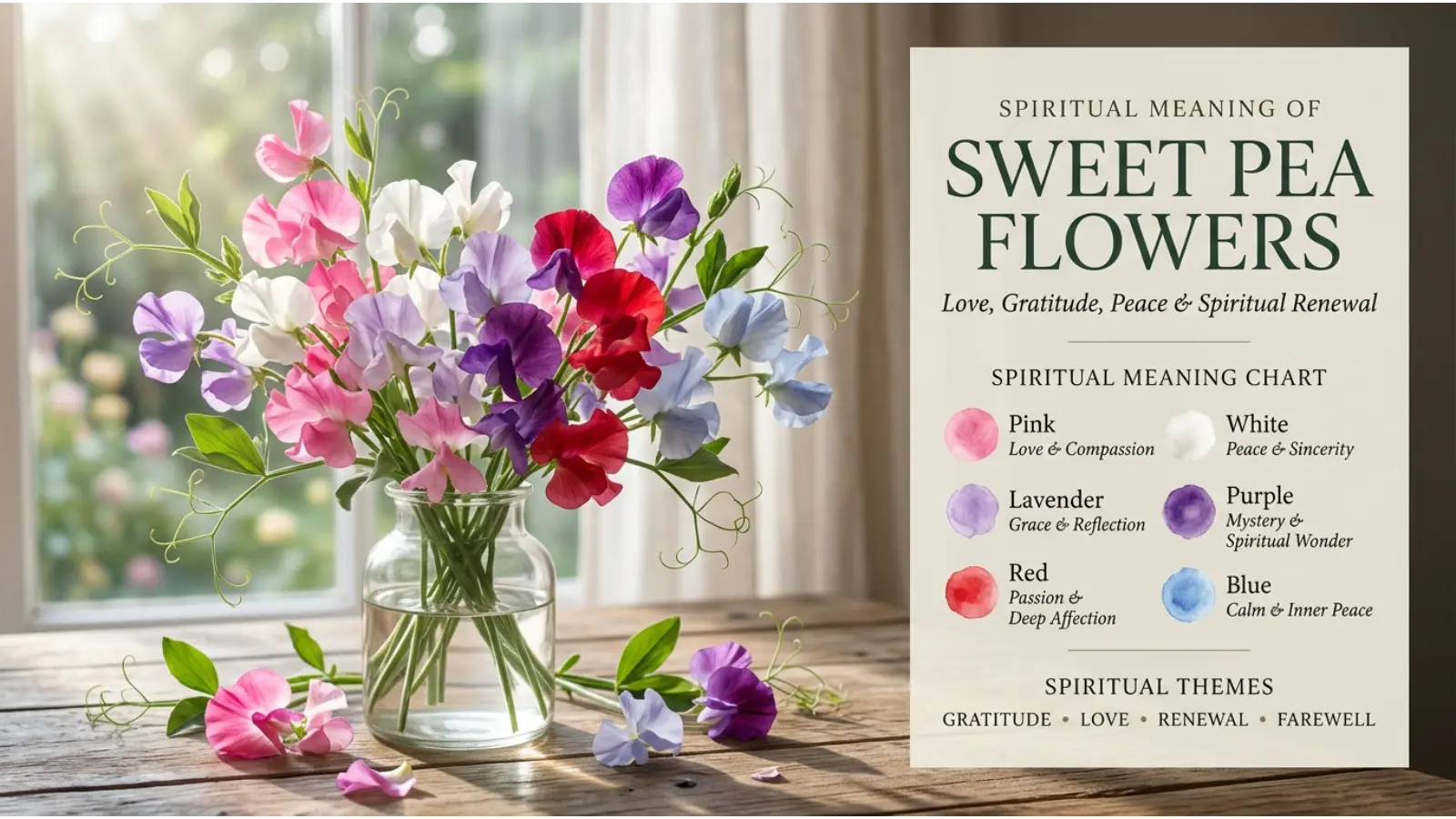
Cultural and Historical Sweet Pea Color Meanings
Sweet peas have a documented place in garden history, but their symbolic meanings are less standardized than those of some flowers used in long-standing religious or ceremonial traditions.
How Sweet Peas Became Popular Garden Flowers
Sweet peas belong to the species Lathyrus odoratus, a flowering plant native to Sicily and nearby parts of the Mediterranean region. They became popular in European gardens after being introduced into cultivation and developed into a wide range of ornamental varieties.
Gardeners later selected plants with different flower colors, forms, and fragrances. As a result, sweet peas became familiar in cottage gardens, floral displays, and cut-flower arrangements.
Their delicate appearance and pleasant scent helped establish them as flowers associated with enjoyment and thoughtful gifts. Nevertheless, not every modern symbolic meaning can be traced to a specific historical event.
Sweet Pea Meanings in Western Flower-Gifting Traditions
In Western floral symbolism, sweet peas are commonly associated with blissful pleasure, appreciation, and gratitude. These associations make them suitable for bouquets given to friends, hosts, and loved ones.
However, flower symbolism has never been completely standardized. Floral dictionaries, local customs, and modern gift-giving practices can assign different meanings to the same bloom.
Do Sweet Peas Have the Same Meaning Worldwide?
No. People interpret flowers through local customs, personal experiences, and the meanings attached to particular occasions.
For example, one person may choose white sweet peas because they look clean and elegant, while another may associate white with a cultural or ceremonial tradition. Neither interpretation should automatically be treated as universal.
When selecting flowers for an international celebration, consider the recipient’s customs and preferences rather than assuming that a Western flower meaning applies everywhere.
Sweet Pea Color Meanings and Personality Associations
Some people use favorite flower colors to express aspects of their style or identity. Although these associations can be enjoyable, color preferences do not reliably reveal someone’s personality.
| Preferred sweet pea color | Possible style association |
|---|---|
| 🌸 Pink | Warm, gentle, and romantic |
| 💜 Purple | Creative, expressive, and distinctive |
| 🤍 White | Simple, balanced, and understated |
| ❤️ Red | Bold, passionate, and confident |
| 🪻 Lavender | Dreamy, graceful, and calm |
| 🍑 Peach | Friendly, welcoming, and cheerful |
| 🌈 Mixed colors | Playful, lively, and expressive |
These descriptions are best understood as impressions rather than psychological assessments.
For instance, someone who chooses white sweet peas might appreciate a minimalist design, but that does not mean they are naturally quiet or reserved. Similarly, choosing red flowers for an anniversary does not prove that a person has a more passionate personality.
Instead, use flower colors to communicate the mood you want to create. That approach is more reliable than trying to judge someone’s character from a favorite shade.
Sweet Peas in Weddings and Special Occasions
Sweet peas are popular choices for floral arrangements because of their delicate petals, fragrance, and range of colors. They can suit both relaxed celebrations and elegant events.
Sweet Peas for Weddings
Pink, white, and lavender sweet peas create a soft, romantic appearance. They work well in bridal bouquets, table arrangements, and small decorative displays.
For a classic wedding palette, combine white sweet peas with pale pink roses and greenery. Alternatively, pair lavender sweet peas with cream flowers for a gentle contrast.
Since sweet peas have relatively delicate stems and petals, discuss seasonal availability and handling with your florist before relying on them for a large event.
Sweet Peas for Birthdays
Bright pink, peach, and mixed-color sweet peas create a cheerful birthday arrangement. They are especially suitable when you want to offer something thoughtful without choosing a strongly romantic flower color.
To personalize the gift, select a palette that matches the recipient’s favorite colors or home decor.
Sweet Peas as Thank-You Flowers
Sweet peas are a natural option for expressing appreciation. A small bunch in white, pink, or peach can communicate gratitude without appearing overly formal.
Moreover, a handwritten note explaining why you appreciate the recipient makes the gift more personal. The meaning comes from the combination of flowers, intention, and words.
Sweet Peas for Anniversaries
Pink and purple sweet peas can create an affectionate anniversary arrangement. Red flowers may add a stronger romantic impression when available.
For a balanced bouquet, use one main color and a smaller amount of a complementary shade. This keeps the arrangement visually clear while allowing the flowers’ natural form to stand out.
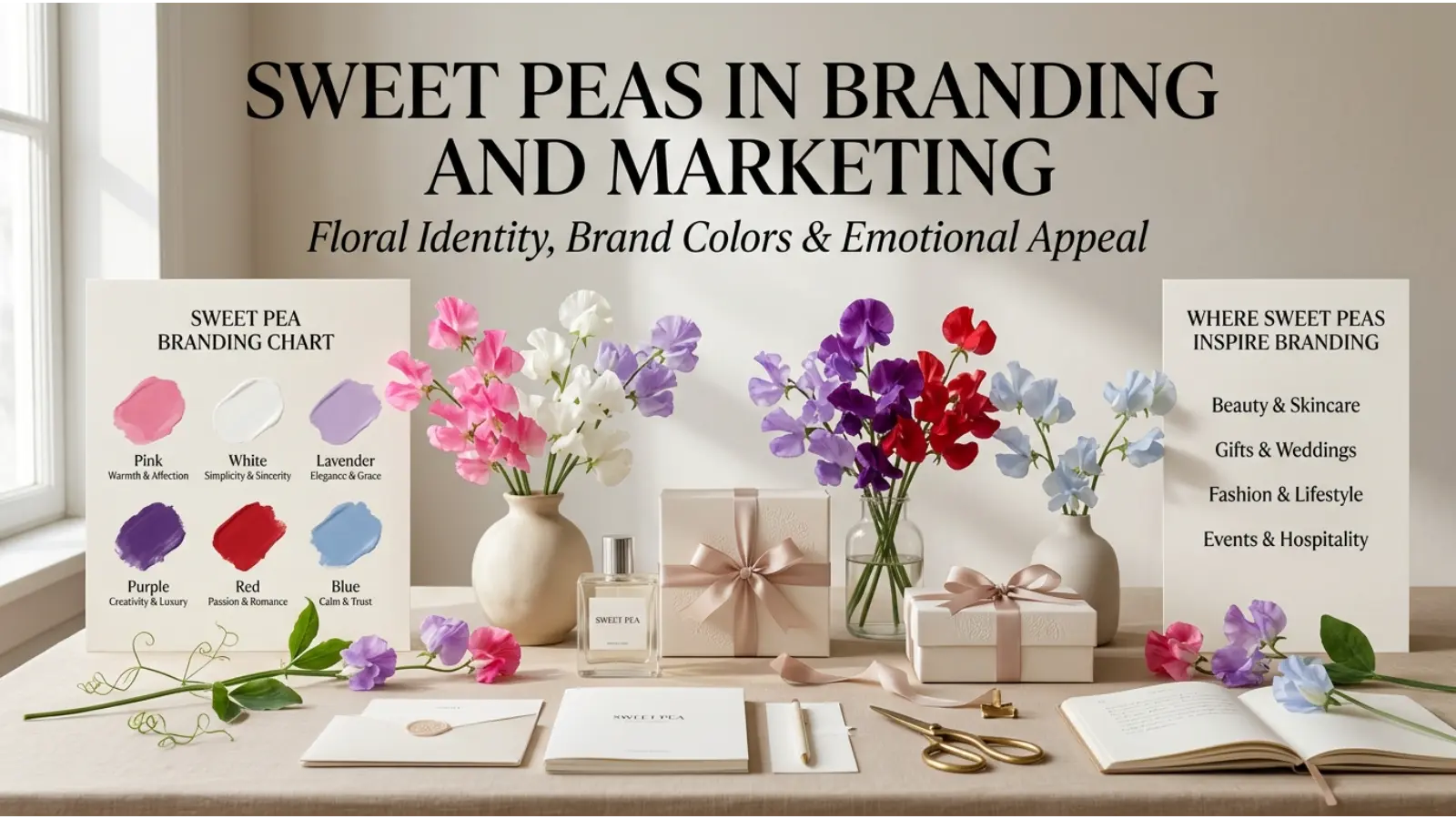
Sweet Peas in Branding and Marketing
Sweet peas are not as common in major corporate logos as abstract shapes or widely recognized flowers. However, their visual qualities can still be useful in branding, particularly for businesses connected with flowers, gifts, gardens, weddings, and handmade products.
Why Businesses Choose Sweet Pea Colors
Soft pink and lavender can create a gentle, romantic brand identity. White can suggest simplicity, while peach introduces warmth and friendliness.
A florist, for example, might use pink and green across packaging to communicate freshness and delicate beauty. A wedding planner could choose lavender and cream to create a more refined visual identity.
These are design choices, not guaranteed ways to influence customers. Their success depends on the target audience, product quality, pricing, and consistency across marketing materials.
Using Sweet Pea Colors in Packaging
Consider these practical combinations:
- Pink and white: Suitable for gift boxes, wedding stationery, and romantic products.
- Purple and cream: Useful for elegant floral packaging and premium-looking designs.
- Peach and green: Creates a fresh, friendly appearance for garden-related products.
- Lavender and white: Works well for gentle, minimal branding.
In addition, check color contrast before printing labels or packaging. Pale lettering on a pastel background may look attractive but become difficult to read.
Sweet Pea Colors on Websites and Social Media
A sweet pea-inspired palette can create visual consistency across a website, product photography, social posts, and printed materials.
Use one primary color, one supporting color, and a neutral shade. For example, pink can be the main brand color, green can provide contrast, and white can keep the layout readable.
However, avoid using too many pale colors for body text. Darker text on a light background is usually easier to read, especially on mobile screens.
Sweet Pea Color Meanings in Interior Design
Sweet peas can inspire interior color palettes even when fresh flowers are not present. Their pink, purple, white, and peach tones work well in rooms that need a soft, natural appearance.
Pink Sweet Peas in the Bedroom
Pink-inspired decor can create a warm, gentle visual atmosphere. Try blush bedding, cream curtains, and a small vase of pink sweet peas.
To prevent the room from feeling overly sweet, add natural wood furniture or darker green accents. These elements introduce contrast and give the palette more depth.
Purple Sweet Peas in the Living Room
Lavender and muted purple can add color without overwhelming a living room. Use them in cushions, artwork, a vase, or a small accent chair.
For a balanced result, pair purple with warm white and natural wood. Deeper purple works best in smaller amounts when the room has limited natural light.
White Sweet Peas in Minimalist Spaces
White flowers complement minimalist interiors because they introduce natural detail without adding another strong color.
Place white sweet peas in a simple glass or ceramic vase against a neutral background. Green foliage adds a fresh contrast, while cream textiles create a warmer atmosphere.
Peach Sweet Peas in Kitchens and Dining Areas
Peach can make a kitchen or dining area feel welcoming. Use it in small accessories, table linens, or flower arrangements instead of covering every surface with the same color.
Pair peach with warm white, light wood, or muted green. These combinations create a natural look that feels more balanced than a room filled with bright orange-pink tones.
How Lighting Changes Sweet Pea-Inspired Colors
Lighting can significantly affect how colors appear.
- Warm lighting: Makes pink, peach, and cream appear warmer.
- Cool lighting: Can make lavender and white appear sharper or bluer.
- Natural daylight: Usually gives a more balanced view of the actual color.
- Dim lighting: Can reduce the visible difference between similar pastel shades.
Therefore, test paint samples and fabric swatches in the room where they will be used. A color that looks beautiful in a bright shop may appear dull under a different light source.
Sweet Pea Colors in Fashion
Sweet pea-inspired colors can be used in clothing, accessories, and seasonal outfits. Their softer tones work particularly well when you want a fresh appearance without relying on bold, high-contrast colors.
Pink for a Soft, Romantic Style
Pink dresses, scarves, and blouses can create a gentle and approachable look. Combine pale pink with white for a light outfit or with charcoal for a stronger contrast.
A pink accessory is also an easy way to introduce color into a neutral wardrobe without committing to a complete pink outfit.
Purple for an Elegant Appearance
Lavender clothing feels light and relaxed, while deep purple can create a richer, more formal impression.
For everyday wear, pair lavender with cream, gray, or denim. For evening occasions, deep purple can work well with black, silver, or other muted shades.
White for a Clean, Classic Look
White clothing is versatile because it pairs with nearly every color. A white outfit can look fresh and simple, while white combined with pink or lavender creates a softer palette.
However, fabric texture and fit affect the overall impression just as much as color. Linen, cotton, satin, and wool can make the same shade look quite different.
Peach for Warmth
Peach works well with cream, beige, olive green, and denim. It is a useful option for spring and summer outfits, although it can be worn throughout the year when paired with suitable fabrics.
When choosing peach clothing, consider your preferred undertone and the lighting in which you will wear it. The same shade can look more orange or more pink under different light sources.
Best Color Combinations for Sweet Pea Flowers
Sweet peas have soft petals and varied colors, so thoughtful combinations can highlight their natural beauty without making a bouquet look crowded.
| Color combination | Visual effect | Best use |
|---|---|---|
| 🌸 Pink + 🤍 White | Soft and romantic | Weddings and gifts |
| 💜 Purple + 🌿 Green | Natural and elegant | Garden arrangements |
| 🪻 Lavender + 🍦 Cream | Gentle and refined | Home decor |
| 🍑 Peach + 🤍 White | Warm and welcoming | Birthdays |
| ❤️ Red + 🤍 White | Bold yet balanced | Romantic bouquets |
| 🌸 Pink + 🪻 Lavender | Dreamy and coordinated | Spring celebrations |
| 🌈 Mixed pastels + 🌿 Green | Fresh and cheerful | Everyday arrangements |
How to Create a Balanced Bouquet
Start by choosing one dominant flower color. Next, add a supporting shade that either complements it or provides gentle contrast. Finally, use greenery or neutral flowers to separate the colors visually.
For example, a bouquet of pink sweet peas, white flowers, and green foliage creates a clear focal point. Adding several unrelated bright colors may make the arrangement feel busy, particularly when the flowers have different shapes.
Consider flower size and texture as well. Sweet peas have delicate petals, so pairing them with a few larger blooms can create variety without hiding their natural form.
Real-World Uses of Sweet Pea Color Meanings
Sweet pea colors are useful whenever flowers need to communicate a mood or complement a setting. Their meanings are flexible, which makes them suitable for both personal and professional use.
In Everyday Life
A small bouquet can brighten a dining table, welcome a guest, or express appreciation after someone has helped you. Choose a color that suits the relationship and the occasion.
If you do not know the recipient’s favorite color, pink, white, or a coordinated pastel mixture can be a versatile starting point.
In Art and Photography
Photographers often use flower color, background, and light to guide attention. Pink sweet peas against green foliage create natural contrast, while white flowers against a pale background produce a quieter image.
For a dramatic photograph, place purple sweet peas against a lighter neutral background. Side lighting can reveal the texture of the petals, while soft daylight helps preserve subtle color differences.
In Gardening
Sweet peas are climbing annuals that generally benefit from support, suitable growing conditions, and regular care. Their flowers can add vertical interest to fences, trellises, and garden structures.
When planning a garden, combine colors based on the visual effect you want. Pink and white create a gentle display, whereas purple and peach offer stronger contrast.
Remember that flowering time, variety, weather, and growing conditions affect which colors are available in a particular season.
In Events and Hospitality
Hotels, cafes, wedding venues, and event planners can use sweet pea-inspired colors in table settings, stationery, floral displays, and seasonal decorations.
A consistent palette helps the different elements feel connected. For example, lavender flowers, cream napkins, and muted green foliage can create a calm, coordinated table setting.
In Gift Presentation
Flower colors can reinforce the message of a gift. Pink may communicate tenderness, purple may suggest admiration, and white may create a simple, elegant appearance.
Nevertheless, a thoughtful message or personal detail is often more meaningful than selecting a supposedly perfect color. Consider the recipient’s taste first.
Common Misconceptions About Sweet Pea Color Meanings
Every Sweet Pea Color Has One Official Meaning
This is incorrect. Flower symbolism varies across floral traditions, cultures, and personal experiences. The meanings discussed in this guide are common associations, not universal rules.
Color Psychology Can Predict Someone’s Personality
A favorite color cannot reliably determine whether someone is kind, confident, romantic, or creative. Color preferences are influenced by many factors, including memory, environment, and personal taste.
All Sweet Pea Colors Are Equally Available
Sweet peas come in many shades, but availability depends on the variety, season, supplier, and growing conditions. Some colors or color descriptions may be difficult to find locally.
A Flower’s Meaning Is More Important Than Its Appearance
Symbolism can help guide your choice, but freshness, fragrance, arrangement, and the recipient’s preferences also matter. A well-chosen bouquet should look appealing and suit the occasion.
Spiritual Interpretations Are Scientific Facts
Personal spiritual meanings can be valuable to individuals, but they should not be presented as scientifically proven effects. A flower can serve as a reminder of hope or gratitude without having a measurable supernatural influence.
Frequently Asked Questions About Sweet Pea Color Meanings
1. What is the main meaning of sweet pea flowers?
Sweet peas are commonly associated with blissful pleasure, appreciation, gratitude, and gentle affection. Their fragrance and delicate appearance also make them popular choices for thoughtful gifts and decorative arrangements.
2. What does a pink sweet pea mean?
Pink sweet peas can represent tenderness, affection, kindness, and gentle romance. They are suitable for birthdays, bridal arrangements, and gifts for someone you care about.
3. What do purple sweet peas symbolize?
Purple sweet peas are often associated with elegance, admiration, creativity, and mystery. Light lavender shades look gentle, while deeper purple varieties create a richer and more dramatic impression.
4. What does a white sweet pea mean?
White sweet peas commonly suggest sincerity, simplicity, peace, and purity. Their neutral appearance makes them useful for weddings, formal arrangements, and bouquets containing several colors.
5. Are sweet peas a symbol of love?
Sweet peas can express affection and romantic interest, particularly when arranged in pink, red, or purple tones. However, their traditional associations are broader than romance and also include pleasure and appreciation.
6. What is the spiritual meaning of sweet peas?
Some people interpret sweet peas as reminders of gratitude, growth, beauty, and positive connections. These meanings are personal or symbolic rather than universal spiritual rules shared by every tradition.
7. What color sweet peas are best for a thank-you gift?
Pink, white, and peach sweet peas are thoughtful options for expressing appreciation. Choose the shade that best suits the recipient’s taste, and include a personal note to make the gesture more meaningful.
8. Can sweet pea colors have different meanings in different cultures?
Yes. Cultural traditions, personal experiences, and local flower customs can affect how people interpret a flower’s color. Therefore, it is best to avoid assuming that one meaning applies worldwide.
9. What colors go well with sweet pea flowers?
Pink pairs beautifully with white, lavender works well with cream, and purple looks attractive alongside green foliage. Peach also complements white and muted green. The best combination depends on the desired mood and the flowers available.
10. Do sweet pea colors affect mood?
Colors can influence visual impressions and may evoke feelings based on personal memories and learned associations. However, there is no strong basis for claiming that a particular sweet pea color produces the same emotional response in everyone.
Conclusion: Choosing the Right Sweet Pea Color
Sweet pea color meanings offer a thoughtful way to choose flowers for gifts, celebrations, gardens, and home decoration. Pink can suggest tenderness, purple can communicate admiration, white can express simplicity, and peach can create a warm, welcoming impression.
However, the beauty of sweet peas lies in their flexibility. A flower does not need to follow a strict symbolic rule to become meaningful. The occasion, the recipient, and the intention behind the gift all contribute to its message.
Next time you choose sweet peas, consider both their color and the feeling you want to express. A carefully selected shade, a balanced arrangement, and a personal gesture can turn a delicate flower into a memorable expression of appreciation and beauty.

Emma Wilson is a dedicated comparison writer and product researcher at ColorMystiic.com. She specializes in creating unbiased product comparisons, detailed reviews, and helpful buying guides. Her goal is to help readers make smarter purchasing decisions with confidence.