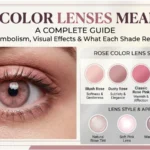
Rose Color Lenses Meanings can make an ordinary look feel softer, warmer, and more expressive. From fashionable sunglasses to tinted glasses and colored contact lenses, rose shades attract attention because they combine the gentle appearance of pink with the romantic associations of red. However, the meaning of rose color lenses depends on how they are used, the shade itself, and the situation in which people see them.
Some people choose rose lenses to create a stylish appearance, while others associate them with love, optimism, creativity, or a dreamy outlook. Additionally, the phrase can refer to the expression “seeing through rose-colored glasses,” which describes looking at life in an overly positive way.
Understanding rose color lenses meanings helps explain their symbolism, fashion appeal, psychological associations, and practical uses.
Quick Answer: Rose color lenses commonly symbolize romance, warmth, optimism, gentleness, and individuality. In fashion, they can create a soft, distinctive appearance. Symbolically, rose-tinted glasses may represent an optimistic or idealized view of life. However, lens color alone does not determine personality, mood, or how a person sees the world.
What Do Rose Color Lenses Meanings?
Rose color lenses have several meanings, depending on whether someone is discussing fashion, symbolism, psychology, or vision.
The rose tint sits within the pink-red color family. As a result, it can combine the tenderness often associated with pink and the emotional intensity commonly associated with red.
Here are the most common interpretations.
| Rose Lens Association | Common Meaning | Typical Impression |
|---|---|---|
| 💗 Romance | Love and affection | Gentle and caring |
| 🌸 Softness | Calmness and tenderness | Friendly and delicate |
| ❤️ Warmth | Emotional closeness | Inviting and expressive |
| 🌅 Optimism | Hope and positivity | Cheerful and uplifting |
| 🎨 Creativity | Originality and self-expression | Artistic and distinctive |
| ✨ Fashion | Personal style | Modern and eye-catching |
| 🌷 Femininity | A traditional cultural association | Soft and elegant |
| 🌹 Idealism | Seeing life positively | Dreamy or unrealistic |
These meanings are interpretations rather than fixed rules. For example, a pale rose tint may appear delicate, while a darker reddish-rose lens may look bold and dramatic.
Furthermore, the frame, clothing, lighting, and setting all influence the impression a pair of rose lenses creates.
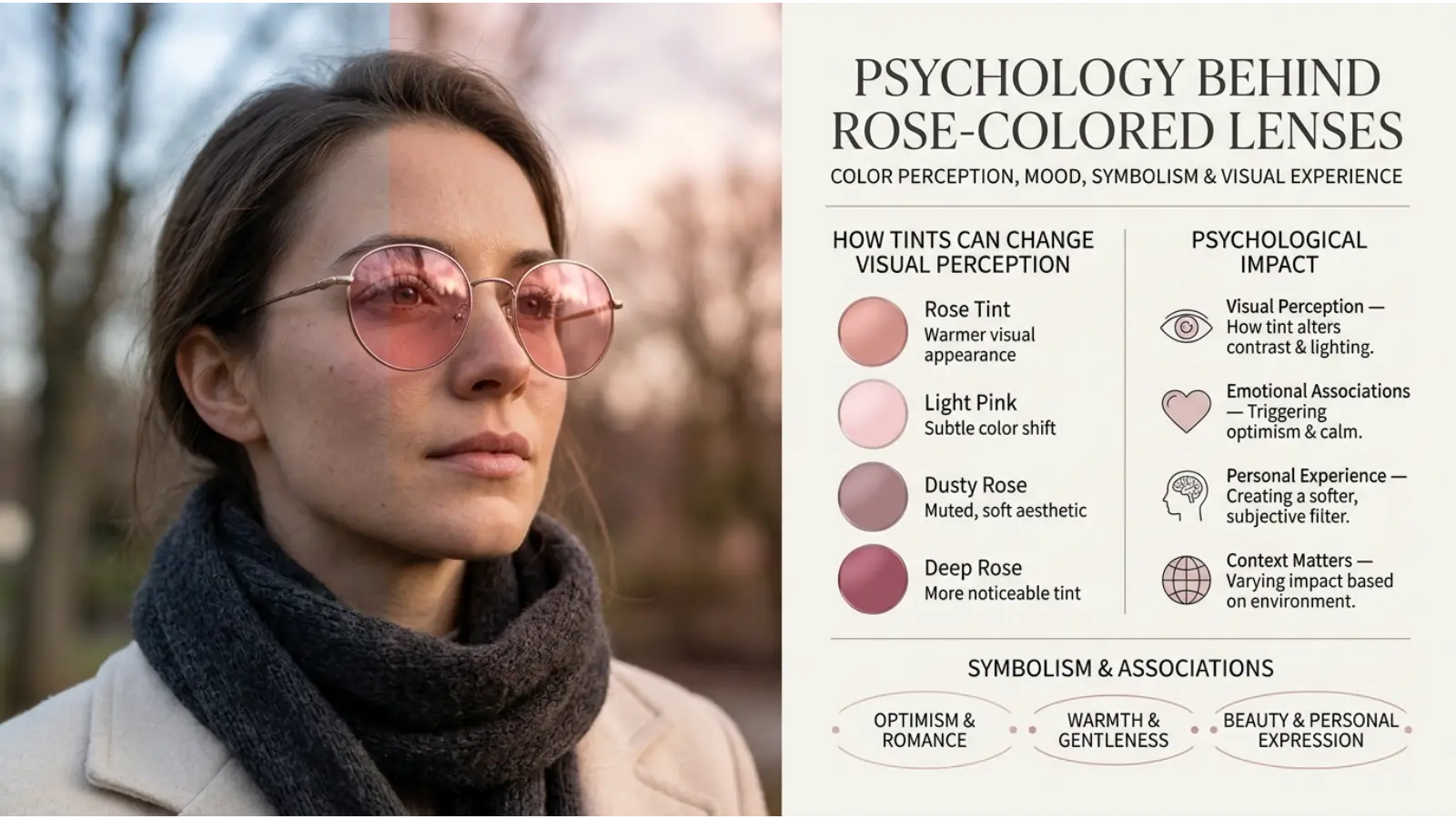
Psychology Behind Rose Color Lenses Meanings
Color psychology explores how colors can influence perception, emotional associations, and decisions. However, reactions vary between people, and research does not support treating one lens color as a reliable indicator of someone’s personality.
Why Rose Shades Feel Warm and Friendly
Rose combines visual qualities associated with red and white or lighter pink tones. Red often attracts attention, while pale pink shades are commonly linked with gentleness and affection in many modern settings.
Consequently, rose lenses can create a softer appearance than some darker or more intense lens colors.
Nevertheless, the effect depends on the exact shade. A bright pink-red tint may look energetic, whereas a dusty rose tint may appear subtle and sophisticated.
Do Rose Lenses Make People Feel Happier?
Not necessarily. Some people find rose shades cheerful or comforting because they associate them with flowers, romance, celebrations, or positive memories.
However, wearing rose lenses does not automatically improve mood. Personal experiences, expectations, surroundings, and individual preferences all influence emotional responses.
There is also a practical distinction between looking through rose-tinted glasses and wearing them as a fashion accessory. The first describes a way of thinking, while the second involves an actual optical filter.
How Rose Lenses Affect Visual Perception
Actual rose-tinted lenses can change the colors and contrast a person sees. Depending on their tint and optical properties, they may make parts of the environment appear warmer or pinker.
However, this effect should not be confused with emotional symbolism. A warm-looking visual scene does not prove that someone feels happier or more optimistic.
Lens transmission, tint density, lighting conditions, and the environment all affect the result.
The Symbolism of Rose-Tinted Glasses
The expression “rose-colored glasses” has a meaning beyond fashion. It describes a tendency to focus on positive qualities while overlooking problems or unpleasant facts.
For example, someone might believe a new business idea cannot fail because they feel excited about it. In this case, they are looking at the situation through rose-colored glasses.
The expression can communicate either a positive or a negative idea.
Positive interpretation: Hope, encouragement, idealism, and the ability to notice opportunities.
Negative interpretation: Unrealistic expectations, denial, excessive optimism, or ignoring warning signs.
The difference depends on context. Optimism can help someone keep going through a difficult period. However, ignoring important evidence can lead to poor decisions.
Therefore, the deeper symbolism of rose-tinted glasses is not simply happiness. It is the relationship between how people perceive reality and how they want reality to be.
Spiritual Rose Color Lenses Meanings
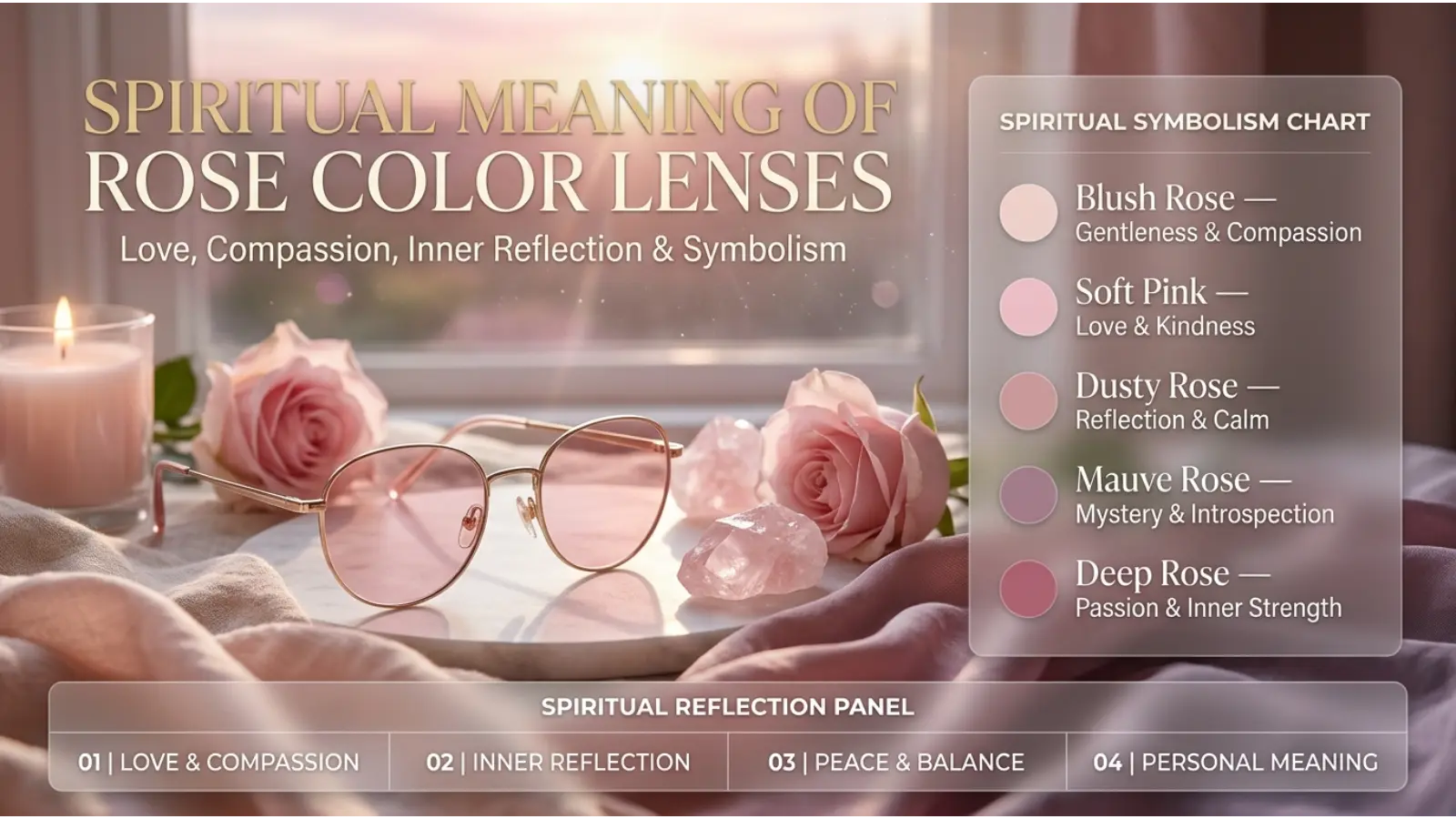
In contemporary spiritual symbolism, rose shades are sometimes associated with love, compassion, emotional openness, and gentle personal growth.
People may choose rose-colored accessories as reminders to treat themselves and others with kindness. Others may associate the color with gratitude, forgiveness, or a hopeful outlook.
These interpretations vary across spiritual communities and personal belief systems. There is no universal spiritual meaning assigned to rose lenses, and wearing them does not establish spiritual protection or healing.
Rose Lenses and Love
Rose shades often represent affection and emotional warmth. As a result, they may be used in romantic photography, gifts, celebrations, or personal accessories.
For some people, rose lenses can serve as a visual reminder to approach relationships with patience and understanding.
Rose Lenses and Positive Energy
In popular spiritual language, rose may represent gentle or loving energy. However, this is symbolic language rather than a scientifically established property of the lens.
A rose-colored accessory can still have personal meaning. Its significance may come from a memory, intention, relationship, or experience associated with the color.
Cultural Rose Color Lenses Meanings
Color meanings are shaped by culture, social expectations, historical experiences, and individual memories. Therefore, rose lenses do not communicate exactly the same message to every audience.
Western Fashion and Popular Culture
In many contemporary Western settings, pink and rose shades are associated with romance, beauty, playfulness, and personal expression.
Rose-tinted glasses also have a familiar metaphorical meaning: viewing life more positively than the facts may justify.
Consequently, rose lenses can communicate both a fashionable appearance and a dreamy outlook.
South Asian Fashion and Celebrations
Across South Asian fashion, pink and rose shades often appear in festive clothing, wedding attire, accessories, and decorative designs.
Depending on the shade and occasion, rose can suggest romance, celebration, delicacy, or elegance. Nevertheless, these associations are not universal across Pakistan, India, Bangladesh, or their many cultural communities.
Rose-colored sunglasses may therefore look festive, modern, or expressive without carrying one fixed cultural message.
East Asian and Other Cultural Contexts
Pink shades can appear in seasonal celebrations, floral imagery, fashion, and popular entertainment in various East Asian societies. Yet the meaning of a specific shade depends on its cultural setting and use.
Likewise, rose lenses may be interpreted differently in African, Middle Eastern, Latin American, and Indigenous communities. It would be misleading to assign one shared meaning to these diverse cultures without considering their specific traditions.
Rose Color Lenses Meanings in Fashion
Fashion is one of the clearest practical applications of rose-tinted lenses. They provide a noticeable color accent without requiring an entire outfit to follow the same palette.
Rose Lenses for Everyday Wear
Rose sunglasses can add warmth to simple outfits. For example, they can work with white shirts, blue denim, neutral jackets, and soft-colored dresses.
Meanwhile, a thin metal frame can create a minimalist appearance, while a thick frame makes the lenses a more prominent feature.
Rose Lenses for Formal Occasions
Rose-tinted eyewear can complement carefully coordinated outfits for parties, outdoor celebrations, and fashion events.
For a balanced look, pair the lenses with neutral clothing or one matching accessory. However, highly reflective lenses or oversized frames may feel too casual for some formal settings.
Rose Lenses for Different Seasons
| Season | Suggested Styling | Overall Impression |
|---|---|---|
| 🌸 Spring | Rose lenses with cream or pastel clothing | Fresh and gentle |
| ☀️ Summer | Rose sunglasses with white and denim | Bright and relaxed |
| 🍂 Autumn | Dusty rose with brown or camel | Warm and refined |
| ❄️ Winter | Rose lenses with charcoal or navy | Modern and distinctive |
These combinations are styling suggestions rather than strict seasonal rules.
What Do Rose Lenses Say About Personal Style?
Rose eyewear may communicate playfulness, creativity, softness, or confidence, depending on its design.
However, the accessory does not reveal the wearer’s true personality. Someone may choose rose lenses simply because they like the color, enjoy a particular trend, or want an alternative to traditional black sunglasses.
Rose Lens Shades and Their Meanings
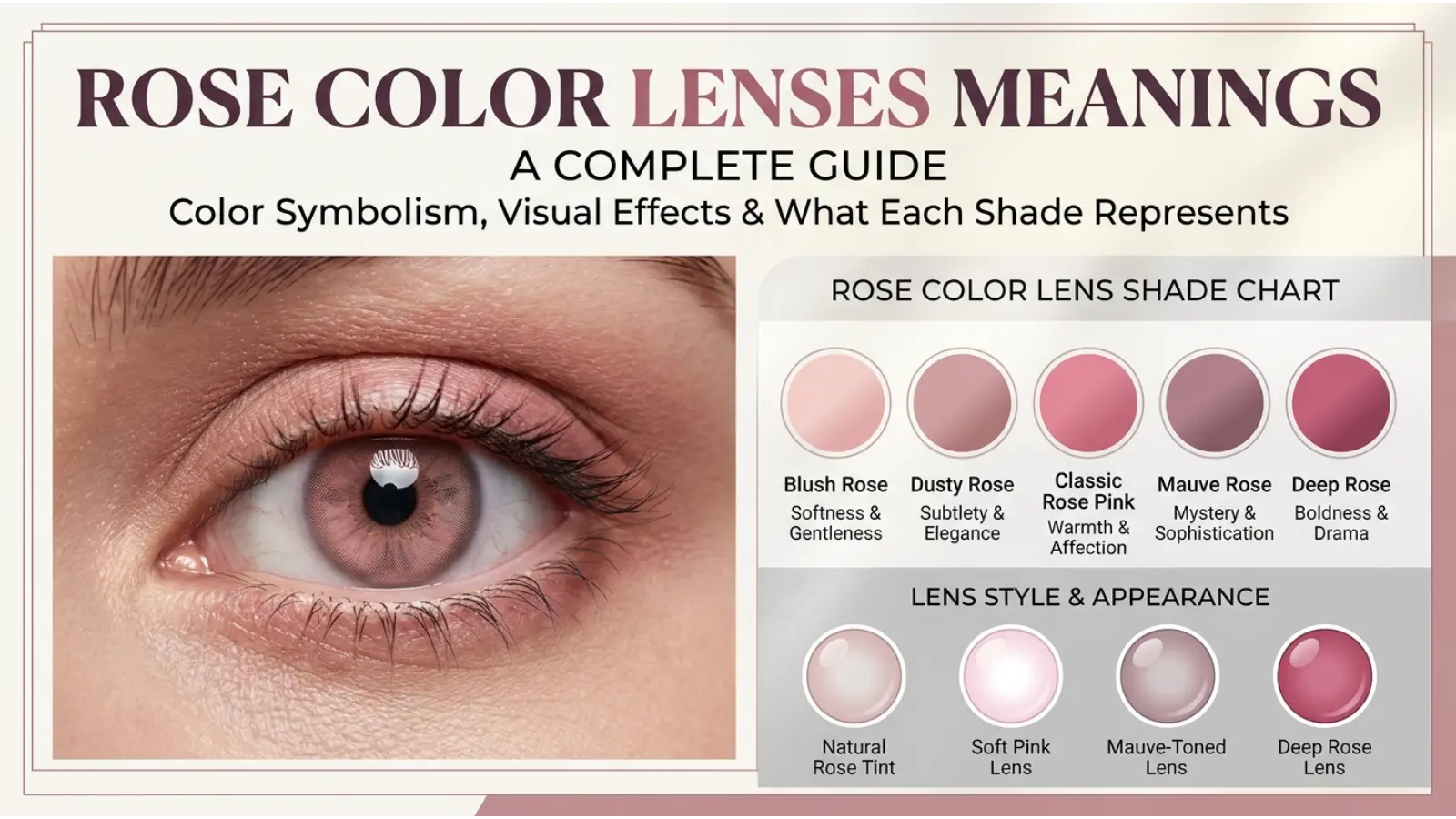
Not all rose lenses look the same. Small changes in saturation, brightness, and color balance can create different visual impressions.
| Lens Shade | Symbolic Association | Best Styling Direction |
|---|---|---|
| 🩷 Pale pink | Tenderness and sweetness | Cream, white, and pastels |
| 🌸 Soft rose | Romance and warmth | Beige, denim, and light gray |
| 🌹 Dusty rose | Sophistication and restraint | Brown, taupe, and navy |
| ❤️ Deep rose | Passion and confidence | Black, charcoal, and burgundy |
| 🪷 Rose-purple | Creativity and individuality | Lavender, silver, and dark blue |
| 🌺 Bright pink-red | Energy and boldness | Simple neutrals and monochrome outfits |
The descriptions above reflect common aesthetic associations. They are not universal psychological effects.
Pale Rose Lenses
Pale rose lenses offer a delicate look that can blend easily with light clothing and understated accessories. Their subtle appearance suits people who want color without making their eyewear the main feature of an outfit.
Dusty Rose Lenses
Dusty rose combines muted pink with grayish or brownish undertones. As a result, it often looks more restrained than a bright pink tint.
This shade works particularly well with earth tones, tailored clothing, and vintage-inspired fashion.
Deep Rose Lenses
Deep rose lenses create a stronger visual statement. They can complement darker frames and structured outfits, especially when the rest of the clothing uses a limited color palette.
However, a darker appearance does not necessarily mean the lenses provide better sun protection. Protection depends on the product’s verified specifications.
For the easiest everyday combination, start with rose lenses, a white shirt, and blue jeans. Alternatively, use a black outfit to make the lenses stand out.
Rose Color Lenses in Branding and Marketing
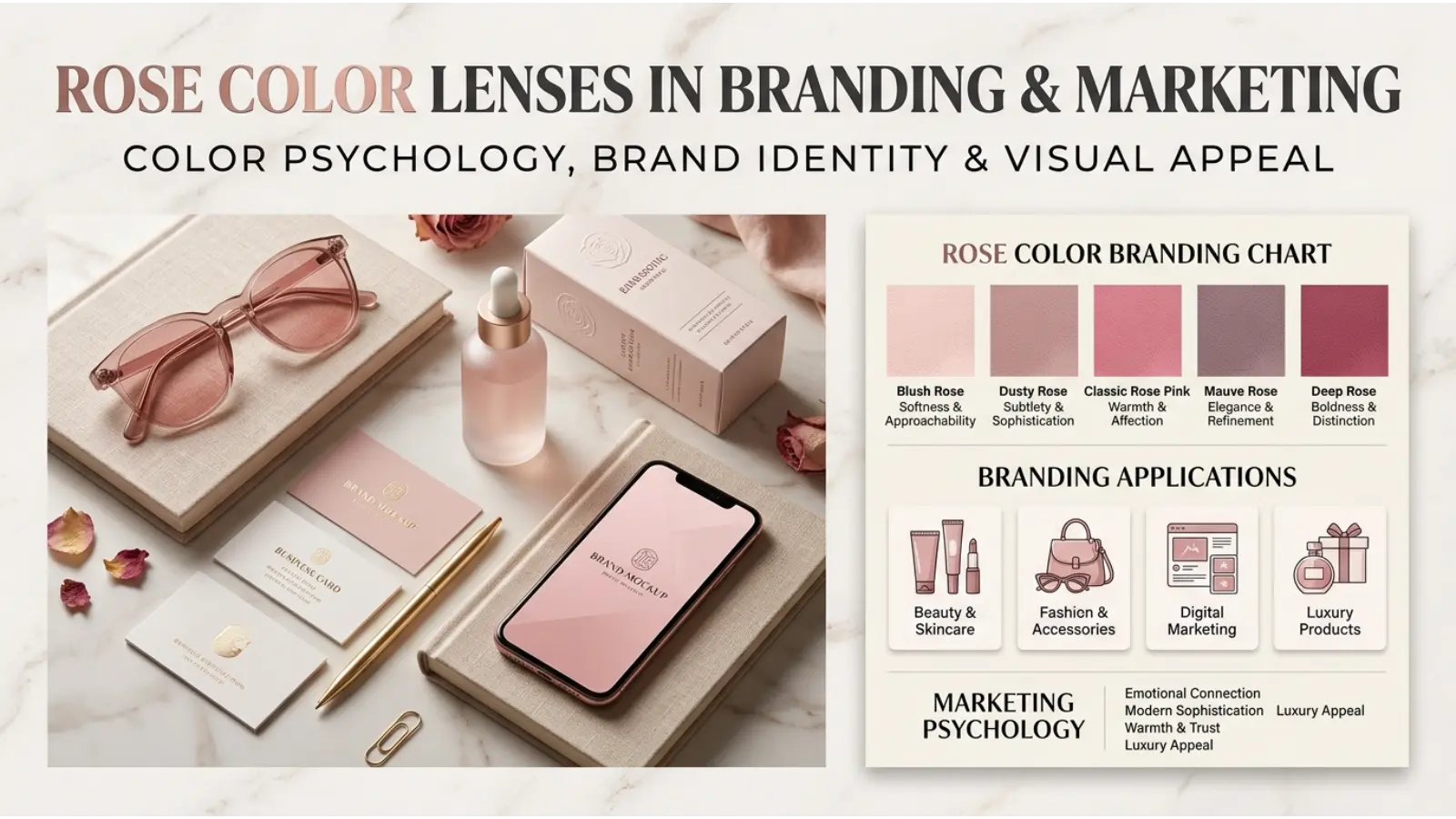
Rose shades can help a brand communicate a particular visual identity. They may be used in eyewear packaging, beauty campaigns, fashion photography, product displays, and promotional materials.
Why Brands Choose Rose
Rose can suggest warmth, approachability, romance, or creativity. Therefore, it may suit products aimed at consumers who want a softer alternative to conventional black, gray, or brown accessories.
However, rose is not automatically a luxury color. Premium positioning also depends on product quality, materials, photography, typography, pricing, and customer experience.
Rose Lenses in Product Photography
Lighting can significantly affect how rose-tinted eyewear appears in photographs.
- Soft natural light: Often shows the lens tint and frame details clearly.
- Warm lighting: Can make rose appear more peachy or reddish.
- Cool lighting: May emphasize purple or blue undertones.
- Dark backgrounds: Can make bright frames or reflective lenses stand out.
- Neutral backgrounds: Help viewers compare the product’s actual color more easily.
For accurate product images, use consistent lighting and avoid editing the lens color in ways that misrepresent the item.
Marketing Rose-Tinted Eyewear
A campaign might position rose lenses around creativity, romantic style, or expressive fashion. Nevertheless, the message should match the product’s actual appearance and intended use.
In particular, avoid suggesting that rose lenses automatically improve mental health, guarantee happiness, or provide eye protection unless the relevant claims are properly supported.
Rose Color Lenses in Photography and Art
Photographers and artists use rose tints to influence the visual atmosphere of an image.
A rose filter may make a portrait appear warmer or create a stylized effect. Similarly, rose-colored sunglasses can become a compositional element that draws attention to the face.
However, the effect depends on the camera, light source, filter, and editing process.
Portrait Photography
Rose lenses can complement warm skin tones and create a distinctive fashion portrait. For a balanced photograph, use a neutral background and avoid adding too many competing pink or red elements.
Creative and Editorial Photography
In editorial work, rose eyewear can communicate a dreamy, nostalgic, futuristic, or playful mood. The intended message becomes clearer when the photographer coordinates the lens tint with the clothing, lighting, and background.
Artists may also use rose filters to represent memory, romantic idealization, or selective perception. In this context, the tint can symbolize how feelings influence the way a scene is remembered.
Do Rose-Tinted Lenses Change What You See?
Yes. Actual tinted lenses can change the appearance of colors and the amount of light that reaches the eyes. The specific effect depends on the lens material, tint, and design.
For example, objects may look warmer or pinker when viewed through some rose-tinted lenses. However, not every rose lens produces the same result.
Can Rose Lenses Help With Digital Screens?
Do not assume that rose-colored lenses automatically reduce digital eye strain. Screen-related discomfort can have several causes, including prolonged near work, glare, dry eyes, and infrequent blinking.
A rose tint may change the visual appearance of a screen, but the color alone does not establish that the glasses prevent eye strain or protect against harmful light.
Are Rose Lenses Suitable for Driving?
Suitability depends on the particular lens and the driving conditions. Some tinted lenses may alter color recognition or reduce visibility in certain settings.
Before using rose lenses for driving, check that the eyewear is suitable for the intended conditions and complies with applicable requirements. Avoid dark or inadequately tested lenses at night.
Do Rose Sunglasses Protect Against UV Rays?
The rose color itself does not guarantee ultraviolet protection.
When buying sunglasses, look for a clearly stated UV400 rating or protection against 99–100% of UVA and UVB rays, supported by reliable product information. Lens darkness is not a dependable measure of UV protection.
Rose Lenses Versus Pink and Red Lenses
Rose, pink, and red are related colors, but they can create different visual impressions.
| Lens Color | Common Aesthetic Impression | Practical Consideration |
|---|---|---|
| 🩷 Pink | Playful, light, or youthful | Tint strength varies by product. |
| 🌹 Rose | Warm, romantic, or refined | Can range from subtle to vivid. |
| ❤️ Red | Bold, dramatic, or energetic | May strongly alter color perception. |
These are common style associations rather than fixed meanings. In addition, optical performance depends on the lens design, not simply the color name.
Common Misconceptions About Rose Color Lenses
Myth 1: Rose Lenses Always Make People Happier
Rose shades may remind people of positive experiences, but they do not guarantee a happier mood. Personal associations and circumstances matter.
Myth 2: Rose Lenses Reveal a Person’s Personality
A person might wear rose eyewear because it matches their clothes or suits their taste. Therefore, it is not reliable to infer someone’s personality from their lens color.
Myth 3: Rose Lenses Always Make Everything Look Pink
The effect depends on the lens tint, transmission, lighting, and environment. Some lenses create a noticeable pink cast, while others produce only a subtle warmth.
Myth 4: Darker Rose Lenses Offer Better UV Protection
Tint darkness and UV protection are different properties. Check the product’s verified UV specifications rather than judging by appearance.
Myth 5: Rose-Tinted Glasses Are Always a Bad Thing
The expression usually warns against excessive optimism, but a positive outlook is not automatically unrealistic. Hope can coexist with careful judgment when people acknowledge both opportunities and risks.
How to Choose the Right Rose Color Lenses
Choosing rose lenses involves more than selecting a shade you like. Consider your intended use, the frame design, visual comfort, and verified product specifications.
- Decide on the purpose. Fashion sunglasses, everyday eyewear, and specialized optical lenses may have different requirements.
- Choose a shade. Pale rose is subtle, dusty rose is muted, and deep rose makes a stronger statement.
- Consider the frame. Metal frames often create a light appearance, while thick acetate frames can make the eyewear more prominent.
- Check UV protection. For outdoor sunglasses, verify the stated UV performance.
- Consider visibility. Make sure the tint is appropriate for the activities you plan to do.
- Test the combination. If possible, try the lenses in natural daylight and indoor lighting before choosing them.
Most importantly, prioritize suitable optical performance over symbolic meaning when the glasses will be used for driving, outdoor activities, or everyday vision.
Frequently Asked Questions
1. What are the main rose color lenses meanings?
Rose color lenses commonly symbolize romance, warmth, optimism, gentleness, creativity, and personal expression. However, the meaning depends on the shade, context, and cultural associations.
2. What do rose-colored glasses symbolize?
Rose-colored glasses symbolize an optimistic or idealized view of reality. The expression can describe healthy hope, but it can also suggest overlooking problems or ignoring inconvenient facts.
3. Do rose-tinted lenses affect your mood?
They may influence someone’s visual experience or bring up personal associations, but rose lenses do not reliably produce a particular mood. Emotional responses vary between individuals.
4. What does wearing rose-colored glasses say about a person?
It may suggest a preference for a particular fashion style, but it does not establish personality traits. The metaphorical expression refers to someone’s outlook rather than the accessory itself.
5. What is the spiritual meaning of rose lenses?
In some contemporary spiritual interpretations, rose represents love, compassion, kindness, and emotional openness. These meanings vary by belief system and are symbolic rather than scientifically established properties.
6. Are rose lenses the same as pink lenses?
Not exactly. Rose usually describes a pink-red shade that may have warm or muted undertones. Pink lenses can range from pale blush to bright, saturated pink. The terms sometimes overlap in product descriptions.
7. Are rose-tinted sunglasses good for your eyes?
Their suitability depends on lens quality, UV protection, and intended use. The rose tint alone does not guarantee eye protection. Choose sunglasses with verified UV protection and appropriate optical performance.
8. Can you wear rose lenses with any outfit?
Rose lenses work with many outfits, especially white, black, beige, navy, denim, and muted green. However, the best combination depends on the tint, frame, clothing colors, and occasion.
9. Do rose lenses change how colors look?
Yes, tinted lenses can change color appearance and contrast. The degree of change depends on the lens design, tint density, and lighting conditions.
10. Are rose-colored glasses a positive or negative symbol?
They can represent either. Positively, they suggest hope and optimism. Negatively, they can symbolize unrealistic expectations or ignoring problems. Context determines the intended meaning.
Conclusion
Rose color lenses meanings extend beyond a fashionable pink tint. They can symbolize romance, warmth, creativity, optimism, and personal expression, while the phrase “rose-colored glasses” explores the difference between hope and an idealized view of reality.
In fashion, rose lenses provide a distinctive accent that works with both soft and contrasting colors. In photography and branding, they can help establish a warm or dreamy visual mood. Nevertheless, their psychological and cultural meanings depend on personal experience and context.
When choosing rose lenses, consider both appearance and function. A beautiful tint can express your style, but verified UV protection and suitable optical performance remain essential. Ultimately, the most meaningful color is one that fits your purpose while allowing you to see the world clearly.
Add a clear search-intent openingClarify lenses versus the idiom

Emma Wilson is a dedicated comparison writer and product researcher at ColorMystiic.com. She specializes in creating unbiased product comparisons, detailed reviews, and helpful buying guides. Her goal is to help readers make smarter purchasing decisions with confidence.