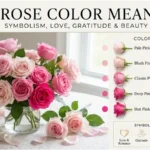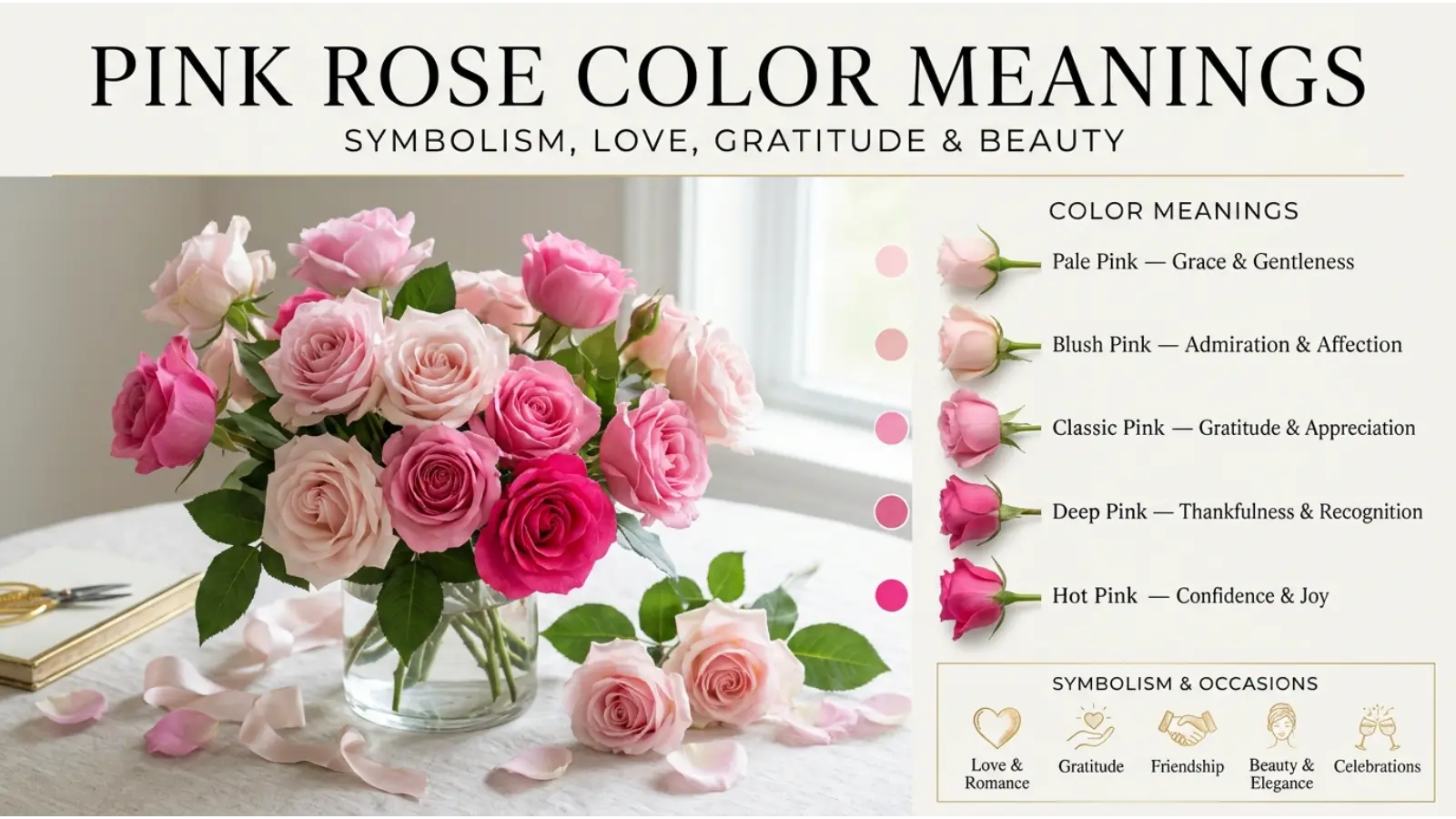
Pink Rose Color Meanings are known for their gentle beauty, but their meaning goes far beyond their soft petals. They can express affection, gratitude, admiration, appreciation, and romantic interest without always carrying the intense message associated with red roses. As a result, pink roses are popular gifts for birthdays, weddings, anniversaries, celebrations, and thoughtful everyday gestures.
However, not every pink rose communicates the same feeling. A pale pink rose may suggest tenderness and innocence, while a deep pink rose often conveys appreciation and heartfelt admiration. The meaning can also change according to the relationship, the occasion, cultural traditions, and the way the flowers are presented.
In this guide to pink rose color meanings, you will discover their symbolism, emotional associations, spiritual interpretations, cultural significance, and practical uses in gifts, fashion, floral design, and home decoration.
Quick Answer: Pink roses generally symbolize grace, admiration, gratitude, sweetness, and gentle love. Light pink roses often represent tenderness and new affection, while deeper pink roses communicate appreciation, respect, and heartfelt thanks.
What Do Pink Roses Symbolize?
Pink roses traditionally represent positive feelings that fall between friendship and deep romantic love. Their appearance is softer than that of red roses, making them suitable for many relationships and occasions.
Although individual interpretations vary, several meanings are commonly associated with pink roses.
- Love and affection: Pink roses express caring feelings without necessarily suggesting intense passion.
- Gratitude: They are a thoughtful way to thank someone for kindness, support, or generosity.
- Admiration: Pink roses can communicate respect for someone’s character, achievements, or beauty.
- Grace and elegance: Their delicate appearance often makes them a symbol of refinement.
- Happiness and appreciation: A pink bouquet can celebrate a joyful moment or acknowledge someone’s importance.
- Gentleness and tenderness: Their soft colors suggest warmth, compassion, and emotional sensitivity.
Nevertheless, context matters. A pink rose given to a romantic partner may express affection, whereas the same flower presented to a teacher, friend, or colleague may communicate gratitude and respect.
Pink Rose Symbolism at a Glance
| Meaning | What it communicates |
|---|---|
| Love | Warm affection and caring feelings |
| Gratitude | Appreciation and heartfelt thanks |
| Admiration | Respect and recognition |
| Grace | Elegance, kindness, and refinement |
| Happiness | Joy, celebration, and positivity |
| Tenderness | Gentle affection and compassion |
| New beginnings | Hope and the early stages of a relationship |
The Pink roses are especially useful when you want to communicate affection without making the message feel overly dramatic.
Pink Rose Color Meanings by Shade
The shade of pink can influence the message a rose communicates. Although there is no universal rule that assigns one fixed meaning to every shade, floral traditions often distinguish light, medium, and deep pink roses.
Light Pink Rose Color Meanings
Light pink roses commonly represent gentleness, sweetness, admiration, and tender affection. Their pale appearance creates a delicate impression, which is why they often appear in weddings, baby celebrations, spring arrangements, and thoughtful gifts.
They can be especially suitable when a relationship is new or when you want to show care without creating a strong romantic impression.
Best occasions: New friendships, birthdays, congratulations, baby showers, and delicate wedding arrangements.
Medium Pink Rose Color Meanings
Medium pink roses offer a balance between softness and vibrancy. They are often associated with appreciation, happiness, affection, and admiration.
Because they are more noticeable than pale pink roses, they work well in bouquets intended to celebrate someone’s achievements or show how much you value them.
Best occasions: Anniversaries, thank-you gifts, celebrations, and gifts for close friends or family members.
Deep Pink Rose Color Meanings
Deep pink roses, including vivid pink and hot pink varieties, often communicate stronger appreciation, gratitude, confidence, and admiration.
Their rich color creates a more energetic impression than pastel pink. Consequently, they are a good choice when you want a bouquet to feel lively, celebratory, and expressive.
Best occasions: Professional achievements, milestone birthdays, appreciation gifts, and celebrations of personal success.
Pink Rose Shade Chart
| Rose shade | Common symbolic meaning | Suggested use |
|---|---|---|
| Pale pink | Tenderness and sweetness | New relationships |
| Blush pink | Romance and gentle affection | Weddings and anniversaries |
| Classic pink | Admiration and appreciation | Friends and family |
| Medium pink | Happiness and warmth | Birthdays and celebrations |
| Deep pink | Gratitude and respect | Thank-you bouquets |
| Hot pink | Energy and confident admiration | Festive occasions |
| Dusty pink | Understated elegance and nostalgia | Vintage-inspired decor |
These meanings are traditional associations rather than strict rules. A rose’s variety, surrounding flowers, presentation, and the recipient’s preferences can all influence how it is understood.
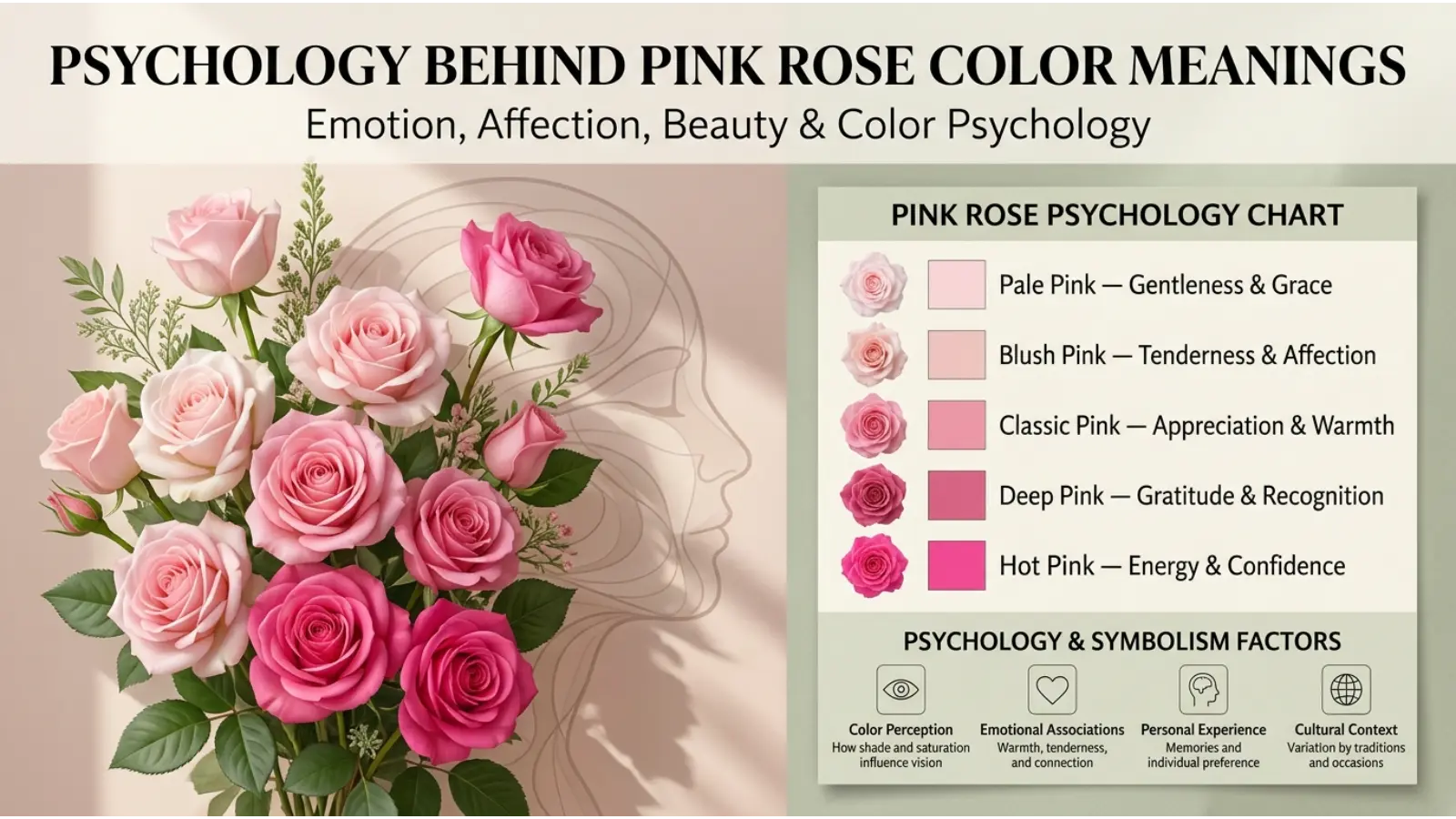
Psychology Behind Pink Rose Color Meanings
Pink roses combine the emotional associations of the color pink with the familiar symbolism of the rose. Pink is often connected with softness, care, sweetness, and warmth in modern visual culture. Meanwhile, roses have long served as recognizable symbols of beauty and affection.
Together, they can create an impression of gentle, thoughtful love.
Why Pink Can Feel Gentle and Comforting
Pink is a lighter tint of red. In color theory, a tint is created by adding white to a color. As a result, pink retains some visual connection to red while appearing softer and less intense.
This visual quality helps explain why pink is often used in designs intended to feel welcoming, delicate, romantic, or caring.
However, the psychological effects of color are not identical for everyone. Personal memories, cultural experiences, surrounding colors, and individual preferences all influence emotional responses.
Pink Roses and Emotional Expression
Pink roses can help people communicate feelings that are sometimes difficult to put into words.
For example, a deep pink bouquet may make a thank-you gift feel more personal. In contrast, pale pink roses can create a quiet, affectionate mood without demanding attention.
Moreover, the number of roses, their arrangement, and the message attached to the bouquet may affect its emotional impact as much as the color itself.
Pink Roses Compared With Red Roses
Red roses are strongly associated with romantic passion in many modern floral traditions. Pink roses, by comparison, usually communicate a gentler form of love.
This distinction makes pink roses useful when you want to celebrate affection, appreciation, or admiration without relying on the more intense symbolism of red.
Neither color has a fixed emotional meaning, however. A personal relationship can give the same bouquet a completely different significance.
Spiritual Pink Rose Color Meanings
In contemporary spiritual symbolism, pink roses are often connected with compassion, emotional openness, kindness, and love. Their delicate appearance makes them a natural symbol of gentleness and the willingness to care for others.
These interpretations are symbolic rather than scientifically established facts, and they vary across spiritual traditions.
Pink Roses and Love
Pink roses can represent love expressed through patience, understanding, and thoughtful actions. Unlike symbolism centered on intense desire, their message often focuses on the everyday qualities that help relationships grow.
For some people, a pink rose is a reminder to show affection through listening, forgiveness, and appreciation.
Pink Roses and Emotional Healing
In personal rituals or reflective practices, pink roses may symbolize comfort, self-compassion, and the process of moving forward after disappointment.
For example, someone might place pink roses in a room as a visual reminder to treat themselves kindly during a difficult period.
The flowers do not medically heal emotional distress, but their personal meaning can support a comforting environment or a meaningful act of remembrance.
Pink Roses and the Heart Chakra
Some modern chakra-based interpretations associate pink with compassion, affection, and the emotional qualities linked to the heart chakra.
Green is more commonly associated with the heart chakra in many modern chakra color systems, although interpretations differ. Pink may be used alongside green to emphasize tenderness and loving connection.
These associations belong to spiritual symbolism, not established scientific descriptions of energy or human emotion.
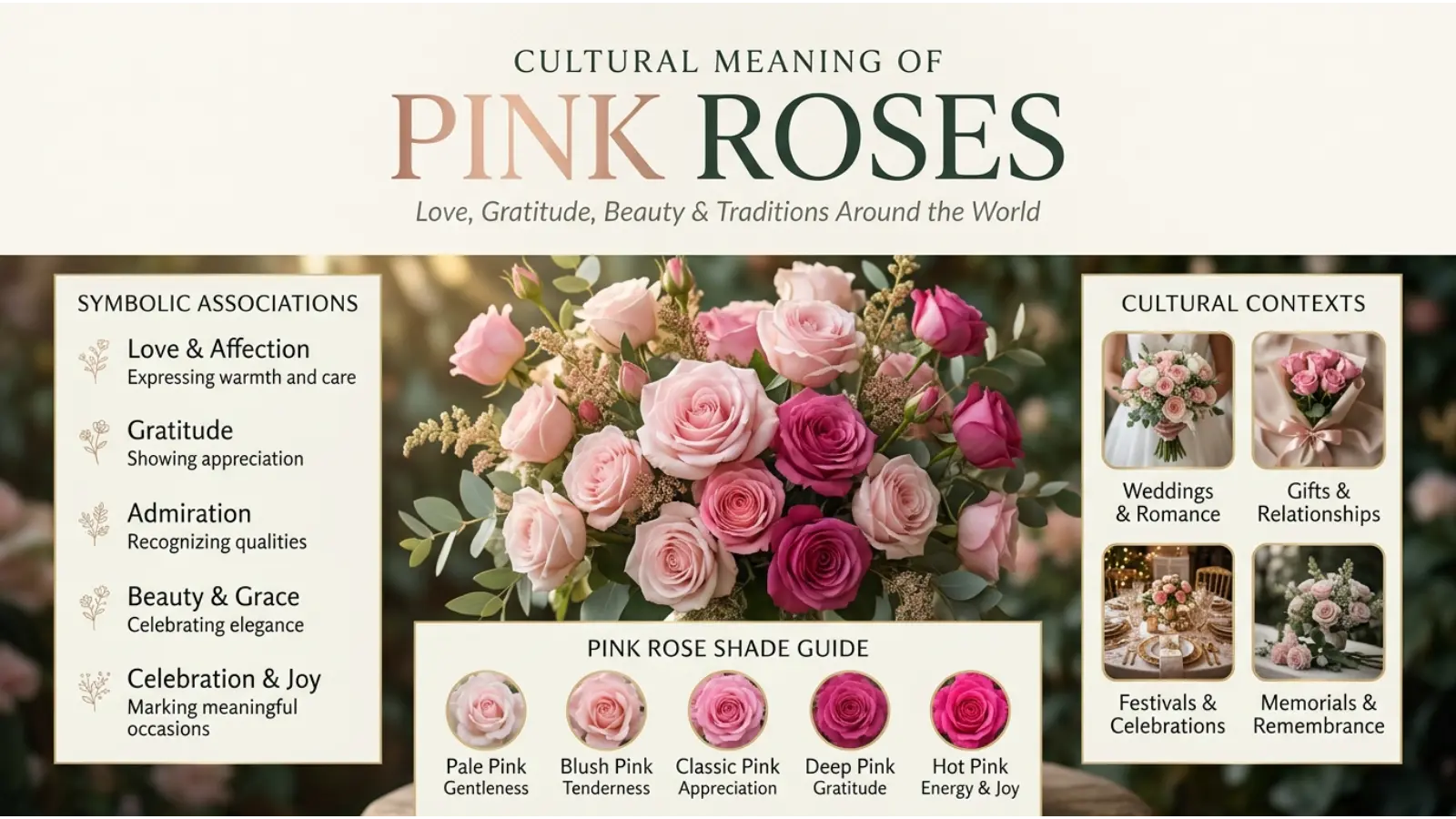
Cultural Pink Rose Color Meanings
Flowers communicate through shared traditions, but those traditions are not identical across the world. Pink roses are often used to express affection and appreciation, although their precise meaning depends on the occasion and the people involved.
Pink Roses in Western Cultures
In many Western settings, pink roses are associated with admiration, gratitude, romance, and celebration.
They appear in wedding bouquets, Mother’s Day arrangements, birthday gifts, and floral displays intended to recognize someone’s kindness or achievements.
Light pink is frequently chosen for delicate or romantic arrangements, while deeper pink shades can create a more energetic and celebratory look.
Pink Roses in Asian Cultures
In several Asian countries, roses are used as gifts for romance, celebrations, and personal milestones. Nevertheless, the meaning of a pink rose depends on local customs and the particular occasion.
For example, flower colors may be selected according to aesthetic preferences, family traditions, seasonal celebrations, or the message a giver wishes to express.
It would be inaccurate to assign one universal meaning to pink roses across all Asian cultures. Regional customs and individual preferences vary considerably.
Pink Roses in Middle Eastern Cultures
Pink roses can be used to express hospitality, affection, appreciation, and celebration in many contemporary Middle Eastern settings.
However, floral customs differ by country, community, and event. Religious practices, family expectations, and personal preferences may also influence which flowers are appropriate for a particular occasion.
Therefore, it is best to consider the recipient and setting rather than assume that one symbolic interpretation applies throughout the region.
Pink Roses in Latin America
Roses are popular in many Latin American celebrations, including romantic occasions, birthdays, and family events.
Pink roses can communicate affection, gratitude, or admiration, while brighter shades may suit lively celebrations and decorative arrangements.
Nevertheless, floral traditions vary between countries and communities, so the recipient’s preferences are often the best guide.
Pink Roses in Modern Global Culture
Social media, online florists, wedding trends, and international flower delivery have helped spread similar rose-color associations around the world.
As a result, pink roses are widely recognized as an option for romantic gestures, appreciation gifts, and elegant celebrations.
Even so, a personal message usually communicates more clearly than the color alone.
Historical Pink Rose Color Meanings
The rose has been used as a symbol in art, literature, gardens, and ceremonial traditions for centuries. Its associations with beauty, love, and admiration developed across different periods and cultures.
Pink roses belong to this broader history, but their modern meanings should not be treated as a single ancient code.
From Garden Flowers to Romantic Gifts
Roses were cultivated in different regions of the world long before the modern commercial flower industry developed. Over time, breeding created a wider range of flower forms and colors, expanding the choices available to gardeners and florists.
As cultivated varieties became more widely available, pink roses gained a place in gardens, bouquets, and decorative arrangements.
Their soft appearance made them suitable for expressing gentleness and admiration, while the rose’s existing association with love strengthened their romantic appeal.
Pink Roses in Art and Literature
Artists and writers have often used roses to represent beauty, affection, longing, and the passing of time.
Pink roses can add a softer emotional tone to these themes. For instance, an artist might use pale pink roses to suggest tenderness or use fading pink petals to evoke nostalgia.
These are interpretive choices rather than fixed historical meanings. The symbolism of a rose depends on the artwork, period, and cultural setting.
What Does a Pink Rose Say About Personality?
Pink roses are sometimes associated with qualities such as kindness, sensitivity, appreciation, and romantic warmth. People who choose pink flowers may simply enjoy their color, fragrance, appearance, or suitability for a particular occasion.
There is no reliable basis for concluding that a person’s personality can be determined by their favorite rose color.
Still, choosing pink roses can communicate something about the message a giver wants to send.
- Pale pink: May express a preference for gentle, understated gestures.
- Blush pink: Can create a romantic and refined impression.
- Classic pink: Often feels friendly, warm, and versatile.
- Deep pink: Can communicate enthusiasm and strong appreciation.
- Dusty pink: May suit someone who prefers muted, vintage-inspired aesthetics.
These descriptions relate to the impression created by the flowers, not proven personality types.
Pink Roses in Branding and Marketing
Pink roses are particularly useful in branding when a business wants to communicate beauty, care, romance, or thoughtful attention.
The flower itself adds meaning beyond the color. While pink can suggest softness or friendliness, the rose can reinforce associations with floral beauty, gifting, and special occasions.
Why Businesses Use Pink Roses
Florists, wedding planners, gift companies, and beauty brands may use pink roses in product photography, packaging, and promotional campaigns.
For example, a florist might feature pale pink roses to promote a delicate wedding bouquet. In contrast, a gift company could use deep pink roses in a thank-you arrangement to communicate appreciation.
Packaging also changes the impression. Pink roses displayed against cream or white can feel classic and elegant, while pink flowers paired with black may look more dramatic and modern.
Pink Roses and Consumer Perception
Visual design can influence how customers initially interpret a product, but color alone does not determine buying decisions.
Price, product quality, brand reputation, photography, and customer experience also matter. Therefore, businesses should use pink roses when their visual message matches the product and intended audience.
A premium florist, for instance, might choose dusty pink roses with restrained typography for a sophisticated appearance. A cheerful gift brand could use vivid pink blooms and brighter packaging to create an energetic mood.
Pink Roses in Interior Design
Pink roses can introduce softness, color, and natural detail into a room. Because they are available in many shades, they can suit both subtle interiors and bold decorative schemes.
Pink Roses in the Living Room
A vase of pink roses can create a welcoming focal point on a coffee table, console, or dining surface.
For a calm look, combine pale pink roses with cream, beige, or light wood. Alternatively, place vivid pink roses in a simple glass vase to add a noticeable accent to a neutral room.
Keep the arrangement proportional to the furniture. A large bouquet may overwhelm a small side table, while a compact arrangement can provide color without making the space feel crowded.
Pink Roses in the Bedroom
Pink roses can complement a bedroom designed around softness and comfort.
Blush roses work well with warm white bedding, beige fabrics, muted green accents, and natural wood. Meanwhile, dusty pink roses can suit rooms with vintage furniture or deeper neutral colors.
Fresh flowers should be kept away from surfaces where spilled water could damage electronics, books, or delicate materials.
Pink Roses in the Kitchen and Dining Area
A small arrangement of pink roses can brighten a kitchen island, breakfast table, or dining area.
Choose a low bouquet for dining tables so that the flowers do not block conversation. Also, keep the vase away from cooking heat and direct contact with food preparation surfaces.
How Lighting Changes Pink Roses
Lighting can make the same pink rose look noticeably different.
- Warm lighting: Often makes pink petals appear softer, warmer, or peachier.
- Cool lighting: Can make pink appear sharper or slightly bluish.
- Bright natural daylight: Usually reveals more detail in the petals.
- Dim lighting: Can make deeper pink roses appear darker and less vivid.
For the most accurate color impression, view the flowers in natural daylight before choosing matching fabrics, paint, or decorations.
Pink Roses in Fashion
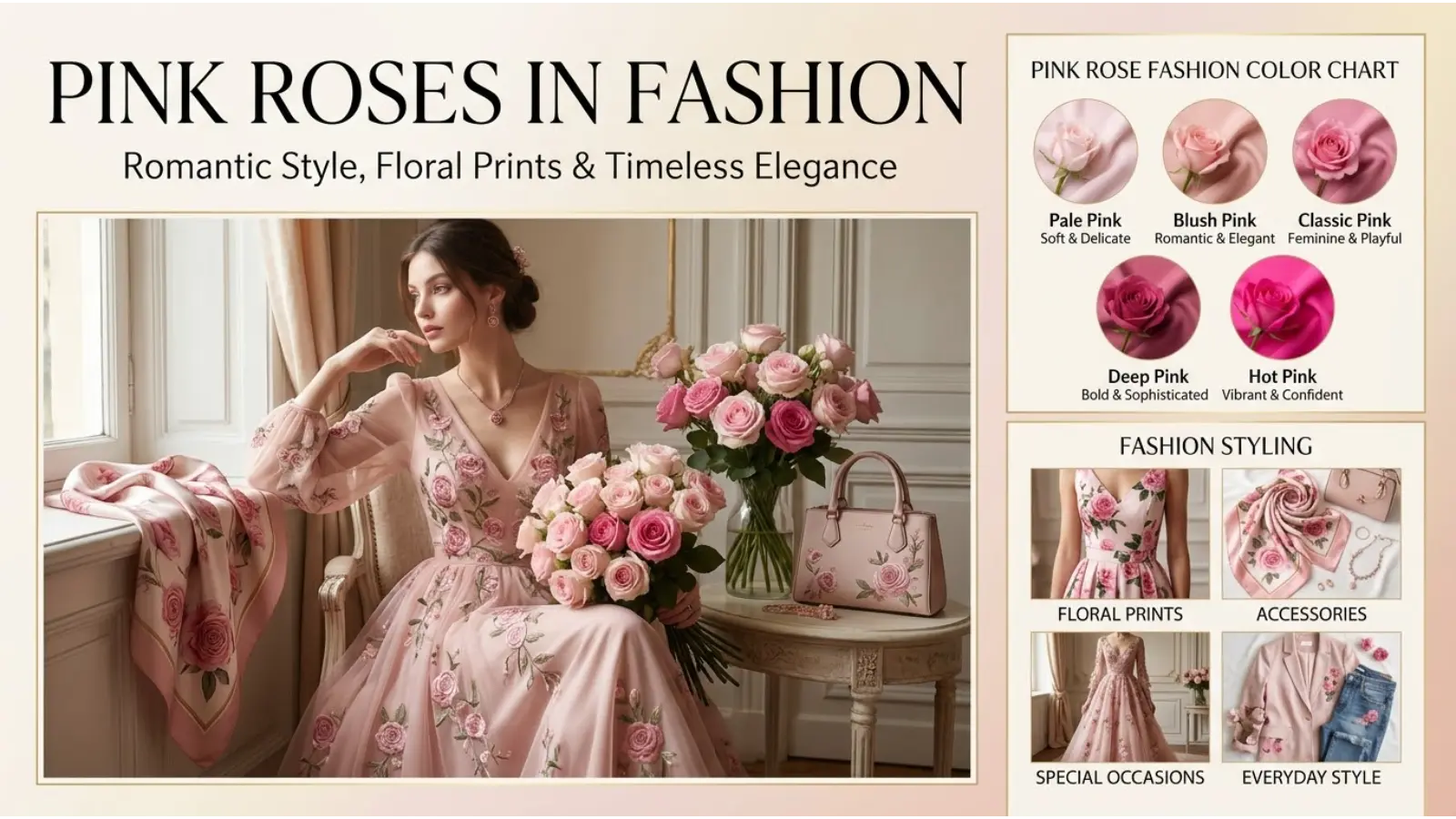
Pink roses influence fashion through floral prints, embroidered details, accessories, jewelry designs, and event styling.
Their meaning depends on how they are presented. A delicate pink rose pattern may look romantic, while a bold pink floral print can feel playful and confident.
Pink Roses for Casual Style
Pink rose prints work well on dresses, shirts, scarves, and lightweight accessories.
For everyday wear, pair a pink floral piece with denim, cream, white, or neutral shoes. This approach allows the flowers to stand out without making the outfit feel too busy.
Pink Roses for Formal Wear
Pink roses are popular in wedding styling, corsages, formal bouquets, and decorative hair accessories.
Blush roses complement soft, understated outfits, while deep pink roses can add contrast to black, navy, or dark green clothing.
For a coordinated look, match the flowers to one detail in the outfit rather than trying to reproduce every shade exactly.
Pink Rose Accessories
Rose-inspired accessories can add floral symbolism without requiring a full floral print.
Examples include rose-shaped earrings, embroidered handbags, hair clips, scarves, and floral brooches.
A small pink rose accessory can suggest romance or elegance, although the overall impression also depends on the material, shape, and styling.
Best Color Combinations for Pink Roses
Pink roses are versatile because they can work with neutrals, greens, warm colors, and darker shades. The best combination depends on whether you want the flowers to appear romantic, fresh, dramatic, or modern.
Color Combination Chart
| Pink rose pairing | Visual effect | Best application |
|---|---|---|
| Pink + White | Clean, gentle, and classic | Weddings and elegant bouquets |
| Pink + Green | Fresh and natural | Garden-inspired arrangements |
| Pink + Red | Romantic and expressive | Anniversary gifts |
| Pink + Cream | Warm and refined | Home decoration |
| Pink + Lavender | Soft and dreamy | Spring bouquets |
| Pink + Burgundy | Rich and dramatic | Formal events |
| Pink + Gold | Glamorous and celebratory | Luxury gifting |
| Pink + Gray | Modern and balanced | Contemporary interiors |
| Pink + Navy Blue | Strong, polished contrast | Formal styling |
| Pink + Peach | Warm and cheerful | Summer arrangements |
Pink and White Roses
<text>Pink and white roses create a balanced arrangement because the white flowers provide visual space while the pink blooms add warmth. This combination is especially suitable for weddings, engagements, and elegant celebrations.</text>
Pink Roses and Greenery
Green leaves provide a natural contrast to pink petals. Eucalyptus, ruscus, and other suitable foliage can add texture and make the flowers appear more vivid.
For a garden-inspired look, use loose greenery rather than arranging every stem in a perfectly uniform shape.
Pink Roses and Burgundy
Burgundy creates a deeper, more dramatic background for pink roses. The combination works particularly well for autumn weddings, evening events, and formal floral arrangements.
Use pale pink roses for a softer contrast or deep pink roses for a richer, more coordinated appearance.
Pink Roses With Gold Details
Gold vases, ribbons, or decorative accents can make pink roses feel more luxurious.
However, too many metallic elements may compete with the flowers. A simple gold vase or narrow ribbon is often enough to create an elegant finish.
Real-World Uses of Pink Roses
Pink roses have practical uses far beyond traditional bouquets. Their familiar symbolism makes them suitable for many personal, creative, and professional settings.
Gifts and Special Occasions
Pink roses can express appreciation, affection, and celebration at birthdays, anniversaries, graduations, and family gatherings.
For a thank-you gift, choose medium or deep pink roses. For a gentle romantic gesture, consider blush or pale pink roses.
A handwritten note can make the meaning more personal and reduce the chance of misunderstanding.
Weddings and Engagements
Pink roses suit many wedding styles, from classic and romantic to modern and minimalist.
Blush roses can complement ivory dresses and soft neutral decor. Meanwhile, vivid pink flowers can add energy to a summer celebration.
The best shade depends on the venue, lighting, clothing, and overall color palette.
Art and Photography
Photographers and artists often use pink roses to explore beauty, tenderness, romance, and nostalgia.
Pale pink petals photographed against a light background can create an airy image, whereas deep pink roses against a dark background produce greater contrast.
For accurate flower photography, use soft natural light and avoid excessive editing that changes the original petal color.
Business and Professional Gifts
Pink roses can be appropriate for thanking a colleague, congratulating a team member, or recognizing professional support.
In workplace settings, a moderate arrangement and a clear accompanying message help maintain a thoughtful, professional tone.
If the relationship is formal, consider the recipient’s preferences and workplace customs before choosing flowers.
Entertainment and Visual Storytelling
In films, illustrations, and other visual media, pink roses can help establish a character’s mood or the emotional tone of a scene.
A fresh pink rose may suggest affection or hope, while a wilted flower may evoke loss, change, or the passing of time.
These meanings depend on the story. Artists use visual symbolism creatively, so the same flower can represent different ideas in different scenes.
How to Choose the Right Pink Roses
Selecting the right pink roses involves more than choosing a shade. Consider the occasion, the recipient, the arrangement, and the practical conditions in which the flowers will be displayed.
Choose According to the Occasion
- Romantic gift: Blush or pale pink roses for gentle affection.
- Thank-you gift: Medium or deep pink roses to communicate appreciation.
- Birthday: Bright pink roses for a cheerful, celebratory mood.
- Wedding: Pale pink or blush roses for a soft, coordinated palette.
- Congratulations: Vivid pink roses to celebrate achievement.
- Sympathy or remembrance: Choose according to the family’s preferences and local customs; a muted pink arrangement may communicate tenderness and care.
Consider the Recipient
Some people prefer pastel colors, while others enjoy vivid flowers. If you know the recipient’s favorite shade, that preference may be more meaningful than any traditional symbolic interpretation.
Similarly, think about allergies, pets, available display space, and whether the recipient can care for fresh flowers.
Look for Freshness
When purchasing fresh pink roses, look for firm stems, healthy leaves, and petals without extensive browning or damage.
Partially opened blooms can provide a longer period of enjoyment as they develop. Remove leaves that would sit below the waterline, use a clean vase, and refresh the water regularly.
Keep cut roses away from strong heat and direct sunlight to help them remain fresh for longer.
Common Misconceptions About Pink Roses
Pink rose symbolism is useful, but it is not a universal language with fixed rules.
Myth 1: Pink Roses Always Mean Romantic Love
Pink roses can express romance, but they also communicate gratitude, admiration, friendship, and appreciation.
The relationship and occasion help determine their meaning.
Myth 2: Every Pink Shade Has One Official Meaning
There is no universally accepted code that assigns a single meaning to each shade of pink.
Floral traditions may distinguish light and dark pink roses, but these differences are flexible rather than absolute.
Myth 3: Pink Roses Are Only for Women
Pink roses are flowers, not indicators of gender. Anyone can give or receive them, and their message depends on the people involved.
A pink bouquet can be a thoughtful gift for a friend, parent, partner, colleague, or anyone who appreciates flowers.
Myth 4: Color Psychology Can Predict Someone’s Personality
A person’s response to pink may reflect their preferences, memories, or cultural experiences. However, choosing pink roses does not reveal a person’s personality with scientific certainty.
Myth 5: Spiritual Meanings Are Scientific Facts
Pink roses may symbolize compassion, hope, or emotional comfort in spiritual practices. These interpretations can be meaningful to individuals, but they should not be presented as scientifically proven effects.
Frequently Asked Questions About Pink Rose Color Meanings
1. What is the main meaning of a pink rose?
A pink rose generally symbolizes admiration, gratitude, grace, and gentle affection. It is a versatile flower that can communicate appreciation or romance depending on the relationship and occasion.
2. What does a light pink rose mean?
A light pink rose commonly represents tenderness, sweetness, gentle admiration, and delicate affection. It is often chosen for new relationships, weddings, thoughtful gifts, and occasions that call for a soft visual style.
3. What does a dark pink rose mean?
Dark or deep pink roses often symbolize gratitude, appreciation, respect, and strong admiration. Their vivid appearance makes them suitable for thank-you bouquets, achievements, and celebratory gifts.
4. Do pink roses mean love?
Yes, pink roses can symbolize love, especially affectionate and gentle forms of love. Unlike the intense romantic associations often linked with red roses, pink roses can also express friendship, appreciation, and caring feelings.
5. What is the spiritual meaning of pink roses?
In some modern spiritual interpretations, pink roses represent compassion, kindness, emotional openness, and loving connection. Their meaning varies among traditions and individuals and is best understood as symbolism rather than scientific fact.
6. Are pink roses romantic or friendly?
They can be both. Pale pink roses often create a gentle, affectionate impression, while deeper pink roses may emphasize admiration and appreciation. A personal note and the nature of the relationship help clarify the intended message.
7. What is the difference between pink and red roses?
Red roses are commonly associated with romantic passion and deep love, while pink roses often express tenderness, admiration, gratitude, and softer affection. However, personal traditions and the circumstances of the gift can change these interpretations.
8. What colors go best with pink roses?
White, cream, green, lavender, burgundy, and gold all pair well with pink roses. White creates a classic appearance, greenery adds a natural contrast, and burgundy produces a richer, more dramatic effect.
9. Are pink roses suitable for weddings?
Yes. Pink roses are popular in wedding bouquets, table arrangements, and ceremony decorations. Pale pink and blush shades create a delicate atmosphere, while brighter pink roses add color and energy to the celebration.
10. What does giving someone pink roses mean?
Giving someone pink roses usually communicates affection, admiration, gratitude, or appreciation. The precise message depends on the shade, the occasion, the relationship, and any personal note accompanying the flowers.
Conclusion
Pink rose color meanings center on affection, admiration, gratitude, grace, and gentle love. However, their beauty lies in their flexibility: pale pink roses can suggest tenderness, classic pink roses can express appreciation, and deep pink roses can communicate enthusiasm and respect.
Their symbolism also extends into spiritual reflection, cultural traditions, fashion, interior design, photography, and branding. At the same time, these interpretations are shaped by personal experience, context, and changing customs rather than a universal set of rules.
When choosing pink roses, think about the feeling you want to communicate and the person who will receive them. A thoughtful shade, a suitable arrangement, and a sincere message can turn a simple bouquet into a meaningful gesture.
Replace the stray text tagTrim repeated symbolism sections

Emma Wilson is a dedicated comparison writer and product researcher at ColorMystiic.com. She specializes in creating unbiased product comparisons, detailed reviews, and helpful buying guides. Her goal is to help readers make smarter purchasing decisions with confidence.