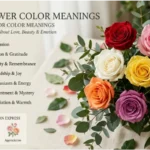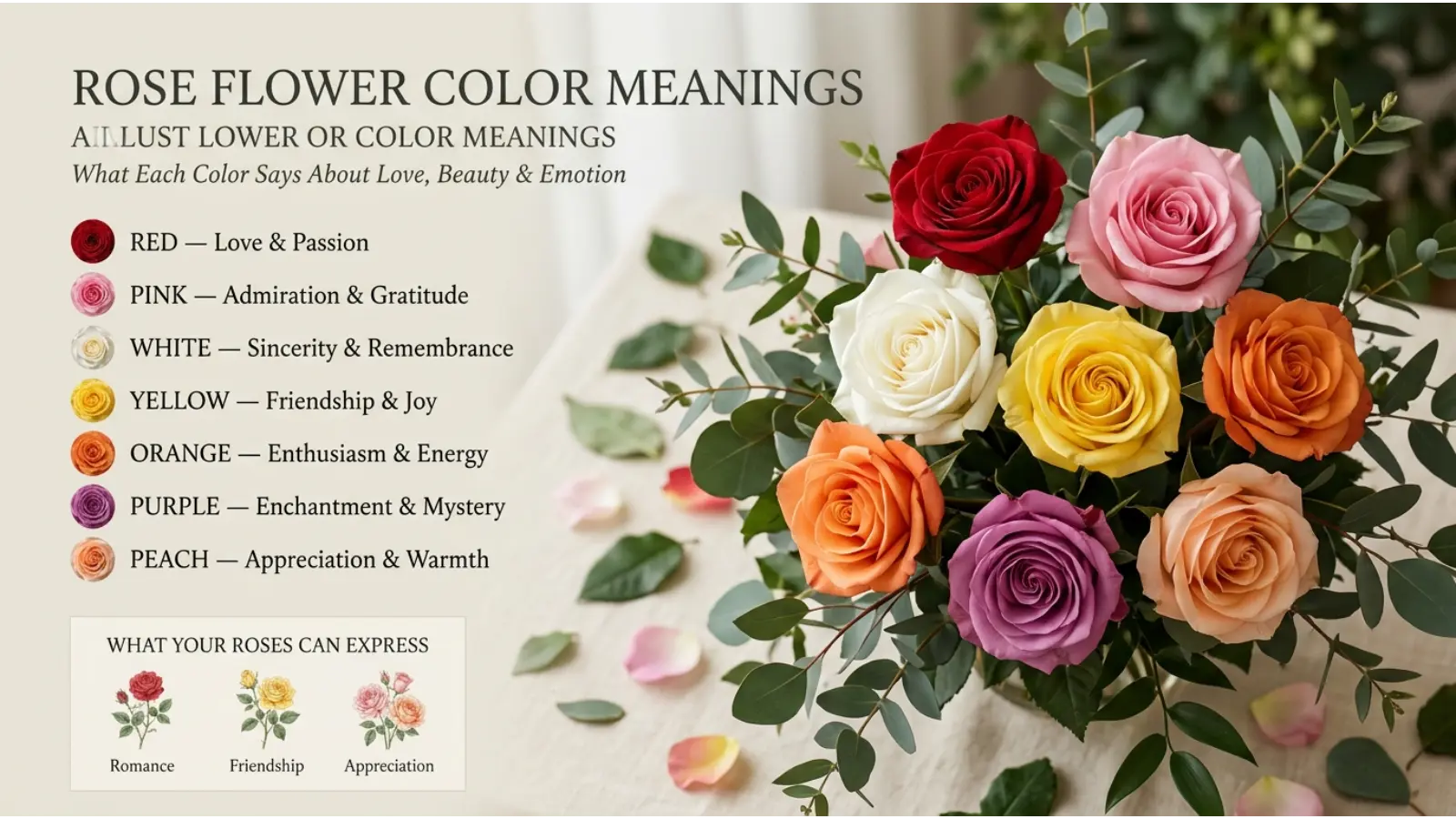
Rose Flower Color Meanings are among the most meaningful flowers in the world. People give them to express love, celebrate special moments, offer sympathy, and show appreciation. However, a rose’s message can change with its color. A red rose often represents romantic love, while a yellow rose may express friendship, happiness, or warmth. White roses are commonly linked with purity and remembrance, whereas pink roses often communicate gratitude and admiration.
Understanding rose flower color meanings helps you choose flowers that express the right feeling. However, these meanings are not universal rules. Personal experiences, cultural traditions, the occasion, and even the relationship between two people can change how a rose is understood.
In this guide, you will discover what different rose colors symbolize, how their meanings developed, and how to use them in gifts, weddings, home decoration, fashion, and creative design.
Quick Answer: Red roses symbolize romantic love, pink roses express admiration and gratitude, white roses represent purity and remembrance, yellow roses suggest friendship and joy, orange roses convey enthusiasm, and purple roses often symbolize enchantment or admiration. These meanings can vary by culture and context.
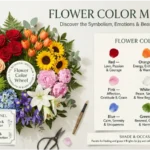
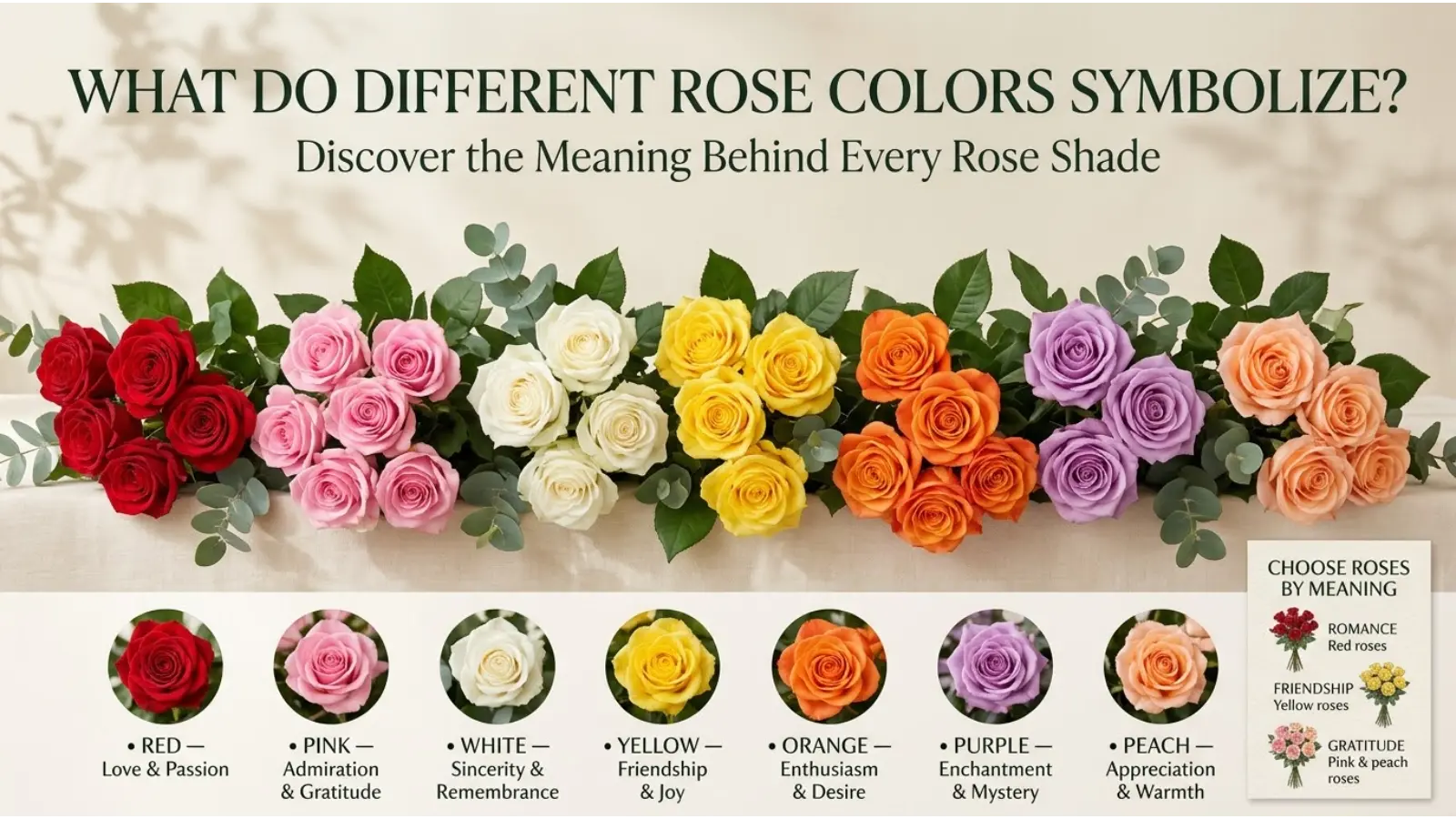
Rose Flower Color Meanings at a Glance
Every rose color carries a different visual impression and a range of traditional associations. Use this colorful chart as a quick reference before choosing a bouquet.
| Rose Color | Common Symbolism | Best Occasions |
|---|---|---|
| ❤️ Red | Romantic love, passion, devotion | Anniversaries, Valentine’s Day |
| 🩷 Pink | Gratitude, admiration, appreciation | Birthdays, thank-you gifts |
| 🤍 White | Purity, peace, remembrance, new beginnings | Weddings, memorials |
| 💛 Yellow | Friendship, happiness, warmth | Celebrations, friendly gifts |
| 🧡 Orange | Energy, enthusiasm, fascination | Achievements, congratulations |
| 💜 Purple | Enchantment, mystery, admiration | Romantic gestures, special gifts |
| 💙 Blue | Mystery, imagination, the unattainable | Artistic gifts, unusual arrangements |
| 💚 Green | Renewal, growth, harmony | New beginnings, housewarmings |
| 🖤 Dark or Black | Farewell, mystery, change, endings | Dramatic displays, symbolic gifts |
| 🌸 Peach | Sincerity, appreciation, modesty | Thank-you gifts, professional milestones |
| 🌼 Cream | Grace, warmth, understated elegance | Weddings, formal occasions |
| 🌺 Burgundy | Deep affection, richness, mature love | Romantic anniversaries, elegant bouquets |
These are common symbolic associations rather than fixed definitions. For example, a yellow rose may communicate friendship in one situation and romantic warmth in another.
What Do Different Rose Flower Color Meanings Symbolize?
1. Red Roses: Love, Passion, and Devotion
Red roses are widely recognized as symbols of romantic love. Their rich color creates a strong visual impression, making them a popular choice for expressing affection and commitment.
However, red roses can communicate more than romance. They may also represent courage, respect, deep appreciation, or a powerful emotional bond.
What red roses can express:
- Romantic love and desire
- Loyalty and devotion
- Respect and admiration
- Passion and emotional intensity
Red roses are especially popular for anniversaries, Valentine’s Day, and romantic proposals. Nevertheless, they are not limited to romantic relationships. A red rose can also serve as a dramatic expression of admiration or respect.
In design, red roses create a striking focal point. Pair them with white flowers for contrast or deep green foliage for a classic, balanced arrangement.
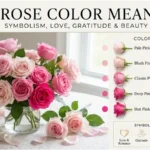
2. Pink Roses: Gratitude, Admiration, and Kindness
Pink roses often communicate appreciation without the intensity associated with deep red roses. Their softer appearance makes them suitable for many relationships and occasions.
Light pink roses are commonly associated with gentleness, sweetness, and grace. Meanwhile, darker pink roses can convey stronger admiration and gratitude.
Common pink rose meanings:
- Light pink: gentleness, sweetness, and appreciation
- Medium pink: gratitude, affection, and happiness
- Deep pink: admiration, recognition, and heartfelt thanks
Pink roses work beautifully as birthday gifts, thank-you bouquets, Mother’s Day flowers, and congratulations presents.
They also suit weddings because their soft tones create a romantic atmosphere without overwhelming other decorations. In branding and photography, pink roses can suggest elegance, care, and a welcoming personality.
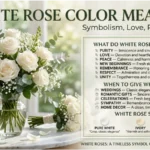
3. White Roses: Purity, Peace, and New Beginnings
White roses are often associated with purity, sincerity, peace, and fresh starts. Their simple appearance makes them suitable for both joyful and reflective occasions.
At weddings, white roses can represent commitment and the beginning of a shared life. At memorial services, they may express respect, remembrance, and sympathy.
White rose symbolism includes:
- Purity and innocence
- Peace and sincerity
- New beginnings
- Respect and remembrance
The occasion matters greatly. White roses at a wedding usually create a hopeful impression, while the same flowers at a memorial can communicate quiet respect.
For decoration, combine white roses with greenery for a natural look. Alternatively, pair them with pale pink or cream flowers to create a soft, elegant arrangement.
4. Yellow Roses: Friendship, Joy, and Warmth
Yellow roses are commonly linked with happiness, optimism, and friendship. Their bright appearance makes them especially suitable for celebrations and cheerful gifts.
Unlike the traditional romantic association of red roses, yellow roses often communicate affection without necessarily suggesting romantic interest.
Yellow roses can represent:
- Friendship and companionship
- Happiness and positive energy
- Celebration and encouragement
- Warmth and appreciation
They are a thoughtful choice for a friend’s birthday, a graduation celebration, or a message of encouragement.
However, yellow flowers have sometimes carried different meanings in older floral traditions, including jealousy or changing relationships. Therefore, the recipient’s cultural background and the occasion can influence how the bouquet is understood.
For a fresh, sunny arrangement, pair yellow roses with white flowers or soft green foliage.
5. Orange Roses: Enthusiasm, Fascination, and Energy
Orange roses combine the visual warmth of yellow with the intensity of red. As a result, they often symbolize excitement, fascination, enthusiasm, and strong interest.
They are useful when you want to express admiration with more energy than a traditional pink bouquet.
Orange rose meanings include:
- Enthusiasm and excitement
- Fascination and attraction
- Confidence and ambition
- Celebration and achievement
Orange roses make lively gifts for graduations, promotions, personal milestones, and celebrations of success.
In photography and event design, they add warmth and visual energy. Pair them with cream roses for balance or deep burgundy flowers for a rich, dramatic effect.
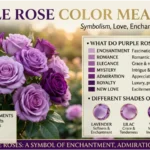
6. Purple Roses: Enchantment, Mystery, and Elegance
Purple roses are often associated with enchantment, mystery, luxury, and fascination. Their unusual appearance can make them feel distinctive and memorable.
Some modern floral traditions associate lavender roses with love at first sight or a feeling of being captivated by someone. However, this is a symbolic convention rather than a universal rule.
Purple rose symbolism includes:
- Enchantment and fascination
- Mystery and imagination
- Elegance and individuality
- Admiration and unusual beauty
Lavender roses work well for romantic gestures, creative celebrations, and gifts for someone who appreciates distinctive flowers.
In interior design, purple roses can add richness to neutral spaces. Combine them with silver, cream, or soft green accents for an elegant appearance.
7. Blue Roses: Mystery, Imagination, and the Unattainable
Blue roses are especially interesting because naturally occurring blue roses with a true blue pigment are not available in the same way as ordinary red or pink roses. Commercial blue roses are often dyed or produced through specialized breeding and genetic techniques that create blue-violet shades.
Because of their unusual appearance, blue roses often symbolize mystery, imagination, rarity, or something difficult to achieve.
Blue rose meanings may include:
- Mystery and fascination
- Imagination and creativity
- Uniqueness and rarity
- The pursuit of an ambitious dream
Blue roses are suitable for unusual gifts, fantasy-inspired arrangements, and artistic displays.
Their meaning is largely symbolic. There is no single traditional interpretation shared by every culture, so the message often depends on the person giving and receiving them.
8. Green Roses: Renewal, Growth, and Harmony
Green roses are less common in traditional bouquets, which makes them especially distinctive. Their color connects them visually with plants, nature, and new growth.
They can symbolize renewal, balance, abundance, and a fresh start.
Green rose symbolism includes:
- Growth and renewal
- Harmony and balance
- Prosperity and abundance
- Nature and fresh beginnings
Green roses can make thoughtful gifts for housewarmings, new jobs, business openings, or other fresh starts.
In floral arrangements, green roses work well with white, cream, and pale pink flowers. They also complement natural materials such as wood, linen, and stone.
9. Black Roses: Mystery, Farewell, and Transformation
True black roses are not a common naturally occurring rose color. Many flowers sold as black roses are extremely dark red or burgundy varieties, while others are dyed.
Their dramatic appearance has made black roses symbols of mystery, endings, rebellion, and transformation in modern art and popular culture.
Black rose meanings may include:
- Mystery and the unknown
- Endings and farewells
- Transformation and change
- Individuality and dramatic beauty
Black roses can suit gothic art, alternative fashion, theatrical arrangements, and symbolic photography.
Nevertheless, they can carry a very different impression from cheerful yellow or soft pink roses. If you are giving them as a gift, consider whether the recipient enjoys dramatic or unconventional symbolism.
10. Peach Roses: Sincerity, Appreciation, and Warmth
Peach roses have a gentle, welcoming appearance. They are often associated with appreciation, sincerity, modesty, and gratitude.
Their warm color makes them an excellent choice when you want to acknowledge someone’s kindness or celebrate an achievement without using a strongly romantic flower.
Peach rose meanings include:
- Sincere appreciation
- Gratitude and warmth
- Modesty and thoughtfulness
- Congratulations and encouragement
Peach roses are suitable for professional thank-you gifts, birthdays, family celebrations, and friendly gestures.
They also pair naturally with cream, pale pink, and white flowers. As a result, they are popular in soft, understated floral arrangements.
11. Cream Roses: Grace, Warmth, and Understated Beauty
Cream roses are softer than pure white roses and warmer in appearance. Their neutral tone creates a feeling of calm elegance.
They are often used to communicate grace, thoughtfulness, sincerity, and understated affection.
Cream roses are particularly suitable for formal events, weddings, anniversaries, and elegant home decoration.
Pair them with greenery for a natural arrangement or combine them with burgundy roses for a rich, traditional look.
12. Burgundy Roses: Deep Affection and Mature Love
Burgundy roses have a darker, richer appearance than many traditional red varieties. Their deep color often creates associations with sophistication, devotion, and mature romantic affection.
They are a strong option for someone who prefers a dramatic bouquet over bright red flowers.
Burgundy roses work especially well for anniversaries, formal celebrations, autumn weddings, and luxurious arrangements.
Combine them with cream roses, dark foliage, or muted gold accents to emphasize their depth.
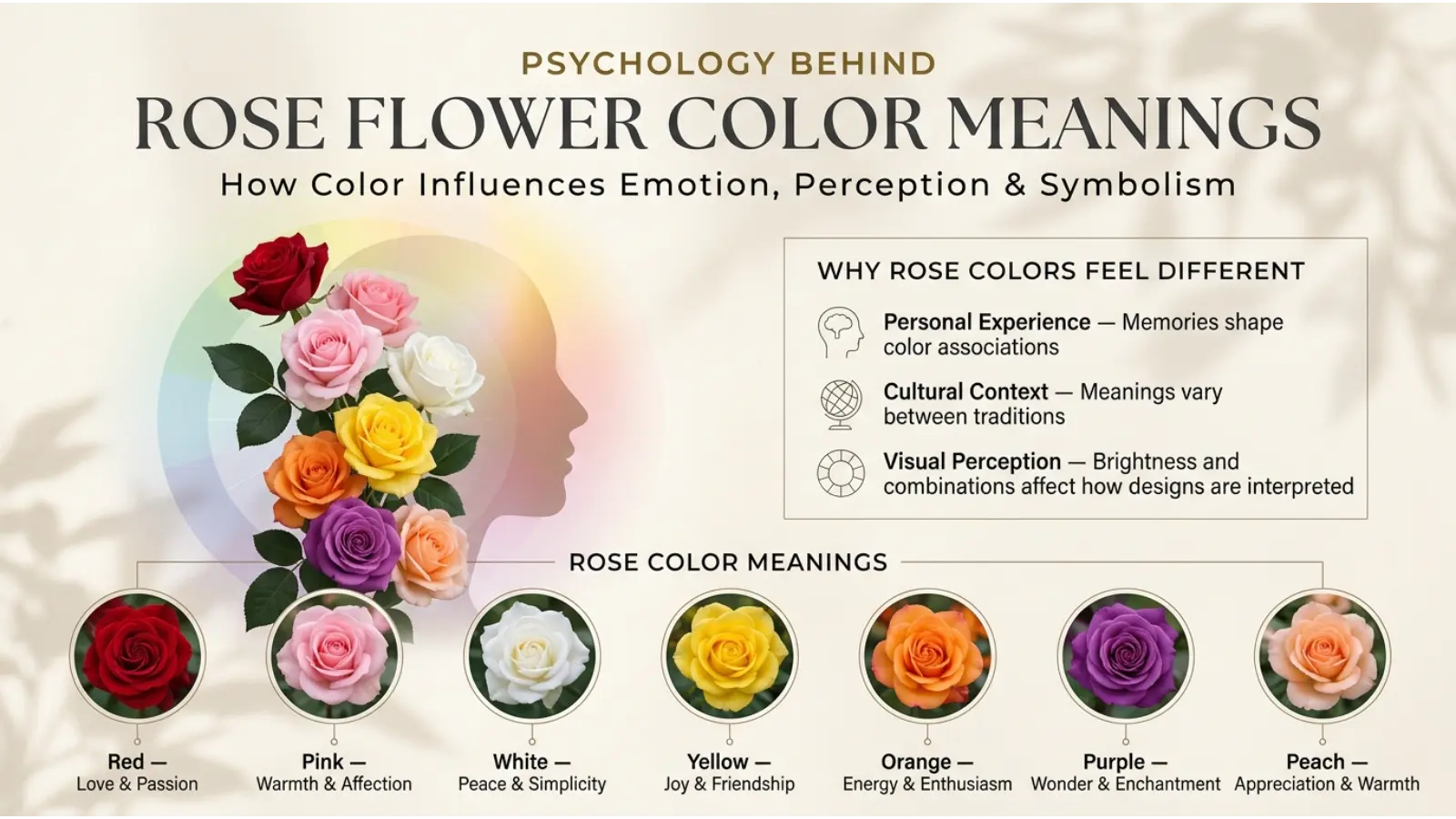
Psychology Behind Rose Flower Color Meanings
Rose color meanings are shaped by more than symbolism alone. The visual qualities of color can influence attention, emotional impressions, and expectations.
However, color psychology does not provide a reliable way to determine someone’s personality or predict exactly how a person will feel. Individual experiences, culture, surroundings, and personal preferences all matter.
Why Red Roses Feel Romantic
Red is visually intense and often attracts attention. Across many modern floral traditions, red roses have become a familiar symbol of romantic love and passion.
Their meaning is reinforced by repeated use in gifts, advertisements, weddings, films, and Valentine’s Day celebrations.
Therefore, the romantic impression comes from both the color’s visual impact and the cultural messages people learn over time.
Why Pink Roses Feel Gentle
Pink often appears softer than saturated red. In flowers, this visual quality can support impressions of kindness, warmth, affection, and tenderness.
Lighter shades may feel delicate, while deep pink can appear more energetic and confident.
Nevertheless, these are common impressions rather than scientific rules. A person’s experience with pink flowers may differ from someone else’s.
Why Yellow Roses Feel Cheerful
Bright yellow is associated with sunlight and can stand out strongly against green leaves. This contrast helps explain why yellow roses often appear lively and noticeable.
The color is frequently used in celebrations and friendly gifts because it supports a bright, welcoming visual message.
However, lighting changes its effect. A soft golden yellow may feel warm and relaxed, while a very vivid yellow may appear bold and energetic.
Why White Roses Feel Calm
White roses have a simple visual appearance that can suggest clarity, openness, and restraint. They also provide a strong contrast against dark green foliage.
Their associations with peace and purity are reinforced by long-standing social and ceremonial uses.
Yet white does not carry the same meaning in every setting. A white bouquet may represent celebration in one context and remembrance in another.
What Science Can and Cannot Tell Us
Research on color perception suggests that color can influence emotional associations and judgments. Still, these effects depend on context, learned associations, and the way colors are presented.
There is no strong scientific basis for claiming that a rose’s color reliably reveals a recipient’s personality, guarantees a particular emotional response, or produces the same psychological effect in every person.
For this reason, it is best to understand rose color meanings as a combination of visual perception, cultural symbolism, and personal interpretation.
Spiritual Rose Flower Color Meanings
Roses have spiritual and symbolic significance in various traditions, literature, and artistic practices. Their meanings are not identical across religions or cultures, so it is best to consider each interpretation in its proper context.
| Rose Color | Possible Spiritual Association |
|---|---|
| ❤️ Red | Devotion, passionate love, heartfelt commitment |
| 🤍 White | Peace, sincerity, purity, remembrance |
| 🩷 Pink | Compassion, kindness, gratitude |
| 💛 Yellow | Joy, warmth, friendship |
| 💜 Purple | Mystery, contemplation, spiritual wonder |
| 💚 Green | Renewal, balance, growth |
| 🧡 Orange | Enthusiasm, vitality, creative energy |
| 💙 Blue | Imagination, the unknown, aspiration |
These associations are symbolic rather than proven supernatural effects.
Red Roses and Devotion
In spiritual art and poetry, red roses can represent deep devotion, love, or sacrifice. Their meaning may be connected to the importance of love in a particular religious or philosophical tradition.
However, a red rose does not have one universal spiritual meaning.
White Roses and Peace
White roses may be used in ceremonies and memorial settings to communicate peace, sincerity, or remembrance. In some Christian artistic traditions, white roses are associated with purity and sacred imagery.
These interpretations depend on the particular tradition and context rather than a single global rule.
Pink Roses and Compassion
Pink roses can serve as symbols of kindness, gratitude, and caring relationships. People may use them during personal reflection or meaningful celebrations to express appreciation for others.
Their spiritual meaning often comes from the intention behind the gift.
Purple Roses and Mystery
Purple roses can suggest contemplation, wonder, and the beauty of things that are difficult to explain. Their unusual color also makes them useful symbols in art and personal rituals.
Nevertheless, there is no universal spiritual system that assigns the same meaning to every purple rose.
Cultural and Historical Meanings of Roses
Rose symbolism has changed across different places and periods. Although some meanings have become widely recognized, no interpretation should be treated as universal.
Roses in Western Traditions
In many Western countries, red roses are closely associated with romance. This connection has been reinforced by poetry, art, courtship customs, greeting cards, and modern celebrations.
White roses are often selected for weddings and memorials, while yellow roses are widely used to express friendship and happiness.
These associations are familiar, but individual families and communities may use flowers differently.
Roses in European History
Roses have held important symbolic roles in European history and literature.
One well-known example is the Wars of the Roses, a series of English dynastic conflicts during the fifteenth century. The white rose became associated with the House of York, while the red rose became associated with the House of Lancaster.
The Tudor rose later combined red and white elements as a symbol of the union between the two rival houses.
This historical example demonstrates that rose symbolism can represent political identity and reconciliation, not only personal emotions.
Roses in Middle Eastern and Persian Traditions
Roses have a long history in Persian poetry, garden culture, and artistic traditions. In Persian literary imagery, the rose often appears alongside the nightingale, a pairing associated with beauty, longing, love, and the relationship between the beloved and the admirer.
Rosewater has also played an important role in culinary, cosmetic, and ceremonial practices in several regions.
These traditions do not assign one fixed meaning to every rose color. The flower’s role depends on the poem, artwork, occasion, or cultural practice.
Roses in Asian Cultures
Roses are used in many Asian countries, particularly in modern floral gifts, celebrations, and commercial flower arrangements. Their meanings vary by country and occasion.
For example, red roses are widely recognized as romantic gifts in contemporary international culture, including in many Asian cities. However, traditional flower symbolism may differ from modern commercial conventions.
It is therefore misleading to claim that all Asian cultures interpret a particular rose color in the same way.
Roses in Latin American and African Communities
In Latin America and across African countries, roses appear in romantic gifts, religious celebrations, weddings, funerals, and everyday floral arrangements.
Their meaning depends on local customs, religious traditions, family preferences, and the purpose of the arrangement.
Because these regions contain many distinct cultures, there is no single interpretation that accurately represents everyone.
Roses in Modern Global Culture
Today, social media, international flower delivery, advertising, and popular entertainment have helped spread familiar rose color associations around the world.
As a result, many people recognize red roses as romantic and yellow roses as friendly, even when they come from different cultural backgrounds.
Still, local customs and personal experiences continue to influence how a bouquet is received.
Rose Flower Color Meanings for Different Relationships
Choosing a rose becomes easier when you consider the relationship before selecting the color.
| Relationship | Rose Colors to Consider | Why They Work |
|---|---|---|
| Romantic partner | Red, pink, burgundy | Love, affection, admiration |
| Close friend | Yellow, pink, peach | Friendship, appreciation, warmth |
| Mother or family member | Pink, peach, cream | Gratitude, care, respect |
| Wedding couple | White, cream, blush pink | New beginnings, elegance, affection |
| Colleague or mentor | Peach, yellow, cream | Appreciation, encouragement |
| Someone grieving | White, cream, muted pink | Sympathy, remembrance, support |
| Creative or unconventional person | Purple, blue, dark burgundy | Individuality, mystery, artistic expression |
| Someone starting a new chapter | Green, white, peach | Growth, renewal, hope |
These suggestions are starting points rather than strict rules. For example, red roses may be appropriate for a family member when they express admiration, while white roses may be chosen for a happy celebration.
When in doubt, consider the recipient’s favorite color and the message you want to communicate.
Rose Flower Color Meanings for Special Occasions
Valentine’s Day
Red roses remain a classic Valentine’s Day choice because of their strong association with romantic love. Pink roses are another option when you want to express tenderness and admiration.
For a distinctive bouquet, combine red and pink roses to communicate affection alongside warmth.
Weddings and Engagements
White, cream, and blush roses work well in weddings because they create a soft and elegant appearance.
However, color choice should also reflect the couple’s style. Burgundy roses can create a dramatic arrangement, while peach roses offer a warmer, more relaxed look.
Birthdays
Yellow roses are a cheerful choice for friends, while pink roses express appreciation and affection.
For someone who enjoys unusual flowers, purple or blue roses can make the occasion feel more personal.
Anniversaries
Red and burgundy roses are traditional options for expressing enduring affection. Pink roses can communicate gratitude for a shared relationship.
A mixed bouquet can also reflect different aspects of a partnership, such as friendship, romance, and mutual respect.
Sympathy and Memorials
White and cream roses are often chosen for memorial arrangements because they can communicate peace, sincerity, and remembrance.
However, some people prefer bright flowers that celebrate a loved one’s personality. The family’s wishes and local customs should guide the decision.
Graduations and New Beginnings
Yellow, peach, and orange roses can create an uplifting gift for a graduation, new job, or personal achievement.
Green roses may also suit these occasions because their associations with renewal and growth fit the idea of beginning a new chapter.
How Many Roses Should You Give?
The number of roses can add another layer of symbolism. However, number-based meanings vary by region and floral tradition.
| Number of Roses | Common Modern Association |
|---|---|
| 1 rose | A simple expression of affection or special attention |
| 3 roses | A romantic message, sometimes associated with “I love you” |
| 6 roses | Affection or a desire for greater closeness |
| 12 roses | A classic romantic bouquet |
| 24 roses | A grander gesture of affection |
| 50 roses | Abundance or a dramatic expression of love |
These associations are not universal or historically fixed. Some florists and gift traditions assign different meanings to the same number.
In addition, the size, freshness, color, and presentation of a bouquet may matter more to the recipient than the exact number of stems.
Can a Bouquet Have More Than One Meaning?
Yes. Combining rose colors can create a more personal message than choosing a single shade.
For example, red roses paired with white roses can suggest a balance of love and sincerity. Pink and yellow roses can create a cheerful arrangement that expresses affection and friendship.
A mixed bouquet also allows you to reflect the different parts of a relationship.
| Color Combination | Possible Message | Visual Effect |
|---|---|---|
| ❤️ Red + 🤍 White | Love and sincerity | Classic, high contrast |
| 🩷 Pink + 💛 Yellow | Affection and friendship | Bright, cheerful |
| ❤️ Red + 💜 Purple | Passion and fascination | Dramatic, luxurious |
| 🤍 White + 💚 Green | Peace and renewal | Natural, calming |
| 🧡 Orange + 💛 Yellow | Enthusiasm and celebration | Warm, energetic |
| 🌸 Peach + 🤍 Cream | Gratitude and elegance | Soft, understated |
| 🍷 Burgundy + 🤍 Cream | Deep affection and refinement | Rich, formal |
| 💙 Blue + 🤍 White | Imagination and serenity | Cool, contemporary |
The meaning of a mixed bouquet is open to interpretation. If the occasion is especially important, you can include a short personal message to explain why you chose those colors.
Rose Flower Color Meanings in Branding and Marketing
Roses are widely used in floral businesses, beauty products, wedding services, gift packaging, and lifestyle branding. Their visual appeal allows businesses to communicate a mood before customers read the accompanying text.
However, the color alone does not guarantee trust, sales, or a specific emotional response. Product quality, messaging, audience expectations, and overall design matter as well.
Red Roses in Romantic Marketing
Red roses are useful for Valentine’s Day campaigns, anniversary gifts, and romantic product collections. Their familiar association with love allows customers to understand the message quickly.
Retailers can use red floral photography alongside elegant typography to create a focused romantic identity.
Pink Roses in Beauty and Lifestyle Branding
Pink roses can communicate softness, care, elegance, and appreciation. As a result, they suit some skincare, fragrance, event-planning, and gift brands.
Pale pink often creates a delicate impression, while bright pink feels more energetic and youthful.
White Roses in Premium Design
White roses can create a clean, refined appearance. They work well in luxury floral packaging, wedding stationery, and minimalist product photography.
Nevertheless, white backgrounds require careful contrast. Dark text, natural textures, or subtle metallic accents can improve readability and visual depth.
Yellow Roses in Friendly Branding
Yellow roses can support a cheerful, welcoming identity. They may be useful for celebration services, friendly gift collections, and bright seasonal campaigns.
Designers should ensure that yellow text remains readable against its background, since pale yellow can have poor contrast on white.
Purple Roses for Distinctive Products
Purple roses can suggest individuality, mystery, or sophistication. They may suit boutique florists, artistic gift collections, and distinctive fragrance packaging.
The precise shade matters. Pale lavender may appear delicate, while deep purple often feels more dramatic.
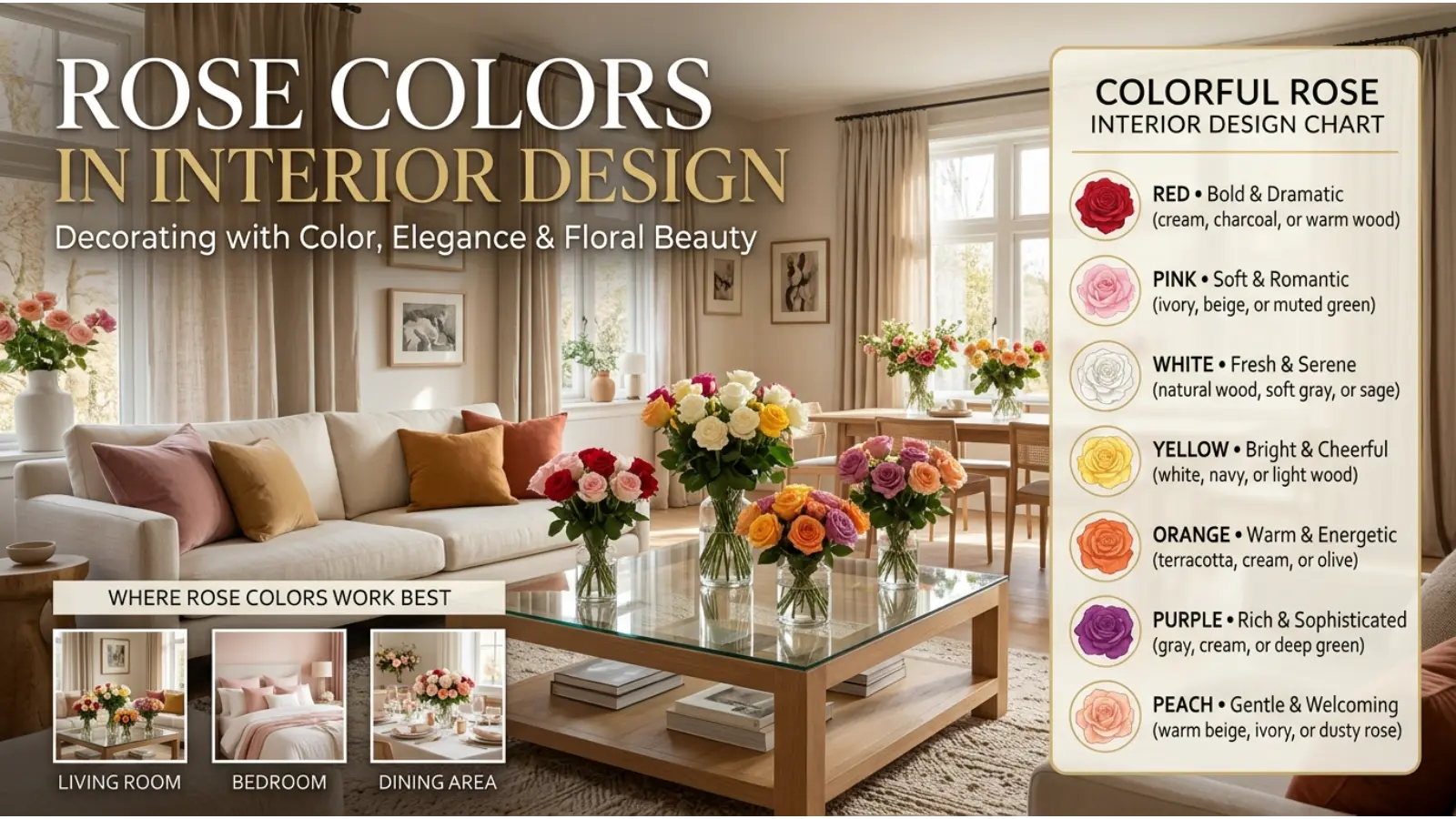
Rose Flower Color Meanings in Interior Design
Roses can influence the appearance of a room through their color, shape, and contrast with surrounding materials. Their effect depends on the room’s lighting, wall color, furniture, and the number of flowers used.
Red Roses for Bold Spaces
Red roses create a strong focal point against neutral walls, dark wood, and simple furniture.
Use them in small arrangements when you want a noticeable accent without making the room feel visually crowded.
Pink Roses for Bedrooms and Living Rooms
Pink roses can soften a room’s appearance. Pair pale pink flowers with cream bedding, light wood, and muted fabrics for a relaxed atmosphere.
Alternatively, deeper pink roses can add contrast to a room decorated in gray, beige, or white.
White Roses for Minimalist Interiors
White roses suit minimalist spaces because their clean color works well with uncluttered furniture and neutral materials.
Place them in a clear glass vase for a light appearance or in a dark ceramic vase for stronger contrast.
Yellow and Orange Roses for Social Spaces
Yellow and orange roses can brighten dining areas, entryways, and living rooms. They work particularly well with warm wood, cream fabrics, and natural greenery.
For a balanced look, let the flowers provide the strongest color accent rather than adding too many competing shades.
Purple Roses for Elegant Decoration
Purple roses pair beautifully with neutral walls, soft gray furniture, and silver or brass details.
For a more natural look, combine them with white flowers and green leaves.
How Lighting Changes Rose Colors
Lighting can change how roses appear. Warm indoor bulbs may make white roses look creamier and yellow roses more golden. Cool daylight can make some pink and purple shades appear less warm.
Additionally, direct sunlight may cause certain cut flowers to fade more quickly. Keep arrangements away from harsh heat and direct sun to help them last longer.
Rose Flower Color Meanings in Fashion
Rose colors also influence clothing, accessories, floral prints, and event styling. A rose-inspired color palette can create a romantic look, a bold statement, or a refined formal outfit.
Red Roses and Statement Style
Red rose patterns or accessories can create a confident, dramatic impression. A red floral scarf, tie, or dress can become the main focus of an outfit.
Pair strong red tones with black, cream, navy, or denim to balance the look.
Pink Roses and Soft Style
Pink rose prints work well in dresses, blouses, scarves, and accessories. Pale pink often creates a gentle appearance, while deeper pink can look more expressive.
For a balanced outfit, combine pink with white, gray, brown, or dark denim.
White Roses and Formal Wear
White rose accessories are suitable for weddings, formal celebrations, and elegant events. They can complement black suits, cream dresses, and neutral outfits.
A small white floral accessory can add detail without overwhelming the overall appearance.
Yellow and Orange Roses for Casual Outfits
Yellow and orange floral patterns can make casual clothing feel lively. They pair well with denim, white shirts, neutral trousers, and simple accessories.
Because these colors can be visually strong, use them as accents if you prefer a more understated outfit.
Purple Roses for Individual Expression
Purple rose prints and accessories can create an artistic or distinctive look. Lavender often feels softer, whereas deep purple creates more contrast.
Pair purple with cream, gray, dark green, or black to suit the mood you want.
Color Combinations That Complement Rose Flower Color Meanings
The best rose color combinations depend on the effect you want. Some create strong contrast, while others produce a softer, more unified appearance.
| Rose Color | Complementary Colors | Design Effect |
|---|---|---|
| Red | White, green, cream | Classic and striking |
| Pink | Gray, white, sage green | Soft and graceful |
| White | Green, navy, burgundy | Clean and elegant |
| Yellow | White, green, soft blue | Bright and fresh |
| Orange | Cream, burgundy, deep green | Warm and dramatic |
| Purple | Silver, cream, sage green | Refined and distinctive |
| Peach | Ivory, blush pink, muted green | Gentle and welcoming |
| Burgundy | Cream, gold, dark green | Rich and luxurious |
| Green | White, peach, pale pink | Natural and balanced |
| Blue | White, silver, pale lavender | Cool and imaginative |
These combinations are useful for bouquets, weddings, photography, invitations, and room decoration. However, the balance matters as much as the colors themselves.
For example, a small amount of burgundy can make cream roses look richer, while too much dark color may overwhelm a delicate arrangement.
How to Choose the Right Rose Flower Color Meanings
If you are unsure which rose color to choose, begin with the purpose of the gift rather than the symbolism chart.
For romance: Red, pink, or burgundy roses are familiar options. Choose the shade that best matches your relationship and the recipient’s taste.
For friendship: Yellow and pink roses can express warmth and appreciation without automatically implying romantic interest.
For gratitude: Peach and deep pink roses are thoughtful choices because they are often associated with appreciation.
Weddings: White, cream, and blush roses create a soft, elegant look. You can also choose colors that match the wedding palette.
For sympathy: White and cream roses are common options, although the family’s wishes and cultural traditions should take priority.
For an unusual gift: Purple, blue, or very dark roses can feel distinctive, particularly when the recipient enjoys unconventional flowers.
A fresh start: Green, white, or peach roses can symbolize growth, renewal, and encouragement.
Finally, consider practical details. Freshness, fragrance, availability, allergies, and the recipient’s personal preferences can be more important than following a traditional meaning exactly.
Common Misconceptions About Rose Flower Color Meanings
Myth 1: Every Rose Color Has One Fixed Meaning
Rose symbolism changes across cultures, traditions, and personal experiences. Red roses often represent love, for example, but that does not mean every red rose must be romantic.
Myth 2: Yellow Roses Always Mean Jealousy
Yellow roses are widely associated with friendship, happiness, and warmth today. Although jealousy appears in some older floral symbolism, it is not the only accepted interpretation.
Myth 3: Blue Roses Grow Naturally in a True Blue Shade
Commercial blue roses are often dyed or produced through specialized breeding and genetic techniques. Their unusual appearance contributes to their symbolic association with rarity and mystery.
Myth 4: A Rose Color Can Reveal Someone’s Personality
Preferring pink, red, or purple roses does not reliably reveal a person’s character. Color preferences can reflect taste, memories, fashion, and experience.
Myth 5: White Roses Are Only for Weddings or Funerals
White roses can suit birthdays, anniversaries, formal events, and everyday gifts. Their meaning depends on how they are used.
Myth 6: More Expensive Roses Communicate Stronger Feelings
A bouquet’s price does not determine the sincerity of a gift. A carefully chosen single rose may carry more personal meaning than an expensive arrangement.
Myth 7: Combining Rose Colors Creates a Universal Message
Mixed bouquets can suggest several emotions, but there is no universal code that everyone understands in exactly the same way. A personal note can make your intended message clearer.
Real-World Uses of Rose Flower Color Meanings
Rose color symbolism is useful beyond traditional flower gifting. It also appears in creative work, photography, event planning, and everyday communication.
In Art and Illustration
Artists can use red roses to suggest passion, white roses to create a feeling of stillness, and dark roses to explore mystery or loss.
However, these are creative choices rather than fixed rules. A red rose in a painting may represent danger or sacrifice if the surrounding imagery supports that interpretation.
In Photography
Rose colors can guide the viewer’s attention. A red rose against a neutral background creates a strong focal point, while pale pink roses in soft natural light can produce a gentle visual mood.
Photographers should also consider white balance, shadows, and saturation. These factors can change how the flower’s color appears in the final image.
In Weddings and Events
Florists use rose colors to support a celebration’s theme. White and cream arrangements often suit minimalist weddings, while burgundy and peach can create a richer, warmer palette.
The venue’s lighting, table linens, and surrounding decorations should be considered before finalizing the flower colors.
In Gifts and Everyday Communication
A rose can express appreciation, sympathy, encouragement, or affection without requiring a long explanation.
Nevertheless, the recipient’s preferences matter. If someone loves yellow flowers, a yellow rose may be more meaningful than a red rose chosen only because tradition says it represents love.
In Entertainment and Storytelling
Films, novels, and games sometimes use roses as visual symbols. A red rose might represent romance, while a dark rose could suggest secrecy or change.
The story’s setting determines the meaning. Writers and artists can use familiar associations while giving the flower a new purpose.
In Business and Product Presentation
Florists, event planners, photographers, and gift businesses can use rose colors to organize collections around occasions or moods.
For example, a friendship collection might feature yellow and peach roses, while a romantic collection might emphasize red and burgundy.
Clear descriptions help customers choose flowers according to their intentions rather than relying on color alone.
Frequently Asked Questions About Rose Flower Color Meanings
1. What is the most popular meaning of a red rose?
Red roses are widely associated with romantic love, passion, and devotion. They are especially popular for Valentine’s Day, anniversaries, and romantic celebrations. However, they can also communicate admiration and respect.
2. What does a pink rose mean?
Pink roses commonly symbolize gratitude, admiration, appreciation, and affection. Light pink often creates a gentle impression, while deep pink can communicate stronger appreciation or recognition.
3. What do white roses symbolize?
White roses often represent purity, peace, sincerity, and new beginnings. They are used at weddings to create an elegant atmosphere and at memorials to express respect and remembrance.
4. Do yellow roses mean friendship or jealousy?
Yellow roses are commonly associated with friendship, joy, and warmth in modern floral gifting. Jealousy appears in some historical floral interpretations, but it is not the only meaning of a yellow rose.
5. What rose color means love?
Red is the most widely recognized rose color for romantic love. Pink can express affection and admiration, while burgundy often suggests deep or mature romantic feelings.
6. What does a purple rose mean spiritually?
Purple roses may symbolize mystery, wonder, admiration, or spiritual contemplation. Their meaning depends on the tradition or personal interpretation. There is no single spiritual meaning accepted by all cultures.
7. What does a blue rose represent?
Blue roses commonly symbolize mystery, imagination, uniqueness, or the pursuit of something difficult to attain. Their unusual appearance helps explain these associations.
8. What does a black rose mean?
Black roses can symbolize mystery, farewell, endings, or transformation. They are often used in artistic and alternative styles. Their meaning depends on the occasion and the message intended.
9. Which rose color is best for a birthday?
Yellow roses are a cheerful choice for friends, while pink and peach roses are suitable for expressing affection or appreciation. Purple roses can make a distinctive gift for someone who enjoys unusual flowers.
10. Can I mix different rose colors in one bouquet?
Yes. Mixing rose colors can communicate several feelings at once. Red and white may suggest love and sincerity, while pink and yellow can create a cheerful combination of affection and friendship. Choose colors that suit the recipient and occasion.
Conclusion
Rose flower color meanings offer a useful way to express feelings through flowers. Red roses are widely recognized for romantic love, pink roses communicate appreciation, white roses suggest peace and new beginnings, and yellow roses often represent friendship and joy. Meanwhile, orange, purple, blue, green, peach, cream, and burgundy roses provide additional ways to personalize a bouquet.
Still, the meaning of a rose is never determined by color alone. Culture, history, personal memories, the occasion, and the relationship between the giver and recipient all influence its message.
The best approach is to use traditional symbolism as a guide rather than a strict rule. Choose roses that reflect your intention, consider what the recipient enjoys, and let the gesture communicate something genuine. Sometimes, the most meaningful flower is simply the one chosen with care.

Emma Wilson is a dedicated comparison writer and product researcher at ColorMystiic.com. She specializes in creating unbiased product comparisons, detailed reviews, and helpful buying guides. Her goal is to help readers make smarter purchasing decisions with confidence.