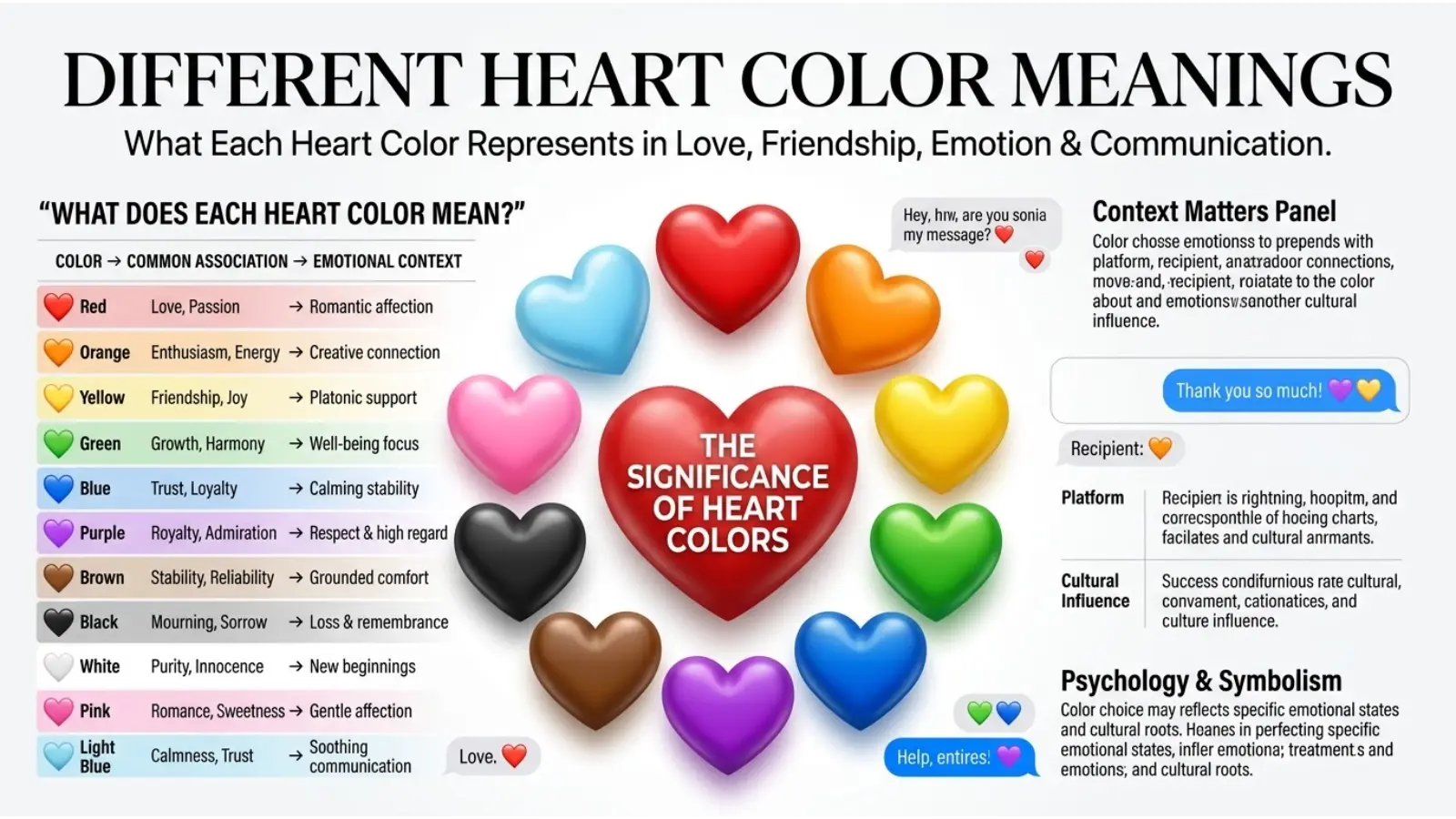
Different Heart Color Meanings can say more than “I love you.” A red heart may express romance, while a yellow heart can suggest friendship, happiness, or warmth. Likewise, blue, green, purple, black, white, brown, orange, and pink hearts can carry different emotional or social meanings depending on the message and context.
That is why people often search for Different Heart Color Meanings when choosing an emoji for a text, social post, relationship, or special occasion. However, these meanings are not fixed rules.
They can change with culture, personal preference, relationship, and the conversation itself. This guide explains the common meanings behind heart colors and shows how to use them naturally.
Quick Answer: What Do Different Heart Color Meanings?
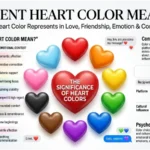
Different heart colors often communicate different emotions or types of affection. Red usually represents romantic love, pink tenderness and caring, orange warmth or encouragement, yellow friendship and happiness, green nature, growth, or sometimes jealousy, blue trust and calmness, purple compassion or admiration, black grief, humor, or a dark aesthetic, white peace and sympathy, and brown comfort, warmth, or connection with nature.
| Heart Color | Common Meaning | Typical Feeling |
|---|---|---|
| ❤️ Red | Love, romance, passion | Deep affection |
| 🩷 Pink | Tenderness, care, sweetness | Gentle affection |
| 🧡 Orange | Warmth, encouragement, enthusiasm | Friendly support |
| 💛 Yellow | Friendship, happiness, positivity | Cheerful affection |
| 💚 Green | Nature, growth, renewal | Freshness or support |
| 💙 Blue | Trust, loyalty, calm | Emotional security |
| 💜 Purple | Compassion, admiration, creativity | Special affection |
| 🖤 Black | Grief, humor, strength, dark style | Complex emotion |
| 🤍 White | Peace, sympathy, purity | Calm or sincere care |
| 🤎 Brown | Comfort, warmth, earthiness | Stability |
| 🩵 Light Blue | Gentleness, calm, openness | Soft support |
| 🩶 Gray | Neutrality, quietness, maturity | Reserved emotion |
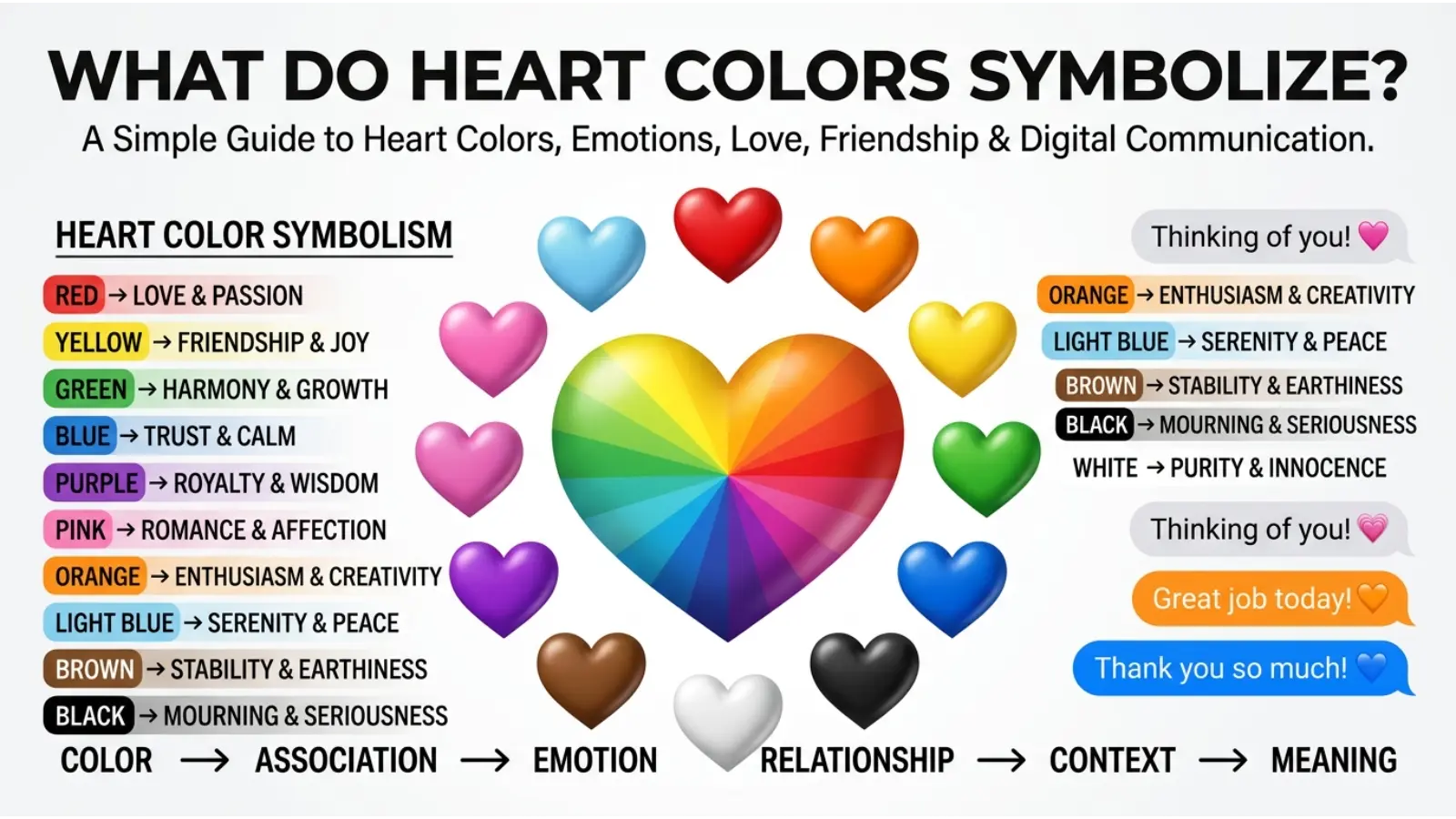
What Do Heart Colors Symbolize?
Heart colors work as a visual emotional language. Because hearts are already associated with love and affection, changing the color can subtly change the message.
For example, sending ❤️ to a romantic partner may feel much stronger than sending 💛 to a close friend. Similarly, 💙 can feel supportive and loyal without necessarily sounding romantic.
However, there is no universal dictionary that assigns one permanent meaning to every heart emoji. Instead, meanings develop through common online usage, cultural associations, visual symbolism, and individual habits.
Therefore, the safest way to understand a heart is to consider the color, the relationship, the words around it, and the situation together.
❤️ Red Heart Meaning
The red heart is the strongest and most widely recognized symbol of love. It commonly represents romance, passion, deep affection, devotion, and emotional closeness.
In romantic conversations, ❤️ can communicate feelings that words alone might not express. It can appear in messages between partners, anniversary posts, love letters, and affectionate comments.
At the same time, red does not always mean romantic love. People may use a red heart to show strong appreciation for family members, friends, favorite causes, or something they genuinely enjoy.
When to Use a Red Heart
Use ❤️ when you want your message to feel:
- Romantic
- Passionate
- Loving
- Deeply appreciative
- Emotionally sincere
Example: “Thank you for always being there for me ❤️”
🩷 Pink Heart Meaning
The pink heart usually feels softer than the traditional red heart. It is commonly associated with tenderness, sweetness, affection, kindness, and gentle romantic feelings.
Because pink is often connected with softness and care, 🩷 can work well when you want to express affection without making the message feel intensely romantic.
It can also fit friendships, supportive conversations, cute messages, and expressions of gratitude.
Pink vs. Red Heart
The difference is mostly emotional tone. Red often feels passionate and serious, while pink tends to feel gentle, playful, sweet, or tender.
For instance, ❤️ may communicate “I love you,” whereas 🩷 can feel closer to “I care about you” or “You are special to me.”
🧡 Orange Heart Meaning
The orange heart often communicates warmth, encouragement, enthusiasm, and friendly affection.
Orange sits between the energy associated with red and the brightness associated with yellow. As a result, 🧡 can feel affectionate without carrying the same romantic intensity as ❤️.
People may use it when encouraging a friend, celebrating good news, or showing emotional support.
Common Uses of the Orange Heart
🧡 can work well for:
- Friendship
- Encouragement
- Positive messages
- Emotional support
- Warm appreciation
- Enthusiasm
It can be especially useful when you want to show that you care while keeping the message friendly.
💛 Yellow Heart Meaning
The yellow heart is commonly associated with happiness, friendship, positivity, warmth, and cheerful affection.
Unlike the red heart, 💛 usually does not immediately suggest romantic passion. Instead, it often creates a bright and friendly emotional tone.
For that reason, people may use it when talking with close friends, celebrating achievements, or sending a positive message.
What Does a Yellow Heart Say?
A yellow heart can communicate:
“I appreciate you.”
“You make me happy.”
“I am supporting you.”
“Our friendship matters to me.”
Still, context matters. A yellow heart between romantic partners can also simply be a personal choice rather than a sign that the relationship is non-romantic.
💚 Green Heart Meaning
The green heart has several possible meanings. It can represent nature, growth, renewal, health, balance, or environmental awareness.
However, green also has another common association: jealousy. Consequently, 💚 can sometimes communicate envy or complicated emotions.
This makes the green heart more context-dependent than some other colors.
Positive Green Heart Meaning
In positive conversations, 💚 can suggest:
- Growth
- Nature
- Renewal
- Support
- Health
- Fresh energy
- Environmental awareness
When Green Can Suggest Jealousy
If someone is discussing competition, relationships, or envy, the green heart may take on a different tone. Therefore, you should read the surrounding message before assigning a single meaning to 💚.
💙 Blue Heart Meaning
The blue heart is often associated with trust, loyalty, calmness, stability, and emotional support.
Blue is frequently perceived as a calm and dependable color. Consequently, 💙 can feel less passionate than ❤️ while still expressing strong care.
It is often suitable for friendships, supportive conversations, family relationships, and messages where trust is important.
Blue Heart in Relationships
A blue heart does not automatically mean “just friends.” Someone may use 💙 simply because they like blue or because it matches their personal style.
Therefore, avoid judging a relationship solely from the heart emoji someone chooses.
💜 Purple Heart Meaning
The purple heart can represent compassion, admiration, creativity, kindness, and special affection.
Purple has long carried associations with rarity, imagination, and richness in many visual traditions. As a result, 💜 can feel distinctive or meaningful.
Depending on context, it may be used for friendship, emotional support, admiration, fandom communities, or romantic affection.
Purple Heart and Respect
When someone sends 💜 after an achievement or difficult experience, it can communicate admiration and heartfelt support rather than romance.
🖤 Black Heart Meaning
The black heart is one of the most flexible heart symbols because its meaning can shift dramatically with context.
🖤 may express grief, sadness, emotional heaviness, strength, irony, dark humor, rebellion, or a dark aesthetic.
For example, someone attending a funeral or discussing loss may use a black heart to express mourning. On the other hand, someone sharing a gothic outfit may use 🖤 simply because it matches their style.
Black Heart Does Not Always Mean Sadness
The color alone does not determine the emotion. In fashion, music, art, and online culture, black can communicate elegance, confidence, mystery, or alternative style.
Therefore, look at the complete message before interpreting 🖤 negatively.
🤍 White Heart Meaning
The white heart commonly suggests peace, sincerity, purity, sympathy, kindness, and gentle affection.
🤍 can feel calm and understated compared with the intensity of a red heart. It is often suitable for supportive messages, expressions of sympathy, and peaceful or minimalist aesthetics.
Because white is also associated with mourning in some cultures, its meaning can change across regions and traditions.
White Heart in Sympathy
A white heart may be used alongside a message of comfort or remembrance. However, it should not be treated as having one universal mourning meaning because cultural practices differ.
🤎 Brown Heart Meaning
The brown heart often suggests warmth, comfort, stability, earthiness, and connection with nature.
Brown is strongly associated with soil, wood, coffee, chocolate, autumn, and natural materials. Consequently, 🤎 can create a cozy and grounded feeling.
It can work particularly well in conversations about:
- Nature
- Autumn
- Food
- Home
- Comfort
- Earth tones
- Warm relationships
🩵 Light Blue Heart Meaning
The light blue heart generally feels softer and lighter than the traditional blue heart.
🩵 can suggest calmness, gentleness, openness, peaceful affection, or supportive friendship. Its pastel appearance also gives it a softer emotional tone.
However, just like other heart colors, it does not have one fixed definition. Personal use and context can change its meaning.
🩶 Gray Heart Meaning
The gray heart tends to feel quieter and more neutral than brighter heart colors.
🩶 may be used to represent calmness, maturity, neutrality, emotional distance, subtle support, or a muted aesthetic.
Because gray is visually understated, it can also work when someone wants to express care without making the message overly emotional.
Different Heart Color Meanings Chart
The following chart provides a simple way to compare the most common heart colors.
| Color | Main Association | Emotional Tone | Good For |
|---|---|---|---|
| ❤️ Red | Romantic love | Strong | Partners, deep affection |
| 🩷 Pink | Tender care | Soft | Sweet messages, affection |
| 🧡 Orange | Warm support | Energetic | Friends, encouragement |
| 💛 Yellow | Happiness | Cheerful | Friendship, positivity |
| 💚 Green | Growth and nature | Fresh | Nature, support, renewal |
| 💙 Blue | Trust and loyalty | Calm | Friends, family, support |
| 💜 Purple | Admiration | Special | Creativity, appreciation |
| 🖤 Black | Grief or dark style | Intense | Sympathy, alternative style |
| 🤍 White | Peace and sincerity | Gentle | Support, remembrance |
| 🤎 Brown | Comfort | Grounded | Home, nature, warmth |
| 🩵 Light Blue | Calm affection | Gentle | Support, peaceful messages |
| 🩶 Gray | Neutral care | Subtle | Quiet support, muted style |
Does Heart Color Change the Meaning of a Message?
Yes, it can.
Consider the sentence:
“I miss you.”
Adding ❤️ may make it sound romantic. They Adding 💛 may make it feel friendly and warm. Adding 💙 can suggest calm emotional support, while 🖤 could create a more serious or emotionally heavy tone.
Therefore, emojis do not merely decorate messages. They can influence how readers interpret emotional intent.
Still, the words remain important. A single emoji should not override the actual meaning of the conversation.
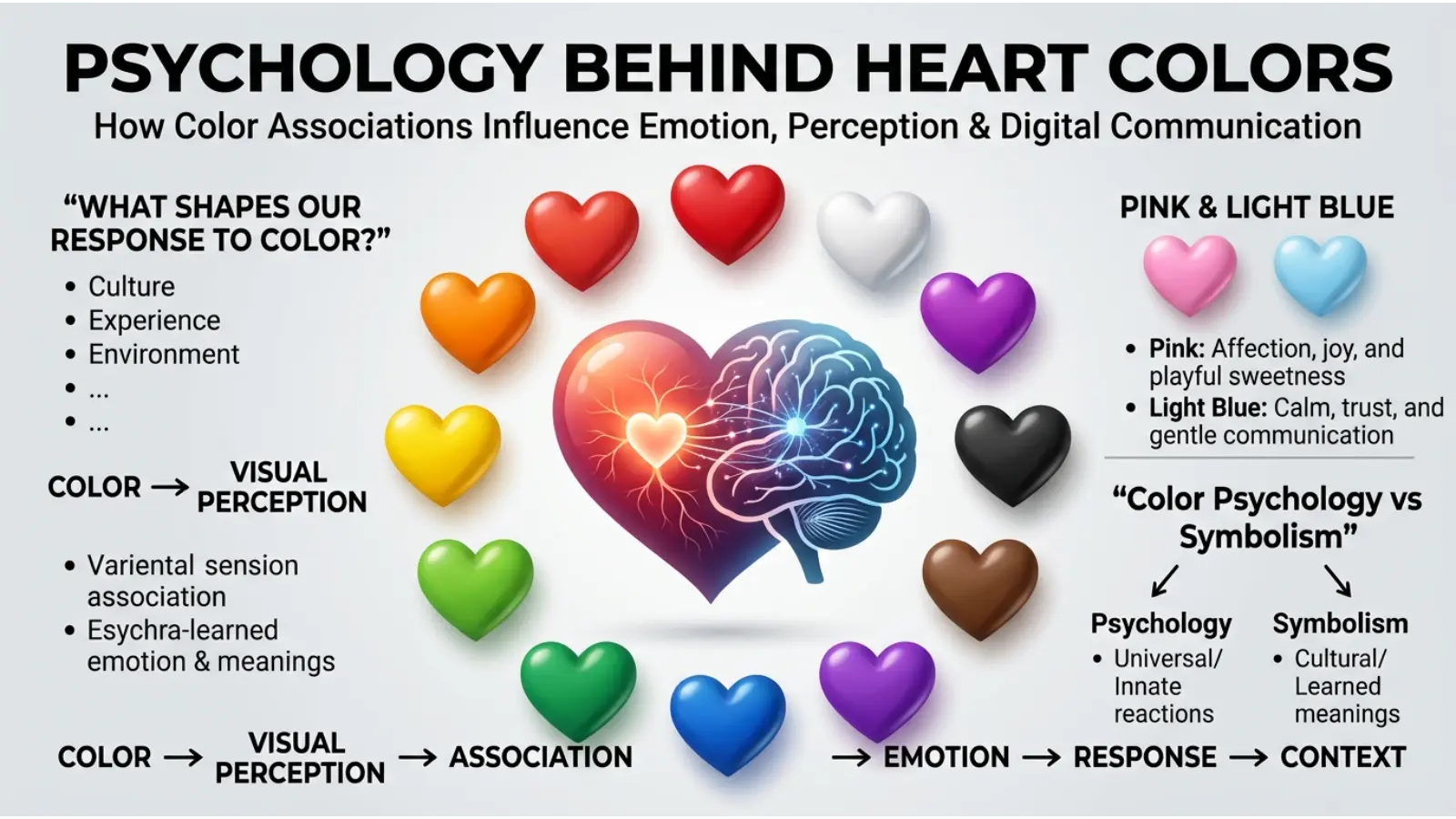
Psychology Behind Different Heart Color Meanings
Color psychology studies how color can influence perception, attention, emotion, and behavior. However, color effects are not simple formulas. A color does not automatically create the same emotion in every person.
Context, personal experience, culture, brightness, saturation, and surrounding colors can all influence perception.
For example, red may appear exciting or passionate in one setting but alarming or aggressive in another. Blue may feel peaceful in one context yet cold or distant in another.
Heart emojis add another layer because the heart symbol itself already carries emotional meaning. Consequently, the final interpretation comes from both the heart shape and its color.
Why Do People Interpret Heart Colors Differently?
Several factors can change the meaning of a heart.
Relationship
A ❤️ from a romantic partner can feel very different from the same emoji sent by a parent or close friend.
Culture
Color symbolism differs around the world. A color associated with celebration in one culture may have a very different connection elsewhere.
Personal Preference
Some people choose heart colors based entirely on their favorite color. Therefore, assuming a hidden message can sometimes lead to misunderstandings.
Conversation
The surrounding words provide important clues. A 💚 sent during a discussion about nature may mean something completely different from 💚 sent during a conversation about jealousy.
Platform Design
Emoji artwork can vary slightly between platforms. Although the basic color remains recognizable, the shape, shade, and visual style can influence the overall impression.
Heart Color Meanings in Relationships
Heart colors can be useful in romantic relationships, but they should not be treated as a secret code.
❤️ Red can emphasize romantic love and passion.
🩷 Pink can make affection feel softer and sweeter.
🧡 Orange can communicate warmth and emotional encouragement.
💛 Yellow may feel playful, cheerful, or friendly.
💙 Blue can emphasize trust and loyalty.
💜 Purple can communicate admiration or a unique emotional bond.
🖤 Black may fit a couple with a dark, alternative, or humorous style.
Most importantly, the meaning depends on how the two people normally communicate.
Heart Color Meanings in Friendship
Friends often use colored hearts to show appreciation without implying romance.
Yellow, orange, blue, green, and purple hearts are especially useful when a message needs warmth but does not need an obviously romantic tone.
For example:
“You absolutely crushed that presentation 💛”
sounds cheerful and supportive.
By comparison:
“Proud of you ❤️”
can feel more emotionally intense, although it can still be completely platonic.
Heart Colors in Social Media
On social media, heart colors can become part of a person’s visual identity.
Someone may consistently use purple hearts because they match their branding. Another person might choose green hearts for environmental content. Similarly, a creator using black hearts may be building a dark or alternative aesthetic.
Therefore, social-media usage often reflects visual identity as much as emotional meaning.
Heart Colors and Branding
Heart colors can also influence brand communication.
A brand promoting romance may naturally lean toward red or pink. A wellness company might prefer green or blue because these colors can support associations with nature, calmness, or trust.
Meanwhile, a creative brand may choose purple to create a distinctive and imaginative identity.
However, successful branding requires more than choosing a color with a popular symbolic meaning. Typography, imagery, layout, audience expectations, cultural context, and industry conventions all contribute to the final impression.
Heart Colors in Design
Heart symbols become especially effective when color and shape support the same message.
A soft pink heart with rounded typography can create a gentle feeling. A black heart combined with bold typography can produce a stronger alternative aesthetic. Likewise, a green heart paired with natural imagery can reinforce environmental themes.
Lighting Also Matters
The appearance of a color changes under different lighting conditions.
A pale pink heart may look almost white under bright light, while a deep red can appear darker in low light. Digital displays also vary in brightness and color calibration.
Consequently, designers should test important graphics on more than one screen.
Heart Colors in Fashion and Style
Colored hearts are common in clothing graphics, jewelry, accessories, nails, phone cases, stickers, and social-media aesthetics.
Red and pink often create romantic or playful looks. Black and white can produce a minimalist appearance. Brown and green work naturally with earthy palettes, while purple and light blue can create softer, more expressive combinations.
The best choice depends on the complete outfit rather than the heart color alone.
Best Color Combinations With Heart Symbols
Heart colors can become more meaningful when combined with suitable supporting colors.
| Heart | Works Well With | Overall Effect |
|---|---|---|
| ❤️ Red | White, black, pink | Romantic and bold |
| 🩷 Pink | White, lavender, cream | Soft and sweet |
| 🧡 Orange | Cream, brown, yellow | Warm and energetic |
| 💛 Yellow | Blue, white, green | Bright and friendly |
| 💚 Green | Beige, brown, cream | Natural and fresh |
| 💙 Blue | White, gray, silver | Calm and clean |
| 💜 Purple | Pink, white, gold | Creative and elegant |
| 🖤 Black | White, red, gray | Strong and dramatic |
| 🤍 White | Almost any dark shade | Minimal and peaceful |
| 🤎 Brown | Beige, green, cream | Cozy and earthy |
Common Misconceptions About Heart Color Meanings
Every Heart Color Has One Exact Meaning
Not true. Most heart-color meanings are flexible associations rather than universal rules.
A Blue Heart Means Someone Is Not Interested Romantically
Not necessarily. People may choose 💙 because they like blue, prefer its appearance, or associate it with trust.
A Black Heart Always Means Sadness
No. 🖤 can represent grief, humor, fashion, strength, or an alternative aesthetic.
A Yellow Heart Always Means Friendship
Usually it feels friendly and cheerful, but personal communication habits can give it another meaning.
Heart Emojis Can Reveal Someone’s Personality
Only cautiously. Emoji preferences may reflect style or mood, but they cannot reliably determine someone’s personality.
How to Choose the Right Heart Color
When deciding which heart to send, start with the emotion you actually want to communicate.
For romance, ❤️ or 🩷 may work naturally.
For friendship, 💛, 💙, 🧡, or 💜 can be good choices.
Support, 💙, 💚, 🤍, or 🩵 can create a gentle tone.
For comfort, 🤎 or 🤍 may feel warm and understated.
For dark humor or alternative style, 🖤 may fit better.
Nature and environmental themes, 💚 is an obvious visual choice.
Above all, choose the heart that matches your relationship and message rather than relying on an unofficial emoji dictionary.
Are Heart Color Meanings Universal?
No. Heart meanings are shaped by culture, online communities, personal habits, and context.
Some color associations are widespread because people repeatedly encounter them in media, design, celebrations, and everyday communication. Even so, these associations should not be treated as universal psychological laws.
A useful rule is simple: interpret the message before interpreting the emoji.
Frequently Asked Questions
What is the most romantic heart color?
The red heart ❤️ is generally the most widely recognized symbol of romantic love, passion, and deep affection.
What heart color means friendship?
Yellow 💛 is commonly associated with friendship and happiness. Blue 💙 and orange 🧡 can also communicate friendly support and affection.
What does a pink heart mean?
A pink heart 🩷 often expresses tenderness, sweetness, caring, and gentle affection. It can be romantic or platonic depending on context.
What does a blue heart mean from a girl or boy?
A blue heart 💙 does not have a gender-specific meaning. It can represent trust, loyalty, friendship, calmness, or affection.
What does a green heart mean?
A green heart 💚 can represent nature, growth, renewal, health, or support. In some situations, it can also suggest jealousy.
What does a purple heart mean?
A purple heart 💜 can express admiration, compassion, creativity, kindness, or special affection. Its meaning depends heavily on the conversation.
What does a black heart mean?
A black heart 🖤 may express grief, sadness, dark humor, strength, mystery, or an alternative aesthetic. It does not always indicate something negative.
What does a white heart mean?
A white heart 🤍 can suggest peace, sincerity, purity, sympathy, or gentle affection. Cultural context can influence its interpretation.
What does a brown heart mean?
A brown heart 🤎 often conveys warmth, comfort, stability, earthiness, or a connection with nature.
Can heart emojis have different meanings between cultures?
Yes. Color symbolism varies across cultures, religions, traditions, and social groups. As a result, the same heart color can produce different associations in different communities.
Final Thoughts on Different Heart Color Meanings
Different heart colors give people a simple way to add emotional detail to digital communication. Red can emphasize romance, pink can soften affection, yellow can brighten friendship, blue can suggest trust, green can connect with growth and nature, while purple, black, white, brown, orange, light blue, and gray can create their own shades of meaning.
Nevertheless, no heart emoji should be treated as a universal code. The relationship between the sender and receiver, the surrounding words, cultural background, and personal habits all matter. In practice, the best interpretation comes from looking at the complete message rather than one symbol.
That flexibility is what makes heart colors useful. A tiny change in color can shift the mood of a message, yet the meaning remains personal enough for people to make each heart their own.

Emma Wilson is a dedicated comparison writer and product researcher at ColorMystiic.com. She specializes in creating unbiased product comparisons, detailed reviews, and helpful buying guides. Her goal is to help readers make smarter purchasing decisions with confidence.