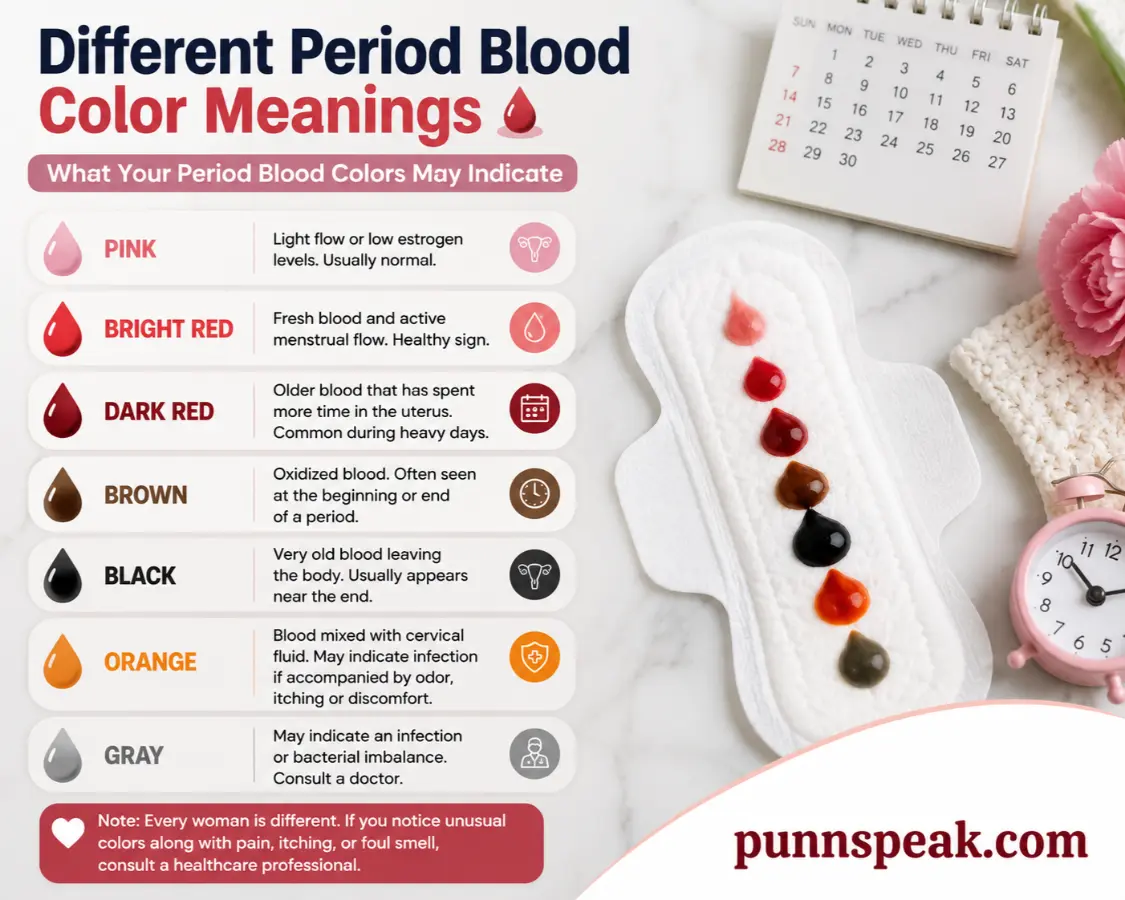
Different period blood color meanings can provide valuable clues about menstrual flow, blood age, hormonal changes, and overall reproductive health. Menstrual blood does not always appear bright red. It can range from light pink and bright red to dark brown, black, orange, or even gray. In most cases, these color variations are a normal part of the menstrual cycle and reflect how long blood has remained in the uterus before leaving the body. Understanding period blood color meanings can help individuals better recognize normal changes and identify situations that may require medical attention.
Quick Answer: Different period blood colors typically indicate the age of the blood, flow intensity, hormonal influences, or possible health conditions. Bright red often indicates fresh blood, while dark brown or black usually represents older blood that has oxidized before leaving the body.
What Does the Color Different Period Blood Colors Symbolize?
Different period blood colors symbolize various stages of menstrual flow and biological processes within the reproductive system. Unlike traditional color symbolism used in psychology and design, period blood colors primarily reflect physiological changes.
Common symbolic interpretations include:
- Bright red: Freshness, active flow, vitality.
- Dark red: Mature menstrual flow, stability.
- Brown: Completion, transition, old blood leaving the body.
- Black: Older oxidized blood, end-of-cycle cleansing.
- Pink: Hormonal shifts, lighter flow.
- Orange: Mixed cervical fluid and blood.
- Gray: Possible infection requiring medical evaluation.
These colors are primarily health indicators rather than emotional or personality symbols.
Psychological Characteristics of the Color Different Period Blood Colors
While menstrual blood colors are medical indicators rather than psychological colors, people often associate them with certain emotional responses and perceptions.
Emotional Associations
- Bright red often creates feelings of normalcy and reassurance.
- Pink may be associated with gentleness and lightness.
- Dark brown or black can cause concern despite often being normal.
- Gray may trigger caution because it can indicate infection.
Psychological Effects
- Understanding blood colors can reduce menstrual anxiety.
- Knowledge promotes confidence in menstrual health monitoring.
- Awareness encourages proactive healthcare decisions.
Positive Emotional Responses
- Reassurance when colors match expected menstrual stages.
- Confidence in understanding bodily changes.
- Increased health awareness.
Negative Emotional Responses
- Worry about unexpected colors.
- Fear of potential health issues.
- Stress caused by misinformation.
Impact on Mood and Behavior
- Familiarity with normal color variations reduces unnecessary concern.
- Unusual colors may encourage individuals to seek professional advice.
- Better menstrual education improves overall health confidence.
Typical Reactions
People commonly react differently depending on the color observed:
- Bright red: Viewed as normal.
- Brown: Often misunderstood but usually harmless.
- Black: Frequently alarming but often represents old blood.
- Gray: May prompt medical consultation.
Spiritual Meaning of the Color Different Period Blood Colors

Many spiritual traditions view menstruation as a symbol of renewal, transformation, and feminine power. Various menstrual blood colors have been interpreted symbolically in some cultures.
Common Spiritual Associations
- Transformation: The menstrual cycle reflects natural change and renewal.
- Healing: Menstruation is often viewed as a cleansing process.
- Protection: Some traditions consider menstrual cycles protective and restorative.
- Power: Menstrual blood has historically been associated with feminine strength.
- Wisdom: Cyclical changes symbolize life’s rhythms.
- New Beginnings: Each cycle marks a fresh reproductive phase.
- Purification: Shedding of the uterine lining can symbolize release.
- Enlightenment: Awareness of bodily cycles fosters self-understanding.
- Eternity: The recurring cycle reflects continuity and renewal.
It is important to note that these interpretations are cultural and spiritual beliefs rather than medical facts.
Positive and Negative Meanings of the Color Different Period Blood Colors
Positive Meanings
Different menstrual blood colors can positively symbolize:
- Health Awareness: Monitoring colors helps track menstrual wellness.
- Renewal: Menstruation represents the body’s natural cycle.
- Balance: Regular color progression often indicates normal cycle function.
- Hope: Understanding menstrual patterns supports reproductive health.
- Clarity: Color changes provide useful biological information.
- Harmony: A predictable cycle often reflects hormonal balance.
- Freshness: Bright red blood indicates active circulation.
- Transition: Brown blood often marks a healthy beginning or end of menstruation.
Negative Meanings
Certain colors may raise concerns depending on context.
- Uncertainty: Unexpected colors can create confusion.
- Isolation: Menstrual stigma may discourage discussion.
- Fear: Black or gray blood can seem alarming.
- Concern: Gray discharge may indicate infection.
- Perfectionism: Excessive monitoring may increase anxiety.
- Emotional Distance: Lack of menstrual education can create discomfort discussing symptoms.
- Boredom or Neglect: Ignoring significant changes may delay medical evaluation.
- Coldness: Clinical misunderstandings can cause unnecessary worry.
Meanings of the Color Different Period Blood Colors
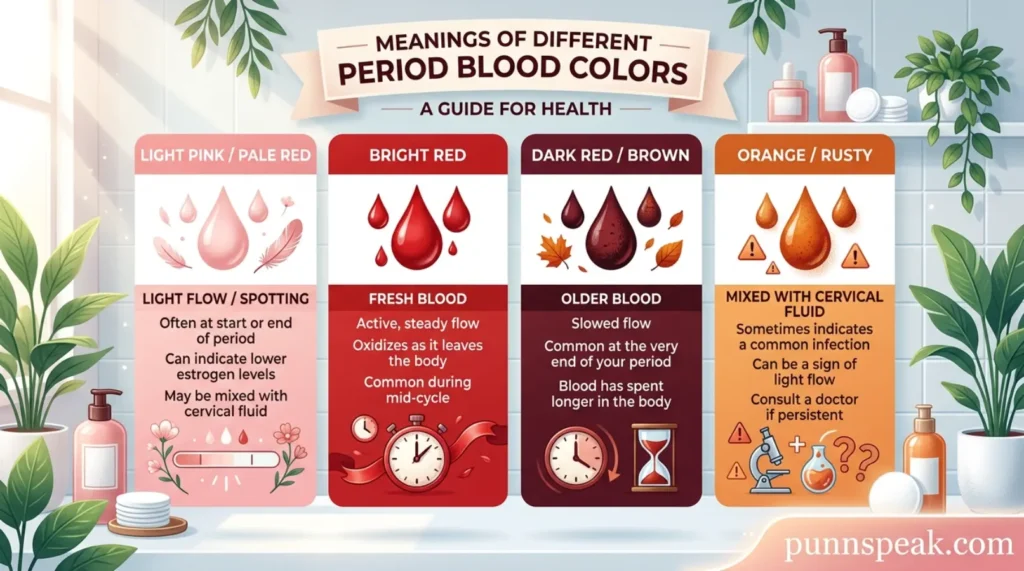
The meaning of menstrual blood colors depends largely on timing, flow intensity, hormonal influences, and individual health conditions.
Bright Red Blood Meaning
Bright red blood is fresh blood that leaves the uterus quickly.
- Usually occurs during heavy flow days.
- Indicates active menstrual bleeding.
- Common in healthy menstrual cycles.
- Often considered the most typical period blood color.
Dark Red Blood Meaning
Dark red blood is slightly older blood.
- Common after sleeping overnight.
- Frequently appears during moderate flow.
- Generally considered normal.
Brown Blood Meaning
Brown blood is older blood that has oxidized.
- Often appears at the beginning or end of a period.
- Usually indicates slower blood flow.
- Common and typically harmless.
Black Blood Meaning
Black blood is usually heavily oxidized blood.
- Often appears when blood takes longer to leave the uterus.
- Common near the end of menstruation.
- Usually not a cause for concern if occasional.
Pink Blood Meaning
Pink menstrual blood may occur due to:
- Lower estrogen levels.
- Light menstrual flow.
- Mixing of blood with cervical fluid.
- Early or late menstrual stages.
Orange Blood Meaning
Orange blood can result from:
- Mixing of menstrual blood and cervical mucus.
- Hormonal fluctuations.
- Occasionally infection if accompanied by odor or discomfort.
Gray Blood Meaning
Gray discharge or blood may indicate:
- Infection.
- Bacterial imbalance.
- Need for medical evaluation.
Feng Shui
Although period blood colors are not traditional Feng Shui colors, red tones carry strong symbolic meaning.
- Associated Element: Fire.
- Energy Symbolism: Vitality, life force, transformation.
- Best Rooms: Living rooms, social spaces, entryways.
- Recommended Color Combinations: Red with white, gold, beige, or earth tones.
- Home Decorating Tips: Use red accents thoughtfully to promote energy and balance.
Marketing
Period-related brands often use color psychology to communicate health information.
Branding Psychology
- Bright red signals menstruation and vitality.
- Pink suggests comfort and feminine care.
- Purple often represents wellness and empowerment.
Consumer Perception
- Soft colors create trust and comfort.
- Clean palettes promote feelings of hygiene.
Trust Signals
Brands use calming and transparent color schemes to build credibility.
Product Packaging
Menstrual care products frequently use:
- Pink
- Purple
- White
- Teal
- Soft red accents
Advertising Applications
Colors help communicate:
- Comfort
- Safety
- Health education
- Confidence
Examples include menstrual-care companies such as Always, Kotex, and Tampax.
Design
Period blood color education often influences healthcare design.
Interior Design
- Medical facilities use calming colors to reduce anxiety.
- Soft blues and greens encourage relaxation.
Graphic Design
- Educational charts use color-coded illustrations.
- Clear visual distinctions improve understanding.
Web Design
- Interactive health guides use accessible color palettes.
- High contrast improves readability.
User Experience
- Color-coded symptom tracking apps enhance usability.
- Visual organization supports health monitoring.
Minimalist Aesthetics
- Simple color systems communicate information effectively.
Fashion
Menstrual color symbolism occasionally influences fashion narratives around femininity and empowerment.
Clothing Symbolism
- Red often symbolizes strength and confidence.
- Pink may suggest gentleness and care.
Seasonal Use
- Deep reds are common during fall and winter.
- Lighter pink tones appear frequently in spring.
Styling Effects
- Red garments attract attention.
- Soft shades create a calming appearance.
Personality Impressions
- Red may project confidence.
- Pink may project warmth.
Advantages
- Strong visual impact.
- Emotional expressiveness.
Disadvantages
- Can appear overly bold in some settings.
- Cultural interpretations vary.
Color Associations Are Not Universal
Western Cultures
In many Western societies, bright red menstrual blood is generally viewed as a sign of normal menstruation. Increased menstrual health education has improved awareness of normal color variations.
Eastern Cultures
Some Eastern traditions view menstruation through concepts of balance, energy flow, and bodily harmony. Darker blood may sometimes be interpreted through traditional wellness frameworks.
Religious Traditions
Religious interpretations vary widely. Some traditions view menstruation as a natural biological process, while others attach ritual or symbolic significance to menstrual cycles.
Historical Interpretations
Historically, menstrual blood was often surrounded by myths and misconceptions. Modern medical science has replaced many of these beliefs with evidence-based understanding.
Modern Global Interpretations
Today, healthcare professionals worldwide generally interpret menstrual blood colors through medical and reproductive health perspectives rather than symbolic meanings.
What Different Period Blood Colors Say About Your Personality
Period blood colors do not determine personality traits. Menstrual blood colors primarily reflect biological and hormonal factors rather than character or behavior.
However, people interested in tracking menstrual health often share certain tendencies:
Strengths
- Health-conscious.
- Detail-oriented.
- Proactive about wellness.
- Self-aware.
Weaknesses
- May become overly concerned about minor changes.
- Can experience health-related anxiety.
Social Behavior
- More likely to discuss health openly.
- Often interested in health education.
Work Style
- Organized.
- Observant.
- Analytical.
Relationships
- Value communication and self-care.
- Often encourage healthy habits.
Emotional Tendencies
- Increased awareness of physical and emotional changes.
- Greater attention to body signals.
It is important to remember that color preferences and health observations cannot reliably predict personality.
Frequently Asked Questions
What defines different period blood colors?
Different period blood colors are variations in menstrual blood appearance caused by blood age, oxidation, hormone levels, flow speed, and reproductive health factors.
What do different period blood colors symbolize?
They primarily symbolize stages of menstrual flow and biological processes rather than personality traits or emotional characteristics.
Why are different period blood colors important?
They can provide useful information about menstrual health, hormonal patterns, and potential medical concerns.
Is bright red period blood normal?
Yes. Bright red blood usually indicates fresh blood and active menstrual flow.
What does brown period blood mean?
Brown blood generally represents older blood that has oxidized before leaving the body.
Is black period blood dangerous?
Not usually. Black blood is often older blood that remained in the uterus longer. However, persistent unusual symptoms should be evaluated by a healthcare professional.
What emotions are associated with period blood colors?
People often associate bright red with normalcy and vitality, while darker colors may create concern due to misunderstanding.
What does period blood mean spiritually?
Some spiritual traditions view menstruation as a symbol of renewal, transformation, cleansing, and feminine power.
Which period blood color may indicate infection?
Gray discharge or gray blood may indicate infection and should be evaluated by a healthcare provider.
What colors pair well with menstrual health branding?
Pink, purple, white, teal, and soft red tones are commonly used because they communicate comfort, trust, and wellness.
What does tracking period blood color reveal?
Tracking can help identify cycle patterns, flow changes, hormonal shifts, and potential health concerns.
Conclusion
Understanding different period blood color meanings can help individuals better interpret their menstrual cycles and recognize normal variations. Bright red, dark red, brown, black, pink, orange, and gray blood colors each provide unique information about blood age, flow patterns, and overall reproductive health. While some cultures and spiritual traditions assign symbolic meanings to menstrual colors, medical interpretation remains the most reliable approach. Monitoring menstrual blood color alongside other symptoms can support greater health awareness and encourage timely medical care when necessary.

Emma Wilson is a dedicated comparison writer and product researcher at ColorMystiic.com. She specializes in creating unbiased product comparisons, detailed reviews, and helpful buying guides. Her goal is to help readers make smarter purchasing decisions with confidence.