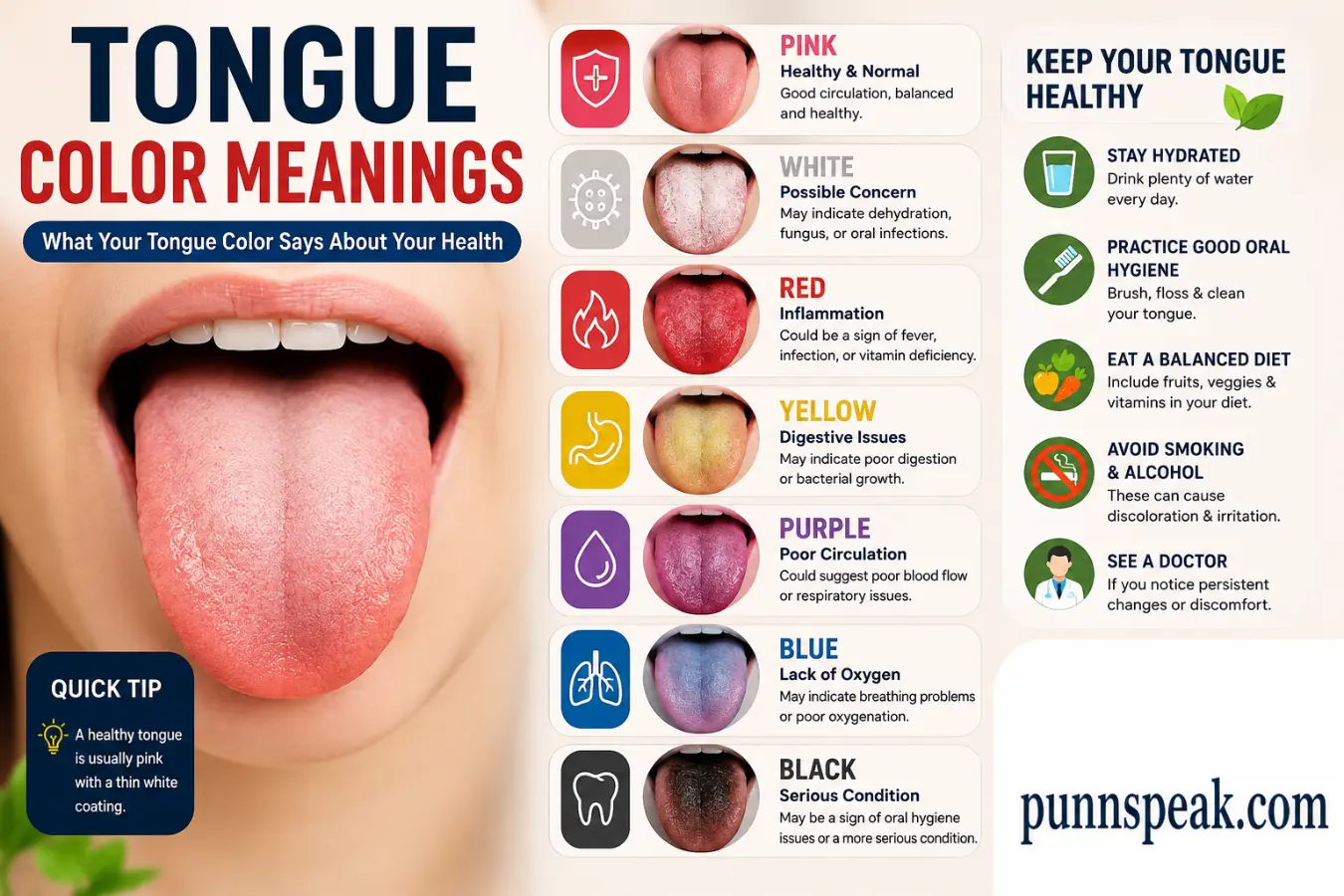
Tongue color meanings have been used for centuries as a way to observe health, wellness, and overall body balance. In both traditional healing systems and modern healthcare, the tongue is considered a useful indicator of hydration, oral hygiene, circulation, and nutritional status. Different tongue colors may reflect normal variations or signal underlying conditions that deserve attention. While tongue color alone cannot diagnose a medical problem, understanding common tongue color meanings can help people recognize changes in their health and seek professional advice when needed.
Quick Answer: A healthy tongue is usually pink. White, red, yellow, purple, blue, gray, brown, or black tongue colors may indicate changes in hydration, oral health, circulation, nutrition, or other health-related factors.
What Does Tongue Color Symbolize?
Tongue color symbolism is primarily connected to health and wellness rather than traditional color psychology. Throughout history, physicians and healers have observed tongue color to gain insights into physical condition and overall vitality.
Common symbolic meanings include:
- Pink tongue: Health, vitality, and balance.
- White tongue: Coating, dryness, or imbalance.
- Red tongue: Heat, inflammation, or increased activity.
- Yellow tongue: Bacterial buildup or digestive changes.
- Purple tongue: Circulation and blood flow concerns.
- Blue tongue: Oxygenation or circulation issues.
- Black tongue: Temporary discoloration or oral health changes.
- Brown tongue: Lifestyle factors or oral hygiene concerns.
- Gray tongue: Digestive or health-related imbalance.
The meaning of tongue color often depends on additional symptoms, duration, and overall health status.
Psychological Characteristics of Tongue Color Meanings
Although tongue colors are not traditional psychological colors, people often associate them with specific emotional reactions and health perceptions.
Emotional Associations
- Pink tongues create feelings of health and reassurance.
- White tongues may suggest fatigue or illness.
- Red tongues can trigger concern due to their intense appearance.
- Dark-colored tongues often create curiosity or worry.
Psychological Effects
- Encourage self-awareness about health.
- Increase attention to oral hygiene.
- Promote preventive healthcare behaviors.
Positive Emotional Responses
- Confidence
- Wellness
- Reassurance
- Peace of mind
- Health awareness
Negative Emotional Responses
- Concern
- Anxiety
- Uncertainty
- Stress
- Health-related worry
Impact on Mood and Behavior
People who notice unusual tongue colors often become more mindful of hydration, nutrition, and oral care habits.
Typical Reactions
Most people view a healthy pink tongue positively, while unusual discoloration usually prompts closer observation or medical consultation.
Spiritual Meaning of Tongue Color Meanings

In various spiritual traditions, the tongue symbolizes communication, truth, self-expression, and inner balance. Different tongue colors are sometimes interpreted as signs of energetic or spiritual conditions.
Common Spiritual Associations
- Holiness: Pure speech and integrity.
- Wisdom: Awareness of health and self-care.
- Purity: A clean, healthy tongue.
- Transformation: Changes in physical or spiritual state.
- Healing: Recovery and renewal.
- Protection: Maintaining wellness through conscious living.
- Power: The ability to communicate effectively.
- Enlightenment: Greater awareness and understanding.
- New Beginnings: Lifestyle improvements and healing journeys.
- Eternity: The ongoing connection between body, mind, and spirit.
Many spiritual traditions view the tongue as a reflection of both physical and emotional well-being.
Positive and Negative Meanings of Tongue Color Meanings
Positive Meanings
Health
A pink tongue is often considered a sign of good health and vitality.
Peace
Healthy tongue coloration can create reassurance and peace of mind.
Simplicity
Normal tongue appearance often reflects balanced body functions.
Clarity
A clean tongue may symbolize clear communication and wellness.
Freshness
Good hydration and oral hygiene contribute to a fresh appearance.
Hope
Improving tongue color may indicate positive health changes.
Balance
A healthy tongue often reflects overall bodily balance.
Harmony
Proper nutrition, hydration, and oral care work together to maintain tongue health.
Negative Meanings
Emptiness
A pale tongue may sometimes indicate nutritional deficiencies.
Isolation
Persistent oral health issues can affect confidence and social interactions.
Coldness
A bluish tongue may symbolize poor circulation.
Sterility
Some people associate overly pale tongues with weakness or illness.
Boredom
A coated tongue may appear dull and unhealthy.
Emotional Distance
Concerns about appearance can sometimes affect social confidence.
Perfectionism
Constantly monitoring tongue appearance may create unnecessary anxiety.
Real-World Examples
- Dehydration can cause dryness and discoloration.
- Smoking may contribute to yellow or brown tongue coloration.
- Poor oral hygiene may lead to white or coated tongues.
- Certain medications can temporarily alter tongue appearance.
Meanings of Tongue Color Meanings
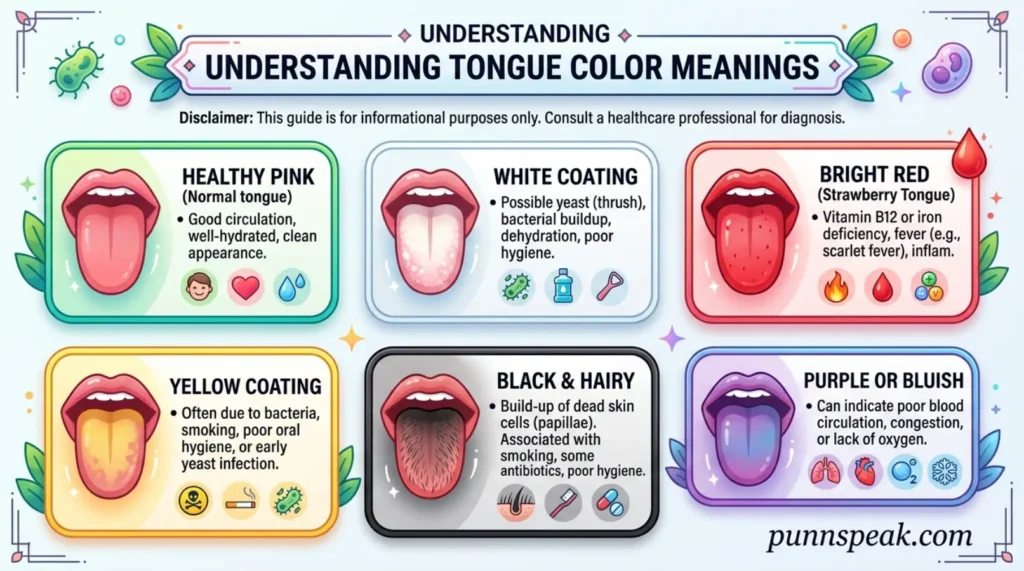
Tongue color meanings vary depending on context, health conditions, and individual circumstances.
Pink Tongue Meaning
A pink tongue is generally considered normal and healthy. It often represents:
- Good circulation
- Proper hydration
- Healthy oral tissues
- Balanced nutrition
White Tongue Meaning
A white tongue may be associated with:
- Dry mouth
- Oral thrush
- Bacterial buildup
- Dehydration
Red Tongue Meaning
A red tongue may indicate:
- Irritation
- Inflammation
- Fever-related changes
- Vitamin deficiencies
Yellow Tongue Meaning
A yellow tongue is often linked to:
- Bacterial accumulation
- Smoking
- Dry mouth
- Poor oral hygiene
Purple Tongue Meaning
Purple tongues may be associated with:
- Circulation changes
- Blood flow concerns
- Traditional medicine interpretations of stagnation
Blue Tongue Meaning
Blue tongues can sometimes indicate:
- Reduced oxygen levels
- Circulatory issues
- Underlying medical concerns
Brown Tongue Meaning
Brown discoloration may result from:
- Tobacco use
- Food stains
- Certain beverages
- Oral hygiene concerns
Gray Tongue Meaning
Gray tongues may occasionally be linked to:
- Digestive issues
- Oral health changes
- Underlying medical conditions
Black Tongue Meaning
Black tongue coloration is commonly associated with:
- Black hairy tongue
- Tobacco use
- Medication side effects
- Temporary oral conditions
Feng Shui
Tongue colors are not traditional Feng Shui colors, but wellness interpretations sometimes connect them to energy balance.
Associated Elements
- Pink: Earth and balance
- Red: Fire
- White: Metal
- Blue: Water
- Yellow: Earth
Energy Symbolism
Different tongue colors may symbolically reflect changes in energy and vitality.
Best Rooms
- Wellness spaces
- Meditation rooms
- Bathrooms
- Health-focused environments
Recommended Color Combinations
- Pink and white
- Blue and silver
- Red and neutral earth tones
Home Decorating Tips
Promote cleanliness, healthy habits, and calming environments that support overall wellness.
Marketing
Health and wellness brands often use tongue color education in marketing campaigns.
Branding Psychology
Healthy pink tones communicate wellness and cleanliness.
Consumer Perception
Consumers associate healthy tongue colors with oral health and hygiene.
Trust Signals
Medical and dental brands often use tongue imagery to reinforce expertise.
Product Packaging
Tongue scrapers, mouthwashes, and dental products frequently highlight healthy tongue appearance.
Advertising Applications
Tongue color charts are often used in educational healthcare content.
Design
Interior Design
Healthcare environments use clean, bright colors that reinforce hygiene and wellness.
Graphic Design
Educational charts often illustrate tongue color meanings visually.
Web Design
Health websites use color-coded diagrams to improve understanding.
User Experience
Visual guides simplify complex health information.
Minimalist Aesthetics
Simple layouts improve readability and trustworthiness.
Fashion
Tongue color meanings do not directly influence fashion, but health and vitality affect personal appearance.
Clothing Symbolism
Healthy appearance often supports confidence and self-expression.
Seasonal Use
Hydration and wellness remain important throughout the year.
Styling Effects
Good health contributes to a vibrant overall appearance.
Personality Impressions
People often associate visible wellness with self-care and responsibility.
Advantages
- Promotes confidence
- Supports a healthy image
Disadvantages
- Visible oral health concerns may affect self-esteem
Practical Example: Maintaining good oral hygiene supports a fresh appearance during professional meetings and social events.
Color Associations Are Not Universal
Western Cultures
Western healthcare systems typically regard a pink tongue as healthy and unusual colors as potential signs of health changes.
Eastern Cultures
Traditional Eastern medicine has long used tongue observation as part of broader wellness assessments.
Religious Traditions
Many religions emphasize the tongue as a symbol of truthful speech, discipline, and moral behavior rather than physical color.
Historical Interpretations
Ancient healers frequently examined tongue appearance when evaluating health and vitality.
Modern Global Interpretations
Today, tongue color meanings are largely interpreted through medical and dental science, although traditional perspectives remain influential in some cultures.
What Tongue Color Meanings Say About Your Personality
Tongue colors do not determine personality. They are health indicators rather than personality colors. However, people interested in monitoring tongue health often share certain characteristics.
Strengths
- Health-conscious
- Detail-oriented
- Responsible
- Preventive-minded
Weaknesses
- May overanalyze minor changes
- Can become overly concerned about health
Social Behavior
- Interested in wellness topics
- Encourages healthy habits
Work Style
- Organized
- Observant
- Proactive
Relationships
- Caring and supportive
- Concerned about family well-being
Emotional Tendencies
- Reassured by positive health signs
- Concerned when changes occur
Color preferences and tongue appearance should never be used to define personality with certainty.
Frequently Asked Questions
What defines tongue color meanings?
Tongue color meanings refer to interpretations of tongue coloration as indicators of oral and overall health.
What does tongue color symbolize?
Tongue color generally symbolizes physical wellness, hydration, and oral health status.
Why is tongue color important?
It can provide clues about changes in health and help identify when medical attention may be needed.
What is the healthiest tongue color?
A healthy tongue is usually pink with a smooth texture.
What does a white tongue mean?
A white tongue may result from bacterial buildup, dehydration, or oral thrush.
What does a red tongue mean?
A red tongue may indicate irritation, inflammation, or nutritional deficiencies.
What does a yellow tongue mean?
A yellow tongue is commonly associated with bacterial growth and oral hygiene concerns.
What does a purple tongue mean?
Purple coloration may suggest circulation-related changes.
What does a black tongue mean?
Black tongue is often caused by black hairy tongue, medications, or tobacco use.
What is the spiritual meaning of tongue color meanings?
Spiritually, tongue colors may symbolize communication, healing, awareness, and personal transformation.
Can tongue color diagnose disease?
No. Tongue color alone cannot diagnose medical conditions and should be evaluated alongside other symptoms.
When should I see a healthcare professional?
Consult a healthcare provider if tongue discoloration persists, worsens, or is accompanied by pain, swelling, or other concerning symptoms.
Conclusion
Tongue color meanings provide valuable insights into oral health, hydration, circulation, and overall wellness. While a pink tongue is generally considered healthy, white, red, yellow, purple, blue, brown, gray, and black tongue colors may indicate various changes in the body. Understanding these color meanings can encourage better self-awareness and oral hygiene habits. However, tongue color should never be used as a standalone diagnostic tool. Persistent or unusual discoloration should always be evaluated by a qualified healthcare professional.

Emma Wilson is a dedicated comparison writer and product researcher at ColorMystiic.com. She specializes in creating unbiased product comparisons, detailed reviews, and helpful buying guides. Her goal is to help readers make smarter purchasing decisions with confidence.