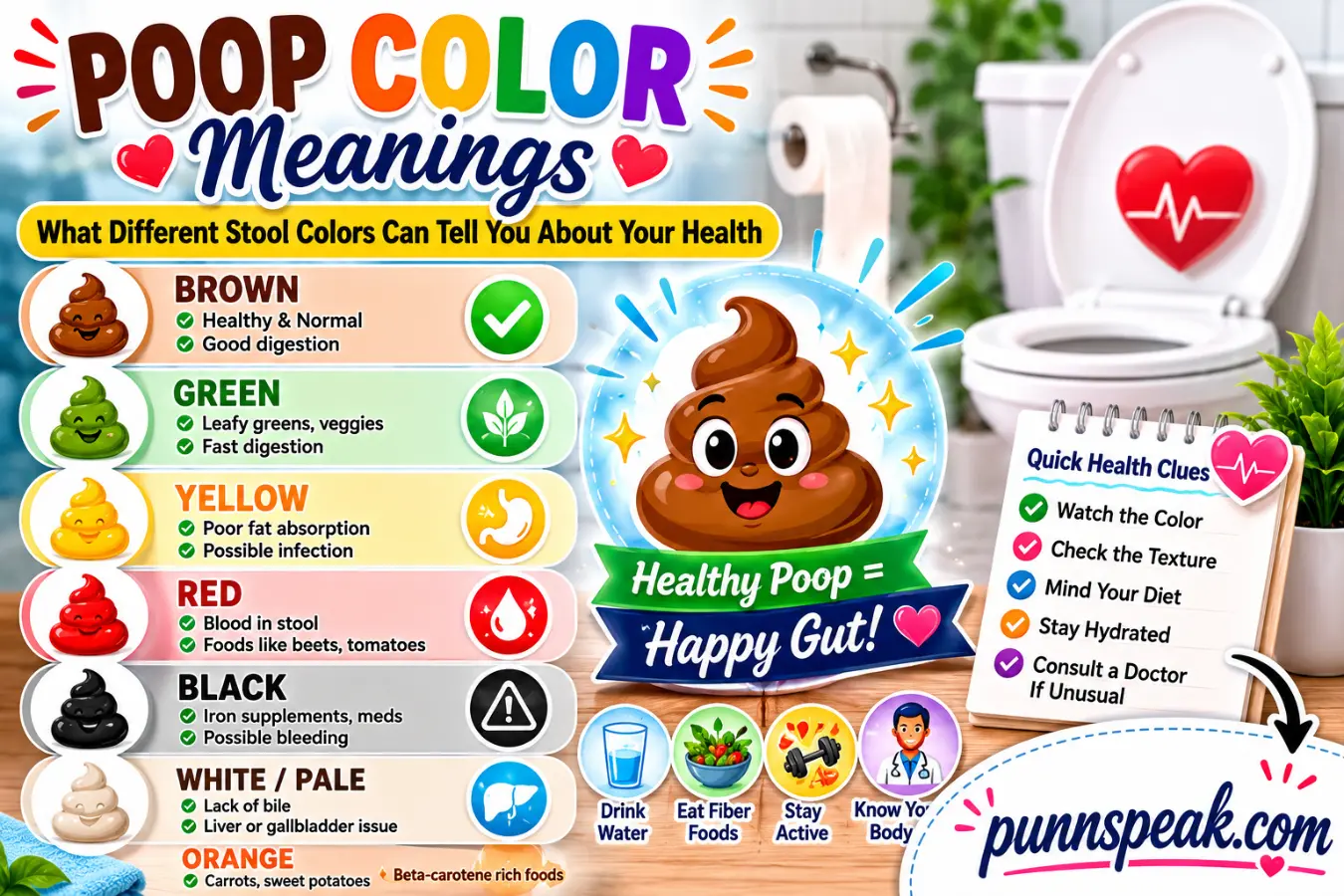
The color of poop can provide valuable clues about digestion, diet, hydration, and overall health. While stool color naturally varies from person to person, certain shades may reflect changes in food intake, medications, digestive processes, or underlying medical conditions. Most healthy stool is brown due to bile produced by the liver, but colors such as green, yellow, black, red, orange, or pale white can occur for various reasons. Understanding poop color meanings can help you identify normal variations and recognize when it may be time to seek medical advice.
Quick Answer: Brown poop is generally considered normal, while green, yellow, black, red, orange, or pale-colored stool may be linked to diet, medications, digestion, or certain health conditions.
What Does the Color of Poop Symbolize?
Unlike traditional color symbolism, poop colors primarily symbolize digestive health and bodily processes.
Different stool colors may indicate:
- Digestive efficiency
- Bile production
- Dietary influences
- Hydration levels
- Medication effects
- Gastrointestinal health
- Nutrient absorption
- Possible medical concerns
Common poop color meanings include:
- 🟤 Brown: Normal digestion
- 🟢 Green: Rapid digestion or leafy vegetables
- 🟡 Yellow: Fat malabsorption or dietary factors
- 🔴 Red: Blood, food coloring, or certain foods
- ⚫ Black: Iron supplements, medications, or bleeding
- ⚪ White/Pale: Lack of bile
- 🟠 Orange: Diet or bile-related changes
Psychological Characteristics of Poop Colors
Although poop colors are primarily medical indicators, they often trigger emotional and psychological reactions.
Emotional Associations
- Brown often feels normal and reassuring.
- Green may create curiosity or concern.
- Yellow may trigger uncertainty.
- Black frequently causes alarm.
- Red often generates anxiety due to associations with blood.
- White or pale stool may cause concern because it appears unusual.
Psychological Effects
- Changes in stool color often increase health awareness.
- Unexpected colors may encourage people to evaluate diet and wellness habits.
- Persistent changes can motivate medical consultation.
Positive Emotional Responses
- Reassurance from normal brown stool
- Increased health awareness
- Motivation to improve diet
- Confidence in monitoring digestive health
Negative Emotional Responses
- Anxiety
- Worry
- Stress
- Confusion
- Fear of illness
Impact on Mood and Behavior
People often become more attentive to their diet, hydration, and health when stool color changes unexpectedly.
How People Typically React
Most people consider brown stool normal and may become concerned when they notice red, black, white, or unusually bright colors.
Spiritual Meaning of the Color of Poop

There is no universally accepted spiritual meaning of poop colors. However, some spiritual traditions associate bodily elimination with cleansing, release, and transformation.
Symbolic Interpretations
- Holiness: Physical cleansing may symbolize purification.
- Wisdom: Awareness of bodily health can encourage self-understanding.
- Purity: Healthy digestion is often associated with balance.
- Transformation: Elimination represents the body’s natural renewal process.
- Healing: Healthy digestion may symbolize restoration.
- Protection: Proper digestive function supports overall wellness.
- Power: Strong health can reflect vitality.
- Enlightenment: Mind-body awareness is emphasized in many traditions.
- New Beginnings: Elimination represents release and renewal.
- Eternity: Some traditions view bodily cycles as part of life’s continuous process.
These interpretations are symbolic rather than medical.
Positive and Negative Meanings of the Color of Poop
Positive Meanings
🟤 Brown Poop
- Healthy digestion
- Proper bile production
- Nutritional balance
- Normal gastrointestinal function
🟢 Green Poop
- High vegetable intake
- Chlorophyll-rich foods
- Efficient dietary fiber consumption
🟠 Orange Poop
- Consumption of carrots, sweet potatoes, or foods rich in beta-carotene
Negative Meanings
🔴 Red Poop
May indicate:
- Blood in the lower digestive tract
- Hemorrhoids
- Certain foods such as beets
⚫ Black Poop
May indicate:
- Iron supplements
- Certain medications
- Possible upper gastrointestinal bleeding
⚪ White or Pale Poop
May indicate:
- Reduced bile flow
- Gallbladder issues
- Liver-related conditions
🟡 Yellow Poop
May suggest:
- Fat malabsorption
- Digestive disorders
- Certain infections
Meanings of the Color of Poop
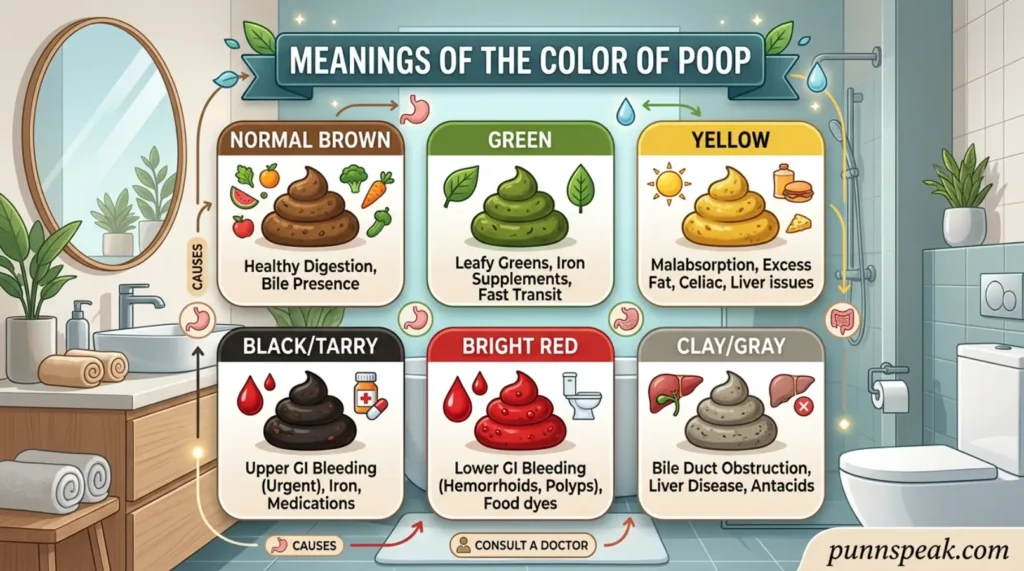
The meaning of stool color depends heavily on diet, medications, hydration, digestion speed, and overall health.
Brown Poop Meaning
Brown stool is generally considered healthy and normal because bile pigments break down during digestion.
Green Poop Meaning
Green stool often occurs after eating leafy vegetables, consuming green food coloring, or when food moves quickly through the digestive tract.
Yellow Poop Meaning
Yellow stool may result from dietary factors or problems absorbing fats.
Red Poop Meaning
Red stool may be caused by foods such as beets or tomatoes, but it can also indicate bleeding and should not be ignored if persistent.
Black Poop Meaning
Black stool may occur after consuming iron supplements or medications containing bismuth. Persistent black stool should be medically evaluated.
White or Pale Poop Meaning
Pale stool can indicate reduced bile production and may warrant medical attention.
Orange Poop Meaning
Orange stool is commonly linked to foods rich in beta-carotene and certain medications.
Color Associations Are Not Universal
Western Cultures
In Western countries, stool color is generally viewed through a medical and digestive-health perspective.
Eastern Cultures
Some traditional healing systems place greater emphasis on digestive balance and bodily harmony when interpreting stool changes.
Religious Traditions
Most religious traditions do not assign specific symbolic meanings to stool colors, although bodily cleanliness is often emphasized.
Historical Interpretations
Historically, physicians examined stool appearance as one of the earliest methods of evaluating health.
Modern Global Interpretations
Today, stool color is widely recognized as a practical health indicator rather than a symbolic color system.
What Poop Colors Say About Your Health
Stool color is a useful observation tool but should not be used alone to diagnose health conditions.
Healthy Indicators
- Consistent brown color
- Regular bowel movements
- Normal stool texture
Potential Warning Signs
- Persistent black stool
- Persistent red stool
- White or clay-colored stool
- Severe yellow stool with digestive symptoms
Lifestyle Factors
Color changes may result from:
- Diet
- Supplements
- Medications
- Hydration
- Digestive speed
Medical Considerations
Persistent or unexplained stool color changes should be discussed with a healthcare professional.
Frequently Asked Questions
What color of poop is considered normal?
Brown is generally considered the normal and healthy stool color.
What does green poop mean?
Green poop often results from leafy vegetables, food coloring, or rapid digestion.
Why is my poop yellow?
Yellow stool may be linked to dietary factors or issues with fat absorption.
What does black poop mean?
Black stool can result from iron supplements, medications, or gastrointestinal bleeding.
What does red poop mean?
Red stool may come from certain foods or indicate bleeding in the lower digestive tract.
What does white poop mean?
White or pale stool may indicate reduced bile production and should be medically evaluated if persistent.
Can food change poop color?
Yes. Foods, drinks, food coloring, and supplements commonly affect stool color.
Is orange poop normal?
Orange stool is often caused by foods rich in beta-carotene, such as carrots and sweet potatoes.
When should I see a doctor about stool color?
Seek medical advice if unusual stool colors persist or occur alongside symptoms such as pain, fever, dizziness, or unexplained weight loss.
Does poop color indicate overall health?
Stool color can provide useful clues about digestive health but should be interpreted alongside other symptoms and medical information.
Conclusion
Poop color meanings offer valuable insight into digestion, nutrition, and overall health. While brown stool is typically considered normal, colors such as green, yellow, red, black, orange, and white can result from dietary choices, medications, or underlying medical conditions. Most color changes are harmless and temporary, but persistent or unusual stool colors should not be ignored. Monitoring stool color alongside other symptoms can help individuals stay informed about their digestive health and seek appropriate medical care when necessary.

Emma Wilson is a dedicated comparison writer and product researcher at ColorMystiic.com. She specializes in creating unbiased product comparisons, detailed reviews, and helpful buying guides. Her goal is to help readers make smarter purchasing decisions with confidence.