Different color diarrhea meanings can provide valuable clues about digestive health, diet, hydration, medications, and underlying medical conditions. While occasional changes in stool color are often harmless, persistent or unusual diarrhea colors may indicate issues involving the digestive tract, liver, gallbladder, pancreas, or intestines. Throughout history, stool appearance has been used as an important health indicator, and modern medicine continues to recognize its diagnostic value. Understanding what different diarrhea colors mean can help individuals monitor their health and know when professional medical advice may be necessary.
Quick Answer: Brown diarrhea is usually normal, while green, yellow, orange, red, black, gray, or white diarrhea may reflect dietary factors, medications, infections, digestive issues, or other health conditions.
What Does the Color Different Color Diarrhea Symbolize?
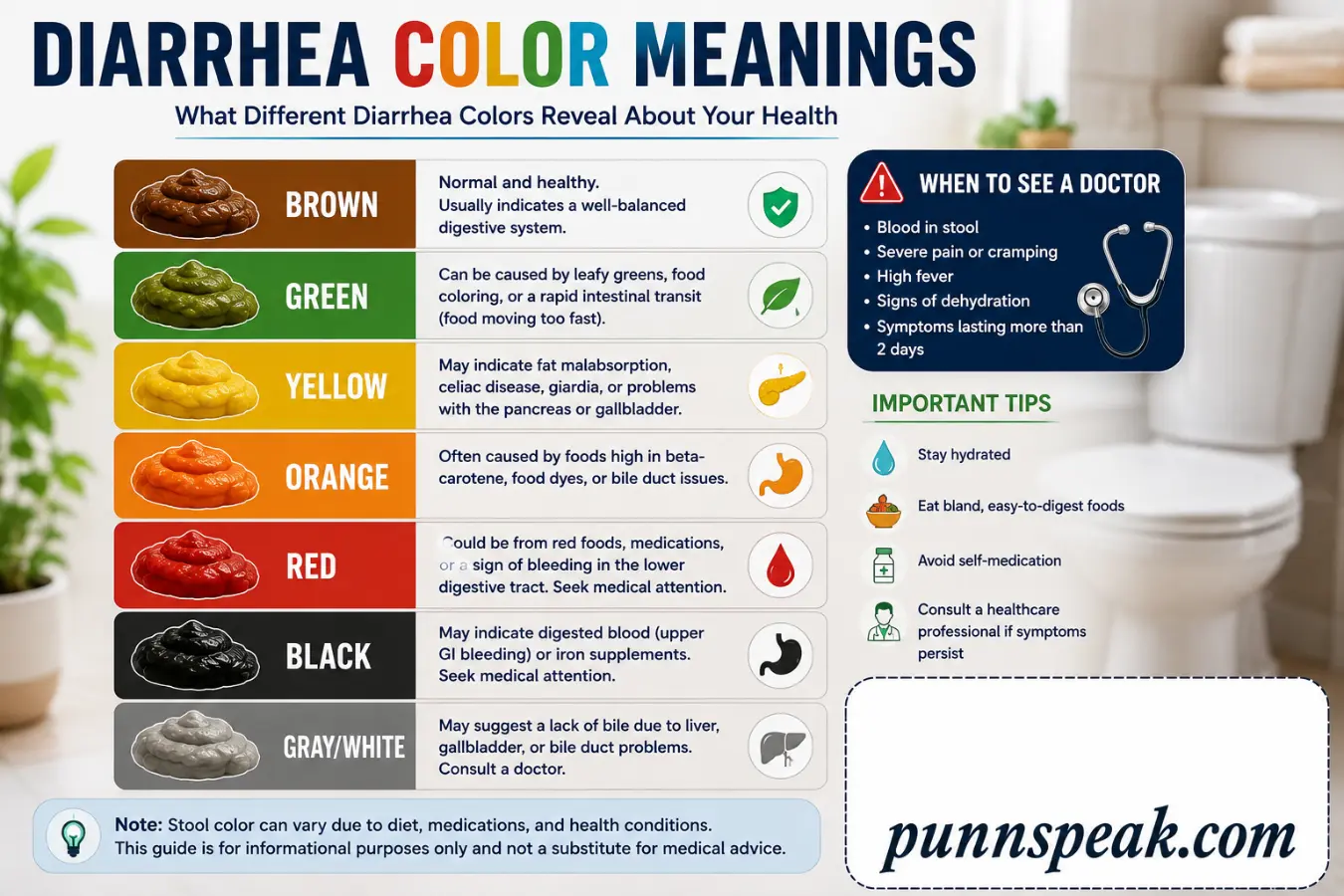
Different diarrhea colors symbolize various health conditions, digestive processes, and bodily changes. Unlike traditional color symbolism, diarrhea colors are primarily interpreted through medical and wellness perspectives.
Common symbolic meanings include:
- Brown diarrhea: Normal digestion and waste elimination.
- Green diarrhea: Rapid digestion or dietary influences.
- Yellow diarrhea: Fat malabsorption or digestive imbalance.
- Orange diarrhea: Food dyes, diet, or bile changes.
- Red diarrhea: Possible bleeding or food-related coloring.
- Black diarrhea: Digested blood or medication effects.
- Gray or white diarrhea: Reduced bile flow or liver-related concerns.
The significance of diarrhea color often depends on accompanying symptoms, duration, and overall health.
Psychological Characteristics of Different Color Diarrhea Meanings
Although diarrhea colors are not traditional psychological colors, they often create emotional and behavioral responses related to health awareness.
Emotional Associations
- Brown diarrhea often creates reassurance because it is considered normal.
- Green diarrhea may cause curiosity or mild concern.
- Yellow or orange diarrhea may trigger uncertainty.
- Red or black diarrhea often causes alarm because they may indicate serious conditions.
Psychological Effects
- Increases awareness of digestive health.
- Encourages monitoring of symptoms.
- Motivates dietary adjustments.
- Prompts medical consultation when necessary.
Positive Emotional Responses
- Relief when symptoms resolve.
- Confidence in normal digestive function.
- Greater health awareness.
Negative Emotional Responses
- Anxiety.
- Concern.
- Stress.
- Fear of illness.
- Uncertainty.
Impact on Mood and Behavior
Changes in diarrhea color often encourage individuals to pay closer attention to nutrition, hydration, and digestive health.
Typical Reactions
Most people view brown diarrhea as relatively normal, while red, black, white, or gray diarrhea typically prompts greater concern.
Spiritual Meaning of Different Color Diarrhea Meanings
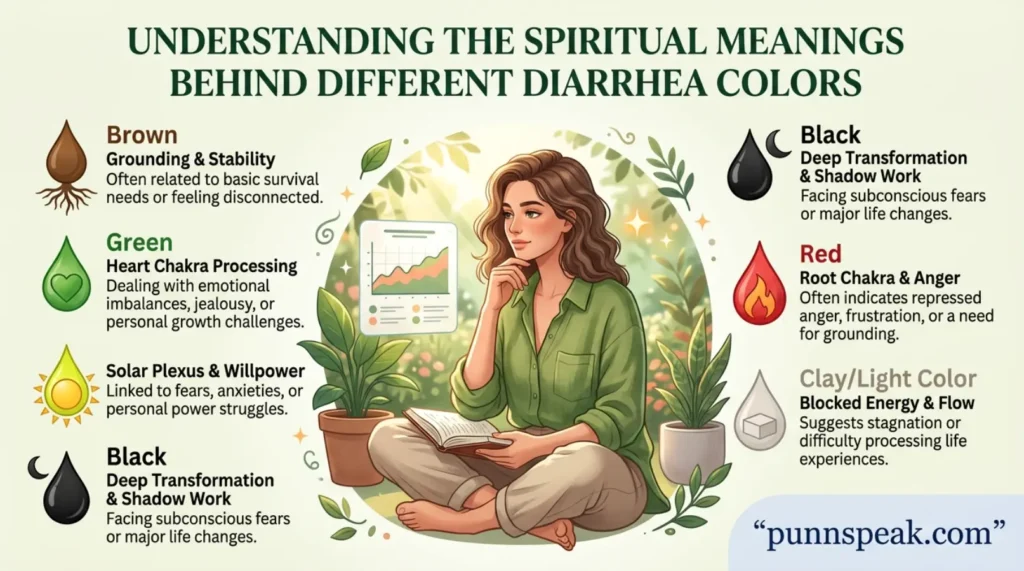
Many traditional healing systems associate digestive health with emotional balance, cleansing, and energy flow. While these interpretations are symbolic rather than scientific, they remain meaningful in some cultures.
Spiritual Associations
- Holiness: Purification and cleansing.
- Wisdom: Awareness of bodily signals.
- Purity: Removal of unwanted substances.
- Transformation: Physical and emotional change.
- Healing: Recovery and restoration.
- Protection: Caring for health and wellness.
- Power: Maintaining bodily balance.
- Enlightenment: Increased self-awareness.
- New Beginnings: Recovery after illness.
- Eternity: The body’s ongoing renewal process.
In spiritual traditions, digestive changes are sometimes viewed as signs of release, cleansing, or transformation.
Positive and Negative Meanings of Different Color Diarrhea Meanings
Positive Meanings
Clarity
Changes in stool color can provide useful health information.
Freshness
Healthy digestive function supports overall wellness.
Hope
Temporary diarrhea often resolves naturally.
Balance
Normal brown coloration reflects balanced digestion.
Harmony
Proper nutrition and hydration support digestive harmony.
Awareness
Color changes can encourage proactive healthcare.
Renewal
Digestive systems continuously renew and repair themselves.
Healing
Recovery often follows short-term digestive disturbances.
Negative Meanings
Emptiness
Frequent diarrhea may result in fluid loss and dehydration.
Isolation
Digestive issues can affect social confidence.
Coldness
Some cultures associate digestive discomfort with imbalance.
Sterility
Persistent digestive symptoms may reduce quality of life.
Boredom
Dietary restrictions can feel limiting during recovery.
Emotional Distance
Digestive concerns sometimes affect social participation.
Perfectionism
Excessive monitoring of stool changes may create unnecessary stress.
Real-World Examples
- Green diarrhea may follow consumption of leafy vegetables.
- Black diarrhea can occur after taking iron supplements.
- Yellow diarrhea may result from digestive disorders.
- Red diarrhea may be caused by beets or gastrointestinal bleeding.
Meanings of Different Color Diarrhea Meanings

The meaning of diarrhea color depends on digestion speed, diet, medications, hydration, and underlying health conditions.
Brown Diarrhea Meaning
Brown diarrhea is generally considered normal and often reflects healthy bile production and digestion.
Common associations include:
- Normal digestive activity.
- Balanced bile levels.
- Healthy waste elimination.
Green Diarrhea Meaning
Green diarrhea often occurs when food moves too quickly through the intestines.
Possible causes include:
- Leafy green vegetables.
- Food coloring.
- Antibiotics.
- Digestive infections.
Yellow Diarrhea Meaning
Yellow diarrhea may indicate fat malabsorption or digestive issues.
Possible associations include:
- Excess fat in stool.
- Gallbladder issues.
- Pancreatic conditions.
- Certain infections.
Orange Diarrhea Meaning
Orange diarrhea may result from:
- Foods rich in beta-carotene.
- Artificial food coloring.
- Changes in bile production.
Red Diarrhea Meaning
Red diarrhea can be caused by:
- Red foods or beverages.
- Hemorrhoids.
- Lower gastrointestinal bleeding.
Medical evaluation may be necessary if the cause is unclear.
Black Diarrhea Meaning
Black diarrhea may result from:
- Iron supplements.
- Certain medications.
- Digested blood from the upper digestive tract.
Gray or White Diarrhea Meaning
Gray or white diarrhea may indicate reduced bile flow.
Possible causes include:
- Liver disorders.
- Gallbladder problems.
- Bile duct obstruction.
Medical evaluation is often recommended.
Feng Shui
Although diarrhea colors are not traditional Feng Shui colors, health-related color symbolism can still be interpreted through energy concepts.
Associated Elements
- Brown: Earth.
- Green: Wood.
- Yellow: Earth.
- Black: Water.
- Red: Fire.
Energy Symbolism
Digestive colors often symbolize movement, cleansing, and balance.
Best Rooms
- Wellness spaces.
- Bathrooms.
- Meditation rooms.
Recommended Color Combinations
- Green and brown.
- Yellow and white.
- Red and neutral tones.
Home Decorating Tips
Promote cleanliness, comfort, and stress reduction through balanced color schemes.
Marketing
Healthcare brands often use digestive health color charts for educational purposes.
Branding Psychology
Color-coded systems improve understanding and recognition.
Consumer Perception
People associate color charts with medical expertise and transparency.
Trust Signals
Healthcare organizations use visual color guides to educate patients.
Product Packaging
Digestive health products often incorporate green, blue, and white colors.
Advertising Applications
Educational graphics frequently explain stool and digestive color meanings.
Design
Interior Design
Healthcare facilities use calming colors that support comfort and trust.
Graphic Design
Color-coded digestive charts simplify health information.
Web Design
Interactive visuals improve user understanding.
User Experience
Clear color distinctions enhance educational value.
Minimalist Aesthetics
Simple layouts improve readability and trustworthiness.
Fashion
Diarrhea colors are not commonly used in fashion symbolism, but associated colors influence clothing choices.
Clothing Symbolism
Brown symbolizes stability, green symbolizes growth, and red symbolizes energy.
Seasonal Use
Natural colors remain popular throughout the year.
Styling Effects
Earth tones create comfort and reliability.
Personality Impressions
Natural colors often convey practicality and balance.
Advantages
- Easy to coordinate.
- Timeless appeal.
Disadvantages
- Some shades may appear dull if overused.
Practical Example: Earth-tone outfits often create a calm and grounded appearance.
Color Associations Are Not Universal
Western Cultures
Western medicine focuses on stool color as a health indicator, while culturally brown is often viewed as natural and normal.
Eastern Cultures
Traditional healing systems may connect digestive changes to energy imbalances and dietary influences.
Religious Traditions
Many religious traditions emphasize bodily health, cleanliness, and moderation rather than specific stool colors.
Historical Interpretations
Ancient physicians frequently observed stool appearance when evaluating health conditions.
Modern Global Interpretations
Today, stool color meanings are primarily understood through medical science, though traditional beliefs continue to influence some cultures.
What Different Color Diarrhea Meanings Say About Your Personality
Diarrhea colors do not determine personality traits. They are health indicators rather than personality colors.
However, people who pay close attention to digestive health often display certain characteristics.
Strengths
- Health-conscious.
- Detail-oriented.
- Responsible.
- Proactive.
Weaknesses
- May worry excessively about symptoms.
- Can become overly focused on health concerns.
Social Behavior
- Interested in wellness information.
- Encourages healthy habits.
Work Style
- Organized.
- Careful.
- Preventive-minded.
Relationships
- Supportive.
- Caring.
- Health-aware.
Emotional Tendencies
- Reassured by positive health signs.
- Concerned when symptoms persist.
Color observations should never be used to predict personality with certainty.
Frequently Asked Questions
What defines different color diarrhea meanings?
Different color diarrhea meanings refer to the health-related interpretations associated with changes in diarrhea color.
What does diarrhea color symbolize?
Diarrhea color often symbolizes digestive function, bile production, diet, hydration, and overall gastrointestinal health.
Why is diarrhea color important?
Color changes can provide clues about digestive health and possible medical conditions.
Is brown diarrhea normal?
Yes. Brown diarrhea is usually considered the most normal stool color.
What does green diarrhea mean?
Green diarrhea often occurs when food moves rapidly through the digestive system.
What does yellow diarrhea mean?
Yellow diarrhea may suggest fat malabsorption or digestive issues.
What does red diarrhea mean?
Red diarrhea can result from food coloring, certain foods, or gastrointestinal bleeding.
What does black diarrhea mean?
Black diarrhea may indicate iron supplements, medications, or digested blood.
What does white diarrhea mean?
White or gray diarrhea may indicate problems with bile flow and should be medically evaluated.
What colors pair well with digestive health graphics?
Green, blue, brown, and white are commonly used because they represent health, trust, and cleanliness.
What does paying attention to stool color say about a person?
It often reflects health awareness and a proactive approach to wellness.
When should I see a healthcare professional?
Seek medical advice if unusual diarrhea colors persist or occur with pain, fever, dehydration, dizziness, or blood.
Conclusion
Different color diarrhea meanings provide valuable insights into digestive health, nutrition, hydration, and overall wellness. While brown diarrhea is typically considered normal, green, yellow, orange, red, black, gray, and white diarrhea may indicate dietary influences, medications, digestive conditions, or other health concerns. Understanding these color meanings can improve health awareness and encourage timely medical evaluation when necessary. However, stool color alone should never be used as a diagnosis, and persistent or concerning symptoms should always be discussed with a healthcare professional.

Emma Wilson is a dedicated comparison writer and product researcher at ColorMystiic.com. She specializes in creating unbiased product comparisons, detailed reviews, and helpful buying guides. Her goal is to help readers make smarter purchasing decisions with confidence.