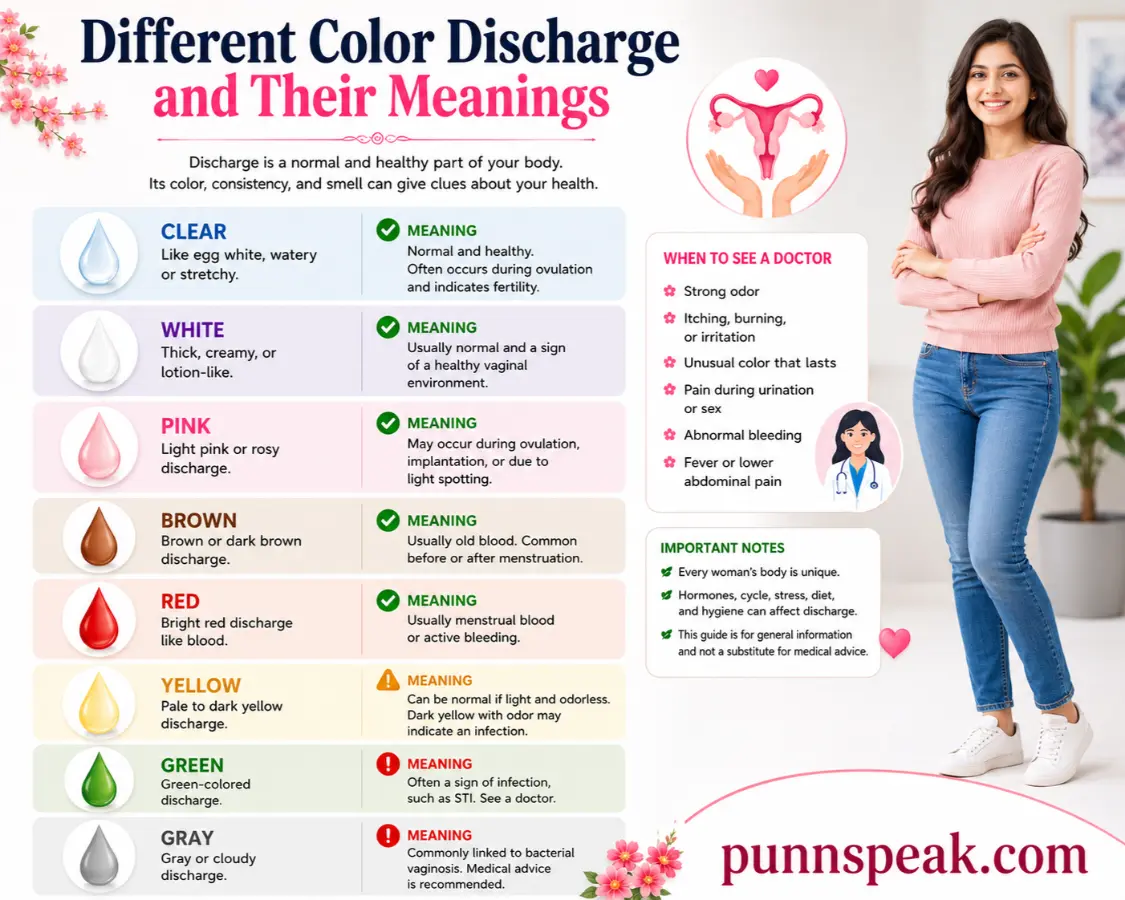
Vaginal discharge is a normal and important part of reproductive health. Its color, texture, and amount can change throughout the menstrual cycle due to hormones, ovulation, pregnancy, lifestyle factors, or health conditions. Different discharge colors may provide clues about what is happening inside the body, ranging from normal biological processes to potential infections or medical concerns. Understanding these color variations can help individuals recognize healthy patterns and know when professional medical advice may be needed.
Quick Answer: Different discharge colors have different meanings. Clear and white discharge are usually normal, yellow, green, gray, brown, or blood-tinged discharge may sometimes indicate infection, hormonal changes, menstruation, or other health conditions depending on accompanying symptoms.
What Does Different Color Discharge Symbolize?
Different discharge colors symbolize various biological and health-related processes occurring within the reproductive system. Unlike traditional color symbolism, discharge colors are primarily interpreted through medical and physiological contexts.
Common interpretations include:
- Clear discharge often symbolizes healthy vaginal function and fertility.
- White discharge generally represents normal hormonal activity.
- Yellow discharge may indicate mild changes or infection.
- Green discharge can signal bacterial or sexually transmitted infections.
- Gray discharge is commonly associated with bacterial imbalance.
- Brown discharge often reflects old blood leaving the uterus.
- Pink discharge may occur during implantation, ovulation, or light bleeding.
- Red discharge usually indicates menstrual blood or active bleeding.
The meaning of discharge color depends heavily on texture, odor, timing, and associated symptoms.
Psychological Characteristics of the Color Different Color Discharge
Although discharge colors are not traditional psychological colors, people often develop emotional responses when noticing changes in discharge color.
Emotional Associations
- Clear and white discharge often create feelings of reassurance.
- Pink discharge may trigger curiosity or anticipation.
- Brown discharge can cause uncertainty.
- Yellow, green, or gray discharge may generate concern or anxiety.
Psychological Effects
- Health-related color observations often influence self-awareness.
- Unusual colors may increase vigilance regarding personal health.
- Changes may encourage healthcare consultations.
Positive Emotional Responses
- Confidence in reproductive health.
- Sense of normalcy.
- Reassurance about fertility cycles.
- Increased body awareness.
Negative Emotional Responses
- Worry about infections.
- Fear of underlying medical conditions.
- Embarrassment discussing symptoms.
- Stress caused by uncertainty.
Impact on Mood and Behavior
- Individuals may become more attentive to hygiene practices.
- Some may seek medical advice promptly.
- Others may experience temporary anxiety until symptoms are understood.
How People Typically React
- Monitor color changes.
- Compare symptoms with previous experiences.
- Research possible causes.
- Consult healthcare professionals when symptoms persist.
Spiritual Meaning of the Color Different Color Discharge

Across many spiritual traditions, bodily changes are often viewed symbolically as signs of transformation, renewal, and healing. While discharge colors do not have universal spiritual meanings, some symbolic interpretations exist.
- Holiness: Associated with bodily awareness and self-care.
- Wisdom: Encourages attention to physical health signals.
- Purity: Clear or healthy discharge may symbolize natural balance.
- Transformation: Hormonal and reproductive changes reflect life transitions.
- Healing: Recovery from illness may involve temporary discharge changes.
- Protection: The body naturally produces discharge to maintain vaginal health.
- Power: Reproductive health represents biological strength.
- Enlightenment: Understanding bodily signals promotes informed decision-making.
- New Beginnings: Changes during ovulation, pregnancy, or postpartum periods may symbolize fresh stages of life.
- Eternity: Reproductive cycles reflect ongoing natural rhythms.
These interpretations are symbolic rather than medical.
Positive and Negative Meanings of the Color Different Color Discharge
Positive Meanings
Certain discharge colors are commonly associated with healthy bodily functions.
- Purity: Clear discharge often indicates healthy lubrication.
- Peace: Predictable discharge patterns provide reassurance.
- Simplicity: White discharge commonly reflects normal hormonal activity.
- Clarity: Consistent discharge patterns help track menstrual cycles.
- Freshness: Healthy discharge supports vaginal cleanliness.
- Hope: Fertile cervical mucus may indicate ovulation.
- Balance: Stable discharge often reflects hormonal equilibrium.
- Harmony: Healthy vaginal flora maintains natural protection.
Negative Meanings
Some colors may indicate underlying concerns.
- Emptiness: Sudden absence of normal discharge may sometimes reflect hormonal changes.
- Isolation: Individuals may feel uncomfortable discussing symptoms.
- Coldness: Gray discharge may signal bacterial vaginosis.
- Sterility: Medical treatments can alter normal discharge patterns.
- Boredom: Repetitive health concerns may become frustrating.
- Emotional Distance: Worry about symptoms may affect relationships.
- Perfectionism: Excessive monitoring can increase stress.
For example, green discharge accompanied by odor and irritation often requires medical evaluation, while brown discharge near the beginning or end of menstruation is commonly harmless.
Meanings of the Color Different Color Discharge

The meaning of discharge color changes depending on menstrual cycle timing, hormonal influences, age, medications, pregnancy status, and overall health.
Clear Discharge Meaning
Clear discharge is usually normal and often associated with:
- Ovulation
- Fertility
- Healthy vaginal lubrication
- Hormonal balance
White Discharge Meaning
White discharge commonly indicates:
- Normal vaginal health
- Hormonal fluctuations
- Healthy bacterial balance
Thick white discharge accompanied by itching may suggest a yeast infection.
Yellow Discharge Meaning
Yellow discharge may be:
- Normal when pale yellow and odorless
- A sign of infection when dark yellow, thick, or foul-smelling
Green Discharge Meaning
Green discharge often requires medical attention because it may indicate:
- Sexually transmitted infections
- Bacterial infections
- Inflammation
Gray Discharge Meaning
Gray discharge is frequently linked to:
- Bacterial vaginosis
- Vaginal flora imbalance
- Unpleasant fishy odor
Brown Discharge Meaning
Brown discharge typically represents:
- Old blood
- End of menstruation
- Spotting between periods
Pink Discharge Meaning
Pink discharge may occur due to:
- Ovulation spotting
- Implantation bleeding
- Minor cervical irritation
Red Discharge Meaning
Red discharge usually indicates:
- Menstrual bleeding
- Fresh blood
- Occasionally abnormal bleeding requiring evaluation
Feng Shui
In Feng Shui, health-related colors are interpreted through their individual color symbolism rather than discharge itself.
- Associated element: Depends on the specific color.
- Energy symbolism: Represents body balance and wellness.
- Best rooms: Bathrooms, wellness spaces, and bedrooms.
- Recommended color combinations: Soft whites, blues, greens, and earth tones.
- Home decorating tips: Use calming colors that support relaxation and health awareness.
Marketing
Health and wellness brands often use colors associated with cleanliness and trust.
- Branding psychology: White and blue communicate hygiene and reliability.
- Consumer perception: Clean colors promote confidence.
- Trust signals: Medical organizations frequently use blue and white.
- Product packaging: Feminine care products often feature soft blues, pinks, and whites.
- Advertising applications: Colors are used to emphasize safety and wellness.
Examples include healthcare and hygiene brands that rely on clean, calming color palettes.
Design
Color meanings related to health influence many design fields.
- Interior design: Wellness clinics use calming neutral colors.
- Graphic design: Health education materials prioritize clarity.
- Web design: Medical websites often use blue and white for trust.
- User experience: Simple layouts reduce anxiety.
- Minimalist aesthetics: Clean color schemes support readability and professionalism.
Fashion
Health-related color symbolism also appears in clothing.
- Clothing symbolism: White often represents cleanliness and purity.
- Seasonal use: Soft colors are common in spring and wellness-themed collections.
- Styling effects: Light colors create a fresh appearance.
- Personality impressions: Neutral tones may appear calm and organized.
- Advantages: Versatile and professional.
- Disadvantages: Can appear overly clinical if overused.
For example, healthcare professionals frequently wear colors associated with cleanliness and trustworthiness.
Color Associations Are Not Universal
Western Cultures
In many Western societies, white is associated with cleanliness, purity, and healthcare. Red is linked with blood, vitality, and warning signs.
Eastern Cultures
Some Eastern cultures associate white with mourning and remembrance rather than purity. Red often symbolizes luck, prosperity, and celebration.
Religious Traditions
Various religions use white to represent holiness, spiritual purity, and divine protection. Red may symbolize sacrifice, life, or spiritual power.
Historical Interpretations
Historically, bodily signs and color changes were often interpreted as indicators of health, fertility, and disease long before modern medicine existed.
Modern Global Interpretations
Today, discharge color meanings are primarily interpreted through medical science rather than symbolic traditions. Healthcare providers rely on evidence-based assessments rather than cultural symbolism.
What Different Color Discharge Says About Your Personality
Discharge color does not determine personality. However, people who actively monitor and understand their reproductive health may share certain behavioral tendencies.
Strengths
- Health awareness
- Responsibility
- Attention to detail
- Proactive decision-making
Weaknesses
- Excessive worry
- Overanalyzing symptoms
- Health-related anxiety
Social Behavior
- More likely to discuss health topics openly.
- Often encourage preventive healthcare practices.
Work Style
- Detail-oriented.
- Organized.
- Interested in wellness and self-care.
Relationships
- Value communication about health.
- Often prioritize mutual well-being.
Emotional Tendencies
- May feel reassured by routine bodily patterns.
- Can experience concern when changes occur unexpectedly.
Color preferences and health awareness do not predict personality with certainty. Human personality is influenced by many factors beyond health habits.
Frequently Asked Questions
What defines different color discharge?
Different color discharge refers to variations in vaginal discharge color, including clear, white, yellow, green, gray, brown, pink, and red, each potentially reflecting different bodily processes.
What does different color discharge symbolize?
Medically, discharge colors symbolize hormonal changes, fertility, menstruation, infections, or reproductive health conditions.
Why is discharge color important?
Color can provide useful clues about vaginal health and help identify potential concerns early.
Is clear discharge normal?
Yes. Clear discharge is generally considered a healthy and normal bodily function.
What emotions are associated with noticing discharge color changes?
People commonly experience reassurance, curiosity, concern, or anxiety depending on the color and accompanying symptoms.
What does clear discharge mean spiritually?
Some symbolic interpretations associate clear discharge with purity, balance, and renewal.
What colors indicate possible infection?
Yellow, green, and gray discharge may indicate infection, especially when accompanied by odor, itching, or irritation.
What colors pair well with health and wellness branding?
White, blue, green, and soft neutral colors are commonly used in healthcare branding.
What does liking health-related color symbolism say about a person?
People interested in health symbolism are often wellness-focused and attentive to personal well-being.
Is brown discharge always a problem?
No. Brown discharge often represents old blood and may occur before or after menstruation.
When should I see a healthcare provider?
Medical advice should be sought if discharge changes are accompanied by strong odor, itching, burning, pain, fever, or unusual bleeding.
Can discharge color change during pregnancy?
Yes. Hormonal changes during pregnancy can affect discharge color, consistency, and volume.
Conclusion
Understanding different color discharge and their meanings can help individuals recognize normal reproductive processes and identify signs that may require medical attention. Clear and white discharge are typically associated with healthy vaginal function, while yellow, green, gray, brown, pink, and red discharge may reflect hormonal changes, menstruation, fertility, pregnancy, or potential infections. Because discharge color meanings depend on context, accompanying symptoms, and personal health history, professional medical evaluation is important whenever unusual changes occur. Awareness of these variations supports informed health decisions and promotes overall reproductive wellness

Emma Wilson is a dedicated comparison writer and product researcher at ColorMystiic.com. She specializes in creating unbiased product comparisons, detailed reviews, and helpful buying guides. Her goal is to help readers make smarter purchasing decisions with confidence.