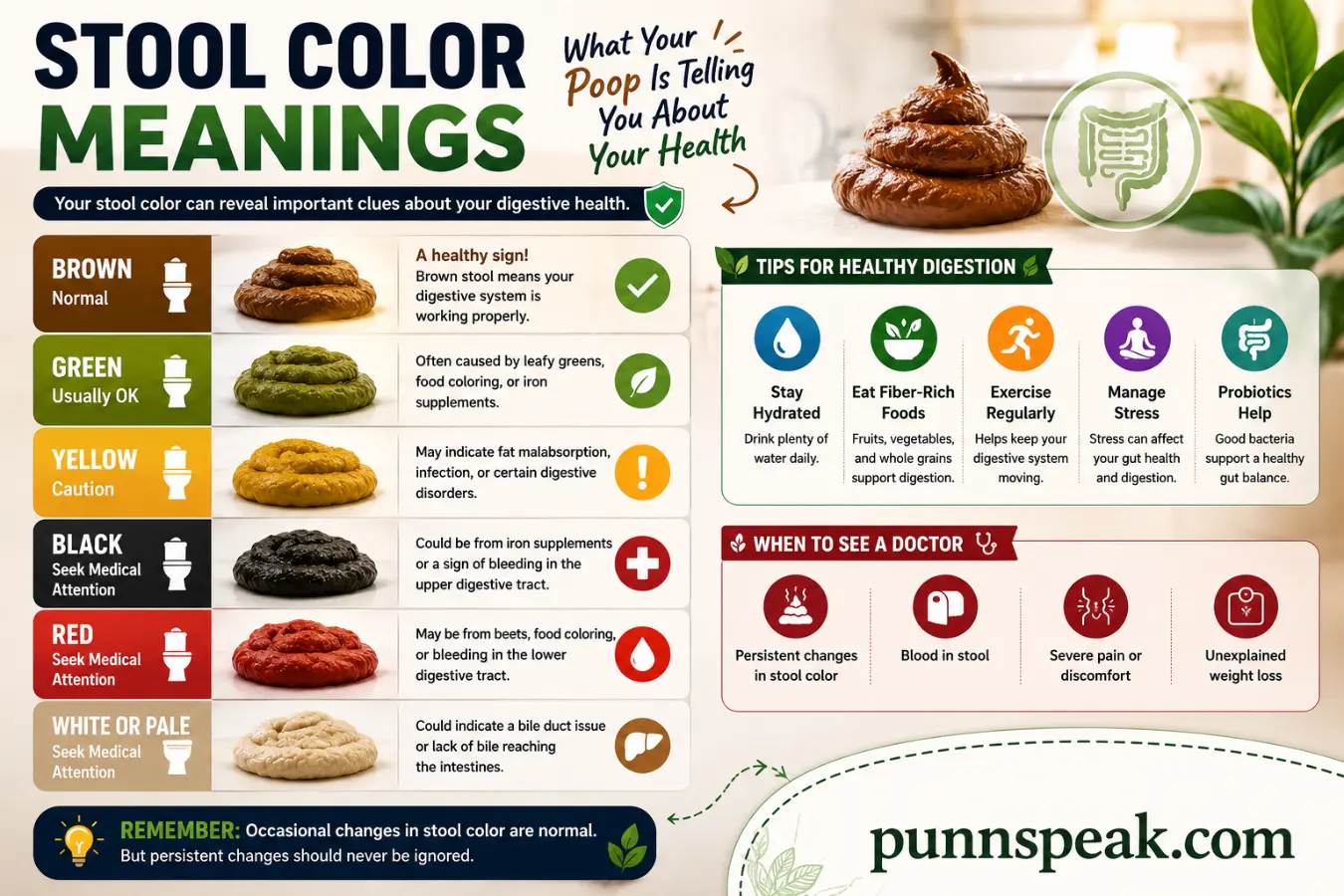
Stool color is one of the body’s most visible indicators of digestive health. While stool colors are not “colors” in the traditional psychology or design sense, they carry important meanings related to diet, digestion, hydration, liver function, and overall well-being. Different stool colors can signal normal bodily processes, temporary dietary changes, or potential health conditions that may require medical attention. Understanding stool color meanings can help people recognize normal variations and identify when changes may indicate a need for professional evaluation.
Quick Answer: Stool color meanings range from normal brown (healthy digestion) to green, yellow, black, red, pale, or white stools, each potentially reflecting dietary influences, digestive processes, medications, or underlying health conditions.
What Does the Color Stool Symbolize?
Unlike traditional color symbolism, stool colors primarily symbolize the functioning of the digestive system. Medical professionals often use stool color as an important observational tool when assessing digestive and gastrointestinal health.
Different stool colors may symbolize:
- Digestive efficiency.
- Nutrient absorption.
- Bile production and flow.
- Dietary habits.
- Hydration levels.
- Gut microbiome activity.
- Potential gastrointestinal concerns.
- Overall metabolic health.
The most common and healthy stool color is medium to dark brown, which typically indicates normal digestion and healthy bile metabolism.
Psychological Characteristics of the Color Stool
Although stool colors are not typically analyzed through conventional color psychology, people often have emotional and psychological responses to changes in stool appearance because they associate them with health and wellness.
Emotional Associations
- Reassurance when stool appears normal brown.
- Concern when unexpected colors appear.
- Curiosity about digestive health.
- Increased health awareness.
- Anxiety regarding unusual changes.
Psychological Effects
- Encourages self-monitoring of health.
- Promotes awareness of diet and nutrition.
- Can motivate healthier lifestyle choices.
- May trigger medical consultation when needed.
Positive Emotional Responses
- Confidence in digestive health.
- Peace of mind.
- Sense of bodily balance.
- Health reassurance.
Negative Emotional Responses
- Worry about illness.
- Stress regarding symptoms.
- Uncertainty about health status.
- Fear of potential medical conditions.
Impact on Mood and Behavior
Changes in stool color often influence behavior by encouraging:
- Dietary modifications.
- Increased hydration.
- Medical checkups.
- Greater attention to digestive health.
How People Typically React
- Most people view brown stool as normal and healthy.
- Green stool often causes mild concern but is frequently harmless.
- Red or black stool may create alarm because they can indicate bleeding.
- White or clay-colored stool often prompts medical evaluation.
Spiritual Meaning of the Color Stool

Historically, many cultures viewed bodily waste as part of purification, release, and transformation processes. Although stool colors are not commonly assigned spiritual meanings, symbolic interpretations can be drawn from themes of cleansing and renewal.
Common Spiritual Associations
- Purification: Removal of what no longer serves the body.
- Transformation: Conversion of food into energy and waste.
- Healing: Healthy elimination supports wellness.
- Protection: The body’s natural detoxification process.
- Wisdom: Awareness of physical health signals.
- Power: Efficient digestive function reflects vitality.
- New Beginnings: Releasing old material allows renewal.
- Balance: Proper elimination supports harmony within the body.
- Enlightenment: Increased awareness of health and self-care.
- Eternity: The ongoing cycle of nourishment, digestion, and renewal.
Many holistic traditions consider healthy elimination a sign of energetic balance and physical wellness.
Positive and Negative Meanings of the Color Stool
Positive Meanings
Healthy Digestion
Brown stool commonly reflects normal digestive processes and healthy bile function.
Example: Consistent brown stool often indicates effective nutrient processing.
Balance
Regular bowel movements and consistent coloration suggest digestive stability.
Example: Individuals with balanced diets often experience predictable stool color.
Clarity
Changes in stool color can provide valuable health information.
Example: Temporary green stool after consuming leafy vegetables reveals dietary influence.
Freshness
Normal stool patterns often accompany healthy eating habits.
Example: Diets rich in fiber may support healthy digestive function.
Hope
Many unusual stool colors result from harmless dietary causes and resolve naturally.
Example: Beet consumption may temporarily produce reddish stool.
Harmony
Healthy elimination contributes to overall physical wellness.
Example: Proper hydration often supports normal bowel appearance.
Negative Meanings
Concern
Unexpected color changes may indicate digestive issues.
Example: Persistent pale stools may warrant medical evaluation.
Warning
Some colors can serve as health alerts.
Example: Black stools may occasionally indicate gastrointestinal bleeding.
Uncertainty
Color variations may create confusion about health status.
Example: Yellow stools can have multiple possible causes.
Isolation
People may hesitate to discuss digestive concerns.
Example: Embarrassment sometimes delays medical consultation.
Anxiety
Unusual stool appearance may increase stress levels.
Example: Sudden red stool often causes concern even when caused by food coloring.
Health Imbalance
Persistent abnormal colors can signal underlying conditions.
Example: Long-term pale stools may indicate bile duct issues.
Meanings of the Color Stool
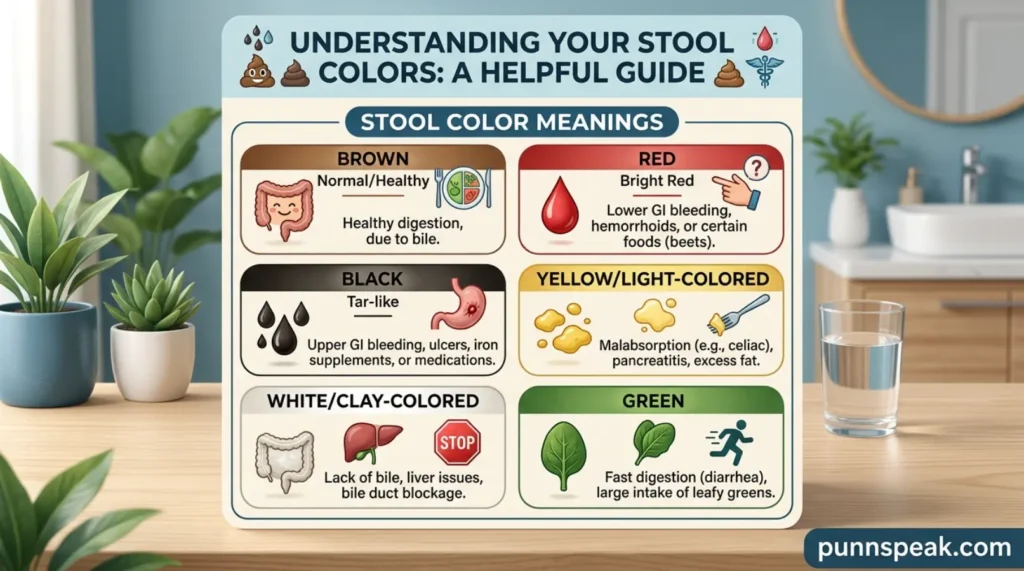
The meaning of stool color depends largely on context, including diet, medications, hydration, digestive function, and medical history.
Brown Stool Meaning
Brown is generally considered the normal and healthiest stool color. It results from bile pigments being broken down during digestion.
Green Stool Meaning
Green stool often results from:
- Leafy green vegetables.
- Food coloring.
- Rapid intestinal transit.
- Iron supplements.
Yellow Stool Meaning
Yellow stool may be associated with:
- Fat malabsorption.
- Certain digestive disorders.
- Temporary dietary factors.
Black Stool Meaning
Black stool may result from:
- Iron supplements.
- Certain medications.
- Dark-colored foods.
- Gastrointestinal bleeding (requires medical evaluation).
Red Stool Meaning
Red stool can be caused by:
- Beets.
- Red food coloring.
- Lower digestive tract bleeding.
White or Pale Stool Meaning
Pale or clay-colored stool may indicate reduced bile flow and should be evaluated if persistent.
Feng Shui
Although stool colors are not traditionally used in Feng Shui, the concept of healthy elimination relates to the free movement of energy.
Associated Element: Earth
Energy Symbolism:
- Grounding.
- Release.
- Stability.
- Transformation.
Best Rooms:
- Bathrooms.
- Wellness spaces.
- Health-focused environments.
Recommended Color Combinations:
- Earth tones.
- Browns.
- Greens.
- Beige shades.
Home Decorating Tips:
- Maintain cleanliness.
- Encourage natural airflow.
- Use grounding natural materials.
Marketing
Stool colors themselves are rarely used directly in branding, but healthcare and digestive wellness companies frequently use associated colors.
Branding Psychology
- Brown symbolizes natural bodily processes.
- Green represents digestive wellness.
- Blue conveys trust and medical reliability.
Consumer Perception
Consumers associate digestive-health branding with:
- Professionalism.
- Safety.
- Scientific credibility.
Trust Signals
Healthcare brands emphasize:
- Clinical expertise.
- Transparency.
- Evidence-based guidance.
Product Packaging
Digestive-health products often feature:
- Green tones.
- Blue accents.
- White backgrounds.
Advertising Applications
Marketing commonly focuses on:
- Gut health.
- Comfort.
- Wellness.
- Balance.
Design
Interior Design
Natural earth tones symbolize health, stability, and grounding.
Graphic Design
Healthcare materials frequently use clean, simple color palettes to communicate trust.
Web Design
Medical websites often use:
- White backgrounds.
- Blue accents.
- Green wellness indicators.
User Experience
Clear visual communication helps users understand health information quickly.
Minimalist Aesthetics
Simple layouts improve readability and reduce anxiety when discussing medical topics.
Fashion
Although stool colors are not fashion categories, earth-inspired shades related to healthy digestion themes appear frequently in apparel.
Clothing Symbolism
Brown tones symbolize:
- Reliability.
- Stability.
- Practicality.
Seasonal Use
Earth tones are especially popular during:
- Autumn.
- Winter.
- Transitional seasons.
Styling Effects
Brown clothing creates:
- Warmth.
- Approachability.
- Natural elegance.
Personality Impressions
People wearing earth tones are often perceived as:
- Grounded.
- Dependable.
- Authentic.
Advantages
- Versatile.
- Timeless.
- Easy to coordinate.
Disadvantages
- Can appear dull if overused.
- May lack visual excitement.
Color Associations Are Not Universal
Western Cultures
Western healthcare systems often view stool color as a practical indicator of health rather than symbolic meaning. Brown is generally associated with normal digestive function.
Eastern Cultures
Many Eastern traditions emphasize bodily observation as part of overall wellness. Changes in stool appearance may be viewed as indicators of internal balance.
Religious Traditions
Religious teachings often focus on cleanliness, purification, and stewardship of the body rather than specific stool colors.
Historical Interpretations
Ancient physicians frequently examined stool appearance to diagnose illness before modern laboratory testing became available.
Modern Global Interpretations
Today, stool color is widely recognized as a useful health marker across medical systems worldwide.
What Stool Color Says About Your Personality
Unlike traditional color psychology, stool color preferences do not determine personality traits. However, people who pay attention to stool color changes often display certain health-related behaviors.
Strengths
- Health awareness.
- Attention to detail.
- Preventive mindset.
- Responsibility toward wellness.
Weaknesses
- Excessive health monitoring.
- Increased anxiety about minor changes.
- Overinterpretation of symptoms.
Social Behavior
Such individuals may:
- Discuss health topics openly.
- Share wellness information.
- Encourage preventive care.
Work Style
They often demonstrate:
- Careful observation.
- Analytical thinking.
- Thoroughness.
Relationships
Health-conscious individuals may prioritize:
- Healthy lifestyles.
- Mutual well-being.
- Long-term wellness habits.
Emotional Tendencies
Common tendencies include:
- Curiosity.
- Vigilance.
- Responsibility.
- Occasional worry.
It is important to remember that stool color observations do not define personality and should not be used to draw psychological conclusions.
Frequently Asked Questions
What defines stool color?
Stool color is determined primarily by bile pigments, digestion, diet, medications, and intestinal transit time.
What does brown stool symbolize?
Brown stool generally symbolizes normal digestion and healthy bile metabolism.
Why is stool color important?
Stool color can provide valuable information about digestive health and may help identify potential medical concerns.
Is brown stool a warm or cool color?
Brown is generally classified as a warm, earth-toned color.
What emotions do stool color changes represent?
People often experience reassurance with normal brown stool and concern when unusual colors appear.
What is the spiritual meaning of stool color?
Spiritually, stool may symbolize release, purification, transformation, and renewal.
What colors are considered normal for stool?
Various shades of brown are typically considered normal.
What causes green stool?
Green stool commonly results from leafy vegetables, food coloring, iron supplements, or rapid digestion.
What does black stool mean?
Black stool can result from iron supplements, medications, or gastrointestinal bleeding and should be evaluated if unexplained.
What does pale or white stool mean?
Persistent pale stool may indicate reduced bile flow and warrants medical attention.
What does liking brown colors say about a person?
People who prefer brown often value stability, reliability, practicality, and authenticity.
When should I see a doctor about stool color?
Seek medical advice if unusual stool colors persist, especially black, red, white, or pale stools that cannot be explained by diet or medication.
Conclusion
Understanding stool color meanings can provide valuable insight into digestive health and overall wellness. While normal brown stool generally reflects healthy digestion, colors such as green, yellow, red, black, or white can arise from dietary factors, medications, or underlying medical conditions. Stool color should be viewed as a useful health indicator rather than a definitive diagnosis. Monitoring changes, maintaining a healthy lifestyle, and consulting a healthcare professional when unusual colors persist can help support long-term digestive health and well-being.

Emma Wilson is a dedicated comparison writer and product researcher at ColorMystiic.com. She specializes in creating unbiased product comparisons, detailed reviews, and helpful buying guides. Her goal is to help readers make smarter purchasing decisions with confidence.