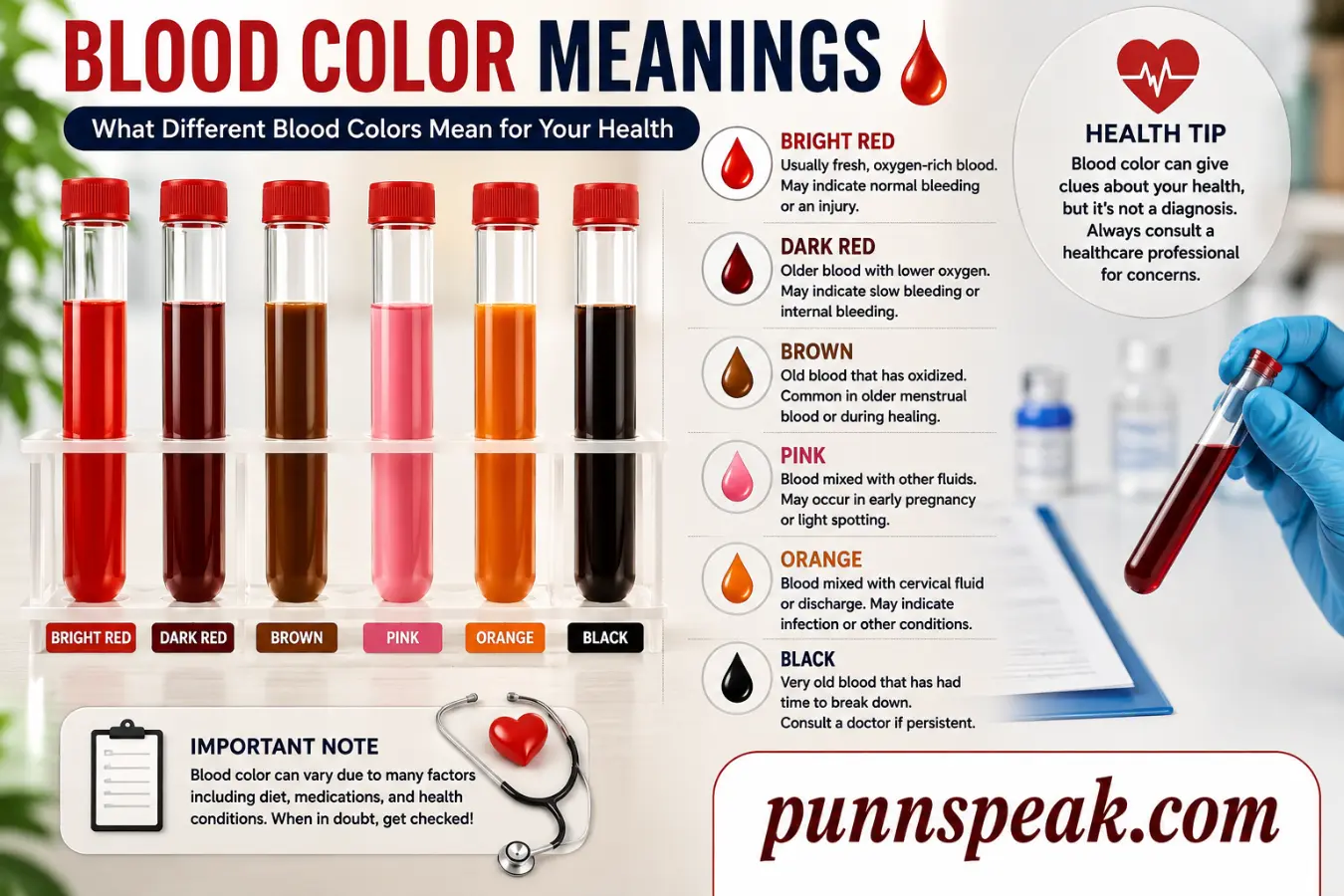
Blood color meanings have long been associated with health, vitality, life force, and medical observation. The color of blood can vary depending on oxygen levels, age of the blood, source of bleeding, and certain health conditions. Throughout history, blood has also carried symbolic, spiritual, and cultural significance, representing life, sacrifice, strength, and renewal. While blood color alone cannot diagnose a medical condition, understanding the meanings behind different blood colors can help people recognize normal variations and know when professional medical advice may be necessary.
Quick Answer: Bright red blood typically indicates fresh, oxygen-rich blood, while dark red, brown, pink, orange, or black-colored blood may reflect differences in oxygenation, age of the blood, menstrual flow, or underlying health conditions.
What Does the Color Blood Symbolize?
Blood symbolism is deeply rooted in human history and culture. Because blood is essential for life, it often represents vitality, energy, survival, and human connection.
Common symbolic meanings include:
- Bright red blood: Life, strength, vitality, and courage.
- Dark red blood: Maturity, endurance, and deeper life energy.
- Brown blood: Transition, aging, and natural cycles.
- Pink blood: Sensitivity, dilution, and gentleness.
- Orange-red blood: Change and imbalance.
- Black blood: Mystery, endings, and transformation.
The meaning of blood color often depends on medical, cultural, spiritual, and symbolic contexts.
Psychological Characteristics of Blood Color Meanings
Blood colors often create strong emotional and psychological reactions because they are closely associated with health, injury, and survival.
Emotional Associations
- Bright red blood often evokes urgency and alertness.
- Dark red blood can feel serious or intense.
- Brown blood may suggest natural aging or transition.
- Black blood can create concern or curiosity.
Psychological Effects
- Increases attention and awareness.
- Triggers protective instincts.
- Encourages health monitoring.
- Influences perceptions of danger or safety.
Positive Emotional Responses
- Strength
- Vitality
- Resilience
- Courage
- Renewal
Negative Emotional Responses
- Fear
- Anxiety
- Concern
- Uncertainty
- Stress
Impact on Mood and Behavior
The sight of blood often causes people to become more attentive, cautious, and health-conscious.
Typical Reactions
Most individuals associate healthy red blood with life and vitality, while unusual blood colors may prompt concern and medical consultation.
Spiritual Meaning of Blood Color Meanings

Across many spiritual traditions, blood symbolizes life energy, sacrifice, protection, and the connection between physical and spiritual existence.
Spiritual Associations
- Holiness: Sacred life force and spiritual devotion.
- Wisdom: Understanding life’s cycles.
- Purity: Cleansing and renewal.
- Transformation: Personal growth and change.
- Healing: Recovery and restoration.
- Protection: Spiritual safeguarding.
- Power: Inner strength and vitality.
- Enlightenment: Awareness and awakening.
- New Beginnings: Rebirth and renewal.
- Eternity: The ongoing cycle of life.
Blood is often viewed as a symbol of both physical existence and spiritual significance.
Positive and Negative Meanings of Blood Color Meanings
Positive Meanings
Vitality
Blood symbolizes life, energy, and physical health.
Strength
Healthy blood flow is associated with endurance and resilience.
Courage
Blood has long been linked with bravery and sacrifice.
Renewal
Blood supports healing and tissue repair.
Hope
Healthy circulation reflects wellness and recovery.
Balance
Proper blood function helps maintain bodily harmony.
Protection
Blood supports immune system functions and healing.
Connection
Blood often symbolizes family ties and human relationships.
Negative Meanings
Danger
Visible blood may signal injury or trauma.
Loss
Blood loss can symbolize weakness or vulnerability.
Fear
Unexpected bleeding often creates concern.
Illness
Certain blood colors may be linked to health conditions.
Uncertainty
Changes in blood color can raise medical questions.
Emotional Distress
Blood is often associated with intense emotional reactions.
Mortality
Blood can symbolize the fragility of life.
Real-World Examples
- Bright red bleeding often indicates fresh blood flow.
- Brown menstrual blood commonly reflects older blood leaving the body.
- Pink blood may occur when blood mixes with other fluids.
- Black or unusually dark blood may require medical evaluation.
Meanings of Blood Color Meanings
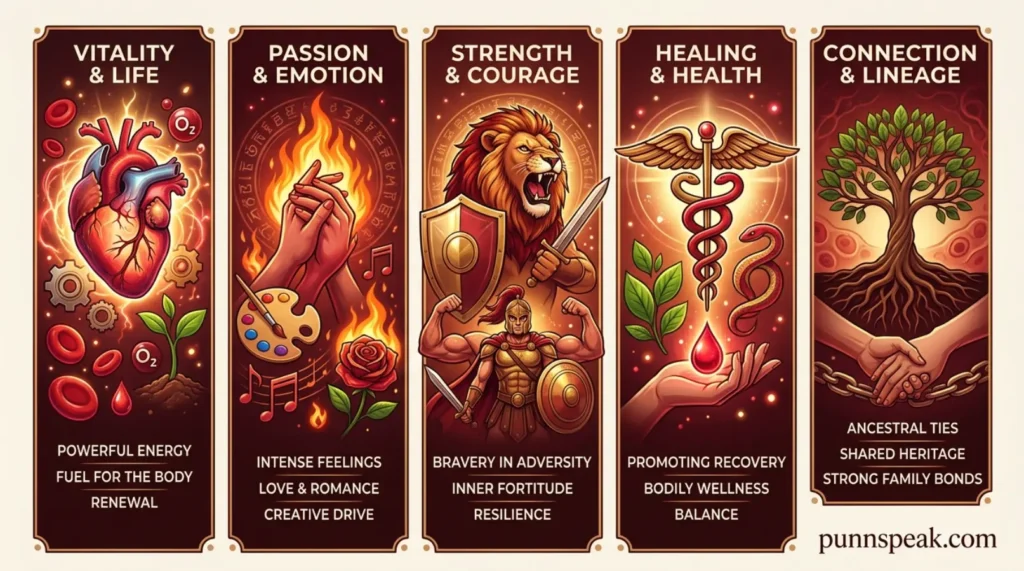
Blood color meanings vary depending on the source, oxygen content, age of the blood, and individual circumstances.
Bright Red Blood Meaning
Bright red blood is usually oxygen-rich and fresh. It commonly symbolizes:
- Vitality
- Energy
- Active circulation
- Strength
Dark Red Blood Meaning
Dark red blood often contains less oxygen and may represent:
- Mature blood flow
- Endurance
- Stability
- Deep vitality
Brown Blood Meaning
Brown blood usually indicates older blood that has had time to oxidize.
Common meanings include:
- Natural transitions
- Aging blood
- Completion of a cycle
Pink Blood Meaning
Pink blood may result from diluted blood.
Possible associations include:
- Sensitivity
- Gentleness
- Lighter blood flow
Orange Blood Meaning
Orange-colored blood may occur when blood mixes with cervical fluid or discharge.
It may symbolize:
- Change
- Transition
- Imbalance
Black Blood Meaning
Black blood often appears very dark brown and usually represents older oxidized blood.
Symbolically it may reflect:
- Transformation
- Mystery
- Endings and new beginnings
Feng Shui
Although blood colors are not traditional Feng Shui colors, they can be connected to energy symbolism.
Associated Element
- Red blood: Fire element
- Dark red blood: Earth and Fire balance
Energy Symbolism
Blood colors often symbolize life energy, vitality, and movement.
Best Rooms
- Wellness spaces
- Exercise rooms
- Meditation areas
Recommended Color Combinations
- Red and gold
- Red and white
- Deep red and earth tones
Home Decorating Tips
Use blood-inspired reds carefully as accent colors to create warmth, energy, and vitality.
Marketing
Blood-related colors are frequently used in healthcare, emergency services, sports, and wellness branding.
Branding Psychology
Red blood-inspired colors communicate energy, urgency, and action.
Consumer Perception
Consumers often associate blood-red tones with strength and passion.
Trust Signals
Medical organizations use red to symbolize care, emergency response, and health services.
Product Packaging
Blood-red shades are common in fitness, sports nutrition, and healthcare products.
Advertising Applications
Marketers use blood-inspired reds to capture attention and encourage action.
Examples include brands such as Netflix, Coca-Cola, and YouTube, which utilize powerful red color psychology.
Design
Interior Design
Blood-inspired reds create warmth, energy, and visual impact.
Graphic Design
Red attracts attention and improves visual hierarchy.
Web Design
Blood-red accents are often used for calls-to-action and important notifications.
User Experience
Strategic use of red improves visibility and urgency.
Minimalist Aesthetics
Deep red accents can add sophistication without overwhelming a design.
Fashion
Blood-inspired colors are popular in fashion because they project confidence and strength.
Clothing Symbolism
Blood-red clothing often symbolizes passion, courage, and power.
Seasonal Use
Particularly popular during fall, winter, and holiday seasons.
Styling Effects
Creates bold visual impact and confidence.
Personality Impressions
Often associated with leadership and determination.
Advantages
- Eye-catching
- Confident appearance
- Timeless appeal
Disadvantages
- Can feel intense if overused
- May attract excessive attention
Practical Example: A deep red blazer can create a strong professional impression during presentations or networking events.
Color Associations Are Not Universal
Western Cultures
Blood-red colors often symbolize love, passion, courage, danger, and sacrifice.
Eastern Cultures
Many Eastern cultures associate red with prosperity, luck, celebration, and positive energy.
Religious Traditions
Blood frequently symbolizes sacrifice, redemption, covenant, and spiritual devotion.
Historical Interpretations
Throughout history, blood represented life force, warfare, honor, and family lineage.
Modern Global Interpretations
Today, blood colors are interpreted through both medical science and cultural symbolism, creating a wide range of meanings.
What Blood Color Meanings Say About Your Personality
People who are drawn to blood-inspired red colors often share certain personality characteristics, although color preferences do not determine personality with certainty.
Strengths
- Courageous
- Energetic
- Passionate
- Determined
- Confident
Weaknesses
- Impulsive
- Competitive
- Easily stressed
- Intense
Social Behavior
- Outgoing
- Expressive
- Action-oriented
Work Style
- Motivated
- Goal-focused
- Leadership-oriented
Relationships
- Loyal
- Passionate
- Protective
Emotional Tendencies
- Strong emotions
- High enthusiasm
- Deep commitment
These traits are general tendencies rather than guaranteed personality characteristics.
Frequently Asked Questions
What defines blood color meanings?
Blood color meanings refer to the symbolic, cultural, spiritual, and health-related interpretations associated with different blood colors.
What does blood color symbolize?
Blood typically symbolizes life, vitality, strength, sacrifice, and human connection.
Why is blood color important?
Blood color can provide clues about oxygenation, circulation, age of the blood, and overall health.
Is blood red a warm or cool color?
Blood red is generally considered a warm color.
What emotions does blood red represent?
It often represents passion, courage, energy, urgency, and determination.
What does blood mean spiritually?
Spiritually, blood often symbolizes life force, sacrifice, healing, protection, and renewal.
What colors pair well with blood red?
White, black, gold, silver, beige, and dark gray pair well with blood-inspired reds.
What does liking blood red say about a person?
People who prefer blood-red tones are often perceived as confident, energetic, and passionate.
Why is blood sometimes dark red?
Dark red blood usually contains less oxygen or is older than freshly oxygenated blood.
What does brown blood mean?
Brown blood typically indicates older blood that has oxidized over time.
Is black blood normal?
Very dark blood may appear black. Persistent unusual blood colors should be evaluated by a healthcare professional.
Can blood color diagnose disease?
No. Blood color alone cannot diagnose medical conditions and should be considered alongside other symptoms and medical evaluation.
Conclusion
Blood color meanings combine health interpretations, cultural symbolism, spiritual significance, and psychological associations. Bright red blood is commonly linked with vitality and life, while dark red, brown, pink, orange, and black blood colors may reflect natural biological processes or specific health-related circumstances. Understanding these meanings can improve health awareness and appreciation for the powerful symbolism blood holds across cultures. However, unusual or persistent changes in blood color should always be discussed with a qualified healthcare professional.

Emma Wilson is a dedicated comparison writer and product researcher at ColorMystiic.com. She specializes in creating unbiased product comparisons, detailed reviews, and helpful buying guides. Her goal is to help readers make smarter purchasing decisions with confidence.