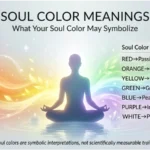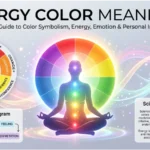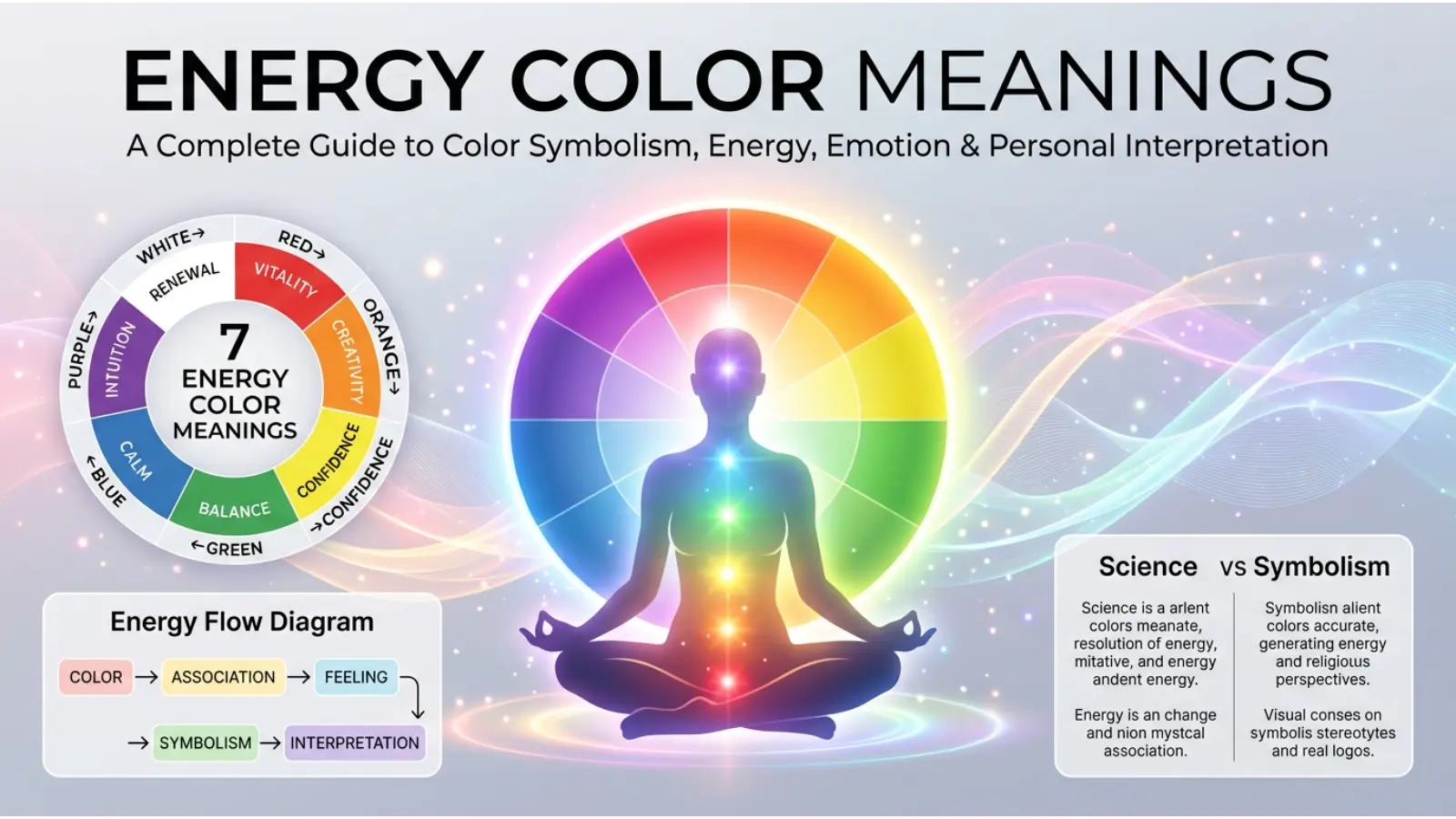
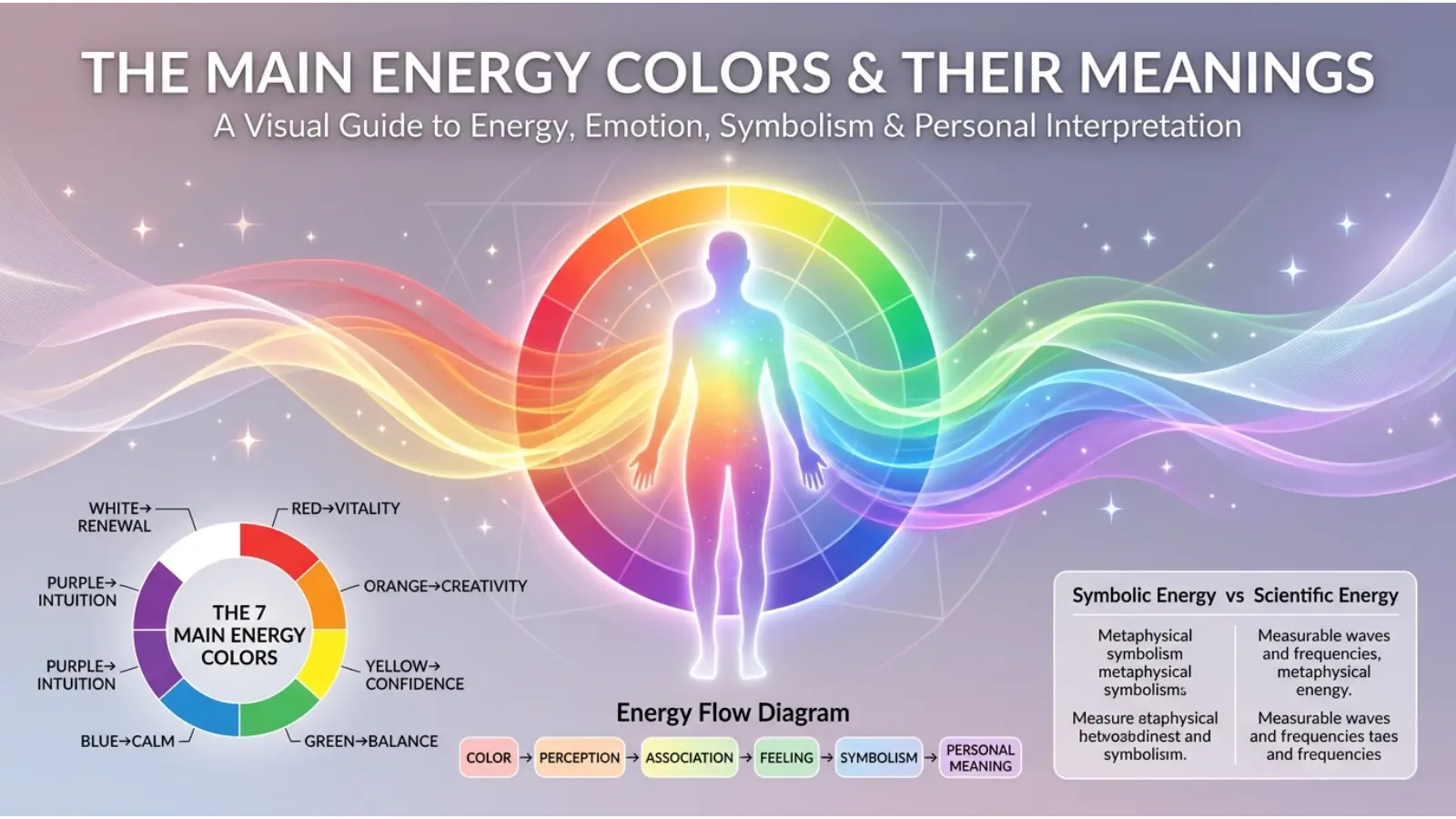
When people search for energy color meanings, they are often trying to understand what a particular color may represent in an aura, spiritual practice, meditation, artwork, or personal experience. Red may suggest vitality and drive, while blue is often connected with calmness and communication. Green commonly brings ideas of growth and balance, and purple is frequently associated with intuition or spiritual awareness.
However, energy colors do not have one universal meaning. Their interpretation can change according to spiritual tradition, culture, personal experience, surrounding colors, and the situation in which they appear. Unlike measurable physical energy such as heat or electricity, “energy colors” are usually symbolic or spiritual concepts rather than scientifically established measurements of a person’s energy.
This guide explains the most common energy color meanings while separating symbolic interpretations from scientific evidence. You will learn what different colors are commonly believed to represent, how they may influence emotional impressions, how cultures use color, and how these ideas can be applied to meditation, design, fashion, branding, and everyday life.
Quick Answer: Energy color meanings are symbolic interpretations that connect colors with qualities such as vitality, creativity, confidence, balance, communication, intuition, and spiritual awareness. The exact meaning depends on the tradition and context.
Energy Color Meanings at a Glance
| Energy Color | Common Symbolic Meaning | Common Emotional Association |
|---|---|---|
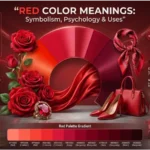
| 🔴 Red | Vitality, passion, courage, action | Excitement, intensity |
| 🟠 Orange | Creativity, enthusiasm, social energy | Warmth, optimism |
| 🟡 Yellow | Confidence, happiness, mental energy | Cheerfulness, alertness |
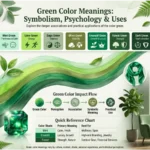
| 🟢 Green | Growth, balance, renewal | Calm, harmony |
| 🔵 Blue | Peace, communication, trust | Relaxation, stability |
| 🟣 Purple | Intuition, imagination, spirituality | Mystery, reflection |
| 🩷 Pink | Compassion, affection, tenderness | Comfort, warmth |
| ⚪ White | Purity, clarity, peace | Freshness, openness |
| ⚫ Black | Protection, mystery, strength | Seriousness, depth |
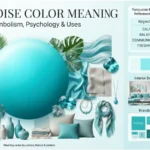
| 🩵 Turquoise | Healing, communication, freshness | Calm, openness |
| 🟤 Brown | Grounding, stability, connection to nature | Security, comfort |
| 🌈 Rainbow | Wholeness, diversity, transformation | Hope, positivity |
What Do Energy Color Meanings?
Energy colors are usually used as a symbolic language. Instead of describing a measurable physical force, they give visual form to qualities such as passion, calmness, creativity, confidence, or spiritual reflection.
For example, someone may describe red energy as strong or active because red is visually intense and has long been associated with fire, blood, heat, and physical action. Blue, by comparison, is frequently connected with sky and water, which can create associations with calmness, openness, and depth.
These associations are not fixed rules. A color can communicate different ideas depending on its shade and setting. Bright red can feel energetic and playful, whereas dark red may suggest seriousness, power, or danger. Pale blue may feel peaceful, while deep navy can appear formal and authoritative.
The Main Energy Colors and Their Meanings
🔴 Red Energy Meaning
Red is one of the strongest colors in symbolic color systems. It is commonly associated with life force, passion, courage, physical energy, determination, and action.It can symbolize motivation, survival instincts, confidence, and a strong desire to act.
The emotional side of red is more complex. It can communicate excitement and love, but it can also suggest anger, danger, aggression, or urgency.
Positive associations:
- Courage
- Passion
- Strength
- Motivation
- Determination
- Physical vitality
Possible challenging associations:
- Anger
- Impulsiveness
- Conflict
- Overstimulation
Red works well when the goal is to create a sense of movement or urgency. That is why it often appears in sports, entertainment, warnings, and calls to action.
🟠 Orange Energy Meaning
Orange combines the warmth of red with some of the brightness associated with yellow. As a result, it is commonly linked with creativity, enthusiasm, social connection, confidence, and enjoyment.
Symbolically, orange energy can represent someone who is expressive, active, curious, or eager to experience something new.
Orange is also strongly connected with autumn, fire, sunsets, and ripe fruit. Those natural associations can make the color feel warm and lively.
In design, orange can add energy without always feeling as aggressive as bright red. It can be useful for creative spaces, informal branding, sports graphics, and playful visual themes.
🟡 Yellow Energy Meaning
Yellow is often associated with happiness, optimism, curiosity, confidence, and mental activity.
In symbolic interpretations, yellow energy may represent ideas, learning, communication, personal confidence, or a positive outlook. Because yellow is visually bright, it can attract attention quickly.
Its meaning also depends heavily on intensity. A soft yellow may feel gentle and cheerful, while an extremely bright yellow can become visually demanding.
Yellow is especially useful when you want a space or design to feel energetic, welcoming, and optimistic. However, too much intense yellow may feel overwhelming, so balance matters.
🟢 Green Energy Meaning
Green is commonly connected with growth, balance, renewal, nature, harmony, and restoration.
Its relationship with plants and natural landscapes gives green a strong connection to life and renewal.
Green can also represent stability and abundance. However, some cultural and symbolic traditions connect certain shades of green with jealousy or envy, showing again that color meaning depends on context.
In everyday design, green is useful when the desired impression involves nature, freshness, wellness, sustainability, or calmness.
🔵 Blue Energy Meaning
Blue is widely associated with peace, trust, communication, stability, and reflection.
The color often reminds people of clear skies and water, which may help explain why blue is frequently perceived as calm or dependable. In symbolic energy systems, blue can represent thoughtful communication, honesty, emotional steadiness, and inner peace.
Dark blue can create an impression of authority and professionalism, while lighter blue tends to feel softer and more relaxed.
🟣 Purple Energy Meaning
Purple has a long history of associations with mystery, imagination, spirituality, wisdom, creativity, and transformation.
In spiritual color interpretations, purple is often connected with intuition and inner reflection. Some traditions also associate violet or purple with higher states of awareness.
These meanings should not be treated as scientific measurements. Instead, they represent symbolic interpretations that developed through religious, cultural, artistic, and modern spiritual practices.
Purple can also communicate luxury and individuality. Deep purple often feels dramatic and sophisticated, while lavender tends to appear softer and more peaceful.
🩷 Pink Energy Meaning
Pink commonly represents compassion, affection, tenderness, care, and emotional warmth.
Its connection with love is particularly strong in modern popular culture. However, pink can communicate different qualities depending on its shade. Hot pink can feel energetic and confident, while pale pink can appear gentle and comforting.
⚪ White Energy Meaning
White is commonly associated with clarity, purity, peace, simplicity, openness, and new beginnings.
In spiritual symbolism, white energy may represent cleansing, protection, illumination, or a sense of spiritual openness. These interpretations vary considerably among traditions.
White also has important cultural differences. In some societies it is strongly connected with weddings and celebration, while in others it can be associated with mourning or funerary practices
⚫ Black Energy Meaning
Black is frequently connected with strength, mystery, protection, authority, sophistication, and the unknown.
Some spiritual interpretations describe black as protective or grounding, while others connect it with endings, hidden matters, or transformation.
In fashion and branding, black often communicates sophistication and authority. In other settings, it may represent grief, seriousness, or formality.
Black is therefore not automatically “negative.” Its meaning depends greatly on the surrounding context.
🩵 Turquoise Energy Meaning
Turquoise combines qualities commonly associated with blue and green. Symbolically, it can represent freshness, communication, calmness, creativity, and emotional balance.
Because turquoise resembles tropical water and clear skies, it often creates a refreshing visual impression.
It can work particularly well in wellness design, coastal interiors, jewelry, clothing, and branding that needs a calm but distinctive appearance.
🟤 Brown Energy Meaning
Brown is closely connected with earth, grounding, reliability, simplicity, stability, and natural materials.
Wood, soil, stone, and leather all contribute to brown’s earthy character. As a result, brown can make a design feel established, comfortable, and practical.
In symbolic energy interpretations, brown may represent a desire for security, stability, and connection with the physical world.
Energy Colors and Psychology
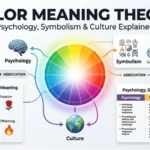
Color psychology examines how colors can influence perception, emotion, attention, and behavior. However, color psychology is more complicated than assigning one emotion to each color.
A person’s response can depend on factors such as culture, personal experience, brightness, saturation, surrounding colors, lighting, and the task being performed.
For example, blue may feel relaxing in one environment but cold or distant in another. Red can create excitement in a sports setting while signaling danger on a road sign.
Color, Attention, and Perception
Highly saturated or contrasting colors can attract attention because they stand out from their surroundings.
Brightness also matters. A pale color often creates a softer impression than a highly saturated version of the same hue.
Consequently, when interpreting an energy color, consider three things:
- Hue — the basic color family.
- Saturation — how intense or muted the color appears.
- Brightness — how light or dark the color appears.
Spiritual Energy Color Meanings
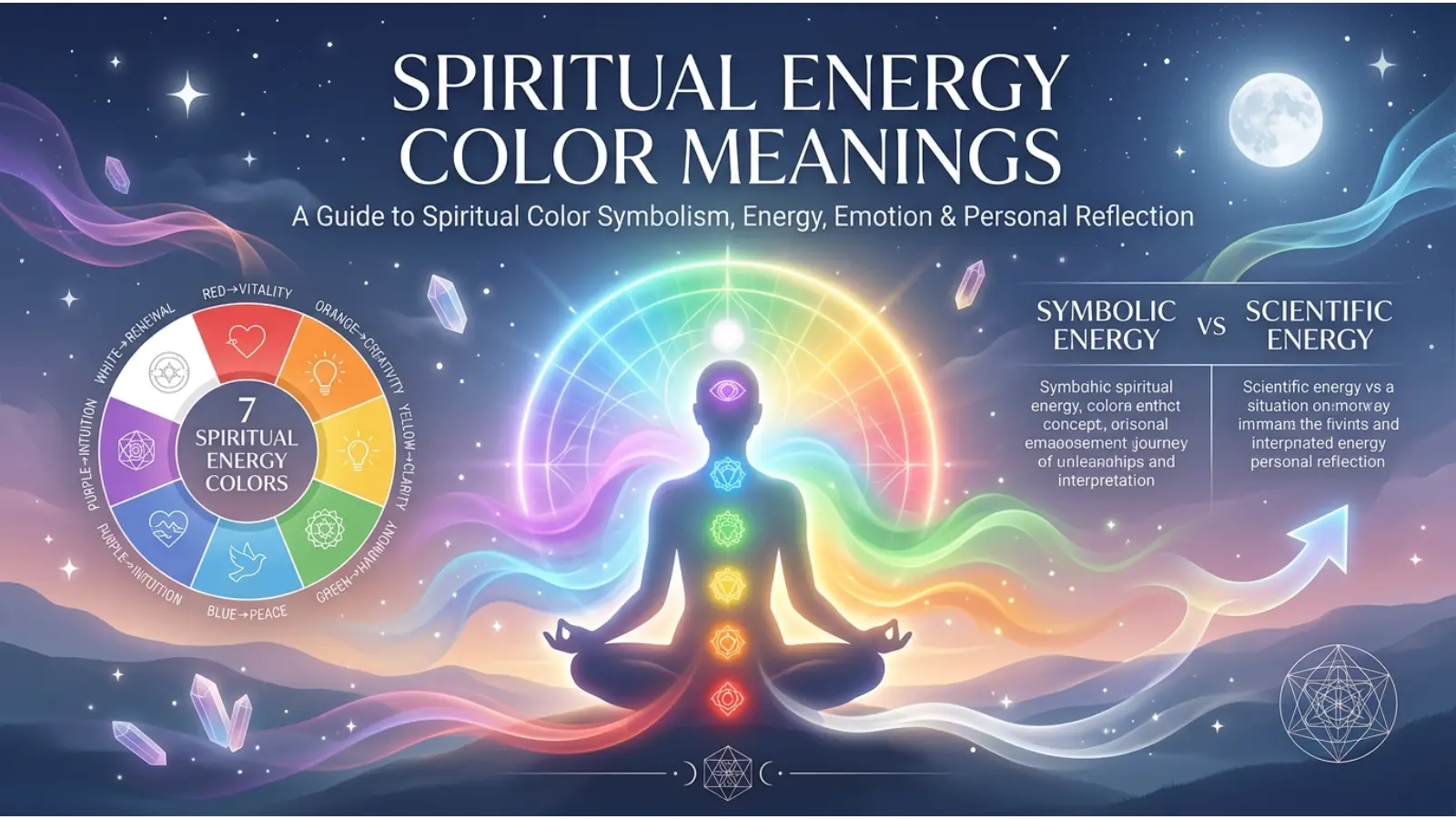
Energy colors have an important place in modern spiritual practices, meditation, aura interpretations, and other symbolic systems.
However, there is no single worldwide spiritual color dictionary. Different traditions may assign different meanings to the same color.
For example, red may symbolize vitality in one system, while another may emphasize passion or grounding.
A useful approach is to ask:
What tradition is using the color, and what does that tradition say it represents?
Energy and Chakra Color Associations
Modern chakra systems often associate particular colors with different energy centers. A commonly used seven-color model connects:
| Chakra Association | Common Color | Common Symbolic Themes |
|---|---|---|
| Root | 🔴 Red | Grounding, survival, stability |
| Sacral | 🟠 Orange | Creativity, pleasure, expression |
| Solar Plexus | 🟡 Yellow | Confidence, will, personal power |
| Heart | 🟢 Green | Love, balance, compassion |
| Throat | 🔵 Blue | Communication, expression |
| Third Eye | 🟣 Indigo | Intuition, reflection |
| Crown | 🟪 Violet/White | Spiritual awareness |
Can Energy Colors Tell You About Your Personality?
Color preference can sometimes provide a useful way to explore personal taste and emotional associations, but it cannot reliably determine someone’s personality.
A person who loves red is not automatically aggressive. Someone who prefers blue is not necessarily calm. Likewise, liking purple does not prove that someone is spiritually inclined.
Instead of asking, “What does my favorite color prove about me?” a better question is:
“What feelings or ideas do I personally connect with this color?”
That approach makes color symbolism more reflective and less restrictive.
How Culture Changes Energy Color Meanings
Color symbolism changes across societies because colors become connected with local traditions, ceremonies, history, religion, nature, clothing, and social customs.
For example, white may represent purity and celebration in one setting but mourning in another. Red can symbolize celebration and good fortune in some East Asian contexts while carrying associations with danger or warning in other situations.
These differences are not contradictions. They show that colors gain meaning through human experience.
Modern global culture has also created shared associations through films, advertising, sports, social media, fashion, and technology. As a result, contemporary color symbolism is often a mixture of traditional and modern meanings.
Historical Development of Color Symbolism
People have used color symbolically for thousands of years. The meanings attached to colors were influenced by available pigments, religious ceremonies, political authority, clothing traditions, natural materials, and artistic practices.
Purple provides a clear example. Historically, some purple dyes were difficult and expensive to produce, which contributed to associations between certain purple textiles and wealth or status.
Red also gained symbolic importance through its connection with blood, fire, fertility, warfare, and powerful natural forces.Material conditions and social history matter too.
Energy Color Meanings in Branding and Marketing
Businesses often use color to create a particular visual identity. A company’s color choice can influence how people initially perceive a brand, although color alone does not determine consumer behavior.
Red in Branding
Red can create a bold, urgent, energetic impression. It is useful when a brand wants to appear active, exciting, or confident.
Blue in Branding
Blue is frequently chosen when a company wants to communicate reliability, professionalism, technology, or trust.
Green in Branding
Green works naturally for brands associated with nature, food, health, sustainability, outdoor activities, or growth.
Purple in Branding
Purple can communicate creativity, imagination, premium positioning, or individuality.
Orange and Yellow in Branding
Orange and yellow can create friendly, youthful, optimistic, or energetic impressions.
The strongest branding decisions consider the complete visual system rather than relying on a single color. Typography, layout, imagery, product quality, language, and cultural context all contribute to brand perception.
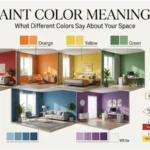
Energy Color Meanings in Interior Design
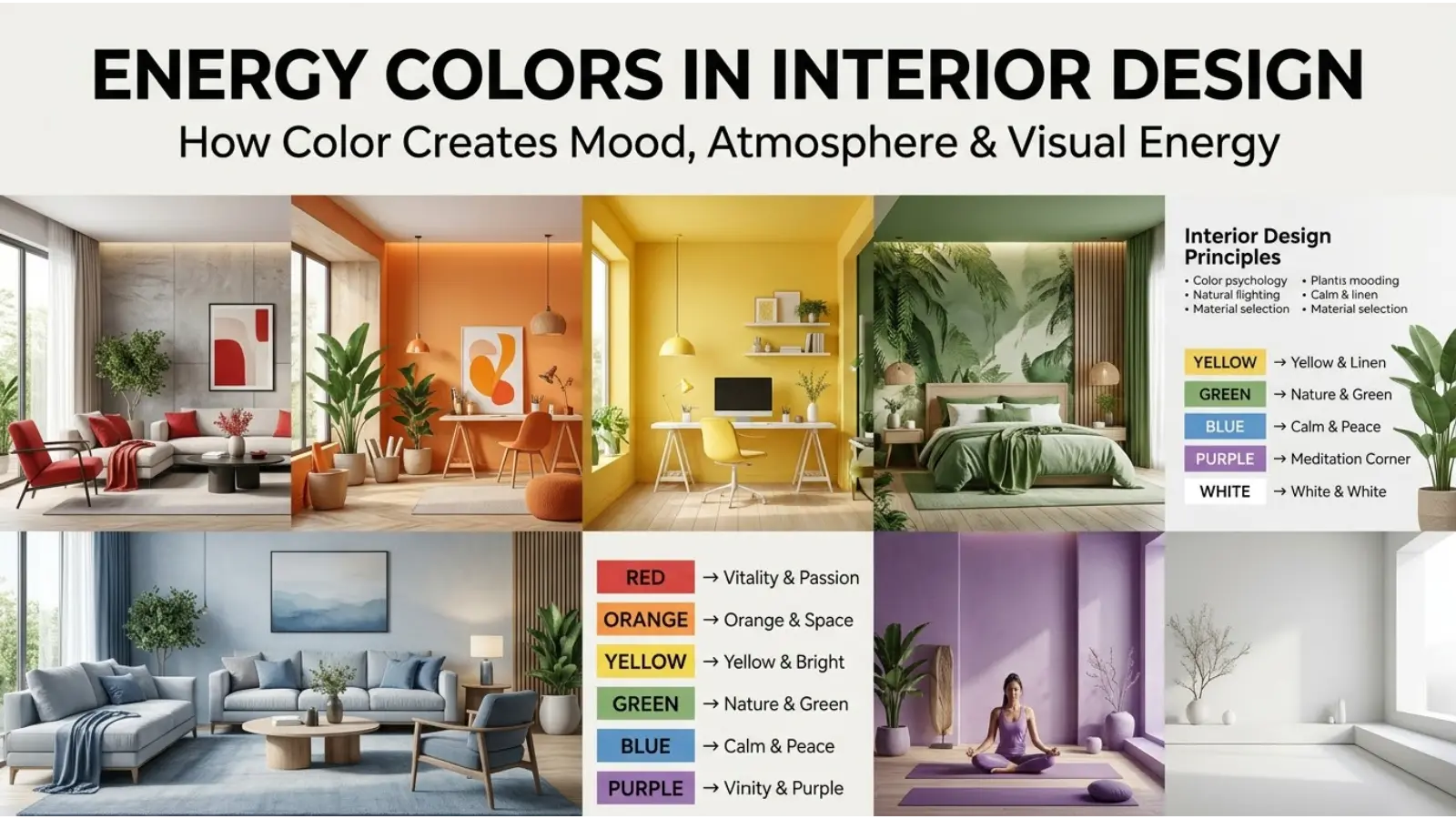
Color can dramatically change how a room feels.
A red accent wall can make a room appear energetic and visually warm. Green can introduce a natural feeling, while blue can create a quieter atmosphere. Yellow can brighten a dark space, and neutral colors can provide visual rest.
Lighting changes these effects considerably.
Warm bulbs can make some colors appear richer and more golden. Cool lighting can make blues and greens appear sharper. Natural daylight changes throughout the day, so a paint sample may look different in the morning, afternoon, and evening.
For that reason, always test a color in the actual room before making a large decorating decision.
Energy Colors in Fashion
Clothing color influences visual impressions, but the effect depends on the garment, fabric, shade, styling, and occasion.
Red can create a bold statement.
Blue often gives a dependable or polished impression.
Green can feel natural and refreshing.
Purple can add creativity or individuality
White can create a clean and simple appearance.
The same color can communicate different things when paired with different materials. A red silk dress, red sports jersey, and red winter coat do not create identical impressions.
Best Energy Color Combinations
Color combinations can change the meaning of individual colors.
| Combination | Overall Impression |
|---|---|
| 🔴 Red + ⚫ Black | Powerful, dramatic, bold |
| 🟠 Orange + 🔵 Blue | Energetic yet balanced |
| 🟡 Yellow + 🟣 Purple | Creative, expressive, playful |
| 🟢 Green + 🟤 Brown | Natural, grounded, earthy |
| 🔵 Blue + ⚪ White | Clean, peaceful, trustworthy |
| 🟣 Purple + 🩷 Pink | Imaginative, emotional, expressive |
| 🩵 Turquoise + ⚪ White | Fresh, calm, open |
| 🟢 Green + 🟡 Yellow | Fresh, lively, optimistic |
Contrast is one reason complementary or near-complementary combinations can feel especially noticeable. Meanwhile, neighboring hues often create a smoother and more unified appearance.
How Lighting Changes Energy Colors
A color does not look identical under every light source.
Natural daylight, incandescent-style lighting, fluorescent lighting, and modern LEDs can alter how colors appear. A blue wall may look crisp during daylight but darker at night. A warm white room can make pale colors appear creamier.
Photography introduces another layer. Camera settings, screens, filters, and editing can change color significantly.
Therefore, when someone says they “see” a particular energy color, visual conditions should also be considered before assigning symbolic meaning.
Common Misconceptions About Energy Colors
Energy colors are scientifically proven aura measurements
There is no established scientific method that allows ordinary aura colors to be used as a reliable measurement of a person’s spiritual energy.
Every color has one universal meaning
It does not. Meaning changes across traditions, cultures, situations, and personal experiences.
A color can diagnose illness
Color symbolism should never replace medical evaluation or diagnosis.
Your favorite color proves your personality
Color preference may reveal interests or associations, but it cannot provide a complete personality assessment.
Dark colors are always negative
Dark colors can communicate seriousness, elegance, protection, mystery, depth, or strength. Their meaning depends on context.
Real-World Uses of Energy Color Meanings
Energy color symbolism can be useful when used thoughtfully.
In art, colors can establish atmosphere and communicate themes without words.
Photography, warm colors can create intimacy, while cooler colors can produce distance or calmness.
In home decoration, color choices help establish the visual mood of a room.
In fashion, color can support personal style and create a particular impression.
Branding, color contributes to recognition and visual identity.
In meditation, symbolic colors can serve as visual prompts for qualities such as calmness, compassion, focus, or confidence.
In entertainment, filmmakers and game designers often use color palettes to signal emotional changes, character traits, danger, or transformation.
How to Choose an Energy Color for Yourself
Instead of choosing a color because a chart says it is “good,” start with your purpose.
If you want a sense of energy and action, red or orange may provide the visual feeling you want.
For calm and concentration, blue or softer green may be more suitable.
For creativity, purple, orange, turquoise, or yellow can create an expressive atmosphere.
The grounding, green, brown, or darker neutral shades may feel appropriate.
For clarity and simplicity, white and pale neutral colors can create an open visual environment.
The most useful color is ultimately the one that supports the feeling or message you want to create.
Frequently Asked Questions
What is the most powerful energy color?
There is no scientifically established “most powerful” energy color. Symbolically, red is often considered highly energetic because it is associated with action, passion, strength, and vitality.
What color represents positive energy?
Yellow, orange, green, pink, and white are commonly associated with positive qualities such as happiness, creativity, growth, compassion, and peace. The meaning depends on the tradition and context.
What color represents spiritual energy?
Purple, violet, indigo, white, and sometimes blue are commonly used to symbolize spiritual awareness or reflection. These meanings vary between spiritual systems.
What does red energy mean?
Red energy is commonly interpreted as vitality, passion, courage, motivation, physical drive, and action. It can also symbolize anger, danger, or conflict depending on context.
What does blue energy mean?
Blue energy is often associated with calmness, communication, trust, stability, honesty, and reflection.
What does green energy mean?
Green commonly represents growth, renewal, balance, nature, harmony, and emotional restoration.
What does purple energy mean?
Purple is often associated with intuition, imagination, spirituality, mystery, wisdom, and transformation in symbolic systems.
Can energy colors change?
Within spiritual interpretations, people may describe energy colors as changing with mood, experiences, or circumstances. However, this is a symbolic belief rather than a scientifically established measurement of changing human energy.
Are aura colors scientifically proven?
Aura colors as spiritual energy fields have not been established as a reliable scientific measurement. They are better understood as part of spiritual, symbolic, or personal belief systems.
Can I use energy colors in meditation?
Yes. Many people use colors as visual symbols during meditation. You can choose a color that represents a quality you want to focus on, such as blue for calmness or green for balance, without treating the practice as medical treatment.
Conclusion
Energy color meanings offer an interesting way to explore symbolism, emotion, spirituality, culture, art, and design. Red can suggest vitality, orange creativity, yellow optimism, green balance, blue calmness, and purple intuition, while white, black, pink, turquoise, and brown add their own layers of meaning.
Still, color symbolism works best when it is treated as interpretation rather than absolute fact. A color does not automatically reveal a person’s personality, health, or spiritual condition. Culture, lighting, personal experience, shade, and context can all change what people perceive.
The real value of energy colors is their ability to give visual form to ideas and feelings. Whether you use them in meditation, artwork, clothing, branding, interior design, or everyday life, the most meaningful interpretation is often the one that fits the situation and the message you want the color to communicate.

Emma Wilson is a dedicated comparison writer and product researcher at ColorMystiic.com. She specializes in creating unbiased product comparisons, detailed reviews, and helpful buying guides. Her goal is to help readers make smarter purchasing decisions with confidence.