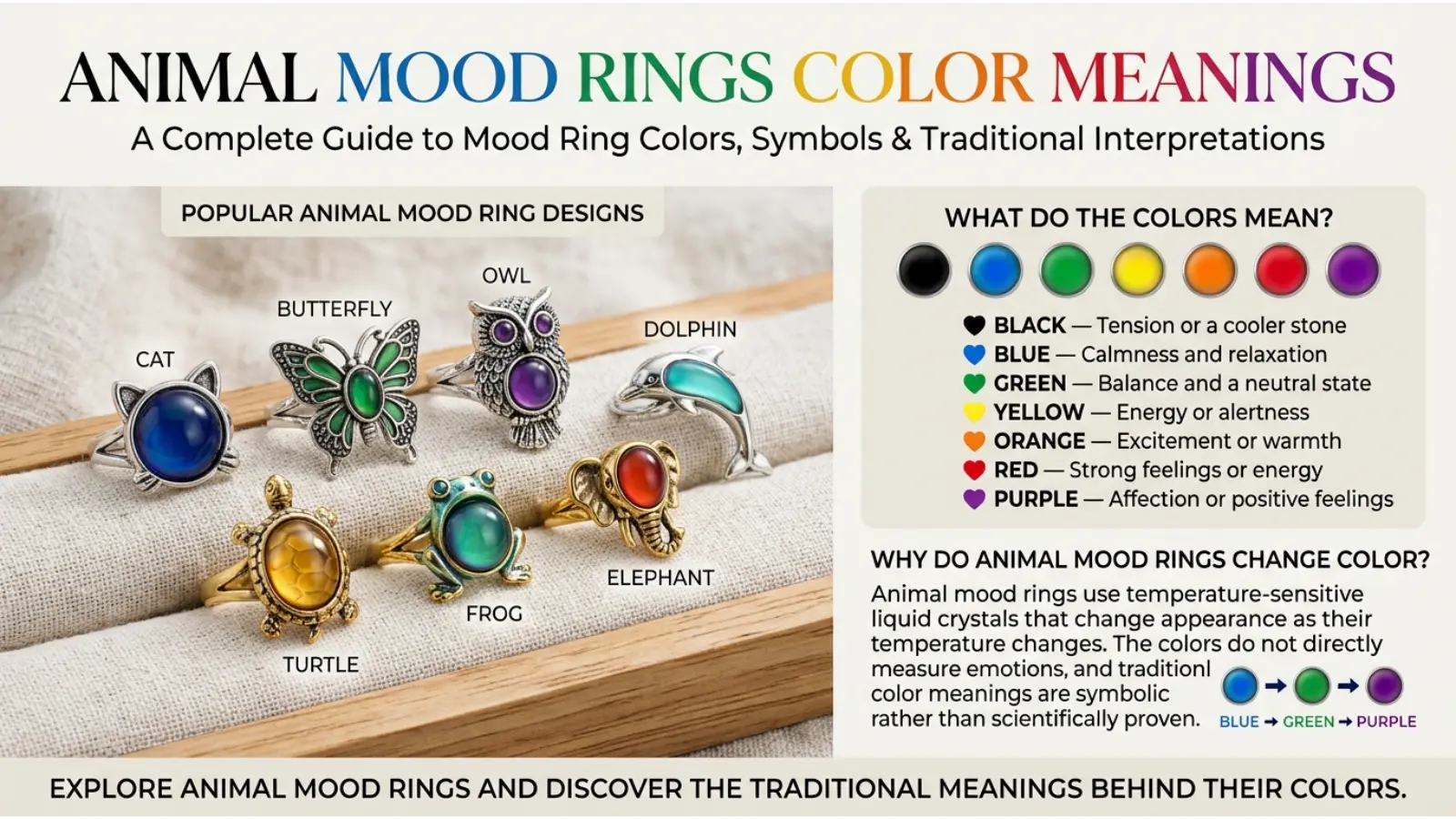
Animal Mood Rings Color Meanings combine playful animal designs with color-changing technology. Shaped like cats, butterflies, dolphins, frogs, hearts, or other creatures, these accessories change color as the temperature of their mood-sensitive material changes. Their shifting shades are often linked with emotions such as calmness, excitement, happiness, and stress.
Understanding animal mood rings color meanings can help you interpret the colors you see while enjoying the symbolism of your favorite animal. However, these rings do not actually read your feelings. Instead, their colors respond mainly to temperature changes, which can be influenced by your skin, surroundings, and activity.
In this guide, you will discover common mood ring colors, their symbolic meanings, how animal designs influence interpretation, and practical tips for understanding these colorful accessories.
Quick Answer
Animal mood rings color meanings are commonly associated with emotions such as calmness, happiness, excitement, and tension. Blue often symbolizes calmness, green represents balance, purple suggests excitement or creativity, and black is traditionally linked with stress or cold temperatures. However, the exact meaning depends on the ring’s color chart and temperature-sensitive material. These colors are symbolic interpretations, not scientifically reliable measurements of emotions. If none is available, use general mood ring symbolism as a guide, but remember that different products can display different colors at the same temperature.
What Are Animal Mood Rings?
Animal mood rings are decorative rings featuring animal shapes or designs that change color with temperature. They combine the familiar appeal of mood jewelry with designs inspired by nature.
Many use thermochromic liquid crystals or similar temperature-sensitive materials. These materials change their appearance when their temperature shifts, producing different colors across a particular temperature range.
For example, a butterfly mood ring may appear blue when it is relatively warm and purple when its temperature changes. The exact result depends on the material used in the ring.
Animal mood rings are popular because they offer three appealing features:
- Color-changing effects: The ring changes appearance as its temperature shifts.
- Animal symbolism: Each animal can represent qualities such as freedom, loyalty, wisdom, or transformation.
- Personal style: Different shapes and colors allow wearers to express their interests.
Although the animal design adds symbolic meaning, the color change itself is generally a physical response to temperature rather than a direct reading of emotions. If none is available, use general mood ring symbolism as a guide, but remember that different products can display different colors at the same temperature.
Animal Mood Rings Color Meanings Chart
The following chart explains common mood ring colors and their traditional symbolic associations. Actual color ranges vary by manufacturer, so use the chart supplied with your ring when available.
| Color | Common symbolic meaning | Possible temperature-related explanation |
|---|---|---|
| 🔵 Blue | Calmness, relaxation, peace | Often associated with a warmer, comfortable ring temperature |
| 🟢 Green | Balance, stability, harmony | May indicate a middle temperature range |
| 🟣 Purple | Excitement, creativity, mystery | Often associated with a different temperature band |
| 🩷 Pink | Affection, happiness, playfulness | May appear within a particular warmer or cooler range |
| 🟡 Yellow | Curiosity, energy, alertness | Depends on the ring’s temperature response |
| 🟠 Orange | Enthusiasm, activity, warmth | Depends on the material and color scale |
| 🔴 Red | Passion, intensity, strong feelings | May represent a specific temperature range |
| ⚫ Black | Tension, uncertainty, mystery | May indicate a cooler ring or a material outside its usual display range |
These meanings are common interpretations rather than universal rules. One manufacturer’s blue may represent calmness, while another brand may assign it a different emotional label.
What Does Each Animal Mood Ring Color Mean?
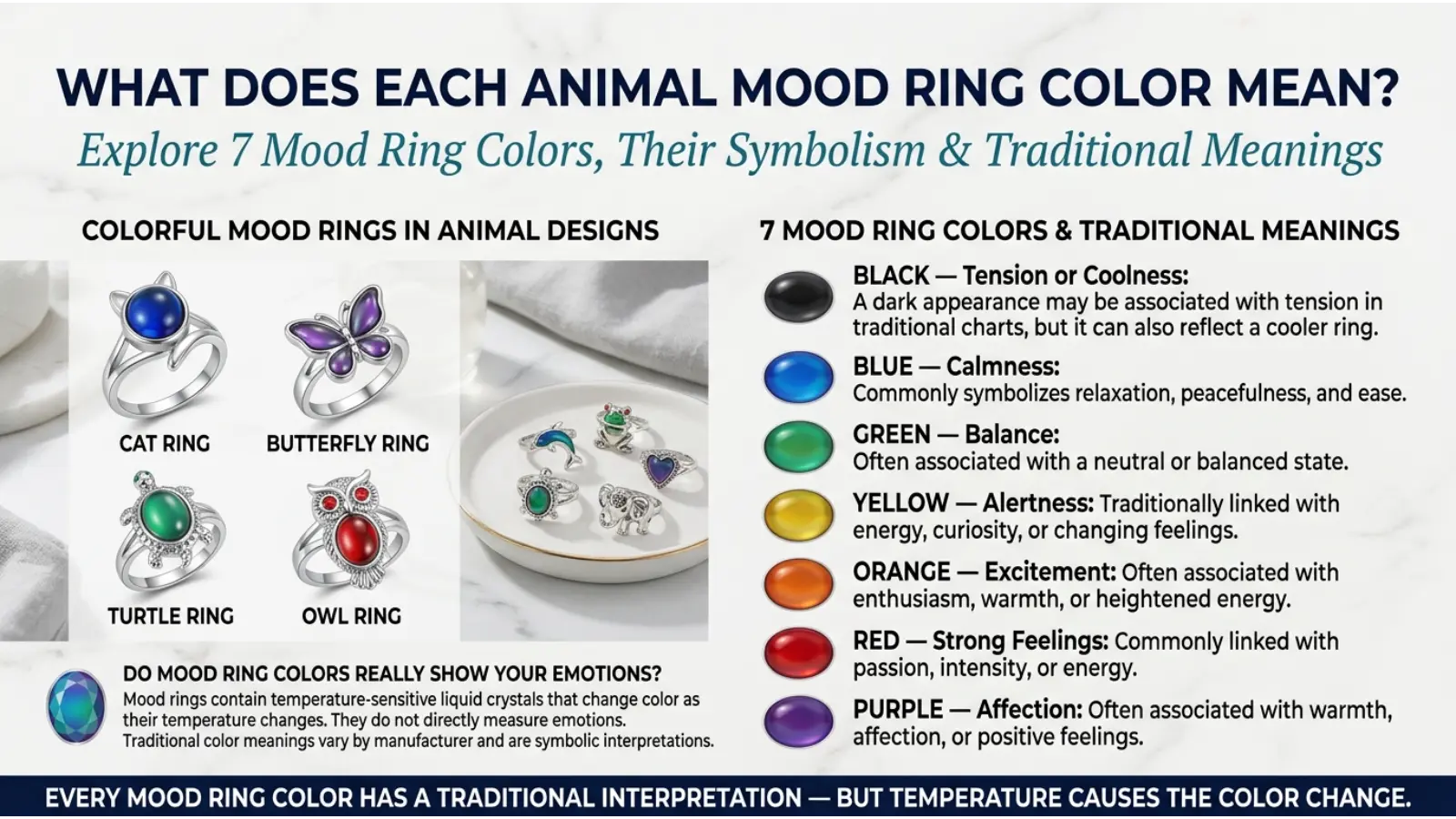
Blue Animal Mood Ring Meaning
Blue is commonly associated with peace, relaxation, trust, and emotional balance. A blue animal mood ring may therefore be interpreted as a symbol of calmness or a relaxed state.
A blue dolphin ring, for example, combines the peaceful associations of blue with the dolphin’s playful and intelligent image. Similarly, a blue butterfly ring may suggest freedom and a gentle approach to change.
However, the blue shade does not prove that you are relaxed. The ring may simply have reached a temperature at which its material reflects blue light.
Green Animal Mood Ring Meaning
Green commonly symbolizes nature, growth, renewal, and balance.
A green frog ring may suggest good fortune, renewal, or adaptability. Meanwhile, a green turtle design may symbolize patience, stability, and a connection with nature.
Green can also be a useful color for a nature-inspired outfit because it pairs naturally with brown, cream, beige, and other earthy shades.
Purple Animal Mood Ring Meaning
Purple is frequently linked with imagination, mystery, creativity, and individuality. In traditional mood ring charts, it may be described as a sign of excitement, romantic feelings, or heightened emotions.
A purple butterfly ring can symbolize personal transformation and creative freedom. A purple cat ring may convey independence, mystery, and a distinctive personality.
These associations come from color symbolism and the animal’s cultural image.
Pink Animal Mood Ring Meaning
Pink is often associated with affection, kindness, warmth, and playfulness. A pink animal mood ring may be interpreted as a symbol of friendliness or romantic interest.
A pink kitten ring can suggest tenderness and companionship, while a pink butterfly may represent gentle change and personal growth.
Keep in mind that pink does not necessarily mean someone is in love. Its appearance depends on the ring’s temperature-sensitive material, and its emotional meaning is subjective.
Yellow Animal Mood Ring Meaning
Yellow often represents optimism, curiosity, mental energy, and happiness. In an animal mood ring, this color can create a bright, cheerful appearance.
A yellow bee ring may symbolize activity, cooperation, and productivity. A yellow chick or bird design can suggest new beginnings and a lighthearted outlook.
Nevertheless, yellow is not a guaranteed sign of happiness.
Orange Animal Mood Ring Meaning
Orange combines the warmth commonly associated with red and the brightness associated with yellow. Consequently, it is often linked with enthusiasm, creativity, confidence, and social energy. If none is available, use general mood ring symbolism as a guide, but remember that different products can display different colors at the same temperature.
An orange fox ring may symbolize cleverness and adaptability. An orange butterfly design can suggest energy and a willingness to embrace new experiences.
In fashion, orange animal jewelry can also serve as an accent against neutral clothing. Pairing it with cream, denim, or dark brown helps the color stand out.
Red Animal Mood Ring Meaning
Red is commonly associated with passion, courage, excitement, and intensity. Some mood ring charts describe red as a sign of strong emotions or heightened energy.
A red ladybug ring may symbolize luck and positivity, while a red dragon design may suggest strength and confidence.
However, red does not automatically indicate anger or romantic passion. The shade may simply reflect the temperature range of the ring’s material.
Black Animal Mood Ring Meaning
Black is often connected with mystery, protection, elegance, and the unknown. In traditional mood jewelry, it is sometimes described as a sign of stress, tension, or low energy.
A black cat ring may emphasize independence and mystery, while a black panther design can suggest strength and confidence.
From a practical perspective, black may appear when a mood ring becomes colder or when its material cannot display its usual range of colors. Some products also use black as a permanent background, so the meaning depends on the design.
How Animal Designs Change the Symbolic Meaning
The animal featured on a mood ring adds another layer of interpretation. Although the animal does not control the color-changing effect, its symbolism can influence how the wearer understands the accessory.
| Animal design | Common symbolism | Combined interpretation |
|---|---|---|
| 🦋 Butterfly | Transformation, freedom, growth | Personal change and creativity |
| 🐱 Cat | Independence, curiosity, mystery | Individuality and self-expression |
| 🐬 Dolphin | Playfulness, intelligence, friendship | Joy and social connection |
| 🐸 Frog | Renewal, adaptability, good fortune | Growth and fresh opportunities |
| 🐢 Turtle | Patience, protection, stability | Calmness and steady progress |
| 🦉 Owl | Wisdom, observation, mystery | Reflection and thoughtful choices |
| 🐞 Ladybug | Luck, hope, positivity | Optimism and good fortune |
| 🦊 Fox | Cleverness, flexibility, resourcefulness | Confidence and adaptability |
| 🐝 Bee | Cooperation, productivity, diligence | Energy and teamwork |
| 🐉 Dragon | Power, courage, imagination | Strength and personal ambition |
These meanings vary across cultures, stories, and personal experiences. For instance, a dragon can represent power and good fortune in some East Asian traditions, while modern fantasy stories may portray dragons as dangerous or mysterious creatures.
Therefore, the best interpretation combines the animal’s familiar symbolism with the color’s traditional associations, without assuming that either one reveals a person’s true emotional state.
Why Do Animal Mood Rings Change Color?
Animal mood rings change color because their temperature-sensitive materials respond to heat. Many traditional mood rings contain thermochromic liquid crystals sealed beneath a transparent surface.
As the temperature changes, the structure of these materials changes the wavelengths of light they reflect. Consequently, the ring may appear blue, green, purple, or another color.
Several factors can influence the result:
- Skin temperature: Changes in blood flow near the skin can affect the temperature of your finger.
- Room temperature: A cold or warm environment can change the ring’s temperature.
- Physical activity: Movement and exercise can affect skin temperature.
- Weather: Cold outdoor conditions may cause a ring to display a different shade.
- Material quality: Different products use different temperature ranges and color-changing materials.
For example, if your butterfly mood ring turns from green to blue after you move into a warm room, that change does not necessarily mean your mood has improved. The ring may simply be responding to its new environment. If none is available, use general mood ring symbolism as a guide, but remember that different products can display different colors at the same temperature.
Can Animal Mood Rings Really Detect Emotions?
No. Ordinary animal mood rings cannot reliably detect or identify emotions.
Although emotional states can sometimes influence physical responses such as sweating, skin temperature, and blood flow, these changes are not unique to any particular feeling. Exercise, weather, room temperature, and other factors can produce similar effects.
A mood ring measures neither happiness nor sadness directly. Instead, it responds to temperature, and people attach emotional meanings to the resulting colors.
Therefore, treat your ring as a playful accessory rather than a scientific emotional test. If it turns purple during a happy moment, you can enjoy the coincidence without assuming that the color proves how you feel.
Spiritual Animal Mood Rings Color Meanings
Some people enjoy interpreting animal mood rings through spiritual symbolism. In these interpretations, the animal and the changing colors can serve as reminders of personal values, growth, or emotional awareness.
For example, a butterfly may represent transformation, a turtle may symbolize patience, and an owl may suggest wisdom. When combined with blue, green, or purple, these designs can create personal associations with peace, balance, or creativity.
However, these interpretations are not universal spiritual rules. They differ across individuals, cultures, and traditions, and there is no established scientific evidence that mood ring colors reveal spiritual energy or provide supernatural protection.
You can still use an animal mood ring as a personal reminder. A green turtle might encourage you to slow down, while a purple butterfly might remind you to stay open to change.

Animal Mood Rings in Fashion and Everyday Life
Animal mood rings are easy to incorporate into casual outfits because they combine a decorative shape with a colorful feature.
Choosing a Ring for Your Style
Consider the animal design first. Cats and foxes may appeal to people who enjoy playful or mysterious designs, while butterflies and dolphins create a lighter, nature-inspired look.
Next, consider the colors you usually wear. Blue and green rings work well with denim, white, and neutral outfits. Purple and pink designs can complement softer clothing, while red and orange create a stronger accent.
Finally, check the ring’s construction. If you intend to wear it regularly, look for comfortable sizing and product information about water resistance and care.
Using Animal Mood Rings as Gifts
These rings can make fun gifts because the animal shape adds a personal touch. A butterfly might suit someone who enjoys nature, while an owl could appeal to a person who likes books or wildlife.
Nevertheless, avoid assigning a fixed personality to the recipient based on the design. Choose an animal that matches their interests rather than assuming that it reveals who they are. If none is available, use general mood ring symbolism as a guide, but remember that different products can display different colors at the same temperature.
Caring for Your Mood Ring
Temperature-sensitive materials can be affected by rough handling, moisture, or prolonged exposure to heat, depending on the product.
To help preserve the ring:
- Follow the manufacturer’s cleaning instructions.
- Avoid exposing it to extreme heat or sudden temperature changes.
- Store it away from direct sunlight when recommended.
- Stop wearing it if the surface cracks or the color-changing material appears damaged.
Proper care can help preserve both the decorative design and the color-changing effect.
Common Misconceptions About Animal Mood Rings
Myth 1: A blue ring always means happiness.
Blue is commonly associated with calmness, but the ring’s actual color depends on its material and temperature range.
Myth 2: A black ring means you are stressed.
Black can have that symbolic interpretation, yet it may also indicate a cool ring or a material outside its normal color-changing range.
Myth 3: Every animal has a fixed emotional meaning.
Animal symbolism varies between cultures and personal experiences. A cat may suggest independence to one person and companionship to another.
Myth 4: Mood rings are scientifically accurate emotion detectors.
They respond primarily to temperature. They cannot reliably distinguish between emotions or tell you exactly what you are feeling.
Myth 5: Every mood ring uses the same color chart.
Manufacturers use different materials and temperature ranges. Always consult the chart supplied with your particular ring.
Frequently Asked Questions
1. What do animal mood rings color meanings represent?
Animal mood rings color meanings combine traditional color symbolism with the meaning of the animal design. Blue often represents calmness, green balance, purple creativity, and pink affection. These interpretations are symbolic rather than scientific.
2. What does blue mean on an animal mood ring?
Blue commonly symbolizes calmness, relaxation, and peace. However, the ring may turn blue because its temperature-sensitive material has reached a particular temperature, not because you are necessarily relaxed.
3. What does purple mean on an animal mood ring?
Purple is often associated with creativity, mystery, excitement, and individuality. Its exact interpretation depends on the ring’s chart and the personal symbolism attached to its animal design.
4. Why does my animal mood ring turn black?
A mood ring may turn black when it becomes too cool for its usual color range or when its material cannot display the expected colors. Some rings also have permanent black sections.
5. What does a butterfly mood ring symbolize?
A butterfly mood ring often represents transformation, freedom, hope, and personal growth. Its color adds another symbolic layer, although the color change itself is temperature-driven.
6. What does a cat mood ring mean?
A cat mood ring may symbolize independence, curiosity, mystery, or companionship. The interpretation depends on the wearer’s personal associations and the design.
7. Can an animal mood ring tell if someone loves you?
No. A mood ring cannot reliably identify love, attraction, or romantic interest. Its color changes in response to temperature rather than providing a direct measurement of someone’s feelings.
8. Are animal mood rings suitable for children?
They can be fun accessories for children, but suitability depends on the product’s materials, construction, and age recommendations. Check for small parts, sharp edges, and any relevant safety warnings.
9. Do animal mood rings work in cold weather?
Yes, many can still change color in cold weather, although the displayed color may differ because the ring becomes cooler. Some may remain dark if their temperature falls outside the material’s normal display range.
10. How can I find the correct meaning of my mood ring’s color?
Check the manufacturer’s color chart first. If none is available, use general mood ring symbolism as a guide, but remember that different products can display different colors at the same temperature.
Conclusion
Animal mood rings combine temperature-sensitive technology, colorful designs, and the symbolism of animals. Blue may suggest calmness, green can represent balance, and purple often evokes creativity, while animal shapes such as butterflies, cats, turtles, and dolphins add their own meanings.
Even so, the colors do not provide a reliable reading of emotions. Their appearance depends mainly on temperature and the materials used in the ring.
Enjoy your animal mood ring as a creative accessory and a way to express your interests. By understanding both its physical color-changing process and its symbolic associations, you can appreciate the design without mistaking its colors for scientific evidence of your mood.

Emma Wilson is a dedicated comparison writer and product researcher at ColorMystiic.com. She specializes in creating unbiased product comparisons, detailed reviews, and helpful buying guides. Her goal is to help readers make smarter purchasing decisions with confidence.