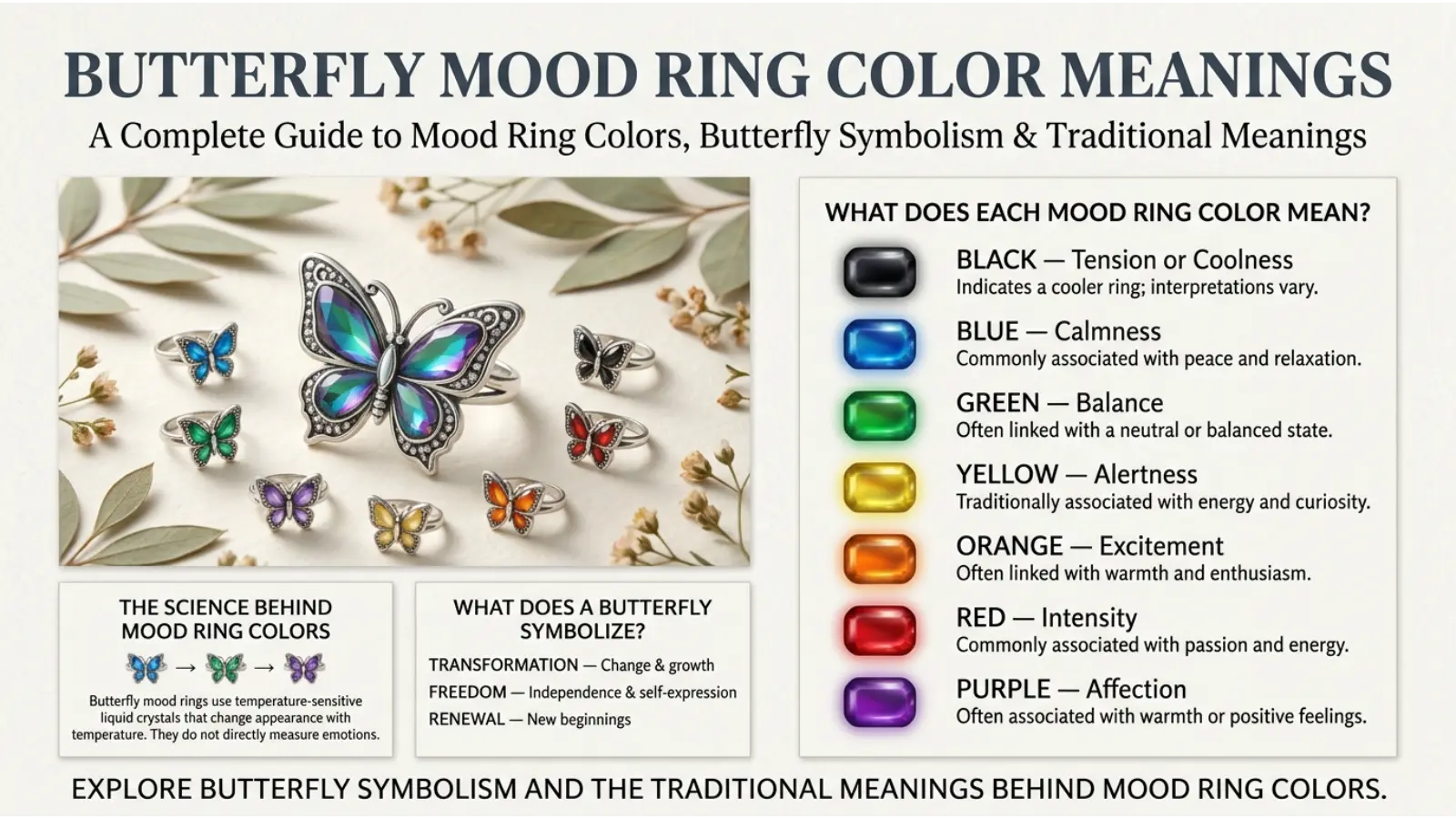
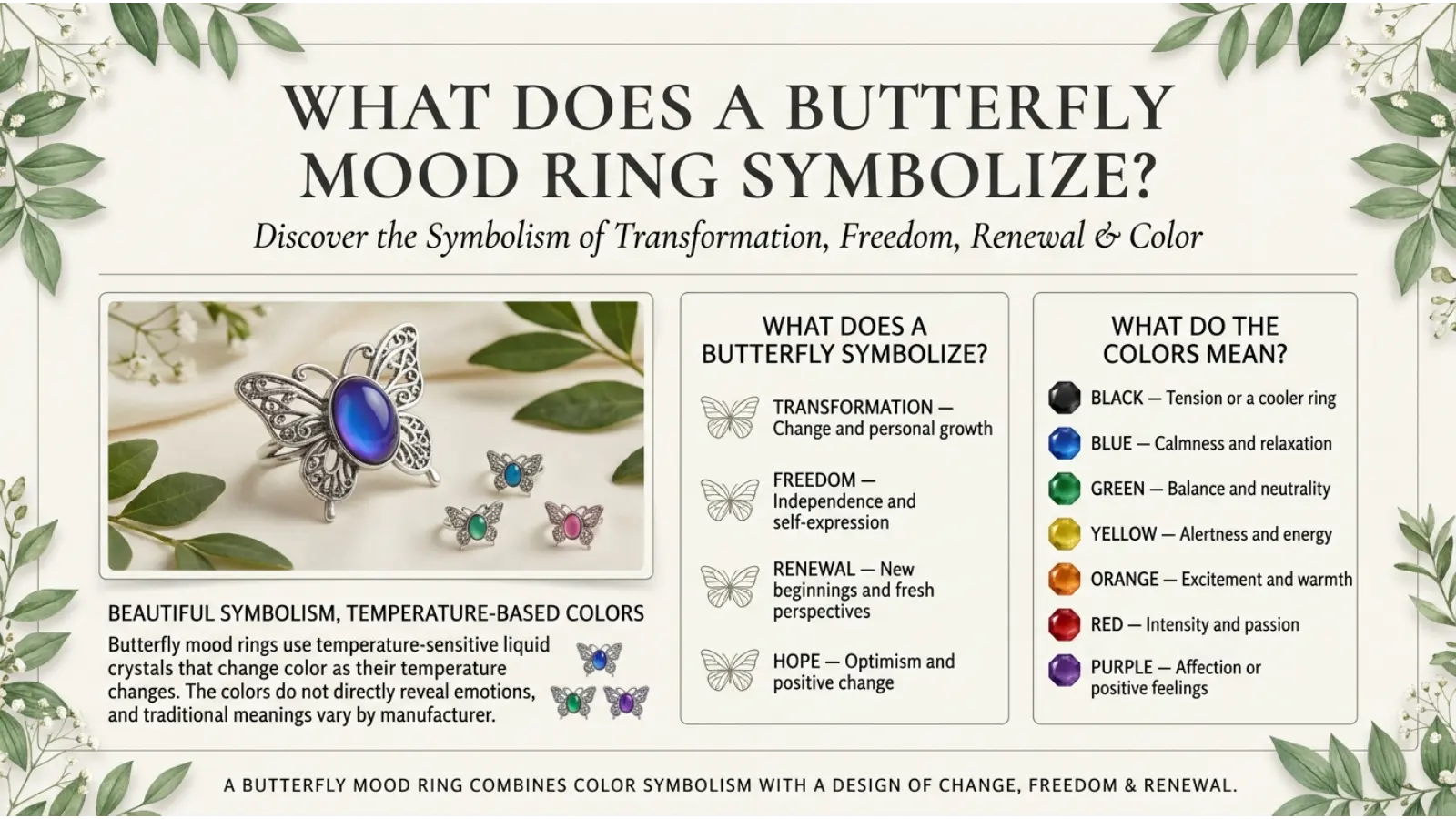
A Butterfly Mood Ring Color Meanings combines the beauty of a butterfly with the changing colors of a traditional mood ring. Each color is often associated with a different feeling, such as calmness, happiness, excitement, or tension. However, these meanings are symbolic rather than scientific measurements of emotions. A butterfly mood ring changes color because its temperature-sensitive material responds to heat from your skin and the surrounding environment.
As a result, the same ring may display different colors throughout the day. Understanding butterfly mood ring color meanings can help you explore their traditional interpretations, learn how the color-changing material works, and choose a design that matches your personal style.
Quick Answer: Butterfly mood ring colors traditionally represent different emotional states. Blue is associated with calmness, green with balance, purple with excitement or affection, and black with tension or cooler conditions. However, the exact meanings vary by color chart, and the ring responds to temperature rather than directly measuring your emotions.
Butterfly Mood Ring Color Meanings Chart
A butterfly mood ring usually features a butterfly-shaped setting with a thermochromic stone or color-changing insert. Although manufacturers may use different color charts, the following guide explains common mood ring interpretations.
Colorful Butterfly Mood Ring Chart
| Color | Traditional Mood Meaning | Common Symbolism | Color Indicator |
|---|---|---|---|
| 🔵 Blue | Calm and relaxed | Peace, trust, harmony | 🟦 |
| 🩵 Light Blue | Peaceful and comfortable | Openness, ease | 🩵 |
| 🟢 Green | Balanced or neutral | Growth, renewal, harmony | 🟩 |
| 🟣 Purple | Excited or affectionate | Mystery, creativity, romance | 🟪 |
| 💗 Pink | Loving or happy | Tenderness, warmth | 🩷 |
| 🔴 Red | Passionate or energized | Courage, excitement | 🟥 |
| 🟠 Orange | Energetic or adventurous | Enthusiasm, warmth | 🟧 |
| 🟡 Yellow | Alert or curious | Optimism, attention | 🟨 |
| 🟤 Amber | Thoughtful or unsettled | Caution, reflection | 🟫 |
| ⚫ Black | Tense or cool | Mystery, seriousness | ⬛ |
| ⚪ White | Uncertain or transitional | Simplicity, clarity | ⬜ |
These meanings are common symbolic interpretations, not universal rules. Some mood ring charts assign different emotions to the same color. In addition, a particular butterfly ring may display only a few shades rather than every color listed above.
What Does a Butterfly Mood Ring Color Meanings Symbolize?
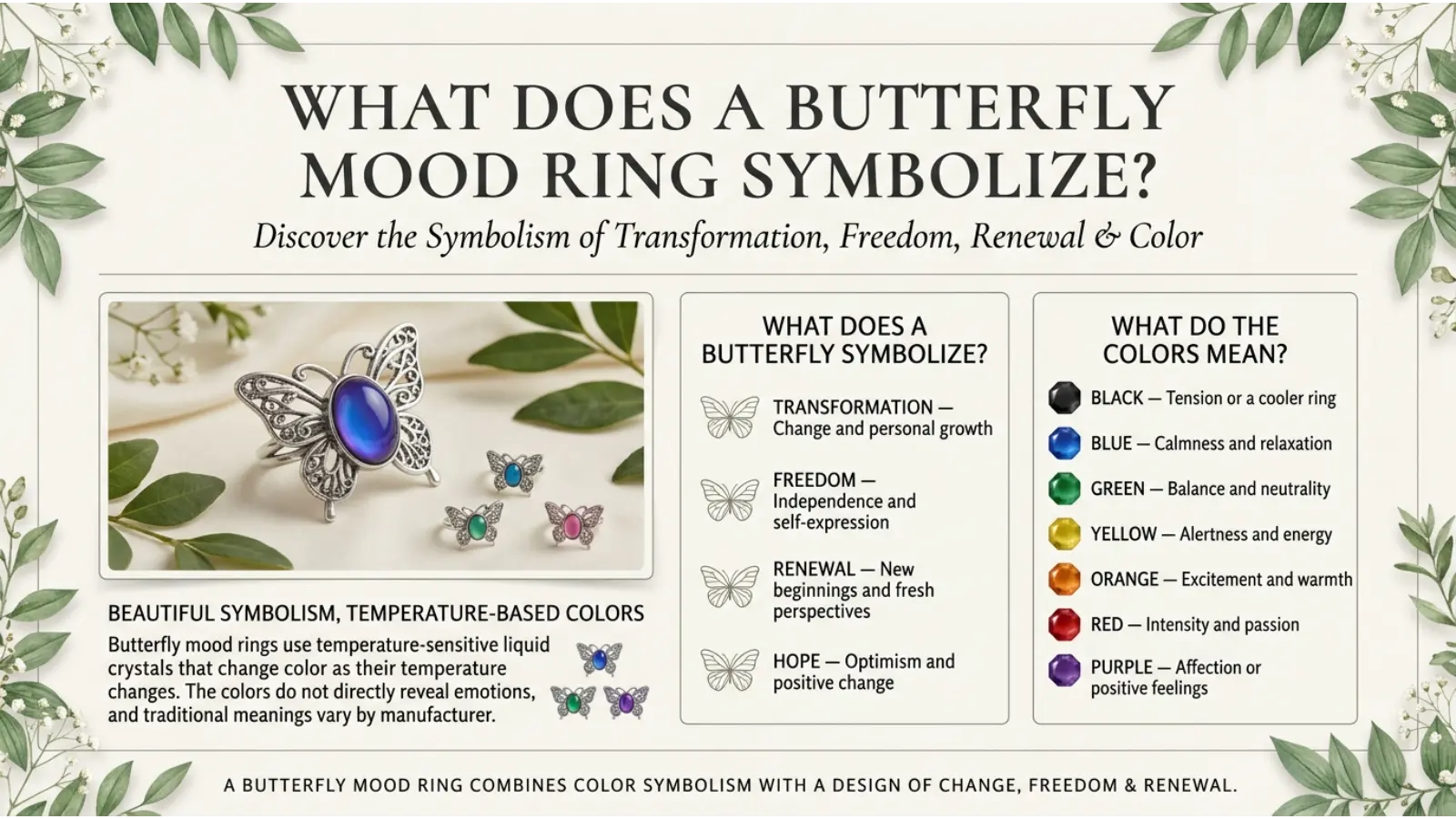
Butterflies have long served as symbols of transformation, renewal, freedom, and personal growth. Their life cycle, from caterpillar to butterfly, makes them a natural symbol of change.
The butterfly represents transformation, while the changing stone adds an element of mystery and self-expression.
For example, someone might wear a purple butterfly mood ring to express creativity or a blue one to reflect a preference for calm, peaceful colors. These choices communicate personal meaning, but they do not reveal a person’s actual emotional state with certainty.
The Meaning Behind the Butterfly Design
The butterfly shape can add several symbolic associations to a mood ring.
- Transformation: A reminder of personal development and new beginnings.
- Freedom: A symbol of independence and self-expression.
- Beauty: An appreciation for delicate designs and natural forms.
- Hope: A reminder that change can bring new opportunities.
- Renewal: A symbol of moving forward after a difficult period.
Because butterflies appear in art, jewelry, stories, and cultural traditions, their meanings can differ between individuals and communities.
Blue Butterfly Mood Ring Color Meaning
Blue is commonly associated with calmness, peace, trust, and relaxation in traditional mood ring charts. A blue butterfly mood ring may therefore symbolize emotional balance or a desire for a peaceful atmosphere.
Light blue often suggests gentleness and openness, whereas darker blue can feel more serious, stable, or reflective.
However, a blue stone does not prove that the wearer is relaxed. The ring may turn blue because its temperature-sensitive material has warmed to a particular range.
Symbolic meaning: Calmness, harmony, trust, and peace.
Style tip: Pair a blue butterfly ring with silver jewelry, denim, white clothing, or soft pastel colors for a fresh, relaxed look.
Purple Butterfly Mood Ring Color Meanings
Purple is often linked with creativity, mystery, imagination, and spirituality. On many traditional mood ring charts, it is also associated with excitement, affection, or romantic feelings.
A purple butterfly design combines these associations with the butterfly’s symbolism of transformation. As a result, it can make a meaningful accessory for someone who values individuality, artistic expression, or personal growth.
Nevertheless, purple does not have one fixed emotional meaning. Its interpretation depends on the chart, the shade, and the person’s own associations.
Symbolic meaning: Creativity, mystery, affection, and transformation.
Style tip: Purple works well with black, silver, lavender, cream, and other soft colors. For a coordinated look, choose a purple accessory that complements rather than competes with the butterfly design.
Green Butterfly Mood Ring Color Meaning
Green commonly represents balance, renewal, nature, and growth. In traditional mood ring interpretations, it is often described as a neutral or balanced state.
The color also connects naturally with the butterfly’s transformation symbolism. Together, green and the butterfly design can suggest a fresh start, personal development, or a connection with nature.
The stone changes color in response to temperature, and the symbolic interpretation is separate from the physical process.
Symbolic meaning: Balance, growth, renewal, and harmony.
Style tip: Combine a green butterfly ring with earthy clothing, natural fabrics, or gold-tone accessories for a nature-inspired appearance.
Pink Butterfly Mood Ring Color Meaning
Pink is commonly associated with affection, tenderness, warmth, and romance. A pink butterfly mood ring may therefore represent love, kindness, or a playful personal style.
Lighter pink shades often feel soft and gentle, while brighter pinks may appear energetic, expressive, and youthful. These impressions depend on the shade and the surrounding colors.
Although some traditional mood ring charts associate pink with loving or happy feelings, the stone cannot confirm whether someone is in love.
Symbolic meaning: Affection, tenderness, warmth, and romance.
Style tip: Pink pairs naturally with white, silver, lavender, and pastel blue, making it suitable for casual outfits and delicate jewelry combinations.
Red Butterfly Mood Ring Color Meaning
Red is a strong visual color associated with passion, energy, courage, and excitement. A red butterfly mood ring may appeal to someone who enjoys bold accessories and expressive designs.
In mood ring symbolism, red is sometimes connected with intense feelings or increased energy. Yet a red stone is not reliable evidence of anger, attraction, or excitement.
Red can also create a striking contrast against a metallic butterfly setting, helping the design stand out.
Symbolic meaning: Passion, confidence, courage, and energy.
Style tip: Wear a red butterfly ring with black, white, denim, or neutral clothing when you want the accessory to become a focal point.
Black Butterfly Mood Ring Color Meaning
Black is frequently associated with mystery, elegance, protection, and seriousness. Some traditional mood ring charts interpret a black stone as tension or an unsettled mood.
There is, however, an important difference between symbolism and the ring’s physical behavior. A mood ring may appear black when the temperature-sensitive material is outside its usual color-changing range, when the stone is cool, or when the material is damaged.
Symbolic meaning: Mystery, elegance, strength, and seriousness.
Style tip: Black butterfly rings pair well with silver, dark denim, monochrome outfits, and minimalist accessories.
Yellow and Orange Butterfly Mood Ring Meanings
Yellow and orange are often connected with warmth, energy, optimism, curiosity, and enthusiasm. These colors can give a butterfly ring a bright, playful appearance.
Yellow may symbolize attention, happiness, or curiosity, while orange is commonly associated with energy and adventure. These are general associations rather than scientifically established readings of the wearer’s emotions.
Depending on the material, yellow and orange may appear during transitions between cooler and warmer color states.
Symbolic meaning of yellow: Optimism, curiosity, and brightness.
Symbolic meaning of orange: Enthusiasm, warmth, and adventure.
Style tip: These shades complement cream, brown, white, denim, and other warm or neutral tones.
How Does a Butterfly Mood Ring Color Meanings Change Color?
A butterfly mood ring generally uses a temperature-sensitive material called a thermochromic material. Traditional mood rings commonly use liquid crystals or related temperature-responsive materials that change their appearance across different temperature ranges.
When the ring touches your skin, it absorbs heat. As the temperature changes, the material can reflect or transmit light differently, producing a visible color shift.
For instance, the ring might appear green in one situation and blue or purple in another. This does not mean that the ring has detected a particular emotion. It means the material has responded to a change in temperature.
What Can Affect the Color?
Several everyday factors can influence the appearance of a butterfly mood ring.
- Body temperature: Changes in skin temperature can affect the ring’s color.
- Room temperature: A cold or warm environment can alter the stone’s temperature.
- Blood circulation: Changes in circulation may influence skin temperature, although a mood ring cannot measure circulation accurately.
- Physical activity: Movement and exercise can change body heat.
- Weather: Cold outdoor conditions or hot sunlight may affect the material.
- Ring fit: A loose ring may have less consistent contact with your skin.
- Material condition: Age, damage, and exposure to unsuitable conditions can affect performance.
Consequently, the color may change even when your emotional state remains the same.
Can a Butterfly Mood Ring Really Read Your Emotions?
No. A butterfly mood ring cannot reliably determine your emotions, personality, stress level, or romantic feelings.
The ring responds to temperature, which may be influenced by several factors. Although emotions can sometimes affect physical responses such as sweating or skin temperature, these changes are not specific enough for a mood ring to identify a particular feeling.
For example, a cool hand might result from cold weather rather than anxiety. Likewise, a warm hand might reflect exercise rather than happiness.
Spiritual Meaning of Butterfly Mood Ring Colors
Some people enjoy interpreting butterfly mood rings through spiritual symbolism. In these interpretations, the butterfly may represent transformation, while the stone’s color provides a personal symbol for reflection.
These meanings vary among spiritual traditions and individuals. They are not universal religious teachings or scientifically verified effects.
| Color | Possible Spiritual Interpretation |
|---|---|
| 🔵 Blue | Peace, reflection, and inner calm |
| 🟢 Green | Renewal, growth, and harmony |
| 🟣 Purple | Intuition, creativity, and wisdom |
| 💗 Pink | Compassion, affection, and kindness |
| 🔴 Red | Courage, vitality, and determination |
| ⚫ Black | Protection, mystery, or boundaries |
| 🟡 Yellow | Hope, clarity, and optimism |
For example, someone beginning a new chapter in life might choose a butterfly ring as a reminder of personal growth. Another person may associate blue with peaceful reflection.
These interpretations can be personally meaningful without requiring the ring to possess supernatural abilities.
Butterfly Mood Rings and Personality Associations
People sometimes connect their favorite mood ring colors with personality traits. For example, someone who prefers blue may enjoy its calm appearance, while a person drawn to purple may appreciate its creative or mysterious associations.
However, color preference does not determine personality. A favorite color may reflect memories, fashion preferences, cultural influences, or simple visual enjoyment.
You can use a butterfly mood ring as a personal expression of identity without treating its colors as a personality test.
Consider asking yourself three questions when choosing a color:
- Which color do I enjoy wearing most?
- What memories or ideas does that color bring to mind?
- Does the butterfly design represent something meaningful to me?
These questions offer a more thoughtful way to explore personal symbolism than relying on a color chart alone.
How to Wear and Care for a Butterfly Mood Ring
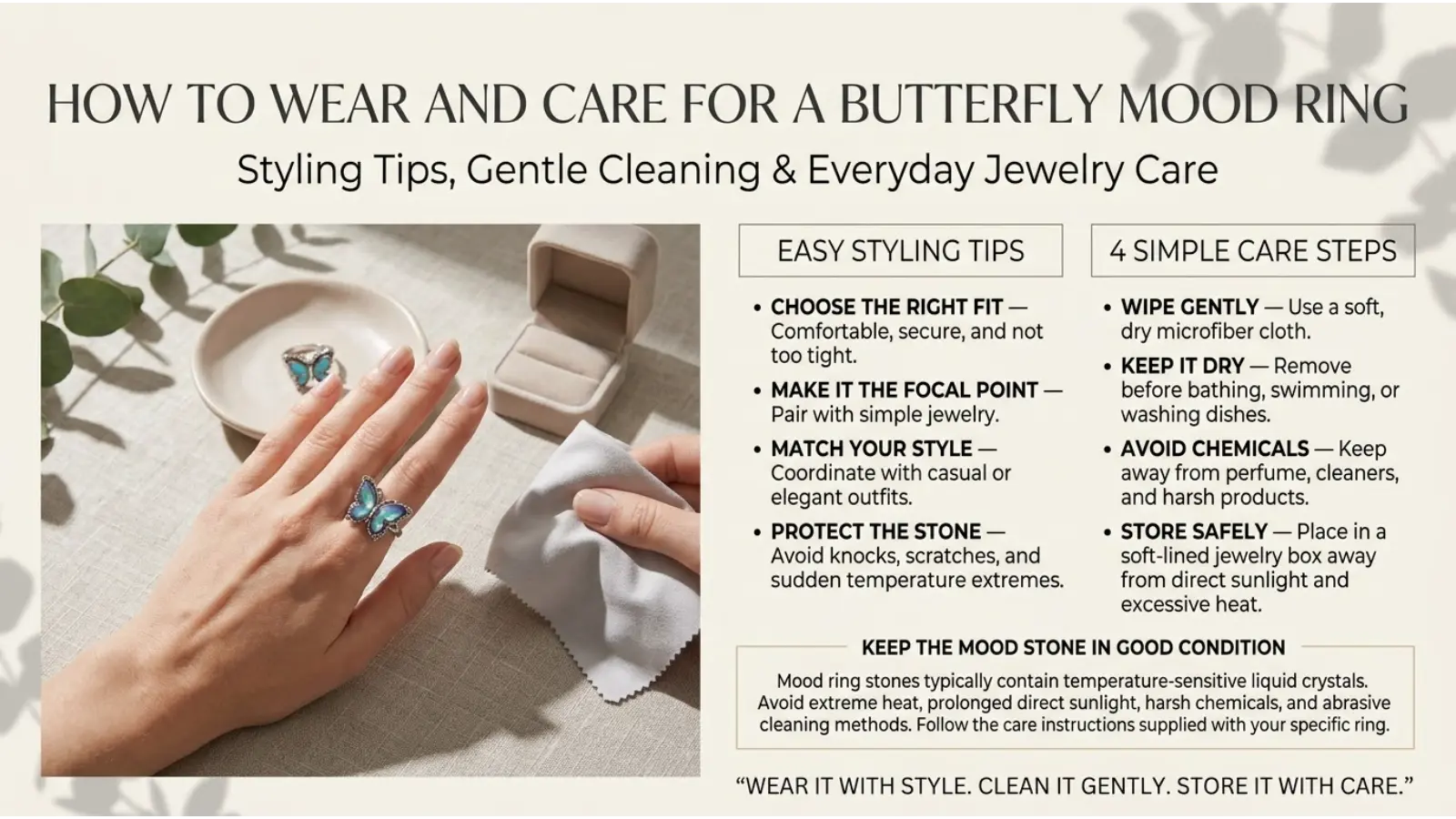
A butterfly mood ring can be worn as an everyday accessory, a gift, or a small personal keepsake. Its delicate design often works well with casual and feminine jewelry styles, although the best combination depends on the ring’s shape and finish.
Choosing the Right Style
- For everyday wear: Choose a comfortable ring that fits securely without squeezing your finger.
- For a gift: Consider the recipient’s favorite colors and jewelry preferences.
- For special occasions: Match the metal finish with other accessories for a coordinated look.
- For a symbolic keepsake: Choose a butterfly design that reminds you of a meaningful change or personal goal.
Caring for the Color-Changing Stone
Follow the manufacturer’s care instructions because the materials used in mood rings can vary. In general, avoid exposing the ring to harsh chemicals, excessive heat, or sudden temperature extremes.
Keep it dry if the manufacturer advises against water exposure, and store it away from direct sunlight when not in use. Do not use strong cleaners or abrasive tools on the stone.
If the ring stops changing color, check whether it is too cold, too warm, or damaged before assuming that it has permanently failed.
Common Misconceptions About Butterfly Mood Ring Colors
Misconception 1: Each color reveals one exact emotion.
Reality: Color meanings vary among charts, and the material responds to temperature rather than directly measuring feelings.
Misconception 2: A black ring means you are sad or angry.
Reality: Black may occur when the material is cool or outside its normal color-changing range.
Misconception 3: Purple always means love.
Reality: Purple may symbolize affection, creativity, excitement, or mystery, depending on the chart and context.
Misconception 4: Mood rings are scientific emotional tests.
Reality: They are temperature-sensitive accessories, not validated tools for assessing emotional or mental health.
Misconception 5: Spiritual meanings are the same for everyone.
Reality: Spiritual interpretations depend on personal beliefs and cultural context.
Frequently Asked Questions
1. What do butterfly mood ring colors mean?
Butterfly mood ring colors are commonly associated with symbolic emotional states. Blue often represents calmness, green balance, purple excitement or affection, pink tenderness, and black tension or cooler conditions. The meanings vary by chart.
2. What does a blue butterfly mood ring mean?
Blue is traditionally associated with peace, calmness, trust, and relaxation. However, the ring’s blue color indicates a temperature response, not proof of a particular emotion.
3. What does a purple butterfly mood ring mean?
Purple may symbolize creativity, mystery, affection, or excitement. The exact interpretation depends on the manufacturer’s color chart and the person’s own associations.
4. What does a green butterfly mood ring mean?
Green is often linked with balance, neutrality, renewal, and growth. It does not scientifically confirm that the wearer is relaxed or emotionally balanced.
5. Why does my butterfly mood ring turn black?
The stone may be too cool, outside its usual temperature range, or affected by damage. Check the ring’s instructions to understand its expected color changes.
6. Can a butterfly mood ring tell if someone likes you?
No. A mood ring cannot reliably identify romantic attraction. Its color changes in response to temperature, not a person’s feelings toward someone else.
7. Are butterfly mood rings accurate?
They can respond to temperature, but they are not accurate emotional detectors.
8. Do butterfly mood rings change color in cold weather?
Yes, cold weather can affect the temperature of the ring and its stone. Depending on the material, the color may change or become darker when the ring cools.
9. What does a butterfly symbolize in jewelry?
Butterflies commonly symbolize transformation, freedom, hope, beauty, and personal growth. Their meaning can differ according to personal experience and cultural tradition.
10. Can I wear a butterfly mood ring every day?
Usually, yes, if the ring’s materials are suitable for regular wear. Follow the manufacturer’s care instructions, avoid harsh chemicals, and protect the color-changing stone from damaging conditions.
Conclusion
Butterfly mood ring color meanings combine the symbolism of butterflies with the traditional interpretations of changing mood ring colors. Blue may suggest calmness, green may represent balance, purple can symbolize creativity or affection, and pink may express tenderness. Meanwhile, the butterfly itself often represents transformation, freedom, and personal growth.
Still, the color-changing material responds to temperature rather than directly revealing emotions. Understanding this distinction helps you enjoy the ring without relying on it as a psychological test.
Ultimately, the most meaningful butterfly mood ring is one that reflects your personal style, reminds you of something important, or simply makes you smile when its colors change.
Add all missing color sectionsImprove the chart’s practical usefulness
Emma Wilson is a dedicated comparison writer and product researcher at ColorMystiic.com. She specializes in creating unbiased product comparisons, detailed reviews, and helpful buying guides. Her goal is to help readers make smarter purchasing decisions with confidence.