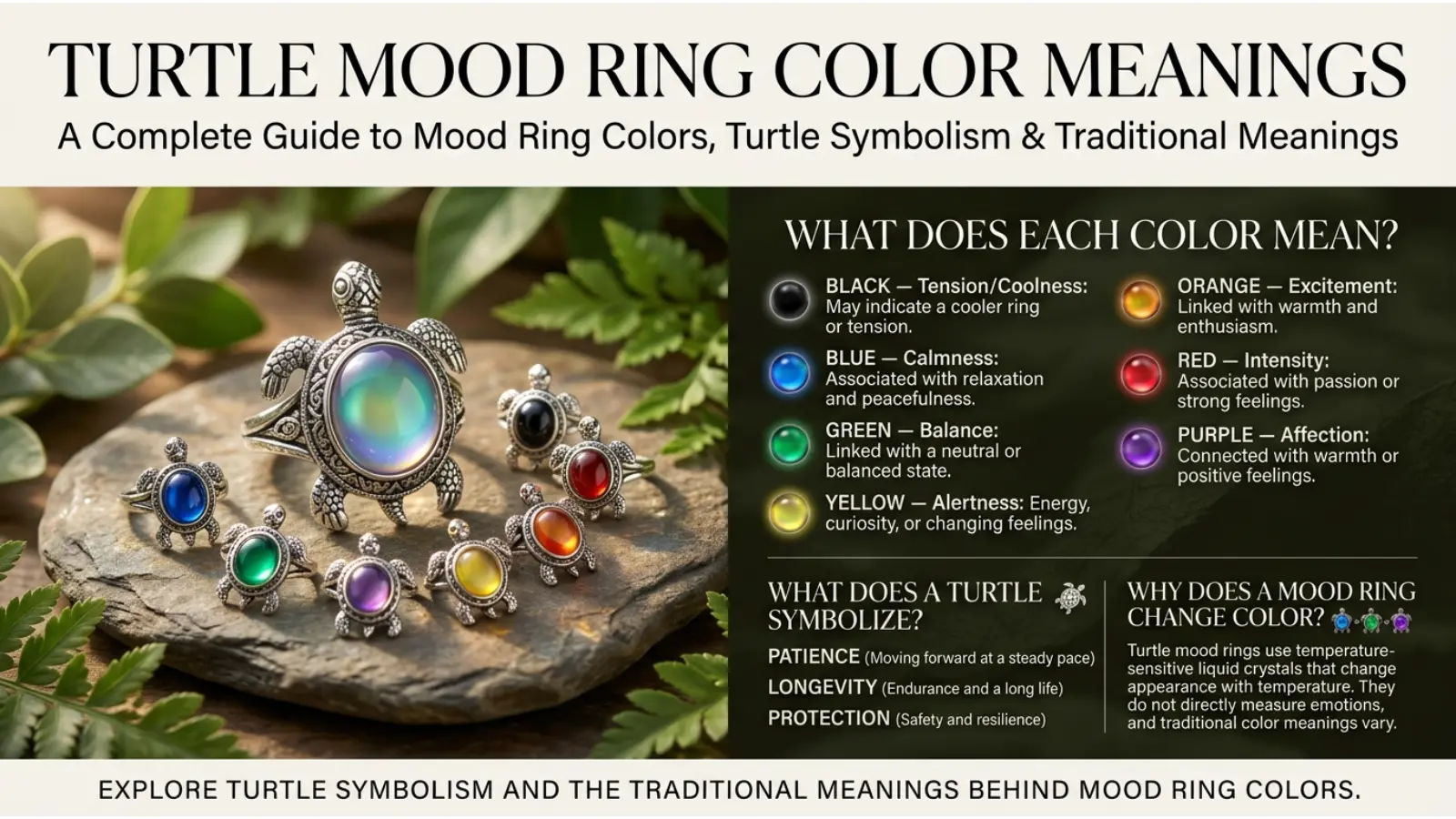
A Turtle Mood Ring Color Meanings combines the charm of a turtle-shaped design with the changing colors of a traditional mood ring. These rings often feature a small turtle, a symbol commonly associated with patience, protection, wisdom, and steady growth. However, the changing colors have a different purpose: they respond to temperature rather than directly reading your emotions.
Understanding turtle mood ring color meanings can help you interpret the shades you see while also exploring the symbolism behind this fascinating animal. For example, green may remind you of nature and renewal, while blue is often associated with calmness and peace. However, the exact meaning depends on the ring’s color chart, the temperature-sensitive material, and the way you interpret its design.
In this guide, you will learn what different turtle mood ring colors may represent, how thermochromic materials work, and why turtle symbolism makes these accessories special.
Quick Answer: What Do Turtle Mood Ring Colors Mean?
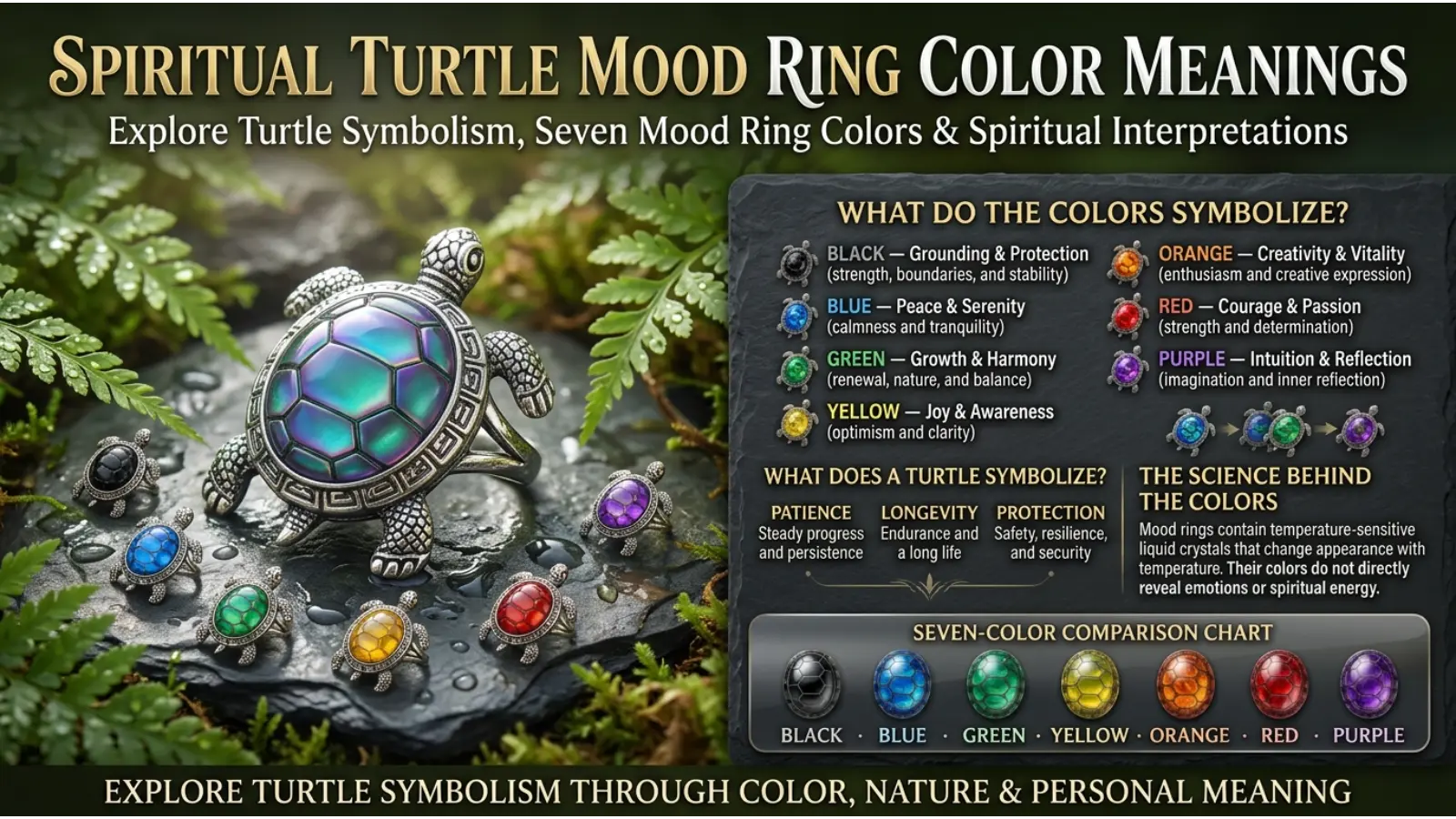
Turtle mood ring colors generally follow the same temperature-based patterns as traditional mood rings.These are common interpretations, not universal rules. The turtle design adds symbolic meanings such as patience, protection, resilience, and longevity.
What Makes a Turtle Mood Ring Special?
A turtle mood ring stands out because it combines a color-changing feature with an animal that carries rich symbolic meaning. Depending on the design, the turtle may appear on the ring’s surface, inside a decorative setting, or as a small charm.
Unlike a plain mood ring, this design can appeal to people who enjoy nature-inspired jewelry and meaningful accessories. Furthermore, its two features offer different ways to interpret the ring.
The changing color provides a temperature-related display, while the turtle represents qualities that people may want to celebrate in their everyday lives.
The Meaning Behind the Turtle Design
Turtles are often linked with several positive qualities:
- Patience: Turtles are commonly used as symbols of taking life slowly and steadily.
- Protection: Their shells provide a natural image of safety and personal boundaries.
- Wisdom: Their long lifespans make them symbols of experience and thoughtful living.
- Resilience: Turtles can represent persistence through difficult situations.
- Stability: Their steady movement can symbolize consistency and grounded choices.
These meanings are symbolic rather than scientific predictions. Wearing a turtle ring does not guarantee protection, wisdom, or good fortune. Instead, the design can serve as a personal reminder of the qualities you value.
Turtle Mood Ring Color Meanings Chart
The following chart explains common mood ring color associations. Actual shades and interpretations vary between manufacturers, so use the color guide supplied with your ring whenever one is available.
| Color | Common mood ring association | Possible symbolic meaning |
|---|---|---|
| 🔵 Blue | Relaxed or comfortable | Peace, trust, calmness |
| 🟢 Green | Balanced or moderate | Nature, growth, harmony |
| 🟣 Purple | Warm or emotionally expressive | Creativity, imagination, mystery |
| 🩵 Light Blue | Calm or comfortable | Openness, ease, clarity |
| 🩷 Pink | Warm or changing conditions | Affection, tenderness, playfulness |
| 🟠 Orange | A warmer or transitional state | Enthusiasm, energy, curiosity |
| 🟡 Yellow | A transitional or lighter shade | Optimism, alertness, brightness |
| 🟤 Brown | A particular temperature range | Earthiness, stability, simplicity |
| ⚫ Black | Often a cooler state or limited color change | Mystery, strength, protection |
| ⚪ Clear or Pale | Depends on the material and lighting | Simplicity, openness, freshness |
Remember: The symbolic meanings in the final column describe common color associations. They do not tell you exactly how you feel. The temperature-related interpretation also varies according to the ring’s materials and color chart.
What Does Each Turtle Mood Ring Color Meanings?
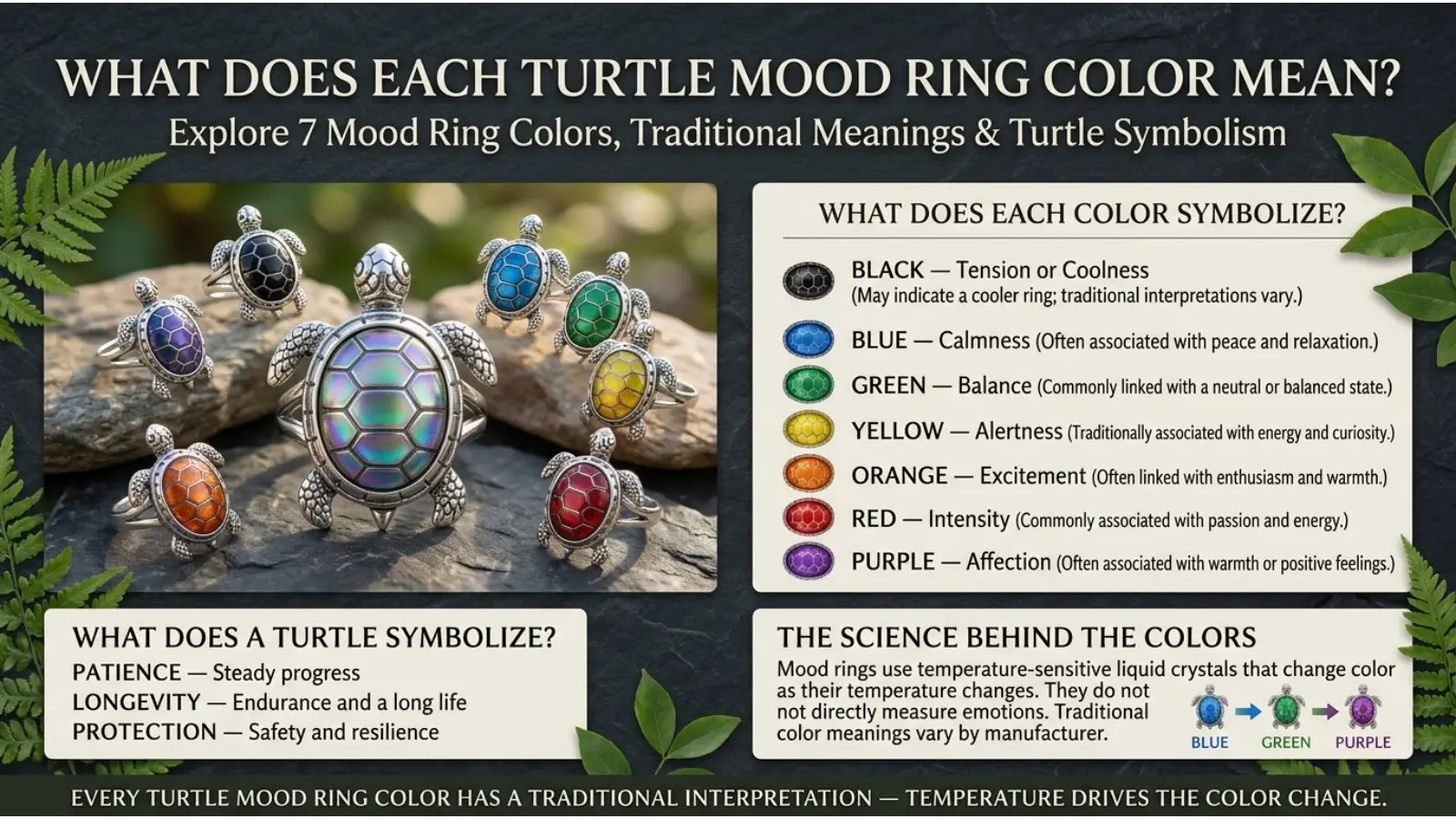
Blue Turtle Mood Ring Meaning
Blue is one of the colors commonly associated with traditional mood rings. It is often interpreted as a sign of calmness, relaxation, or comfort.
From a symbolic perspective, a blue turtle ring can represent peaceful progress. The blue shade suggests calmness, while the turtle adds an idea of patience and steady movement.
What it may symbolize:
- Calmness and emotional balance
- Patience during challenging moments
- Peaceful thinking
- Trust and reliability
However, a blue ring does not prove that you are relaxed. The thermochromic material reacts to temperature, which can change with your surroundings, skin contact, and circulation.
Green Turtle Mood Ring Meaning
Green is strongly connected with nature, renewal, growth, and balance.
A green turtle mood ring may serve as a reminder to maintain balance, appreciate nature, and make steady progress toward your goals.
Common symbolic associations:
- Personal growth
- Harmony and stability
- Renewal and fresh beginnings
- Connection with nature
Nevertheless, the exact temperature represented by green depends on the product.
Purple Turtle Mood Ring Meaning
Purple is commonly associated with imagination, creativity, mystery, and spirituality. In jewelry, it can also give a design a distinctive and elegant appearance.
A purple turtle ring may symbolize thoughtful growth and the freedom to explore new ideas. Some people may also connect it with intuition or personal reflection.
Common symbolic associations:
- Creativity and originality
- Wisdom and reflection
- Mystery and individuality
- Spiritual exploration
These associations are personal and cultural interpretations rather than established scientific meanings. A purple shade on your ring does not confirm that you are experiencing a particular emotion or spiritual state.
Light Blue Turtle Mood Ring Meaning
Light blue often creates a softer impression than deep blue.
When paired with a turtle design, light blue can suggest a calm approach to life and the value of moving forward without rushing.
It may represent:
- Peaceful intentions
- Patience and understanding
- Fresh perspectives
- Gentle confidence
The appearance of light blue can also depend on the lighting and the ring’s material. Therefore, compare it with the manufacturer’s chart before assigning a temperature-related interpretation.
Pink Turtle Mood Ring Meaning
Pink is frequently linked with affection, kindness, tenderness, and playfulness. On a turtle mood ring, the color may give the design a friendly, cheerful appearance.
Symbolically, pink and the turtle can combine warmth with patience. This makes the pairing suitable for someone who appreciates gentle reminders about kindness and self-care.
Common symbolic meanings include:
- Affection and compassion
- Friendship and kindness
- Playfulness and joy
- Emotional warmth
Still, pink does not necessarily mean that you are in love or feeling happy. A mood ring cannot reliably identify specific emotions.
Orange Turtle Mood Ring Meaning
Orange is often associated with energy, enthusiasm, curiosity, and creativity. Its bright appearance can make a turtle ring look lively and distinctive.
Symbolically, an orange turtle can represent the courage to explore new opportunities while remaining patient with the process.
Possible associations:
- Enthusiasm and motivation
- Curiosity and adventure
- Creative expression
- Confidence in new experiences
If your ring turns orange, check its specific color chart. Some mood rings use orange for a different temperature range or display it only during a transition between shades.
Yellow Turtle Mood Ring Meaning
Yellow often symbolizes sunshine, optimism, attention, and mental brightness. Its cheerful appearance can make a turtle accessory feel playful and energetic.
As a symbolic combination, a yellow turtle may represent a positive outlook supported by patience and consistency.
Common associations include:
- Optimism and hope
- Curiosity and learning
- Cheerfulness
- New ideas
However, yellow is not a universal sign of happiness on mood rings. Temperature-sensitive materials can produce different colors depending on their formulation.
Brown Turtle Mood Ring Meaning
Brown is commonly connected with earth, reliability, simplicity, and stability. Because turtles are often imagined as grounded, nature-connected animals, brown can complement their symbolism particularly well.
A brown turtle ring may remind you to stay practical and focus on gradual progress instead of expecting immediate results.
Symbolic associations include:
- Grounded thinking
- Dependability
- Connection with nature
- Patience and endurance
A brown appearance may also be related to the ring’s temperature response, its design, or the material’s condition. It should not automatically be interpreted as a sign of stress or sadness.
Black Turtle Mood Ring Meaning
Black is often associated with strength, mystery, protection, and independence. On a turtle ring, it can create a bold look while emphasizing the protective symbolism of the turtle’s shell.
In traditional mood ring charts, black is frequently associated with cooler conditions. However, a ring may also appear black when its temperature-sensitive material is not displaying another clear color.
Possible symbolic meanings:
- Strength and resilience
- Personal boundaries
- Mystery and individuality
- Protection and independence
Check the temperature, the product instructions, and the condition of the ring.
Clear or Pale Turtle Mood Ring Colors
Some rings may appear very pale, nearly clear, or less colorful under certain conditions. The meaning depends on the type of material and the way the ring is made.
Symbolically, pale colors can suggest simplicity, openness, or a fresh start.
If the ring suddenly loses its usual colors, inspect it for wear, damage, or exposure to conditions that the manufacturer advises avoiding.
How Do Turtle Mood Rings Change Color?
Turtle mood rings usually rely on thermochromic materials, which change their visible color in response to temperature.
Many traditional mood rings use temperature-sensitive liquid crystals or related materials. As their temperature changes, their optical properties change as well, causing the ring to display different shades.
Here is how the process generally works:
- Your skin transfers heat: When you wear the ring, heat moves between your finger and the ring.
- The material responds: The temperature-sensitive substance changes its optical properties as its temperature shifts.
- A new shade appears: The ring displays a color that corresponds to the material’s current temperature range.
- The color changes again: As your skin or surroundings become warmer or cooler, the visible shade may change.
Consequently, a ring can change color when you enter a colder room, warm your hands, or remove it from your finger.
Do Mood Rings Actually Read Your Emotions?
No. Mood rings do not directly measure emotions, thoughts, or personality. They respond to temperature.
Emotions can sometimes influence physical responses, including skin temperature and blood flow. For example, stress may affect circulation in the hands. Nevertheless, many other factors also influence skin temperature, so the ring cannot distinguish emotional changes from ordinary physical changes.
Spiritual Turtle Mood Ring Color Meanings
Some people enjoy interpreting jewelry through spiritual symbolism. In that context, a turtle mood ring can represent patience, protection, grounding, wisdom, and a steady connection with nature.
The color adds another layer of personal meaning. For example, green may remind someone of growth, while blue may represent peace. Purple may be associated with reflection or spiritual exploration.
These meanings are not universal religious teachings. They vary according to individual beliefs, cultural backgrounds, and personal experiences.
Turtle Symbolism and Protection
A turtle’s shell provides a natural symbol of protection and boundaries.
This is a symbolic interpretation, not evidence that the ring can prevent harm or provide supernatural protection.
Turtle Symbolism and Wisdom
Turtles are often associated with wisdom because of their long lives and steady behavior. A turtle ring can therefore serve as a reminder to think carefully before making important decisions.
Rather than rushing, you might use the design as a personal prompt to consider your options, learn from experience, and remain consistent with your goals.
Turtle Symbolism and Good Fortune
In some cultural traditions, turtles are associated with longevity, stability, or good fortune. The precise meaning depends on the tradition and the context in which the turtle appears.
If you wear a turtle ring for good luck, its meaning can be personal and encouraging. However, the accessory itself cannot guarantee a particular outcome.
Turtle Mood Ring Color Meanings in Different Contexts
Color symbolism changes according to culture, setting, and personal experience. A shade that suggests peace to one person may have a different meaning to someone else.
For example, green can be associated with nature and renewal, but it also carries specific meanings in different national, religious, and cultural contexts. Similarly, purple has been linked with royalty in some historical settings and with spirituality or creativity in others.
The turtle design also affects interpretation. In some traditions, turtles carry associations with longevity or the natural world, while other people simply see them as cute animals.
Therefore, it is best to understand the ring’s colors as a mixture of product-specific temperature indicators and flexible cultural or personal symbolism.
What Does Your Turtle Mood Ring Say About Your Personality?
A turtle mood ring cannot reliably determine your personality. However, you may choose a turtle design because you appreciate what the animal represents.
For example, someone who likes turtle jewelry may value nature, patience, marine life, or meaningful accessories. Another person may simply enjoy the shape and changing colors.
Likewise, preferring blue, green, or purple does not prove that you possess a particular personality trait. Color preferences can reflect personal taste, memories, trends, and cultural associations.
The most useful approach is to treat the ring as a reflection of your interests rather than a personality test.
How to Get the Best Results From a Turtle Mood Ring
If you want to understand your ring’s color changes, a few simple habits can help.
- Read the manufacturer’s color chart: This is the best starting point because color ranges vary by product.
- Allow time for temperature changes: After putting on the ring, give it time to adjust to your finger.
- Observe the surrounding conditions: Cold air, warm rooms, and recent handwashing can affect the displayed shade.
- Compare colors in consistent lighting: Different lighting can make the same shade look lighter, darker, or less saturated.
- Keep the ring in good condition: Follow the manufacturer’s cleaning and care instructions to avoid damaging its sensitive materials.
- Avoid treating colors as emotional facts: Use the changing shades for curiosity and enjoyment rather than emotional diagnosis.
By observing the ring under similar conditions, you can better understand its normal color range.
Common Misconceptions About Turtle Mood Rings
A Blue Ring Always Means Happiness
Not necessarily. Blue is often associated with calmness on mood ring charts, but the material responds to temperature rather than happiness.
A Black Ring Means Something Is Wrong
No. Black may indicate a cooler temperature range, a limited color response, or a problem with the ring. Check the product instructions before drawing conclusions.
Turtle Rings Have Special Powers
The turtle design can carry personal or cultural symbolism, but there is no reliable evidence that wearing a turtle mood ring provides supernatural protection or predicts the future.
Everyone Uses the Same Color Chart
Not every manufacturer uses identical materials or temperature ranges. As a result, the same shade may have different interpretations across different products.
Mood Rings Can Diagnose Stress
They cannot reliably diagnose stress, anxiety, or any other emotional or medical condition. Their color changes are influenced by many physical and environmental factors.
Frequently Asked Questions
1. What do turtle mood ring color meanings represent?
They combine the temperature-based color changes of a mood ring with the symbolism of a turtle. Common associations include blue for calmness, green for balance, and purple for creativity, although the manufacturer’s chart may differ.
2. What does a green turtle mood ring mean?
Green is commonly associated with balance, nature, renewal, and growth. On a traditional mood ring, it may also represent a moderate temperature range.
3. What does a blue turtle mood ring mean?
Blue is often linked with calmness and relaxation. Physically, however, the shade reflects the temperature response of the ring rather than a confirmed emotional state.
4. Why does my turtle mood ring turn black?
Black may appear when the ring is cool or when its temperature-sensitive material is not showing another clear shade. If it remains black under different conditions, consult the product instructions and inspect the ring for damage.
5. Can a turtle mood ring tell if I am happy?
No. The ring measures neither happiness nor any other emotion directly.
6. What is the spiritual meaning of a turtle mood ring?
For people who use spiritual symbolism, it may represent patience, protection, wisdom, grounding, and steady growth. These meanings depend on personal beliefs and cultural traditions.
7. Does a turtle mood ring bring good luck?
Some people associate turtles with longevity, stability, or good fortune. Wearing the ring can serve as a personal reminder of these ideas, but it cannot guarantee luck.
8. Why does my turtle mood ring keep changing colors?
Its temperature-sensitive material responds to changes in skin temperature and the surrounding environment. Moving between warm and cool places can cause the shade to change.
9. Are turtle mood ring color charts universal?
No. Different manufacturers may use different materials, color ranges, and temperature thresholds. Always check the chart provided with your specific ring.
10. Can children wear turtle mood rings?
Keep small jewelry pieces away from young children who may put them in their mouths, and follow the manufacturer’s safety instructions.
Conclusion
Turtle mood ring color meanings combine the changing shades of temperature-sensitive jewelry with the symbolism of a familiar animal. Blue may suggest calmness, green can represent balance and growth, purple often evokes creativity, and black may appear under cooler conditions. However, the exact temperature-related meaning depends on the ring’s materials and its manufacturer’s chart.
The turtle adds another layer of meaning through its associations with patience, protection, resilience, and longevity. These qualities can make the ring a thoughtful personal accessory, whether you enjoy nature-inspired jewelry or simply like watching its colors change.
Ultimately, the best way to appreciate a turtle mood ring is to understand how it works while choosing the symbolic meanings that feel relevant to you. Its colors can be fun to observe, and its design can offer a small reminder to approach life with patience and curiosity.

Emma Wilson is a dedicated comparison writer and product researcher at ColorMystiic.com. She specializes in creating unbiased product comparisons, detailed reviews, and helpful buying guides. Her goal is to help readers make smarter purchasing decisions with confidence.