Funeral color meanings can communicate grief, respect, remembrance, spirituality, hope, or even celebration of a person’s life. While black is strongly associated with mourning in many Western societies, it is not the only color used at funerals. White, blue, purple, gray, and other colors can carry meaningful messages depending on culture, religion, family traditions, and the wishes of the person being remembered.
People search for funeral color meanings because choosing clothing, flowers, decorations, or memorial designs can feel difficult during an emotional time. A color that seems respectful in one community may have a different meaning somewhere else.
This guide explains the symbolism behind common funeral colors, how traditions have changed, and how to choose appropriate colors for clothing, flowers, memorial services, and celebrations of life.
Quick Answer: Black commonly represents mourning, dignity, and respect at funerals, while white may symbolize peace, purity, and spiritual hope. Blue can suggest calmness and remembrance, purple can represent dignity or spirituality, and gray often conveys quiet respect. However, funeral color meanings depend heavily on culture, religion, family customs, and the type of service.
Funeral Color Meanings at a Glance
| Color | Common Funeral Meaning | Typical Impression | Common Uses |
|---|---|---|---|
| Black | Mourning, respect, formality | Serious and traditional | Clothing, suits, dresses |
| White | Peace, purity, remembrance | Calm and spiritual | Clothing, flowers, décor |
| Gray | Dignity, restraint, neutrality | Quiet and understated | Suits, accessories, décor |
| Navy Blue | Respect, calm, stability | Formal but softer than black | Suits, dresses, ties |
| Purple | Spirituality, dignity, remembrance | Reflective and ceremonial | Flowers, clothing, décor |
| Red | Love, passion, sacrifice | Strong and emotional | Flowers or cultural settings |
| Pink | Affection, tenderness, remembrance | Gentle and personal | Flowers, memorial details |
| Green | Life, renewal, nature | Hopeful and peaceful | Flowers, plants, décor |
| Yellow | Warmth, friendship, remembrance | Bright and personal | Flowers and celebrations of life |
| Brown | Simplicity, earth, stability | Natural and modest | Clothing or rustic décor |
These meanings are broad associations rather than universal rules. The same color can express different emotions when the cultural or religious setting changes.
What Does Black Symbolize at a Funeral?
Black is the most familiar funeral color in many Western societies. It is commonly connected with mourning, seriousness, respect, formality, and loss.
The connection between black clothing and mourning developed through long-standing European social customs. Wearing dark clothing became a visible way to show grief and communicate that a person was observing a period of mourning.
Black also works practically at formal services because it is visually restrained. It does not usually draw attention away from the ceremony or the family.
Why Is Black Associated With Grief?
Black can create a visual sense of seriousness and distance. In a funeral setting, that subdued appearance can support the solemn atmosphere of the event.
However, black does not automatically mean sadness in every situation. In fashion and design, black can also represent elegance, authority, strength, and sophistication. Context determines which association becomes strongest.
Is Black Always Appropriate for a Funeral?
Not necessarily.
Black is generally a safe choice for a traditional funeral when no specific dress code has been provided. But families may request lighter colors, favorite colors, cultural clothing, or bright clothing to celebrate the deceased.
The invitation or family instructions should take priority over general funeral etiquette.
White Funeral Color Meaning
White commonly represents peace, purity, innocence, spiritual hope, and remembrance.
In some cultures and religious traditions, white has important associations with death and mourning. In other settings, it represents resurrection, peace, or the idea of a soul moving beyond earthly life.
The White can also create a peaceful visual atmosphere because it is light and uncluttered.
White Funeral Clothing
White clothing may be respectful when the family or cultural tradition supports it. A white shirt combined with a dark suit is also a common way to introduce white without making the outfit overly bright.
White Funeral Flowers
White lilies, roses, chrysanthemums, carnations, and other pale flowers are frequently chosen for memorial arrangements.
Their meaning depends on the flower as well as the color. White roses, for example, may communicate reverence and remembrance, while white lilies are often associated with peace and spiritual ideas.
Blue Funeral Color Meaning
Blue is often associated with calmness, loyalty, peace, trust, and remembrance.
Unlike black, blue can create a softer emotional impression while remaining formal. Navy blue is especially useful when someone wants a traditional appearance without wearing completely black clothing.
What Does Blue Mean in Mourning?
Blue can suggest emotional calm and quiet reflection. It may also be meaningful when blue was the deceased person’s favorite color.
For a celebration of life, blue can work particularly well because it provides a respectful appearance without making the setting feel excessively somber.
Navy Blue vs. Bright Blue
Navy blue is generally more formal and understated.
Medium or light blue creates a more relaxed and hopeful impression.
Bright blue can feel energetic, so it is best used according to the family’s wishes and the overall tone of the service.
Purple Funeral Color Meaning
Purple has long been associated in different traditions with spirituality, dignity, ceremony, reflection, and mourning.
Its meaning is especially context-dependent. Purple can feel solemn and ceremonial when used in deep shades, while lavender creates a gentler impression.
Dark Purple
Deep purple can communicate dignity and seriousness. It may work well in floral arrangements, memorial graphics, or ceremonial decorations.
Lavender
Lavender is softer and may suggest tenderness, peace, affection, and gentle remembrance.
Gray Funeral Color Meaning
Gray represents restraint, dignity, neutrality, and quiet reflection.
It is useful for people who want to dress formally without choosing solid black. Charcoal gray suits, for example, can look conservative and respectful.
Gray also works well in memorial design because it does not compete strongly with photographs, flowers, or written tributes.
Gray and Black Together
Black and gray create a traditional and understated combination. The contrast is strong enough to look formal while giving the overall appearance more visual softness than an entirely black outfit.
Red Funeral Color Meaning
Red is one of the most culturally sensitive funeral colors.
In many modern Western settings, red can represent love, passion, strong emotion, courage, or deep attachment. Because it is visually powerful, it may appear too celebratory or attention-grabbing for a conventional funeral outfit.
But red can have important mourning meanings in particular cultural traditions.
Red Funeral Flowers
Red roses may be used to express deep love for a deceased partner, family member, or close friend. In this context, the emotional meaning comes from both the color and the relationship.
Red should therefore not automatically be labeled inappropriate. The surrounding tradition matters.
Pink Funeral Color Meaning
Pink can represent love, affection, tenderness, compassion, and gentle remembrance.
Light pink tends to feel softer, while bright pink is more energetic. For a formal funeral, muted pinks are generally easier to integrate into a restrained design.
Green Funeral Color Meaning
Green is strongly connected with nature, life, renewal, growth, and hope.
Its meaning can be particularly appropriate for outdoor memorials or celebrations of life. Plants, foliage, and green floral arrangements can create a natural environment without becoming visually overwhelming.
Green may also symbolize the continuing cycle of life, although this interpretation is symbolic rather than a universal religious belief.
Yellow Funeral Color Meaning
Yellow often represents friendship, warmth, happiness, remembrance, and positive memories.
The Yellow flowers may communicate affection and memories of joyful moments. However, very bright yellow clothing can attract attention, so it should be chosen according to the event’s dress expectations.
Brown Funeral Color Meaning
Brown is associated with earth, simplicity, stability, natural surroundings, and modesty.
It is less common than black or navy for formal funeral clothing but can work in informal memorial settings, outdoor services, or celebrations of life.
Brown can also complement natural funeral decorations involving wood, plants, dried flowers, and neutral fabrics.
Funeral Color Meanings by Culture
There is no single global funeral color system.
Color symbolism changes because mourning traditions developed within different religious, social, and historical environments.
Western Funeral Traditions
Black has traditionally been the strongest mourning color across many Western societies. Dark suits, dresses, coats, and accessories remain common at formal funerals.
Modern services, however, are more flexible. Families may request specific colors that reflect the personality, career, hobbies, or favorite color of the deceased.
East Asian Traditions
White has important associations with mourning in several East Asian cultures and may be used in funeral clothing or ceremonies.
The exact customs differ between countries, religions, and communities. It is therefore better to follow the specific funeral tradition rather than assume that every East Asian funeral uses white in exactly the same way.
South Asian Traditions
Funeral and mourning colors vary significantly across South Asian religions and communities. White can have strong associations with mourning in some traditions, while other ceremonies involve additional colors according to religious customs.
Because South Asia contains many different religious and cultural practices, local tradition should always guide clothing and decoration choices.
Middle Eastern Traditions
Funeral customs across the Middle East vary by country, religion, and community. Dark clothing may be common in some modern settings, while religious traditions can establish their own expectations.
African Funeral Traditions
African funeral practices are highly diverse. Black, white, red, and other colors can have different meanings among different nations and ethnic communities.
In some settings, clothing color can communicate mourning status, family connection, or ceremonial meaning. In others, bright colors may be part of a life celebration.
Latin American Traditions
Funeral color practices vary widely across Latin America. Black remains common in formal mourning, but religious traditions, local customs, and celebrations of life can introduce white, purple, flowers, and other colors.
The meaning of a color should be understood within the specific community rather than applied to an entire region.

How Funeral Color Meanings Have Changed Over Time
Funeral clothing was once much more strictly controlled by mourning customs in many societies.
During parts of European history, widows and other close relatives could follow detailed mourning practices involving specific clothing, fabrics, and lengths of mourning.
Modern society is generally more flexible. Workplaces, travel, changing family structures, secular ceremonies, and celebrations of life have all contributed to broader funeral dress choices.
Today, the most respectful color is often the one that fits the family’s expectations and the character of the service.
Funeral Color Psychology: Why Colors Affect the Atmosphere
Color psychology can help explain why funeral spaces feel different when particular colors dominate, but it should not be treated as a precise formula for human emotion.
For example, a dark blue room may feel formal and calm, while a highly saturated blue display can feel much more energetic.
This is why saying “blue always creates calmness” would be too simplistic.
Brightness Changes Meaning
A dark shade often feels more formal and serious than a bright shade of the same hue.
For example:
- Charcoal gray: restrained and formal
- Silver gray: lighter and more modern
- Navy blue: conservative and dignified
- Sky blue: softer and more open
- Deep purple: ceremonial and serious
- Lavender: gentle and delicate
Saturation Matters Too
A muted color usually blends into a solemn environment more easily than an extremely vivid color.
This explains why dusty rose, sage green, cream, and muted blue may feel more appropriate for a memorial than neon versions of the same colors.
Funeral Colors and Personality
People often connect color preferences with personality traits, but these associations should not be treated as personality tests.
Someone who loves blue is not automatically calm, and someone who prefers black is not necessarily serious or pessimistic.
Personal color choices can instead reflect many things, including fashion preferences, memories, cultural background, age, environment, and current emotions.
At a funeral, choosing a deceased person’s favorite color can be more about personal remembrance than personality psychology.
Funeral Color Meanings for Clothing
Clothing is usually the most visible use of funeral colors.
Traditional Funeral Outfit
A conservative combination may include:
- Black suit or dress
- White or muted shirt
- Black or dark shoes
- Simple accessories
- Minimal patterns
This works well when the funeral has no unusual dress instructions.
Modern Funeral Outfit
A modern respectful outfit could use:
- Navy suit
- Charcoal trousers
- Dark green dress
- Muted purple accessory
- Soft blue shirt
- Neutral shoes
The goal is usually to look respectful rather than to attract attention.
When Bright Colors Are Appropriate
Bright clothing can be appropriate when the family specifically requests it.
Some celebrations of life ask guests to wear the deceased person’s favorite color or cheerful clothing. In such cases, following the family’s request is more respectful than following traditional black-clothing rules.
Funeral Flowers and Color Symbolism
Flowers allow families to use color in a meaningful but controlled way.
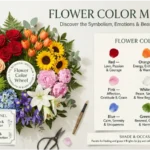
| Flower Color | Common Emotional Association |
|---|---|
| White | Peace, purity, reverence |
| Red | Deep love, passion, devotion |
| Pink | Affection, tenderness |
| Yellow | Friendship, warmth, happy memories |
| Purple | Dignity, spirituality, remembrance |
| Blue | Calmness, peace, loyalty |
| Green | Nature, renewal, life |
These are general symbolic associations rather than universal meanings. Flower type, cultural tradition, and the relationship with the deceased can change the message.
Funeral Colors in Memorial Design
Memorial cards, programs, photo boards, videos, websites, and printed tributes can all use color to establish a visual mood.
Traditional Memorial Design
Black, white, gray, and muted gold create a formal appearance.
Peaceful Memorial Design
White, cream, pale blue, and soft green can produce a lighter and more peaceful atmosphere.
Celebration of Life Design
The deceased person’s favorite colors can make the memorial more personal. Bright colors can be appropriate when they reflect personality, hobbies, or joyful memories.
Funeral Color Meanings in Branding and Marketing
Funeral homes, memorial services, cemeteries, and related organizations often use restrained colors to communicate trust and professionalism.
Dark blue may suggest stability and reliability.
Gray can create a modern, neutral appearance.
White can suggest cleanliness, peace, and simplicity.
Purple can provide a spiritual or ceremonial feeling.
Gold may introduce dignity and premium visual quality when used sparingly.
The strongest funeral-related branding usually avoids relying on color alone. Typography, photography, spacing, wording, and cultural sensitivity all contribute to the message.
Funeral Colors in Interior Design
The same color can look completely different depending on lighting and surrounding materials.
Memorial Room
Soft neutral walls with natural wood and white flowers can create a peaceful environment.
Funeral Home Reception Area
Navy, charcoal, cream, and warm wood can communicate professionalism without making the room feel overly dark.
Celebration-of-Life Space
Muted greens, blues, lavender, or personal colors can create a warmer environment.
Lighting Matters
Warm lighting can make cream, beige, brown, and gold appear richer.
Cool lighting can make blue and gray appear sharper.
A color selected from a computer screen may therefore look different when printed or displayed in a real room.
Funeral Color Combinations That Work Well
Black + White
A classic combination associated with formality, mourning, and simplicity.
Navy + White
A softer alternative to black and white that remains highly formal.
Gray + Lavender
Creates a quiet, gentle memorial palette.
White + Green
Connects peace with nature and renewal.
Navy + Gray
A professional combination suitable for clothing and memorial materials.
Purple + White
Can create a ceremonial and spiritual visual effect.
Cream + Brown + Green
Works particularly well for natural or outdoor celebrations of life.

A Real-Time Funeral Color Example
Imagine a family planning a memorial service for a relative who loved gardening and spending time outdoors.
Instead of using an entirely black visual theme, the family chooses cream, sage green, and soft white.
The invitations use cream paper with green accents. White flowers are combined with natural greenery. Family photographs are displayed in simple wooden frames.
The clothing request remains flexible: guests may wear traditional dark clothing or include a subtle green element.
The result is still respectful, but the color scheme tells something personal about the person’s life.
This example shows why funeral color meanings cannot be separated from context. The colors are not simply “green means life” and “white means peace.” Together, they help tell the person’s story.
How Age and Generation Can Affect Funeral Color Choices
Older generations may be more familiar with traditional black mourning clothing.
Younger families may prefer celebrations of life that use photographs, favorite colors, personalized decorations, and brighter floral arrangements.
Neither approach is automatically more respectful.
The difference often reflects changing ideas about how people remember and honor someone who has died.
How Personal Memories Change Color Meaning
A color can become meaningful because of one specific person.
A particular shade of blue might remind a family of the deceased’s favorite shirt.
Yellow might remind someone of a garden.
Purple might connect to a favorite sports team, hobby, or meaningful object.
This personal symbolism can be more powerful than a general color dictionary because it comes from lived experience.
Common Misconceptions About Funeral Color Meanings
“Black Is the Only Respectful Funeral Color”
Not true. Black is traditional in many settings, but appropriate colors depend on culture, religion, family wishes, and the type of service.
“White Always Means Happiness”
White can represent peace, purity, spirituality, mourning, or remembrance depending on cultural context.
“Bright Colors Are Disrespectful”
Not always. Some families specifically request bright colors to celebrate a person’s life.
“Red Should Never Be Worn to a Funeral”
There is no universal rule. Red can be inappropriate for some traditional services but meaningful in certain cultural settings or when used in flowers.
“Color Psychology Can Tell You Exactly How Someone Feels”
Color can influence perception, but human emotion is much more complicated. Personal experience and cultural meaning matter greatly.
How to Choose the Right Funeral Color
When you are unsure, use this simple order of priorities:
- Follow the family’s instructions.
- Consider the religion or cultural tradition.
- Check whether the service is traditional or a celebration of life.
- Choose understated colors when no guidance is available.
- Use the deceased person’s favorite color when the family welcomes personalization.
- Avoid attention-grabbing combinations unless they are specifically requested.
For a traditional funeral with no instructions, black, navy, charcoal, white, and other muted colors are usually practical choices.
Funeral Color Meanings in Everyday Life
Funeral colors appear beyond the service itself.
They may be used in:
- Memorial cards
- Funeral programs
- Flower arrangements
- Sympathy gifts
- Cemetery decorations
- Memorial websites
- Photo collages
- Funeral home interiors
- Celebration-of-life invitations
- Clothing
- Jewelry
- Candles
- Printed photographs
- Memorial videos
The best choices usually balance symbolism with the personality of the person being remembered.
FAQ About Funeral Color Meanings
What color is most commonly associated with funerals?
Black is the most widely recognized funeral color in many Western societies. It commonly represents mourning, seriousness, respect, and formality.
What does white mean at a funeral?
White can symbolize peace, purity, innocence, remembrance, and spiritual hope. In some cultures, it is also a major mourning color.
Is blue an appropriate funeral color?
Yes. Navy blue is especially appropriate for formal services because it is conservative and understated. Lighter blues can create a softer impression.
What does purple mean at a funeral?
Purple can symbolize dignity, spirituality, ceremony, and remembrance. Its meaning varies between cultures and religious traditions.
Can I wear red to a funeral?
It depends on the service. Red can be too attention-grabbing for a traditional funeral, but it can also represent love or have specific cultural significance. Follow the family’s expectations.
What color flowers are best for a funeral?
White is a traditional choice for peaceful and respectful arrangements, but red, pink, purple, yellow, blue, and green can also be appropriate when they have personal or cultural meaning.
Is it disrespectful to wear bright colors to a funeral?
Not necessarily. If the family requests bright colors or the event is designed as a celebration of life, colorful clothing may be completely appropriate.
What color represents remembrance?
There is no single universal remembrance color. White, blue, purple, and other colors can represent remembrance depending on the culture, relationship, and setting.
What should I wear if I do not know the funeral dress code?
Choose conservative, understated clothing. Black, navy, charcoal, white, or muted colors are generally safer than very bright or highly patterned clothing.
Should a funeral use the deceased person’s favorite color?
It can be a meaningful choice, particularly for a personalized memorial or celebration of life. The family’s wishes should guide the decision.
Funeral Color Meanings Chart: Quick Reference
| Color | Main Symbolism | Best Practical Use |
|---|---|---|
| Black | Mourning, respect, formality | Traditional clothing |
| White | Peace, purity, remembrance | Flowers and memorial décor |
| Gray | Dignity, restraint | Suits and neutral design |
| Navy | Trust, calm, respect | Formal clothing |
| Purple | Spirituality, dignity | Flowers and ceremonial design |
| Red | Love, devotion, strong emotion | Personal flowers or cultural settings |
| Pink | Tenderness, affection | Floral arrangements |
| Green | Nature, renewal, life | Outdoor memorials |
| Yellow | Friendship, warmth | Celebration-of-life flowers |
| Brown | Earth, stability, simplicity | Natural décor |
Final Thoughts on Funeral Color Meanings
Funeral color meanings are not fixed rules written into every culture. Black may communicate mourning in one setting, while white may carry the same emotional weight in another. Blue can express calm remembrance, purple can create a sense of dignity, and green can connect a memorial with nature and renewal.
The most meaningful funeral color is often the one that respects the family, culture, ceremony, and person being remembered.
When traditional etiquette is expected, muted and formal colors are usually the safest choice. When a family wants a personalized celebration of life, colors can become part of the person’s story.
That is the deeper value of funeral color symbolism: color does not replace words or memories. It can quietly support them.

Emma Wilson is a dedicated comparison writer and product researcher at ColorMystiic.com. She specializes in creating unbiased product comparisons, detailed reviews, and helpful buying guides. Her goal is to help readers make smarter purchasing decisions with confidence.