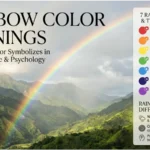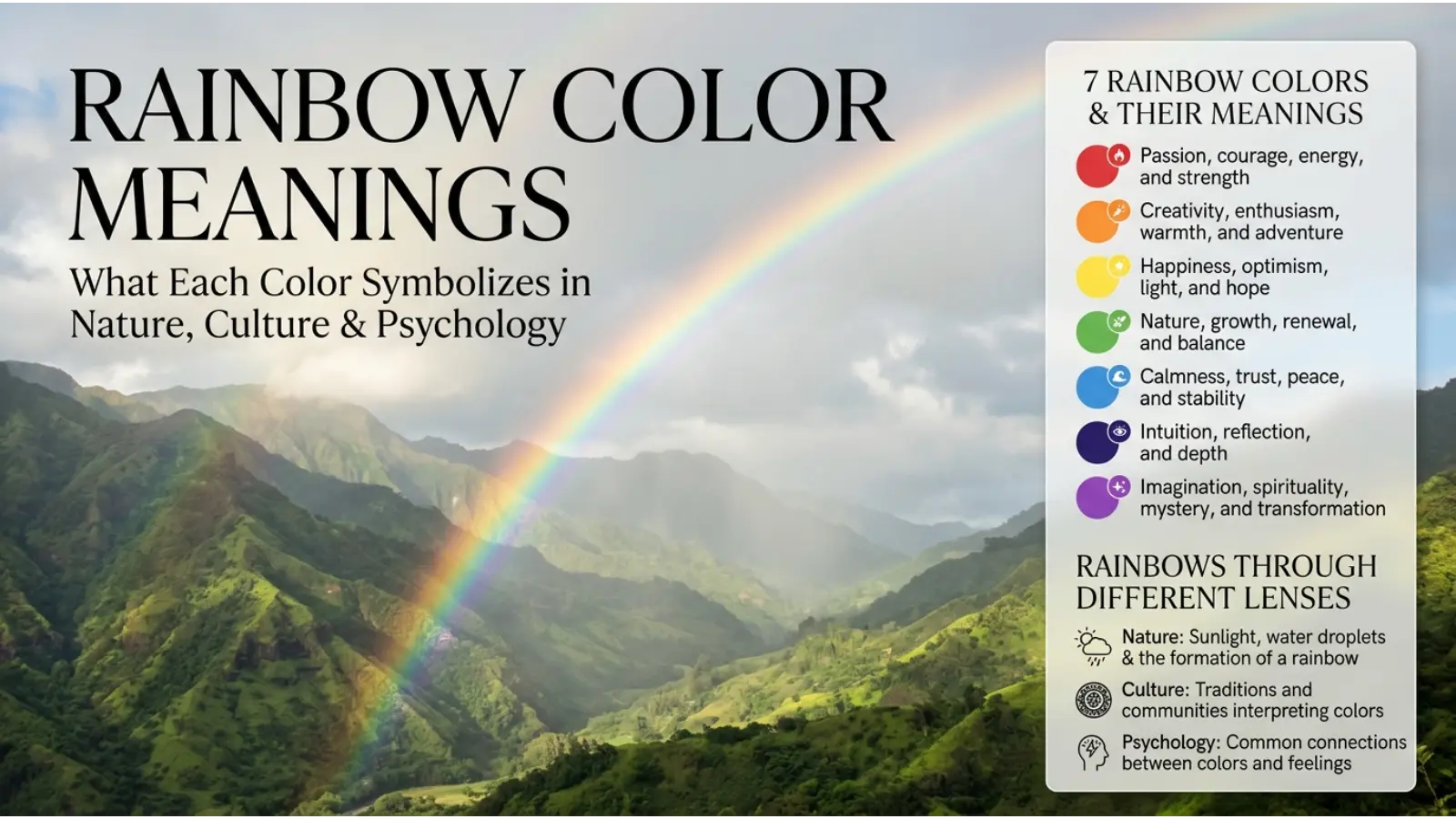
A Rainbow Color Meanings brings together some of the most recognizable colors in nature. It often reminds people of hope, happiness, peace, and new beginnings. However, every rainbow color can suggest something different. Red is commonly associated with passion and energy, while green represents nature and growth. Blue often suggests calmness, and violet can symbolize imagination and mystery.
Understanding rainbow color meanings helps explain why people use these colors in artwork, clothing, home decoration, celebrations, and business branding. Their meanings also depend on cultural traditions, personal experiences, and the situation in which they appear.
In this guide, you will discover what each rainbow color represents, how rainbow symbolism developed, and how to use these colors in everyday life.
Quick Answer: Rainbow colors commonly symbolize energy, joy, happiness, growth, peace, reflection, and imagination. Together, they often represent hope, diversity, harmony, and new beginnings. However, color meanings are symbolic associations, not universal rules.
The Seven Rainbow Color Meanings
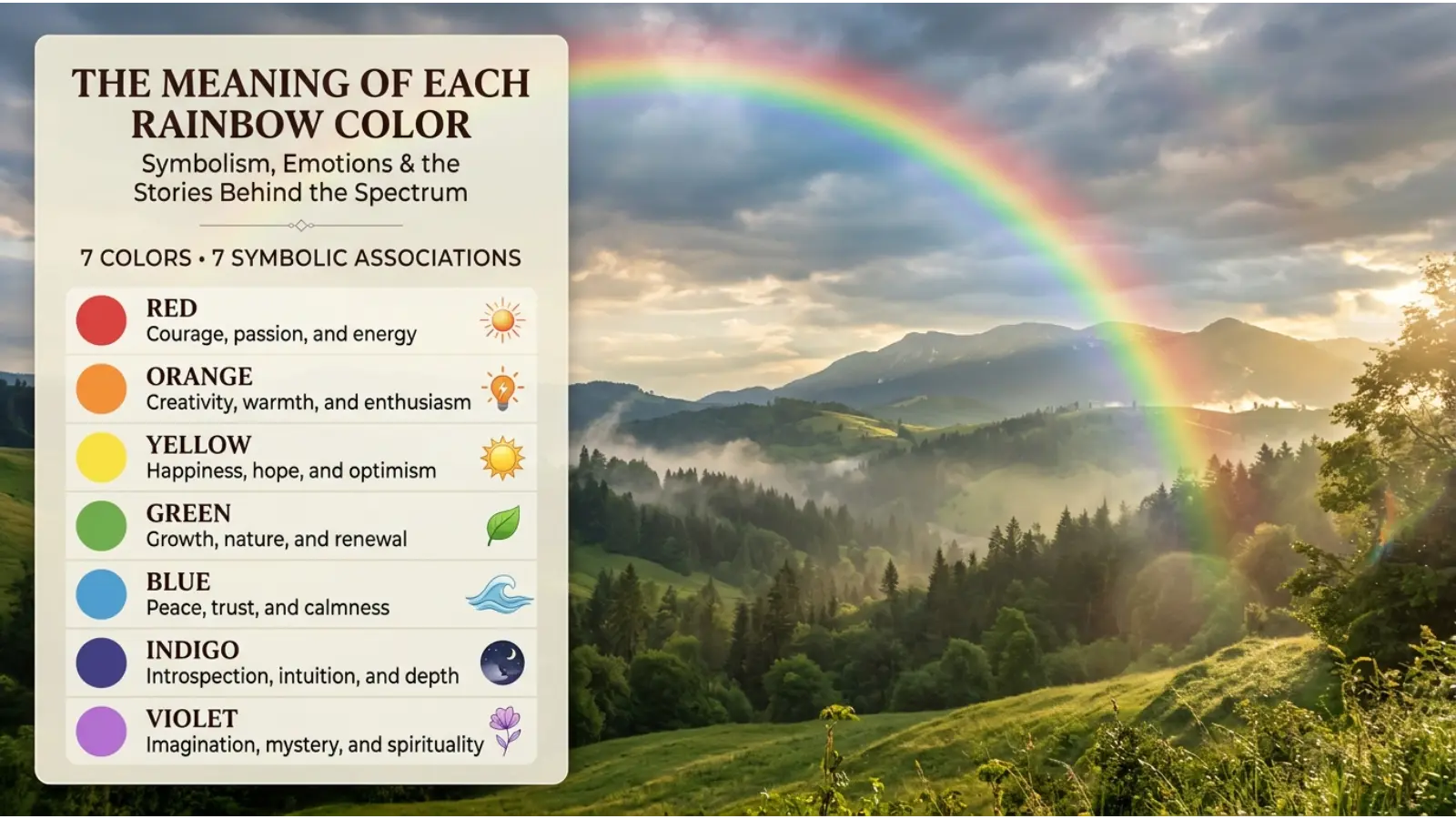
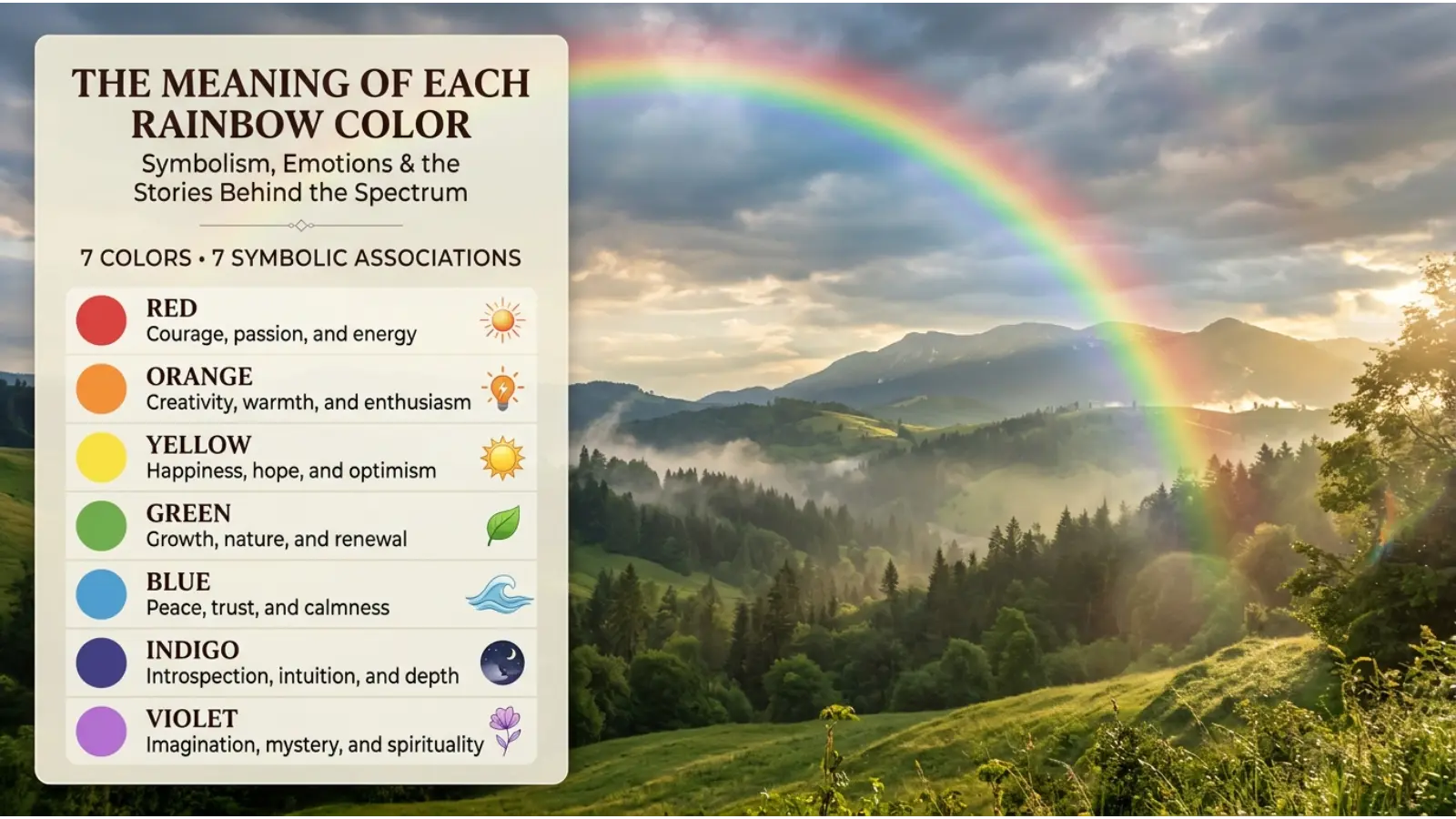
A traditional rainbow is commonly described using seven colors: red, orange, yellow, green, blue, indigo, and violet. In nature, these colors blend into one continuous spectrum rather than forming seven perfectly separate bands.
Colorful Rainbow Meaning Chart
| Rainbow color | Common symbolic meaning | Feeling it may suggest |
|---|---|---|
| 🟥 Red | Passion, courage, energy | Excitement and strength |
| 🟧 Orange | Creativity, enthusiasm, warmth | Friendliness and fun |
| 🟨 Yellow | Happiness, optimism, hope | Cheerfulness and brightness |
| 🟩 Green | Nature, growth, renewal | Freshness and balance |
| 🟦 Blue | Peace, trust, calmness | Relaxation and stability |
| 🟪 Indigo | Reflection, depth, intuition | Thoughtfulness and mystery |
| 🟣 Violet | Imagination, spirituality, creativity | Wonder and inspiration |
| 🌈 Rainbow | Hope, diversity, connection | Unity and possibility |
These meanings reflect common cultural and symbolic associations. They do not mean that everyone experiences a color in the same way.
What Does a Rainbow Symbolize?
A rainbow often represents hope because it can appear after rainfall, when the sky begins to clear. This natural experience has made rainbows a familiar symbol of better days ahead.
However, rainbows carry several other meanings.
- Hope: A rainbow can represent the possibility of improvement after a difficult period.
- New beginnings: Its appearance after a storm can suggest renewal and a fresh start.
- Unity: Different colors appear together in one beautiful natural display.
- Diversity: A rainbow can represent different identities, experiences, and communities.
- Joy: Its bright appearance often creates a cheerful visual impression.
- Peace: Rainbows are frequently used in artwork and public messages to express harmony.
- Possibility: Their beauty can inspire imagination and creative thinking.
The meaning changes with the context. For example, a rainbow in a children’s illustration might communicate happiness and wonder. In a community campaign, it may represent inclusion and acceptance.
The Each Rainbow Color Meanings
1. Red: Energy, Courage, and Passion
Red is the first color commonly listed in the traditional rainbow sequence. It is visually striking and often attracts attention.
❤️ Red represents energy, courage, passion, and strength.</text>
In symbolism, red can express love, determination, excitement, and confidence. At the same time, it may suggest danger, anger, or urgency, depending on the setting.
In design, red can make important details stand out. For example, an artist may use red to create a dramatic focal point, while a clothing designer may choose it for a bold outfit.
How to use red: Combine it with white for a clean appearance, navy for a strong contrast, or softer pink shades for a gentler romantic feeling.
2. Orange: Creativity, Warmth, and Enthusiasm
Orange combines the visual qualities of red and yellow. As a result, people often associate it with warmth, excitement, friendliness, and creative energy.
🧡 Orange represents enthusiasm, adventure, creativity, and warmth.</text>
In illustrations and advertisements, orange can create an inviting, playful atmosphere. It also works well in autumn-inspired designs because it resembles the colors of falling leaves and warm evening light.
However, bright orange may feel intense when used across large areas. Muted terracotta and peach offer softer alternatives.
How to use orange: Pair it with cream for warmth, navy for contrast, or green for a nature-inspired palette.
3. Yellow: Happiness, Optimism, and Hope
Yellow is associated with sunlight, brightness, and cheerful experiences. Within rainbow symbolism, it often represents optimism and the possibility of positive change.
💛 Yellow represents happiness, optimism, brightness, and hope.</text>
Designers use yellow to draw attention and create a lively atmosphere. Nevertheless, its effect depends on the shade. Pale yellow may appear gentle, while highly saturated yellow can look energetic or demanding.
Yellow can also communicate caution in road signs and safety markings. This demonstrates how the same color can express different messages depending on its purpose.
How to use yellow: Combine it with gray for a balanced design, white for a fresh appearance, or dark blue for strong readability.
4. Green: Growth, Nature, and Renewal
Green is closely connected with plants, forests, and healthy natural landscapes. Therefore, it often symbolizes life, renewal, balance, and growth.
💚 Green represents nature, growth, renewal, and balance.</text>
In everyday life, green may suggest environmental awareness or fresh beginnings. Businesses also use green in branding when they want to communicate nature, sustainability, or wellness. However, a green logo alone does not prove that a company follows environmentally responsible practices.
Different shades also create different impressions. Light green can appear fresh, while deep green may suggest tradition, richness, or sophistication.
How to use green: Pair it with brown for an earthy palette, white for freshness, or gold for an elegant look.
5. Blue: Peace, Trust, and Calmness
Blue is commonly associated with the sky and water. These familiar connections help explain why it often appears in designs intended to communicate calmness, reliability, and stability.
💙 Blue represents peace, trust, calmness, and stability.</text>
In workplaces, blue may support a professional visual identity. In bedrooms, softer blue shades can contribute to a quiet atmosphere. However, dark blue may appear formal, while bright blue can feel lively and modern.
Blue is not always a symbol of happiness. In some expressions, it represents sadness or loneliness. The surrounding words, images, and cultural setting help determine its meaning.
How to use blue: Combine it with white for a clean look, beige for warmth, or orange for a complementary contrast.
6. Indigo: Depth, Reflection, and Intuition
Indigo is a deep blue-violet color traditionally placed between blue and violet in the seven-color rainbow sequence.
💜 Indigo can symbolize depth, reflection, intuition, and mystery.</text>
Its darker appearance often creates a thoughtful or dramatic mood in artwork. In spiritual and symbolic writing, indigo is sometimes associated with inner awareness and contemplation. These associations vary among traditions and should not be treated as universal facts.
Indigo also works well in fashion and interior design when a darker alternative to ordinary blue is desired.
How to use indigo: Pair it with silver for a cool, elegant appearance, cream for softness, or pale yellow for contrast.
7. Violet: Imagination, Mystery, and Spirituality
Violet is commonly associated with creativity, imagination, and mystery. Historically, purple and violet shades have also appeared in artistic and ceremonial settings associated with prestige or spiritual reflection, although the meanings vary by place and period.
💜 Violet represents imagination, mystery, creativity, and spiritual reflection.</text>
In modern design, violet can look playful, artistic, luxurious, or peaceful. The result depends on its brightness, saturation, and the colors surrounding it.
For example, pastel violet may create a gentle atmosphere, while deep violet can look dramatic and rich.
How to use violet: Pair it with white for softness, gold for elegance, or green for a striking artistic combination.
Rainbow Color Meanings in Psychology
Color psychology explores how colors relate to perception, emotion, attention, and behavior. However, color responses are influenced by many factors, including personal memories, cultural learning, surroundings, and individual preferences.
Rainbow colors do not automatically create specific emotions. Instead, their appearance and context can influence how people interpret an image or environment.
How Rainbow Colors May Influence Perception
| Color | Common psychological association | Practical design use |
|---|---|---|
| 🟥 Red | Excitement and urgency | Highlight important details |
| 🟧 Orange | Warmth and enthusiasm | Create an inviting atmosphere |
| 🟨 Yellow | Brightness and alertness | Draw attention to key elements |
| 🟩 Green | Nature and freshness | Support nature-inspired designs |
| 🟦 Blue | Calmness and reliability | Create a professional appearance |
| 🟪 Indigo | Depth and reflection | Add visual richness |
| 🟣 Violet | Creativity and imagination | Create an artistic atmosphere |
These are general associations rather than guaranteed psychological effects.
For instance, a bright red warning sign may feel urgent because people learn to recognize its purpose. Meanwhile, red flowers may suggest romance because of familiar cultural traditions. The color is the same, but the meaning changes with the object and setting.
Spiritual Rainbow Color Meanings
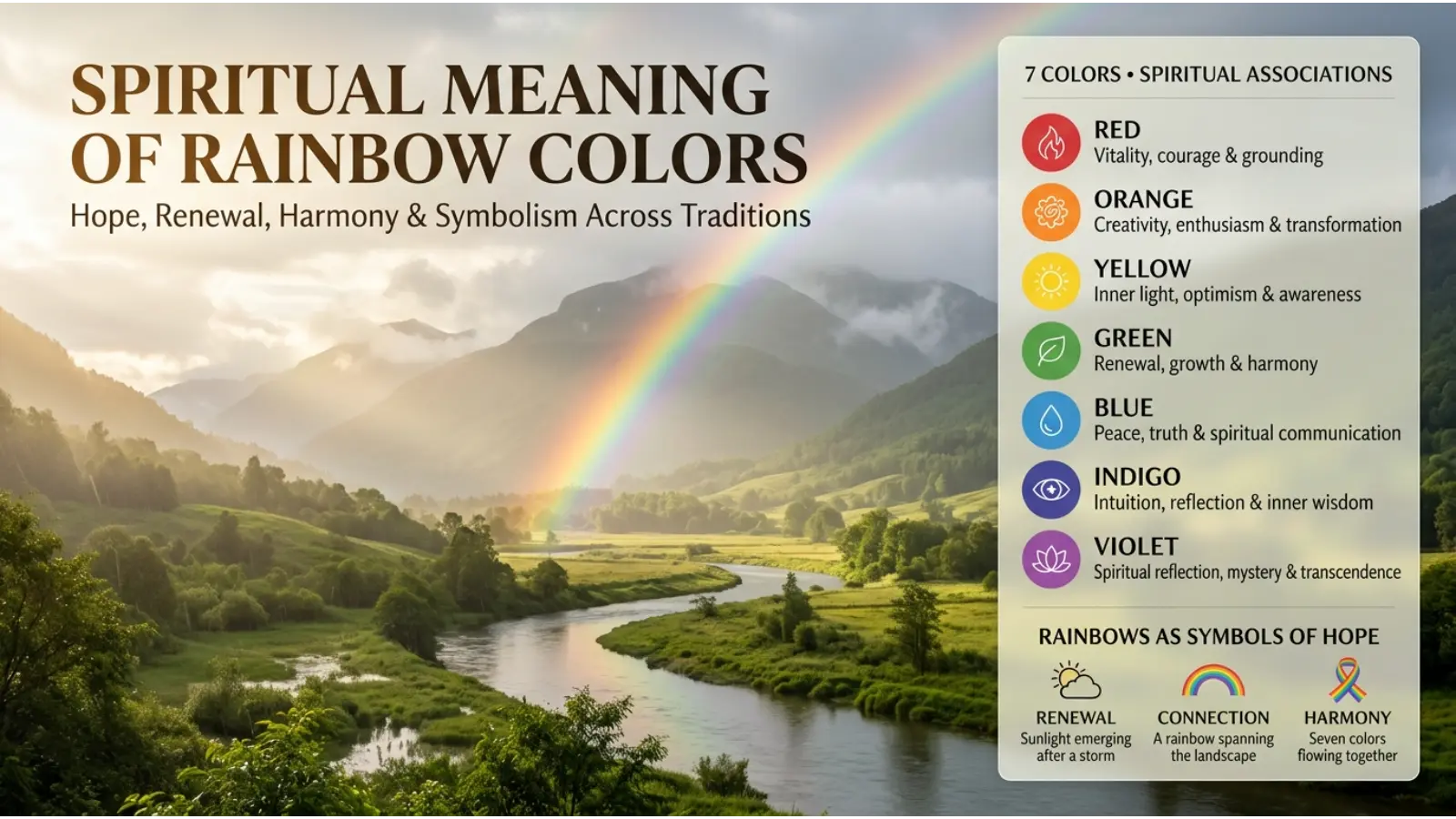
In spiritual interpretations, rainbows are often used as symbols of hope, renewal, harmony, and connection. Their appearance after rain can encourage people to reflect on change and the possibility of new beginnings.
Some contemporary spiritual systems also assign individual meanings to rainbow colors. These interpretations are not shared by every religion or tradition.
Common symbolic interpretations include:
- Red: Vitality, courage, and determination.
- Orange: Creativity, enthusiasm, and personal expression.
- Yellow: Clarity, confidence, and optimism.
- Green: Renewal, balance, and growth.
- Blue: Peace, communication, and trust.
- Indigo: Reflection, intuition, and inner awareness.
- Violet: Imagination, wisdom, and spiritual exploration.
These meanings are best understood as interpretive traditions rather than scientifically established spiritual properties.
What Does Seeing a Rainbow Mean Spiritually?
Some people interpret seeing a rainbow as a reminder to remain hopeful, appreciate beauty, or welcome change. Others simply enjoy it as a natural phenomenon.
A rainbow does not have one universally accepted spiritual message. Its personal meaning may depend on someone’s beliefs, experiences, and circumstances.
Rainbow Symbolism Across Cultures
Rainbows appear in stories, art, religion, and folklore around the world. Nevertheless, their meanings are not identical across cultures.
Western Cultural Interpretations
In many modern Western settings, rainbows represent hope, happiness, peace, and new beginnings. They frequently appear in children’s books, greeting cards, celebrations, and artwork.
Additionally, rainbow imagery has become widely recognized as a symbol of LGBTQ+ pride and community. The rainbow Pride flag is associated with visibility, inclusion, identity, and equal rights.
Eastern Cultural Interpretations
Rainbow symbolism varies across Asian societies, religions, and artistic traditions. In some Buddhist contexts, rainbow imagery appears in spiritual art and teachings, while other traditions connect rainbows with particular stories or cosmological ideas.
It would be inaccurate to assign one meaning to rainbows across all of Asia. Local history and religious traditions matter.
Middle Eastern Interpretations
Rainbows may be appreciated as signs of natural beauty, hope, or divine creation in some communities. However, beliefs differ among countries, religious groups, and individuals.
A rainbow’s appearance should not automatically be interpreted as a specific religious sign.
African Cultural Interpretations
African cultures include many distinct languages, histories, religions, and oral traditions. Rainbow imagery may appear in local stories, art, and contemporary community symbols.
There is no single meaning that accurately describes rainbow symbolism throughout the entire continent.
Indigenous Traditions
Some Indigenous communities have specific stories and teachings involving rainbows. These meanings belong to particular peoples and cultural traditions rather than one universal Indigenous belief system.
Therefore, it is best to identify a specific community before explaining a traditional interpretation.
Modern Global Culture
Today, rainbow imagery is used in advertising, entertainment, social campaigns, education, and celebrations. Its bright appearance makes it useful for communicating diversity and optimism.
However, context remains essential. A rainbow on a toy package may simply suggest fun, while a rainbow flag can communicate a much more specific social identity.
Historical Rainbow Color Meanings
Rainbow symbolism has a long history in mythology, religious traditions, art, and literature.
In the biblical story of Noah, the rainbow is described as a sign of God’s covenant following the flood. This gives the rainbow a particular religious meaning within Judaism and Christianity.
In Greek mythology, Iris is associated with the rainbow and serves as a messenger of the gods. This provides a different historical interpretation rooted in ancient Greek storytelling.
Over time, rainbow imagery also became popular in paintings, decorative arts, children’s illustrations, and public celebrations.
In modern history, the rainbow Pride flag became a recognized symbol of LGBTQ+ visibility and rights. Its use shows how a familiar natural image can acquire a specific social meaning.
Although the rainbow’s symbolism has changed, its connection with beauty and possibility continues across many modern settings.
What Does a Rainbow Color Meanings in Dreams?
Dream interpretations are subjective. There is no reliable scientific evidence that a rainbow in a dream predicts future events or carries one fixed message.
Still, people may connect rainbow dreams with personal emotions or experiences.
- A bright rainbow: May remind someone of happiness, optimism, or a positive memory.
- A rainbow after a storm: May suggest relief after a stressful experience.
- A double rainbow: May represent abundance, wonder, or a meaningful personal moment.
- A fading rainbow: May bring up thoughts about change or something temporary.
- A rainbow over water: May create associations with peace, reflection, or renewal.
The most useful question is often how the dream felt to the person experiencing it. Personal associations can be more meaningful than a universal dream dictionary.
Rainbow Colors in Branding and Marketing
Businesses use color to shape their visual identity, attract attention, and communicate a message. Rainbow palettes can be especially useful when a brand wants to appear creative, diverse, playful, or inclusive.
Why Brands Use Rainbow Colors
A rainbow palette can help communicate:
- Creativity: Multiple colors suggest variety and experimentation.
- Inclusion: Rainbow imagery may represent different identities and communities.
- Celebration: Bright colors can suit events, entertainment, and festive products.
- Playfulness: A vivid palette can appeal to audiences looking for fun.
- Variety: Different colors can help distinguish products, categories, or services.
However, using every rainbow color is not always the best branding choice. Too many bright colors can make a logo difficult to read or remember.
How to Use Rainbow Colors in a Business
For a professional brand, select a primary color and use the remaining rainbow colors as accents. For example, a blue logo with a small rainbow detail can preserve a clean appearance while communicating creativity.
A children’s brand may use brighter colors across packaging, while a wellness business might choose muted rainbow shades to create a softer visual identity.
Always consider contrast, readability, accessibility, and the expectations of the intended audience.
Rainbow Color Meanings in Interior Design
Rainbow colors can make a room feel lively and expressive. Nevertheless, using all seven colors at full strength can overwhelm a small space.
A more balanced approach is to choose one dominant color, two supporting shades, and a few small accents.
Room-by-Room Rainbow Color Ideas
| Room | Suggested rainbow approach | Possible atmosphere |
|---|---|---|
| Living room | Neutral walls with rainbow cushions | Cheerful and welcoming |
| Bedroom | Blue, lavender, and soft pink accents | Gentle and restful |
| Home office | Blue base with yellow accents | Professional and lively |
| Kitchen | White cabinets with colorful accessories | Fresh and playful |
| Children’s room | Bright rainbow wall art | Imaginative and energetic |
How Lighting Changes Rainbow Colors
Lighting can change how colors look in a room. Warm bulbs may make yellow, orange, and red shades appear richer, while cool lighting can emphasize blue and violet tones.
Natural daylight also changes throughout the day. Therefore, test paint samples in the actual room before decorating the entire space.
For a rainbow-inspired room, consider using a neutral background. White, beige, and light gray allow colorful decorations to stand out without competing for attention.
Rainbow Color Meanings in Fashion
Rainbow clothing can communicate creativity, confidence, celebration, or support for a community. The impression depends on the clothing style, color intensity, and occasion.
Ways to Wear Rainbow Colors
Casual outfits: Try a rainbow-striped shirt with plain jeans or neutral trousers. This keeps the outfit colorful without making every item compete for attention.
Professional clothing: Add a small rainbow accessory, such as a tie, scarf, pin, or pocket square, when it suits the workplace.
Formal occasions: A rainbow detail on a handbag, jewelry, or patterned garment can introduce color while maintaining an elegant appearance.
Summer fashion: Brighter rainbow shades often work well with lightweight fabrics and simple accessories.
Winter fashion: Deeper jewel tones and muted rainbow colors can add interest to coats, knitwear, and scarves.
What Colors Pair Well With a Rainbow Outfit?
White and black create a simple background for bright rainbow patterns. Denim adds a casual feel, while beige and cream create a softer appearance.
If an outfit already contains several strong colors, keep shoes and accessories relatively simple. This helps maintain visual balance.
Best Rainbow Color Combinations
Rainbow colors can work together in many different ways. The most effective combination depends on the mood, purpose, and amount of color used.
| Color combination | Why it works | Best use |
|---|---|---|
| 🟥 Red + 🟨 Yellow | Bright, energetic contrast | Posters and celebrations |
| 🟧 Orange + 🟦 Blue | Contrasting warm and cool colors | Branding and artwork |
| 🟨 Yellow + 🟪 Indigo | Strong visual contrast | Illustrations and graphics |
| 🟩 Green + 🟣 Violet | Nature-inspired yet expressive | Fashion and creative spaces |
| 🟦 Blue + 🟣 Violet | Closely related cool hues | Bedrooms and digital designs |
| 🌈 Rainbow + White | White creates visual breathing room | Websites and packaging |
| 🌈 Rainbow + Black | Dark backgrounds make bright colors stand out | Posters and bold fashion |
| 🌈 Rainbow + Beige | A neutral background softens vivid colors | Home decoration |
For websites, use dark text on light backgrounds whenever possible. Also, do not rely on color alone to communicate important information; labels and clear shapes help more people understand the design.
Rainbow Colors in Art and Photography
Artists use rainbow colors to create contrast, suggest movement, and guide the viewer’s attention. Since each color has a different visual character, combining them can make an image feel dynamic.
How Artists Use Rainbow Symbolism
An artist might place a rainbow above a damaged landscape to suggest hope or recovery. Another might use it in a portrait to explore identity, individuality, or belonging.
These interpretations come from the artwork’s context rather than the colors alone.
Rainbow Photography Tips
Rainbows often appear when sunlight interacts with water droplets in the air. For a photograph, a darker cloud or landscape can help the rainbow become more visible.
Try these practical techniques:
- Look for rain showers with sunlight breaking through.
- Place the rainbow against a simple background when possible.
- Include a landscape or building to show scale.
- Avoid excessive editing that changes the rainbow’s natural colors.
- Adjust exposure carefully so bright areas retain detail.
The strongest rainbow photographs often combine the colorful arc with an interesting foreground rather than relying on the rainbow alone.
Rainbow Color Meanings in Everyday Life
Rainbow colors appear in many ordinary situations. Their meaning often comes from how people use them.
- Education: Teachers may use rainbow charts to make learning materials visually engaging.
- Celebrations: Rainbow decorations can create a cheerful atmosphere at parties.
- Sports: Rainbow-themed clothing or accessories may communicate team spirit, identity, or inclusion.
- Entertainment: Animated films and children’s programs often use rainbows to suggest wonder and fantasy.
- Gardening: Rainbow-inspired flower arrangements can create a colorful display.
- Personal gifts: Rainbow gifts may express joy, encouragement, friendship, or support.
- Public campaigns: Rainbow imagery can communicate community identity or social inclusion.
- Digital design: Rainbow gradients can make illustrations, wallpapers, and creative websites feel expressive.
Nevertheless, the meaning should always fit the situation. A rainbow is not automatically a symbol of a specific movement, religion, or personal belief.
Common Misconceptions About Rainbow Color Meanings
Myth 1: Every Rainbow Must Have Exactly Seven Colors
The seven-color description is a traditional way to teach the visible spectrum. In reality, rainbow colors blend continuously, so the number of visible color bands depends on how people divide the spectrum.
Myth 2: Every Color Has One Universal Meaning
Color associations differ between individuals and cultures. Red can suggest romance, danger, celebration, or courage depending on the setting.
Myth 3: Rainbow Colors Can Predict the Future
Some spiritual traditions attach personal significance to rainbows. However, there is no established scientific evidence that seeing a rainbow predicts future events.
Myth 4: Color Psychology Proves That Colors Control Emotions
Color can influence perception and sometimes affect emotional responses. However, these effects are not identical for everyone and do not allow colors to reliably control a person’s mood or behavior.
Myth 5: Rainbow Colors Always Represent LGBTQ+ Pride
Rainbow imagery has many uses, including nature photography, children’s products, celebration, and art. A rainbow Pride flag has a more specific social meaning, but not every rainbow image is intended to communicate that identity.
Myth 6: More Colors Always Create Better Design
A complete rainbow can be visually appealing, but excessive color can reduce readability and create clutter. Balanced spacing, suitable contrast, and a clear visual hierarchy matter just as much.
Frequently Asked Questions About Rainbow Color Meanings
1. What do the seven rainbow colors mean?
The seven commonly named colors are associated with energy, enthusiasm, happiness, growth, calmness, reflection, and imagination. Together, they often symbolize hope, diversity, harmony, and possibility.
2. What is the spiritual meaning of a rainbow?
A rainbow may symbolize hope, renewal, harmony, or a connection between different parts of life. However, spiritual interpretations differ among traditions and individuals.
3. Does a rainbow symbolize good luck?
Many people associate rainbows with positive experiences and good fortune. However, this is a cultural or personal interpretation rather than a scientifically established effect.
4. Why do rainbows symbolize hope?
Rainbows often appear as rain clears and sunlight returns. This natural experience has made them a familiar symbol of relief, optimism, and better days ahead.
5. What does a double rainbow mean?
A double rainbow occurs when light undergoes additional reflection inside water droplets, producing a second, fainter arc. Symbolically, people may associate it with wonder, abundance, or good fortune, but it has no single universal spiritual meaning.
6. What does a rainbow represent in different cultures?
Rainbow symbolism varies across cultures and historical traditions. It may represent hope, divine promises, mythology, natural beauty, or community identity, depending on the specific context.
7. Why are rainbow colors used in branding?
Businesses may use rainbow colors to communicate creativity, variety, celebration, or inclusion. A well-planned palette can attract attention, but the design should still suit the brand’s audience and purpose.
8. What does a rainbow mean in the LGBTQ+ community?
The rainbow Pride flag is a widely recognized symbol of LGBTQ+ identity, visibility, diversity, and community. Its meaning is more specific than the general symbolism of a rainbow in nature.
9. Can rainbow colors affect your mood?
Colors can influence visual perception and may affect how people feel in certain settings. However, personal experiences, cultural associations, lighting, and context all play a role, so the effects are not universal.
10. What is the best way to use rainbow colors in design?
Choose a clear purpose, balance bright colors with neutral shades, and maintain readable contrast. For a simple design, use one dominant color with a few rainbow accents instead of giving every color equal visual weight.
Conclusion
Rainbow color meanings combine natural beauty with symbolism shaped by culture, personal experience, art, and history. Red can suggest passion, yellow can evoke brightness, green can represent growth, and blue can communicate calmness. Meanwhile, indigo and violet add depth, reflection, and imagination to the traditional rainbow sequence.
Together, rainbow colors often express hope, diversity, connection, and new possibilities. Their meaning, however, depends on how and where they appear.
The next time you see a rainbow, consider what it represents to you. It might remind you of a happy memory, inspire a creative idea, or simply encourage you to appreciate a beautiful moment in nature.

Emma Wilson is a dedicated comparison writer and product researcher at ColorMystiic.com. She specializes in creating unbiased product comparisons, detailed reviews, and helpful buying guides. Her goal is to help readers make smarter purchasing decisions with confidence.