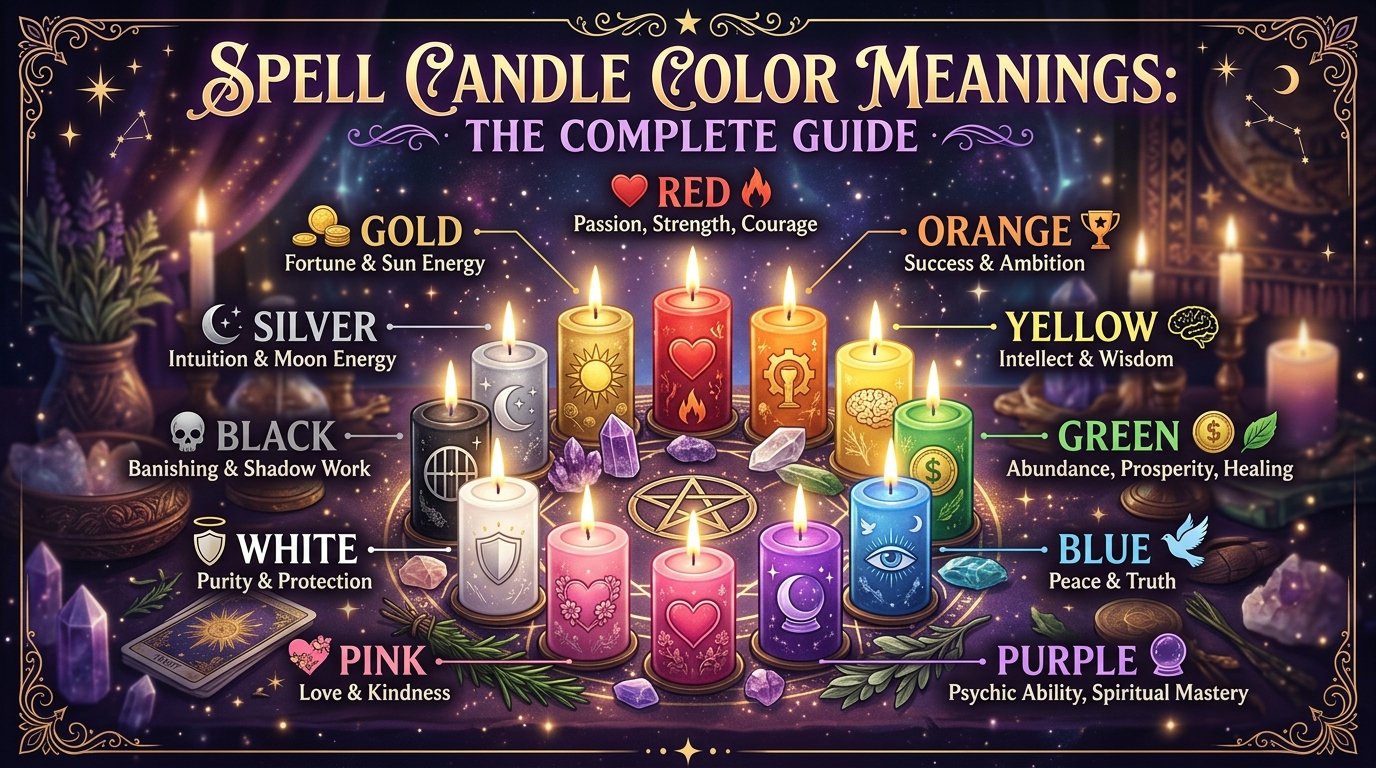
Color has always played a powerful role in human traditions, emotions, and symbolism. In many spiritual and folk practices, candle colors are chosen to represent specific intentions rather than to create magical effects on their own. This is why people often search for spell candle color meanings—to understand what each color traditionally symbolizes and how it may support meditation, reflection, rituals, or personal goals.
The meaning of a candle color is not universal. It can vary between modern spiritual practices, historical traditions, religious customs, and individual beliefs. While many people associate colors with certain emotions or intentions, these interpretations are symbolic rather than scientifically proven.
In this guide, you’ll learn the traditional meanings of spell candle colors, how color psychology relates to candle symbolism, cultural perspectives, practical uses, and common misconceptions.
Quick Answer:
Spell candle color meanings are symbolic associations used in many spiritual traditions. For example, white often represents purity and protection, green symbolizes growth and prosperity, red is linked to passion and courage, blue represents peace and communication, and purple is associated with wisdom and spiritual insight. These meanings vary across traditions and should be viewed as symbolic rather than proven supernatural effects.
What Are Spell Candle Color Meanings?
Spell candle color meanings are traditional symbolic associations assigned to different candle colors. Many people choose candle colors to match a personal intention, such as finding inner peace, encouraging confidence, expressing gratitude, or reflecting on personal growth.
The candle itself is often viewed as a focus point. Its flame may help create a calm environment for meditation, prayer, journaling, or mindful reflection, while the color reinforces the chosen intention through symbolism.
Different traditions—including modern witchcraft, folk magic, New Age spirituality, and some ceremonial practices—may interpret colors slightly differently.
Traditional Spell Candle Color Meanings
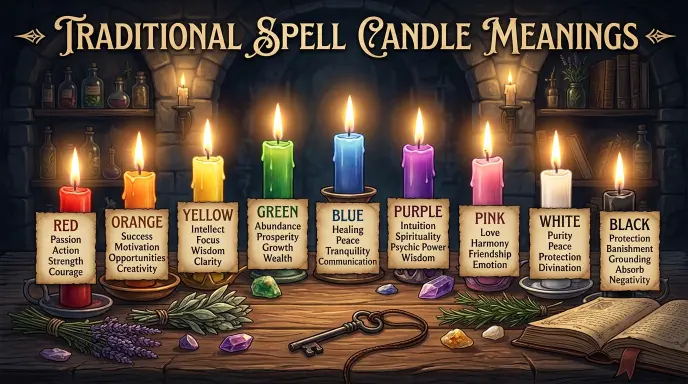
White Candle Meaning
White is one of the most versatile candle colors.
Common symbolism
- Purity
- Peace
- Protection
- Clarity
- Healing
- New beginnings
- Spiritual cleansing
White candles are frequently chosen when someone wants a neutral symbol or when another color is unavailable.
Black Candle Meaning
Black candles often surprise people because they are not traditionally associated only with negativity.
They commonly symbolize:
- Protection
- Letting go
- Ending unhealthy habits
- Personal boundaries
- Transformation
- Absorbing unwanted energy (symbolically)
Many traditions use black candles during reflection or when marking the end of one chapter before beginning another.
Red Candle Meaning
Red is among the strongest symbolic colors.
It often represents:
- Passion
- Love
- Courage
- Physical energy
- Motivation
- Confidence
- Determination
Because red naturally attracts attention, it is also associated with action and vitality.
Pink Candle Meaning
Pink carries a softer emotional meaning.
It commonly symbolizes:
- Friendship
- Compassion
- Self-love
- Kindness
- Emotional healing
- Affection
- Harmony
Pink candles are often chosen during practices focused on forgiveness or strengthening relationships.
Orange Candle Meaning
Orange combines the warmth of red with the optimism of yellow.
Traditional meanings include:
- Creativity
- Success
- Confidence
- Motivation
- Opportunity
- Personal ambition
- Enthusiasm
Orange is often selected when beginning new projects or seeking inspiration.
Yellow Candle Meaning
Yellow is strongly connected with the mind.
Its symbolism includes:
- Learning
- Focus
- Memory
- Optimism
- Communication
- Mental clarity
- Curiosity
Many people use yellow candles while studying, journaling, or brainstorming ideas.
Green Candle Meaning
Green is closely connected with nature.
Traditional symbolism includes:
- Growth
- Prosperity
- Good fortune
- Renewal
- Balance
- Health
- Abundance
Because green represents flourishing plants, it naturally became associated with progress and opportunity.
Blue Candle Meaning
Blue encourages calm and emotional balance.
Common meanings include:
- Peace
- Truth
- Communication
- Patience
- Trust
- Wisdom
- Emotional healing
Lighter blues often represent serenity, while darker blues may symbolize wisdom and responsibility.
Purple Candle Meaning
Purple has long been connected with mystery and higher understanding.
It often symbolizes:
- Spiritual awareness
- Wisdom
- Intuition
- Personal growth
- Transformation
- Inner strength
- Reflection
Historically, purple was expensive to produce, making it a symbol of dignity and importance.
Brown Candle Meaning
Brown is associated with the earth.
Its symbolism includes:
- Stability
- Home
- Security
- Practical thinking
- Grounding
- Reliability
Brown reminds people to stay connected with everyday responsibilities.
Gray Candle Meaning
Gray represents balance between extremes.
It may symbolize:
- Neutrality
- Patience
- Reflection
- Wisdom through experience
- Emotional balance
Gray is sometimes chosen when seeking perspective before making important decisions.
Gold Candle Meaning
Gold traditionally represents:
- Achievement
- Success
- Confidence
- Prosperity
- Wisdom
- Celebration
- Personal accomplishment
Its bright appearance naturally connects it with abundance and recognition.
Silver Candle Meaning
Silver often symbolizes:
- Intuition
- Reflection
- Calm thinking
- Moon symbolism
- Emotional awareness
- Balance
Many traditions connect silver with quiet reflection rather than outward action.
Psychology Behind Candle Colors
Color psychology studies how colors influence perception and emotional responses. While research suggests that colors can affect mood, there is no scientific evidence that candle colors themselves produce supernatural outcomes.
Instead, colors may influence:
- Emotional expectations
- Attention
- Memory
- Relaxation
- Motivation
- Personal associations
For example:
- Blue environments often feel calmer.
- Red can increase alertness.
- Green may remind people of nature.
- Yellow often feels energetic.
These psychological responses help explain why many people feel more focused when using meaningful colors during meditation or reflection.
Spiritual Meaning of Spell Candle Colors
Across many modern spiritual traditions, candle colors are used as symbolic reminders of personal intentions.
Examples include:
| Candle Color | Traditional Spiritual Association |
|---|---|
| White | Purity and protection |
| Black | Release and transformation |
| Red | Courage and strength |
| Pink | Compassion and love |
| Orange | Creativity and confidence |
| Yellow | Wisdom and learning |
| Green | Growth and abundance |
| Blue | Peace and healing |
| Purple | Spiritual insight |
| Gold | Success and achievement |
| Silver | Reflection and intuition |
These interpretations vary between traditions and should not be viewed as universal beliefs.
Cultural Interpretations of Candle Colors
Color meanings differ around the world.
Western cultures
White often symbolizes weddings and innocence, while black is frequently linked with mourning.
East Asian traditions
White may represent mourning in several cultures, showing that meanings can differ greatly from Western symbolism.
Latin American traditions
Religious candle use is common, and colors often carry devotional rather than magical meanings.
African traditions
Many cultural traditions use color symbolically within ceremonies, but interpretations vary widely between communities.
Modern global spirituality
Contemporary spiritual communities often blend historical symbolism with personal interpretation.
Historical Origins of Candle Color Symbolism
Colored candles became more widely available after advances in candle-making and dyes.
Historically, candles were primarily practical sources of light. Over time, religions, ceremonies, and spiritual traditions began assigning symbolic meanings to colors.
Many modern spell candle meanings combine:
- European folk traditions
- Ceremonial practices
- Modern pagan symbolism
- New Age spirituality
- Personal belief systems
Because these traditions evolved separately, meanings are not always identical.
Do Candle Colors Really Have Power?
There is no scientific evidence that candle colors possess supernatural powers.
Many practitioners believe the value comes from:
- Focused intention
- Mindfulness
- Personal symbolism
- Meditation
- Emotional reflection
In psychology, meaningful rituals can help people stay committed to goals, reduce stress, and create moments of intentional reflection.
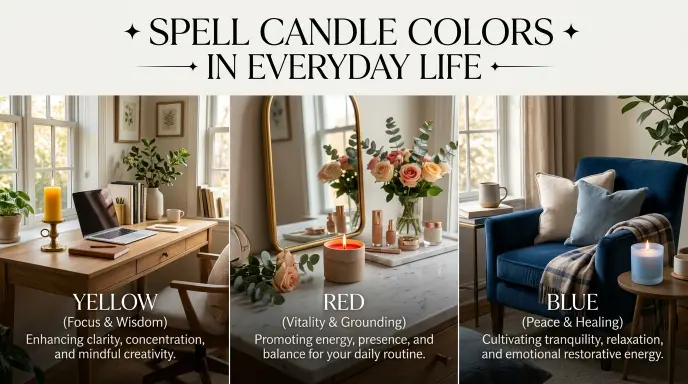
Using Spell Candle Colors in Everyday Life
Even outside spiritual practices, candle colors can create meaningful environments.
Examples include:
- White candles for quiet reading spaces.
- Blue candles during relaxation routines.
- Green candles while planning financial goals.
- Yellow candles in study areas.
- Pink candles during gratitude journaling.
- Orange candles for creative projects.
- Purple candles during meditation.
- Brown candles in cozy living spaces.
The symbolism can serve as a visual reminder of personal intentions.
Choosing the Right Spell Candle Color
Rather than following strict rules, many people choose colors based on:
- Personal meaning
- Cultural background
- Emotional goals
- Spiritual tradition
- Seasonal themes
- Intuition
If several intentions overlap, some people combine different candle colors or select white as a universal alternative.
Common Misconceptions About Spell Candle Color Meanings
Every tradition uses identical meanings.
False. Symbolism differs across cultures and spiritual systems.
One color guarantees results.
No reliable evidence supports this claim. Colors are symbolic tools, not guarantees.
Black candles represent evil.
Historically, black often symbolizes protection, endings, or transformation rather than evil.
White candles are only for protection.
White is considered one of the most adaptable symbolic candle colors.
There is only one correct interpretation.
Color symbolism evolves over time and often depends on cultural context and personal belief.
Practical Tips for Working With Candle Colors
- Choose a color that matches your personal intention.
- Use candles safely on stable, heat-resistant surfaces.
- Focus on reflection rather than expecting supernatural outcomes.
- Keep a journal to record thoughts and emotional changes.
- Remember that symbolism is personal and can evolve over time.
Frequently Asked Questions
What do spell candle colors mean?
They are symbolic color associations used in many spiritual traditions to represent intentions such as peace, love, courage, wisdom, prosperity, or protection.
Which candle color is used for protection?
White and black are commonly associated with protection in many modern traditions, although meanings vary.
What does a green spell candle represent?
Green usually symbolizes growth, prosperity, healing, abundance, and renewal.
What is the meaning of a blue candle?
Blue is commonly linked with peace, communication, truth, patience, and emotional balance.
Is there scientific proof that candle colors work?
No. Scientific evidence does not support supernatural effects from candle colors. Their value is generally understood as symbolic and psychological.
Can I use a white candle instead of another color?
Many traditions consider white a universal substitute because it symbolizes purity and clarity.
Why do different websites give different candle meanings?
Color symbolism comes from many traditions, so interpretations naturally differ.
What candle color represents love?
Red often symbolizes romantic passion, while pink is more commonly associated with affection, kindness, friendship, and self-love.
Can I combine different candle colors?
Yes. Many people combine colors to reflect multiple intentions, although practices vary by tradition.
Does candle color matter more than intention?
Most modern practitioners believe personal intention and mindful focus are more significant than the color itself.
Final Thoughts
Spell candle color meanings offer a rich blend of symbolism, psychology, history, and personal tradition. While different cultures and spiritual paths interpret colors in unique ways, the common thread is that colors help people express intentions, focus their thoughts, and create meaningful rituals.
Understanding these symbolic meanings can deepen your appreciation of color in everyday life, whether you’re meditating, decorating your home, practicing a spiritual tradition, or simply enjoying the calming glow of a candle.

Emma Wilson is a dedicated comparison writer and product researcher at ColorMystiic.com. She specializes in creating unbiased product comparisons, detailed reviews, and helpful buying guides. Her goal is to help readers make smarter purchasing decisions with confidence.