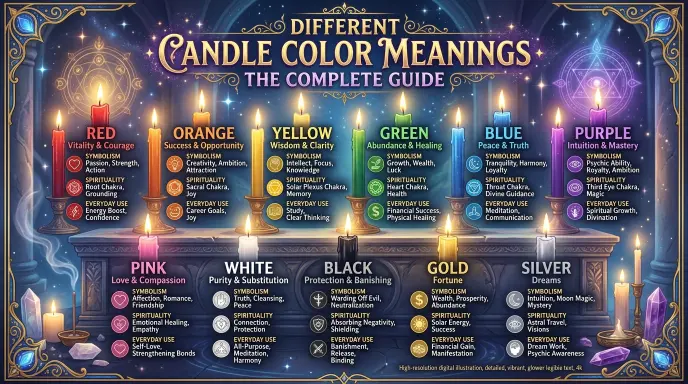
Candles have been used for thousands of years to bring light, mark celebrations, support meditation, and create meaningful rituals. Beyond their warm glow, many people believe that candle colors carry symbolic meanings that can influence intention, mood, and personal reflection. That is why so many people search for different candle color meanings when choosing candles for prayer, relaxation, home décor, or spiritual practices.
The meaning of a candle color is not universal. Some interpretations come from cultural traditions, others from modern spirituality, and many are simply personal associations. A white candle may symbolize peace in one tradition while representing remembrance in another. Understanding these differences helps you choose candle colors with greater confidence.
This guide explores the symbolism, psychology, cultural significance, and practical uses of candle colors. It also explains where these meanings come from and where interpretations may vary.
Quick Answer: Different candle color meanings are symbolic associations linked to emotions, intentions, traditions, and spiritual practices. While there is no universal system, colors such as white for purity, red for passion, green for growth, blue for peace, and purple for wisdom are among the most widely recognized interpretations.
What Do Different Candle Color Meanings Symbolize?
Candle colors often represent intentions rather than guaranteed outcomes. Lighting a candle does not change reality by itself, but it can help people focus their thoughts, emotions, prayers, or meditation.
Many traditions connect colors with themes such as:
- Love
- Peace
- Courage
- Healing
- Protection
- Prosperity
- Wisdom
- Creativity
- Gratitude
- Renewal
These meanings are symbolic rather than scientific facts. Their value often comes from personal belief, cultural customs, and mindful practice.
Complete Candle Color Meaning Chart
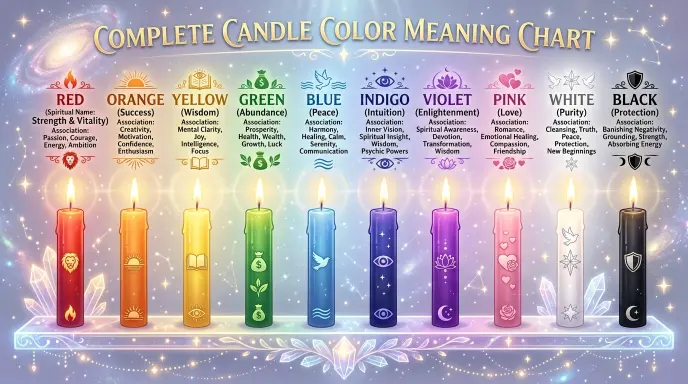
White Candle Meaning
White is one of the most versatile candle colors.
Common symbolism
- Purity
- Peace
- Hope
- Spiritual cleansing
- New beginnings
- Simplicity
- Truth
Everyday uses
People often choose white candles for:
- Meditation
- Weddings
- Memorial services
- Prayer
- Relaxing spaces
Psychologically, white creates a feeling of openness and calm.
Red Candle Meaning
Red attracts attention more than almost any other color.
Symbolizes
- Love
- Passion
- Courage
- Strength
- Energy
- Determination
Common uses
- Romantic celebrations
- Confidence-building rituals
- Motivation
- Valentine’s Day décor
Because red increases visual stimulation, it is often associated with action and excitement.
Pink Candle Meaning
Pink represents gentle emotions.
Often connected with
- Kindness
- Compassion
- Friendship
- Emotional healing
- Self-love
- Affection
Pink candles are frequently chosen for peaceful environments and caring relationships.
Orange Candle Meaning
Orange combines the warmth of red with the optimism of yellow.
Represents
- Creativity
- Joy
- Confidence
- Adventure
- Motivation
- Personal growth
Many artists and entrepreneurs enjoy orange because it symbolizes fresh ideas and enthusiasm.
Yellow Candle Meaning
Yellow is commonly linked with sunshine and optimism.
Symbolic meanings
- Happiness
- Intelligence
- Learning
- Communication
- Confidence
- Mental clarity
Yellow candles are popular in study rooms, offices, and creative spaces.
Green Candle Meaning
Green naturally reminds people of forests, plants, and growth.
Common symbolism
- Prosperity
- Abundance
- Renewal
- Good fortune
- Balance
- Healing
- Nature
Many people light green candles when focusing on financial goals or personal growth.
Blue Candle Meaning
Blue has long been associated with calmness.
Represents
- Peace
- Wisdom
- Patience
- Communication
- Trust
- Emotional balance
Blue candles are commonly used during meditation or quiet reflection.
Purple Candle Meaning
Purple has historical connections with royalty because purple dyes were once extremely expensive.
Symbolizes
- Wisdom
- Spiritual awareness
- Imagination
- Dignity
- Inner growth
Purple candles are often selected for deeper meditation or reflective practices.
Black Candle Meaning
Black candles are frequently misunderstood.
In many modern traditions, they symbolize protection, transformation, or the ending of one chapter before another begins.
Common meanings
- Protection
- Personal strength
- Letting go
- Reflection
- Transformation
They are not automatically associated with negative intentions.
Brown Candle Meaning
Brown reflects stability and nature.
Associated with
- Security
- Home
- Reliability
- Grounding
- Practical decisions
Brown candles work well in rustic décor and nature-inspired spaces.
Gray Candle Meaning
Gray represents neutrality and balance.
It may symbolize:
- Reflection
- Patience
- Compromise
- Emotional stability
- Wisdom gained through experience
Silver Candle Meaning
Silver is connected with elegance and reflection.
Common interpretations
- Intuition
- Moon symbolism
- Insight
- Calm thinking
- Modern sophistication
Silver candles are especially popular during winter celebrations.
Gold Candle Meaning
Gold symbolizes achievement and abundance.
It often represents:
- Success
- Celebration
- Confidence
- Prosperity
- Wisdom
- Gratitude
Gold candles frequently appear during holidays and major celebrations.
The Psychology Behind Candle Colors
Although research has not shown that candles possess special powers, color psychology demonstrates that colors can influence mood, attention, and emotional perception.
For example:
- Warm colors feel energetic.
- Cool colors feel calming.
- Light colors often appear peaceful.
- Dark colors create depth and seriousness.
A candle’s gentle light can also soften these color effects, creating a relaxing atmosphere that supports mindfulness.
Spiritual Meaning of Candle Colors
Many spiritual traditions assign symbolic meanings to candle colors. However, these interpretations differ across religions, cultures, and modern spiritual practices.
Common spiritual themes include:
| Candle Color | Spiritual Association |
|---|---|
| White | Purity and guidance |
| Red | Strength and life energy |
| Pink | Compassion and love |
| Orange | Creativity and confidence |
| Yellow | Wisdom and clarity |
| Green | Growth and healing |
| Blue | Peace and truth |
| Purple | Spiritual awareness |
| Black | Protection and transformation |
| Gold | Success and gratitude |
| Silver | Intuition and reflection |
These meanings should be viewed as symbolic traditions rather than universal truths.
Cultural Interpretations of Candle Colors
Color meanings change around the world.
Western cultures
White often symbolizes weddings, innocence, and peace.
East Asian traditions
White may also represent mourning or remembrance in certain cultures.
Latin American celebrations
Bright candle colors are often used during festivals and religious observances.
African traditions
Different communities have unique color systems connected with ancestry, ceremonies, and identity.
Modern global culture
Today, candle colors are commonly selected based on personal intention rather than strict cultural rules.
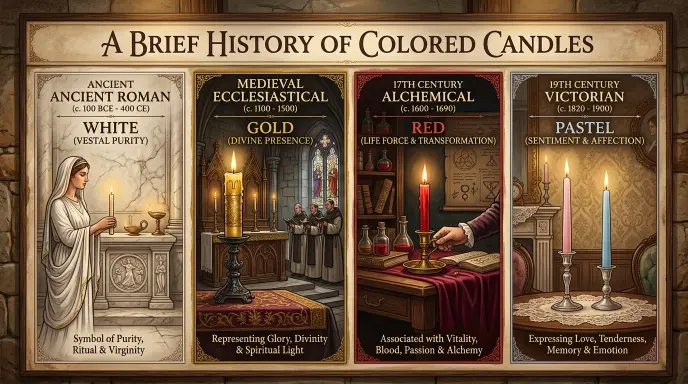
A Brief History of Colored Candles
Early candles were valued mainly for providing light rather than color.
As candle-making techniques improved, colored wax became more common. Decorative candles eventually gained popularity in religious ceremonies, seasonal celebrations, home décor, and wellness practices.
Today, colored candles serve both practical and symbolic purposes across many cultures.
Do Candle Colors Really Affect Personality?
There is no scientific evidence that your favorite candle color determines your personality.
However, people often choose colors that match their current mood or personal preferences.
For example:
- Blue lovers may enjoy peaceful surroundings.
- Red fans often appreciate excitement.
- Green enthusiasts may value nature.
- Purple admirers may enjoy creativity.
These are general observations, not personality tests.
Different Candle Colors in Home Décor
Color influences the atmosphere of a room.
Living room
Neutral white, cream, or gold candles create a welcoming space.
Bedroom
Soft pink, lavender, and blue encourage relaxation.
Home office
Yellow and green can create an energetic yet balanced environment.
Dining room
Red, orange, and gold add warmth during meals.
Candle Colors in Branding and Business
Businesses carefully select colors because they shape customer impressions.
Luxury brands often use:
- Black
- Gold
- White
Health and eco-friendly companies frequently choose:
- Green
- White
Technology brands commonly use:
- Blue
These same color associations influence decorative candles sold for different occasions.
Candle Colors in Fashion and Lifestyle
People often match candle colors with seasonal decorations and personal style.
Examples include:
- White for minimalist interiors
- Gold for holiday elegance
- Red for romantic settings
- Green for natural themes
- Black for modern décor
- Pink for soft, cozy spaces
Matching candles with surrounding colors creates visual harmony.
Best Candle Color Combinations
Certain combinations naturally complement one another.
White and Gold
Elegant and festive.
Blue and Silver
Peaceful and sophisticated.
Green and Brown
Natural and grounding.
Purple and White
Spiritual yet calming.
Red and Gold
Warm, luxurious, and celebratory.
Pink and White
Soft, romantic, and welcoming.
Common Myths About Candle Color Meanings
Every tradition agrees on candle meanings
False. Meanings differ across cultures and spiritual systems.
Black candles always represent evil
False. Many traditions associate black with protection, boundaries, and transformation.
One candle color guarantees results
No evidence supports this claim. Candle colors are symbolic tools that may help people focus their intentions.
White candles can replace every color
Some traditions say yes, while others assign unique purposes to each color.
Real-World Uses of Different Candle Color Meanings
People use colored candles in many everyday situations.
- Meditation sessions
- Prayer
- Home decoration
- Weddings
- Memorial services
- Birthday celebrations
- Holiday displays
- Spa environments
- Yoga studios
- Photography styling
- Restaurant ambiance
- Seasonal decorating
In each case, color helps shape the emotional atmosphere.
Frequently Asked Questions
What is the most powerful candle color?
There is no universally “most powerful” candle color. White is often considered the most versatile because it symbolizes peace, purity, and new beginnings in many traditions.
Which candle color represents protection?
Many spiritual traditions associate black and white candles with protection, though interpretations vary.
What candle color is best for love?
Red symbolizes passion, while pink is commonly linked with affection, compassion, and emotional connection.
Which candle color means prosperity?
Green and gold are widely connected with abundance, success, and financial growth.
Can I use any candle color for meditation?
Yes. Many people choose white, blue, or purple because these colors are commonly associated with calmness and reflection.
Do religions agree on candle color meanings?
No. Religious traditions use candle colors differently, and many have their own symbolic systems.
Do candle colors have scientific effects?
Scientific research supports that colors can influence mood and perception. However, there is no scientific evidence that candle colors possess supernatural powers.
Why do candle meanings vary?
Color symbolism develops through history, culture, religion, psychology, and personal experience, so meanings naturally differ.
Can one candle have multiple meanings?
Yes. A single color can symbolize different ideas depending on the tradition, occasion, and personal interpretation.
Does candlelight change how colors look?
Yes. Warm candlelight softens many colors, making reds appear richer, whites warmer, and blues less intense than they look under daylight.
Final Thoughts
Different candle color meanings combine history, psychology, culture, and personal symbolism. While no single interpretation applies everywhere, understanding these associations can help you choose colors that match your intentions, décor, celebrations, or moments of reflection.
The most meaningful candle is often the one whose color aligns with your purpose, whether you’re creating a peaceful room, marking a special occasion, or simply enjoying the comforting glow of candlelight.

Emma Wilson is a dedicated comparison writer and product researcher at ColorMystiic.com. She specializes in creating unbiased product comparisons, detailed reviews, and helpful buying guides. Her goal is to help readers make smarter purchasing decisions with confidence.