For centuries, candles have been used as symbols of light, intention, focus, and transformation. In many spiritual and magical traditions, the color of a candle is believed to add another layer of meaning to the practice. People search for candle color meanings witchcraft because they want to understand how different colors are associated with intentions such as love, protection, healing, prosperity, wisdom, and personal growth.
Candle colors are not universally interpreted in the same way. Their meanings often come from a mixture of folklore, cultural traditions, personal beliefs, symbolism, and modern spiritual practices. A red candle may represent passion and strength in one tradition, while another person may connect it with courage or motivation. The meaning depends on the intention behind the candle, the cultural background, and the personal connection of the practitioner.
This guide explores the symbolism, psychology, spiritual interpretations, cultural influences, and practical uses of candle colors.
Quick Answer:
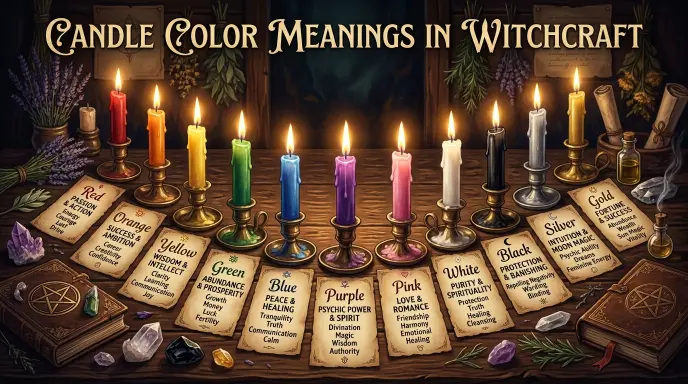
Candle color meanings in witchcraft are symbolic associations used to represent intentions and energies. Common examples include white for cleansing and peace, black for protection and transformation, red for passion and strength, green for growth and prosperity, blue for healing and calm, and purple for intuition and spiritual wisdom. Interpretations vary depending on tradition and personal belief.
What Do Candle Colors Symbolize in Witchcraft?
Candle colors are often viewed as visual symbols that help people focus their thoughts and intentions. In witchcraft and other spiritual practices, a candle is not usually considered powerful because of the color alone. Instead, the color works as a symbolic tool that helps create a specific mood, mindset, or purpose.
Humans naturally respond to colors. A deep blue candle may create feelings of calmness and reflection, while a bright orange candle can feel energetic and uplifting. These emotional responses are one reason colors have become important in spiritual symbolism.
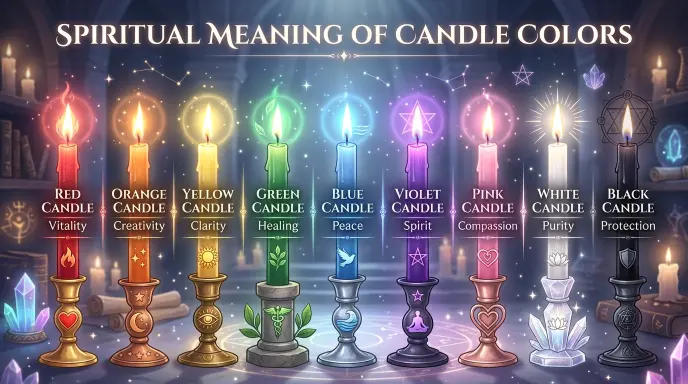
- White: Purity, peace, cleansing, new beginnings
- Black: Protection, mystery, endings, transformation
- Red: Passion, courage, energy, action
- Pink: Love, kindness, friendship, emotional healing
- Green: Growth, nature, abundance, prosperity
- Blue: Calmness, healing, communication, wisdom
- Purple: Intuition, spirituality, imagination, higher knowledge
- Yellow: Confidence, learning, creativity, happiness
- Orange: Motivation, success, enthusiasm, change
- Gold: Achievement, confidence, celebration
- Silver: Reflection, intuition, lunar symbolism
These meanings are symbolic rather than scientifically proven effects. Many practitioners use them as a way to organize their intentions and create a meaningful personal practice.
The Psychology of Candle Colors
Color psychology studies how colors can influence human perception, emotions, and behavior. While spiritual meanings are based on symbolism and tradition, psychological responses to colors have been studied in areas such as design, marketing, and environmental psychology.
A candle’s color can influence the atmosphere of a room even without any spiritual meaning attached.
Warm Colors and Emotional Energy
Warm colors such as red, orange, and yellow are often associated with energy and activity.
A red candle may visually suggest:
- Passion
- Confidence
- Strength
- Urgency
Because red is a highly noticeable color, it is often used to create a strong emotional impression. Designers frequently use red to attract attention and create feelings of excitement.
Cool Colors and Inner Reflection
Cool colors such as blue, green, and purple often create a calmer visual experience.
Blue candles may encourage feelings of:
- Peace
- Stability
- Relaxation
- Reflection
Purple candles often appear mysterious and elegant. Many people associate the color with imagination, creativity, and spiritual exploration.
Dark and Light Colors
Light-colored candles, especially white, are often associated with simplicity, openness, and cleanliness. Their neutral appearance allows people to connect them with many different intentions.
Dark candles, especially black, are often misunderstood. In symbolism, black does not always represent negativity. It can also represent protection, hidden knowledge, mystery, and the unknown.
The meaning of a color changes depending on the surrounding context, cultural background, and personal experience.
Spiritual Candle Color Meanings Witchcraft
Candle symbolism appears in many spiritual practices around the world. However, there is no single universal system that defines what every candle color means. Different traditions may assign different meanings based on history, culture, and belief systems.
In modern witchcraft, candles are often used as symbolic tools for:
- Focusing intention
- Meditation
- Personal reflection
- Creating a meaningful atmosphere
- Marking spiritual practices
The flame itself is often viewed as a symbol of transformation because it changes one form of energy into another by burning the candle.
Candle Colors and Personal Intention
Many practitioners choose candle colors based on the feeling or goal they want to represent.
For example:
A green candle may symbolize goals related to growth, nature, or abundance.
A blue candle may represent calm thoughts, emotional balance, or communication.
A black candle may represent protection, boundaries, or the closing of an old chapter.
These interpretations are symbolic choices rather than guaranteed outcomes. The meaning often comes from the intention and personal connection behind the practice.
Why Candle Color Meanings Witchcraft Differ Between Traditions
The same color can carry different meanings depending on location, history, and belief.
For example, white is often connected with purity and peace in many Western traditions, but white can also have different associations in some cultures where it is connected with mourning.
Red can symbolize love and passion in many modern contexts, while in other cultures it may represent celebration, luck, or power.
This difference shows that color symbolism is not fixed. Colors gain meaning through human experiences, stories, and traditions.
Understanding these differences helps prevent oversimplifying spiritual practices and allows people to appreciate the rich history behind color symbolism.
Candle Color Meanings in Witchcraft: A Complete Guide to Individual Colors
Candle colors are often chosen because they represent a specific feeling, intention, or symbolic idea. In witchcraft and other spiritual practices, the same candle color can have different meanings depending on the tradition, personal belief, and purpose behind its use.
The following interpretations reflect common symbolic associations found in modern witchcraft, folklore, and spiritual communities.
Red Candle Color Meanings Witchcraft: Passion, Strength, and Action
Red is one of the most powerful and attention-grabbing colors. In candle symbolism, red is often connected with energy, courage, desire, and movement.
A red candle may represent:
- Passion
- Love
- Physical energy
- Confidence
- Motivation
- Strength
- Determination
In symbolic practices, red candles are sometimes connected with:
- Increasing personal confidence
- Encouraging motivation
- Celebrating love and attraction
- Representing personal power
From a psychological perspective, red can create a sense of excitement and energy. This is why the color is commonly used in advertising, sports branding, and designs that need to feel bold.
However, red can also represent anger, impatience, or conflict when used without balance. The meaning depends on the intention and surrounding symbols.
Blue Candle Meaning in Witchcraft: Peace, Healing, and Wisdom
Blue is often viewed as a calming and reflective color. Many spiritual traditions associate blue with peace, emotional balance, communication, and wisdom.
Blue candle symbolism commonly includes:
- Calmness
- Healing
- Truth
- Communication
- Protection
- Understanding
People may choose blue candles when they want to create an atmosphere focused on:
- Meditation
- Calm thinking
- Emotional clarity
- Personal reflection
Many organizations use blue in branding because it creates feelings of reliability and professionalism.
Green Candle Meaning in Witchcraft: Growth, Nature, and Prosperity
Green is strongly connected with the natural world. Since plants, forests, and renewal are represented by green, the color has become a symbol of growth and balance.
Green candle meanings often include:
- Prosperity
- Renewal
- Healing
- Nature
- Fertility
- Stability
- Personal development
In spiritual symbolism, green candles are often chosen for intentions involving:
- Career growth
- Financial goals
- New opportunities
- Connection with nature
- Emotional renewal
Green has a unique psychological connection because humans often associate natural environments with restoration and calmness.
Different shades can create different impressions:
- Light green: Fresh starts and gentle growth
- Dark green: Stability, wealth, and endurance
Purple Candle Meaning in Witchcraft: Intuition, Spirituality, and Creativity
Purple has long been associated with mystery, imagination, and higher knowledge. Its connection with royalty and spirituality has made it a meaningful symbolic color across many cultures.
Purple candle symbolism includes:
- Intuition
- Wisdom
- Creativity
- Spiritual exploration
- Imagination
- Transformation
Many modern spiritual practitioners choose purple candles for practices involving:
- Meditation
- Self-discovery
- Creative inspiration
- Personal reflection
Purple combines the calm qualities often associated with blue and the energy often associated with red, creating a color that feels both powerful and thoughtful.
In branding and design, purple is often used to communicate luxury, creativity, and uniqueness.
Black Candle Meaning in Witchcraft: Protection, Mystery, and Transformation
Black candles are among the most misunderstood symbols. Many people assume black always represents negativity, but symbolic meanings are much more complex.
Black candle meanings can include:
- Protection
- Absorbing unwanted energy
- Mystery
- Endings
- Transformation
- Personal boundaries
Black can represent the unknown, similar to the darkness of night before a new beginning. It may symbolize letting go of old patterns or creating a protective space.
Psychologically, black is often connected with elegance, seriousness, authority, and power.
The meaning of a black candle depends heavily on the user’s intention and cultural understanding.
White Candle Meaning in Witchcraft: Purity, Peace, and New Beginnings
White candles are among the most widely used candle colors because they are often considered versatile symbols.
Common meanings include:
- Peace
- Purification
- Clarity
- Protection
- Healing
- Fresh beginnings
Many people choose white candles because the color creates a simple and peaceful visual atmosphere.
White is often connected with:
- Meditation
- Reflection
- Cleansing symbolism
- Spiritual focus
In many cultures, white represents purity and innocence. However, cultural meanings can vary.
This shows why understanding cultural context is important when interpreting colors.
Pink Candle Meaning in Witchcraft: Love, Compassion, and Emotional Healing
Pink is often viewed as a softer expression of love compared with red. It is commonly connected with kindness, affection, friendship, and emotional care.
Pink candle symbolism includes:
- Romantic love
- Friendship
- Compassion
- Self-love
- Emotional healing
- Gentleness
Pink candles are often associated with intentions involving:
- Strengthening relationships
- Encouraging kindness
- Developing self-acceptance
Yellow Candle Meaning in Witchcraft: Intelligence, Creativity, and Confidence
The Yellow represents brightness and energy.
Yellow candle meanings include:
- Knowledge
- Creativity
- Happiness
- Confidence
- Focus
- Inspiration
People may choose yellow candles when focusing on:
- Learning goals
- Creative projects
- Mental clarity
- Personal confidence
Because yellow is visually connected with sunlight, it often creates feelings of warmth and positivity.
However, extremely bright yellow can sometimes feel overwhelming, showing how color intensity changes perception.
Orange Candle Meaning in Witchcraft: Motivation, Success, and Change
The Orange combines the energy of red with the brightness of yellow.
Orange candle symbolism includes:
- Motivation
- Success
- Confidence
- Creativity
- Opportunity
- Positive change
Orange candles may represent action and movement. They are often chosen when someone wants to symbolize progress or overcome hesitation.
In design, orange is frequently used to create feelings of friendliness, excitement, and energy.
Brown Candle Meaning in Witchcraft: Stability, Grounding, and Connection With Nature
The Brown is an earthy color connected with soil, forests, and natural materials.
Brown candle meanings often include:
- Grounding
- Stability
- Security
- Simplicity
- Nature
- Practical wisdom
Brown candles may symbolize a desire for balance and connection with everyday life.
Because brown appears frequently in nature, it often creates feelings of reliability and comfort.
Gold Candle Meaning in Witchcraft: Success, Confidence, and Achievement
Gold candle symbolism includes:
- Success
- Wealth
- Confidence
- Recognition
- Celebration
- Personal achievement
TheGold is visually connected with sunlight and precious materials, which is why many cultures associate it with power and importance..
Silver Candle Color Meanings Witchcraft: Reflection, Intuition, and Balance
Silver candle meanings may include:
- Intuition
- Reflection
- Balance
- Feminine symbolism
- Mystery
- Inner awareness
The reflective quality of silver makes it symbolically connected with self-examination and hidden knowledge.
In design, silver often communicates modernity, technology, and elegance.
Historical Influence of Candle Color Symbolism
The use of colored candles developed through a combination of candle-making history, religious traditions, folk practices, and modern spiritual movements.
Early candles were mainly valued as sources of light. As candle-making materials improved and colored wax became more available, candles gained additional symbolic uses.
Colors have always played an important role in human traditions. Ancient civilizations used specific colors in clothing, art, ceremonies, and decoration to express identity, status, and beliefs.
Modern witchcraft practices often combine older European folklore, ceremonial traditions, nature symbolism, and personal interpretation.
Because these meanings developed across different cultures and time periods, there is no single official list of candle color meanings.
Cultural Interpretations of Candle Colors
Western Traditions
In many Western cultures, candle colors are often connected with emotional symbolism. White may represent peace, red may represent love, and green may represent growth or prosperity.
Eastern Traditions
Some Eastern cultures have unique color associations shaped by history, philosophy, and religious traditions. For example, colors may represent balance, fortune, spirituality, or social meanings depending on the region.
Indigenous and Folk Traditions
Many indigenous and folk practices connect colors with nature, seasons, animals, ancestors, and natural elements.
Modern Global Culture
Today, candle symbolism spreads through books, online communities, wellness practices, and personal spirituality. As a result, many people create their own meaningful connections with colors.
How Candle Colors Are Used in Everyday Life, Design, and Personal Practice
Candle colors are not limited to spiritual practices. They also influence everyday experiences through decoration, mood creation, photography, celebrations, and personal rituals. The meaning of a candle often comes from the combination of its color, setting, purpose, and the emotions it creates.
A candle placed in a meditation space may have a different meaning than the same candle used at a wedding, restaurant, or home gathering. Context changes how people understand color.
Candle Colors in Real-World Applications
Daily Life and Personal Spaces
Many people use colored candles simply to create a certain atmosphere in their homes.
A person may choose:
- Blue candles for a peaceful bedroom environment
- Green candles for a nature-inspired space
- White candles for a clean and minimal look
- Orange candles for an energetic workspace
- Purple candles for a creative corner
The psychological effect often comes from the visual experience rather than the candle itself. A carefully chosen color can help create a specific mood or remind someone of a personal intention.
For example, lighting a green candle while journaling about personal growth may strengthen the mental connection between the color and the goal.
Candle Colors in Meditation and Reflection
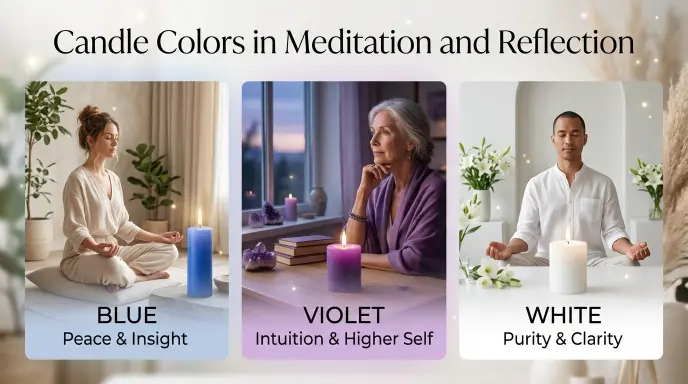
Many people use candles as a focus point during meditation, mindfulness, or quiet reflection.
The color can support the atmosphere:
- Blue may encourage calm reflection
- White may create a feeling of simplicity
- Purple may support creative thinking
- Green may create a connection with nature
The important element is personal meaning. A color that feels peaceful to one person may feel different to another because memories and experiences influence how humans respond to colors.
Candle Colors in Business and Branding
Color symbolism plays a major role in branding and marketing. Companies carefully select colors because colors influence first impressions and emotional responses.
Although candle symbolism in witchcraft is different from business psychology, both use the human connection with color.
Luxury and Premium Brands
Colors such as:
- Gold
- Black
- Deep purple
- Silver
are often used to create impressions of:
- Elegance
- Quality
- Exclusivity
- Sophistication
A luxury candle company may use black packaging with gold details because this combination suggests refinement and value.
Natural and Wellness Brands
Colors connected with nature are common in wellness industries.
Green packaging or candles may communicate:
- Freshness
- Sustainability
- Nature
- Balance
White and soft blue designs often create feelings of cleanliness, calmness, and simplicity.
Creative and Artistic Brands
Purple, orange, and unusual color combinations are often used by creative brands because they suggest imagination and originality.
Artists and designers use these colors to create memorable visual identities.
Candle Colors in Interior Design
Candles are popular home decorations because they combine light, color, and atmosphere.
The right candle color can complement a room’s design style.
Living Room
Warm colors can make social spaces feel welcoming.
Good choices:
- Orange for energy
- Gold for elegance
- Red as an accent color
- White for a modern look
A living room with neutral furniture can gain personality through carefully chosen candle colors.
Bedroom
Bedrooms usually benefit from softer colors that encourage relaxation.
Common choices:
- Blue for calmness
- Lavender or purple for creativity
- Pink for warmth
- White for simplicity
The brightness of the candle also matters. A softer flame creates a different feeling than strong artificial lighting.
Office and Study Areas
Examples:
- Yellow for a bright atmosphere
- Blue for a calm environment
- Green for balance
A candle should complement the workspace rather than distract from it.
Dining Areas
Candle colors can influence the feeling of meals and gatherings.
Popular choices:
- White for elegance
- Gold for celebrations
- Red for romantic settings
- Orange for warmth
Restaurants often use candlelight because soft lighting can create a more comfortable dining experience.
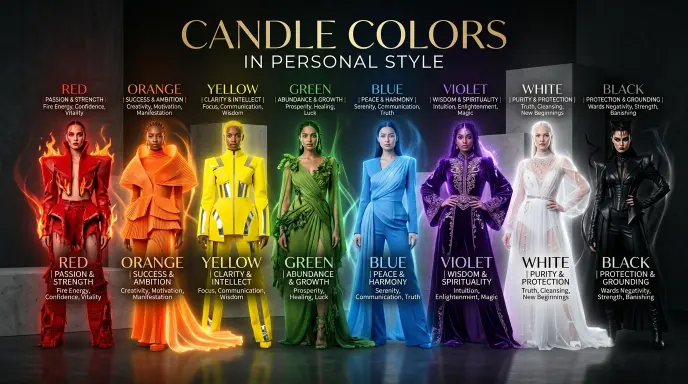
Candle Colors in Fashion and Personal Style
Color symbolism also appears in fashion. The colors people choose often communicate a mood, personality impression, or style preference.
Although wearing a color does not reveal someone’s personality, colors can influence how others perceive appearance.
Black
Often associated with:
- Confidence
- Sophistication
- Mystery
- Professional style
White
Often associated with:
- Cleanliness
- Simplicity
- Freshness
Red
Often creates an impression of:
- Confidence
- Energy
- Boldness
Blue
Often communicates:
- Calmness
- Trust
- Reliability
Purple
Often suggests:
- Creativity
- Individuality
- Luxury
Green
Often connects with:
- Nature
- Freshness
- Balance
Fashion designers use these associations intentionally when creating clothing collections and visual identities.
Powerful Candle Color Combinations and Their Symbolism
Combining colors can create a stronger visual message because colors influence each other.
White and Gold
Symbolism:
- Celebration
- Achievement
- Elegance
Blue and White
Symbolism:
- Peace
- Cleanliness
- Calmness
This pairing works well in relaxing spaces and minimalist designs.
Green and Brown
Symbolism:
- Nature
- Stability
- Grounding
These colors create an earthy atmosphere inspired by forests and natural landscapes.
Purple and Silver
Symbolism:
- Mystery
- Creativity
- Reflection
Red and Black
Symbolism:
- Strength
- Passion
- Power
This dramatic combination creates a bold visual impact.
Common Misconceptions About Candle Color Meanings
Myth 1: Every Candle Color Has One Fixed Meaning
Reality:
Color meanings change across cultures, traditions, and personal experiences. There is no single universal dictionary that defines every candle color.
Myth 2: Candle Colors Guarantee Results
Reality:
Many spiritual practitioners view candles as symbolic tools for focus and intention. The color itself does not scientifically guarantee a specific outcome.
Myth 3: Black Candles Are Always Negative
Reality:
In symbolism, it can represent protection, transformation, mystery, and personal boundaries.
Myth 4: Color Preferences Reveal Personality Completely
Reality:
Someone’s favorite color may reflect taste, memories, culture, or current emotions. It does not provide a complete explanation of someone’s character.
How Lighting Changes Candle Color Meaning
The same candle can look different depending on lighting conditions.
A red candle under warm light may appear romantic and cozy, while the same candle under bright white light may appear more energetic and intense.
Factors that change color appearance include:
- Room lighting
- Candle material
- Flame brightness
- Surrounding colors
- Time of day
Designers and photographers consider these factors because color perception depends on the environment.
FAQ: Candle Color Meanings Witchcraft
What do candle colors mean in witchcraft?
Candle colors are symbolic tools used by many practitioners to represent intentions, emotions, and spiritual ideas. Meanings vary between traditions.
What is the most powerful candle color in witchcraft?
There is no universally most powerful candle color. Different colors may represent different intentions, and personal belief plays an important role.
What does a white candle mean spiritually?
White candles are commonly associated with peace, cleansing, clarity, protection, and new beginnings in many spiritual traditions.
What does a black candle mean in witchcraft?
Black candles are often associated with protection, transformation, mystery, endings, and creating boundaries.
What color candle is used for love?
Red and pink candles are commonly associated with love symbolism. Red often represents passion, while pink is connected with affection and emotional care.
Are candle color meanings scientifically proven?
No. Candle color meanings in witchcraft are based mainly on symbolism, tradition, and personal belief. Some psychological effects of colors have been studied, but spiritual meanings are cultural interpretations.
Can I choose a candle color based on personal feelings?
Yes. Many people choose colors because they personally connect with the emotion, memory, or intention they want to represent.
Conclusion:
Candle color meanings in witchcraft represent a fascinating blend of symbolism, culture, psychology, and personal interpretation. From the calming qualities associated with blue to the transformative symbolism of black and the growth themes connected with green, each color carries layers of meaning shaped by human experience.
The most important part of candle symbolism is not following a strict rulebook but understanding why a color feels meaningful. A candle becomes powerful as a symbol because people connect it with thoughts, emotions, memories, and intentions.
Whether used for spiritual reflection, home decoration, creative inspiration, or simply creating a peaceful atmosphere, candle colors remind us that color influences the way we experience the world around us. Understanding these meanings allows us to use color more thoughtfully in everyday life.

Emma Wilson is a dedicated comparison writer and product researcher at ColorMystiic.com. She specializes in creating unbiased product comparisons, detailed reviews, and helpful buying guides. Her goal is to help readers make smarter purchasing decisions with confidence.