Colors have always played a powerful role in human communication. Long before modern branding, psychology, and design, colors were used to express emotions, represent ideas, and communicate deeper meanings. In the Bible, colors often appear through clothing, objects, visions, nature, and sacred spaces.People search for biblical spiritual color meanings because they want to understand what colors represent in Scripture and how those meanings may connect with personal faith, prayer, art, worship, and everyday life.
However, biblical color symbolism is not always a simple one-color-one-meaning system. Meanings can change depending on the context, historical setting, translation, and the passage where the color appears.
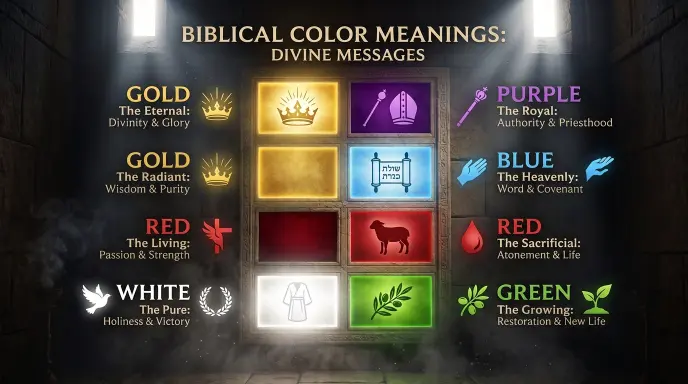
For example, white is often connected with purity and righteousness, while purple may represent royalty and honor. Blue can symbolize heavenly connection, and gold is frequently associated with glory and divine value. Yet these interpretations should be understood carefully because the Bible does not provide a universal color dictionary.
This guide explores the symbolism, spiritual significance, cultural background, and practical uses of biblical colors. You will learn how colors were understood in ancient times, how they appear in Scripture, and why they continue to influence religious art, worship environments, design, and personal expression today.
Quick Answer:
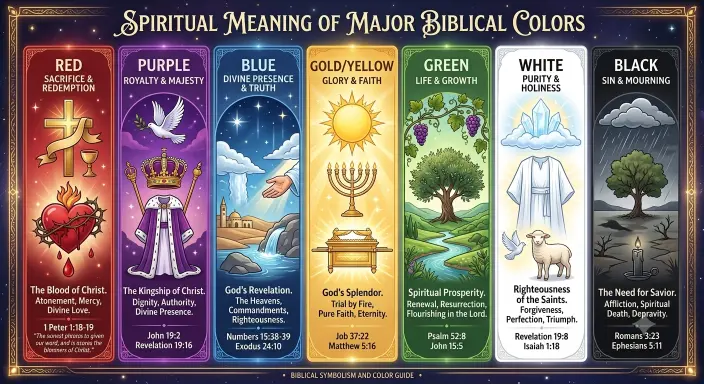
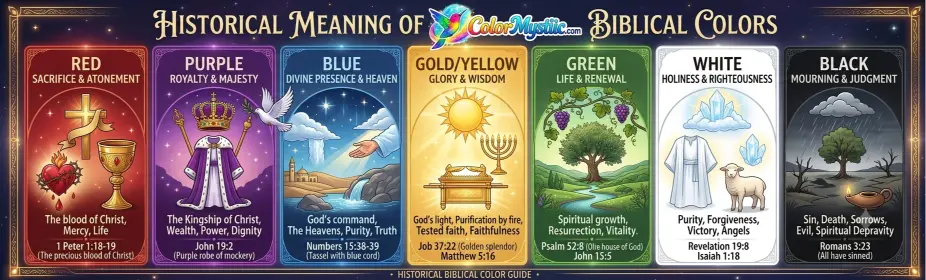
Biblical spiritual color meanings refer to the symbolic messages associated with colors in Scripture and Christian tradition. Common interpretations include white for purity, gold for glory, purple for royalty, blue for heaven and divine connection, For example red for sacrifice and life, green for growth, and black for mourning or darkness. However, meanings depend on biblical context and cultural interpretation.
What Do Biblical Spiritual Colors Symbolize?
Biblical colors often work as visual symbols that communicate ideas people could understand without many words. In ancient societies, colors were connected with materials, clothing, nature, wealth, status, and religious practices. A particular color could remind people of holiness, celebration, sacrifice, authority, or human struggles.
Unlike modern color psychology, which studies how colors influence emotions and behavior, biblical color symbolism comes mainly from religious texts, historical traditions, and interpretations developed over centuries.
For example, the use of gold in sacred objects reflected value, beauty, and honor because gold was considered one of the most precious materials available. Similarly, white clothing often represented cleanliness and purity because white fabric visibly showed the absence of stains.
It is also important to understand that biblical meanings are symbolic rather than scientific rules. A color does not automatically create a spiritual effect. Instead, colors serve as reminders of beliefs, stories, and spiritual themes.
Why Are Colors Important in the Bible?
Colors appear throughout biblical stories in several ways:
- Clothing and garments — Priestly clothing and royal garments often used specific colors to show identity and importance.
- Sacred objects — The Tabernacle and temple included colored fabrics and materials with symbolic significance.
- Visions and prophecy — Symbolic colors appear in prophetic writings to represent spiritual ideas.
- Nature and creation — Colors found in the natural world often connect with themes of life, beauty, and God’s creation.
Therefore, biblical colors should be studied through their historical and spiritual context rather than isolated meanings.
Psychology and Symbolism of Biblical Colors
Modern psychology studies how colors influence human perception, emotions, and decisions. Biblical symbolism is different because it focuses more on meaning, memory, and spiritual association. However, there are places where psychological responses and symbolic meanings overlap.
For example, people naturally associate bright colors with visibility and attention. This helps explain why gold and white have often been connected with glory, celebration, and importance across many cultures.
Dark colors, on the other hand, are commonly linked with seriousness, mystery, or mourning. This connection can also be seen in many historical religious traditions.
Understanding both psychology and symbolism helps explain why certain colors continue to feel meaningful today.
Spiritual Meaning of Major Biblical Colors
Blue: Heaven, Revelation, and Divine Connection
Blue is one of the most recognized spiritual colors in biblical interpretation. It is often associated with the heavens, divine commandments, faithfulness, and spiritual awareness.
In ancient Israelite tradition, blue was connected with sacred clothing and reminders of obedience to God. The use of blue in religious garments helped create a visual connection between earthly life and heavenly ideas.
Spiritual Associations of Blue
Blue is commonly linked with:
- Heaven and the presence of God
- Faith and loyalty
- Spiritual understanding
- Peace and trust
- Divine guidance
The emotional effect of blue also supports these associations. Many people experience blue as calming and stable, which is why it is often used in places designed for reflection and prayer.
However, blue does not have only one meaning. Its interpretation depends on the biblical passage and the tradition studying it.
White: Purity, Holiness, and New Beginnings
White is one of the strongest symbolic colors in biblical tradition. It often represents purity, righteousness, holiness, and spiritual renewal.
White clothing appears in many religious contexts because clean, bright garments create a visual image of innocence and transformation.
Spiritual Associations of White
White commonly represents:
- Purity of heart
- Forgiveness
- Holiness
- Victory
- Peace
- Spiritual renewal
In Christian traditions, white is often used during celebrations connected with important spiritual events because it represents joy, hope, and new life.
Psychologically, white creates a sense of openness and simplicity. This is one reason it is commonly used in religious spaces, weddings, and ceremonies.
Purple: Royalty, Authority, and Spiritual Honor
Purple has long been associated with wealth and power because purple dyes were historically expensive and difficult to produce. As a result, purple became connected with kings, rulers, and high status.
Within biblical symbolism, purple is often connected with royalty, dignity, and honor.
Spiritual Associations of Purple
Purple may symbolize:
- Kingship
- Authority
- Majesty
- Wisdom
- Spiritual responsibility
Because of its connection with rulers, purple can represent the idea of divine authority and the greatness of God.
Today, purple is also used in many churches during reflective seasons because it encourages ideas of sacrifice, preparation, and spiritual growth.
Red: Sacrifice, Life, and Powerful Emotion
Red is a strong and emotional color. In biblical symbolism, it is often connected with blood, sacrifice, life, and passion.
Blood held deep meaning in ancient biblical culture because it was viewed as connected with life itself.
Spiritual Associations of Red
Red is commonly linked with:
- Sacrifice
- Love
- Courage
- Life
- Commitment
- Spiritual passion
At the same time, red can represent danger, conflict, or human struggle depending on the context. This shows why biblical interpretation requires careful reading rather than assuming every color has only one meaning.
Gold: Glory, Value, and Divine Beauty
Gold represents something precious and lasting. Because gold does not easily decay or lose its shine, ancient cultures viewed it as a symbol of permanence and greatness.
In biblical settings, gold appears in sacred objects and descriptions of heavenly beauty.
Spiritual Associations of Gold
Gold often represents:
- Divine glory
- Honor
- Wealth
- Purity
- Eternal value
- Majesty
The symbolism of gold continues today in religious art, architecture, and decoration because it creates a feeling of importance and sacred beauty.
Green: Growth, Life, and Renewal
Green is strongly connected with nature and living things. In biblical interpretation, it is often associated with growth, restoration, and God’s provision.
Plants, trees, and fields frequently represent life and blessing in Scripture.
Spiritual Associations of Green
Green may symbolize:
- Growth
- Renewal
- Hope
- Prosperity
- Restoration
- New life
Because green appears throughout creation, many people connect it with spiritual development and the ongoing process of transformation.
Black: Mourning, Darkness, and Mystery
Black has complex symbolism in biblical interpretation. It is sometimes associated with mourning, suffering, darkness, or difficult spiritual conditions.
However, darkness in biblical language does not always represent evil. Sometimes it represents mystery, the unknown, or a period of waiting.
Spiritual Associations of Black
Black may represent:
- Mourning
- Human suffering
- Mystery
- Darkness
- Serious reflection
The meaning of black depends heavily on the surrounding message and context.
Cultural Meaning of Biblical Colors
Biblical color symbolism developed within ancient Middle Eastern cultures, but its interpretation has expanded across different societies over centuries. Colors do not carry exactly the same meaning everywhere because communities connect colors with their own history, traditions, environment, and beliefs.
Therefore, understanding biblical colors requires looking beyond one culture. A color may represent celebration in one region while expressing mourning or seriousness in another.
Western Christian Interpretation of Colors
In many Western Christian traditions, colors became connected with worship seasons, religious ceremonies, and church decoration.
Common associations include:
- White: Celebrations, purity, resurrection, and holy occasions
- Purple: Reflection, repentance, royalty, and preparation
- Red: Martyrdom, sacrifice, and the work of the Holy Spirit
- Green: Ordinary time, spiritual growth, and ongoing faith
- Gold: Celebration, glory, and special religious events
These meanings developed through centuries of Christian practice rather than coming from a single biblical color chart.
Middle Eastern and Ancient Near Eastern Context
The Bible emerged from cultures where colors were strongly connected with materials, trade, and social status.
For example:
- Purple dyes were expensive because they required difficult production methods.
- Gold represented wealth because it was rare and valuable.
- White clothing reflected cleanliness and honor.
- Blue dyes were connected with special fabrics and religious garments.
In ancient societies, wearing a particular color could communicate social position, occupation, or religious importance.
Eastern Cultural Perspectives
Eastern cultures have their own color traditions that sometimes overlap with biblical symbolism but also differ.
For example:
- White may represent purity in some religious contexts but may symbolize mourning in some Asian cultures.
- Red is often connected with celebration and good fortune in many Eastern societies, while biblical symbolism may focus more on sacrifice and life.
- Gold frequently represents prosperity, success, and spiritual importance across many cultures.
This shows why color meanings should always be understood through cultural background.
African and Indigenous Interpretations
Many African and Indigenous communities use colors as important forms of communication through clothing, art, ceremonies, and storytelling.
Colors may represent:
- Community identity
- Ancestral connections
- Nature
- Spiritual beliefs
- Important life events
Although these traditions may not always be directly connected to biblical interpretation, they demonstrate a universal human tendency to use colors as symbols of deeper ideas.
Historical Biblical Spiritual Color Meanings
The meanings associated with biblical colors developed over thousands of years. To understand them properly, it helps to consider the materials and societies behind them.
Ancient Dyes and Their Importance
In biblical times, producing colored fabrics was often expensive and difficult. Natural dyes came from plants, minerals, and animals.
Because some colors required significant resources, they became connected with wealth and importance.
For example:
- Purple fabric required rare dyes and became associated with royalty.
- Gold decorations represented power and honor.
- Bright fabrics showed status and celebration.
Color was not only about appearance; it also communicated social meaning.
Colors in the Tabernacle and Temple
The Tabernacle described in the Old Testament included materials with specific colors, including blue, purple, scarlet, and fine linen.
These colors contributed to the visual beauty of sacred spaces and helped create a sense of holiness.
Different religious traditions interpret these colors in different ways, but many connect them with ideas such as:
- Divine presence
- Worship
- Beauty
- Sacred purpose
Evolution of Color Symbolism Through History
Over time,Biblical Spiritual Color Meanings continued to develop through:
- Church traditions
- Religious artwork
- Architecture
- Clothing
- Festivals
- Literature
Artists used colors to communicate spiritual themes visually. For example, paintings often used bright light, gold backgrounds, and white clothing to represent holiness or heavenly scenes.
Personality Associations With Biblical Colors
People often wonder what their favorite colors say about their personality. Color preferences can reveal personal tastes, emotional connections, and cultural influences. However, a person’s favorite color does not scientifically determine their character.
Instead, colors may influence the way people express themselves.
People Who Prefer Blue
Those who enjoy blue may appreciate qualities commonly associated with the color, such as:
- Calmness
- Stability
- Trust
- Reflection
Blue lovers may choose environments that feel peaceful and organized.
People Who Prefer White
White is often preferred by people who enjoy:
- Simplicity
- Clean design
- Fresh beginnings
- Order
However, preferences depend on personal experiences and culture.
People Who Prefer Purple
Purple is often connected with creativity, imagination, and individuality.
People attracted to purple may enjoy:
- Artistic expression
- Unique styles
- Spiritual reflection
- Luxury aesthetics
People Who Prefer Gold
Gold lovers may appreciate:
- Achievement
- Beauty
- Success
- Tradition
Gold often creates a feeling of celebration and importance.
Biblical Colors in Branding and Marketing
Although biblical symbolism is mainly spiritual, many ideas connected with these colors are also used in branding. Companies carefully select colors because they influence how customers perceive products and organizations.
Designers do not use colors because they have magical meanings. Instead, colors create associations based on psychology, culture, and experience.
Blue in Branding
Blue is commonly used by organizations that want to communicate:
- Trust
- Reliability
- Security
- Professionalism
Because blue feels stable and calm, it appears frequently in technology, finance, healthcare, and communication industries.
White in Branding
White often communicates:
- Cleanliness
- Simplicity
- Modern design
- Openness
Many brands use white space to create a premium and uncluttered appearance.
Purple in Branding
Purple is often chosen for brands connected with:
- Creativity
- Luxury
- Imagination
- Wisdom
Its historical connection with royalty also helps create a feeling of uniqueness.
Gold in Branding
Gold is frequently used when brands want to express:
- Premium quality
- Tradition
- Achievement
- Elegance
Luxury products often combine gold with black, white, or deep colors to create a sophisticated appearance.
Biblical Colors in Interior Design
Colors inspired by biblical symbolism can also influence home and worship environments. Interior designers use color to create emotional experiences.
Using Blue in Rooms
Blue can create a peaceful atmosphere.
Suitable areas:
- Bedrooms
- Meditation spaces
- Prayer rooms
- Relaxation areas
Blue works well with:
- White
- Natural wood
- Soft gray
- Beige
Using White in Interior Spaces
White creates a feeling of:
- Cleanliness
- Space
- Light
It can make smaller rooms appear larger.
However, too much white may feel cold, so designers often add natural textures such as wood, plants, or warm lighting.
Using Purple and Gold
Purple and gold create a rich and elegant appearance.
They work well in:
- Feature walls
- Decorative items
- Religious spaces
- Formal rooms
Because these colors are visually strong, small amounts often create the best effect.
Biblical Colors in Fashion
Fashion has always used colors to communicate personality, mood, and identity. Biblical colors continue to influence clothing choices because their symbolic meanings remain familiar.
White Fashion Meaning
White clothing often suggests:
- Elegance
- Freshness
- Simplicity
- Celebration
Blue Fashion Meaning
Blue clothing can communicate:
- Confidence
- Professionalism
- Calmness
Dark blue is often used in business clothing because it appears dependable.
Purple Fashion Meaning
Purple clothing often creates an impression of:
- Creativity
- Luxury
- Individuality
It can be used as a statement color or as a subtle accessory.
Gold Fashion Meaning
Gold details can add:
- Celebration
- Luxury
- Confidence
Accessories such as jewelry often use gold because it has a long association with value and beauty.
Biblical Spiritual Color Meanings and thair Combinations
Colors are rarely used alone. Throughout history, artists, designers, and religious communities have combined colors to create deeper visual messages. The meaning of a color combination often comes from the relationship between the colors rather than from one color by itself.
In biblical-inspired design, color combinations can create feelings of reverence, hope, celebration, reflection, and beauty.
Blue and White: Heaven, Peace, and Purity
Blue and white create one of the most peaceful color combinations.
Symbolically, this combination may represent:
- Spiritual connection
- Purity
- Peace
- Faith
- Divine guidance
Blue brings associations of heaven and calmness, while white adds ideas of cleanliness and renewal.
Practical Uses
This combination works well in:
- Prayer spaces
- Religious artwork
- Meditation areas
- Calm interior designs
It is also popular in modern design because it creates a fresh and relaxing atmosphere.
Purple and Gold: Royalty and Divine Glory
Purple and gold have a strong historical connection with authority and importance.
Together, they may represent:
- Majesty
- Honor
- Wisdom
- Spiritual richness
- Celebration
Because both colors have associations with value and luxury, this combination is often used in formal religious decorations and ceremonial designs.
Design Advice
Since purple and gold are powerful colors, using them in smaller amounts often creates a more balanced appearance.
Examples:
- Purple fabric with gold details
- Gold decorations in a purple-themed room
- Religious artwork using both colors
Red and White: Sacrifice and Renewal
Red and white create a contrast between powerful emotion and purity.
Symbolically, this combination may suggest:
- Love
- Sacrifice
- Hope
- Transformation
Red brings energy and passion, while white creates balance and clarity.
This combination appears frequently in religious art, seasonal decorations, and symbolic designs.
Green and Gold: Growth and Blessing
Green and gold combine natural life with ideas of value and abundance.
Possible symbolic meanings include:
- Growth
- Prosperity
- Renewal
- Creation
- Blessing
This combination works naturally in designs inspired by nature and spirituality.

Common Misconceptions About Biblical Spiritual Color Meanings
Many people search for biblical color meanings expecting a complete list where every color has one fixed definition. However, biblical symbolism is more complex.
Myth 1: Every Color Has One Universal Biblical Meaning
A common misunderstanding is that every biblical color always represents the same thing.
The reality is different.
A color’s meaning depends on:
- The passage where it appears
- Historical background
- Cultural setting
- Translation differences
- Religious interpretation
For example, darkness may represent difficulty or evil in one context, but mystery or the unknown in another.
Myth 2: Colors Have Supernatural Powers
Some modern discussions suggest that colors automatically create spiritual energy or produce certain results.
Biblical color symbolism generally focuses on meaning and remembrance rather than magical effects.
A color can remind people of faith, hope, or important teachings, but the color itself is not usually considered a source of spiritual power.
Myth 3: Modern Color Psychology and Biblical Symbolism Are the Same
Color psychology studies how colors may influence human emotions and behavior.
Biblical symbolism focuses on religious meaning and interpretation.
Although they sometimes overlap, they are not identical.
For example:
- Blue may feel calming psychologically.
- Blue may represent heavenly ideas symbolically.
These are related but different concepts.
Real-World Applications of Biblical Spiritual Color Meanings
Biblical colors continue to influence many areas of modern life. Their meanings appear in religious spaces, creative industries, communication, and personal expression.
Biblical Colors in Daily Life
People often use symbolic colors when choosing:
- Clothing
- Home decoration
- Gifts
- Event themes
- Personal artwork
For example, someone may choose white decorations for a celebration because they associate white with purity and new beginnings.
Another person may use blue in a personal space because it creates a feeling of peace and reflection.
Biblical Colors in Religious Art
Artists have used colors for centuries to communicate spiritual messages visually.
Color helps viewers understand ideas without words.
Examples include:
- Gold backgrounds representing heavenly glory
- White clothing representing holiness
- Purple clothing representing authority
- Red elements representing sacrifice or devotion
Religious artists often use contrast and lighting to guide attention toward important spiritual themes.
Biblical Colors in Photography
Photographers use color symbolism to create emotional storytelling.
For example:
Blue Photography
Can create feelings of:
- Calmness
- Distance
- Reflection
- Peace
White Photography
Can suggest:
- Simplicity
- Hope
- Clean beauty
Gold Photography
Can create:
- Warmth
- Celebration
- A sense of importance
The meaning depends on the subject, lighting, and cultural background.
Biblical Colors in Business and Marketing
Modern businesses often use colors connected with traditional symbolism.
Although companies do not usually use biblical meanings directly, historical associations influence how audiences respond.
Examples:
- Blue may communicate trust and reliability.
- Gold may suggest premium quality.
- Purple may suggest creativity and luxury.
- White may suggest simplicity and cleanliness.
Successful branding considers audience expectations because the same color can create different reactions in different cultures.
Biblical Colors in Sports and Entertainment
Colors play a major role in sports teams, movies, and entertainment design.
Teams often choose colors to create identity and emotional connection.
For example:
- Red can create excitement and energy.
- Gold can suggest achievement and victory.
- Blue can create trust and loyalty.
- Black can create strength and mystery.
Movies and television also use symbolic colors to communicate character emotions and themes.
A dark color palette may create seriousness, while bright colors may suggest hope or celebration.
How Lighting Changes Biblical Color Meanings
The appearance of a color can change dramatically depending on lighting.
A white room under warm lighting may feel peaceful and welcoming, while the same room under harsh lighting may feel cold.
Similarly:
- Gold may appear luxurious under soft lighting.
- Purple may look deeper in low light.
- Blue may appear more peaceful in natural daylight.
Designers and artists consider lighting carefully because color is not experienced separately from its environment.
How Age and Culture Influence Color Interpretation
People learn color meanings through personal experiences and cultural traditions.
A child may associate a color with a favorite object, while an adult may connect the same color with memories, traditions, or beliefs.
Culture also affects interpretation.
For example:
- White may represent purity in many Western religious traditions.
- White may represent mourning in some East Asian cultures.
- Red may represent sacrifice in some religious contexts.
- Red may represent celebration in other cultures.
Therefore, color meanings should always be understood with respect for different backgrounds.
Frequently Asked Questions About Biblical Spiritual Color Meanings
1. What are the main biblical spiritual color meanings?
The most commonly discussed biblical color meanings include white for purity, gold for glory, purple for royalty, blue for heavenly connection, red for sacrifice and life, green for growth, and black for mourning or darkness. Interpretations can vary depending on context.
2. Does the Bible give an official list of color meanings?
No. The Bible contains many symbolic uses of colors, but it does not provide a complete official dictionary explaining every color. Many meanings come from historical study and religious tradition.
3. What does the color blue represent spiritually in the Bible?
Blue is often associated with heaven, faithfulness, divine connection, and spiritual awareness. However, its meaning depends on the specific biblical context.
4. What does white symbolize in Christianity?
White is commonly associated with purity, holiness, righteousness, celebration, and spiritual renewal.
5. Why is purple considered a spiritual color?
Purple became associated with royalty and authority because purple dye was historically rare and expensive. In spiritual traditions, it may represent dignity, honor, and divine kingship.
6. What does gold symbolize in the Bible?
Gold often represents glory, value, beauty, honor, and something precious or lasting.
7. Is color symbolism the same in every religion?
No. Different religions and cultures interpret colors differently. Similar colors may have overlapping meanings, but traditions develop their own symbolism.
8. Can colors affect spiritual feelings?
Colors can influence emotions and create associations, but spiritual meaning usually comes from personal belief, tradition, and interpretation rather than the color itself.
9. Why are colors important in religious art?
Colors help artists communicate ideas such as holiness, sacrifice, hope, and divine beauty. They allow viewers to understand symbolic messages visually.
10. How can I use biblical colors in everyday life?
You can use them in clothing, home design, artwork, celebrations, or personal reflection. The most meaningful use comes from understanding the symbolism behind the color.
Conclusion:
Biblical spiritual color meanings reveal how humans have used colors to communicate ideas about faith, identity, hope, sacrifice, and divine connection. Throughout history, colors have helped people express beliefs that words alone could not fully capture.
However, biblical colors should be understood with balance. They are powerful symbols, but their meanings are shaped by Scripture, history, culture, and interpretation. A color does not have one automatic message in every situation.
Blue may remind someone of heaven and peace. White may represent purity and renewal. Purple may suggest royalty and honor. Gold may reflect glory and lasting value. These meanings continue to influence religious art, design, fashion, and personal expression today.
By learning the stories and traditions behind colors, we become more aware of how visual symbols shape the way people communicate. Colors are not just decorations; they are a language of memory, emotion, and meaning that connects generations across time.

Emma Wilson is a dedicated comparison writer and product researcher at ColorMystiic.com. She specializes in creating unbiased product comparisons, detailed reviews, and helpful buying guides. Her goal is to help readers make smarter purchasing decisions with confidence.