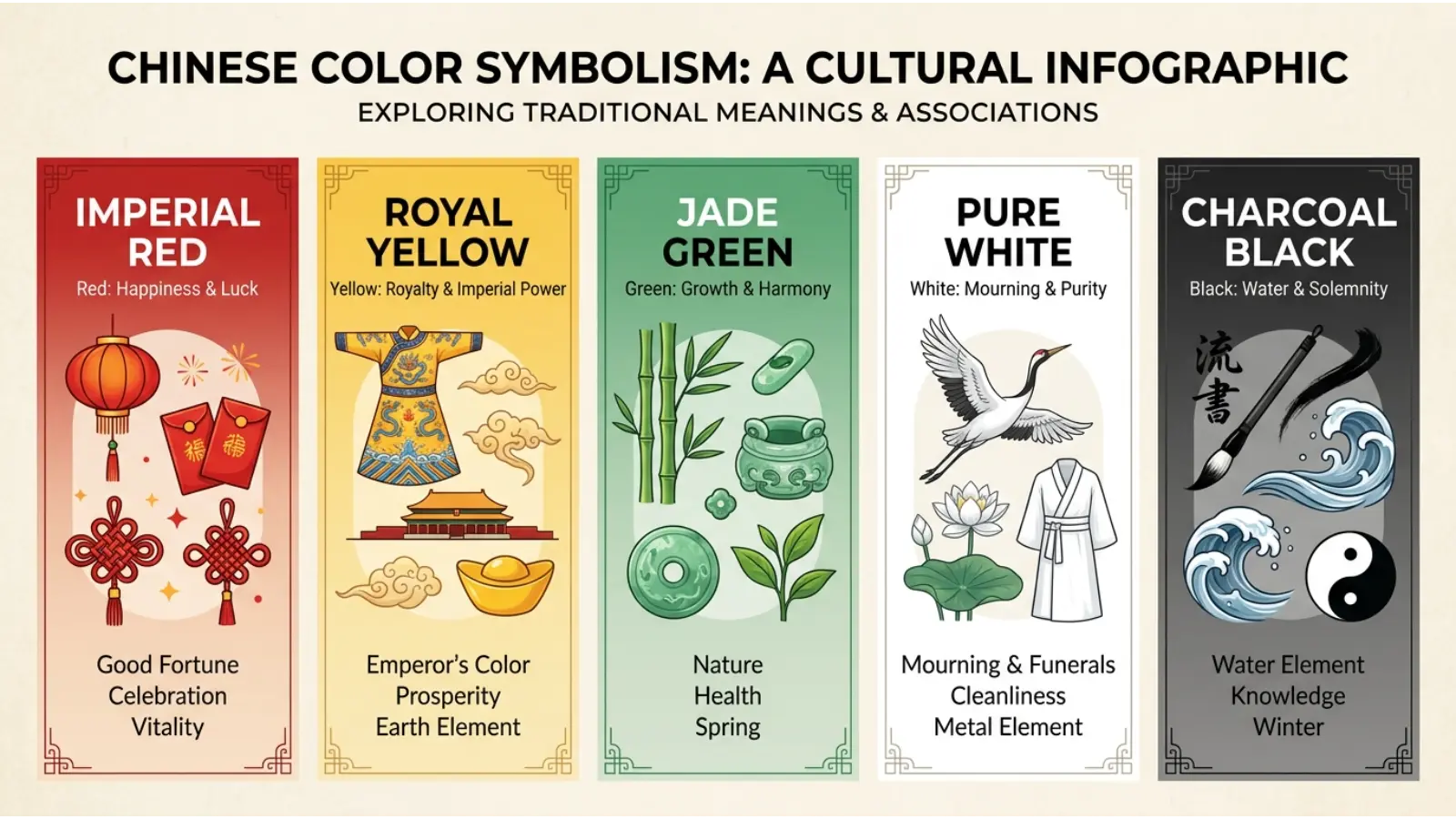
Colors play a much bigger role in Chinese culture than simply making things look beautiful. They communicate emotions, traditions, social status, celebrations, beliefs, and even wishes for good fortune. A single color can carry a joyful meaning in one situation and a respectful or solemn meaning in another.Many people search for color meanings in China because they want to understand Chinese traditions, avoid cultural mistakes, choose appropriate gifts, design products for Chinese audiences, or simply learn about one of the world’s oldest civilizations.
Unlike universal color psychology, Chinese color symbolism is deeply influenced by history, philosophy, festivals, and cultural customs. Meanings can also vary depending on the region, occasion, and historical period.
Quick Answer: In Chinese culture, red symbolizes happiness and good fortune, gold represents wealth and prosperity, yellow traditionally signifies royalty, white is associated with mourning, black can symbolize power or mystery, and green often represents growth but may carry different meanings depending on context.
Quick Answer
Chinese color meanings are rooted in thousands of years of tradition. While modern influences continue to shape their use, these classic associations remain widely recognized:
- Red: Luck, happiness, celebration, success
- Gold: Wealth, prosperity, fortune
- Yellow: Royalty, honor, authority
- Green: Growth, health, renewal
- Blue: Healing, immortality, harmony
- White: Mourning, funerals, purity
- Black: Power, mystery, dignity
- Purple: Nobility, spirituality, elegance
- Pink: Romance and youthful affection
- Orange: Good fortune and positive energy
Chinese Color Meanings Chart
| Color | Traditional Meaning | Common Modern Uses |
|---|---|---|
| 🔴 Red | Luck, happiness, prosperity | Weddings, Lunar New Year, gifts |
| 🟡 Yellow | Royalty, honor, prestige | Cultural symbols, decoration |
| 🟠 Gold | Wealth, success, abundance | Business, luxury branding |
| 🟢 Green | Growth, health, nature | Wellness, eco-friendly products |
| 🔵 Blue | Healing, trust, harmony | Technology, healthcare |
| ⚪ White | Mourning, remembrance, purity | Funerals, memorial ceremonies |
| ⚫ Black | Power, authority, mystery | Fashion, luxury branding |
| 🟣 Purple | Nobility, spirituality | Premium products, art |
| 🌸 Pink | Romance, affection | Fashion, cosmetics |
| 🟤 Brown | Stability, earth | Interior design, natural brands |
What Do Colors Symbolize in China?
Chinese color symbolism developed through centuries of philosophy, imperial history, religious traditions, and everyday customs. Ancient ideas such as the Five Elements (Wood, Fire, Earth, Metal, and Water) influenced how colors were understood.
Rather than having one fixed meaning, many colors represent different ideas depending on where and how they are used.
For example:
- Red celebrates life and happiness.
- White honors those who have passed away.
- Gold expresses prosperity.
- Green reflects nature and renewal.
- Yellow recalls imperial authority.
Understanding context is essential because the same color may communicate different messages during weddings, festivals, business events, or memorial ceremonies.
Psychology of Color Meanings in China
Although modern color psychology studies examine how colors influence mood and perception, Chinese symbolism is based primarily on long-standing cultural traditions rather than scientific evidence.
Still, many traditional meanings align with emotional responses people commonly experience.
Red Encourages Optimism
Red naturally attracts attention. It is energetic and exciting, making it suitable for celebrations and joyful occasions.
Gold Suggests Achievement
Gold often creates feelings of success, confidence, and prestige.
Green Promotes Calm
Green is strongly connected with nature, fresh beginnings, and healthy living.
Blue Feels Peaceful
Blue commonly represents stability, trust, and relaxation.
White Creates Respect
Although white often symbolizes weddings in Western cultures, in China it traditionally reflects remembrance and mourning.
Historical Origins of Chinese Color Symbolism
Chinese color traditions date back thousands of years.
During imperial dynasties:
- Yellow was reserved for emperors.
- Golden dragons decorated royal clothing.
- Ordinary citizens could not freely wear certain imperial colors.
- Red became linked with festivals and good fortune.
- White became associated with funeral clothing.
These traditions continue to influence modern celebrations and cultural expectations.
The Luckiest Color Meanings in China Culture
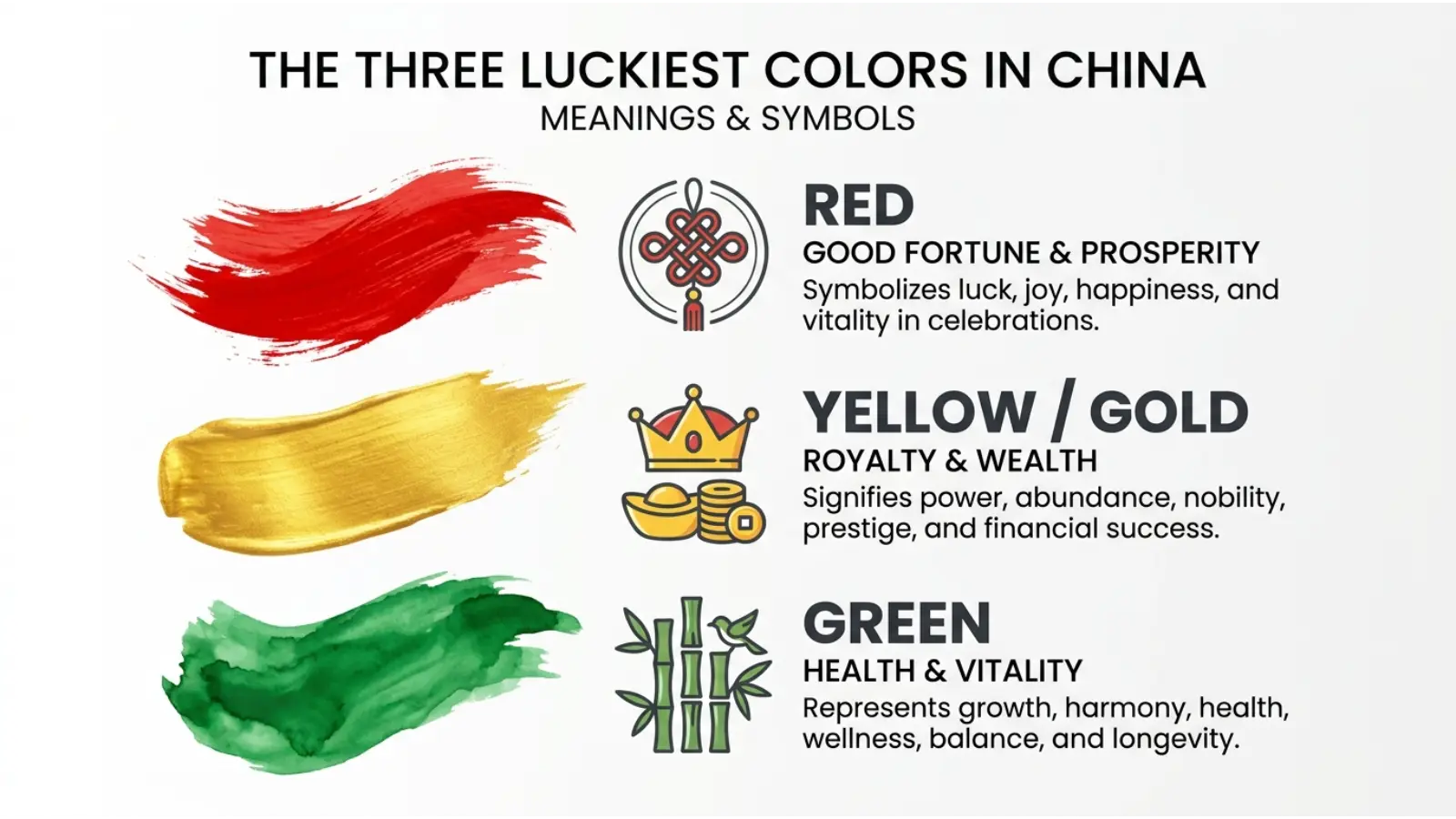
Several colors are widely considered lucky.
Red
The most famous lucky color.
It appears on:
- Red envelopes
- Wedding decorations
- Lanterns
- Festival banners
- Firecrackers
- Traditional clothing
People often wear red during Lunar New Year to welcome good fortune.
Gold
Gold symbolizes:
- Wealth
- Financial success
- Prosperity
- High status
- Good fortune
The Gold is frequently paired with red because together they represent happiness and abundance.
Yellow
Historically associated with emperors, yellow came to represent dignity, wisdom, and prestige.
Today it still conveys importance and cultural heritage.
Colors Traditionally Considered Less Favorable
Some colors require greater cultural awareness.
White
White traditionally appears during:
- Funerals
- Memorial ceremonies
- Mourning rituals
While it can also represent purity, its association with grief remains significant in many traditional settings.
Black
Black may symbolize:
- Mystery
- Authority
- Strength
However, depending on the situation, it may also suggest darkness or misfortune.
Modern fashion has made black increasingly popular for elegance and professionalism.
Green
Green generally has positive meanings related to life and health.
However, one famous Chinese expression involving a green hat has a completely different cultural meaning. Because of this historical idiom, green hats are usually avoided as gifts.
This example shows why context matters more than the color alone.
Color Meanings During Chinese Festivals
Festivals highlight the strongest examples of Chinese color symbolism.
Lunar New Year
Dominant colors:
- Red
- Gold
These colors decorate homes, markets, temples, and streets because they symbolize luck and prosperity.
Weddings
Red remains the traditional wedding color because it celebrates happiness, fertility, and a joyful future.
Funerals
White clothing and decorations traditionally express respect for the deceased.
Color Meanings in Chinese Philosophy
Ancient Chinese philosophy connects colors with the Five Elements.
| Element | Associated Color | Symbolic Meaning |
|---|---|---|
| Wood | Green | Growth, vitality |
| Fire | Red | Energy, happiness |
| Earth | Yellow | Stability, nourishment |
| Metal | White | Purity, structure |
| Water | Black | Wisdom, depth |
These symbolic links influenced architecture, traditional medicine, art, and ceremonial practices.
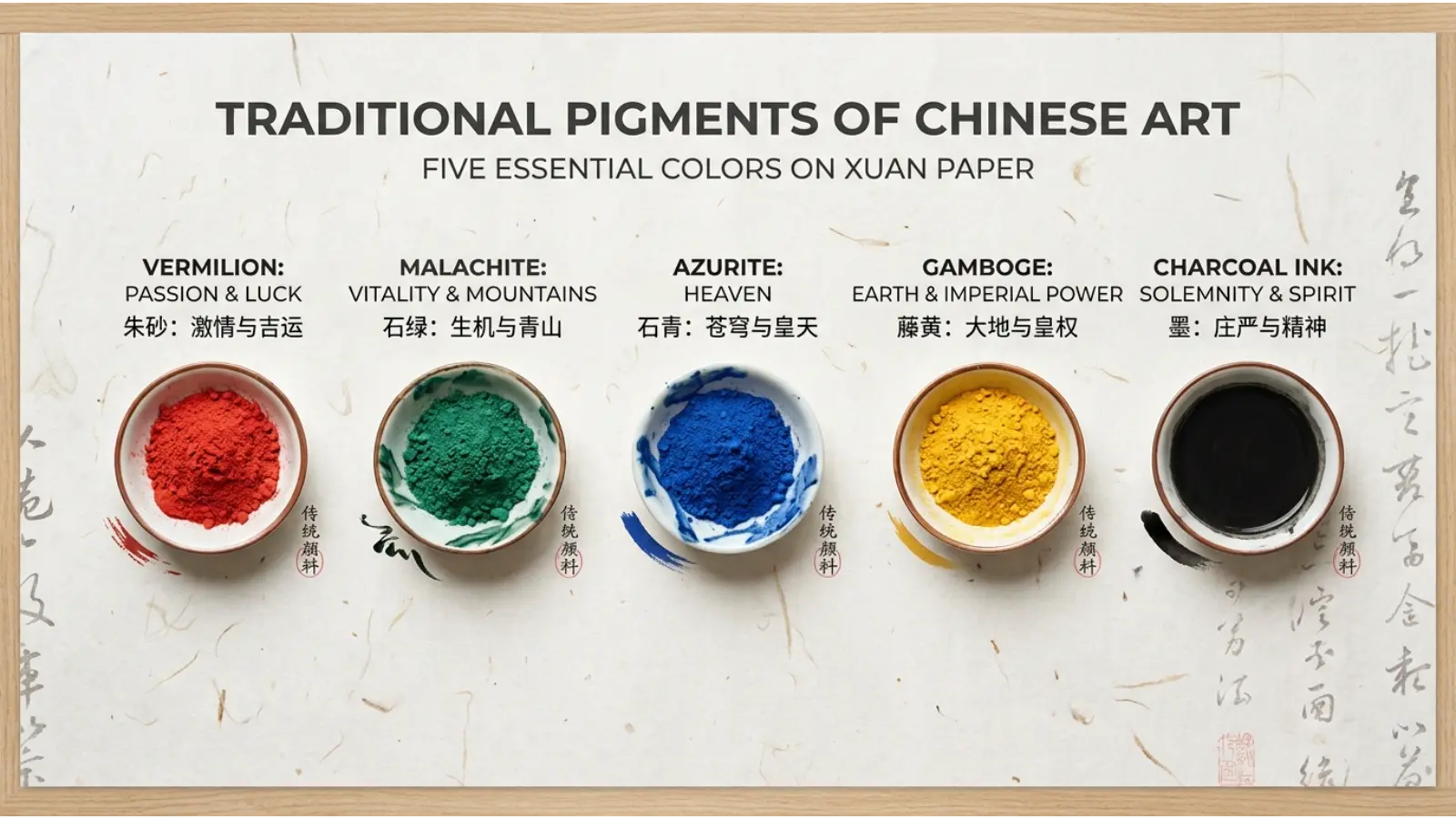
Color Meanings in Chinese Art
Artists have long used colors to communicate ideas.
- Red highlights celebration and life.
- Gold represents heaven and prosperity.
- Black creates dramatic contrast.
- Green depicts landscapes and renewal.
- Blue often appears in traditional porcelain and decorative arts.
Rather than choosing colors randomly, artists frequently selected them to reinforce the story or message.
Color Meanings in Branding and Marketing
Businesses targeting Chinese consumers often adapt color choices to cultural expectations.
Popular Branding Colors
Red
- Excitement
- Prosperity
- Good fortune
Gold
- Premium quality
- Luxury
- Success
Green
- Sustainability
- Organic products
- Health
Why It Matters
Consumers may respond differently to colors based on cultural experiences. A package designed for one market may send an unintended message in another.
Successful global brands often adjust packaging for Chinese holidays by incorporating more red and gold.
Color Meanings in Interior Design
Traditional Chinese-inspired interiors frequently use balanced color combinations.
Living Room
Red accents create warmth without overwhelming the space.
Dining Room
Gold details add elegance and abundance.
Bedroom
Soft greens and blues encourage a peaceful atmosphere.
Home Office
Neutral colors with touches of red may create a sense of motivation while maintaining focus.
Lighting also changes how colors appear. Warm lighting makes reds and golds richer, while cool lighting enhances blues and greens.
Color Meanings in Chinese Fashion
Fashion blends tradition with modern style.
Traditional celebrations often feature:
- Red dresses
- Gold embroidery
- Yellow decorative elements
Modern fashion embraces nearly every color, but traditional symbolism still influences clothing choices for weddings and festivals.
Black has become fashionable and sophisticated despite older symbolic associations.
Best Color Combinations in Chinese Design
Some combinations have become especially meaningful.
| Combination | Symbolism | Common Uses |
|---|---|---|
| Red + Gold | Luck and wealth | Weddings, New Year |
| Red + Yellow | Celebration and honor | Festivals |
| Green + White | Nature and balance | Wellness brands |
| Blue + White | Calm and elegance | Ceramics, interiors |
| Black + Gold | Luxury and authority | Premium branding |
Everyday Uses of Color Symbolism in China
Color meanings influence many daily decisions.
Examples include:
- Gift wrapping
- Festival decorations
- Business logos
- Restaurant interiors
- Product packaging
- Clothing choices
- Wedding invitations
- Holiday advertising
- Traditional crafts
- Cultural events
Even small design choices may communicate respect for local traditions.
Common Misconceptions About Color Meanings in China
Every Chinese Person Thinks the Same Way
Not true.
China is diverse, with regional traditions and modern influences shaping personal preferences.
White Always Means Bad Luck
White is strongly connected with mourning, but it is also used in modern design, fashion, and minimalist interiors.
Red Is Appropriate Everywhere
Red is widely celebrated but may not fit every formal or solemn occasion.
Ancient Meanings Never Change
Global fashion, technology, and international design continue to influence how younger generations view colors.
Frequently Asked Questions
Why is red considered lucky in China?
Red has long symbolized happiness, celebration, prosperity, and protection from misfortune. It is especially important during Lunar New Year and weddings.
Why is white worn at Chinese funerals?
Traditional Chinese customs associate white with mourning, remembrance, and respect for those who have passed away.
Is black unlucky in China?
Not always. Black can symbolize authority, strength, and elegance, although older traditions may associate it with darkness or solemnity.
Why do Chinese weddings use red instead of white?
Red represents joy, prosperity, love, and a fortunate future together, making it the traditional wedding color.
Is yellow still considered a royal color?
Its exclusive imperial status no longer exists, but yellow still carries historical associations with prestige and honor.
What colors bring good luck in China?
Red and gold are the two most widely recognized lucky colors.
Why are red envelopes used during Lunar New Year?
The red color symbolizes good fortune, while the money inside expresses wishes for prosperity and success.
Does green always have a positive meaning?
Usually yes. Green represents growth, health, and renewal, although certain cultural expressions give it different meanings in specific contexts.
Do modern Chinese brands still follow traditional color meanings?
Many do, especially during festivals and special promotions, although contemporary branding also follows global design trends.
Can foreigners use these colors respectfully?
Yes. Learning their traditional meanings helps avoid misunderstandings and shows cultural awareness.
Conclusion
Understanding color meanings in China reveals how deeply colors are woven into everyday life, history, and tradition. Red celebrates happiness, gold reflects prosperity, yellow recalls imperial heritage, and white expresses remembrance. These meanings continue to shape festivals, branding, fashion, interior design, and social customs, even as modern influences introduce new interpretations.
Rather than viewing colors as having universal meanings, it is helpful to see them through their cultural context. A thoughtful choice of color can communicate respect, strengthen design, improve marketing, or simply deepen appreciation for one of the world’s richest cultural traditions.

Emma Wilson is a dedicated comparison writer and product researcher at ColorMystiic.com. She specializes in creating unbiased product comparisons, detailed reviews, and helpful buying guides. Her goal is to help readers make smarter purchasing decisions with confidence.