Lanterns have guided travelers, celebrated festivals, honored loved ones, and decorated homes for centuries. Yet the color of a lantern often carries a message beyond its beauty. Different lantern colors can symbolize hope, love, prosperity, remembrance, celebration, or peace depending on the culture, tradition, and occasion.Many people search for lantern color meanings because they want to choose the right lantern for a festival, wedding, memorial, home décor, business event, or spiritual practice.
However, there is no single universal meaning. A red lantern in one tradition may symbolize joy, while a white lantern in another may represent remembrance.
This guide explores the symbolism, psychology, cultural interpretations, and practical uses of lantern colors in a clear and balanced way. You’ll also learn how designers, decorators, photographers, and event planners use lantern colors to create different moods.
Quick Answer:
Lantern color meanings vary by culture and context. Red often represents luck and celebration, white symbolizes peace or remembrance, yellow suggests hope and happiness, green reflects growth, blue conveys calm, purple symbolizes wisdom, and black is commonly associated with mystery or mourning.
What Do Lantern Colors Symbolize?
A lantern is already a symbol of light overcoming darkness. Once color is added, its meaning becomes even more specific.
People often choose lantern colors to express emotions without words. During festivals, they celebrate happiness. During memorials, they honor loved ones. At weddings, they represent new beginnings and prosperity.
Although interpretations differ around the world, most lantern colors share common symbolic themes.
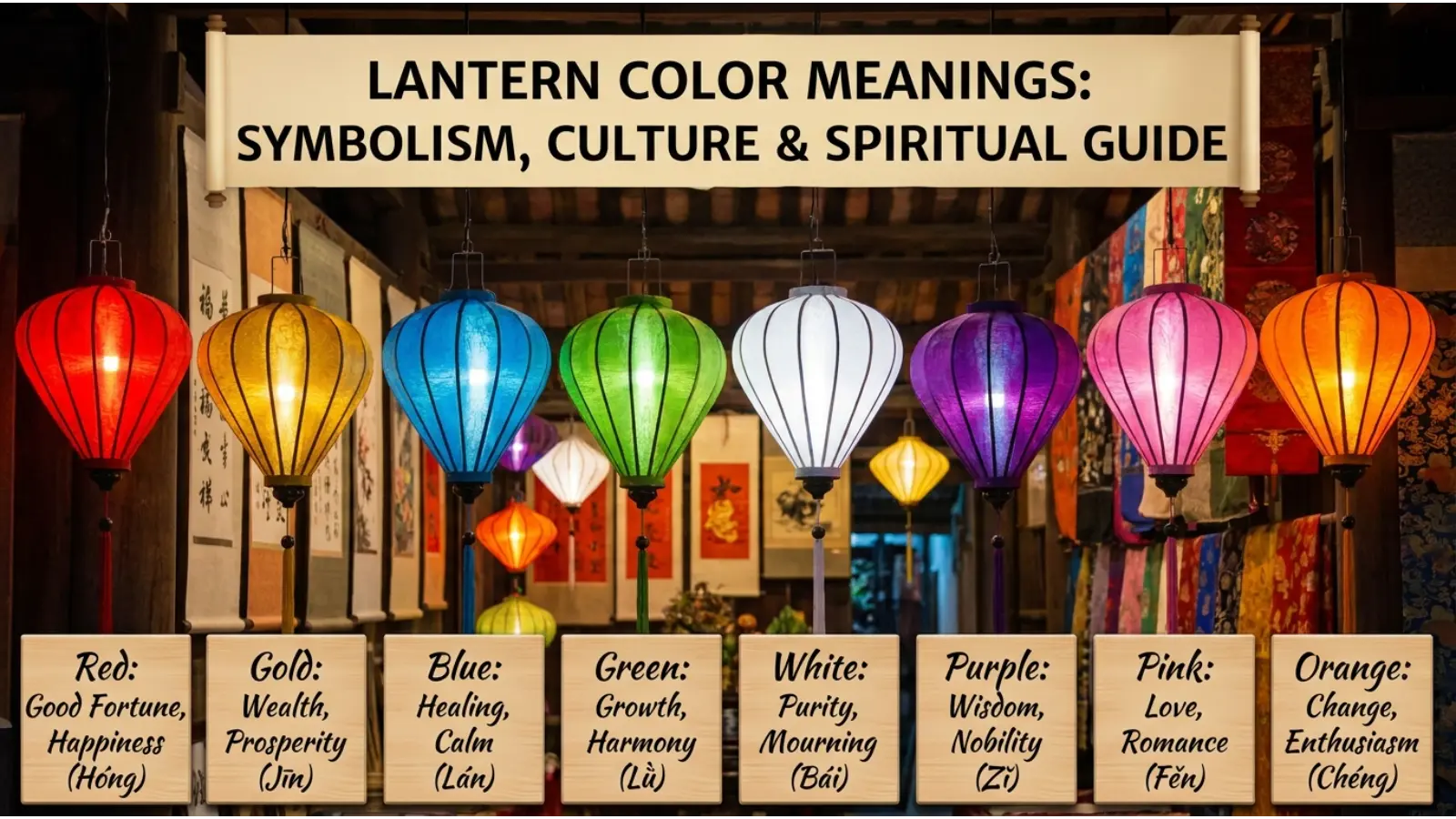
Lantern Color Meanings Chart
| Lantern Color | Common Symbolism | Popular Uses |
|---|---|---|
| ❤️ Red | Luck, celebration, happiness | Festivals, weddings, Lunar New Year |
| 🤍 White | Peace, remembrance, purity | Memorials, spiritual ceremonies |
| 💙 Blue | Calm, trust, wisdom | Gardens, meditation spaces |
| 💚 Green | Growth, nature, renewal | Outdoor events, eco-friendly themes |
| 💛 Yellow | Hope, joy, optimism | Festivals, parties, celebrations |
| 🧡 Orange | Warmth, creativity, enthusiasm | Autumn décor, family gatherings |
| 💜 Purple | Wisdom, dignity, spirituality | Religious events, elegant decorations |
| 🖤 Black | Mystery, elegance, mourning | Modern décor, remembrance events |
| 🩷 Pink | Love, kindness, affection | Weddings, baby showers, romantic events |
| 🩵 Gold | Wealth, success, prosperity | Luxury events, business celebrations |
Red Lantern Meaning
Red is one of the world’s most recognized lantern colors.
It symbolizes:
- Good fortune
- Celebration
- Prosperity
- Happiness
- Success
In many East Asian traditions, red lanterns decorate streets during festivals because they are believed to invite positive energy and joyful beginnings.
From a psychological perspective, red attracts attention quickly. Therefore, event organizers often use red lanterns as focal points.
White Lantern Meaning
White lanterns usually symbolize:
- Peace
- Purity
- Reflection
- Remembrance
- Hope
However, meanings vary across cultures.
In some countries, white represents weddings and innocence. In others, it is closely connected with funerals and honoring ancestors.
Because of this difference, understanding local customs is important before choosing white lanterns for public events.
Blue Lantern Meaning
Blue lanterns create a peaceful atmosphere.
Common meanings include:
- Calmness
- Stability
- Trust
- Reflection
- Wisdom
Blue lighting often feels cooler than warm-colored lanterns. Consequently, people frequently use blue lanterns around water features, gardens, meditation areas, and quiet outdoor spaces.
Green Lantern Meaning
Green symbolizes nature and renewal.
It commonly represents:
- Growth
- Healing
- Fresh beginnings
- Balance
- Environmental awareness
Today, green lanterns are popular during eco-friendly festivals and outdoor celebrations because they naturally blend with plants and landscapes.
Yellow Lantern Meaning
Yellow is associated with sunlight and optimism.
Its symbolism includes:
- Happiness
- Hope
- Energy
- Friendship
- Cheerfulness
Yellow lanterns brighten spaces quickly. As a result, they are often chosen for family gatherings, children’s events, and festive decorations.
Orange Lantern Meaning
Orange combines the warmth of red with the optimism of yellow.
It often symbolizes:
- Creativity
- Adventure
- Warm hospitality
- Autumn
- Enthusiasm
During harvest festivals, orange lanterns help create a welcoming atmosphere.
Purple Lantern Meaning
The Purple has long been connected with dignity and wisdom.
Purple lanterns may symbolize:
- Spiritual reflection
- Creativity
- Royalty
- Imagination
- Respect
Many elegant evening events use purple lighting because it feels luxurious without being overwhelming.
Pink Lantern Meaning
Pink lanterns express gentle emotions.
They often represent:
- Love
- Romance
- Compassion
- Kindness
- Celebration
For this reason, pink lanterns appear frequently at weddings, baby showers, and Valentine’s Day events.
Gold Lantern Meaning
Gold-colored lanterns symbolize:
- Wealth
- Achievement
- Success
- Celebration
- Abundance
Luxury hotels and formal celebrations frequently combine gold lanterns with warm lighting to create a sophisticated environment.
Black Lantern Meaning
Black lanterns have more complex meanings.
Depending on the setting, they may represent:
- Mystery
- Elegance
- Reflection
- Mourning
- Strength
Modern designers sometimes use black lanterns to create dramatic visual contrast rather than symbolic darkness.
Psychology of Lantern Colors
Color psychology studies how people commonly respond to different colors. While personal preferences vary, research suggests that color can influence attention, mood, and emotional perception.
For example:
- Warm colors often feel energetic.
- Cool colors usually appear calming.
- Bright lanterns attract attention.
- Soft lighting creates relaxation.
- Dark colors produce dramatic contrast.
Importantly, these responses are general trends rather than fixed rules.
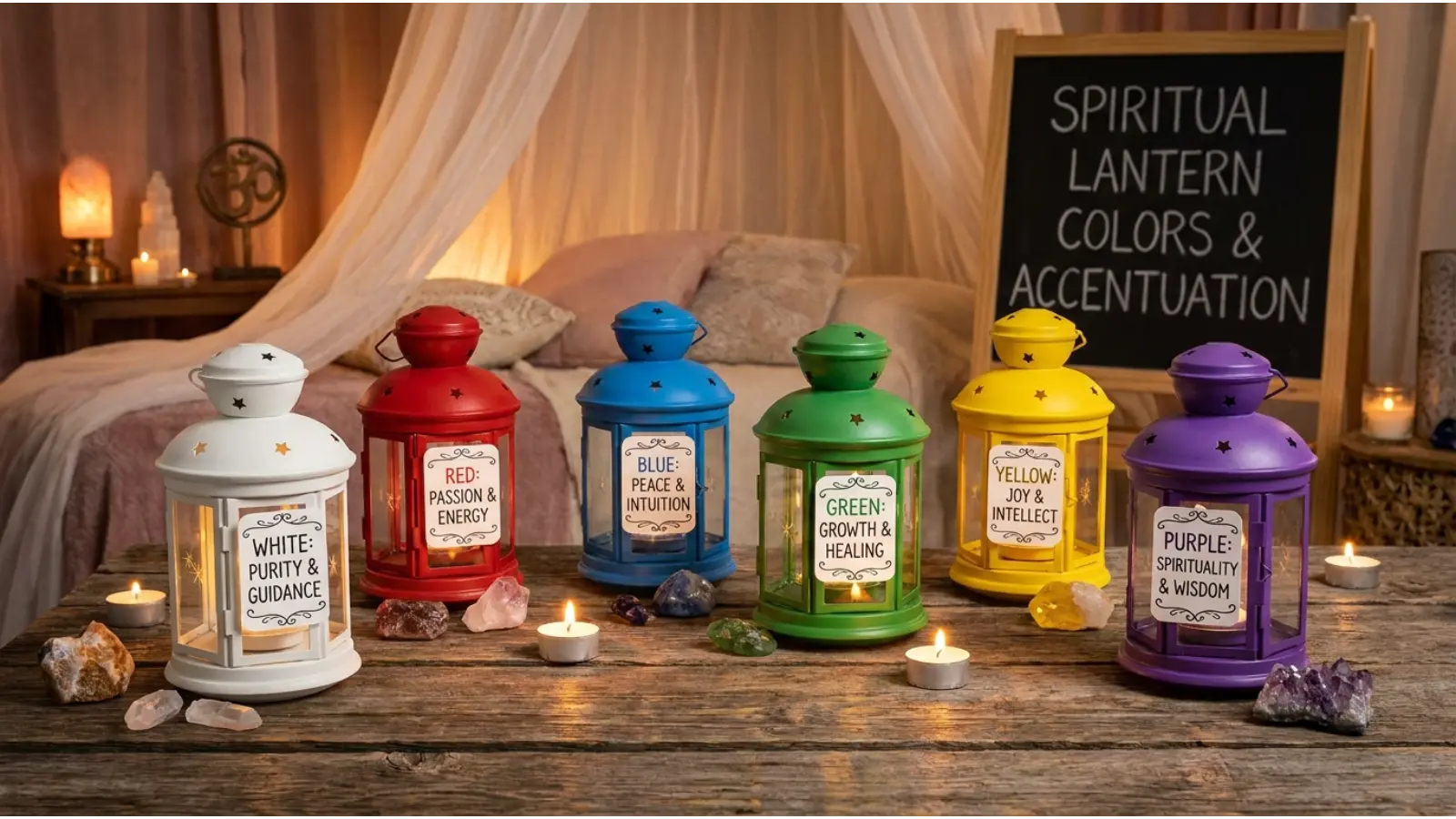
Spiritual Meaning of Lantern Colors
Across many spiritual traditions, lanterns symbolize guidance, hope, and enlightenment.
Color may add another symbolic layer:
- Red may represent life energy.
- White often reflects inner peace.
- Blue encourages quiet reflection.
- Green symbolizes renewal.
- Purple suggests wisdom.
- Gold represents spiritual abundance.
These interpretations differ among religions and cultures. Therefore, no single spiritual meaning applies everywhere.
Lantern Colors in Different Cultures
East Asia
Lantern festivals celebrate community, family, and good fortune.
Red dominates celebrations because it symbolizes happiness and prosperity.
Western Countries
Lanterns are commonly used for:
- Weddings
- Garden parties
- Holidays
- Memorial events
- Outdoor decoration
Meaning often depends more on the occasion than on traditional symbolism.
Middle Eastern Traditions
Decorative lanterns, especially during Ramadan, symbolize light, hospitality, and celebration.
Gold, white, and warm-colored lanterns are especially popular.
Modern Global Culture
Today, lantern colors are increasingly chosen for design themes rather than traditional symbolism.
Even so, many cultural meanings remain respected during festivals and ceremonies.
Historical Meaning of Lantern Colors
Historically, lantern colors were influenced by available dyes, local customs, and religious traditions.
Over time:
- Red became linked with celebrations.
- White gained ceremonial importance.
- Gold reflected wealth.
- Blue represented calmness.
- Green became associated with nature.
Modern decorative lanterns now combine these traditional meanings with contemporary design preferences.
Do Lantern Colors Reflect Personality?
Some people enjoy choosing lantern colors that match their personalities.
For example:
| Favorite Lantern Color | Common Personality Association* |
|---|---|
| Red | Confident, energetic |
| Blue | Calm, thoughtful |
| Green | Balanced, nature-loving |
| Yellow | Optimistic, cheerful |
| Purple | Creative, imaginative |
| White | Peaceful, organized |
| Black | Independent, sophisticated |
*These are symbolic associations rather than scientific personality tests.
Lantern Colors in Branding and Marketing
Businesses carefully select lantern colors during promotions because colors influence first impressions.
Examples include:
- Red for excitement and sales.
- Gold for luxury branding.
- Blue for trust.
- Green for sustainability.
- White for simplicity.
- Purple for premium experiences.
Restaurants, hotels, and event venues also use lantern lighting to reinforce their brand identity.
Lantern Colors in Interior Design
Lanterns can completely change the mood of a room.
Living Room
Warm white, gold, or yellow lanterns create a welcoming atmosphere.
Bedroom
Blue, lavender, or soft white lanterns encourage relaxation.
Home Office
Neutral white lighting improves visibility while maintaining comfort.
Garden
Green and warm amber lanterns blend naturally with outdoor landscapes.

Lantern Colors in Fashion and Events
Lantern colors often coordinate with clothing and event themes.
For example:
- Red complements wedding celebrations.
- White suits elegant ceremonies.
- Gold enhances luxury events.
- Pink creates romantic settings.
- Blue supports coastal themes.
- Orange works beautifully during autumn festivals.
Matching lantern colors with event décor creates visual harmony.
Best Lantern Color Combinations
| Combination | Effect |
|---|---|
| Red + Gold | Celebration and prosperity |
| Blue + White | Calm elegance |
| Green + Brown | Natural harmony |
| Purple + Gold | Luxury and creativity |
| Pink + White | Romance |
| Yellow + Orange | Warm happiness |
| Black + Gold | Modern sophistication |
Real-World Example
Imagine a community cultural festival held in the evening.
The entrance features red lanterns to create excitement and welcome visitors.
Walking paths are lined with warm white lanterns so guests feel comfortable and safe.
The garden area uses green lanterns to blend naturally with the trees.
Finally, the main stage is decorated with gold and purple lanterns, giving performances a premium and festive appearance.
Although each lantern provides light, its color also shapes visitors’ emotions and expectations.
Common Misconceptions About Lantern Color Meanings
Every culture uses the same meanings.
False. Symbolism varies widely between traditions.
One color always has one meaning.
Not true. Context changes interpretation.
Color psychology predicts everyone’s emotions.
Research suggests general patterns, but personal experiences also matter.
Bright lanterns are always better.
Not necessarily. Soft lighting often creates a more relaxing atmosphere.
Everyday Uses of Lantern Colors
Lantern colors influence many parts of daily life, including:
- Home decoration
- Garden lighting
- Weddings
- Cultural festivals
- Religious celebrations
- Business events
- Photography
- Restaurants
- Hotels
- Outdoor markets
- Holiday displays
- Community gatherings
Choosing the right color helps create the desired emotional atmosphere.
Frequently Asked Questions
What do red lanterns mean?
They commonly symbolize luck, prosperity, celebration, and happiness, especially during festivals.
What does a white lantern symbolize?
White lanterns often represent peace, remembrance, purity, or hope depending on the culture.
Which lantern color represents good luck?
Red is the color most widely associated with good luck.
Are lantern color meanings universal?
No. Meanings vary by culture, religion, history, and personal tradition.
Which lantern color is best for meditation?
Blue, soft white, and purple are popular choices because they create a calm environment.
Why do festivals use colorful lanterns?
Different colors help express celebration, identity, tradition, and community spirit.
Does lantern color affect mood?
Color and lighting can influence emotional perception, although responses differ between individuals.
Which lantern color is best for weddings?
Red, white, pink, and gold are among the most popular choices, depending on cultural traditions.
Can businesses use lantern colors for branding?
Yes. Restaurants, hotels, and event venues often select lantern colors that support their brand identity and customer experience.
Do lantern colors have spiritual meanings?
Many traditions associate lantern colors with symbolic ideas such as hope, wisdom, renewal, or peace, but interpretations are not universal.
Conclusion
Lanterns do much more than illuminate dark spaces. Their colors communicate ideas, celebrate traditions, and shape emotional experiences. While lantern color meanings differ across cultures and occasions, they consistently remind us that light can symbolize guidance, hope, remembrance, and celebration.
Understanding these meanings helps you choose the right lantern for festivals, home décor, photography, branding, or special events. At the same time, remembering that symbolism changes with culture and context allows you to appreciate lantern colors with greater respect and awareness.

Emma Wilson is a dedicated comparison writer and product researcher at ColorMystiic.com. She specializes in creating unbiased product comparisons, detailed reviews, and helpful buying guides. Her goal is to help readers make smarter purchasing decisions with confidence.