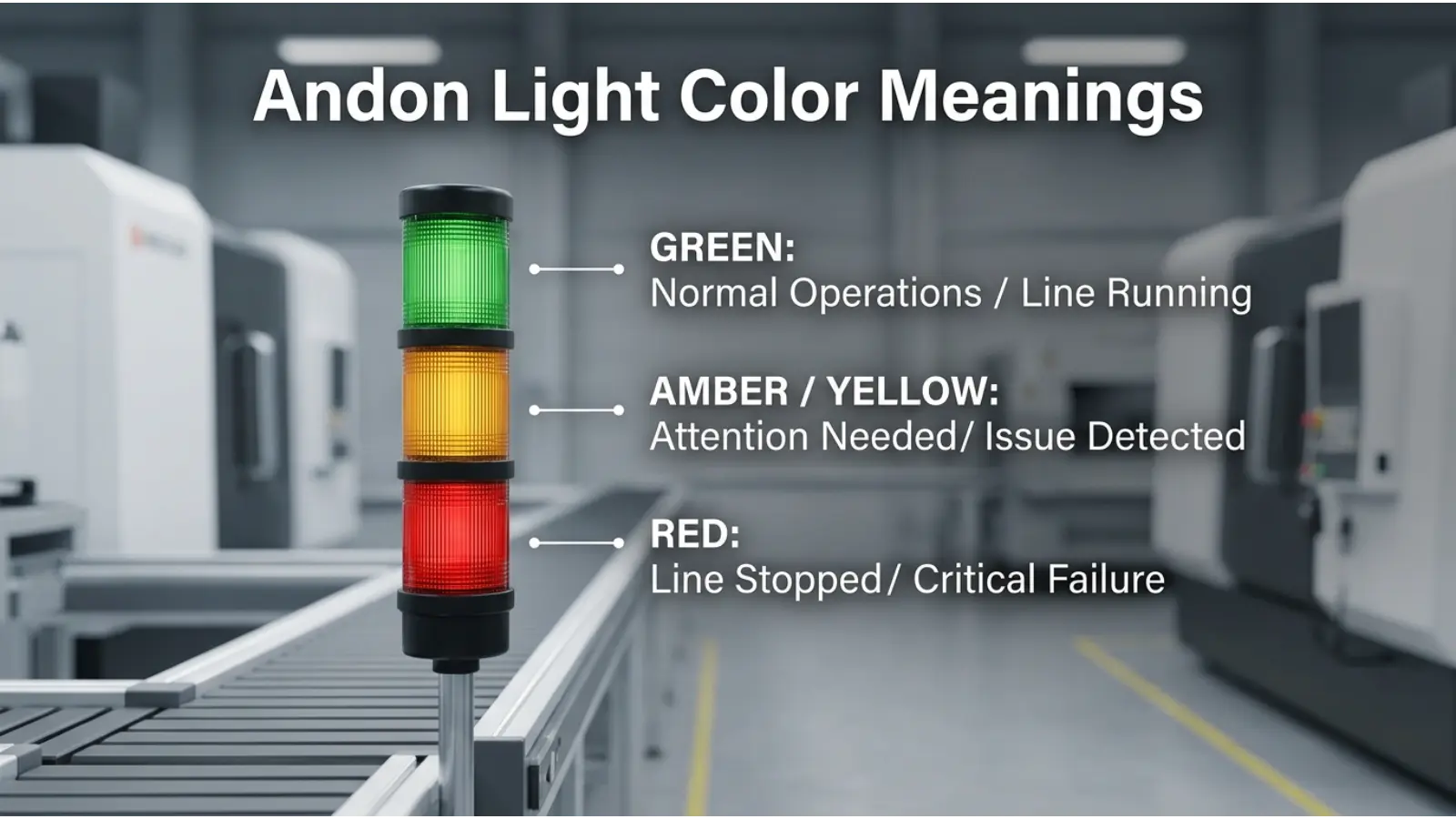
Walk through almost any modern factory and you will notice colorful tower lights mounted on machines. These lights are called andon lights, and each color sends a clear message about the condition of equipment or a production process. Instead of relying on words, workers can instantly understand what is happening by recognizing the color being displayed.Many people search for andon light color meanings because the colors are not always the same in every workplace.
While some meanings are widely accepted, companies may customize them to match their own safety procedures and production systems. Therefore, understanding both the common standards and workplace-specific rules is essential.
This guide explains the symbolism, psychology, workplace applications, cultural interpretations, and practical uses of andon light colors. You’ll also learn why these colors are so effective in manufacturing, quality control, and lean production.
Quick Answer:
Andon light color meanings help workers identify machine status at a glance. In most factories, green means normal operation, yellow signals caution, red indicates a problem or stoppage, blue requests assistance, and white provides general information. However, organizations may adjust these meanings based on their operating procedures.
What Are Andon Lights?
An andon light is a visual communication device used in manufacturing, warehouses, assembly lines, and automated production systems. It quickly informs employees about machine conditions without requiring verbal communication.
Originally developed as part of lean manufacturing, andon systems help reduce downtime, improve safety, and speed up problem-solving.
Typical industries include:
- Automotive manufacturing
- Electronics production
- Food processing
- Pharmaceutical plants
- Packaging facilities
- Warehouses
- Distribution centers
Andon Light Color Meanings Chart
| Color | Common Meaning | Worker Action | Priority |
|---|---|---|---|
| 🟢 Green | Normal operation | Continue working | Low |
| 🟡 Yellow | Warning or attention needed | Monitor situation | Medium |
| 🔴 Red | Machine fault or emergency | Stop and investigate | Critical |
| 🔵 Blue | Operator assistance requested | Supervisor responds | Medium |
| ⚪ White | Information or setup mode | Check instructions | Low |
| 🟣 Purple | Special process or custom signal | Follow company procedures | Varies |
What Does Each Andon Light Color Symbolize?
Green Andon Light Meaning
Green represents normal operation.
When a machine displays green, production is running correctly without immediate issues.
Symbolism
- Stability
- Efficiency
- Productivity
- Safety
- Progress
Psychological Effect
Green creates confidence. Workers feel comfortable because everything is functioning as expected. As a result, they can focus on maintaining productivity instead of troubleshooting equipment.
Yellow Andon Light Meaning
Yellow serves as an early warning.
Instead of indicating failure, it alerts workers that attention may soon be required.
Symbolism
- Awareness
- Preparation
- Observation
- Prevention
Psychology
Yellow naturally attracts human attention without causing panic. Consequently, it encourages workers to stay alert and respond before a small issue becomes a major problem.
Red Andon Light Meaning
Red indicates the highest level of urgency.
Production often stops when a red signal appears.
Symbolism
- Danger
- Emergency
- Failure
- Immediate action
- Critical issue
Psychology
Humans instinctively react quickly to red because it has long been associated with danger and warning signals. Therefore, it is ideal for communicating urgent machine problems.
Blue Andon Light Meaning
Blue commonly requests assistance.
Rather than signaling danger, it tells supervisors or maintenance staff that help is needed.
Symbolism
- Support
- Communication
- Technical assistance
- Teamwork
Psychology
Blue promotes calm decision-making. Instead of creating stress, it encourages organized problem-solving.
White Andon Light Meaning
White generally provides information rather than warnings.
It may indicate:
- Machine setup
- Inspection mode
- Production complete
- Operator instructions
- Standby mode
Symbolism
- Clarity
- Information
- Neutral status
- Communication
Purple Andon Light Meaning
Purple is less common.
Many companies use it for customized processes such as:
- Quality inspection
- Engineering review
- Maintenance scheduling
- Experimental production
- Special operating modes
Because there is no universal standard, employees should always follow company-specific guidelines.
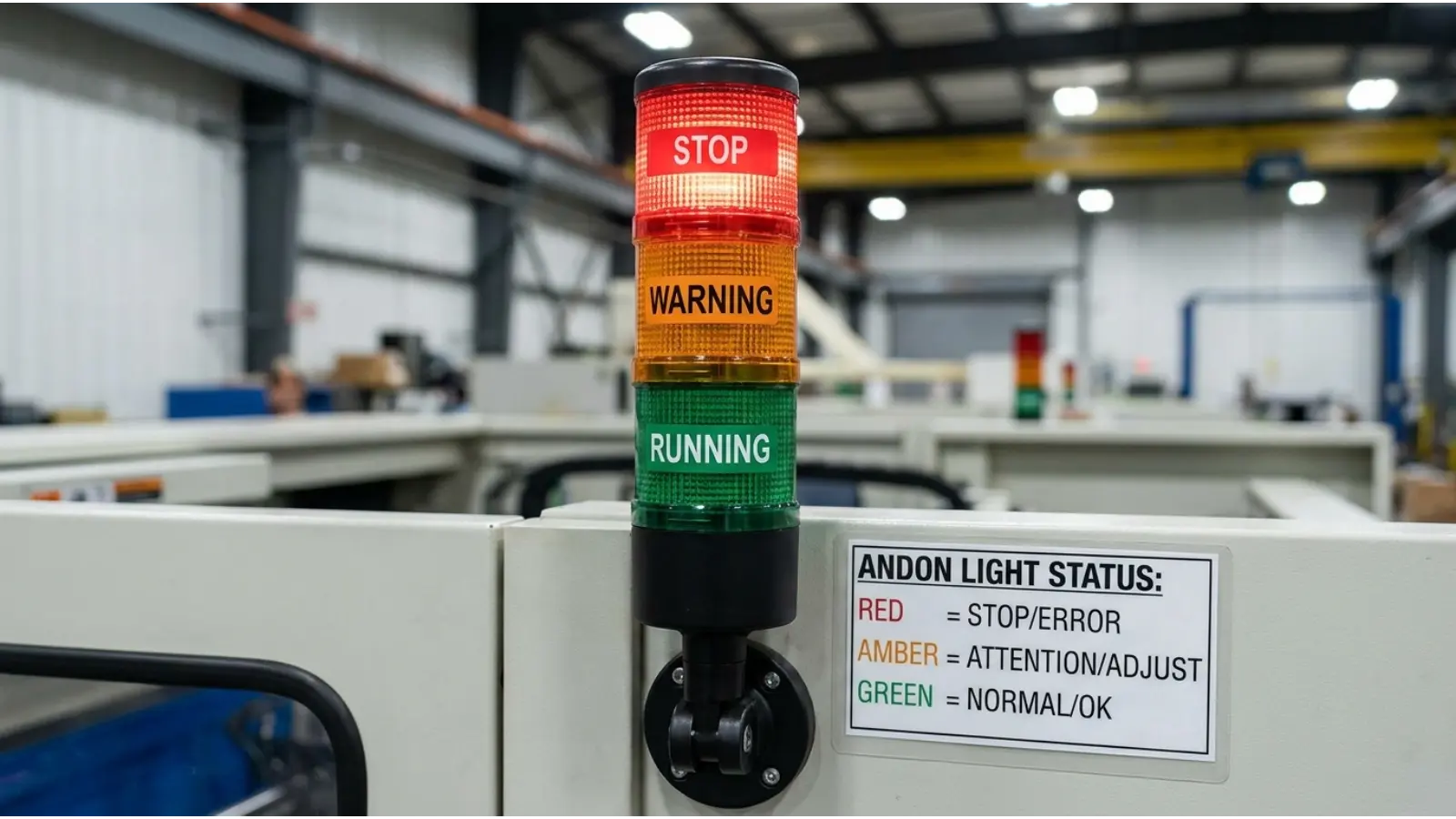
Psychology of Andon Light Colors
Color psychology helps explain why andon systems are so effective.
Different colors trigger different emotional responses, allowing workers to interpret information almost instantly.
| Color | Emotional Response |
|---|---|
| Green | Confidence and reassurance |
| Yellow | Alertness and caution |
| Red | Urgency and immediate action |
| Blue | Calm cooperation |
| White | Clarity and information |
Although psychology supports these general responses, individual experiences and workplace training also influence how people interpret colors.
Why Colors Improve Workplace Safety
Visual communication is often faster than written instructions.
For example, an operator may notice a flashing red tower light from across a factory floor long before reading a message on a screen.
This provides several benefits:
- Faster response times
- Reduced downtime
- Improved safety
- Better teamwork
- Lower production losses
- Easier monitoring of multiple machines
Therefore, color-coded signals play an essential role in lean manufacturing.
Lean Manufacturing and Andon Systems
Andon lights are closely connected with lean manufacturing principles.
Their purpose is not simply to report problems. Instead, they encourage workers to identify issues early so production quality remains high.
Key benefits include:
- Continuous improvement
- Waste reduction
- Faster maintenance
- Better communication
- Higher product quality
Spiritual Meaning of Andon Light Colors
Andon lights were designed for industrial communication rather than spiritual symbolism. However, some people enjoy exploring the traditional symbolic meanings of the individual colors.
These interpretations vary across cultures and belief systems.
| Color | Traditional Symbolic Association |
|---|---|
| Green | Growth and renewal |
| Yellow | Awareness and wisdom |
| Red | Strength and courage |
| Blue | Peace and trust |
| White | Purity and clarity |
| Purple | Creativity and transformation |
These meanings should not be confused with official workplace safety standards.
Cultural Interpretations of Signal Colors
Color meanings are influenced by culture, yet many industrial signal colors are standardized to reduce confusion.
Western Countries
- Red = Stop
- Green = Go
- Yellow = Warning
East Asia
Many manufacturing facilities use similar meanings because international safety standards promote consistency.
Global Manufacturing
Large companies often use identical signal systems across multiple countries. As a result, employees can recognize machine conditions even when working in different locations.
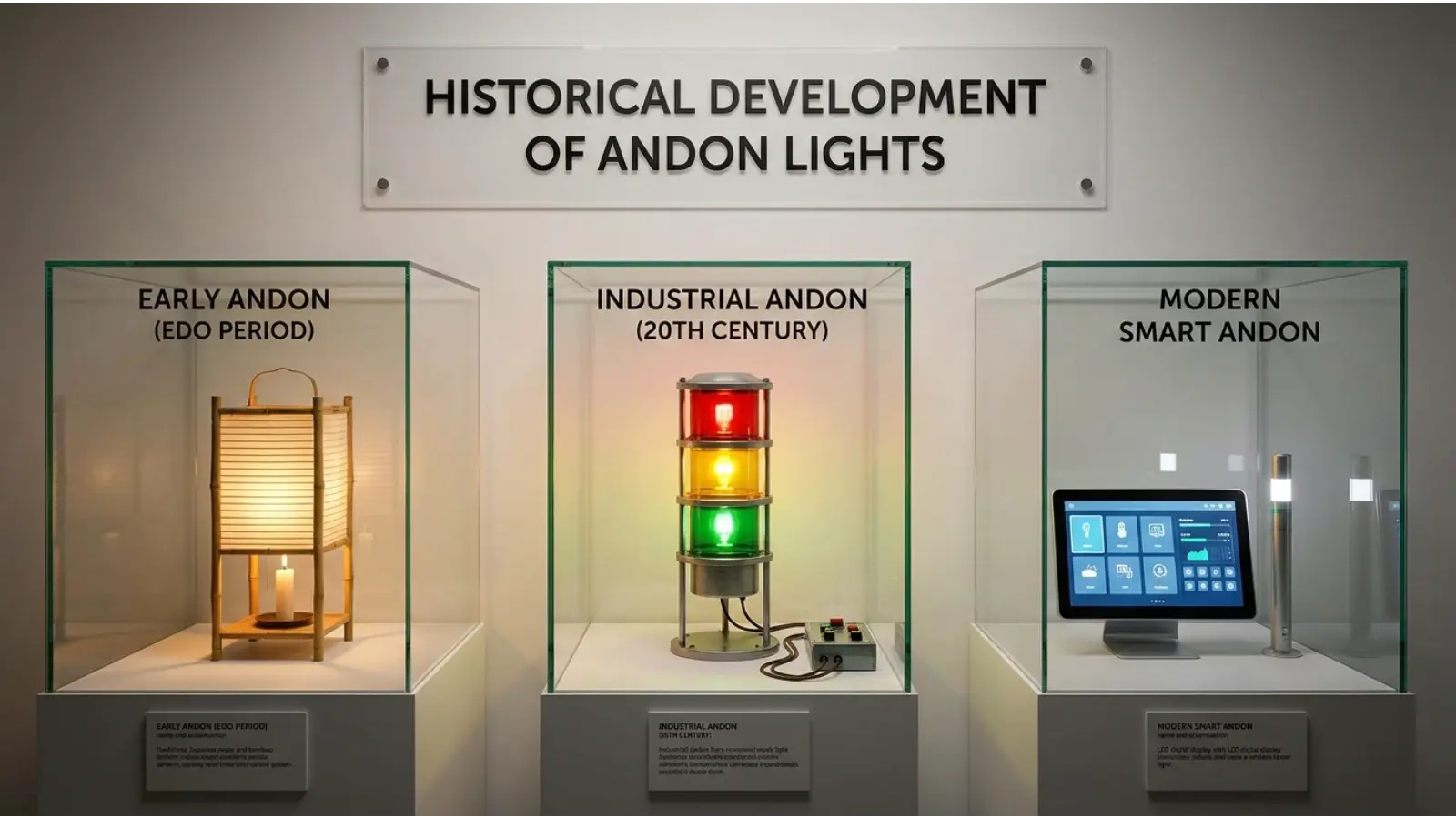
Historical Development of Andon Lights
The word “Andon” comes from Japan.
Originally, it referred to a traditional paper lantern. Later, manufacturers adopted the term to describe visual signaling systems used on production lines.
The concept became widely recognized through lean manufacturing practices developed in the automotive industry.
Today, andon systems are used around the world in both manual and highly automated factories.
Personality Associations with Favorite Signal Colors
Some readers wonder whether preferring a certain andon light color reflects personality.
Research does not support strong conclusions. However, symbolic associations are common.
People who like:
- Green may appreciate stability and organization.
- Yellow may enjoy learning and problem-solving.
- Red may value action and decisiveness.
- Blue may prefer teamwork and calm communication.
- White may appreciate simplicity and clarity.
Color preference alone does not determine personality.
Andon Colors in Workplace Design
Factories carefully choose signal colors because visibility directly affects safety.
Good practices include:
- High contrast backgrounds
- Bright LED lighting
- Consistent color assignments
- Flashing patterns for emergencies
- Regular employee training
As a result, workers spend less time interpreting signals and more time solving problems.
Real-World Example
Imagine an automotive assembly line producing engine components.
During normal production, every machine displays a green light.
Suddenly, one machine changes to yellow, indicating a sensor has detected unusual vibration. Maintenance prepares to inspect the equipment while production continues.
A few minutes later, the vibration exceeds safe limits, and the light changes to red. The machine automatically stops, preventing damage and protecting workers.
Once maintenance arrives, the operator activates a blue assistance signal. After repairs, the machine enters white setup mode for testing. Finally, it returns to green, showing that production has resumed safely.
This sequence demonstrates how andon lights improve communication, reduce downtime, and support workplace safety.
Color Combinations Used in Andon Towers
Most tower lights stack several colors together.
Common combinations include:
| Combination | Typical Meaning |
|---|---|
| Green + Yellow | Running with minor warning |
| Green + Red | Operating until stoppage |
| Yellow + Red | Escalating fault |
| Blue + White | Assistance during setup |
| Full Tower | Multiple machine conditions |
Exact meanings vary by manufacturer and company policy.
Common Misconceptions About Andon Light Color Meanings
Every Factory Uses the Same Colors
Not always.
While many companies follow similar conventions, organizations often customize colors to match their production systems.
Red Always Means Emergency
Sometimes red indicates a production fault rather than immediate danger.
Employees should always follow workplace procedures.
Green Means No Maintenance Is Needed
A green light simply indicates normal operation.
Preventive maintenance remains necessary even when machines appear to be functioning correctly.
Real-World Applications
Andon light colors are used in many industries.
Manufacturing
Monitor production equipment.
Warehousing
Show conveyor status and loading conditions.
Robotics
Display robot operating modes.
Food Processing
Indicate sanitation, production, or maintenance stages.
Pharmaceutical Production
Support quality assurance and compliance.
Electronics Manufacturing
Signal assembly line performance and equipment status.
Why Lighting Conditions Matter
The appearance of andon lights changes depending on the environment.
For example:
- Bright sunlight can reduce visibility.
- Dust may dim light intensity.
- LED technology provides clearer colors than older bulbs.
- Flashing lights attract more attention than steady lights.
Therefore, proper placement and maintenance are just as important as choosing the correct colors.
Frequently Asked Questions
What do andon light colors mean?
They communicate machine status using standardized visual signals. Green usually means normal operation, yellow indicates caution, and red signals a fault.
Is there an international standard for andon colors?
Many manufacturers follow similar practices, but exact meanings may vary between companies and industries.
Why is green used for normal operation?
Green is widely associated with safety, stability, and successful operation, making it easy for workers to recognize.
Why are red lights used for machine faults?
Red naturally attracts attention and has long been linked with danger and urgent action.
What does a flashing yellow andon light mean?
It usually indicates a warning that requires attention before production problems become more serious.
Can companies customize andon light colors?
Yes. Many organizations assign additional meanings based on their own workflows and operating procedures.
What does a blue andon light mean?
Blue commonly requests assistance from supervisors or maintenance personnel.
Why are andon lights important?
They improve communication, reduce downtime, increase workplace safety, and support lean manufacturing practices.
Do andon light colors have psychological effects?
Yes. Different colors influence attention and emotional responses, helping workers recognize machine conditions more quickly.
Are andon light meanings the same as traffic light meanings?
They are similar in many cases, but industrial systems often include additional colors such as blue, white, and purple.
Conclusion
Understanding andon light color meanings helps workers, supervisors, engineers, and business owners communicate more effectively in fast-paced industrial environments. Green signals normal production, yellow encourages caution, red demands immediate attention, blue requests assistance, and white often provides operational information. Although these meanings are widely recognized, organizations may adapt them to fit their own procedures.
By combining thoughtful color selection with proper employee training, andon systems improve safety, reduce downtime, and make manufacturing processes more efficient. As technology advances, these simple color signals remain one of the fastest and most reliable ways to communicate critical information across the factory floor.

Emma Wilson is a dedicated comparison writer and product researcher at ColorMystiic.com. She specializes in creating unbiased product comparisons, detailed reviews, and helpful buying guides. Her goal is to help readers make smarter purchasing decisions with confidence.