Why do people have favorite colors? For some, a favorite color feels calming. For others, it represents confidence, freedom, creativity, love, nature, or childhood memories. That is why favorite color meanings can be fascinating—but they are not as simple as saying one color always represents one personality type.
Color meaning develops from several influences. Psychology can explain how color may affect attention, emotion, and perception. Culture gives colors shared meanings. Personal experiences add memories and associations. Fashion, advertising, religion, nature, and popular culture can influence what a color feels like to an individual.
Your favorite color can therefore offer clues about your preferences and the emotions you enjoy surrounding yourself with, but it cannot accurately diagnose your personality.
In this guide, you will learn what popular favorite colors may symbolize, what research can and cannot tell us about color preference, how cultures interpret colors differently, and how these colors work in branding, interiors, fashion, art, and everyday life.
Quick Answer: Favorite color meanings describe the common emotions, symbols, cultural associations, and personality impressions connected with colors people prefer. Blue is often associated with calm and trust, red with energy and passion, green with nature and growth, purple with creativity and luxury, yellow with optimism, orange with enthusiasm, pink with affection, black with power and sophistication, white with simplicity and purity, and brown with stability.
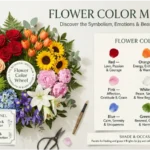
Favorite Color Meanings at a Glance
| Favorite Color | Common Positive Associations | Possible Negative Associations | Common Personality Impression |
|---|---|---|---|
| 🔵 Blue | Calm, trust, stability | Coldness, distance | Reliable, peaceful |
| 🔴 Red | Passion, courage, energy | Anger, danger | Bold, energetic |
| 🟢 Green | Nature, growth, balance | Envy, stagnation | Balanced, caring |
| 🟣 Purple | Creativity, imagination, luxury | Mystery, excess | Creative, individualistic |
| 🟡 Yellow | Happiness, optimism, energy | Anxiety, caution | Cheerful, expressive |
| 🟠 Orange | Enthusiasm, warmth, confidence | Restlessness, loudness | Social, adventurous |
| 🩷 Pink | Affection, tenderness, playfulness | Immaturity, excessive sweetness | Warm, compassionate |
| ⚫ Black | Power, elegance, sophistication | Grief, heaviness | Independent, confident |
| ⚪ White | Simplicity, cleanliness, peace | Emptiness, sterility | Organized, minimalist |
| 🟤 Brown | Stability, nature, comfort | Dullness, conservatism | Practical, grounded |
| 🩵 Turquoise | Freshness, communication, calm | Artificiality, emotional distance | Open, refreshing |
| 🩶 Gray | Balance, neutrality, sophistication | Boredom, uncertainty | Reserved, composed |
These are broad cultural associations, not personality tests.
What Do Favorite Color Meanings?
A favorite color usually tells you more about what visual and emotional qualities you enjoy than it tells you exactly who you are.
Someone who loves blue may enjoy peaceful environments, but that does not automatically mean the person is quiet. A person who chooses red may enjoy energetic visual experiences without being aggressive. Someone who loves black may appreciate its clean appearance rather than identifying with ideas of power or mystery.
The meaning becomes stronger when color is combined with context.
For example, green can represent forests and environmental awareness in one situation, money in another, and jealousy in a particular expression. Red can suggest love on Valentine’s Day, danger on a warning sign, celebration in one cultural setting, or political meaning in another.
This is why color interpretation works best as a language of associations rather than a fixed code.
Favorite Blue Color Meaning
Blue is one of the most widely recognized colors and is commonly associated with calmness, trust, stability, water, sky, and reliability.
People who prefer blue may be attracted to its visual quietness. Pale blue can feel airy and gentle, while navy blue can appear serious, professional, and authoritative.
Blue Personality Associations
- Calmness
- Reliability
- Thoughtfulness
- Loyalty
- Patience
- Emotional steadiness
- Preference for order
These are associations, not scientific personality diagnoses.
When Blue Can Feel Negative
Very dark or heavily used blue can sometimes appear distant, cold, or overly serious. The emotional effect depends on brightness, saturation, surrounding colors, and the situation.
Where Blue Works Best
Blue is especially useful for:
- Bedrooms
- Offices
- Technology brands
- Financial services
- Professional clothing
- Water-related designs
- Minimalist interiors
Favorite Red Color Meaning
Red is visually powerful and often attracts attention quickly. It can symbolize passion, love, courage, excitement, strength, urgency, and danger.
Red has an unusual range of meanings because it can communicate both attraction and warning.
A bright red dress may feel confident and dramatic. A red warning sign feels urgent. Red flowers can communicate romance. The Red sports uniforms can appear energetic and competitive.
Red Personality Associations
People who prefer red are often popularly described as:
- Energetic
- Confident
- Passionate
- Competitive
- Adventurous
- Expressive
Again, liking red does not prove that someone has these traits.
Using Red Carefully
Because red has strong visual impact, small amounts can be more effective than covering an entire space. A red chair, handbag, logo accent, or wall feature can create energy without overwhelming the viewer.
Favorite Green Color Meaning
Green has a strong connection with vegetation, forests, agriculture, and the natural world. Because of these associations, it commonly represents growth, renewal, health, balance, and environmental awareness.
Green also has important cultural and economic meanings. Depending on context, it can suggest money, permission, freshness, or envy.
Green Personality Associations
A person who prefers green may be perceived as:
- Balanced
- Nature-loving
- Patient
- Practical
- Caring
- Growth-oriented
These impressions should not be treated as psychological facts.
Different Greens Create Different Feelings
| Shade | Common Impression |
|---|---|
| Mint | Fresh, light, youthful |
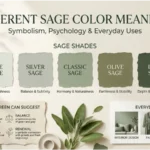
| Sage | Calm, natural, understated |
| Emerald | Rich, elegant, luxurious |
| Forest | Deep, stable, natural |
| Lime | Energetic, playful, modern |
| Olive | Earthy, traditional, practical |
Favorite Purple Color Meaning
Purple has long carried associations with imagination, creativity, mystery, spirituality, luxury, and individuality.
Historically, some purple dyes were difficult and expensive to produce, helping purple develop associations with status and wealth in certain societies. Modern design has expanded its meaning into creativity, fantasy, technology, beauty, and self-expression.
Purple Personality Associations
People who prefer purple are often portrayed as:
- Imaginative
- Creative
- Independent
- Curious
- Artistic
- Open to unusual ideas
Purple can also become visually heavy when very dark and highly saturated, so lighter lavender and muted violet often create a softer atmosphere.
Favorite Yellow Color Meaning
Yellow is commonly connected with sunlight, warmth, optimism, happiness, attention, and energy.
However, too much intense yellow may feel visually tiring for some people. Its meaning can also change across cultures and contexts.
Yellow Personality Associations
A favorite yellow may be popularly associated with:
- Optimism
- Curiosity
- Sociability
- Creativity
- Playfulness
- Enthusiasm
Rather than treating yellow lovers as automatically cheerful, it is more accurate to say that they may be attracted to the energetic and bright qualities yellow represents.
Favorite Orange Color Meaning
Orange combines qualities commonly associated with red and yellow: warmth, energy, enthusiasm, friendliness, and visibility.
It can feel more approachable than a strong red while remaining more energetic than many neutral colors.
Orange is often useful for:
- Sports designs
- Children’s products
- Food branding
- Outdoor products
- Creative spaces
- Promotional graphics
People who prefer orange are sometimes described as adventurous, outgoing, energetic, and social.
Favorite Pink Color Meaning
Pink has many modern associations with affection, tenderness, romance, care, beauty, playfulness, and softness.
Its meaning has also changed considerably over time and varies by culture. Contemporary Western culture often connects particular shades of pink with femininity, but that association is not universal or timeless.
Pink Shades Matter
Soft blush pink can appear elegant and calm. Hot pink can feel energetic and rebellious. Dusty rose can look mature and sophisticated.
This demonstrates an important rule of color psychology: the name of a color is not enough to predict its effect.
Hue, saturation, brightness, material, lighting, and surrounding colors all matter.
Favorite Black Color Meaning
Black is often associated with power, sophistication, elegance, mystery, seriousness, independence, and authority.
It also has associations with mourning and grief in several cultures. That contrast makes black one of the most context-dependent colors.
In fashion, black can create a streamlined appearance. In branding, it can communicate premium positioning. Photography, black can add drama and visual depth.
People who prefer black are sometimes described as independent, confident, private, sophisticated, or strong-minded. These impressions are cultural associations rather than personality measurements.
Favorite White Color Meaning
White is frequently associated with cleanliness, simplicity, peace, openness, purity, and minimalism.
Its meaning varies strongly across cultures. In some traditions, white is connected with weddings and celebration, while in others it has important associations with mourning.
White also behaves differently from saturated colors in design. It can create visual space and make nearby colors appear stronger.
A favorite white may therefore reflect an attraction to simplicity, order, spaciousness, or clean visual environments.
Favorite Brown Color Meaning
Brown is strongly connected with earth, wood, soil, leather, coffee, and other natural materials.
It often communicates stability, warmth, practicality, comfort, and reliability.
Brown is useful when a design needs to feel grounded rather than futuristic. Wood tones, leather, clay, and natural fibers can make interiors feel warmer because the material and color reinforce one another.
People who prefer brown may be perceived as practical, dependable, traditional, or grounded.
Favorite Gray Color Meaning
Gray occupies a middle position between black and white. It is commonly associated with neutrality, balance, restraint, sophistication, technology, and professionalism.
Light gray can feel modern and airy. Charcoal can feel dramatic and formal.
However, large amounts of flat gray may appear dull or emotionally distant if there is little variation in texture, lighting, or accent color.
Gray works particularly well as a supporting color rather than always being the main emotional statement.
What Does Your Favorite Color Say About Your Personality?
Popular color symbolism often assigns personality traits to favorite colors, but the evidence should be handled carefully.
Color preference is affected by many factors, including:
- Personal memories
- Age
- Culture
- Fashion trends
- Environment
- Gender expectations
- Media exposure
- Social experiences
- Material and texture
- Current mood
A person’s favorite color can change over time. Someone may love bright colors as a child and prefer muted colors as an adult. Another person may choose completely different colors for clothing, home decoration, and digital design.
A Better Way to Interpret Color Preference
Instead of asking, “What does my favorite color prove about me?”, ask:
“What qualities of this color am I attracted to?”
For example:
“I love navy blue because it makes everything feel organized and calm.”
That statement tells you more about the individual’s actual experience than simply saying, “Blue means I am trustworthy.”
Does Color Preference Really Reveal Personality?
Not in a simple or reliable way.
Researchers have found that color preferences and color responses can be influenced by both personal and cultural factors. Color psychology is therefore useful for studying patterns of perception, but it should not be confused with a personality test.
A favorite color cannot reliably determine intelligence, honesty, introversion, leadership ability, or future behavior.
The strongest interpretation is usually descriptive rather than predictive.
Color can describe an emotional impression you enjoy without predicting every aspect of your character.
How Culture Changes Favorite Color Meanings
Color meanings are not universal.
The same color can communicate celebration in one culture and mourning in another. Religious traditions, national history, clothing customs, political symbols, local environments, and historical events all shape color interpretation.
Western Cultural Associations
In many Western settings:
- White is commonly associated with weddings and cleanliness.
- Black can represent sophistication or mourning.
- Red can symbolize love, danger, or urgency.
- Green often suggests nature or environmental awareness.
- Blue frequently communicates trust and professionalism.
These are broad patterns rather than universal rules.
Asian Cultural Interpretations
Across Asia, color meanings vary enormously by country and tradition. Red, for example, can carry strong associations with celebration, prosperity, happiness, or good fortune in several East and South Asian contexts.
White can also have mourning-related meanings in some Asian traditions, demonstrating why global brands cannot simply export Western color assumptions.
Middle Eastern and Islamic Contexts
Colors may carry religious, historical, national, and political associations. Green has particular importance in Islamic history and symbolism, but its exact meaning varies by context and tradition.
A responsible interpretation should avoid claiming that every Muslim community gives green one identical meaning.
African Cultural Interpretations
Africa contains hundreds of cultural traditions, so there is no single “African color meaning.”
National flags, ceremonial clothing, local art, spiritual traditions, and community history can all influence interpretation.
Latin American Contexts
Color symbolism in Latin America also varies by country and tradition. Religious celebrations, festivals, national identity, indigenous heritage, and popular culture can all influence color meaning.
The lesson is simple: never assume a color has one worldwide definition.

The Spiritual Favorite Color Meanings
Spiritual color meanings depend heavily on the tradition being discussed.
There is no single universal spiritual color system. Different religions, esoteric traditions, meditation systems, healing practices, and modern spiritual communities may assign different meanings to the same color.
Common modern symbolic interpretations include:
| Color | Common Spiritual Association |
|---|---|
| Blue | Peace, reflection, communication |
| Red | Vitality, courage, physical energy |
| Green | Growth, balance, renewal |
| Purple | Wisdom, imagination, spiritual reflection |
| Yellow | Awareness, optimism, personal power |
| White | Peace, purity, transcendence |
| Black | Mystery, protection, transformation |
These should be understood as symbolic interpretations, not scientifically proven spiritual effects.
Color may influence the atmosphere of a meditation room or ritual because visual environments can shape attention and emotion. That is different from claiming that a particular color has a supernatural power.
Favorite Color Meanings in Branding and Marketing
Brands rarely choose colors randomly.
A company may select a color because it fits the emotional position it wants customers to associate with the product.
Blue is frequently used by technology, finance, healthcare, and corporate brands because it can create impressions of stability and professionalism.
Red can support brands that want high energy, urgency, appetite, excitement, or boldness.
Green can work naturally for environmental, health, organic, agricultural, and financial themes.
Purple can help position products around creativity, beauty, imagination, or premium experiences.
Why Context Matters in Branding
A color does not create a brand personality by itself.
Typography, photography, logo shape, packaging, product quality, advertising language, and cultural expectations all influence the final impression.
A bright green logo can feel youthful and energetic. A deep forest green logo can feel traditional and premium.
The color family is only one part of the message.
Favorite Color Meanings in Interior Design
Your favorite color does not have to cover an entire room.
A better approach is often to use your preferred color at different levels:
60% — Main background: walls, large furniture, flooring
30% — Supporting color: curtains, rugs, bedding, cabinets
10% — Accent color: artwork, cushions, lamps, decorative objects
This is a flexible design guideline rather than a strict scientific rule.
Bedroom
Soft blue, sage green, lavender, warm beige, and muted gray can create a quieter visual environment.
Living Room
A favorite strong color can work well through cushions, artwork, chairs, rugs, or a feature wall.
Office
Blue, green, neutral gray, brown, and muted purple can create very different professional atmospheres depending on brightness and saturation.
Kitchen
White, cream, green, blue, yellow, wood tones, and earthy colors can all work. Consider the natural light before choosing a final shade.
Lighting Changes Everything
A paint color can look different under daylight, warm bulbs, cool LEDs, and evening lighting.
Always test a color in the actual room before committing to a large surface.

Favorite Colors in Fashion
Color preference can become part of personal style without becoming a strict rule.
Someone who loves black may build a wardrobe around monochrome clothing. A person who loves green may use olive trousers, emerald accessories, or sage shirts rather than wearing bright green from head to toe.
Professional Clothing
Navy, charcoal, white, black, brown, and muted colors often create restrained professional impressions.
Casual Clothing
Brighter colors can add energy and individuality. Orange, yellow, turquoise, red, and pink can work especially well as accent pieces.
Formal Wear
Deep shades tend to appear richer and more formal because they absorb more visual attention than extremely bright colors.
Accessories
If your favorite color is intense, accessories are an easy way to use it:
- Handbags
- Shoes
- Watches
- Scarves
- Jewelry
- Ties
- Phone cases
- Sunglasses
Favorite Color Combinations That Work Well
Good color combinations usually depend on contrast, harmony, saturation, and the purpose of the design.
| Favorite Color | Strong Pairings | Overall Effect |
|---|---|---|
| Blue | White, beige, gold | Calm and polished |
| Red | Black, white, navy | Bold and dramatic |
| Green | Cream, brown, gold | Natural and grounded |
| Purple | Gray, cream, gold | Elegant and creative |
| Yellow | Navy, gray, white | Bright but balanced |
| Orange | Navy, cream, brown | Warm and energetic |
| Pink | Gray, white, burgundy | Soft or sophisticated |
| Black | White, gold, red | Strong and dramatic |
| White | Almost any color | Clean and flexible |
| Brown | Cream, green, blue | Warm and natural |
The 3-Part Color Test
When choosing colors, check three things:
Hue: What basic color family is it?
Value: Is it light or dark?
Saturation: Is it muted or intense?
Two colors can belong to the same family but feel completely different because their value and saturation differ.
How Age Can Change Color Preferences
Color preferences may shift throughout life.
Children are often surrounded by highly saturated colors in toys, classrooms, cartoons, and children’s products. Adults may increasingly encounter neutral colors in professional clothing, architecture, technology, and home design.
This does not mean everyone follows the same pattern.
Life experiences, fashion, cultural expectations, and personal memories can be more influential than age alone.
How Lighting Changes Color Meaning
Lighting can change not only how a color looks but also how it feels.
A warm light can make cream, brown, orange, and red appear richer. Cool lighting can make blues and some greens appear sharper.
For photography, the same shirt can look completely different under sunlight and indoor lighting.
This is why a digital color sample should never be treated as a perfect prediction of a physical product’s appearance.
Real-Time Example: Choosing a Favorite Color for a New Brand
Imagine a new fitness company is choosing between bright red and deep green for its identity.
At first, red may seem attractive because it communicates energy and action. But if the company specializes in outdoor wellness and sustainable fitness, deep green may better support the intended message.
Now imagine the company sells high-intensity sports equipment instead. Bright red may become more appropriate.
The color did not change. The context changed.
This is one of the most important lessons in color psychology: meaning is created by the relationship between color, audience, product, culture, and situation.
How Artists Use Favorite Color Symbolism
Artists often use color to guide emotion before viewers consciously understand an image.
A painter may use blue to create distance or quietness. Red may pull the eye toward an important subject. Green may connect a character to nature. Purple may create an unusual or dreamlike atmosphere.
Artists can also deliberately break conventional symbolism.
A peaceful scene painted in red can feel unsettling. A funeral scene dominated by bright yellow can create emotional tension.
This shows that symbolism becomes powerful when expectations are either reinforced or challenged.
Common Misconceptions About Favorite Color Meanings
“Your Favorite Color Reveals Your Exact Personality”
It does not.
Color preference may provide clues about aesthetic taste or emotional associations, but it cannot accurately describe an entire personality.
“Every Color Has One Universal Meaning”
It does not.
Culture and context can completely change a color’s interpretation.
“Color Psychology Is the Same as a Personality Test”
It is not.
Color psychology examines relationships between color and perception, emotion, behavior, or meaning. A personality test measures psychological traits using a structured assessment.
“A Color Always Creates the Same Emotion”
Not necessarily.
The same color can feel exciting, frightening, elegant, childish, peaceful, or boring depending on its context.
“Dark Colors Are Always Negative”
No.
Black, navy, charcoal, dark green, and deep purple can communicate luxury, confidence, depth, stability, and sophistication.
Favorite Color Meanings in Everyday Life
Color preference influences more decisions than people realize.
You may choose a phone case because of its color, select a wall paint because it feels peaceful, buy a shirt because it looks confident, or choose a notebook because its color makes studying more enjoyable.
Businesses make similar decisions when selecting packaging, websites, uniforms, signs, and advertisements.
Artists use color to direct attention. Photographers use it to create atmosphere. Interior designers use it to control visual balance. Fashion designers use it to shape identity.
Color is therefore not simply decoration. It is part of visual communication.
A Simple Favorite Color Self-Reflection Chart
Instead of treating color meanings as personality labels, use this chart to explore your own preferences.
| Question | What It Can Reveal |
|---|---|
| Which color do I choose most often? | Strong visual preference |
| Which color makes me feel relaxed? | Preferred atmosphere |
| Which color gives me energy? | Preferred visual stimulation |
| Which color do I wear most? | Personal style |
| Which color would I paint my room? | Environmental preference |
| Which color reminds me of childhood? | Personal memory |
| Which color do I avoid? | Negative association or visual preference |
| Has my favorite color changed? | Changing taste and experiences |
This approach is more useful than a simple online quiz because it considers your own experiences.
Frequently Asked Questions About Favorite Color Meanings
What is the most popular favorite color?
Blue is frequently reported as a highly preferred color across surveys and populations, although preferences vary by country, age group, sample, and research method. There is no single permanent global ranking.
What does it mean if my favorite color is blue?
Blue is commonly associated with calmness, trust, stability, reliability, and openness. A preference for blue may simply mean you enjoy its appearance or the atmosphere it creates.
What does your favorite color say about you?
It may reflect aesthetic taste, memories, cultural influences, or the emotional qualities you enjoy. It cannot reliably determine your personality.
What is the rarest favorite color?
There is no universal answer. Survey results change according to the colors offered, the population studied, country, age, and wording of the question.
Can your favorite color change?
Yes. Color preference can change with age, experiences, fashion, surroundings, culture, and changing personal taste.
Why do people have favorite colors?
People develop color preferences through a mixture of biological responses, learned associations, personal memories, culture, environment, and repeated exposure.
Does favorite color affect personality?
There is no strong basis for saying that a favorite color determines personality. However, people can use colors to express identity and create environments that support a desired mood.
Why do cultures have different color meanings?
Color meanings are learned through history, religion, traditions, language, ceremonies, national symbols, clothing, art, and social experience.
Why does my favorite color look different in different rooms?
Lighting, surrounding colors, surface material, shadows, and the size of the colored area can change how the color is perceived.
Can businesses use favorite color meanings in marketing?
Yes, but color should be treated as one part of a larger brand strategy. Audience, culture, product category, typography, imagery, packaging, and brand personality all matter.
Conclusion
Favorite color meanings are most useful when treated as a language of associations rather than a personality formula.
Blue can suggest calm and trust. Red can communicate passion and urgency. Green can connect a design with nature and growth. Purple can suggest creativity and imagination. Yellow can bring brightness and optimism. Black can create sophistication and authority. White can communicate simplicity and space.
Yet none of these meanings exists in isolation.
A color’s effect changes with culture, lighting, saturation, surrounding colors, personal memories, fashion, history, and the situation in which it appears. The color you love may tell an interesting story about what you enjoy seeing around you, but it does not define who you are.
The most useful question is not simply “What does my favorite color mean?”
It is:
“What do I personally see, feel, and remember when I look at it?”
That answer can make color psychology much more personal—and much more meaningful.
Emma Wilson is a dedicated comparison writer and product researcher at ColorMystiic.com. She specializes in creating unbiased product comparisons, detailed reviews, and helpful buying guides. Her goal is to help readers make smarter purchasing decisions with confidence.