Green is one of the most familiar colors in everyday life. We see it in leaves, forests, gardens, traffic signals, money, sports uniforms, packaging, and digital interfaces. Because it appears so often in nature, green is strongly connected with life, growth, renewal, and balance. Yet its meaning is not always positive. In some situations, green can suggest jealousy, inexperience, illness, or envy.The meanings of the color green change with context. A soft sage green can feel calm and natural, while a bright neon green may feel energetic and modern.\
A deep forest green can suggest stability and tradition, while yellow-green may appear playful or fresh.
This guide explains green from several angles, including color psychology, symbolism, spirituality, culture, history, personality associations, branding, interior design, fashion, and everyday use. It also separates commonly accepted symbolism from claims that are less certain.
Quick Answer: Green commonly symbolizes nature, growth, renewal, health, balance, harmony, freshness, and prosperity. Depending on the shade and context, it can also represent jealousy, inexperience, illness, or environmental awareness.
Green Color Meaning at a Glance
| Green Meaning | Common Association | Typical Feeling |
|---|---|---|
| 🌿 Nature | Plants, forests, Earth | Natural, grounded |
| 🌱 Growth | Development, new beginnings | Hopeful, positive |
| ♻️ Renewal | Fresh starts, restoration | Refreshing |
| 💚 Health | Wellness, vitality | Healthy, clean |
| ⚖️ Balance | Harmony and stability | Calm |
| 💰 Prosperity | Money and success | Secure, abundant |
| 🍃 Freshness | Clean, organic qualities | Light, refreshing |
| 💚 Compassion | Care and kindness | Gentle |
| 🟢 Safety | Permission and “go” signals | Reassuring |
| 😒 Jealousy | Envy and possessiveness | Negative |
| 🌳 Tradition | Nature, heritage, stability | Established |
The meaning depends heavily on shade, brightness, saturation, surrounding colors, culture, and the situation in which green appears.
What Does the Color Green Symbolize?
Green is most strongly associated with nature and living things. Grass, leaves, trees, moss, and many plants give the color a powerful connection with the natural world.
From this association come several common meanings:
- Growth
- Renewal
- Life
- Health
- Freshness
- Balance
- Harmony
- Hope
- Prosperity
- Sustainability
- Safety
Green can also represent permission or movement. In many traffic systems, a green signal tells people that they may proceed. This gives green a practical association with safety, approval, and forward movement.
At the same time, green has a darker symbolic side. Expressions involving “green with envy” connect the color with jealousy and desire. Green can also suggest immaturity because “green” has long been used to describe someone who is inexperienced.
Positive Meanings of Green
The most common positive meanings include:
Growth: Green represents the visible growth of plants and is therefore often used as a metaphor for personal, financial, or organizational development.
Renewal: Spring landscapes help connect green with fresh beginnings and recovery.
Balance: Green sits between blue and yellow on traditional color models, giving it a visual association with both cool and warm qualities.
Health: Green appears frequently in wellness, natural-product, and health-related visual design.
Prosperity: Green is associated with money in some cultures, especially in modern Western contexts because of the green appearance of U.S. currency.
Harmony: Natural green landscapes can communicate peacefulness and connection with the environment.
Negative Meanings of Green
Green is not automatically calming or positive.
It can represent:
- Jealousy
- Envy
- Greed
- Inexperience
- Sickness
- Artificiality when extremely bright
- Immaturity
The negative meaning usually comes from language, cultural associations, or unusual shades, rather than from the color itself.
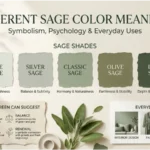
A Meanings of the Color Green Chart by Shade
Different greens can create very different impressions.
| Shade of Green | Common Meaning | Best Impression |
|---|---|---|
| Sage green | Calm, natural, understated | Relaxation |
| Mint green | Freshness, cleanliness, youth | Light and modern |
| Forest green | Stability, nature, tradition | Trust and depth |
| Emerald green | Luxury, richness, vitality | Premium appearance |
| Olive green | Earthiness, maturity, practicality | Natural and grounded |
| Lime green | Energy, playfulness, youth | Attention and excitement |
| Moss green | Nature, age, earthiness | Organic character |
| Sea green | Water, freshness, calm | Relaxation |
| Kelly green | Energy, confidence, freshness | Bold identity |
| Dark green | Security, wealth, tradition | Authority |
| Yellow-green | Youth, energy, spring | Liveliness |
| Neon green | Technology, nightlife, intensity | High energy |
A useful design rule is simple: the darker and less saturated the green, the more mature and grounded it often appears; the brighter and more saturated it becomes, the more energetic and attention-grabbing it feels.
Psychology Meanings of the Color Green
Color psychology studies how colors can influence perception, emotion, and behavior. However, color effects are not universal rules. A person’s response to green can depend on culture, personal experience, lighting, surrounding colors, and the particular shade.
Green often receives a relatively comfortable response because people encounter many green environments in nature. A park filled with trees does not create the same visual experience as a wall painted in intense fluorescent green.
How Green Can Affect Mood
Green is commonly associated with:
- Calmness
- Freshness
- Comfort
- Naturalness
- Stability
- Restoration
- Hope
Nature-related green environments can feel especially restorative because they combine color with other environmental features such as trees, open space, natural textures, daylight, and reduced visual clutter.
This distinction matters. Green itself is not a guaranteed stress-relief color. The entire environment influences the experience.
Green and Human Behavior
Green can communicate that something is natural, environmentally responsible, or healthy. This is why businesses selling organic food, gardening products, natural cosmetics, and environmental services often use green.
But consumers can also learn to recognize this strategy. A green package does not automatically mean that a product is environmentally friendly.
Does Green Make People Feel Calm?
Often, softer greens can create a calm visual impression, especially when paired with neutral colors and natural materials. Bright green is different. Highly saturated greens can be stimulating rather than relaxing.
For a peaceful room, muted sage, eucalyptus, or soft olive may work better than fluorescent green.
Spiritual Meanings of the Color Green
Green has spiritual associations in many traditions, but there is no single universal spiritual meaning of green.
Its strongest symbolic connection is with life, renewal, balance, and growth. These ideas naturally arise from the annual cycle of plants: seeds develop, leaves appear, vegetation grows, and landscapes renew themselves.
Green may therefore be used symbolically to represent:
- Renewal
- Hope
- Healing
- Life
- Balance
- Compassion
- Connection with nature
- Spiritual growth
In some religious traditions, green has specific meanings, but those meanings should not be treated as universal. Religious symbolism depends on theology, historical period, region, and denomination.
Green in Islam
Green has an important and respected place in Islamic visual culture and history. It is frequently associated with paradise, life, and positive religious imagery, although there is no single rule that makes green the universal “official” color of Islam.
The important point is that religious color symbolism should be understood within its particular tradition rather than reduced to a simple universal definition.
Green and the Heart Chakra
In modern chakra-based spiritual practices, green is commonly associated with the heart chakra, often called Anahata. It is linked with themes such as love, compassion, balance, and emotional connection.
This is a spiritual framework rather than a scientifically established system of human psychology.

Cultural Meanings of the Color Green Around the World
Green does not mean exactly the same thing everywhere.
Green in Western Culture
Modern Western symbolism commonly connects green with:
- Nature
- Environmentalism
- Health
- Growth
- Money
- Safety
- Jealousy
The environmental meaning became especially powerful through modern ecological movements and “green” terminology.
Green in Ireland
Green has a strong cultural connection with Ireland and Irish identity. This association developed through historical, political, and cultural traditions rather than simply because Ireland is known for its green landscape.
Green is also prominent in St. Patrick’s Day celebrations around the world.
Green in Islamic Cultures
The Green has longstanding positive associations in many Islamic cultural contexts. It can appear in architecture, art, textiles, flags, and religious imagery.
However, Muslim-majority societies are culturally diverse, so the use and meaning of green vary by country and context.
Green in East Asian Cultures
Green can carry different meanings across China, Japan, Korea, and other parts of East Asia. Traditional symbolism often depends on the exact shade, historical period, object, and social context.
Modern meanings can also differ from traditional ones. This is why claims such as “green always means X in Asia” are too broad.
Green in Latin American Cultures
Green is often connected with nature, land, fertility, and national identity. Its meaning can also become political when it appears prominently in national flags or movements.
Green in Africa
Green frequently appears in African national flags and can symbolize land, agriculture, vegetation, or natural resources. The exact meaning depends on the country and its history.
Why Cultural Context Matters
A color should never be interpreted in isolation. A green dress, green flag, green building, or green gift may have completely different meanings depending on local customs.
The safest approach is to ask what green means in that particular cultural setting rather than assuming one global definition.
Historical Meanings of the Color Green
Green has a long history because humans have always encountered it in vegetation and natural materials.
Historically, green pigments were often more difficult to produce reliably than simple earth pigments. Some green pigments were made from minerals, plants, or mixtures of blue and yellow materials.
Green also developed strong connections with nature, fertility, spring, and renewal because agricultural societies depended on the seasonal return of vegetation.
In medieval and early modern European art, green could appear in clothing, landscapes, religious imagery, manuscripts, and heraldry. Its meaning depended heavily on the subject.
Over time, green also became associated with political movements, environmentalism, national identity, and modern ideas about sustainability.
The historical lesson is important: green did not have one fixed meaning throughout history. Its symbolism changed as societies changed.
What Does Green Say About Personality?
People who prefer green are sometimes described as:
- Balanced
- Dependable
- Practical
- Peaceful
- Nature-loving
- Generous
- Patient
- Security-oriented
- Growth-minded
Some personality systems use color preferences to describe character types. These descriptions can be entertaining or useful for self-reflection, but they should not be treated as scientific personality tests.
Does Loving Green Mean You Are a Calm Person?
Not necessarily.
A person may prefer green because they love nature, grew up around gardens, like a particular shade, associate it with a sports team, or simply find it visually attractive.
Color preference can reflect personal associations without proving a personality trait.
Meanings of the Color Green in Branding and Marketing
Green is one of the most useful colors for brands that want to communicate nature, wellness, sustainability, freshness, or growth.
It is common in industries such as:
- Organic food
- Agriculture
- Gardening
- Health and wellness
- Environmental services
- Natural beauty
- Financial services
- Outdoor products
- Education
- Technology
Why Businesses Choose Green
A company may choose green because customers already associate the color with natural environments. This allows the brand to communicate an idea quickly before someone reads the packaging or advertisement.
For example, a natural skincare company might use muted green with cream and brown to create an organic impression.
A financial company may use dark green to suggest stability and prosperity.
A technology company might use bright green to create a more energetic and modern identity.
Green Does Not Automatically Mean “Eco-Friendly”
This is one of the most important branding lessons.
A company can use green because it looks attractive, even when the product has little connection with environmental sustainability.
This practice is sometimes described as greenwashing when marketing creates an environmental impression that is not supported by the company’s actual practices.
The color alone is not evidence of sustainability.
Green and Packaging
Green packaging can make products appear:
- Natural
- Fresh
- Organic
- Healthy
- Botanical
- Environmentally conscious
But shade matters. Dark green can look premium and serious, while lime green can look youthful and energetic.
Meanings of the Color Green in Interior Design
Green is extremely flexible in interior design because it connects naturally with plants, wood, stone, and other earthy materials.
Green Living Room
A muted green wall can create a relaxed atmosphere without becoming as heavy as some darker colors.
Try pairing:
- Sage green + cream
- Forest green + warm beige
- Olive green + natural wood
- Emerald green + brass
- Soft green + white
Green Bedroom
For bedrooms, softer and less saturated greens are often easier to live with than extremely bright shades.
Sage, eucalyptus, muted olive, and dusty green can work well with warm neutrals.
Green Office
Green can introduce a natural feeling into a workspace. A small amount of green through plants, artwork, chairs, or accessories can add visual variety without dominating the room.
Green Kitchen
Green cabinets have become popular because they combine color with an earthy feeling.
Dark green cabinets can create a rich, traditional look. Pale green can create a lighter, more casual kitchen.
Lighting Changes Green
The same green paint can look surprisingly different throughout the day.
- Warm bulbs can make green appear more yellow or earthy.
- Cool bulbs can make it appear bluer.
- Strong daylight can reveal undertones that are difficult to see in a store.
- Low light can make dark green appear almost black.
Always test a paint color under the lighting conditions of the actual room.

Meanings of the Color Green in Fashion
Green can communicate anything from casual freshness to luxury, depending on the shade and material.
Dark Green Fashion
Forest and deep green can create a mature, sophisticated appearance. They can be especially useful when someone wants an alternative to black, navy, or brown.
Light Green Fashion
Mint and pale green create a softer, fresher impression and often work well in spring and summer clothing.
Emerald Green Fashion
Emerald green has a rich appearance and can work especially well for evening dresses, formal clothing, jewelry, and statement accessories.
Olive Green Fashion
Olive is versatile because it behaves almost like a neutral. It works well with:
- White
- Cream
- Black
- Denim
- Brown
- Beige
- Tan
Green for Professional Clothing
Dark green can work in professional clothing when used carefully. A forest-green blazer, tie, handbag, or accessory can add personality without being excessively bright.
For a conservative workplace, muted green is usually easier to integrate than neon or lime green.
Best Color Combinations With Green
| Green + Color | Visual Effect | Good Uses |
|---|---|---|
| Green + White | Clean and fresh | Websites, kitchens, packaging |
| Green + Cream | Warm and natural | Interiors, fashion |
| Green + Brown | Earthy and grounded | Outdoor brands, home design |
| Green + Beige | Soft and mature | Interiors, clothing |
| Green + Gold | Rich and elegant | Luxury branding, events |
| Green + Black | Dramatic and strong | Fashion, premium design |
| Green + Navy | Stable and sophisticated | Corporate design |
| Green + Pink | Fresh and lively | Fashion, lifestyle branding |
| Green + Blue | Natural and peaceful | Wellness, environmental design |
| Green + Orange | Energetic and playful | Youth brands, advertising |
| Green + Purple | Creative and distinctive | Art and modern branding |
How to Choose the Right Combination
Start with the feeling you want.
For calm, use sage green with cream or soft blue.
For luxury, try emerald or forest green with gold or warm neutrals.
Energy, use lime or bright green with orange, yellow, or white.
For natural warmth, combine olive green with brown, beige, and wood.
For modern contrast, use a deep green with black or charcoal.
Meanings of the Color Green in Art and Photography
Artists often use green to connect a scene with nature, life, distance, or atmosphere.
In landscape painting, green can establish the feeling of vegetation and season. In photography, green can become especially powerful when a subject is surrounded by foliage.
Photographers also need to watch white balance. A camera may record green differently under artificial lighting, shade, or mixed light.
Green as a Visual Storytelling Tool
Green can make a character or environment appear connected to nature. It can also create contrast against skin tones, warm architecture, or red objects.
Because green sits opposite red on the traditional color wheel, a green background can make red objects stand out strongly.
Meanings of the Color Green in Sports
Green uniforms can communicate freshness, energy, nature, or regional identity.
Sports teams may choose green because it is distinctive in a crowded visual field or because it represents local geography, national identity, or a traditional team color.
Green can also become part of a team’s emotional identity over time. Once fans associate a particular green with a team, the color carries meaning beyond basic color psychology.
Green in Entertainment and Pop Culture
Green frequently appears in fantasy, science fiction, animation, games, and film because it is visually distinctive.
Bright green can suggest:
- Energy
- Technology
- Radioactivity
- The supernatural
- Alien environments
- Toxic substances
Dark green can create a more mysterious or natural atmosphere.
This shows why context matters more than a dictionary definition of color symbolism. A glowing green object in a science-fiction movie does not necessarily represent health or nature.
A Real-Time Everyday Example: Choosing Green for a Brand
Imagine you are launching a small online store selling reusable household products.
You choose a medium sage green for the main logo, cream for the background, and dark charcoal for text.
Why might this work?
The green connects visually with plants and environmental themes. Cream keeps the design warm instead of overly clinical. Charcoal provides strong text contrast and prevents the design from becoming too soft.
Now imagine changing the same green to neon green.
The brand may suddenly feel younger, louder, and more technological. That might be useful for a gaming company but less suitable for a premium organic skincare business.
The color did not change its basic identity alone—the context changed the message.
How Age and Personal Experience Change Green’s Meaning
People do not all respond to green in exactly the same way.
Children may associate bright green with toys, games, cartoon characters, or school materials. Adults may connect the same color with nature, money, health, or environmental issues.
Personal experience matters too.
Someone who grew up surrounded by forests may experience green as comforting. Someone who associates green with a particular institution, sports team, uniform, or unpleasant experience may have a different reaction.
Color meaning is therefore partly cultural and partly personal.
How Lighting Changes the Meaning of Green
Lighting can change not only how green looks but also how people interpret it.
A dark green under warm lighting may appear luxurious and cozy.
The same green under cool lighting may appear cleaner and more modern.
A bright green under intense daylight can look highly energetic.
Under weak lighting, the same color may lose brightness and become dull.
This is why designers should evaluate color in its actual environment, not only on a digital color picker or printed sample.
Common Misconceptions About Green
Myth 1: Green Always Means Nature
Green often represents nature, but not every use of green is environmental. A technology company can use green simply because it wants an energetic visual identity.
Myth 2: Green Always Makes People Calm
Muted greens can create a calm impression, but highly saturated greens can be stimulating.
Myth 3: Green Has One Meaning Worldwide
Color symbolism varies by culture, religion, history, and context. There is no universal green dictionary.
Myth 4: People Who Like Green Have a Specific Personality
Color preference cannot reliably determine someone’s personality.
Myth 5: Green Branding Means a Product Is Sustainable
A green logo or package does not prove that a company follows environmentally responsible practices.
Myth 6: Dark Green and Bright Green Communicate the Same Message
They can create very different impressions. Dark green often feels mature and stable, while bright green tends to feel energetic and youthful.
Practical Uses of Green in Everyday Life
Green can be used strategically in many situations.
For a Calm Home
Choose muted greens with warm neutrals and natural textures.
For a Fresh Brand
Combine medium or light green with white and simple typography.
For a Luxury Look
Use deep emerald or forest green with restrained gold or cream accents.
For an Outdoor Business
Pair natural green with brown, beige, stone, or blue.
For a Youthful Design
Use brighter green with white, yellow, orange, or strong typography.
For Clothing
Use olive as a versatile neutral or emerald as a statement color.
For Photography
Use natural green backgrounds to create an outdoor atmosphere, but watch for unwanted green reflections on skin.
Frequently Asked Questions About the Meanings of the Color Green
What is the main meaning of green?
Green most commonly represents nature, growth, renewal, health, balance, freshness, and life. Depending on context, it can also represent money, safety, jealousy, or inexperience.
What does green symbolize spiritually?
Green is often associated with renewal, life, balance, healing, compassion, and spiritual growth. Specific meanings vary between religious and spiritual traditions.
Is green a positive or negative color?
Green can be either. Nature, growth, health, and renewal are positive associations, while jealousy, envy, and inexperience are common negative associations.
What does green say about a person?
Green is sometimes associated with people who are calm, practical, balanced, dependable, or nature-oriented. However, color preference does not scientifically determine personality.
Why is green associated with money?
In the United States, green became strongly associated with money because modern U.S. paper currency uses green prominently. The association then became common in wider popular culture.
Why does green represent nature?
Plants and vegetation are major sources of green in the natural world. This repeated visual experience created a strong connection between green and life, forests, plants, and environmental ideas.
What does dark green symbolize?
Dark green commonly suggests maturity, stability, nature, wealth, tradition, and sophistication. It can feel more serious than bright green.
What does light green symbolize?
Light green often suggests freshness, youth, spring, growth, cleanliness, and gentleness.
What colors go best with green?
Green pairs naturally with white, cream, beige, brown, blue, black, gold, pink, and purple. The best choice depends on the shade of green and the desired mood.
Does green reduce stress?
Green environments can feel restorative, particularly when they include natural elements. However, there is no simple rule that every green color reduces stress. Shade, setting, lighting, and personal experience all matter.
Final Thoughts on Green Color Symbolism
The meanings of the color green are powerful because green connects the artificial world with something people encounter every day: nature. Leaves, forests, grass, gardens, and seasonal growth give the color an immediate visual language of life and renewal.
Yet green is far more complex than “the color of nature.” It can communicate health, prosperity, safety, environmental awareness, luxury, youth, tradition, or energy. In another context, it can suggest jealousy or inexperience.
The most useful way to understand green is to look at shade + context + culture + surrounding colors + lighting together.
A deep forest green on a luxury package is not sending the same message as fluorescent green on a gaming interface. Sage green in a bedroom does not create the same impression as emerald green in evening fashion.
Color symbolism becomes much more useful when you stop asking, “What does green always mean?” and instead ask, “What is this particular green communicating here?”

Emma Wilson is a dedicated comparison writer and product researcher at ColorMystiic.com. She specializes in creating unbiased product comparisons, detailed reviews, and helpful buying guides. Her goal is to help readers make smarter purchasing decisions with confidence.