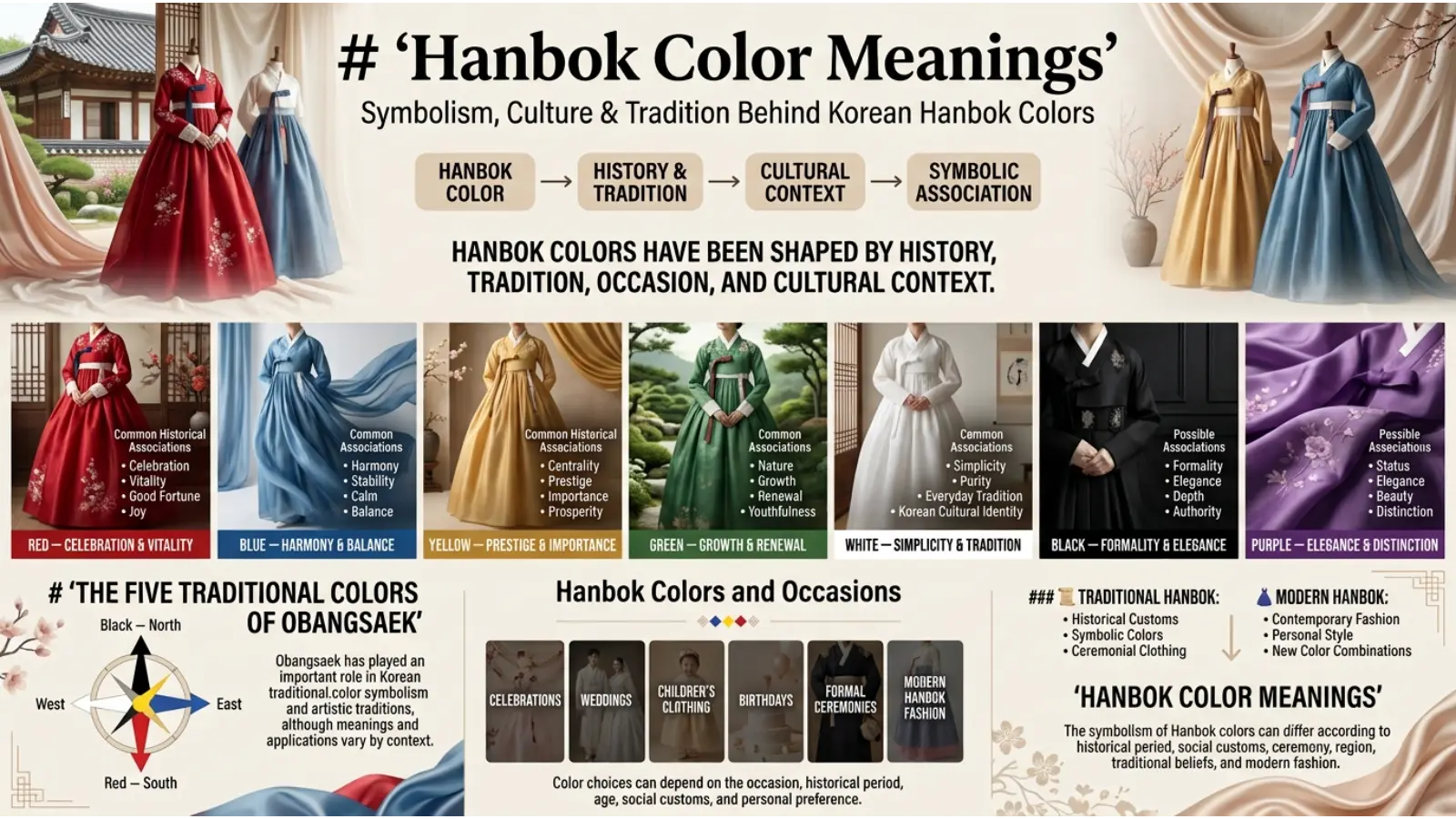
Hanbok color meanings are deeply connected to Korean history, cultural traditions, social customs, and ideas about harmony. A traditional Korean hanbok is known for its graceful shape, flowing lines, and meaningful use of color. However, the colors are not simply chosen for decoration. Historically, they could reflect the seasons, directions, social status, important ceremonies, age, and hopes for the future.
People often search for hanbok color meanings because they want to understand why Korean traditional clothing uses bright combinations such as red and blue, yellow and green, or soft shades of pink and white. The answer is not always simple because meanings have changed over time. A color used in a wedding hanbok may carry a different meaning when worn during a holiday, childhood celebration, or royal ceremony.
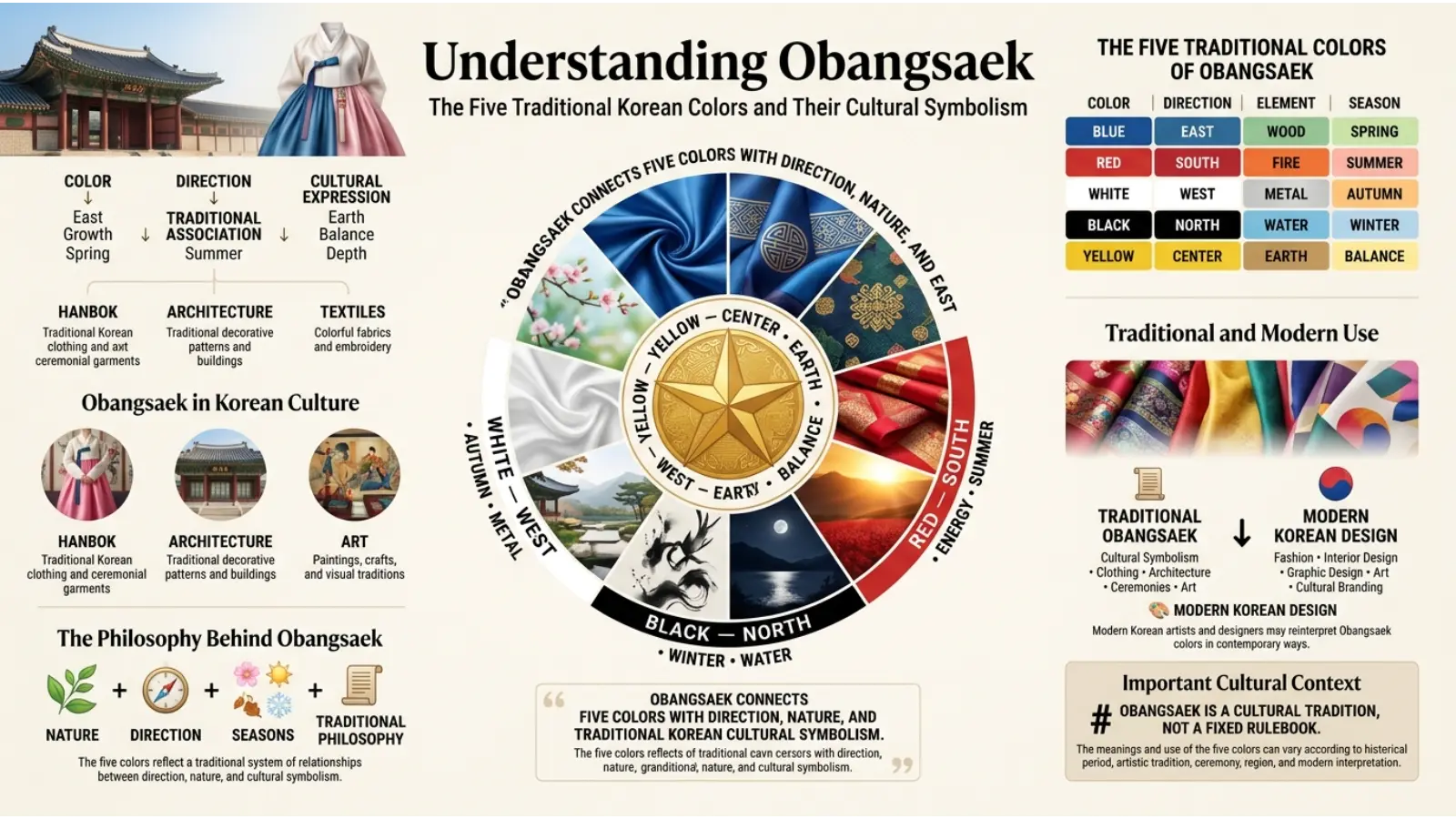
Traditional Korean color symbolism was strongly influenced by the idea of Obangsaek, the five traditional directional colors. These colors—blue, red, yellow, white, and black—were associated with natural elements, directions, and the balance of the universe.
This guide explores the cultural symbolism, historical meaning, emotional associations, fashion use, and modern interpretation of hanbok colors.
Quick Answer: Hanbok colors traditionally represent harmony, nature, protection, prosperity, life, purity, and balance. Blue, red, yellow, white, and black are especially important because of the Korean five-color system known as Obangsaek.
What Do Hanbok Colors Symbolize?
Traditional hanbok colors can communicate cultural ideas without using words. Bright colors often represent celebration, energy, good fortune, and protection, while softer colors may create a feeling of elegance, modesty, or calm.
The meaning of a hanbok color also depends on context. For example, red can symbolize life and happiness in a celebration, while white has historically represented simplicity and purity. A royal garment may use color differently from everyday clothing.
Rather than assigning one permanent meaning to every shade, traditional Korean color symbolism works as a system. Colors interact with one another, creating balance.
The most important traditional color system is based on five major colors:
| Hanbok Color | Traditional Association | Common Symbolic Ideas |
|---|---|---|
| Blue | East and wood | Growth, spring, hope |
| Red | South and fire | Energy, happiness, protection |
| Yellow | Center and earth | Balance, stability, prosperity |
| White | West and metal | Purity, simplicity, clarity |
| Black | North and water | Wisdom, depth, mystery |
These associations come from traditional East Asian philosophical ideas and should not be treated as modern scientific personality facts.
Understanding Obangsaek: The Five Traditional Korean Colors
Obangsaek is one of the most important foundations for understanding hanbok color meanings.
The word refers to five traditional colors connected with five directions and natural elements. These colors appeared in clothing, architecture, decorative art, ceremonies, and traditional Korean design.
The five colors were valued because they represented harmony within the natural world.
Blue: Growth and New Beginnings
Blue traditionally connects with the east and the element of wood. Symbolically, it is often associated with growth, spring, renewal, and new beginnings.
In hanbok fashion, blue can create a peaceful and elegant appearance. Light blue often feels gentle and youthful, while darker blue can appear more formal and dignified.
Blue also works beautifully with white, pink, yellow, and red details. Because of this, it remains a popular choice in both traditional and modern hanbok designs.
Red: Life, Celebration, and Protection
Red is one of the most visually powerful colors in traditional Korean clothing.
It has often been associated with energy, life, celebration, warmth, and good fortune. Red could also carry protective symbolism in traditional cultural practices.
Wedding clothing frequently uses strong colors, including red, because ceremonies traditionally emphasized happiness, prosperity, and hopes for a successful future.
In modern hanbok fashion, red immediately creates a bold impression. A deep red hanbok can look formal and luxurious, while brighter red shades feel energetic and festive.
Yellow: Balance and the Center
Yellow traditionally represents the center in the Obangsaek system.
Because the center connects the surrounding directions, yellow can symbolize balance, stability, and harmony. Historically, yellow and gold-like tones could also suggest importance and prestige depending on the period and context.
Yellow is especially striking when combined with blue, green, or red.
In a modern hanbok, soft yellow can create a cheerful appearance, while deeper golden tones can make an outfit feel ceremonial.
White: Purity and Simplicity
White has a particularly important place in Korean cultural history.
Koreans historically became widely associated with white clothing, leading to descriptions of Korea as a culture with a strong tradition of wearing white garments. White clothing was valued for its clean, simple, and natural appearance.
However, white should not be understood only as a symbol of purity. Its meaning also connects with simplicity, modesty, everyday life, and cultural identity.
A white hanbok can look graceful because the clean background allows colorful accessories or garments to stand out.
Black: Depth and Wisdom
Black traditionally connects with the north and water within the five-color system.
Symbolically, it can suggest depth, wisdom, mystery, and strength. Black was not always used in the same way as modern Western fashion, where it is often strongly connected with formal clothing or mourning.
In contemporary hanbok design, black has become increasingly popular because it creates contrast and sophistication.
A black hanbok paired with gold, white, red, or soft pastel details can combine traditional inspiration with a modern fashion style.
The Meaning of Red and Blue Together in Hanbok
One of the most recognizable color combinations in traditional Korean clothing is red and blue.
These colors can represent complementary forces and balance. They are also visually powerful because warm red contrasts strongly with cool blue.
This combination appears in traditional Korean symbolism and ceremonial clothing. In fashion, the pairing creates an immediate sense of energy while maintaining visual balance.
A red skirt with a blue jacket, or the reverse combination, can therefore look both culturally meaningful and visually striking.
However, the exact interpretation depends on the historical period, garment type, and ceremony.
Green Hanbok Color Meaning
The Green is not one of the five primary Obangsaek colors in the same direct sense as blue, red, yellow, white, and black, but it has an important place in Korean traditional color palettes.
Green is commonly associated with:
- Nature
- Growth
- Youth
- Freshness
- Spring
- Harmony
Traditional Korean color systems also include additional colors created through combinations and variations of the major colors.
A green hanbok often creates a fresh and natural impression. Light green can feel youthful and delicate, while darker green may appear richer and more formal.
Green pairs especially well with pink, yellow, white, and deep red.
Pink Hanbok Color Meaning
Pink is widely loved in modern hanbok fashion because it creates a soft, romantic, and youthful appearance.
Depending on the shade, pink may suggest:
- Gentleness
- Joy
- Youth
- Romance
- Celebration
- Warmth
It is important to remember that pink’s modern fashion associations do not always represent a fixed historical rule. Traditional garments changed according to time, region, class, available dyes, and social customs.
Today, pale pink hanbok is especially popular for photographs, celebrations, cultural events, and modern hanbok styles.
Purple Hanbok Color Meaning
Purple often creates an impression of elegance, mystery, and luxury.
Historically, rare or difficult dyes could make certain colors more valuable in different societies. Therefore, the use and availability of particular shades could influence their social importance.
In modern hanbok fashion, purple may communicate:
- Creativity
- Elegance
- Luxury
- Individuality
- Mystery
Lavender shades create a gentle and modern look, while dark purple can feel dramatic and ceremonial.
Purple hanbok designs often pair beautifully with white, pink, silver-toned details, or deep blue.
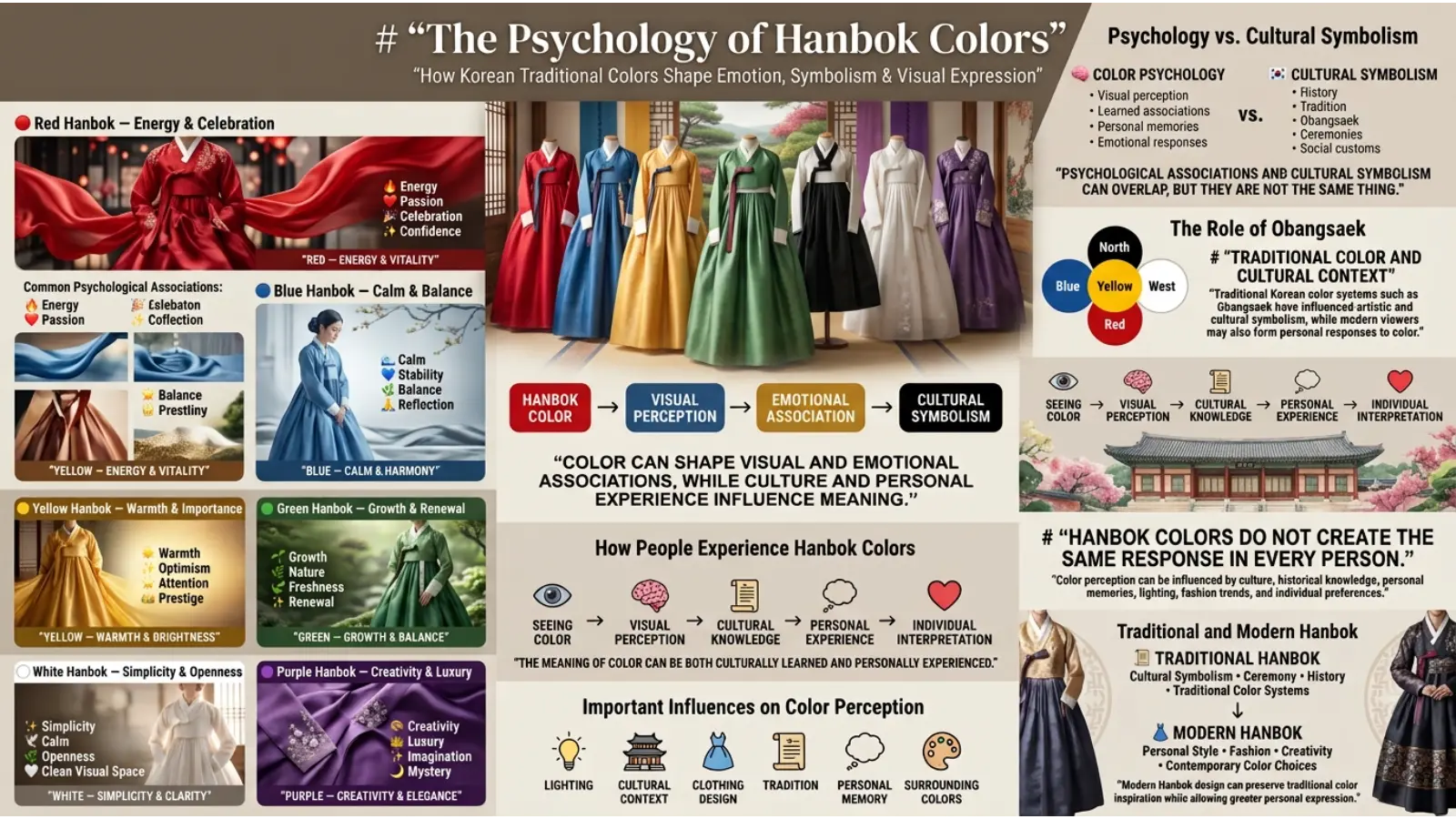
The Psychology of Hanbok Colors
Color psychology can help explain why hanbok colors create different emotional impressions. However, emotional reactions to color are influenced by culture, personal experience, lighting, and context.
There is no scientific rule proving that one hanbok color automatically produces the same emotional reaction in every person.
Still, colors can influence perception.
Warm colors such as red, orange, and strong yellow often appear energetic and visually active. Cooler colors such as blue and green can appear calmer and more relaxed.
In hanbok design, color placement also matters.
A bright skirt may create a playful appearance, while a dark jacket can add visual weight and formality. Soft pastel combinations often create a delicate mood.
Therefore, hanbok color psychology is best understood as a combination of visual perception and cultural symbolism.
How Hanbok Colors Express Emotion
Hanbok colors can help communicate the emotional atmosphere of an event.
Bright colors may feel appropriate for:
- Weddings
- Festivals
- Traditional celebrations
- Children’s events
- Cultural performances
Meanwhile, softer or neutral colors may create a more peaceful and refined appearance.
A person’s emotional response can also change according to the shade. Bright red and dark burgundy may belong to the same color family, but they create very different impressions.
For this reason, the exact shade matters as much as the basic color name.
Hanbok Colors and Korean Cultural Meaning
Hanbok color meanings cannot be separated completely from Korean culture.
Traditional clothing developed alongside Korean social customs, ceremonies, religious influences, philosophical ideas, artistic traditions, and historical changes.
Color could sometimes communicate information about:
- Age
- Marriage
- Social position
- Ceremonial role
- Occasion
- Season
However, these rules were not identical throughout Korean history.
The Joseon period, for example, had social regulations that affected clothing and color use. Therefore, modern interpretations should avoid assuming that every Korean person wore colors according to one simple and permanent system.
Traditional symbolism was complex, and everyday practice changed over time.
Historical Meaning of Hanbok Colors
The history of hanbok colors reflects changes in Korean society.
The availability of dyes influenced what people could wear. Some colors were easier to produce than others, while certain colors could be associated with social status or official clothing.
During different historical periods, clothing regulations could influence which colors were acceptable for particular groups.
Royal clothing and ceremonial garments often followed different traditions from ordinary clothing.
Therefore, historical hanbok color meanings should always be viewed in context.
A color that represented prestige in one setting might simply be decorative in another.
Royal Hanbok Colors
Royal clothing traditionally used distinctive colors and decorative elements to express authority and ceremonial importance.
Color helped make important individuals visually recognizable during official events.
Strong colors, elaborate embroidery, and symbolic designs could work together to communicate status.
Yellow and golden tones are often associated with royalty in many East Asian historical contexts. However, specific rules about royal dress differed by kingdom, period, and political system.
For this reason, it is more accurate to examine royal hanbok colors within their particular historical period rather than claiming that one color always represented Korean royalty.
Wedding Hanbok Color Meanings
Traditional Korean wedding clothing is especially rich in color symbolism.
Wedding garments often use vibrant combinations because marriage celebrations traditionally focus on happiness, prosperity, family, and hopes for the future.
Red and blue are particularly recognizable colors in Korean wedding traditions.
These colors can visually express balance through their contrast.
Traditional wedding clothing may also include decorative symbols associated with wishes for happiness and family prosperity.
Modern Korean weddings may combine traditional hanbok with contemporary styles. As a result, today’s wedding hanbok colors can range from historically inspired red and blue combinations to pastel pink, ivory, lavender, and other modern shades.
Children’s Hanbok Colors
Children’s hanbok often uses bright and cheerful colors.
One of the most recognizable examples is the use of colorful striped sleeves in traditional children’s clothing.
The multiple colors create a lively appearance and may connect with traditional ideas about protection and positive wishes.
Bright colors can also make childhood clothing visually joyful.
Modern children’s hanbok continues this tradition while using new fabrics, softer colors, and practical designs.
White Hanbok and Korean Identity
White clothing became an important part of Korean cultural identity.
The preference for white garments was historically visible enough that outside observers often commented on it.
However, white clothing should not be explained through only one meaning.
Practical factors, cultural preferences, social traditions, and historical circumstances all contributed to its importance.
White could create a simple appearance, but it could also represent cultural values connected with cleanliness and modest living.
Today, white hanbok remains popular because it provides a timeless and elegant foundation for colorful accessories.
Spiritual and Philosophical Meaning of Hanbok Colors
The spiritual meaning of hanbok colors is mainly connected with traditional philosophical systems rather than one universal religious interpretation.
The five-color system has connections with broader East Asian ideas about:
- Directions
- Natural elements
- Balance
- Seasonal cycles
- Harmony
These interpretations should not be confused with a scientific explanation of color.
For many people, the symbolism is cultural and philosophical rather than a literal spiritual belief.
Interpretations also vary among traditions and individuals.
The most useful way to understand these colors is to see them as part of a larger worldview that emphasized relationships between people, nature, and the universe.
Hanbok Color Meanings and the Seasons
Seasonal thinking can also influence how hanbok colors are perceived.
Spring colors often include:
- Light green
- Soft pink
- Pale yellow
- Sky blue
These shades create a fresh and youthful feeling.
Summer designs may use:
- White
- Light blue
- Soft green
- Bright colors
These colors can appear visually cool and light.
Autumn-inspired hanbok colors often include:
- Deep red
- Burgundy
- Golden yellow
- Brown
- Dark green
These shades feel richer and warmer.
Winter hanbok styles may use:
- White
- Navy blue
- Black
- Deep purple
- Silver-toned details
Modern fashion is flexible, so these seasonal associations are style suggestions rather than traditional rules.
How Hanbok Colors Change With Lighting
Lighting can dramatically change the appearance of a hanbok.
A bright red garment may look warmer in yellow indoor lighting and cooler under certain LED lights.
Natural sunlight can reveal details that are difficult to see indoors. Silk fabrics may also reflect light differently from cotton or synthetic fabrics.
Before choosing a hanbok for photography or an important event, consider:
- Indoor or outdoor lighting
- Time of day
- Fabric texture
- Camera settings
- Background colors
A color that looks perfect in a shop may appear different during a photo shoot.
Therefore, testing the outfit in the expected lighting conditions can be helpful.
Hanbok Color Meanings in Modern Fashion
Modern hanbok designers often respect traditional symbolism while experimenting with new colors.
Pastel hanbok has become popular because softer shades can feel elegant and contemporary.
Common modern color choices include:
- Blush pink
- Lavender
- Mint green
- Powder blue
- Cream
- Peach
- Soft gray
These colors may not carry exactly the same historical meanings as the Obangsaek system.
Instead, modern designers often focus on mood, personal expression, photography, and fashion trends.
This shows how hanbok continues to evolve while maintaining a connection with Korean cultural heritage.
Personality Associations With Hanbok Colors
People sometimes connect color preferences with personality.
For example:
Blue lovers may be seen as calm or thoughtful.
Red lovers may appear energetic or confident.
Yellow lovers may seem cheerful or expressive.
Green lovers may be associated with balance and nature.
Purple lovers may be viewed as creative or individualistic.
These are cultural and psychological associations, not reliable personality tests.
Choosing a hanbok color does not determine a person’s character.
A person may select red simply because it looks good with their skin tone, matches a ceremony, or creates a strong visual effect.
Color preference can change with age, experience, fashion trends, and cultural surroundings.
Hanbok Colors in Fashion and Personal Style
Choosing the right hanbok color can change the overall impression of an outfit.
A bright color combination creates a lively and memorable appearance.
Pastel colors can make the outfit feel softer.
Dark colors often add contrast and formality.
When selecting a hanbok, consider:
- Skin undertone
- Hair color
- Event type
- Season
- Photography background
- Personal style
There is no universal best hanbok color.
The most successful choice combines cultural understanding with personal comfort.
Color Combinations That Work Beautifully in Hanbok
Red and Blue
Red and blue create one of the strongest traditional-inspired combinations.
The contrast between warm and cool colors creates visual balance.
This combination works well for ceremonial and festive styles.
Pink and Green
Pink and green can create a fresh, floral appearance.
This combination works especially well for spring events and softer modern hanbok designs.
Yellow and Blue
Yellow and blue create strong contrast.
The pairing can look cheerful while still feeling balanced.
White and Any Bright Color
White works as a flexible neutral background.
A white garment can make red, blue, green, purple, or yellow details appear more noticeable.
Black and Gold
Black creates visual depth, while gold-toned details add a sense of richness.
This combination is especially popular in modern formal designs.
Lavender and Cream
Lavender and cream create a soft and sophisticated appearance.
This combination works well for modern hanbok photography and elegant celebrations.
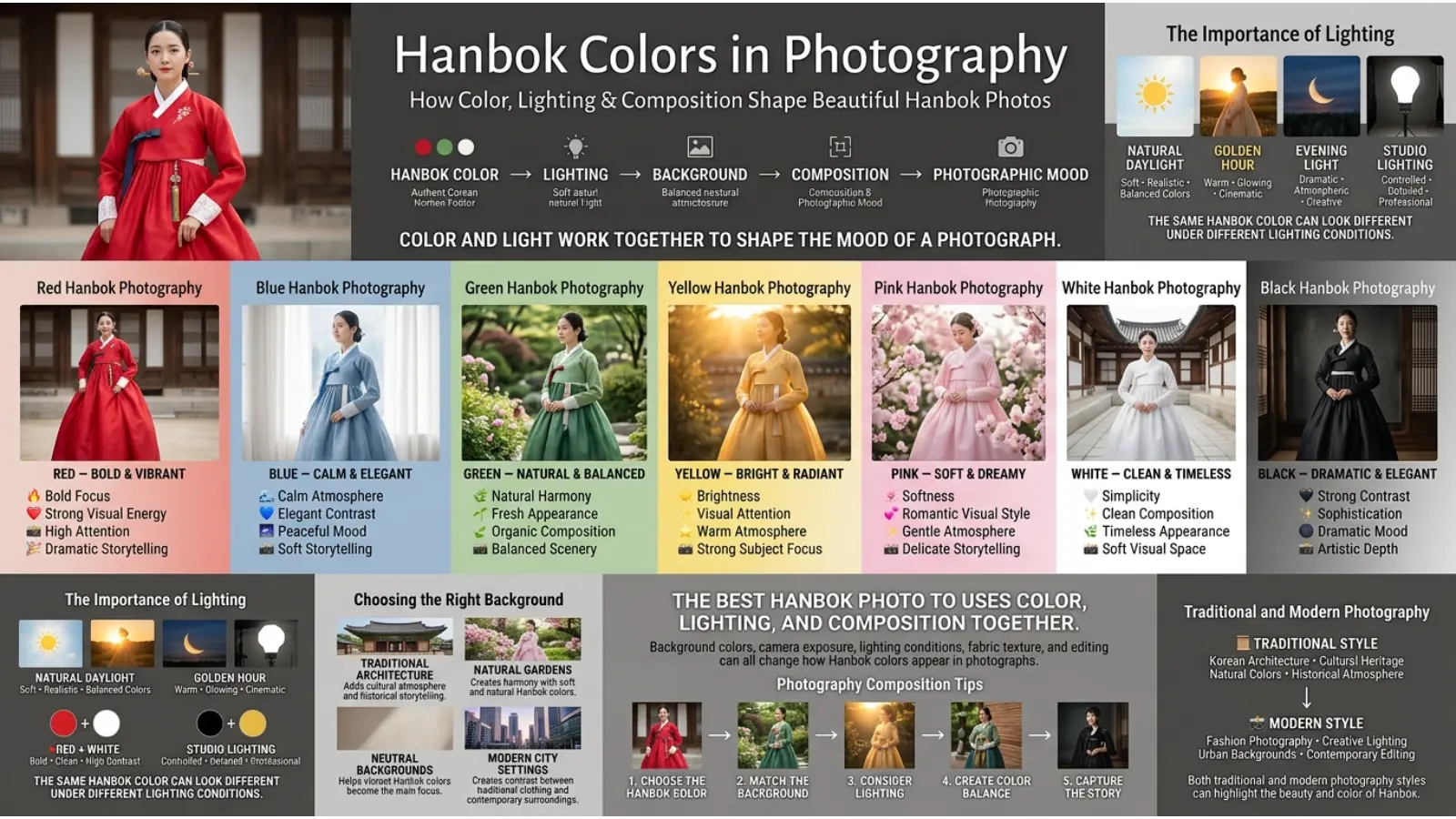
Hanbok Colors in Photography
Color selection is especially important when photographing hanbok.
A beautiful outfit can lose visual impact if the background has similar colors.
For example, a pale yellow hanbok may blend into a bright yellow wall.
A dark blue hanbok may stand out strongly against a light traditional building.
For better photographs:
- Use contrasting backgrounds.
- Consider natural lighting.
- Avoid overly busy surroundings.
- Match accessories carefully.
- Check how fabric reflects light.
Traditional architecture can also influence color choices.
Hanbok photography often looks visually balanced when the clothing either complements or contrasts with the environment.
Hanbok Colors in Modern Korean Entertainment
Modern Korean entertainment has helped introduce hanbok styles to global audiences.
Historical dramas often use costume colors to create visual differences between characters, social roles, and scenes.
However, television costumes should not always be treated as perfectly accurate historical evidence.
Costume designers may adjust colors for cameras, storytelling, lighting, and visual impact.
Modern music performances and fashion events have also inspired new hanbok color combinations.
As a result, hanbok has become both a cultural symbol and a source of modern fashion creativity.
Common Misconceptions About Hanbok Color Meanings
Every Hanbok Color Has One Fixed Meaning
This is not accurate.
The meaning of a color can depend on the historical period, garment type, ceremony, social context, and modern interpretation.
Red Always Means the Same Thing
Red may suggest celebration, energy, life, or protection, but its exact meaning changes according to context.
White Only Represents Purity
White has deeper historical connections with Korean daily life, simplicity, cultural identity, and traditional clothing practices.
Modern Hanbok Must Follow Ancient Color Rules
Modern hanbok fashion is flexible.
Designers often combine historical inspiration with contemporary colors.
Color Determines Personality
There is no scientific basis for claiming that a hanbok color can reveal someone’s complete personality.
Color preference may reflect mood or personal taste, but it does not define identity.
Real-World Applications of Hanbok Color Meanings
Choosing Hanbok for Cultural Events
Understanding traditional color symbolism can help people choose clothing that feels appropriate for a cultural celebration.
Bright colors may suit festive occasions, while softer colors can create a more relaxed appearance.
Fashion Design
Designers can use traditional color relationships as inspiration while creating modern collections.
The contrast between red and blue or the harmony of pastel colors provides many creative possibilities.
Branding and Cultural Design
Hanbok-inspired colors can be useful in Korean cultural branding, tourism materials, exhibitions, and visual storytelling.
However, brands should use traditional symbolism respectfully rather than reducing Korean culture to decorative stereotypes.
Art and Illustration
Artists can use hanbok colors to communicate historical atmosphere, emotional tone, or cultural identity.
Color combinations can also help viewers recognize the difference between traditional inspiration and modern reinterpretation.
Home and Event Decoration
Hanbok color palettes can inspire event decorations.
Blue and red can create energy and contrast, while soft green and pink can produce a peaceful spring atmosphere.
The five-color system can also inspire balanced decorative designs.
Why Context Changes Hanbok Color Meaning
Color does not exist separately from its surroundings.
The same blue may look peaceful in one outfit and powerful in another.
A red garment may suggest celebration at a festival but create a completely different impression on a modern fashion runway.
Age can also influence color choices.
Children may wear brighter combinations, while adults may prefer softer or darker shades depending on fashion and occasion.
Culture also changes perception.
A person outside Korea may interpret a color according to their own cultural background, while someone familiar with Korean traditions may recognize additional symbolism.
This is why understanding hanbok color meanings requires more than memorizing a list of colors.
Frequently Asked Questions About Hanbok Color Meanings
What do the colors of a hanbok mean?
Hanbok colors can represent ideas such as harmony, growth, happiness, purity, balance, and protection. Meanings depend on traditional symbolism, historical context, and the occasion.
What are the five traditional Korean colors?
The five traditional colors associated with Obangsaek are blue, red, yellow, white, and black.
What does a red hanbok symbolize?
Red is commonly associated with energy, life, celebration, happiness, and protective symbolism in traditional Korean cultural contexts.
What does a blue hanbok mean?
Blue is traditionally connected with growth, renewal, spring, and the east. In fashion, it can also create a calm and elegant appearance.
Why is white important in Korean traditional clothing?
White has a long history in Korean clothing and is associated with simplicity, cleanliness, modesty, and cultural identity.
What does yellow mean in a hanbok?
Yellow traditionally connects with the center and the earth in the five-color system. It can symbolize balance, stability, and harmony.
Can anyone wear any hanbok color today?
Modern hanbok fashion is generally much more flexible than historical clothing systems. People can choose colors based on personal style, the occasion, and cultural respect.
What colors are popular for Korean wedding hanbok?
Traditional wedding clothing often uses strong and meaningful color combinations, especially red and blue. Modern wedding hanbok may also use pastel or neutral shades.
Does hanbok color show social status?
Historically, clothing colors and styles could be influenced by social position and official regulations. These rules changed across different periods and do not apply in the same way to modern hanbok.
What is the best color for a modern hanbok?
The best color depends on personal preference, skin tone, event type, lighting, and the style of the hanbok. Traditional colors and modern pastels can both work beautifully.
Conclusion
Hanbok color meanings reveal how clothing can connect fashion with history, nature, philosophy, and cultural identity. Blue, red, yellow, white, and black remain especially important because of their connection with the traditional Obangsaek color system.
Yet hanbok color symbolism is more complex than a simple list of definitions. A color can change meaning depending on the ceremony, historical period, garment, surrounding colors, and the person wearing it.
Modern hanbok continues to expand these traditions through new shades and creative combinations. From bold red and blue ceremonial designs to soft pastel fashion styles, color remains one of the most expressive parts of hanbok.
Learning about hanbok colors also encourages us to look more closely at the colors around us. Clothing is not only about appearance. In many cultures, color carries memories, traditions, hopes, and stories that continue to evolve with every generation.

Emma Wilson is a dedicated comparison writer and product researcher at ColorMystiic.com. She specializes in creating unbiased product comparisons, detailed reviews, and helpful buying guides. Her goal is to help readers make smarter purchasing decisions with confidence.