Handfasting is a meaningful ceremony in which ribbons, cords, or cloth are wrapped around a couple’s joined hands. The practice is often associated with Celtic-inspired weddings, Pagan traditions, and modern spiritual ceremonies. However, the colors of the ribbons can make the ritual even more personal. Handfasting ribbon color meanings may represent love, loyalty, protection, wisdom, passion, prosperity, family, or a couple’s hopes for the future.
People search for these meanings because choosing the right ribbon colors can help turn a beautiful ceremony into a deeply personal symbol. Still, color meanings are not universal. A red ribbon may represent passion in one ceremony, while another couple may use it to honor courage or strength.
Likewise, white can symbolize purity, peace, or a fresh beginning depending on personal beliefs and cultural background. This guide explores the symbolism, psychology, spiritual associations, cultural context, history, and practical use of handfasting ribbon colors.
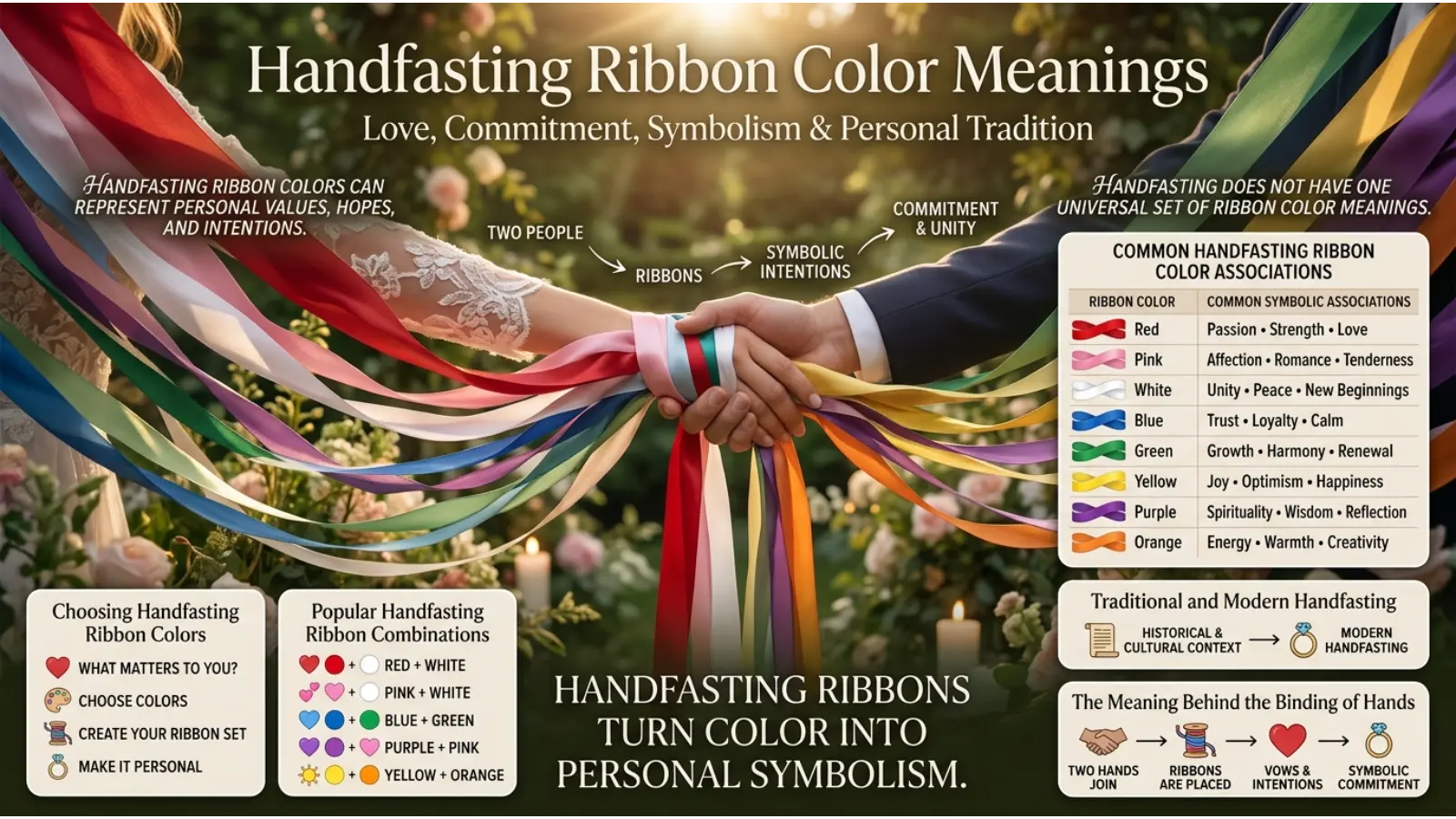
Quick Answer: Handfasting ribbon colors are usually chosen to represent the couple’s values, relationship, hopes, and spiritual beliefs. Common meanings include red for passion, blue for loyalty, green for growth, white for peace, purple for spiritual connection, yellow for joy, and gold for prosperity.
What Do Handfasting Ribbon Colors Symbolize?
Handfasting ribbons symbolize the promises and intentions shared by two people. During the ceremony, each ribbon or cord can represent a specific wish for the relationship. For example, one ribbon may stand for love, while another represents trust or protection.
Unlike a traditional color system with fixed rules, handfasting symbolism is flexible. There is no single universal list that every couple must follow. This freedom allows couples to choose colors based on personal experiences, cultural traditions, spiritual beliefs, or simple emotional preferences.
The strongest meaning usually comes from intention. A blue ribbon chosen to represent the couple’s first trip together may carry more personal value than a traditional interpretation of blue.
Therefore, handfasting ribbon colors work best when symbolism and personal meaning come together.
A Colorful Guide to Handfasting Ribbon Color Meanings
| Ribbon Color | Common Symbolic Meaning | Relationship Association |
|---|---|---|
| 🔴 Red | Passion, courage, strength | Romantic love and desire |
| 🔵 Blue | Loyalty, trust, peace | Faithfulness and emotional security |
| 🟢 Green | Growth, fertility, renewal | Building a life together |
| ⚪ White | Peace, sincerity, new beginnings | Harmony and commitment |
| 🟣 Purple | Spirituality, wisdom, mystery | Deep spiritual connection |
| 🟡 Yellow | Joy, optimism, energy | Happiness and friendship |
| 🟠 Orange | Enthusiasm, creativity, warmth | Adventure and excitement |
| 🩷 Pink | Affection, tenderness, romance | Gentle and caring love |
| 🟤 Brown | Stability, grounding, reliability | A strong foundation |
| ⚫ Black | Protection, strength, transformation | Overcoming difficulties |
| 🟡 Gold | Success, abundance, honor | Prosperity and achievement |
| ⚪ Silver | Intuition, reflection, balance | Emotional understanding |
| These meanings are common interpretations rather than strict rules. The same color can mean different things depending on the couple and ceremony. |
Red Handfasting Ribbon Meaning
Red is one of the strongest and most emotionally powerful handfasting colors. It is often connected with passion, romantic attraction, courage, and physical energy.
For many couples, a red ribbon represents the spark that brought them together. It can symbolize a relationship filled with strong emotions and the willingness to face challenges as a team.
However, red is not only about romance. It may also represent courage. Marriage and long-term commitment require people to support each other during difficult moments. Because of this, red can represent bravery and determination.
A deep burgundy ribbon may create a more mature and elegant feeling, while bright red often feels energetic and passionate.
Blue Handfasting Ribbon Meaning
Blue commonly represents trust, loyalty, peace, and emotional stability. For this reason, it is one of the most popular colors for couples who value friendship and faithfulness.
A relationship is not built only on romance. Trust often becomes one of the strongest foundations of long-term partnership. Therefore, a blue ribbon can symbolize the promise to communicate honestly and remain dependable.
Light blue may suggest calmness and peace, while navy blue can feel more serious and committed.
Blue is also commonly associated with water and the sky. These natural associations can make the color meaningful for couples who value freedom, emotional depth, or a peaceful life together.
Green Handfasting Ribbon Meaning
Green is strongly connected with nature, growth, renewal, and new beginnings. In a handfasting ceremony, it can represent the relationship growing over time.
A couple may choose green to symbolize building a family, developing together, or beginning a new chapter.
Green also reflects balance. In nature, growth requires patience, care, and favorable conditions. Similarly, relationships need attention and understanding to remain healthy.
Dark green may create a feeling of stability and tradition, while lighter green shades often suggest freshness and hope.
For outdoor ceremonies, green ribbons can also visually connect the handfasting ritual with gardens, forests, and the natural world.
White Handfasting Ribbon Meaning
White is often associated with peace, honesty, sincerity, and new beginnings. It can represent the couple’s desire to begin their shared life with openness and goodwill.
Although white is sometimes connected with purity in Western wedding traditions, that interpretation is not universal. In a handfasting ceremony, white can have many meanings depending on the beliefs of the people involved.
Some couples choose white to represent peace during disagreements. Others use it as a reminder to approach the relationship with honesty and respect.
White also works well with almost every other ribbon color. Therefore, it can serve as a visual symbol of balance within a colorful handfasting cord.
Purple Handfasting Ribbon Meaning
Purple is often associated with spirituality, wisdom, mystery, and imagination. A purple handfasting ribbon may represent a relationship that has a strong spiritual or emotional connection.
Historically, purple has also been associated with rarity and status because purple dyes were once difficult and expensive to produce in some regions. Today, however, its meaning is much broader.
In modern ceremonies, purple may represent the idea that a relationship goes beyond everyday responsibilities. It can symbolize shared beliefs, personal growth, and emotional understanding.
Lavender may create a soft and romantic feeling, while deep purple can appear more ceremonial and dramatic.
Yellow Handfasting Ribbon Meaning
Yellow represents joy, optimism, warmth, and energy. It is a cheerful choice for couples who want their ceremony to reflect happiness and friendship.
Marriage includes ordinary days as well as special moments. Because of this, yellow can symbolize the importance of laughter and positivity throughout everyday life.
A yellow ribbon may also represent mental energy and communication. Couples may choose it to symbolize open conversation and the ability to find hope during difficult times.
Soft yellow creates a gentle appearance, while bright yellow can make the handfasting ribbons feel energetic and festive.
Orange Handfasting Ribbon Meaning
Orange combines the emotional warmth often associated with red and the cheerful energy commonly connected with yellow.
In handfasting symbolism, orange can represent enthusiasm, adventure, creativity, and excitement. It may be a good choice for couples who enjoy travel, new experiences, or an active lifestyle.
Orange can also represent warmth within the home. Therefore, it may symbolize creating a welcoming and joyful life together.
Autumn weddings often use orange, copper, rust, and warm gold shades because they create a natural seasonal connection.
Pink Handfasting Ribbon Meaning
Pink is commonly associated with affection, tenderness, kindness, and gentle love.
While red often represents intense passion, pink may represent the softer side of romance. A pink ribbon can symbolize emotional support, caring behavior, and affection.
This makes pink meaningful for couples who want to celebrate friendship as well as romance.
Different shades can also change the impression. Pale pink feels delicate and calm, while darker pink may appear more energetic and confident.
Gold Handfasting Ribbon Meaning
Gold often symbolizes prosperity, achievement, abundance, honor, and celebration.
A gold handfasting ribbon may represent hopes for a successful future together. However, prosperity does not need to mean financial wealth alone.
For many couples, prosperity may mean having strong friendships, good health, meaningful experiences, or a happy home.
Gold also reflects light, which can make it a symbol of hope and optimism. When combined with white, green, or purple, gold can give handfasting cords a ceremonial and elegant appearance.
Silver Handfasting Ribbon Meaning
Silver is often associated with reflection, intuition, balance, and emotional awareness.
Because silver visually reflects light, it can symbolically represent self-awareness and the ability to understand another person’s perspective.
Some modern spiritual traditions connect silver with moon symbolism. However, these associations vary between traditions and should not be treated as universal religious beliefs.
Silver ribbons can also create a modern and elegant look, especially when paired with blue, white, purple, or black.
Black Handfasting Ribbon Meaning
Black can be misunderstood because people often assume it represents something negative. In handfasting symbolism, however, black can represent protection, strength, mystery, and transformation.
A relationship may survive major changes, challenges, and difficult experiences. Therefore, black can symbolize resilience and the ability to move through difficult periods together.
Black also provides strong visual contrast. When combined with gold, silver, red, or white, it can create a bold and formal appearance.
The meaning should always depend on the couple’s intention rather than stereotypes about the color.
Brown Handfasting Ribbon Meaning
Brown represents stability, grounding, reliability, and connection with the earth.
A brown ribbon may be meaningful for couples who value practicality and emotional security. It can symbolize building a relationship on patience, responsibility, and trust.
Brown works especially well in rustic, woodland, autumn, and nature-inspired ceremonies.
When paired with green, cream, or gold, brown can create a warm and natural handfasting color palette.
Psychology Behind Handfasting Ribbon Colors
Color psychology can help explain why certain colors feel emotionally appropriate for important ceremonies. However, color psychology does not prove that one color automatically causes the same emotion in every person.
People respond to colors through a mixture of personal experiences, culture, environment, and learned associations.
Red may feel energetic because it is visually intense. Blue may appear calming because many people associate it with open skies and water. Green can feel restorative because of its connection with plants and natural environments.
During a handfasting ceremony, these emotional associations can strengthen the atmosphere. Still, the psychological effect of a ribbon color is influenced by its shade, lighting, surrounding colors, and personal meaning.
For example, a dark blue ribbon may feel formal and stable, while a bright turquoise ribbon may feel playful and adventurous.
Why Personal Meaning Matters More Than Traditional Rules
The most meaningful handfasting ribbons often tell a story.
A couple may choose blue because they met near the ocean. Another couple may choose green because they enjoy hiking together. A yellow ribbon may represent the birth month of a loved one or a particularly happy memory.
Personal symbolism makes the ceremony unique.
Traditional meanings can provide inspiration, but they should not limit the couple. Handfasting is often centered on intention, and intention gives the colors their deepest value.
Therefore, couples can create their own color meanings and explain them during the ceremony if they wish.
Spiritual Meaning of Handfasting Ribbon Color Meanings
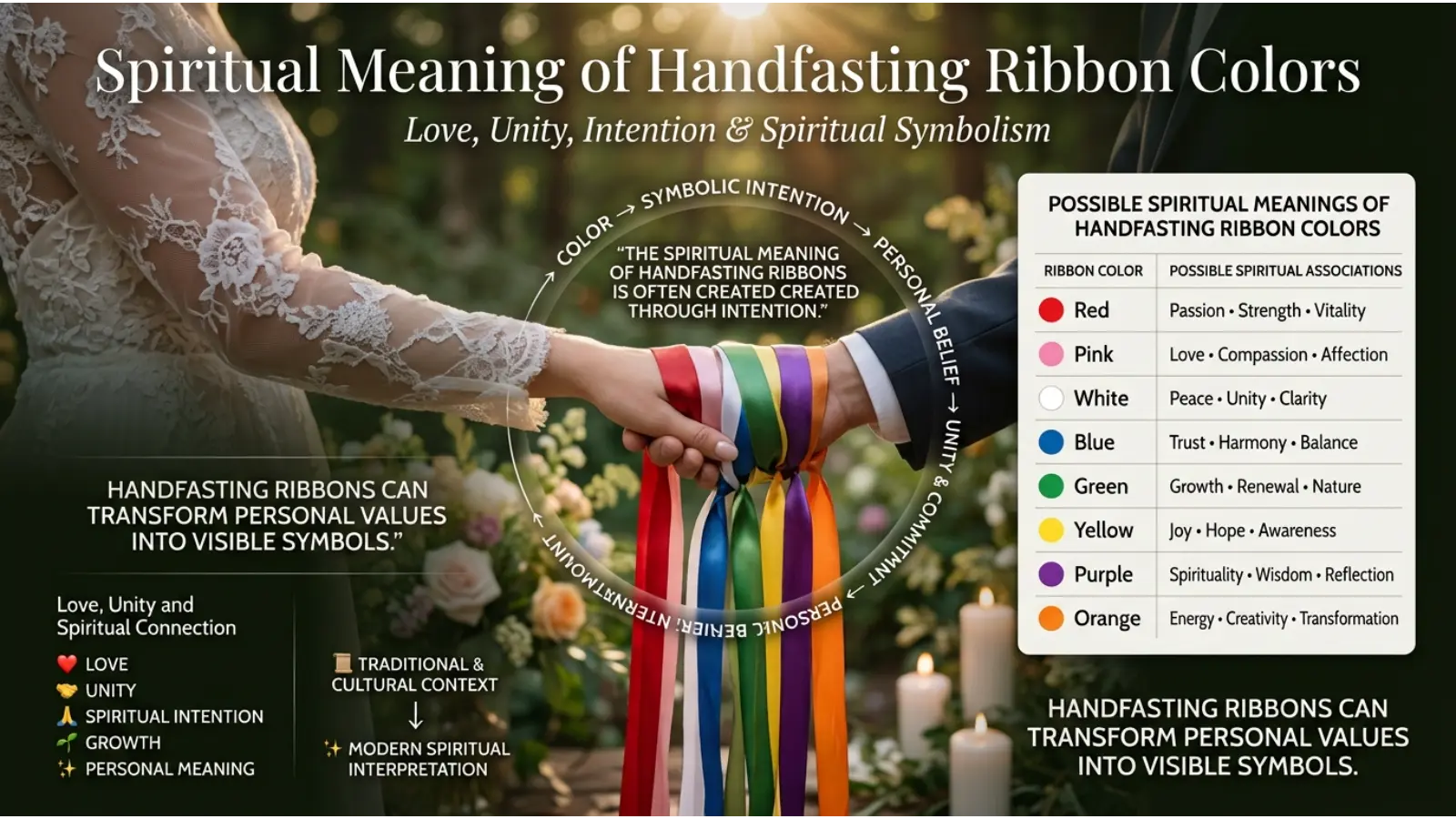
Handfasting is used in different modern Pagan, spiritual, secular, and wedding traditions. Because of this diversity, there is no single spiritual meaning shared by everyone.
Some people view the binding of hands as a symbol of unity. Others see the ribbons as representing promises, intentions, elements, seasons, or important stages of life.
Common spiritual associations may include:
- Red for energy and courage.
- Blue for peace and truth.
- Green for growth and connection with nature.
- White for clarity and harmony.
- Purple for spiritual reflection.
- Gold for hope and positive energy.
These meanings should be understood as symbolic traditions rather than universal religious rules.
Couples should choose colors that respect their own beliefs and, when appropriate, the traditions they are following.
The Cultural and Historical Background of Handfasting
Handfasting has historical associations with marriage customs in parts of the British Isles, especially Scotland. Over time, the idea of joining hands became connected with betrothal, marriage promises, and ceremonial union.
Modern handfasting ceremonies have also been influenced by contemporary Pagan movements, Celtic-inspired spirituality, alternative weddings, and personalized secular ceremonies.
The colorful ribbon tradition seen today is often a modern ceremonial expression rather than a single unchanged practice from ancient history.
This distinction matters because modern weddings sometimes present every handfasting tradition as ancient Celtic custom. In reality, historical practices varied by place and time.
Today, couples often blend historical inspiration with modern creativity. This allows the ceremony to honor tradition while still reflecting individual identity.
How Culture Changes Color Meaning
Colors do not carry identical meanings around the world.
White, for example, is strongly associated with weddings in many Western cultures. However, in other cultural contexts, white may have connections with mourning or remembrance.
Red is associated with passion in many modern Western settings, while it can also represent celebration, good fortune, and happiness in several Asian traditions.
Gold may symbolize wealth and success in many places, yet its meaning can change depending on religious and cultural context.
Because handfasting ceremonies are highly personal, couples should consider their own cultural backgrounds when selecting colors.
A ribbon can also be used to honor family heritage. For example, a couple may include colors connected with their ancestry, national traditions, or family history.
Personality Associations and Color Preference
People often connect favorite colors with personality traits. Someone who prefers blue may be described as calm, while someone who loves red may be described as passionate.
These associations can be interesting, but they should not be treated as personality tests.
Scientific evidence does not support the idea that a person’s favorite color can accurately determine their complete personality.
However, color preferences can sometimes reflect current mood, cultural influences, personal memories, and aesthetic taste.
For handfasting ceremonies, personality associations can still be useful as inspiration. A creative couple may enjoy purple and orange, while a nature-loving couple may prefer green and brown.
The important point is that the colors should reflect the couple rather than attempt to define them.
Choosing Handfasting Colors Based on Your Relationship
A useful approach is to think about the values you want your ceremony to represent.
For Passion and Romance
Choose combinations such as:
- Red and pink.
- Red and gold.
- Burgundy and cream.
These palettes can represent affection, emotional warmth, and romantic commitment.
For Trust and Friendship
Consider:
- Blue and white.
- Blue and silver.
- Teal and cream.
These combinations create a calm appearance and can symbolize loyalty and honest communication.
For Growth and New Beginnings
Try:
- Green and white.
- Green and gold.
- Sage green and cream.
These colors can represent renewal, balance, and building a future together.
For Spiritual Connection
Possible choices include:
- Purple and silver.
- White and lavender.
- Deep purple and gold.
These combinations can create a ceremonial feeling and symbolize reflection and shared beliefs.
For Strength and Protection
Consider:
- Black and gold.
- Red and black.
- Navy and silver.
These combinations may represent resilience, courage, and the ability to face challenges together.
How Many Handfasting Ribbons Should You Use?
There is no required number of ribbons.
Some couples use only one cord to represent unity. Others use several ribbons, with each person participating in the ceremony adding a different color.
Using multiple ribbons can allow each color to represent a promise.
For example:
- Red for love.
- Blue for trust.
- Green for growth.
- White for peace.
- Gold for hope.
The number should fit the ceremony. Too many ribbons may become difficult to manage, while too few may limit the symbolism if a couple wants each promise represented separately.
A practical choice is usually between three and seven cords, although the ceremony itself should determine the final number.
Handfasting Ribbon Color Meanings for Family and Loved Ones
Some couples invite parents, children, siblings, or close friends to participate by adding a ribbon.
Each person can choose a color connected with their relationship to the couple.
For example, a parent may add a ribbon representing support. A close friend may add one representing friendship and shared memories.
This approach can make the ceremony more inclusive.
However, couples should explain the symbolism clearly so guests understand the purpose of each ribbon.
Personal stories often create more emotional impact than simply listing traditional color meanings.
Handfasting Ribbon Color Meanings in Wedding Design
Handfasting colors can become part of the larger wedding design.
The ribbon colors may appear in:
- Floral arrangements.
- Invitations.
- Table decorations.
- Wedding clothing.
- Bridesmaid or groomsmen accessories.
- Ceremony arches.
- Photography details.
Using related shades creates visual harmony. However, the colors do not need to match exactly.
A handfasting ribbon can also become the strongest symbolic element in the ceremony while the rest of the wedding uses neutral colors.
This approach allows the ribbons to stand out and receive attention during photographs.
How Lighting Changes Handfasting Ribbon Colors
Lighting can significantly change how ribbon colors appear.
Natural sunlight may make yellow, orange, and red appear brighter. Evening lighting can make dark colors such as navy, purple, and burgundy appear deeper.
Candles and warm indoor lights can add yellow or orange tones to white and cream ribbons.
Therefore, couples should examine the ribbons in the actual ceremony environment whenever possible.
A color that looks perfect in a store may appear completely different outdoors.
Photography can also change color appearance because cameras adjust for lighting conditions. Testing a small sample before the ceremony can help avoid surprises.
Choosing Ribbon Materials
Color is important, but material also affects symbolism and appearance.
Satin
Satin reflects light and creates a formal, elegant appearance. It works well for traditional and luxurious ceremonies.
Silk
Silk feels soft and refined. It may suit intimate or formal handfasting ceremonies.
Cotton
Cotton creates a natural and simple appearance. It works especially well for rustic and outdoor weddings.
Velvet
Velvet adds depth and richness. Deep purple, burgundy, green, and navy often look especially dramatic in velvet.
Braided Cord
Braided cords can symbolize strength because multiple strands are joined together. They are practical and visually meaningful.
The material can strengthen the message of the color. For example, green cotton may emphasize a natural theme, while purple velvet can create a more ceremonial atmosphere.
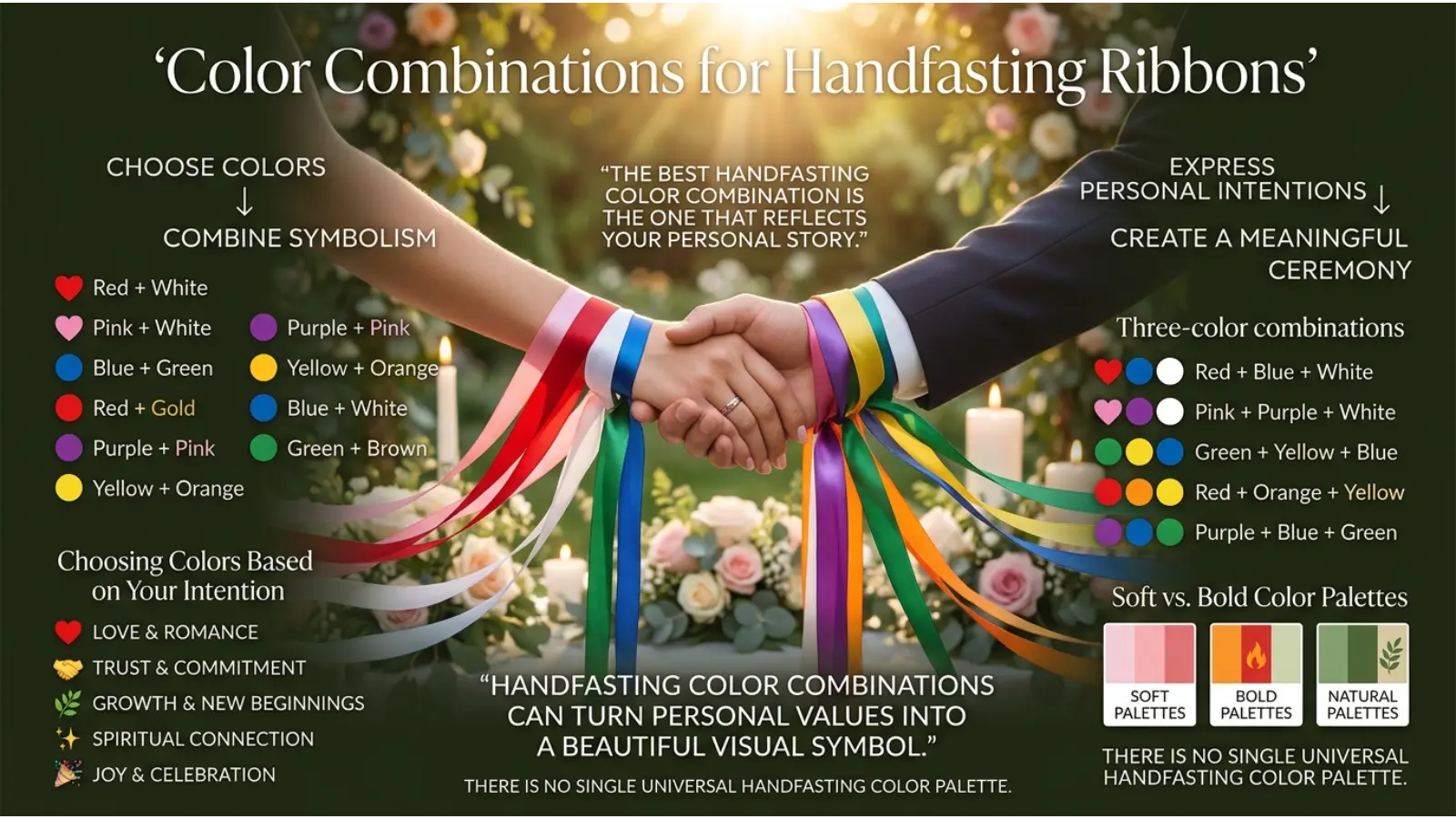
Color Combinations for Handfasting Ribbon Color Meanings
Red, White, and Gold
This combination can represent passion, peace, and hope for prosperity. It creates a warm and celebratory appearance.
Blue, Green, and White
These colors work well for couples who value trust, growth, and harmony. They also create a fresh, natural look.
Purple, Silver, and White
This palette can feel elegant and reflective. It may suit spiritual or evening ceremonies.
Black, Gold, and Burgundy
These colors create a bold and dramatic appearance. They may symbolize strength, commitment, transformation, and celebration.
Pink, Lavender, and Cream
This combination creates a gentle and romantic atmosphere. It is suitable for couples who prefer soft colors and a delicate design.
Green, Brown, and Gold
This palette connects strongly with nature and works beautifully for woodland or rustic ceremonies.
Handfasting Ribbon Colors and Seasonal Weddings
The season can help guide color choices.
Spring ceremonies often work well with soft green, yellow, pink, and lavender. These colors reflect renewal and fresh beginnings.
Summer ceremonies can use bright blue, turquoise, yellow, orange, and vibrant green.
Autumn handfasting ribbons often include burgundy, rust, brown, dark green, and gold.
Winter ceremonies may feature deep blue, silver, white, dark green, purple, and burgundy.
Seasonal colors are optional, but they can help connect the ceremony with its surroundings.
Handfasting Ribbon Color Meanings in Fashion
The ribbons can complement wedding clothing without perfectly matching every outfit.
A bride or groom wearing neutral colors can use bright handfasting ribbons as a focal point. Meanwhile, colorful wedding clothing may look better with simpler ribbons.
Metallic accessories can also influence the final design.
Gold jewelry often pairs naturally with warm colors such as red, green, burgundy, and cream. Silver accessories usually complement blue, purple, white, and cool green shades.
Comfort should also matter. Long or heavy ribbons may look beautiful but can be difficult to handle during the ceremony.
Using Handfasting Colors in Photography
Photographers often use color to direct attention.
Bright handfasting ribbons can become a strong visual detail in close-up photographs. However, too many competing colors may distract from the couple.
For the best visual result, choose one dominant color and two or three supporting colors.
Contrast can also help. Dark ribbons stand out against light clothing, while bright ribbons can become difficult to see against highly colorful backgrounds.
The ceremony location matters as well. Green ribbons may blend into a forest background, while red, gold, or purple may stand out more clearly.
Common Misconceptions About Handfasting Ribbon Color Meanings
Every Color Has One Official Meaning
This is not true. Handfasting color meanings vary between individuals and traditions.
Handfasting Is Always an Ancient Celtic Wedding Ritual
Modern handfasting ceremonies often combine historical inspiration with newer spiritual and wedding practices.
Black Is Always Negative
Black can symbolize protection, strength, transformation, and resilience.
You Must Use Traditional Colors
There are no universal rules requiring specific ribbon colors.
Color Psychology Can Predict Relationship Success
No scientific evidence shows that choosing a certain ribbon color will make a relationship stronger.
The symbolism can be emotionally meaningful, but the color itself does not determine the future of a marriage.
Practical Tips for Choosing Handfasting Ribbon Colors
Start by choosing three to five important values in your relationship.
Next, connect each value with a color that feels meaningful to both partners.
Then, consider the ceremony location and lighting.
Test the colors together before making a final decision.
Choose ribbons that are long enough to wrap around joined hands comfortably without creating unnecessary difficulty.
Finally, write down the meaning of each ribbon. This can help the officiant explain the symbolism during the ceremony.
The result will feel more personal because every color has a clear purpose.
Real-World Uses of Handfasting Ribbon Color Meanings Symbolism
Handfasting colors can influence more than the ceremony itself.
In wedding design, they can create a consistent visual identity.
In photography, they can provide meaningful focal points.
The fashion, they can connect clothing and accessories with the couple’s story.
In art and crafts, couples may preserve the ribbons after the ceremony by framing them or turning them into keepsakes.
Some couples display the ribbons in their home as a reminder of their promises.
Others use small pieces of the ribbon in anniversary celebrations.
This shows how color symbolism can continue beyond the wedding day.
How Context Changes the Meaning of a Ribbon Color
The same ribbon can communicate different ideas depending on context.
A red ribbon in a romantic ceremony may represent passion. In a family-focused ceremony, the same color might represent courage or strength.
A green ribbon in an outdoor ceremony may highlight a connection with nature. In another ceremony, it might represent financial hopes or personal growth.
Context is created by:
- The words spoken during the ceremony.
- The relationship between the couple.
- Cultural traditions.
- The location.
- The other colors used.
- Personal memories.
This is why simple color charts should be treated as starting points rather than permanent rules.
FAQ About Handfasting Ribbon Color Meanings
What do handfasting ribbon colors mean?
Handfasting ribbon colors commonly represent values, promises, emotions, and hopes for a relationship. Meanings vary, but red often represents passion, blue represents trust, green represents growth, and white represents peace.
What is the best color for a handfasting ceremony?
There is no single best color. The ideal colors are those that reflect the couple’s relationship, values, cultural background, and ceremony style.
What does a red handfasting ribbon symbolize?
Red commonly symbolizes passion, love, courage, strength, and emotional energy.
What does a blue handfasting ribbon mean?
Blue is often associated with loyalty, trust, peace, emotional security, and honest communication.
What does green mean in handfasting?
Green commonly represents growth, renewal, balance, fertility, nature, and building a future together.
Can you use black in a handfasting ceremony?
Yes. Black can symbolize protection, strength, transformation, resilience, and the ability to overcome challenges.
How many ribbons should be used for handfasting?
There is no fixed number. Couples may use one cord or several ribbons depending on the ceremony and the meanings they want to include.
Do handfasting ribbon colors have traditional Celtic meanings?
Some modern color meanings are inspired by Celtic and Pagan traditions. However, not every color chart used today comes directly from ancient Celtic customs.
Can family members add ribbons during handfasting?
Yes. Family members and friends can participate by adding ribbons that represent love, support, friendship, or their relationship with the couple.
Do handfasting colors have to match the wedding theme?
No. Matching colors can create visual harmony, but personal symbolism is more important than perfect decoration.
Final Thoughts
Handfasting ribbon colors transform a simple ceremonial act into a visual story about love, commitment, and shared intentions. Red can represent passion, blue can suggest loyalty, green can symbolize growth, and white can reflect peace. Yet the deepest meaning does not come from a universal color chart.
It comes from the people holding hands.
The most powerful handfasting ceremony is one in which every ribbon has a purpose. A color may honor a memory, represent a promise, celebrate cultural heritage, or express hope for the future.
Therefore, use traditional handfasting ribbon color meanings as inspiration, but do not feel limited by them. Choose colors that reflect your journey, explain their meaning in your own words, and create a ceremony that feels authentic to your relationship.

Emma Wilson is a dedicated comparison writer and product researcher at ColorMystiic.com. She specializes in creating unbiased product comparisons, detailed reviews, and helpful buying guides. Her goal is to help readers make smarter purchasing decisions with confidence.