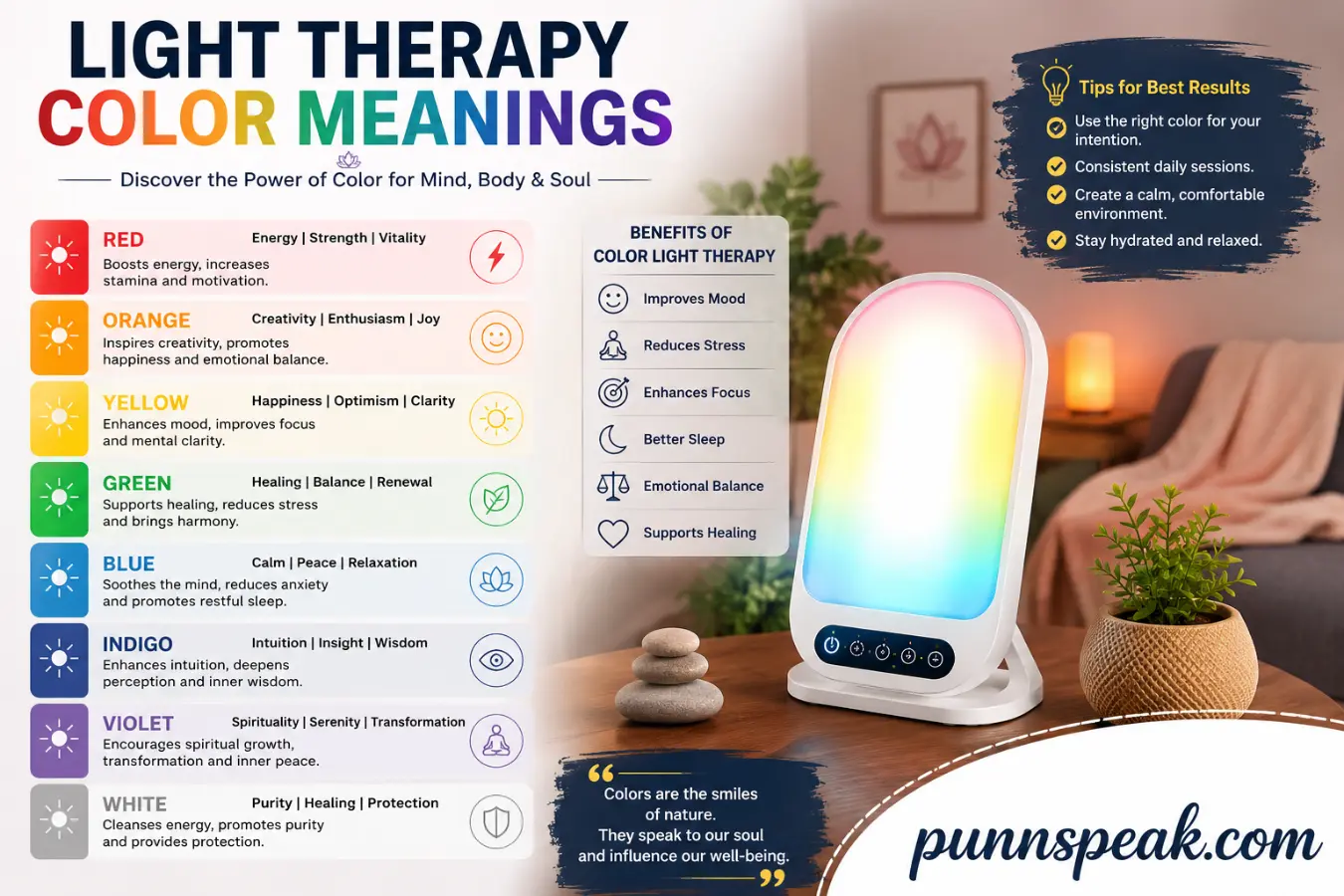
Light therapy uses different colors of visible light to influence mood, behavior, well-being, and environmental perception. Each light color is associated with unique psychological, emotional, spiritual, and symbolic meanings that have been explored in color psychology, wellness practices, design, and cultural traditions. While scientific evidence varies depending on the application, color symbolism continues to play an important role in how people interpret and respond to colored light.
From calming blue light to energizing red light and balancing green light, light therapy colors are often chosen based on their perceived emotional and psychological effects. Understanding these meanings can help individuals make informed decisions about wellness spaces, interior environments, branding, and personal preferences.
Quick Answer: Light therapy color meanings generally associate red with energy and vitality, blue with calm and focus, green with balance and healing, yellow with optimism and creativity, purple with spirituality and wisdom, and white with clarity and purity.
What Does the Color Light Therapy Symbolize?
Light therapy colors symbolize different emotional, psychological, and spiritual qualities depending on the specific hue used. Collectively, light therapy colors represent:
- Emotional well-being.
- Balance and harmony.
- Healing and restoration.
- Energy and vitality.
- Mental clarity.
- Personal transformation.
- Spiritual awareness.
- Renewal and growth.
The symbolism of light therapy colors is rooted in both modern color psychology and centuries of cultural interpretations. Different colors are often selected to create specific moods, influence behavior, or support desired emotional states.
Psychological Characteristics of the Color Light Therapy
Color psychology suggests that people often react differently to various colors of light. Although responses vary among individuals, several common associations exist.
Emotional Associations
- Red is linked with passion, motivation, and excitement.
- Blue is associated with calmness, trust, and stability.
- Green represents balance, relaxation, and renewal.
- Yellow symbolizes happiness, confidence, and optimism.
- Purple reflects imagination, wisdom, and spirituality.
- White signifies purity, clarity, and simplicity.
Psychological Effects
- Certain colors may influence alertness and attention.
- Softer hues can promote relaxation and comfort.
- Brighter colors often stimulate mental activity.
- Cool colors tend to create a sense of spaciousness and calm.
Positive Emotional Responses
- Relaxation.
- Hopefulness.
- Confidence.
- Inspiration.
- Emotional balance.
- Mental clarity.
- Motivation.
Negative Emotional Responses
- Overstimulation from intense red lighting.
- Feelings of sadness or detachment from excessive cool tones.
- Visual fatigue from overly bright environments.
- Anxiety when colors are used excessively or inappropriately.
Impact on Mood and Behavior
- Warm colors may encourage activity and social interaction.
- Cool colors often support concentration and reflection.
- Balanced color environments can improve perceived comfort.
- Color exposure may influence productivity and emotional perception.
How People Typically React to Light Therapy Colors
- Red often feels energetic and attention-grabbing.
- Blue frequently feels calming and professional.
- Green is commonly perceived as natural and reassuring.
- Yellow tends to feel cheerful and uplifting.
- Purple often appears creative and luxurious.
- White generally feels clean and organized.
Spiritual Meaning of the Color Light Therapy
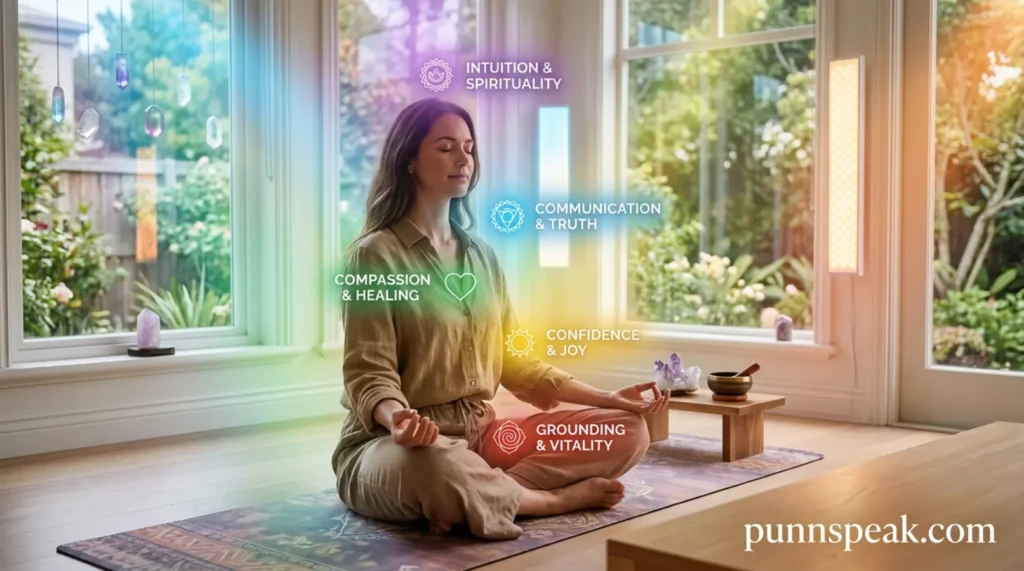
Across many spiritual traditions, colored light is viewed as symbolic rather than inherently supernatural. Different colors are often associated with various spiritual concepts.
Spiritual Symbolism
- Holiness: White light frequently represents sacredness and divine presence.
- Wisdom: Purple and indigo are often connected with insight and higher understanding.
- Purity: White symbolizes innocence, cleanliness, and spiritual purity.
- Transformation: Violet and purple are commonly linked with personal growth.
- Healing: Green is traditionally associated with restoration and renewal.
- Protection: Blue is often viewed as a protective and stabilizing color.
- Power: Red symbolizes strength, courage, and life force.
- Enlightenment: Gold, white, and violet may represent spiritual awakening.
- New Beginnings: Green and yellow often symbolize fresh starts and growth.
- Eternity: White light is frequently associated with timelessness and transcendence.
Many meditation, mindfulness, and wellness practices use colored light symbolically to encourage specific emotional or spiritual states.
Positive and Negative Meanings of the Color Light Therapy
Positive Meanings
Light therapy colors often symbolize positive qualities depending on the hue used.
- Purity: White light in healthcare environments conveys cleanliness.
- Peace: Blue lighting is commonly used in relaxation spaces.
- Simplicity: Neutral white environments promote minimalism.
- Clarity: Bright white light enhances visibility and focus.
- Freshness: Green tones evoke nature and renewal.
- Hope: Yellow light often symbolizes optimism and positivity.
- Balance: Green represents emotional equilibrium.
- Harmony: Soft blended lighting creates a sense of unity.
Negative Meanings
Certain color associations may also carry less favorable interpretations.
- Emptiness: Excessive white lighting can feel impersonal.
- Isolation: Cool blue environments may seem emotionally distant.
- Coldness: Bright white lighting can appear clinical.
- Sterility: Hospitals often use white lighting that some perceive as sterile.
- Boredom: Monochromatic spaces may lack visual interest.
- Emotional Distance: Overuse of cool colors can reduce perceived warmth.
- Perfectionism: Extremely controlled environments may feel rigid or intimidating.
Real-world reactions often depend on context, intensity, and personal experience.
Meanings of the Color Light Therapy
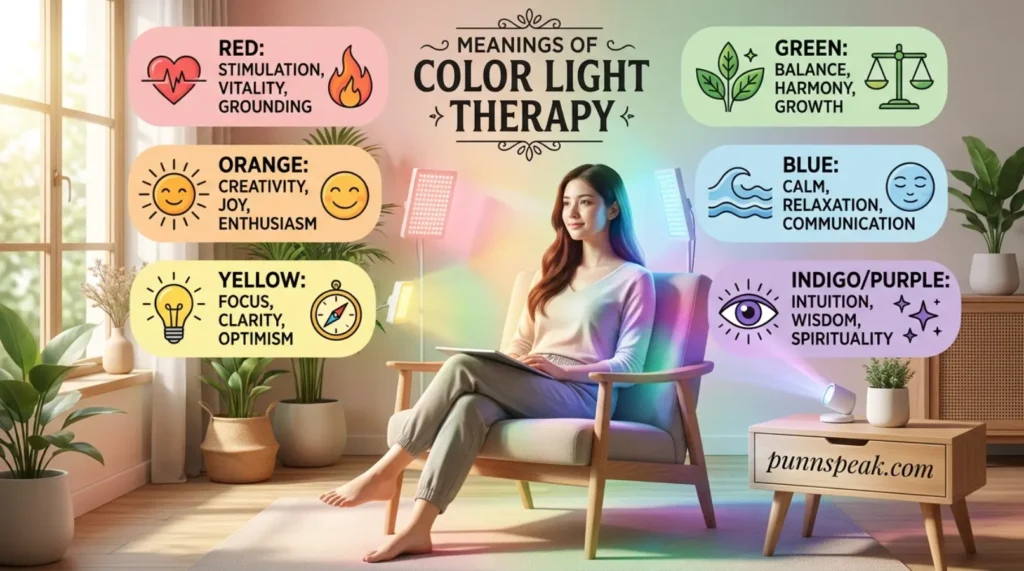
The meaning of light therapy colors changes significantly based on environment, culture, purpose, and individual interpretation. A color that feels calming in one setting may feel cold or uninspiring in another.
Feng Shui
In Feng Shui, colored light can be used to support energy flow and environmental balance.
Associated Elements
- Red: Fire.
- Blue: Water.
- Green: Wood.
- Yellow: Earth.
- White: Metal.
Energy Symbolism
- Red energizes and activates.
- Blue calms and stabilizes.
- Green encourages growth.
- Yellow supports positivity.
- White promotes clarity.
Best Rooms
- Blue: Bedrooms and meditation areas.
- Green: Living rooms and wellness spaces.
- Yellow: Kitchens and social areas.
- White: Offices and study rooms.
- Red: Accent areas rather than entire rooms.
Recommended Color Combinations
- Green and white.
- Blue and gray.
- Yellow and cream.
- Purple and silver.
Home Decorating Tips
- Use warm colors sparingly in relaxation spaces.
- Balance bright colors with neutral tones.
- Incorporate natural elements alongside green lighting.
- Use layered lighting for flexibility.
Marketing
Color plays a powerful role in branding and consumer psychology.
Branding Psychology
- Blue communicates trust and reliability.
- Red creates urgency and excitement.
- Green suggests sustainability and health.
- Yellow signals friendliness and optimism.
Consumer Perception
Consumers often form first impressions based partly on color cues before reading text or evaluating products.
Trust Signals
Blue remains one of the most trusted colors in financial, technology, and healthcare branding.
Product Packaging
- Green packaging often suggests eco-friendly products.
- White packaging implies simplicity and cleanliness.
- Red packaging attracts attention on crowded shelves.
Advertising Applications
Advertisers use color strategically to guide emotions and influence engagement.
Examples of Brands
- Blue: IBM, Facebook, PayPal.
- Red: Coca-Cola, Netflix, Target.
- Green: Starbucks, Whole Foods Market.
- Yellow: McDonald’s, IKEA.
Design
Light therapy color meanings strongly influence design decisions.
Interior Design
- Blue promotes calm and relaxation.
- Green creates natural harmony.
- White enhances openness and brightness.
Graphic Design:
Colors establish visual hierarchy and emotional tone.
Web Design:
- Blue improves perceptions of trust.
- Green supports wellness and sustainability themes.
- White enhances readability and cleanliness.
User Experience:
Strategic color usage improves navigation, attention, and engagement.
Minimalist Aesthetics:
White and neutral tones remain central to minimalist design because they create clarity and visual simplicity.
Fashion:
Color symbolism extends into clothing choices and personal style.
Clothing Symbolism:
- Red communicates confidence.
- Blue suggests professionalism.
- Green reflects balance.
- White symbolizes freshness and simplicity.
Seasonal Use:
- Bright colors are popular during spring and summer.
- Darker tones are often favored in autumn and winter.
Styling Effects
Different colors can alter perceived energy, confidence, and approachability.
Personality Impressions:
People may perceive:
- Red wearers as bold.
- Blue wearers as trustworthy.
- Green wearers as balanced.
- White wearers as organized.
Advantages:
- Supports personal expression.
- Creates memorable impressions.
- Enhances outfit coordination.
Disadvantages:
- Some colors may be perceived differently across cultures.
- Overuse of intense colors can dominate an appearance.
Practical Example:
A professional presentation may benefit from blue tones, while a creative event may encourage the use of purple or vibrant colors.
Color Associations Are Not Universal
Color meanings vary significantly across cultures, religions, and historical periods.
Western Cultures
In many Western societies:
- White symbolizes purity and weddings.
- Blue represents trust and professionalism.
- Green suggests nature and health.
- Red symbolizes passion and urgency.
Eastern Cultures:
Many Eastern traditions interpret colors differently.
- Red often symbolizes prosperity and good fortune.
- White may be associated with mourning in some regions.
- Gold frequently represents wealth and success.
Religious Traditions:
Different faiths use colors symbolically.
- White often represents holiness.
- Purple may symbolize spiritual authority.
- Green holds special significance in several religious traditions.
- Gold is frequently associated with divine glory.
Historical Interpretations:
Historically, color meanings were influenced by available dyes, social status, and cultural practices.
- Purple was once associated with royalty due to its rarity.
- White often symbolized wealth because it was difficult to maintain.
Modern Global Interpretations:
Global media and international branding have created broader color associations, though local traditions continue to influence perception.
What Light Therapy Says About Your Personality

People who enjoy colored-light environments may identify with the symbolic qualities of their preferred colors. However, color preference alone cannot accurately determine personality.
Strengths:
Depending on preferred colors, individuals may value:
- Creativity.
- Calmness.
- Confidence.
- Balance.
- Optimism.
- Organization.
Weaknesses:
Potential tendencies may include:
- Perfectionism.
- Overthinking.
- Impulsiveness.
- Emotional sensitivity.
- Risk aversion.
Social Behavior:
- Red enthusiasts may enjoy energetic social settings.
- Blue enthusiasts often appreciate meaningful conversations.
- Green enthusiasts may prefer harmony and cooperation.
Work Style:
- Blue-oriented individuals often value structure.
- Yellow-oriented individuals may enjoy brainstorming.
- Green-oriented individuals frequently prefer collaboration.
Relationships:
Preferred colors sometimes reflect desired relationship qualities such as stability, passion, honesty, or emotional balance.
Emotional Tendencies:
Color preferences may correlate with current moods, life experiences, cultural influences, and aesthetic tastes rather than fixed personality traits.
Frequently Asked Questions
What defines light therapy color?
A light therapy color is a specific wavelength or visible-light hue used to create particular emotional, aesthetic, or wellness-related effects.
What does light therapy symbolize?
Light therapy generally symbolizes healing, balance, renewal, emotional well-being, and personal growth.
Why is light therapy important?
It is widely used in wellness environments, interior design, mood-focused spaces, and various therapeutic applications.
Is light therapy a warm or cool color?
Light therapy includes both warm colors, such as red and yellow, and cool colors, such as blue and green.
What emotions do light therapy colors represent?
They may represent calmness, energy, optimism, balance, creativity, clarity, and comfort depending on the color used.
What is the spiritual meaning of light therapy colors?
Spiritually, colored light often symbolizes healing, wisdom, protection, enlightenment, and transformation.
What colors pair well with light therapy colors?
Popular combinations include blue and white, green and beige, purple and silver, and yellow with soft neutrals.
What does liking light therapy colors say about a person?
It may suggest an appreciation for mood, atmosphere, aesthetics, or wellness-focused environments, though personality cannot be determined solely by color preference.
Which light therapy color is most calming?
Blue and soft green are commonly considered among the most calming colors.
Which light therapy color is associated with energy?
Red is most frequently associated with vitality, motivation, and stimulation.
Which light therapy color represents healing?
Green is traditionally linked with healing, balance, and renewal.
Which light therapy color is best for focus?
Many people associate cool white and blue tones with concentration and mental clarity.
Conclusion
Light therapy color meanings encompass a rich combination of psychology, symbolism, spirituality, design principles, and cultural traditions. Different colors evoke distinct emotional and mental responses, influencing how people perceive spaces, brands, products, and experiences. Red often symbolizes energy, blue encourages calmness, green promotes balance, yellow inspires optimism, purple reflects wisdom, and white represents purity and clarity. While these associations are widely recognized, interpretations vary across cultures and individuals. Understanding light therapy color meanings provides valuable insight for wellness practices, marketing, design, fashion, and personal self-expression.
Emma Wilson is a dedicated comparison writer and product researcher at ColorMystiic.com. She specializes in creating unbiased product comparisons, detailed reviews, and helpful buying guides. Her goal is to help readers make smarter purchasing decisions with confidence.