Face light therapy has become increasingly popular in skincare, wellness, and self-care routines. Different light colors are used in LED face masks and light therapy devices, with each color traditionally associated with unique symbolic, psychological, and wellness-related meanings. Beyond their skincare applications, these colors carry rich cultural, spiritual, and emotional symbolism that influences how people perceive and respond to them.
From energizing red light to calming blue light and balancing green light, each color conveys distinct messages related to healing, transformation, renewal, and emotional well-being. Understanding face light therapy color meanings can help individuals choose colors that align with their personal goals, mood, and lifestyle preferences.
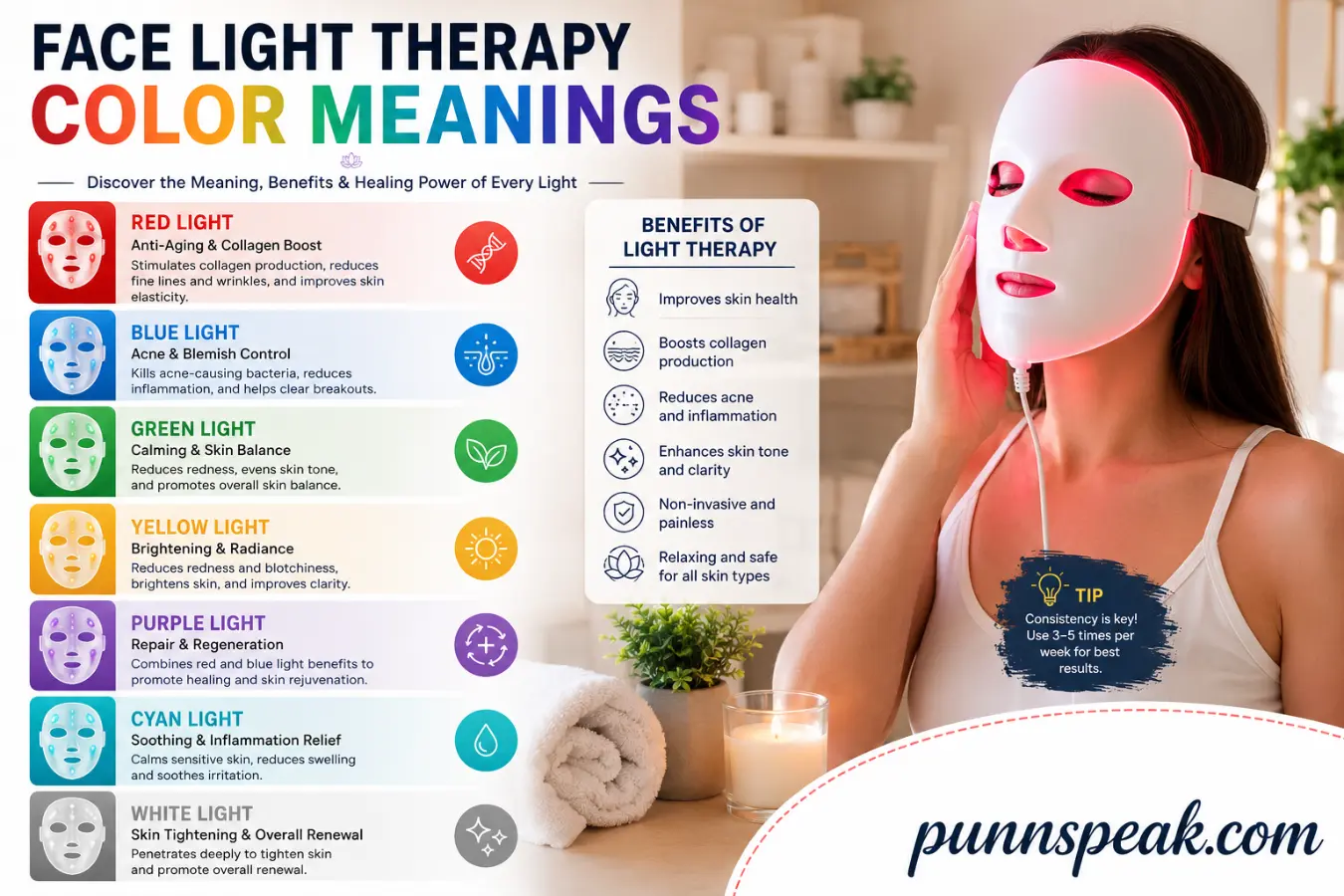
Quick Answer: Face light therapy colors generally symbolize different forms of healing and well-being. Red represents vitality, blue symbolizes calm and clarity, green reflects balance and renewal, yellow signifies optimism, purple represents transformation, and white symbolizes purity and rejuvenation.
What Do Face Light Therapy Colors Symbolize?
Face light therapy colors symbolize a wide range of emotional, psychological, and spiritual qualities.
Common symbolic meanings include:
- Healing and restoration
- Emotional balance
- Personal transformation
- Energy and vitality
- Calmness and relaxation
- Confidence and self-care
- Renewal and growth
- Mental clarity and focus
- Beauty and wellness
- Harmony between mind and body
Each color creates its own symbolic experience and emotional impression.
Psychological Characteristics of Face Light Therapy Colors
Color psychology suggests that different colors can influence emotional responses, perceptions, and moods.
Emotional Associations
- 🔴 Red: Energy, passion, confidence
- 🔵 Blue: Calmness, trust, peace
- 🟢 Green: Balance, harmony, renewal
- 🟡 Yellow: Happiness, positivity, optimism
- 🟣 Purple: Wisdom, creativity, spirituality
- ⚪ White: Purity, simplicity, clarity
Psychological Effects
- Warm colors stimulate attention and motivation.
- Cool colors encourage relaxation and reflection.
- Balanced colors help create emotional comfort.
- Bright colors often increase alertness and engagement.
Positive Emotional Responses
- Hope
- Relaxation
- Motivation
- Optimism
- Confidence
- Emotional stability
- Inspiration
Negative Emotional Responses
- Overstimulation from intense red tones
- Emotional detachment from excessive blue tones
- Boredom from overly neutral environments
- Visual fatigue from excessive brightness
Impact on Mood and Behavior
- Red encourages action.
- Blue promotes calm thinking.
- Green supports emotional balance.
- Yellow stimulates positivity.
- Purple encourages creativity.
- White promotes clarity and organization.
How People Typically React
Many people perceive face light therapy colors as soothing, restorative, and wellness-oriented, although individual responses may vary based on culture and personal experience.
Spiritual Meaning of Face Light Therapy Colors
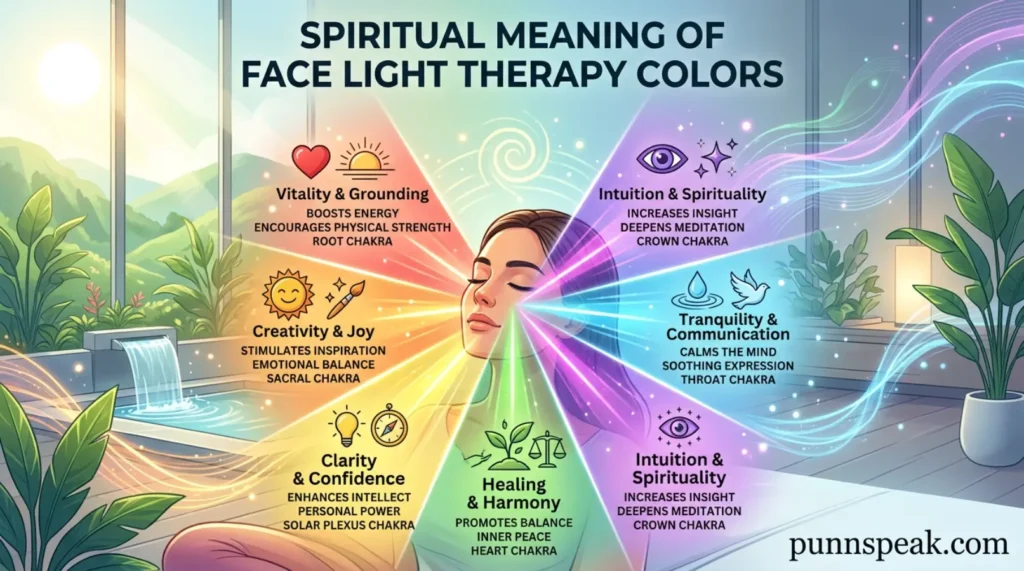
Throughout spiritual traditions, colored light often represents different forms of growth, healing, and enlightenment.
Spiritual Symbolism
- Holiness: White light often represents sacred purity.
- Wisdom: Purple symbolizes higher understanding.
- Purity: White reflects innocence and cleansing.
- Transformation: Purple and violet represent personal growth.
- Healing: Green symbolizes restoration and renewal.
- Protection: Blue is often linked to safety and tranquility.
- Power: Red represents life force and strength.
- Enlightenment: White and violet symbolize awakening.
- New Beginnings: Green and yellow represent fresh starts.
- Eternity: White light often symbolizes timelessness.
Many meditation and mindfulness practices use colored light imagery to support emotional and spiritual reflection.
Positive and Negative Meanings of Face Light Therapy Colors
Positive Meanings
🔴 Red Light
- Vitality
- Courage
- Passion
- Confidence
Example: Red lighting is often used in fitness and performance environments.
🔵 Blue Light
- Peace
- Trust
- Calmness
- Stability
Example: Blue is frequently used in wellness centers and spas.
🟢 Green Light
- Healing
- Balance
- Growth
- Harmony
Example: Green is commonly associated with nature and wellness brands.
🟡 Yellow Light
- Hope
- Joy
- Positivity
- Creativity
Example: Yellow is often used to create cheerful environments.
🟣 Purple Light
- Spirituality
- Wisdom
- Transformation
- Luxury
Example: Purple is frequently used in premium beauty branding.
⚪ White Light
- Purity
- Clarity
- Simplicity
- Freshness
Example: White is common in skincare and healthcare settings.
Negative Meanings
Emptiness
Excessive white environments may feel impersonal.
Isolation
Too much blue can create emotional distance.
Coldness
Bright white lighting may appear clinical.
Sterility
Healthcare environments sometimes feel overly sterile because of extensive white lighting.
Boredom
Monochromatic spaces may lack stimulation.
Emotional Distance
Cool tones can sometimes reduce feelings of warmth.
Perfectionism
Highly controlled environments may feel rigid or intimidating.
Meanings of Face Light Therapy Colors
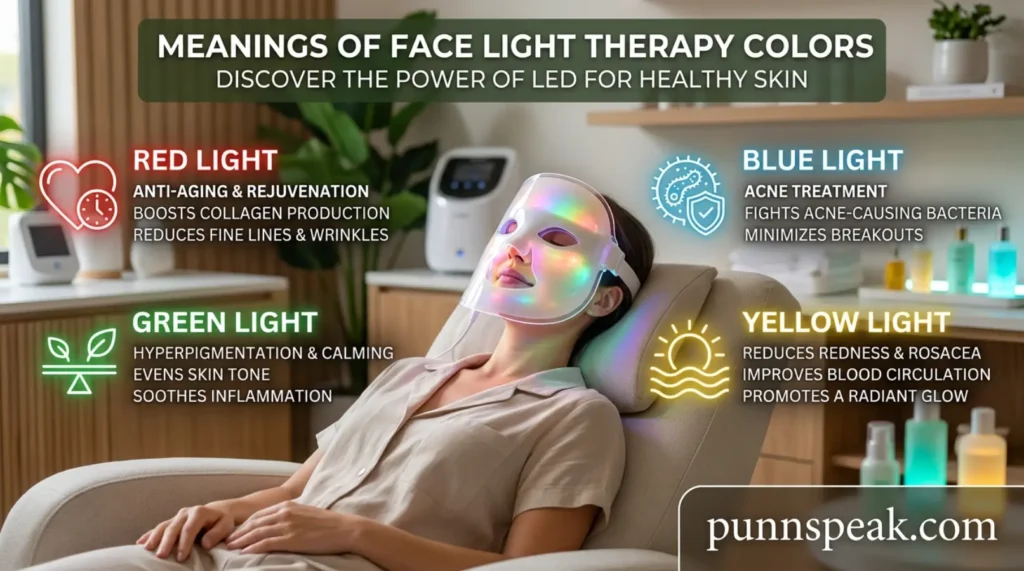
The meaning of face light therapy colors changes according to context, culture, environment, and individual interpretation.
Feng Shui
Associated Elements
- Red: Fire
- Blue: Water
- Green: Wood
- Yellow: Earth
- White: Metal
- Purple: Fire and Spiritual Energy
Energy Symbolism
- Red activates energy.
- Blue calms energy.
- Green restores balance.
- Yellow promotes happiness.
- Purple supports spiritual growth.
Best Rooms
- Blue: Bedrooms
- Green: Living rooms
- Yellow: Kitchens
- White: Offices
- Purple: Meditation rooms
Recommended Color Combinations
- Green and white
- Blue and gray
- Yellow and cream
- Purple and silver
Home Decorating Tips
Use colored lighting as accents rather than the sole source of illumination to create a balanced atmosphere.
Marketing
Face light therapy colors are widely used in wellness and skincare marketing.
Branding Psychology
- Blue builds trust.
- Green signals wellness.
- White communicates cleanliness.
- Purple conveys luxury.
- Red attracts attention.
Consumer Perception
Consumers often associate these colors with beauty, health, and self-care.
Trust Signals
Blue and white are commonly used by skincare brands because they suggest safety and professionalism.
Product Packaging
- White suggests purity.
- Green implies natural ingredients.
- Purple indicates premium quality.
- Blue emphasizes reliability.
Advertising Applications
Color helps communicate product benefits quickly and effectively.
Brands Commonly Using These Colors
- Blue: Nivea, Oral-B
- Green: Whole Foods Market
- Purple: Hallmark, Cadbury
- Red: Coca-Cola
- White: Apple
Design
Interior Design
Face light therapy colors influence mood and atmosphere in wellness spaces.
Graphic Design
Colors guide visual hierarchy and emotional messaging.
Web Design
Blue and white are commonly used for trust and readability.
User Experience
Strategic color choices improve navigation and engagement.
Minimalist Aesthetics
White remains a cornerstone of minimalist design because of its clean and uncluttered appearance.
Fashion
Clothing Symbolism
- Red symbolizes confidence.
- Blue represents professionalism.
- Green reflects balance.
- White suggests simplicity.
- Purple implies creativity.
Seasonal Use
- Bright colors are popular during spring and summer.
- Deeper shades dominate autumn and winter.
Styling Effects
Different colors create different visual impressions and emotional associations.
Personality Impressions
People may perceive:
- Red wearers as bold.
- Blue wearers as dependable.
- Green wearers as grounded.
- Purple wearers as creative.
Advantages
- Enhances self-expression
- Creates memorable impressions
- Supports personal branding
Disadvantages
- Color interpretations vary among cultures
- Overuse may create unintended impressions
Practical Example
A blue outfit may be ideal for a job interview, while purple may work well for creative industries.
Color Associations Are Not Universal
Western Cultures
Red often symbolizes passion, while white typically represents purity and weddings.
Eastern Cultures
Red frequently symbolizes prosperity, luck, and celebration. White may be associated with mourning in some regions.
Religious Traditions
White often symbolizes holiness, while purple may represent spiritual authority and devotion.
Historical Interpretations
Purple was historically associated with royalty because its dye was rare and expensive.
Modern Global Interpretations
Global marketing has created broader color associations, though local traditions still influence meaning.
What Face Light Therapy Colors Say About Your Personality
Color preferences may reflect personal tastes and emotional tendencies, but they do not determine personality with certainty.
Strengths
Depending on preferred colors, individuals may be:
- Creative
- Optimistic
- Compassionate
- Organized
- Confident
- Balanced
Weaknesses
Potential tendencies may include:
- Perfectionism
- Overthinking
- Sensitivity
- Impulsiveness
Social Behavior
- Red lovers often enjoy excitement.
- Blue lovers value meaningful connections.
- Green lovers prefer harmony.
Work Style
- Blue-oriented people often appreciate structure.
- Yellow-oriented individuals enjoy innovation.
- Green-oriented individuals favor teamwork.
Relationships
Preferred colors may reflect desired relationship qualities such as trust, passion, balance, or stability.
Emotional Tendencies
Color preferences often change with life experiences, mood, environment, and personal growth.
Frequently Asked Questions
What are face light therapy colors?
Face light therapy colors are different wavelengths of visible light used in LED skincare and wellness devices.
What do face light therapy colors symbolize?
They symbolize healing, balance, energy, calmness, transformation, and emotional well-being.
Which face light therapy color represents healing?
Green is most commonly associated with healing, renewal, and balance.
What does red light symbolize?
Red symbolizes vitality, strength, confidence, and energy.
What does blue light symbolize?
Blue symbolizes peace, trust, calmness, and emotional stability.
What is the spiritual meaning of face light therapy colors?
Spiritually, they often represent healing, enlightenment, transformation, wisdom, and protection.
Are face light therapy colors warm or cool?
Some are warm, such as red and yellow, while others are cool, such as blue and green.
What colors work well together?
Popular combinations include blue and white, green and beige, and purple with silver.
What does liking blue light say about a person?
It may suggest an appreciation for calmness, stability, and trustworthiness.
Which face light therapy color is associated with positivity?
Yellow is most strongly associated with optimism, happiness, and positivity.
Can color meanings differ across cultures?
Yes. Cultural traditions significantly influence color symbolism and interpretation.
Are personality traits determined by color preference?
No. Color preferences may reflect tendencies and interests but cannot accurately predict personality.
Conclusion
Face light therapy color meanings combine elements of psychology, symbolism, spirituality, design, and cultural tradition. Each color carries unique associations that influence how people perceive beauty, wellness, healing, and self-care. Red represents vitality, blue promotes calmness, green symbolizes renewal, yellow encourages optimism, purple inspires transformation, and white reflects purity and clarity. While these meanings are widely recognized, interpretations vary among individuals and cultures. Understanding face light therapy color meanings provides valuable insight into skincare trends, wellness practices, branding, design, and personal expression.
Emma Wilson is a dedicated comparison writer and product researcher at ColorMystiic.com. She specializes in creating unbiased product comparisons, detailed reviews, and helpful buying guides. Her goal is to help readers make smarter purchasing decisions with confidence.