Mood lip gloss adds a little mystery to everyday makeup. One moment, your lips may look pale pink, and after applying the gloss, the color may deepen into a brighter or warmer shade. This color-changing effect makes people curious about mood lip gloss color meanings and whether each shade represents a particular emotion.
Traditionally, pink is associated with affection, red with passion, purple with creativity, and blue with calmness. However, these are general color associations rather than proven readings of your emotional state. The final shade of mood lip gloss depends on its formula, your natural lip color, skin chemistry, and other factors. In this guide, you will discover common shade meanings, a colorful chart, practical makeup tips, and the science behind color-changing lip gloss.
Quick Answer: What Do Mood Lip Gloss Colors Mean?
Mood lip gloss colors are commonly associated with emotions and personality traits. Pink often symbolizes affection, red represents passion, purple suggests creativity, orange conveys energy, and blue is associated with calmness. Clear or very light shades can suggest simplicity and freshness. However, these meanings are symbolic, not scientific emotion readings. Color-changing lip gloss usually reacts to ingredients and conditions on the lips rather than detecting your actual mood.
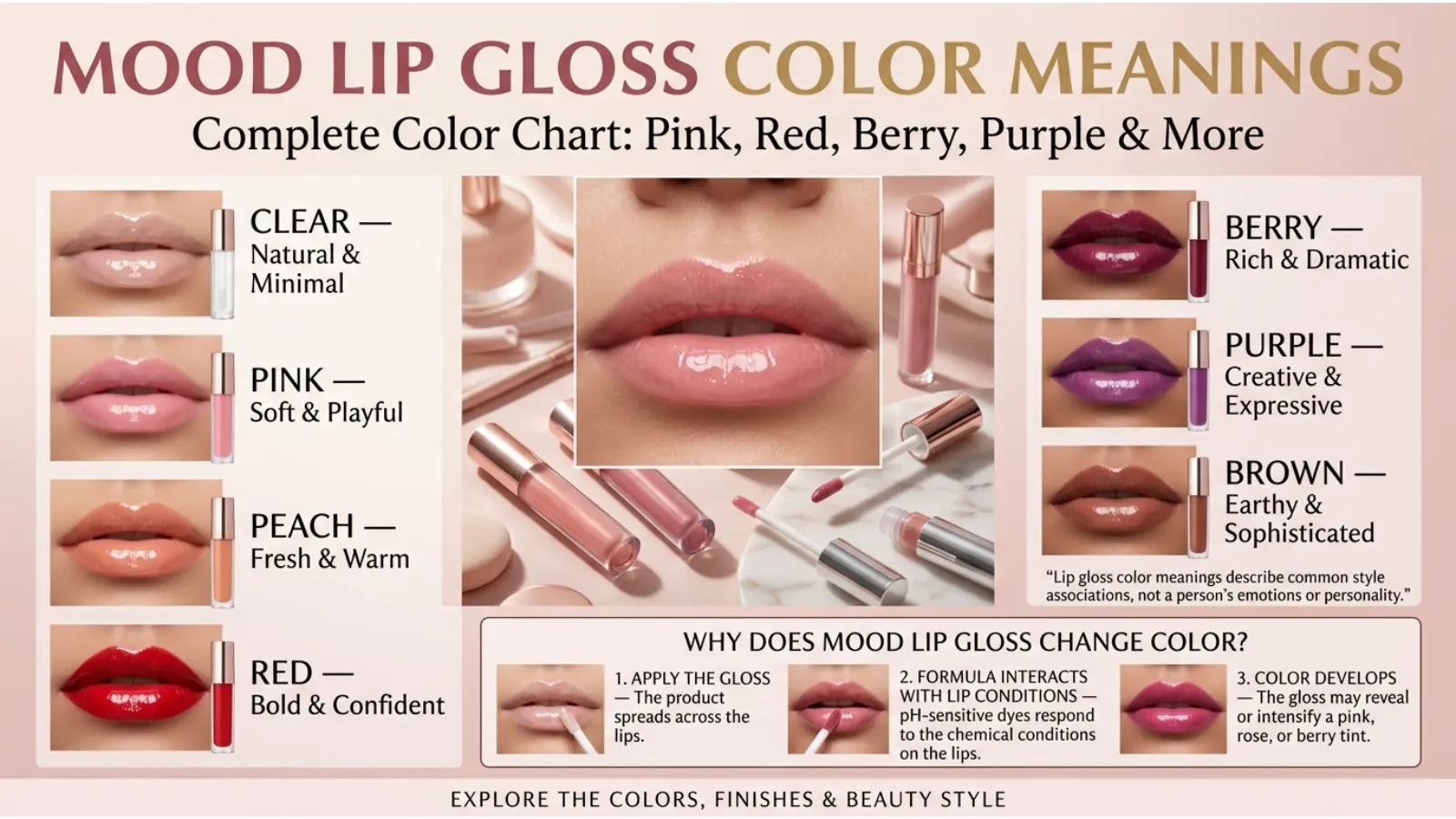
Mood Lip Gloss Color Meanings Chart
The following chart explains common symbolic meanings associated with different shades of mood lip gloss. Because formulas vary between brands, the exact color you see may differ from the examples below.
Colorful Mood Lip Gloss Chart
| Color | Color swatch | Common symbolic meaning | Makeup impression |
|---|---|---|---|
| Pink | 🩷 | Love, affection, sweetness | Soft and romantic |
| Light Pink | 🌸 | Gentleness, innocence, warmth | Natural and delicate |
| Hot Pink | 💗 | Confidence, excitement, playfulness | Bold and youthful |
| Red | ❤️ | Passion, energy, desire | Classic and glamorous |
| Coral | 🪸 | Warmth, friendliness, optimism | Fresh and lively |
| Orange | 🧡 | Creativity, enthusiasm, adventure | Bright and energetic |
| Peach | 🍑 | Comfort, friendliness, softness | Warm and natural |
| Purple | 💜 | Creativity, mystery, imagination | Artistic and expressive |
| Lavender | 🪻 | Serenity, elegance, gentleness | Soft and dreamy |
| Blue | 💙 | Calmness, trust, stability | Cool and unusual |
| Green | 💚 | Nature, renewal, growth | Fresh and distinctive |
| Brown | 🤎 | Earthiness, warmth, reliability | Natural and sophisticated |
| Nude | 🟤 | Simplicity, balance, understated style | Minimal and polished |
| Clear | 🤍 | Freshness, simplicity, versatility | Clean and glossy |
| Berry | 🍇 | Depth, confidence, richness | Elegant and dramatic |
| Plum | 🍆 | Mystery, luxury, individuality | Deep and sophisticated |
These meanings describe common symbolic and fashion associations. They do not mean that a particular lip gloss shade proves you are happy, stressed, confident, or in love.
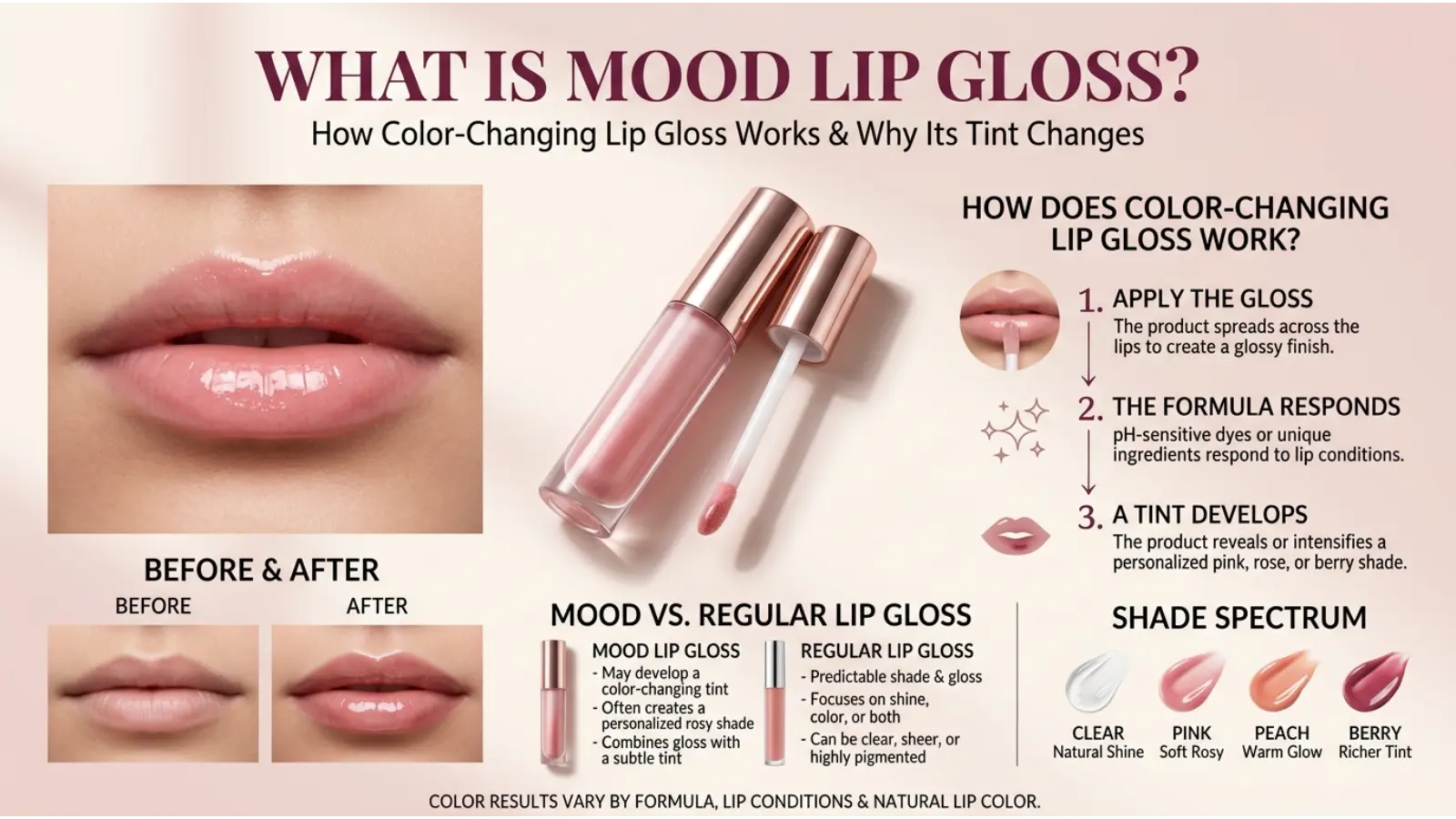
What Is Mood Lip Gloss?
Mood lip gloss is a cosmetic product designed to change or develop its color after application. Some products are marketed as mood-changing glosses because their colors appear to respond to the wearer.
However, the name can be misleading. Most color-changing lip products do not measure emotions, thoughts, or feelings. Instead, their appearance may change because of ingredients that react to the conditions on your lips.
Depending on the product, the final shade may be influenced by:
- The color-changing ingredients in the formula.
- The natural pigmentation of your lips.
- The moisture and pH of the lip surface.
- The amount of product applied.
- Lighting conditions and the color of your surroundings.
As a result, two people using the same gloss may see slightly different shades. This variation can make the product feel personalized, even though it does not provide a reliable emotional reading.
Pink Mood Lip Gloss Color Meaning
Pink is one of the most familiar shades in mood lip gloss. It is often connected with affection, kindness, romance, and a gentle personality. Moreover, pink gloss can create a fresh appearance without the intensity of a deep red lipstick.
Light Pink Mood Lip Gloss
Light pink usually suggests softness, sweetness, and simplicity. In makeup, it creates a subtle finish that works well for everyday activities, school, casual outings, and natural-looking beauty routines.
For example, a sheer light pink gloss can complement a minimal makeup look. It adds shine and a hint of color without overpowering the rest of your face.
Hot Pink Mood Lip Gloss
Hot pink is commonly associated with excitement, confidence, and playful self-expression. Because it is brighter than pastel pink, it attracts more attention and can make a makeup look feel energetic.
Therefore, hot pink gloss can work well with simple eye makeup and neutral clothing. Keeping the rest of your look balanced allows the lip color to stand out.
What Does Pink Lip Gloss Mean Emotionally?
Symbolically, pink represents warmth, affection, and emotional gentleness. However, choosing pink gloss does not prove that someone is feeling romantic or happy. Personal taste, fashion trends, and the occasion may influence the choice just as much.
Red Mood Lip Gloss Color Meaning
Red is often linked with passion, strength, excitement, and confidence. In cosmetics, red lips have a long-standing association with glamour and bold self-expression.
A red mood gloss can create a striking look while still providing the shine of a gloss rather than the heavier finish of some lipsticks.
Bright Red
Bright red commonly suggests energy and confidence. It is suitable for evening events, parties, celebrations, and occasions when you want your lips to become the main feature of your makeup.
Deep Red or Wine Red
Deep red and wine shades often communicate sophistication, richness, and drama. In contrast to a bright red, a darker red may create a more polished or formal appearance.
Does Red Mood Gloss Mean Anger?
Not necessarily. Red can symbolize anger in some situations, but it also represents love, celebration, power, and passion in others. The setting and cultural context determine how people interpret it.
Similarly, a red color change in your gloss is not evidence that you are angry or excited.
Purple Mood Lip Gloss Color Meaning
Purple is commonly associated with creativity, imagination, mystery, and individuality. It can also suggest luxury because darker purple shades have been connected with prestige in several historical and cultural settings.
In makeup, purple gloss offers a distinctive alternative to traditional pink or red.
Lavender Lip Gloss
Lavender is a light purple shade associated with calmness, delicacy, and elegance. It can create a soft, dreamy appearance, particularly when paired with neutral eye makeup.
Deep Purple Lip Gloss
Deep purple often creates a dramatic, artistic, or mysterious impression. It may suit evening makeup, fashion photography, or people who enjoy experimenting with unconventional colors.
Nevertheless, purple does not automatically indicate wisdom, spirituality, or a particular personality. These are symbolic interpretations rather than established psychological measurements.
Blue Mood Lip Gloss Color Meaning
Blue commonly symbolizes calmness, trust, stability, and coolness. In mood lip gloss, however, blue is less conventional than pink or red and may create a more experimental beauty look.
A blue-tinted gloss can appear different depending on its transparency. A sheer blue formula may add a cool shine, while a stronger pigment can produce a more noticeable fashion statement.
Light Blue
Light blue is often associated with peace, openness, and freshness. In beauty styling, it can create a cool-toned effect.
Dark Blue
Dark blue can suggest depth, sophistication, and mystery. It is more unusual in everyday lip makeup, so it may be best suited to creative looks or special occasions.
Remember that a blue shade does not prove someone is sad or relaxed. The emotional meaning is symbolic, and the product’s actual color depends on its formula.
Orange and Coral Mood Lip Gloss Color Meanings
Orange and coral shades are commonly associated with enthusiasm, warmth, friendliness, and optimism. As a result, they can make makeup look bright and lively.
| Shade | Symbolic meaning | Best style |
|---|---|---|
| Orange | Energy and creativity | Bold, playful makeup |
| Coral | Warmth and friendliness | Summer and daytime looks |
| Peach | Softness and comfort | Natural everyday makeup |
| Tangerine | Excitement and freshness | Bright seasonal makeup |
Coral often balances the warmth of orange with the softness of pink. Consequently, it can be easier to wear than a strong orange shade.
For a coordinated appearance, pair coral gloss with peach blush or a light, warm-toned eyeshadow. Alternatively, use a clear or nude eye look to keep attention on the lips.
Brown, Nude, and Clear Mood Lip Gloss Meanings
Neutral gloss shades are popular because they work with many makeup styles and clothing colors. Their meanings are often linked with simplicity, natural beauty, warmth, and sophistication.
Brown Mood Lip Gloss
Brown is commonly associated with earthiness, reliability, warmth, and comfort. In makeup, brown gloss can produce a polished look without the intensity of a bright color.
Lighter caramel shades create a softer appearance, while deep chocolate shades can look more dramatic.
Nude Mood Lip Gloss
Nude gloss is associated with simplicity, balance, and understated elegance. It is useful for everyday wear because it can complement a range of makeup styles.
However, nude is not one universal color. A suitable nude shade depends on your natural lip color and whether your skin undertone is warm, cool, or neutral.
Clear Mood Lip Gloss
Clear gloss is often connected with freshness, simplicity, and versatility. It enhances shine without adding much visible pigment.
Clear gloss can also be layered over lipstick to change the finish. However, a genuinely clear formula should not be assumed to change color unless the product is specifically designed to do so.
Berry and Plum Mood Lip Gloss Color Meanings
Berry and plum glosses combine depth with a rich appearance. They are useful when you want something more dramatic than pink but different from classic red.
Berry shades commonly suggest confidence, richness, and romance. Plum shades, meanwhile, are often associated with mystery, individuality, and sophistication.
For daytime wear, a sheer berry gloss can provide a soft wash of color. For evening makeup, a deeper plum gloss may create a more dramatic effect.
The final appearance depends on pigmentation and your natural lip color. A shade that looks purple in the tube may appear more berry-toned when applied.
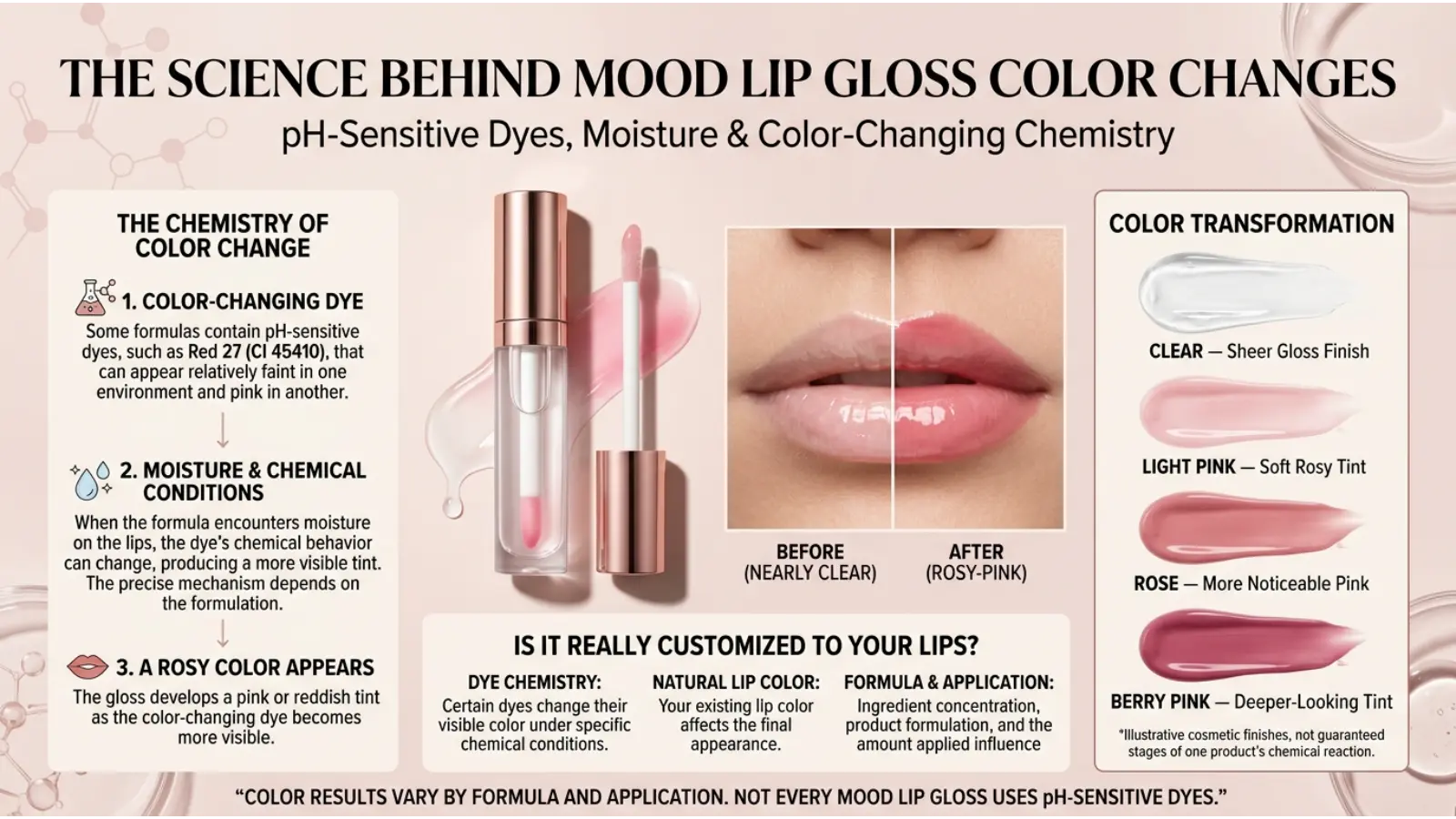
The Science Behind Mood Lip Gloss Color Changes
Understanding the formula helps explain why mood lip gloss can appear to change color.
Some color-changing lip products use dyes or pigments that respond to chemical conditions on the lip surface. Certain dyes, including dyes used in some pH-responsive cosmetics, can appear different depending on their chemical environment. Other products rely on transparent pigments, layered colors, or ingredients that produce a tint after application.
The exact mechanism varies by product, so not every mood gloss works in the same way.
Does Mood Lip Gloss Really Detect Your Mood?
No reliable evidence establishes ordinary mood lip gloss as a tool for detecting emotions. These products are cosmetics, not validated mood-measuring devices.
Although emotions can influence physical responses such as skin temperature or blood flow, a lip gloss color change cannot reliably identify a person’s emotional state. A shade chart should therefore be treated as a fun symbolic guide rather than a scientific test.
Why Does the Same Gloss Look Different on Different People?
Several factors can affect the final result:
- Natural lip color: Your lips’ existing pigmentation can change how a translucent gloss appears.
- Formula: Different dyes and pigments produce different effects.
- Application amount: A thin layer may look subtle, while a thicker layer may appear more saturated.
- Lighting: Daylight, warm indoor bulbs, and cool artificial lighting can change the perceived shade.
- Product layering: Lip balm, lipstick, or another gloss may influence the final color.
Therefore, the shade shown in a product advertisement may not match the exact result on your lips.
How to Choose Mood Lip Gloss for Your Style
Choosing a gloss is easier when you consider the finish, occasion, and look you want rather than relying only on symbolic meanings.
| Your preferred look | Suggested shades | Why they work |
|---|---|---|
| Natural and simple | Clear, nude, light pink | Subtle color and shine |
| Romantic | Pink, rose, berry | Soft or rich color associations |
| Bold and confident | Red, hot pink, plum | Strong visual impact |
| Fresh and summery | Coral, peach, orange | Warm, bright appearance |
| Cool and creative | Lavender, blue, purple | Distinctive color effects |
| Elegant and polished | Wine, brown, deep berry | Rich, understated depth |
First, consider your natural lip color. Then, test the gloss in the lighting where you will usually wear it. Finally, check how it looks after several minutes, since some formulas develop a stronger tint over time.
Tips for Better Results
- Apply a thin layer first so you can see how the shade develops.
- Exfoliate gently only when needed, and avoid applying gloss to cracked or irritated lips.
- Use a lip liner if you want a more defined edge.
- Check the ingredient list and follow the product’s instructions.
- Stop using the product if it causes burning, swelling, or persistent irritation.
A patch test according to the product’s instructions can help identify some reactions, although it cannot guarantee that irritation will never occur.
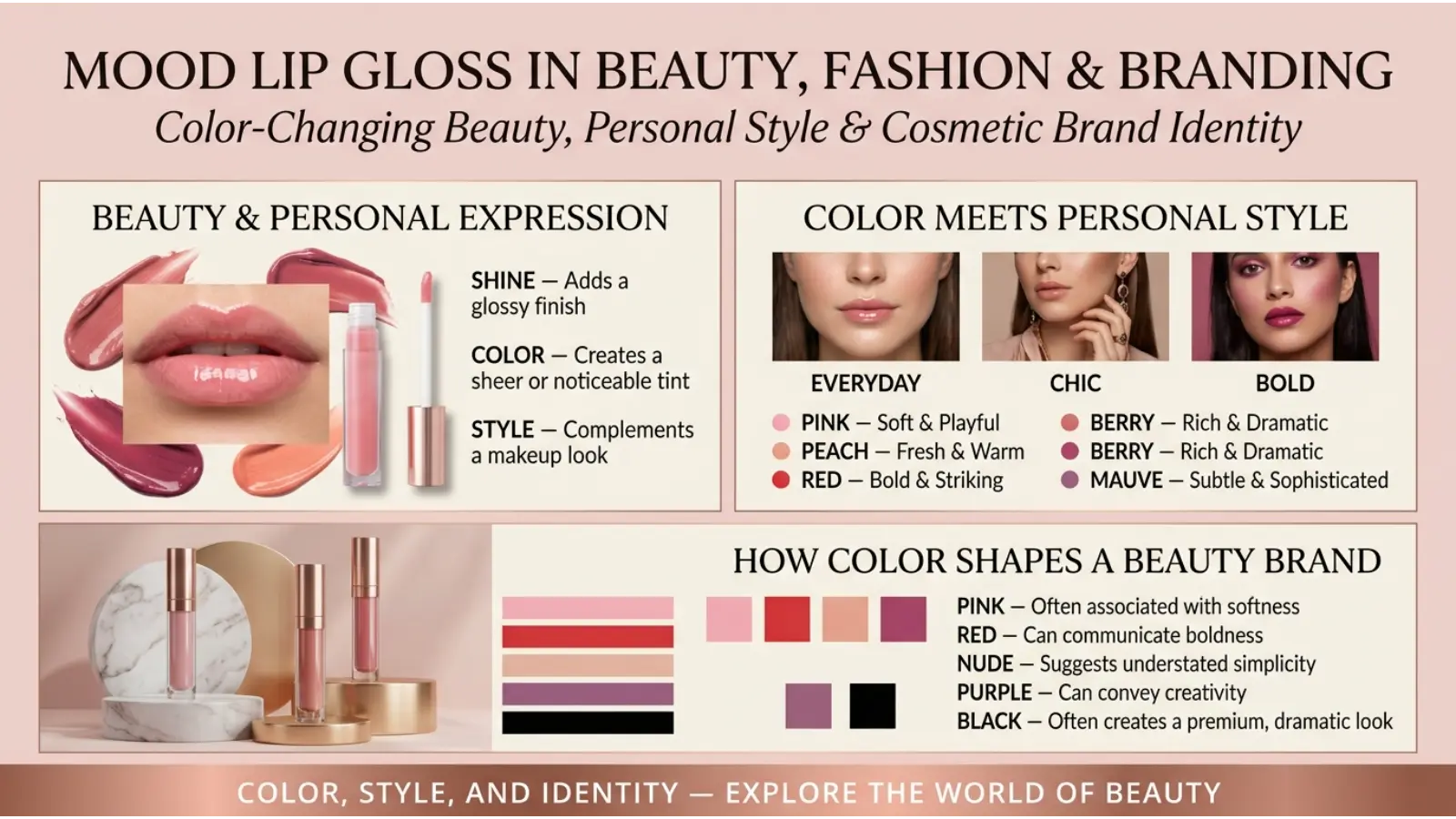
Mood Lip Gloss in Beauty, Fashion, and Branding
Color is an important part of how beauty products communicate their identity. A pink package may suggest sweetness or romance, while black or deep purple packaging may create a more dramatic, premium impression.
Likewise, coral packaging can communicate warmth and freshness. Clear packaging may emphasize a lightweight or simple product, while metallic details can add a sense of glamour.
However, these are design choices rather than universal rules. A brand’s name, packaging material, typography, price, and advertising also influence how customers perceive a product.
In fashion, the same principle applies. A red gloss paired with a black outfit can create a dramatic contrast, whereas a peach gloss with light clothing may produce a softer impression. The context changes how the color is understood.
Common Myths About Mood Lip Gloss
Myth 1: The Gloss Reveals Your True Feelings
Fact: A color-changing gloss does not reliably measure emotions. Its appearance depends on the product and conditions on your lips.
Myth 2: Everyone Gets the Same Shade
Fact: Natural lip pigmentation, application amount, and lighting can create different results.
Myth 3: Pink Always Means Happiness
Fact: Pink is often associated with affection and softness, but its meaning changes with personal experience and context.
Myth 4: Dark Colors Always Mean Negative Emotions
Fact: Dark shades can communicate elegance, confidence, creativity, or drama. They do not automatically represent sadness or anger.
Myth 5: A Mood Gloss Works Like a Medical Test
Fact: Mood lip gloss is a cosmetic product. It should not be used to diagnose emotional or physical conditions.
Frequently Asked Questions About Mood Lip Gloss Color Meanings
1. What is the most common mood lip gloss color?
Pink is a familiar color in mood lip gloss products because it creates a soft, flattering tint. However, the most common result depends on the brand and formula.
2. What does pink mood lip gloss mean?
Pink commonly symbolizes affection, kindness, romance, and gentleness. These are traditional color associations, not proof of how someone feels.
3. What does red mood lip gloss mean?
Red is often associated with passion, energy, confidence, and bold self-expression. In makeup, it can create a classic or glamorous appearance.
4. What does purple mood lip gloss mean?
Purple is commonly connected with creativity, imagination, mystery, and individuality. Lighter purple shades may look softer, while deep purple creates a dramatic impression.
5. Why does mood lip gloss change color?
Depending on its formula, the gloss may contain dyes or pigments that respond to chemical conditions on the lips or produce a tint after application. Different formulas work differently.
6. Does mood lip gloss change color according to your emotions?
No. Ordinary mood lip gloss is not a reliable way to detect emotions. The color change is associated with the cosmetic formula and the conditions in which it is used.
7. Why does mood lip gloss look different on everyone?
Natural lip pigmentation, formula, application amount, lighting, and other products can affect the final color. Therefore, one shade may look pinker or deeper on one person than another.
8. What does blue mood lip gloss mean?
Blue is commonly associated with calmness, trust, and stability. In makeup, blue gloss can create a cool-toned or experimental look.
9. Which mood lip gloss color is best for everyday use?
Clear, nude, light pink, and sheer peach are useful everyday choices because they provide shine without creating a very bold appearance. The best option depends on your preferences and natural lip color.
10. Are mood lip gloss color meanings scientifically proven?
The symbolic meanings of colors are not universal scientific rules, and mood gloss is not a validated emotional assessment tool. Color psychology research explores associations between colors and responses, but those associations can vary by context and individual experience.
Conclusion
Mood lip gloss color meanings combine beauty, symbolism, and curiosity. Pink is often associated with affection, red with passion, purple with creativity, blue with calmness, and neutral shades with simplicity. These interpretations can make choosing makeup more enjoyable, but they should not be treated as definite descriptions of personality or emotional state.
Ultimately, the color you see depends on the gloss formula, your natural lip color, application, and lighting. Use the chart as a guide when exploring different shades, and choose the gloss that makes you feel comfortable and confident. Color can express your personal style without needing to reveal or define your mood.
Emma Wilson is a dedicated comparison writer and product researcher at ColorMystiic.com. She specializes in creating unbiased product comparisons, detailed reviews, and helpful buying guides. Her goal is to help readers make smarter purchasing decisions with confidence.