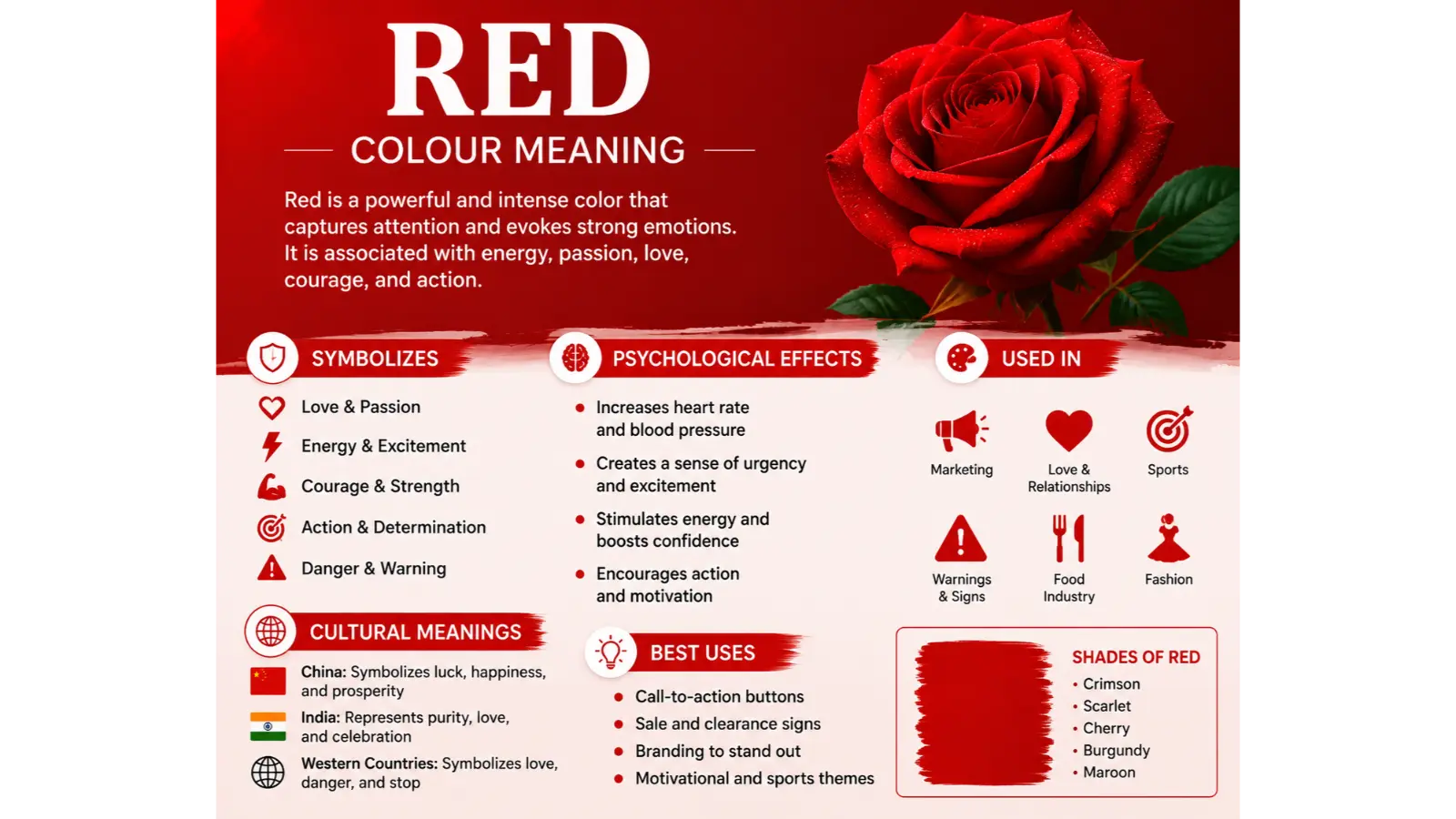
Red is one of the most powerful and emotionally charged colors in the visible spectrum. It instantly captures attention, evokes strong feelings, and carries deep symbolic meanings across cultures, religions, and historical periods.
If it appears in nature, fashion, branding, art, or national flags, red often represents energy, passion, courage, and action. At the same time, it can also symbolize danger, anger, warning, or sacrifice depending on the context.
From a psychological perspective, the color red influences emotions, behavior, and even physical responses, making it one of the most studied colors in color psychology. Designers, marketers, educators, and spiritual traditions all use red strategically because of its remarkable ability to stimulate attention and communicate powerful messages.
Quick Answer:
The color red primarily symbolizes passion, love, courage, strength, power, energy, and confidence. Depending on cultural and situational context, it may also represent danger, anger, urgency, sacrifice, celebration, prosperity, and determination.
What Does the Color Red Symbolize?
The red meaning has fascinated civilizations for thousands of years. Because red is the color of blood and fire, it naturally became associated with life, survival, warmth, strength, and intense emotions. Throughout history, red has symbolized everything from royal authority and military bravery to romantic love and religious devotion.
Unlike softer colors that create calmness or neutrality, red demands attention. It is bold, energetic, and impossible to ignore. This explains why emergency vehicles, warning signs, stop lights, and important notifications frequently use red to communicate urgency.
At the same time, red is deeply connected with positive human experiences. It represents affection on Valentine’s Day, celebration during many cultural festivals, and victory in sports and national traditions. The same color can therefore communicate both excitement and caution, depending on how and where it is used.
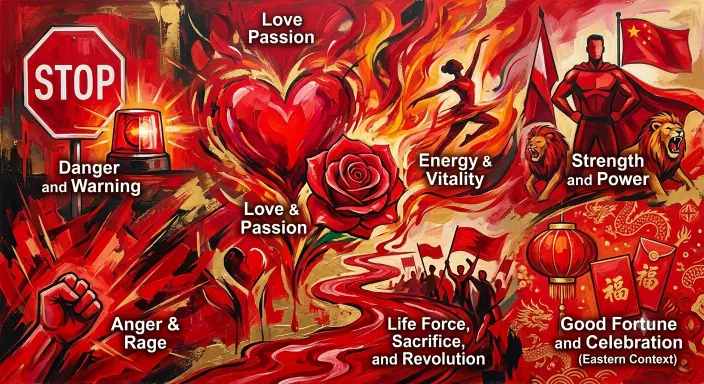
Some of the most common symbolic meanings of red include:
- ❤️ Love and romance
- 🔥 Passion and desire
- 💪 Strength and courage
- 👑 Power and leadership
- ⚡ Energy and vitality
- 🎯 Confidence and determination
- 🚨 Warning and danger
- 😠 Anger and aggression
- 🩸 Sacrifice and bravery
- 🎉 Celebration and prosperity in many cultures
Red as the Color of Passion
Perhaps the most recognized symbolism of red is passion. Red flowers, especially roses, have long represented romantic love and deep emotional commitment. Hearts, Valentine’s Day decorations, and anniversary gifts commonly feature red because it expresses affection, desire, and emotional intensity.
This association is partly psychological. Red naturally increases attention and emotional arousal, making it closely linked with feelings of excitement and attraction.
Red as a Symbol of Power
Throughout history, kings, emperors, military leaders, and influential figures often wore red garments to demonstrate authority. Because red dyes were once rare and expensive, wearing red became a sign of wealth and status.
Even today, red is frequently chosen for:
- Political campaigns
- Luxury branding
- Leadership presentations
- National flags
- Award ceremonies
The color projects confidence and commands respect.
Red Represents Energy
Few colors communicate movement and activity as effectively as red. It is commonly associated with:
- Physical strength
- Athletic performance
- Motivation
- Adventure
- Action
- Competitive spirit
Sports teams frequently incorporate red into uniforms because it projects confidence, aggression, and determination.
Red as a Warning Signal
Nature also teaches humans to associate red with caution. Many poisonous animals display bright red markings as warning signals. Humans have adopted this same visual language through:
- Stop signs
- Traffic lights
- Fire alarms
- Emergency buttons
- Hazard labels
Because the human eye detects red quickly, it has become one of the most effective colors for communicating danger.
Red Symbolizes Courage
Many military decorations, medals, and national symbols incorporate red to represent bravery and sacrifice. Since blood has historically symbolized life itself, red became associated with those willing to protect others despite personal risk.
This symbolism appears in:
- National flags
- Military insignia
- Memorial ceremonies
- Historical monuments
- Heroic artwork

Red and Celebration
Although many people associate red with urgency, countless cultures also view it as a joyful color.
For example, red commonly represents:
- Good fortune
- Prosperity
- Happiness
- Success
- Weddings
- Festivals
- Family celebrations
These positive associations explain why red decorations frequently appear during major holidays and important life events around the world.
Red in Everyday Life
The symbolism of red appears almost everywhere people interact.
Examples include:
| Everyday Use | Common Meaning |
|---|---|
| Traffic stop signs | Danger and caution |
| Roses | Love and romance |
| Fire trucks | Emergency response |
| Sports uniforms | Confidence and competitiveness |
| Sale advertisements | Excitement and urgency |
| National flags | Courage and sacrifice |
| Holiday decorations | Celebration and joy |
| Luxury packaging | Prestige and boldness |
Because of these varied uses, the meaning of red depends heavily on context. A red heart communicates love, while a red warning light communicates immediate danger. This versatility makes red one of the richest and most meaningful colors in human culture.
Psychological Characteristics of the Color Red
The psychology of red has been extensively studied because it consistently produces stronger emotional and physiological reactions than most other colors. Red is considered a highly stimulating color that attracts attention almost instantly. It is often associated with increased excitement, motivation, and emotional intensity.
Researchers in color psychology suggest that exposure to red may influence heart rate, alertness, and perceived energy levels. While individual responses vary, many people naturally associate red with action, urgency, and importance. This is why it is commonly used in advertising, sports, safety signs, and environments where grabbing attention is essential.
Unlike calming colors such as blue or green, red tends to energize rather than relax. It encourages people to notice, respond, and engage, making it one of the most influential colors in visual communication.
Emotional Associations of Red
Red is linked with a wide range of emotions, from deeply positive to strongly negative.
Positive emotional associations include:
- Love and affection
- Passion and romance
- Excitement
- Confidence
- Courage
- Enthusiasm
- Determination
- Motivation
- Strength
- Vitality
Negative emotional associations include:
- Anger
- Aggression
- Frustration
- Danger
- Fear
- Stress
- Impatience
- Conflict
- Overstimulation
- Impulsiveness
These contrasting meanings explain why red can symbolize both celebration and warning depending on the situation.
Psychological Effects of Red
Color psychology suggests that red may influence perception and behavior in several ways.
Some commonly observed effects include:
- Draws attention faster than most colors
- Creates a sense of urgency
- Encourages quicker decision-making
- Increases perceived excitement
- Makes objects appear closer or more prominent
- Enhances feelings of confidence in some situations
- Can increase mental alertness during short tasks
Because of these effects, marketers, designers, and educators often use red to highlight important information or encourage immediate action.
Positive Emotional Responses
Many people experience uplifting emotions when surrounded by balanced amounts of red.
These responses may include:
- Increased motivation
- Greater enthusiasm
- Higher confidence
- Emotional warmth
- Feelings of love and connection
- Excitement before important events
- Increased determination to achieve goals
- Stronger competitive spirit
For example, athletes often wear red uniforms because the color projects confidence and competitive energy.
Negative Emotional Responses
Excessive exposure to red may also create less desirable psychological reactions.
Possible responses include:
- Feeling overwhelmed
- Increased stress
- Irritability
- Aggression
- Anxiety
- Emotional tension
- Difficulty relaxing
- Mental fatigue in highly stimulating environments
This is why red is often used as an accent color rather than the dominant color in spaces intended for relaxation.
Impact on Mood and Behavior
Red has a noticeable influence on mood and behavior because it naturally encourages activity rather than calmness.
It may encourage people to:
- Take action more quickly
- Pay closer attention
- Feel more energetic
- Speak with greater confidence
- Participate more actively
- Approach challenges with determination
However, in emotionally intense situations, too much red may increase feelings of pressure or impatience.
How People Typically React to Red
Although individual experiences differ based on culture, personality, and personal preferences, many people respond to red in similar ways.
Typical reactions include:
- Immediate visual attention
- Heightened emotional awareness
- Increased excitement
- A sense of urgency
- Feelings of strength or confidence
- Greater awareness of potential danger
- Stronger emotional engagement
- Faster decision-making
These reactions explain why red remains one of the most effective colors in advertising, branding, sports, transportation, and public safety.
Overall, the psychology of red reflects its unique ability to communicate intensity, importance, and emotion. Whether it inspires love, courage, excitement, or caution, red continues to shape human perception in powerful and lasting ways.
Spiritual Meaning of the Color Red
The spiritual meaning of red extends far beyond its physical appearance. Across religions, spiritual traditions, and ancient belief systems, red is associated with life force, divine power, protection, sacrifice, courage, and transformation. Because it is the color of blood and fire, red often symbolizes both the beginning of life and the strength needed to overcome challenges.
In many spiritual practices, red represents the balance between physical existence and spiritual growth. It reminds people to stay grounded while pursuing higher wisdom and personal transformation. Rather than carrying a single universal meaning, the symbolism of red varies depending on cultural and religious traditions.
Holiness
In several religious traditions, red represents sacred devotion and divine love.
It symbolizes:
- Deep faith
- Spiritual commitment
- Sacred sacrifice
- Religious celebrations
- Reverence for holy figures
For example, red is often worn during important religious ceremonies to represent the presence of divine power and unwavering faith.
Wisdom
Although blue is more commonly linked with wisdom, red can symbolize practical wisdom gained through life experiences.
It represents:
- Learning through challenges
- Inner resilience
- Mature decision-making
- Courage guided by knowledge
- Strength developed over time
This interpretation reminds believers that wisdom often comes from perseverance rather than comfort.
Purity
Unlike white, which symbolizes innocence, red represents purity through devotion and sacrifice.
Spiritually, it may symbolize:
- A sincere heart
- Honest intentions
- Faithfulness
- Dedication to a higher purpose
- Moral courage
This form of purity is associated with integrity and wholehearted commitment rather than perfection.
Transformation
Fire has long symbolized transformation, and because red is closely connected to fire, it often represents personal growth and renewal.
Red symbolizes transformation through:
- Overcoming fear
- Personal development
- Breaking unhealthy habits
- Spiritual awakening
- Rebuilding after hardship
Many spiritual traditions view life’s challenges as opportunities for inner transformation, making red a symbol of resilience.
Healing
In some healing traditions, red represents vitality and life energy.
It is associated with:
- Physical strength
- Recovery
- Increased energy
- Restoring motivation
- Reconnecting with life’s purpose
Practitioners often associate red with the body’s foundational energy needed for overall well-being.
Protection
Throughout history, many cultures have viewed red as a protective color.
It symbolizes protection from:
- Negative influences
- Harm
- Misfortune
- Spiritual danger
- Evil intentions
Protective red threads, ribbons, clothing, and symbols appear in numerous cultural traditions around the world.
Power
One of red’s strongest spiritual meanings is power.
This includes:
- Inner strength
- Leadership
- Confidence
- Determination
- Spiritual authority
- Courage during adversity
Unlike dominance, spiritual power emphasizes using strength responsibly and compassionately.
Enlightenment
Although enlightenment is frequently associated with gold or white, red can represent the passionate pursuit of spiritual truth.
It reflects:
- Personal awakening
- Commitment to growth
- Self-discovery
- Purposeful living
- Awakening inner potential
Red reminds individuals that spiritual progress often requires courage and perseverance.
New Beginnings
Because red symbolizes life and vitality, it is also connected with fresh starts.
It may represent:
- New opportunities
- Marriage
- Career changes
- Personal goals
- Family milestones
- Renewed confidence
Many cultures incorporate red into celebrations that mark important life transitions.
Eternity
Red also carries meanings related to enduring love and everlasting commitment.
Examples include:
- Lifelong relationships
- Family bonds
- Spiritual devotion
- Eternal courage
- Lasting remembrance
Its enduring symbolism reflects the idea that love, sacrifice, and courage can leave a lasting legacy.
Positive and Negative Meanings of the Color Red
Like every color, red carries both uplifting and cautionary meanings. Whether its symbolism is viewed positively or negatively depends on context, culture, and personal experience. A bouquet of red roses communicates love, while a flashing red emergency light signals immediate danger.
Understanding both sides of red helps explain why it is one of the most emotionally complex colors.
Positive Meanings
Love
Red is universally recognized as the color of romantic love and deep affection.
Example: Red roses are commonly exchanged on Valentine’s Day to express love and commitment.
Passion
The color symbolizes enthusiasm, ambition, and emotional intensity.
Example: Artists often use red to portray powerful emotions in paintings and performances.
Courage
Red has long represented bravery and heroic sacrifice.
Example: Military medals and national flags often include red to honor courage and dedication.
Strength
Red communicates physical and emotional resilience.
Example: Athletic uniforms frequently use red to project determination and competitive spirit.
Energy
It inspires movement, activity, and motivation.
Example: Fitness centers often incorporate red accents to create an energetic atmosphere.
Confidence
Red encourages boldness and self-assurance.
Example: Wearing a red tie during an important presentation can create a strong, confident impression.
Celebration
In many cultures, red symbolizes joy and prosperity.
Example: Red decorations are widely used during weddings and cultural festivals to celebrate happiness and good fortune.
Leadership
Because it naturally attracts attention, red is associated with authority and influence.
Example: Corporate branding often uses red to project confidence and decisive leadership.
Negative Meanings
Danger
Red is one of the world’s most recognizable warning colors.
Example: Stop signs, emergency alarms, and hazard labels all rely on red to signal caution.
Anger
Strong emotions are frequently represented by red.
Example: Cartoons often depict angry characters with red faces to symbolize intense frustration.
Aggression
Excessive red may be associated with hostility or confrontation.
Example: In sports, aggressive branding sometimes uses dark red to emphasize toughness.
Stress
Too much red in an environment can feel overwhelming.
Example: An office painted entirely bright red may make it difficult for some employees to relax.
Impulsiveness
Red can encourage quick reactions rather than careful thinking.
Example: Flashing red sale signs may encourage impulse purchases during shopping.
Conflict
Historically, red has represented war and struggle.
Example: Historical paintings often use red to depict battles and sacrifice.
Overstimulation
Large amounts of bright red can create visual fatigue.
Example: A website with an entirely red interface may feel overwhelming and reduce readability.
Emotional Intensity
While emotional expression can be healthy, excessive intensity may become exhausting.
Example: Constant exposure to dramatic red lighting in entertainment venues may increase feelings of excitement but reduce relaxation.
Meanings of the Color Red
The red color meaning changes depending on where and how it is used. In psychology, red often represents energy and emotion. In spirituality, it symbolizes life force and protection. Branding, it captures attention and encourages action. In fashion, it expresses confidence and boldness. Understanding these contextual meanings allows designers, marketers, educators, and homeowners to use red more effectively.
Feng Shui
In Feng Shui, red is considered one of the most powerful and auspicious colors. It is associated with the Fire element, representing warmth, vitality, recognition, and active energy. Because of its intensity, red is often used thoughtfully to energize a space rather than overwhelm it.
Associated Element
- Fire
Energy Symbolism
- Passion
- Prosperity
- Success
- Vitality
- Protection
- Good fortune
Best Rooms
Red works well in areas that benefit from lively energy, such as:
- Living rooms
- Dining rooms
- Home offices
- Entertainment spaces
- Entryways (used as an accent)
It is generally used sparingly in bedrooms, where softer colors may better support relaxation.
Recommended Color Combinations
Red pairs beautifully with:
- White for balance and freshness
- Gold for prosperity and luxury
- Black for sophistication
- Gray for modern elegance
- Natural wood tones for warmth
Home Decorating Tips
- Use red as an accent wall instead of painting an entire room.
- Add red cushions, artwork, rugs, or decorative accessories for visual interest.
- Balance red with neutral colors to prevent the room from feeling overly stimulating.
- Incorporate natural lighting to soften its intensity.
Marketing
Red is one of the most influential colors in marketing because it quickly attracts attention and creates a sense of excitement. Brands use red to encourage action, increase visibility, and make products appear energetic and memorable.
Branding Psychology
Companies often choose red because it communicates:
- Confidence
- Energy
- Passion
- Leadership
- Excitement
- Urgency
Consumer Perception
Consumers frequently associate red with:
- Powerful products
- Limited-time offers
- High energy
- Strong emotions
- Bold experiences
Trust Signals
Although blue is more commonly associated with trust, red builds confidence by conveying strength, authority, and decisiveness when paired with consistent branding.
Product Packaging
Red packaging is commonly used for:
- Soft drinks
- Snack foods
- Sports products
- Automotive products
- Seasonal gifts
- Promotional items
Its high visibility helps products stand out on crowded store shelves.
Advertising Applications
Red is commonly used for:
- Call-to-action buttons
- Clearance sales
- Holiday campaigns
- Limited-time promotions
- Sports advertising
- Entertainment marketing
Famous Brands That Use Red
Many globally recognized companies use red as a core brand color, including:
- Coca-Cola
- Netflix
- YouTube
- Target
- Nintendo
- LEGO
- Canon
- Kellogg’s
- CNN
These brands use red to create strong recognition, excitement, and memorable visual identities.
Design
Red is a versatile design color that can create excitement, direct attention, and establish visual hierarchy when used thoughtfully.
Interior Design
In homes and commercial spaces, red is often used to:
- Create warm focal points
- Add energy to social spaces
- Highlight architectural features
- Increase visual interest
Accent furniture, artwork, and textiles allow designers to enjoy red’s vibrancy without overwhelming a room.
Graphic Design
Graphic designers use red to:
- Highlight important information
- Create visual contrast
- Guide the viewer’s attention
- Build memorable brand identities
Red works especially well when paired with neutral backgrounds for maximum impact.
Web Design
On websites, red is commonly used for:
- Call-to-action buttons
- Sale banners
- Important notifications
- Error messages
- Promotional highlights
Because red naturally attracts attention, it should be used strategically rather than excessively.
User Experience (UX)
In UX design, red often indicates:
- Warnings
- Errors
- Urgent actions
- Required fields
- Time-sensitive information
Consistent use of red improves usability by helping users quickly recognize important messages.
Minimalist Aesthetics
Even minimalist designs can benefit from small amounts of red.
Examples include:
- A single red button on a white webpage
- Red typography used sparingly
- One red decorative object in a neutral room
- Simple red icons to emphasize key features
These subtle touches create strong visual impact while maintaining a clean design.
Fashion
Red has remained a timeless fashion color because it projects confidence, elegance, and individuality. Whether worn casually or formally, it makes a memorable impression.
Clothing Symbolism
Red clothing often represents:
- Confidence
- Passion
- Courage
- Leadership
- Sophistication
- Celebration
Seasonal Use
Red is popular throughout the year but is especially common during:
- Winter holidays
- Valentine’s Day
- Autumn collections
- Festive celebrations
- Evening events
Styling Effects
Red naturally becomes the focal point of an outfit. It can:
- Brighten neutral wardrobes
- Create dramatic contrast
- Enhance statement pieces
- Draw attention to specific accessories
Personality Impressions
People wearing red are often perceived as:
- Confident
- Energetic
- Outgoing
- Ambitious
- Charismatic
While these impressions are common, they should not be viewed as accurate indicators of personality.
Advantages
- Creates a memorable appearance
- Photographs well
- Complements many neutral colors
- Works in casual and formal settings
- Projects confidence
Disadvantages
- Can feel overpowering if overused
- Bright shades may not suit every occasion
- May attract more attention than desired
- Requires balanced styling with complementary colors
Practical Examples
- A red blazer paired with black trousers creates a polished business look.
- A red dress makes a bold choice for evening events.
- Red sneakers add energy to a casual outfit.
- A red scarf or handbag introduces color without overwhelming the overall style.
- Red lipstick remains a classic fashion statement that complements many occasions.
Color Associations Are Not Universal
Although many people recognize similar symbolic meanings of red, color associations are not universal. The way people interpret red depends on culture, religion, history, geography, and personal experience. A color that represents celebration in one country may symbolize warning or mourning in another. Understanding these cultural differences helps us appreciate the richness of red symbolism and avoid making assumptions about its meaning.
Western Cultures
In many Western countries, red is associated with a wide range of emotions and ideas. It commonly represents:
- Love and romance
- Passion and desire
- Courage and heroism
- Power and confidence
- Danger and warning
- Anger and aggression
For example, red roses are a traditional symbol of romantic love, while stop signs, traffic lights, and emergency vehicles use red to signal caution or immediate attention. During Christmas, red is also linked with joy, generosity, and festive celebrations.
Eastern Cultures
Across many Eastern cultures, red is viewed much more positively and is often considered the color of luck and prosperity.
It commonly symbolizes:
- Good fortune
- Happiness
- Wealth
- Success
- Fertility
- Celebration
In countries such as China, red decorations are widely used during Lunar New Year, weddings, and business openings because they are believed to bring prosperity and positive energy. Red envelopes containing money are also exchanged as symbols of blessings and good luck.
Religious Traditions
The spiritual symbolism of red varies among religions.
Christianity:
Red often represents the blood of Christ, sacrifice, divine love, courage, and the Holy Spirit. It is commonly used during religious ceremonies that commemorate martyrdom or Pentecost.
Hinduism:
Red symbolizes purity, marriage, prosperity, strength, and fertility. Brides traditionally wear red garments during wedding ceremonies.
Buddhism:
Red represents wisdom, compassion, life force, and protection against negative influences.
Islamic Traditions:
While interpretations vary across regions, red may symbolize strength, courage, vitality, and celebration in cultural contexts.
Historical Interpretations
Throughout history, red has carried powerful meanings.
In ancient civilizations:
- Kings and emperors wore red to display authority.
- Warriors associated red with bravery and victory.
- Religious leaders used red garments during sacred ceremonies.
- Artists used red pigments to portray powerful emotions and important figures.
Because red dyes were once rare and expensive, wearing red often indicated wealth and high social status.
Modern Global Interpretations
Today, globalization has expanded the meanings of red even further.
Modern interpretations include:
- Corporate branding
- Political movements
- Sports teams
- Social media icons
- Emergency services
- Environmental campaigns
Although people around the world now recognize many of these modern uses, local traditions continue to shape how red is understood in different societies.
What Red Says About Your Personality
People are often curious about what their favorite color reveals about their personality. While research in color psychology suggests that color preferences may reflect certain tendencies or emotional states, they do not determine personality with certainty. Individual experiences, culture, upbringing, and personal values all play much larger roles in shaping who we are.
That said, people who are naturally drawn to red are often described as energetic, confident, and action-oriented.
Strengths
Individuals who prefer red are frequently associated with qualities such as:
- Confidence
- Determination
- Courage
- Leadership
- Enthusiasm
- Passion
- Ambition
- Optimism
- High energy
- Strong motivation
These individuals often enjoy taking initiative and embracing new challenges.
Weaknesses
Like every personality profile, a preference for red may also be linked with certain challenges.
Possible weaknesses include:
- Impatience
- Impulsiveness
- Competitiveness
- Stubbornness
- Difficulty relaxing
- Short temper
- Risk-taking behavior
- Desire for constant stimulation
These characteristics vary greatly from person to person and should not be considered universal.
Social Behavior
People who enjoy red are often perceived as:
- Outgoing
- Charismatic
- Expressive
- Confident speakers
- Comfortable in leadership roles
- Enthusiastic in group settings
They may naturally attract attention and enjoy environments filled with activity and interaction.
Work Style
In professional settings, red enthusiasts often prefer:
- Fast-paced work
- Leadership opportunities
- Clear goals
- Competitive environments
- Challenging projects
- Decision-making responsibilities
They typically enjoy careers that reward initiative, creativity, and confidence.
Relationships
In personal relationships, people who favor red may value:
- Passion
- Loyalty
- Honesty
- Emotional intensity
- Adventure
- Commitment
Because they often express emotions openly, they may appreciate partners who communicate directly and confidently.
Emotional Tendencies
Emotionally, people attracted to red may:
- Feel emotions intensely
- Recover quickly from setbacks
- Enjoy excitement and novelty
- Seek meaningful experiences
- Become easily motivated
- Prefer action over prolonged hesitation
Again, these tendencies are general observations rather than scientific rules. A favorite color alone cannot accurately predict someone’s personality or behavior.
Frequently Asked Questions
1. What defines the color red?
Red is a primary color in the visible light spectrum with the longest wavelength among visible colors. It is commonly associated with passion, energy, courage, power, and attention-grabbing visual impact.
2. What does the color red symbolize?
The color red symbolizes love, passion, strength, courage, determination, confidence, vitality, and celebration. Depending on the context, it can also represent danger, anger, urgency, or sacrifice.
3. Why is the color red important?
Red is important because it strongly influences human perception and emotion. It is widely used in psychology, branding, design, safety systems, fashion, sports, and cultural traditions to communicate powerful messages.
4. Is red a warm or cool color?
Red is considered a warm color. It is associated with heat, fire, energy, excitement, and movement, making it one of the most emotionally stimulating colors.
5. What emotions does red represent?
Red commonly represents:
- Love
- Passion
- Excitement
- Confidence
- Courage
- Energy
- Anger
- Determination
- Urgency
- Desire
The specific emotional meaning depends on the situation and cultural context.
6. What is the spiritual meaning of red?
Spiritually, red often symbolizes life force, divine love, courage, protection, sacrifice, transformation, vitality, and personal strength. Many traditions also associate it with prosperity and positive energy.
7. What colors pair well with red?
Red works beautifully with:
- White
- Black
- Gold
- Gray
- Beige
- Navy blue
- Green
- Cream
- Silver
- Natural wood tones
The best combination depends on whether the goal is elegance, contrast, warmth, or modern simplicity.
8. What does liking red say about a person?
People who prefer red are often described as confident, energetic, ambitious, passionate, and courageous. However, color preference alone cannot accurately determine personality traits.
9. Why do marketers use red so often?
Marketers use red because it attracts attention, creates excitement, encourages action, and increases the visibility of advertisements, promotions, and product packaging. It is especially effective for sales campaigns and call-to-action buttons.
10. Is red a lucky color?
Yes. In many cultures—particularly throughout East Asia—red is considered a lucky color that symbolizes prosperity, happiness, success, and celebration. It is commonly used during weddings, festivals, and New Year celebrations.
Conclusion
The Red Colour Meaning is both powerful and multifaceted. Across psychology, spirituality, design, fashion, marketing, and culture, red consistently stands out as a symbol of passion, courage, strength, vitality, and determination. At the same time, it also communicates urgency, danger, and emotional intensity, demonstrating that its symbolism depends greatly on context.
If used to inspire confidence, attract attention, celebrate important life events, or express deep emotions, red remains one of the world’s most influential and recognizable colors.
Understanding its many meanings allows us to use it more thoughtfully in everyday life—from decorating our homes and choosing clothing to creating memorable brands and meaningful designs.
While personal experiences and cultural traditions shape how we perceive red, its remarkable ability to evoke emotion ensures that it will continue to hold a significant place in human expression for generations to come.

Emma Wilson is a dedicated comparison writer and product researcher at ColorMystiic.com. She specializes in creating unbiased product comparisons, detailed reviews, and helpful buying guides. Her goal is to help readers make smarter purchasing decisions with confidence.