Tulips are more than beautiful spring flowers. Their colors communicate emotions, traditions, and personal messages that have developed across centuries. From romantic red tulips to peaceful white tulips and mysterious purple varieties, each shade carries its own symbolic language.People search for tulip color meanings because flowers are often used to express feelings without words. A bouquet can represent love, friendship, forgiveness, admiration, hope, or remembrance depending on the color chosen.
Tulip symbolism is not universal. Meanings change based on culture, history, personal experiences, and the situation where the flowers are given. A color that represents celebration in one place may symbolize something different somewhere else.
This guide explores tulip symbolism, emotional meanings, psychology, cultural interpretations, fashion inspiration, branding uses, and practical ways to choose the right tulip color for any occasion.
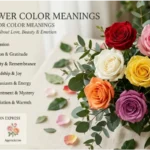
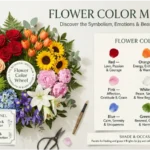
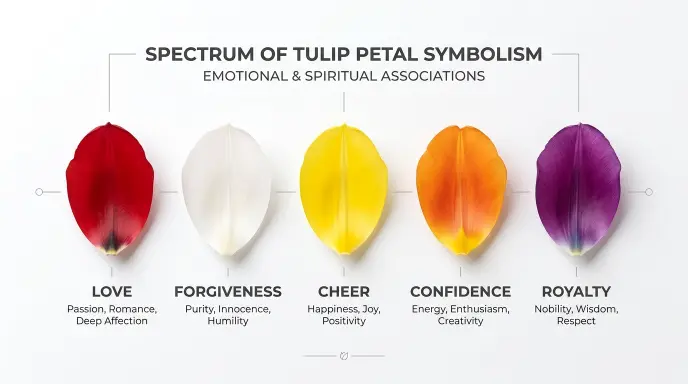
Quick Answer: Tulip color meanings vary by shade. Red tulips usually symbolize deep love, yellow tulips represent happiness and friendship, white tulips suggest purity and forgiveness, purple tulips represent royalty and admiration, and pink tulips express affection and care.
What Do Tulip Colors Symbolize?
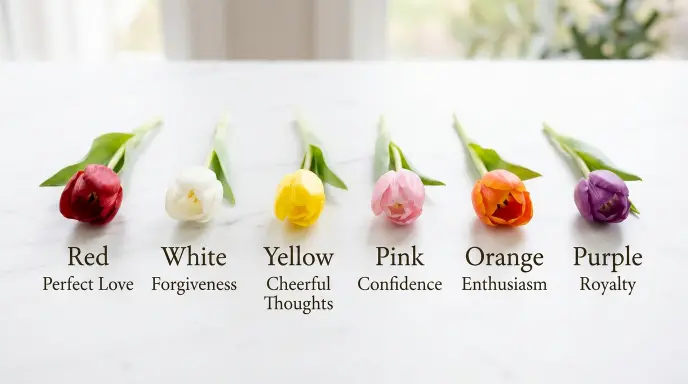
Tulip colors create different emotional impressions because humans naturally connect colors with memories, experiences, and cultural meanings. While flower symbolism is based mainly on tradition rather than strict science, these associations have become widely recognized.
Red Tulip Meaning: Love, Passion, and Deep Emotion
Red tulips are among the most famous symbolic flowers. They are commonly connected with romantic love, devotion, and strong emotional attachment.
Unlike roses, which are often associated with dramatic passion, red tulips can communicate a more sincere and balanced form of love. They are popular gifts for anniversaries, romantic occasions, and meaningful relationships.
Red tulips may also represent:
- Courage
- Respect
- Commitment
- Strong admiration
In design and art, red tulips attract attention because red is a visually powerful color associated with energy and confidence.
Yellow Tulip Meaning: Happiness, Friendship, and Positive Energy
Yellow tulips traditionally symbolize joy, warmth, and cheerful emotions. In modern flower language, they are often associated with friendship and optimism.
Historically, yellow flowers sometimes carried mixed meanings, but today yellow tulips are generally viewed positively. Their bright appearance makes them popular for celebrations, congratulations, and moments when someone needs encouragement.
Yellow tulips can express:
- Happiness
- Hope
- New beginnings
- Appreciation
- Positive memories
Their sunny appearance is one reason they are commonly used in spring decorations.
Pink Tulip Meaning: Affection, Care, and Gentle Love
Pink tulips represent softer emotions compared with red tulips. They are often connected with kindness, affection, and admiration.
They are suitable for expressing appreciation toward friends, family members, or someone you care about deeply.
Pink tulips commonly symbolize:
- Grace
- Happiness
- Compassion
- Good wishes
- Emotional warmth
Because pink is often viewed as a gentle color, pink tulips create a feeling of comfort and friendliness.
White Tulip Meaning: Purity, Peace, and Forgiveness
White tulips are often linked with innocence, honesty, and peaceful intentions. They are commonly used in weddings, memorials, and events where simplicity and respect are important.
White tulips may represent:
- Purity
- New beginnings
- Forgiveness
- Sympathy
- Spiritual reflection
Their clean appearance allows them to fit both joyful and serious occasions.
Purple Tulip Meaning: Royalty, Elegance, and Admiration
Purple tulips have long been associated with luxury and sophistication because purple historically had connections with wealth and royalty.
They often communicate:
- Elegance
- Respect
- Creativity
- Mystery
- Admiration
Purple tulips are a popular choice when someone wants to give flowers that feel unique and memorable.
Orange Tulip Meaning: Energy, Enthusiasm, and Desire
Orange tulips combine the excitement of red with the happiness of yellow. They are often associated with enthusiasm, creativity, and emotional energy.
Orange tulips can symbolize:
- Excitement
- Attraction
- Confidence
- Encouragement
- Celebration
They are ideal for bright, energetic arrangements.
Black Tulip Meaning: Mystery and Uniqueness
True black tulips are extremely rare. Most flowers called black tulips are actually very dark purple or deep maroon.
Because of their unusual appearance, black tulips are often associated with:
- Mystery
- Individuality
- Elegance
- Rare beauty
They are often used in artistic designs where a dramatic feeling is desired.
Blue Tulip Meaning: Imagination and Uniqueness
Naturally blue tulips are not common. Many blue tulips sold commercially are created through coloring techniques.
Because blue flowers are rare, blue tulips often represent:
- Imagination
- Dreams
- Uniqueness
- Creativity
They can create a fantasy-like feeling in floral arrangements.
Psychology of Tulip Colors
Color psychology studies how colors influence human perception, emotions, and behavior. However, flower color meanings are influenced by culture and personal experiences rather than producing automatic emotional responses.
How Tulip Colors Influence Emotions
Bright tulip colors often create energetic impressions:
- Red can feel bold and passionate.
- Yellow can appear cheerful and uplifting.
- Orange can feel exciting and creative.
- Pink can seem gentle and caring.
Soft colors such as white and pastel shades often create feelings of calmness and simplicity.
The environment also changes perception. A red tulip bouquet in a romantic setting may feel passionate, while the same flowers displayed in a business environment may simply appear confident and energetic.
The Role of Memory and Personal Experience
People do not experience colors in exactly the same way. A person who connects yellow tulips with a happy childhood memory may view them more positively than someone with a different association.
Personal history, culture, and emotional context all shape how people interpret flower colors.
Spiritual Tulip Color Meanings
Tulips appear in many spiritual and symbolic traditions, although meanings differ between cultures. There is no single universal spiritual meaning for every tulip color.
Tulips as Symbols of Growth and Renewal
Because tulips bloom in spring, they are often connected with:
- Renewal
- Transformation
- Hope
- Personal growth
- Fresh beginnings
Their seasonal appearance after winter has made them a symbol of returning life and positive change.
Spiritual Color Interpretations
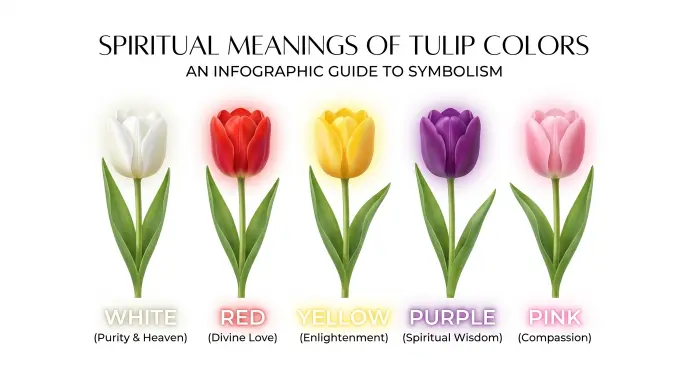
Some symbolic traditions associate:
- White tulips with peace and spiritual clarity
- Purple tulips with wisdom and higher awareness
- Pink tulips with compassion and emotional healing
- Red tulips with powerful life energy
These interpretations are symbolic rather than scientific facts and may vary among spiritual communities.
Cultural Meaning of Tulips Around the World
Tulip symbolism has changed across different societies.
Western Culture
In many Western countries, tulips are strongly associated with spring, romance, gardens, and celebrations. Red tulips are especially connected with love.
Tulips are also popular during Easter and spring festivals because of their connection with renewal.
Turkish and Ottoman Culture
Tulips hold special historical importance in Turkey. During the Ottoman period, tulips became powerful symbols of beauty, elegance, and cultural identity.
The famous “Tulip Era” of the early 18th century reflected the flower’s importance in art, gardens, and decorative design.
Dutch Culture
The Netherlands is strongly connected with tulips because of the country’s famous tulip industry and flower cultivation.
Tulips became an important part of Dutch agriculture, tourism, and national imagery.
Modern Global Culture
Today, tulips are used worldwide for:
- Romantic gifts
- Weddings
- Home decoration
- Festivals
- Corporate events
Their meanings continue to evolve with changing lifestyles.
Historical Meaning of Tulips
Tulips have a long history of symbolism and cultural importance.
Tulips originated in Central Asia and later became highly valued in the Ottoman Empire before spreading throughout Europe.
During the 17th century, tulips became extremely popular in the Netherlands. Their rarity and beauty created intense interest among collectors, making tulips symbols of luxury and status.
Over time, tulips shifted from symbols of wealth to flowers representing everyday beauty, affection, and seasonal renewal.
Tulip Color Personality Associations
People often connect certain personality traits with favorite colors. However, liking a specific tulip color does not scientifically determine someone’s personality.
Common symbolic associations include:
Red Tulip Lovers
Often described as:
- Passionate
- Confident
- Expressive
- Romantic
Yellow Tulip Lovers
Often associated with:
- Optimism
- Creativity
- Social energy
- Cheerfulness
Purple Tulip Lovers
Often connected with:
- Imagination
- Individuality
- Sophistication
- Artistic thinking
White Tulip Lovers
Often linked with:
- Simplicity
- Calmness
- Organization
- Peaceful thinking
These are symbolic impressions, not personality measurements.
Tulip Colors in Branding and Marketing
Flowers are powerful visual tools in branding because colors influence first impressions.
Luxury and Premium Brands
Purple tulip imagery can communicate:
- Elegance
- Creativity
- Exclusivity
Luxury-focused designs often use purple because of its historical connection with prestige.
Natural and Wellness Brands
White and green tulip designs can suggest:
- Freshness
- Clean living
- Simplicity
- Natural beauty
These colors are common in wellness, skincare, and eco-friendly branding.
Romantic and Lifestyle Marketing
Red and pink tulips are frequently used in campaigns related to:
- Love
- Relationships
- Celebrations
- Emotional connections
The flower itself adds softness while the color communicates the emotional message.
Tulip Colors in Interior Design
Tulips can influence the atmosphere of a room through both their color and natural form.
Living Room
Bright tulips can create an inviting social atmosphere.
Good combinations:
- Yellow tulips with neutral furniture
- Red tulips with modern decor
- Pink tulips with soft textures
Bedroom
Soft tulip colors can create a relaxing environment.
Recommended choices:
- White tulips for simplicity
- Pink tulips for warmth
- Lavender-purple tulips for elegance
Office Spaces
Tulips can add energy without overwhelming a workspace.
Good choices:
- Yellow for brightness
- White for a clean look
- Orange for creativity
Lighting also affects appearance. Natural daylight often makes tulip colors appear softer, while artificial lighting can change their tone.
Tulip Colors in Fashion
Tulip-inspired colors appear frequently in clothing because they combine natural beauty with emotional symbolism.
Red Tulip Fashion
Creates a confident and noticeable appearance.
Common uses:
- Evening wear
- Statement accessories
- Romantic outfits
Pink Tulip Fashion
Creates a softer impression.
Popular for:
- Spring clothing
- Feminine styles
- Casual elegance
Purple Tulip Fashion
Often gives a creative and sophisticated appearance.
Works well in:
- Formal clothing
- Luxury-inspired designs
- Accessories
Best Tulip Color Combinations
Red and White Tulips
Meaning:
- Balance
- Love and honesty
- Classic elegance
Pink and White Tulips
Meaning:
- Gentle affection
- Peace
- Freshness
Purple and Yellow Tulips
Meaning:
- Creativity
- Energy
- Visual contrast
Orange and Red Tulips
Meaning:
- Passion
- Celebration
- Confidence
Common Misconceptions About Tulip Meanings
“Every tulip color has one fixed meaning”
Not true. Meanings change depending on culture, relationship, and personal interpretation.
“Flower colors always communicate the same message”
Context matters. A white tulip bouquet at a wedding may represent purity, while white tulips at a memorial may represent peace and remembrance.
“Color psychology controls emotions”
Colors can influence perception, but they do not automatically control feelings or behavior.
Real-World Uses of Tulip Color Meanings
Tulip symbolism can help people make thoughtful choices in everyday life.
Gifts
Choose:
- Red tulips for romantic love
- Yellow tulips for friendship
- Pink tulips for appreciation
- White tulips for sympathy or new beginnings
Events
Tulip colors can help create a theme:
- Weddings: white, pink, pastel shades
- Celebrations: yellow, orange, bright colors
- Formal events: purple, deep shades
Photography and Art
Artists use tulip colors to communicate emotions visually:
- Red creates drama
- Yellow creates warmth
- White creates simplicity
- Purple creates mystery

Frequently Asked Questions About Tulip Color Meanings
What is the most romantic tulip color?
Red tulips are usually considered the most romantic because they symbolize deep love and devotion.
What do yellow tulips symbolize?
Yellow tulips commonly represent happiness, friendship, optimism, and positive energy.
Are white tulips a symbol of love?
White tulips can represent pure love, respect, forgiveness, and sincere intentions.
What does a purple tulip mean?
Purple tulips often symbolize admiration, elegance, creativity, and royalty.
Do tulip colors have different meanings in different countries?
Yes. Cultural traditions influence how people interpret flower colors.
What tulip color represents friendship?
Yellow tulips are commonly associated with friendship and cheerful connections.
Are black tulips real?
True black tulips do not naturally exist. Many “black” tulips are very dark purple varieties.
Can tulip meanings be used for gifts?
Yes. Choosing a tulip color based on symbolism can make a gift feel more personal and thoughtful.
Do tulip colors affect mood?
Colors can influence visual perception and emotional associations, but individual reactions vary.
What tulip color represents new beginnings?
White tulips are often connected with fresh starts, renewal, and peaceful transitions.
Conclusion
Tulip colors tell a story through symbolism, history, and human creativity. A red tulip can express love, a yellow tulip can share happiness, and a white tulip can communicate peace or renewal.
The meaning of a tulip is shaped by more than its color. Culture, personal memories, the occasion, and the surrounding environment all influence how people understand it.
Learning tulip color meanings helps us choose flowers with greater intention and appreciate how nature, art, and human emotions connect through color.

Emma Wilson is a dedicated comparison writer and product researcher at ColorMystiic.com. She specializes in creating unbiased product comparisons, detailed reviews, and helpful buying guides. Her goal is to help readers make smarter purchasing decisions with confidence.