Colors have always carried powerful messages throughout human history. They can express emotions, represent important ideas, and communicate meanings without using words. Long before modern color psychology existed, ancient cultures used colors to describe identity, social status, celebrations, warnings, and spiritual beliefs.Many people search for biblical color meanings because they want to understand the deeper symbolism behind colors mentioned in Scripture.
The Bible also uses colors in meaningful ways. Throughout Scripture, colors appear in descriptions of clothing, temples, visions, natural elements, and important spiritual events. These colors often carry symbolic messages connected with faith, purity, sacrifice, hope, power, and God’s presence.Additionally, these meanings are often explored in religious artwork, church decorations, Christian traditions, dreams, and personal spiritual studies.
For example, white is commonly associated with purity and holiness, while red may represent sacrifice, life, and powerful spiritual events. Similarly, purple became connected with royalty because purple dye was rare and expensive in ancient societies.
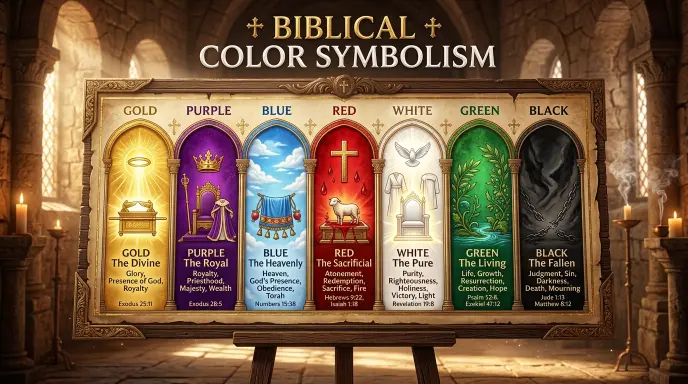
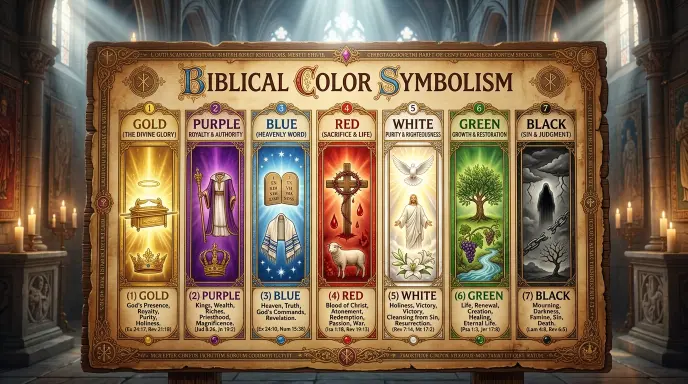
Quick Answer: Biblical color meanings explain the symbolic use of colors in Scripture. White often represents purity and righteousness, red represents sacrifice and life, blue represents heaven and faithfulness, purple represents royalty and authority, gold represents glory, and green represents growth and renewal. However, meanings may vary depending on biblical context and tradition.
What Are Biblical Color Meanings?
Biblical color meanings are symbolic interpretations of colors found throughout the Bible. These meanings developed through Scripture, ancient cultures, religious traditions, and historical understanding.
In biblical times, colors were closely connected with the materials available in nature. Many dyes came from plants, minerals, and rare sources. Because some colors were difficult to create, they often became symbols of importance, wealth, and authority.
For example, purple dye required a complicated process and was extremely valuable. As a result, purple clothing became associated with kings, rulers, and people of high social position.
Additionally, clothing colors could communicate a person’s role or status. Priests, leaders, and wealthy individuals often used specific materials and colors that carried social meaning.
However, the Bible does not provide an official list explaining every color symbol. Instead, meanings are understood by studying the context where each color appears.
For this reason, a balanced approach is important. Biblical color meanings come from a combination of Scripture, history, culture, and religious interpretation rather than from one universal rule.
White Color Meaning in the Bible
White is one of the most recognized colors in biblical symbolism. Throughout Scripture, it is often connected with purity, holiness, righteousness, and spiritual victory.
Because white represents brightness and cleanliness, it naturally became a symbol of transformation and renewal.
Spiritual Symbolism of White
White commonly represents:
- Purity
- Holiness
- Innocence
- Peace
- Forgiveness
- Victory
- New beginnings
One important example appears in biblical descriptions of white garments. These images are often understood as representing people who have been spiritually renewed and restored.
Emotional Meaning of White
From a general color perspective, white often creates feelings of:
- Calmness
- Simplicity
- Freshness
- Openness
Therefore, white is commonly used in religious ceremonies and spiritual environments because it creates a peaceful atmosphere.
White in Modern Religious Use
Today, white is widely used in:
- Churches
- Religious celebrations
- Wedding ceremonies
- Spiritual artwork
- Meditation spaces
Additionally, designers often choose white because it creates a clean and timeless appearance.
Red Color Meaning in the Bible
Red is one of the strongest symbolic colors in Scripture. It is closely connected with blood, sacrifice, life, love, and powerful emotions.
In ancient biblical understanding, blood represented life itself. Therefore, the color red gained deep spiritual importance.
Spiritual Symbolism of Red
Red may represent:
- Life
- Sacrifice
- Love
- Courage
- Passion
- Redemption
- Warning in certain contexts
One of the most significant Christian interpretations of red relates to sacrifice and salvation. Because blood represents life, red became a symbol of giving life for a greater purpose.
Moreover, red is connected with strong emotions. It can represent love and devotion, but it can also represent conflict or judgment depending on the situation.
Red in Biblical Art
Artists often use red to highlight important spiritual themes. For example, red may be used to represent:
- Sacrifice
- Divine love
- Major religious events
- Human struggles
Additionally, the strong visual impact of red helps viewers emotionally connect with religious stories.
Blue Color Meaning in the Bible
Blue is commonly associated with heaven, spiritual connection, faithfulness, and divine truth.
Because people naturally connect the blue sky with the heavens, this color has developed strong spiritual associations in many cultures.
Spiritual Meaning of Blue
Blue commonly symbolizes:
- Heaven
- Divine presence
- Faithfulness
- Wisdom
- Truth
- Protection
Furthermore, blue creates a sense of peace and reflection, which is why it remains a popular color in religious spaces.
Blue in Modern Symbolism
Today, blue is often associated with:
- Trust
- Stability
- Peace
- Confidence
Purple Color Meaning in the Bible
Purple is one of the most recognized colors in biblical symbolism. Throughout history, purple has been connected with royalty, authority, wealth, and honor.
In ancient times, purple dye was extremely difficult and expensive to produce. Because of this, only wealthy and powerful people could often afford purple clothing. As a result, the color became closely linked with kings, rulers, and high social status.
Additionally, purple carried spiritual importance because it represented dignity and greatness.
Spiritual Symbolism of Purple
Purple commonly represents:
- Royal authority
- Leadership
- Honor
- Wealth
- Majesty
- Spiritual importance
- Wisdom
Furthermore, purple can represent a connection between earthly authority and spiritual significance. Because kings were viewed as powerful figures, purple became a visual symbol of strength and influence.
In modern times, people may associate purple with creativity and luxury, while ancient societies strongly connected it with status and power.
Purple in Modern Culture
Today, purple continues to create impressions of:
- Luxury
- Creativity
- Imagination
- Individuality
- Elegance
Gold Color Meaning in the Bible
Gold holds a special place in biblical symbolism because it represents value, glory, beauty, and holiness.
Throughout Scripture, gold appears in descriptions of sacred objects, temples, and heavenly visions. Since gold was rare and precious, it naturally became connected with things considered valuable and important.
Spiritual Meaning of Gold
Gold commonly symbolizes:
- Divine glory
- Purity
- Honor
- Eternal value
- Wealth
- Beauty
Moreover, gold represents something that lasts. Unlike many materials that decay or lose their appearance, gold remains valuable over time. Because of this quality, it became a symbol of permanence and greatness.
Gold in Religious Art and Design
Gold is often used in:
- Church decorations
- Religious paintings
- Sacred objects
- Special celebrations
Furthermore, artists use gold to draw attention to important spiritual elements and create a feeling of majesty.
Green Color Meaning in the Bible
Green is strongly connected with life, growth, renewal, and creation.
Because plants, trees, and nature represent the continuation of life, green naturally became associated with blessing and restoration.
Spiritual Symbolism of Green
Green may represent:
- Growth
- Hope
- Renewal
- Life
- Prosperity
- Restoration
Additionally, green reminds people of nature’s cycles. Plants grow, change, and renew themselves, creating a powerful symbol of spiritual development.
Green in Modern Life
Today, green is associated with:
- Nature
- Health
- Balance
- Environmental awareness
- Freshness
Therefore, green is commonly used in homes, businesses, and spiritual spaces to create feelings of harmony and connection with nature.
Black Color Meaning in the Bible
Black has a more complex meaning in biblical symbolism. Unlike some colors that are mostly associated with positive ideas, black can represent both serious challenges and deeper reflection.
Symbolic Meaning of Black
Black may represent:
- Darkness
- Mourning
- Suffering
- Judgment
- Humility
- Mystery
However, black should not always be viewed negatively. In modern culture, black can also represent strength, elegance, and authority.
Black in Modern Design
Today, black is commonly used to express:
- Sophistication
- Power
- Formality
- Strength
For this reason, black appears frequently in fashion, branding, photography, and luxury design.
Scarlet Color Meaning in Scripture
Scarlet is a deep red color that appears in several biblical passages. It carries strong symbolic connections with sin, sacrifice, wealth, and human nature.
Because scarlet was a rich and noticeable color, it was often associated with importance and value.
Spiritual Symbolism of Scarlet
Scarlet may represent:
- Sin
- Sacrifice
- Human weakness
- Wealth
- Power
One of the most meaningful biblical ideas involving scarlet is the contrast between sin and forgiveness. The transformation from scarlet to white represents the possibility of spiritual cleansing and renewal.
Furthermore, scarlet reminds readers that biblical symbolism often involves transformation. A color may represent a problem but also point toward hope and restoration.
Historical Background of Biblical Colors
To understand biblical color meanings more clearly, it is important to consider the historical world in which the Bible was written.
Ancient people did not have modern synthetic dyes. Instead, they created colors from natural resources such as plants, minerals, and animals.
Because producing certain colors required time, skill, and expensive materials, those colors gained social importance.
Purple Dye and Ancient Wealth
Purple was especially valuable because producing the dye required rare sources and complex methods.
Therefore, purple clothing became connected with:
- Kings
- Leaders
- Wealthy individuals
- High status
Blue Dyes and Religious Clothing
Blue was also significant because certain blue materials were valuable and used in religious garments.
As a result, blue became connected with spiritual dedication and heavenly ideas.
Gold and Sacred Spaces
Gold represented beauty and importance because of its rarity and durability.
Therefore, it was commonly associated with sacred places and valuable objects.
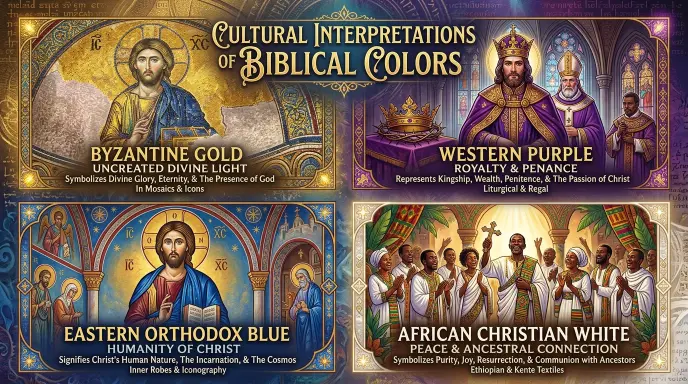
Cultural Interpretations of Biblical Colors
Although biblical color meanings come from ancient Scripture, people around the world may understand these colors differently today.
Culture, history, religion, and personal experiences all influence how people interpret colors.
Western Christian Traditions
In many Western Christian traditions:
- White represents purity and holiness
- Red represents sacrifice and spiritual passion
- Purple represents royalty and reflection
- Green represents growth and renewal
- Gold represents glory and celebration
However, these interpretations can differ between churches and denominations.
Middle Eastern Historical Influence
Because biblical events took place in the Middle East, ancient Jewish culture had a major influence on color symbolism.
Additionally, the availability of certain dyes affected which colors became important.
Modern Global Understanding
Today, biblical colors are interpreted through many cultural perspectives.
For example:
- White may represent purity in many places but mourning in some cultures.
- Red may symbolize love in one culture and warning in another.
- Gold may represent celebration, wealth, or sacred importance.
Therefore, context remains essential when understanding color symbolism.
Personality Associations With Biblical Colors
Many people enjoy connecting colors with personality traits and personal preferences. However, it is important to understand that color preference does not scientifically determine a person’s personality.
Instead, these associations are symbolic and can help people reflect on emotions, values, and personal expression.
People Drawn to White
White is often associated symbolically with people who appreciate:
- Simplicity
- Peace
- Clean environments
- Organization
- Fresh beginnings
Additionally, people who prefer white may enjoy a calm and minimal style because the color creates a feeling of openness.
People Drawn to Red
Red is often connected with:
- Energy
- Confidence
- Passion
- Strong expression
- Courage
Furthermore, red attracts attention quickly. Therefore, people may choose red when they want to appear bold or expressive.
People Drawn to Blue
Blue is commonly linked with:
- Calmness
- Trust
- Stability
- Loyalty
- Wisdom
Because blue creates a peaceful impression, it is often preferred by people who enjoy balanced and reliable environments.
People Drawn to Purple
Purple is often associated with:
- Creativity
- Imagination
- Individuality
- Luxury
- Spiritual reflection
Moreover, purple has historically been connected with leadership and uniqueness because of its association with royalty.
People Drawn to Green
Green is often connected with:
- Nature
- Growth
- Balance
- Renewal
- Harmony
Additionally, green can create a sense of connection with the natural world.
These associations are symbolic rather than scientific personality measurements. A person’s character is shaped by many factors, including experiences, beliefs, and choices.
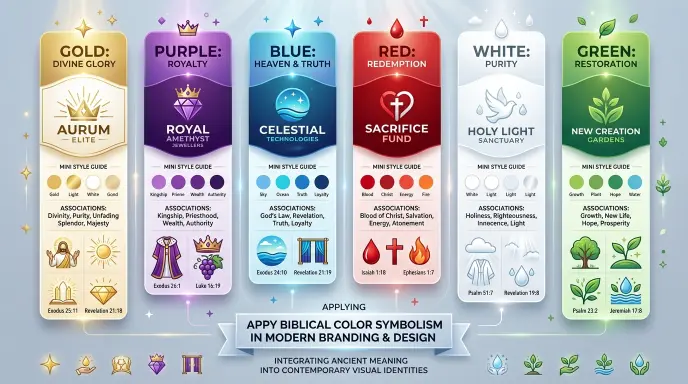
Biblical Color Meanings in Branding and Marketing
Although modern businesses usually do not use biblical symbolism directly, many companies choose colors because of the emotions and ideas they communicate.
Color plays an important role in branding because people often form first impressions quickly. Therefore, businesses carefully select colors that match their identity.
Blue in Branding
Blue is one of the most commonly used branding colors because it creates feelings of:
- Trust
- Security
- Professionalism
- Reliability
For example, companies in technology, finance, and healthcare often use blue because customers may associate it with stability.
Purple in Branding
Purple is often used to communicate:
- Luxury
- Creativity
- Innovation
- Premium quality
Additionally, because purple has historical connections with royalty, it can create a feeling of importance and exclusivity.
Gold in Branding
Gold often represents:
- Success
- Achievement
- Excellence
- High value
Therefore, luxury brands and premium products frequently use gold elements in their visual identity.
Green in Branding
Green is commonly connected with:
- Nature
- Health
- Growth
- Sustainability
As a result, environmentally focused businesses often use green to communicate natural values.
Biblical Colors in Interior Design
Colors inspired by biblical symbolism can also influence the atmosphere of homes, worship spaces, and personal environments.
However, choosing colors for interior design is not only about symbolism. Lighting, room size, furniture, and personal taste also affect how a space feels.
White Interior Design
White creates a feeling of:
- Cleanliness
- Peace
- Openness
- Simplicity
However, too much white without contrast may feel cold. Adding natural textures, wood, or soft colors can create balance.
Blue Interior Design
Blue is often chosen for spaces where people want:
- Calmness
- Focus
- Relaxation
For example, blue can work well in bedrooms, offices, and meditation areas.
Gold Interior Design
Gold details can add:
- Elegance
- Warmth
- Luxury
However, using too much gold may make a room feel overwhelming. Small accents often create a more balanced appearance.
Green Interior Design
Green connects indoor spaces with nature.
It works well in:
- Living rooms
- Workspaces
- Relaxation areas
Additionally, plants and natural materials can strengthen the connection between green symbolism and the environment.
Biblical Colors in Fashion
Fashion uses colors as a form of communication. The colors people wear can influence how others perceive their style and personality.
Although modern fashion is not always connected to biblical meanings, many symbolic associations remain.
White Fashion Meaning
White clothing often creates impressions of:
- Elegance
- Purity
- Freshness
- Simplicity
Red Fashion Meaning
Red clothing can communicate:
- Confidence
- Energy
- Passion
- Boldness
Blue Fashion Meaning
Blue clothing often appears:
- Professional
- Calm
- Trustworthy
Therefore, blue is popular in business clothing and everyday fashion.
Purple Fashion Meaning
Purple clothing can suggest:
- Creativity
- Luxury
- Confidence
- Individuality
Additionally, purple accessories can add a unique style element without becoming too overwhelming.
Green Fashion Meaning
Green clothing often communicates:
- Freshness
- Natural beauty
- Balance
Biblical Color Combinations and Their Meanings
Combining colors can create deeper visual messages. Designers, artists, and religious creators often use combinations to strengthen symbolism.
White and Gold
This combination represents:
- Purity
- Glory
- Celebration
- Sacred beauty
Blue and White
This pairing creates feelings of:
- Peace
- Heaven
- Cleanliness
- Spiritual reflection
Because both colors feel calm, they work well together in peaceful environments.
Purple and Gold
Together, purple and gold communicate:
- Royalty
- Honor
- Luxury
- Importance
Historically, these colors have been associated with leadership and high status.
Green and Brown
This natural combination represents:
- Growth
- Creation
- Earth
- Renewal
It is commonly used in designs inspired by nature.
Common Misconceptions About Biblical Color Meanings
Understanding biblical colors requires careful interpretation. Several common misunderstandings can create confusion.
“Every Color Has Only One Biblical Meaning”
This is not accurate.
A color may have different meanings depending on the passage, historical period, and purpose.
For example, red may represent sacrifice and love in one context but warning or judgment in another.
“The Bible Gives a Complete Color Symbol Dictionary”
The Bible mentions colors and uses symbolism, but it does not provide a complete official guide explaining every color.
Many interpretations come from studying Scripture alongside history and tradition.
“Biblical Colors Are the Same as Color Psychology”
These are different areas of study.
Biblical symbolism focuses on spiritual and religious meanings, while color psychology examines human responses and emotional associations.
Real-World Applications of Biblical Color Meanings
Biblical colors continue to influence many areas of modern life.
Religious Artwork
Artists use colors to communicate spiritual messages.
For example:
- Gold may highlight holiness and glory.
- Blue may create a sense of heaven and peace.
- Red may emphasize sacrifice and love.
Photography and Film
Filmmakers use colors to create emotional meaning.
A scene with dark colors may suggest mystery, while bright colors may represent hope or celebration.
Home Decoration
People often choose colors based on the feelings they want a room to create.
For example:
- Blue for relaxation
- Green for balance
- White for simplicity
Personal Expression
People use colors through clothing, accessories, and design choices to communicate identity and emotions.
Frequently Asked Questions About Biblical Color Meanings
What are the most important biblical color meanings?
The most commonly recognized meanings include white for purity, red for sacrifice, blue for heaven, purple for royalty, gold for glory, and green for growth.
What color represents God’s presence in the Bible?
Gold and blue are often associated with divine glory and heavenly connection, although interpretations depend on context.
What does white mean spiritually?
White commonly represents purity, holiness, righteousness, and spiritual victory.
Why is purple considered a biblical color?
Purple was rare and expensive in ancient times, so it became connected with royalty, authority, and honor.
What does red symbolize in Christianity?
Red is often connected with sacrifice, love, life, and redemption.
Does every culture interpret biblical colors the same way?
No. Cultural traditions influence how people understand colors.
Is there scientific proof behind biblical color meanings?
Biblical color meanings are based on religious interpretation and history rather than scientific color psychology.
Can colors influence emotions?
Yes, colors can influence feelings and atmosphere. However, personal experiences and cultural background also play important roles.
Why was gold important in biblical times?
Gold represented value, beauty, purity, and lasting importance
Conclusion
Biblical color meanings show how colors can communicate ideas far beyond simple appearance. Throughout Scripture, colors have been used to represent important themes such as purity, sacrifice, hope, authority, creation, and divine glory.
However, understanding these symbols requires looking at the complete context. A color does not always carry the same meaning in every situation. Instead, its symbolism develops through history, culture, and the message being communicated.
Furthermore, biblical colors continue to influence modern art, fashion, interior design, branding, and personal expression. They remind us that colors are not only visual experiences but also powerful tools for storytelling and communication.

Emma Wilson is a dedicated comparison writer and product researcher at ColorMystiic.com. She specializes in creating unbiased product comparisons, detailed reviews, and helpful buying guides. Her goal is to help readers make smarter purchasing decisions with confidence.