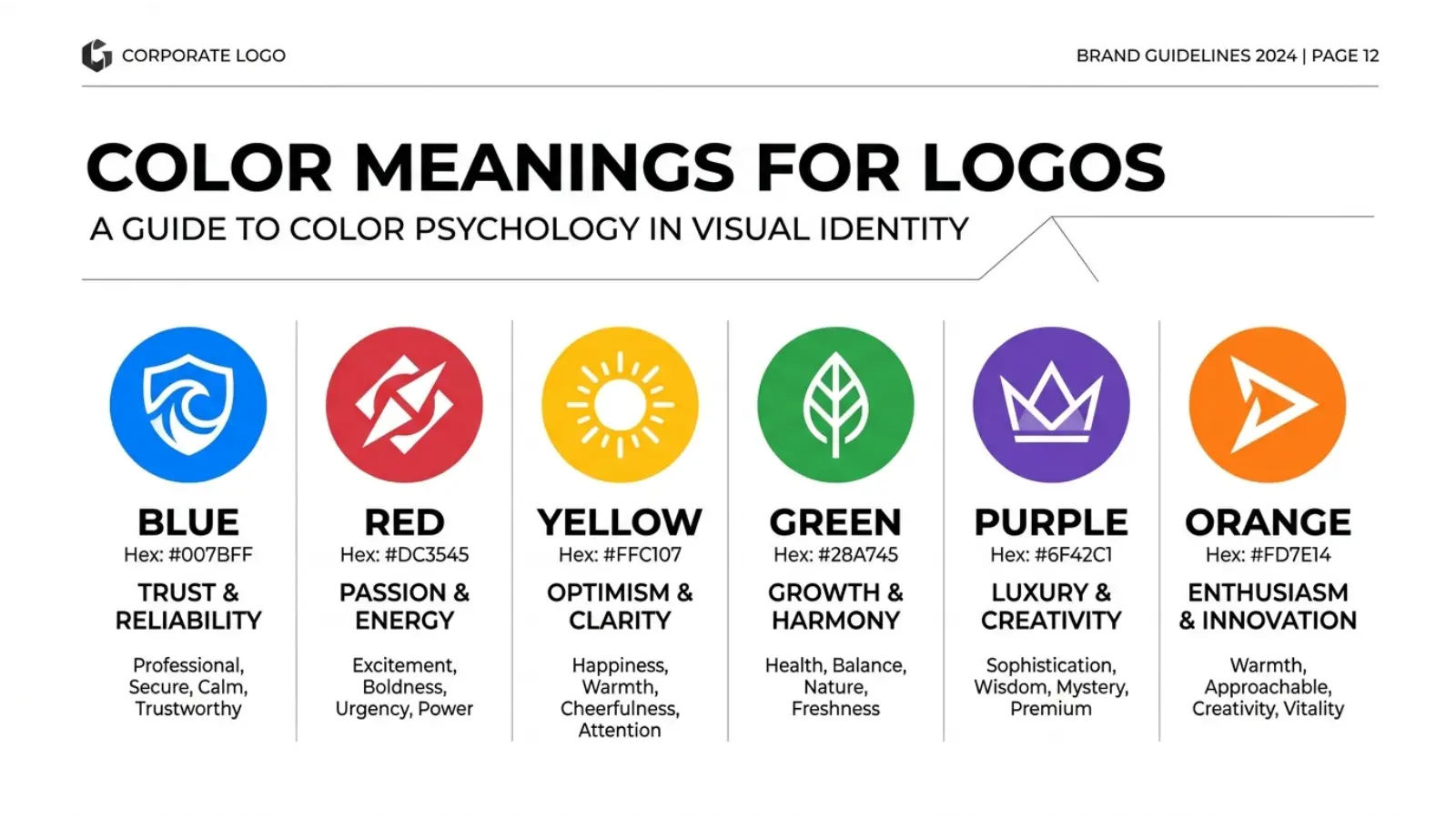
A logo is often the first thing people notice about a business. Before someone reads a company name or learns about its products, they react to its colors. That first impression happens in seconds, making logo color one of the most powerful branding decisions.Many people search for color meanings for logos because they want to understand why famous brands choose certain colors and how those colors influence customer perception. However, color meanings are not universal.
Personal experiences, culture, industry, and context all shape how people interpret a color.This guide explains the psychology, symbolism, branding strategy, cultural meanings, and practical use of logo colors. You’ll also learn how businesses choose colors, how designers create memorable brand identities, and how you can select the right logo color for your own project.
Quick Answer:
Color meanings for logos help communicate a brand’s personality before words are read. Blue often represents trust, red suggests energy, green symbolizes growth, black conveys luxury, while yellow creates optimism. The best logo color depends on your audience, industry, brand values, and cultural context rather than color symbolism alone.
What Are Color Meanings for Logos?
Logo colors communicate emotions, values, and expectations. Although a color cannot guarantee how customers will respond, it can influence first impressions.
For example:
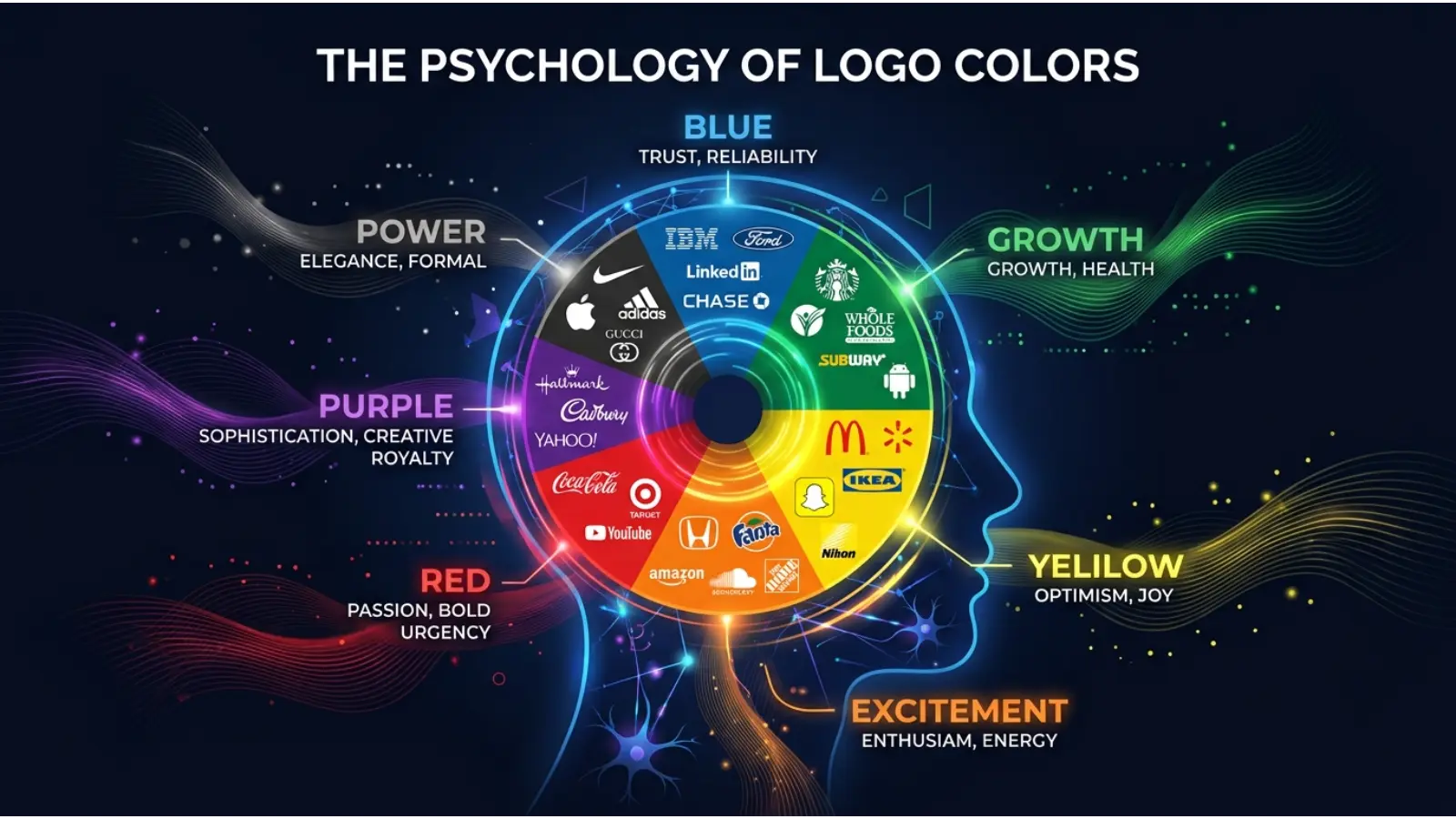
- Banks often use blue because it feels dependable.
- Eco-friendly brands frequently choose green to represent nature.
- Luxury companies commonly use black for elegance.
- Children’s brands often use bright colors to create excitement.
As a result, logo colors become visual shortcuts that help people recognize and remember a brand.
Color Meanings for Logos Chart
| Logo Color | Common Meaning | Best Industries | Emotional Impression |
|---|---|---|---|
| Blue | Trust, stability, intelligence | Finance, Healthcare, Technology | Calm, dependable |
| Red | Passion, energy, excitement | Food, Sports, Retail | Powerful, urgent |
| Green | Nature, health, growth | Environment, Wellness, Agriculture | Fresh, balanced |
| Yellow | Happiness, optimism | Food, Education, Entertainment | Friendly, cheerful |
| Orange | Creativity, enthusiasm | Startups, Fitness, Children’s Brands | Fun, energetic |
| Purple | Luxury, imagination | Beauty, Cosmetics, Premium Products | Creative, sophisticated |
| Black | Elegance, authority | Fashion, Luxury, Automotive | Premium, timeless |
| White | Simplicity, purity | Healthcare, Technology, Minimalist Brands | Clean, modern |
| Gray | Professionalism, neutrality | Manufacturing, Technology | Reliable, balanced |
| Pink | Compassion, youthfulness | Beauty, Lifestyle, Fashion | Gentle, playful |
| Brown | Earthiness, reliability | Coffee, Organic Products | Warm, authentic |
| Gold | Prestige, success | Luxury Goods, Jewelry | Wealth, excellence |
Why Logo Colors Matter in Branding
People remember visuals much faster than text. Therefore, color helps customers recognize brands almost instantly.
A carefully selected logo color can:
- Increase brand recognition
- Create emotional connections
- Support brand personality
- Differentiate competitors
- Improve marketing consistency
- Strengthen customer trust
However, color alone cannot build a successful brand. Good design, quality products, and positive customer experiences remain essential.
Psychology of Logo Colors
Blue Logo Meaning
Blue is one of the world’s most trusted colors.
It often represents:
- Trust
- Security
- Intelligence
- Calmness
- Professionalism
Many financial institutions, software companies, and healthcare organizations choose blue because customers associate it with reliability.
Possible downside:
Too much blue can sometimes appear cold or overly corporate.
Real-world examples: IBM, Facebook, LinkedIn, PayPal.
Red Logo Meaning
Red attracts attention immediately.
It commonly symbolizes:
- Passion
- Excitement
- Action
- Strength
- Confidence
Restaurants often use red because it creates energy and urgency.
Possible downside:
Overuse may feel aggressive or stressful.
Examples: Coca-Cola, Netflix, YouTube, Target.
Green Logo Meaning
Green is strongly connected with nature.
It often represents:
- Growth
- Health
- Sustainability
- Balance
- Renewal
Organic brands and environmental organizations frequently use green.
Possible downside:
Some shades may appear outdated if poorly designed.
Examples: Starbucks, Whole Foods, Animal Planet.
Yellow Logo Meaning
Yellow naturally catches attention.
It symbolizes:
- Joy
- Creativity
- Warmth
- Positivity
- Hope
Bright yellow works especially well for youthful brands.
Possible downside:
Too much yellow can reduce readability.
Orange Logo Meaning
Orange combines red’s energy with yellow’s friendliness.
It communicates:
- Confidence
- Creativity
- Adventure
- Innovation
- Affordability
Many startups use orange to appear approachable.
Purple Logo Meaning
Purple has long been connected with luxury.
Modern brands use it to express:
- Creativity
- Imagination
- Wisdom
- Premium quality
Purple works especially well in beauty and wellness industries.
Black Logo Meaning
Black remains one of the strongest branding colors.
It communicates:
- Elegance
- Sophistication
- Luxury
- Authority
- Confidence
Luxury fashion brands frequently rely on black because it feels timeless.
White Logo Meaning
White usually appears with darker backgrounds.
It represents:
- Simplicity
- Cleanliness
- Minimalism
- Honesty
White space around a logo can be just as important as the logo itself.
Gray Logo Meaning
Gray offers balance between black and white.
It symbolizes:
- Maturity
- Stability
- Neutrality
- Technology
Many engineering companies use gray for a modern appearance.
Pink Logo Meaning
Pink has evolved significantly over time.
Today it often represents:
- Compassion
- Kindness
- Beauty
- Playfulness
- Modern femininity
Many beauty brands successfully use pink while avoiding outdated stereotypes.
Brown Logo Meaning
Brown reflects natural materials.
It communicates:
- Reliability
- Authenticity
- Comfort
- Earthiness
Coffee brands and handmade businesses commonly use brown.
Gold Logo Meaning
Gold symbolizes achievement.
It represents:
- Prestige
- Excellence
- Wealth
- Success
- Celebration
Gold is usually combined with black, white, or dark blue for maximum impact.
Color Meanings Change with Context
The same logo color can send different messages depending on where it appears.
For example:
- Dark blue feels professional.
- Light blue feels friendly.
- Matte black looks modern.
- Glossy black appears luxurious.
- Bright green feels youthful.
- Forest green feels traditional.
Lighting, printing, digital screens, and surrounding colors also affect perception.
Cultural Interpretations of Logo Colors
Color meanings vary around the world.
Western Countries
- White often symbolizes weddings.
- Black may represent elegance or mourning.
- Blue suggests trust.
East Asia
- Red often symbolizes celebration and prosperity.
- White may be associated with mourning in some traditions.
Middle East
Green holds important cultural and historical significance in many communities.
Latin America
Bright colors often communicate celebration and energy.
Africa
Color meanings differ widely among countries and cultures. There is no single interpretation across the continent.
Because businesses operate globally, designers research regional color preferences before launching international brands.
Personality Associations of Logo Colors
People sometimes believe favorite colors reveal personality. While some studies suggest color preferences may reflect temporary moods or personal experiences, no color can accurately define someone’s character.
Still, common associations include:
| Color | Frequently Associated Traits |
|---|---|
| Blue | Reliable, thoughtful |
| Red | Confident, energetic |
| Green | Calm, balanced |
| Yellow | Optimistic, creative |
| Orange | Adventurous |
| Purple | Imaginative |
| Black | Sophisticated |
| White | Organized |
| Brown | Dependable |
These are symbolic associations rather than scientific personality tests.
How Businesses Choose Logo Colors
Professional designers rarely choose colors based only on symbolism.
Instead, they evaluate:
- Target audience
- Brand mission
- Industry expectations
- Competitor analysis
- Accessibility
- Digital performance
- Print consistency
- International markets
Consequently, successful logo colors combine psychology with business strategy.
Real-Time Example: AI Companies and Blue Logos
Many technology and artificial intelligence companies use blue in their branding because it communicates trust, intelligence, and reliability. Since users often share personal information with digital platforms, companies aim to create a sense of security through visual identity.
At the same time, newer AI startups increasingly combine blue with purple or gradients to appear both trustworthy and innovative. This shift shows how branding evolves as industries mature and competition grows.
Color Meanings for Logos in Marketing and Advertising
Marketing teams carefully use colors to influence customer expectations.
For example:
- Red encourages quick attention during sales.
- Green supports sustainability campaigns.
- Black elevates premium products.
- Blue strengthens professional services.
- Yellow highlights promotional offers.
- Orange often increases visibility for call-to-action buttons.
Even so, successful marketing depends on the complete customer experience, not color alone.
Logo Colors in Different Industries
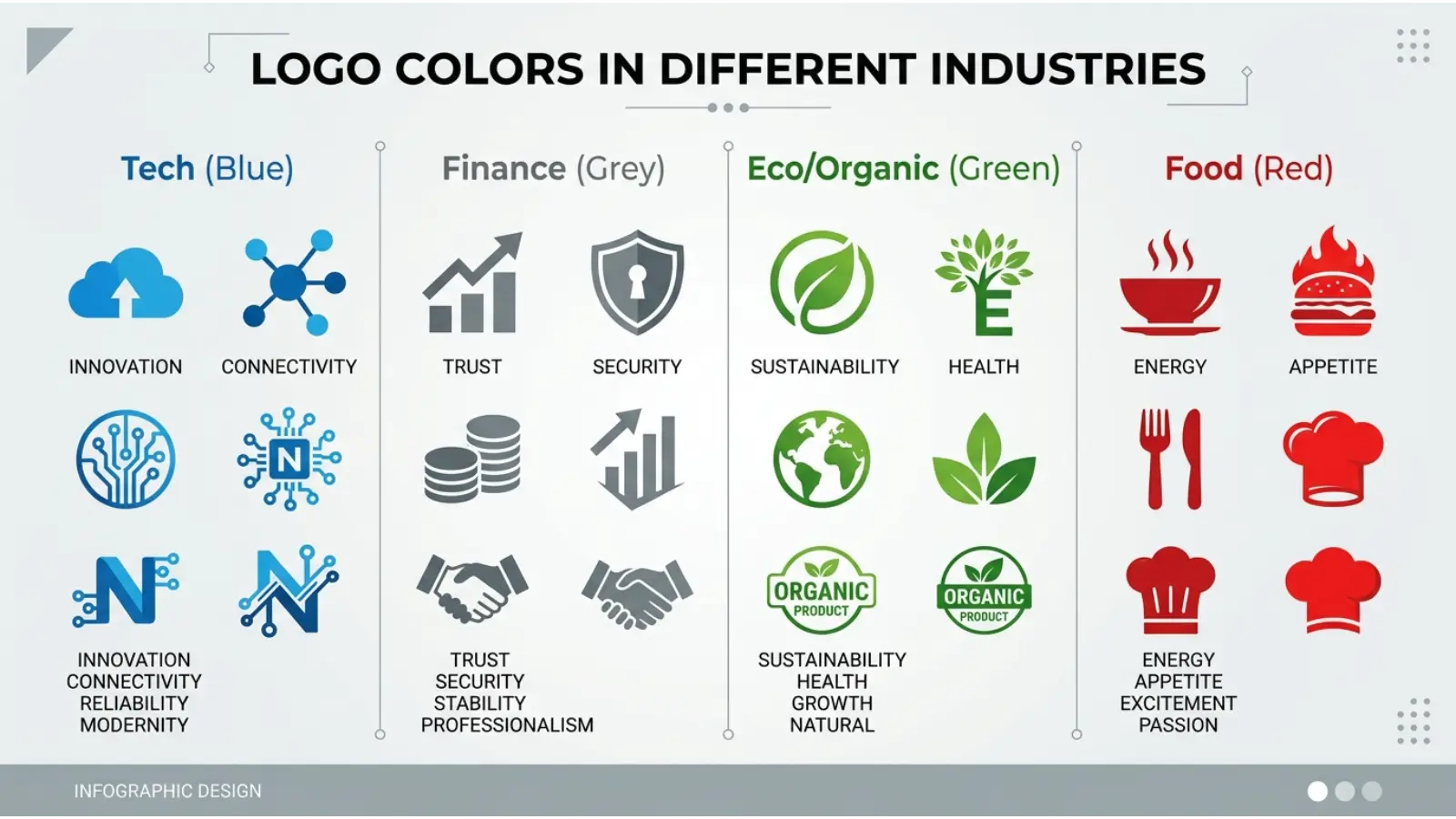
Finance
Preferred colors:
- Blue
- Gray
- Dark green
Reason:
Customers value stability and trust.
Healthcare
Popular colors:
- Blue
- Green
- White
Reason:
These colors suggest cleanliness and care.
Food
Common colors:
- Red
- Yellow
- Orange
Reason:
They attract attention and create excitement.
Luxury Brands
Typical colors:
- Black
- Gold
- White
Reason:
They communicate exclusivity.
Technology
Often uses:
- Blue
- Purple
- Black
Reason:
These colors appear innovative and dependable.
Choosing the Right Logo Color
Before selecting a logo color, ask yourself:
- What emotions should customers feel?
- Who is the target audience?
- Which colors dominate the industry?
- Will the logo work in black and white?
- Is the color accessible for people with color vision differences?
- Will it remain recognizable on websites, packaging, and mobile apps?
A successful logo usually stays simple while remaining memorable.
Best Color Combinations for Logos
| Combination | Why It Works |
|---|---|
| Blue + White | Trust and clarity |
| Black + Gold | Luxury and prestige |
| Green + Brown | Natural and organic |
| Red + Black | Strength and confidence |
| Purple + Gold | Premium creativity |
| Blue + Gray | Professional appearance |
| Orange + Dark Blue | Friendly yet reliable |
| Black + White | Timeless simplicity |
Common Misconceptions About Logo Colors
One Color Fits Every Brand
False.
The best logo color depends on the brand’s purpose and audience.
Color Alone Builds Trust
False.
Customer service, quality, and reputation matter much more.
Every Culture Sees Colors the Same Way
False.
Cultural traditions influence color interpretation.
Bright Colors Always Increase Sales
Not necessarily.
Luxury brands often succeed using simple black-and-white branding.
Everyday Applications of Logo Color Psychology
Logo colors influence many parts of daily life.
Businesses use them for:
- Company logos
- Product packaging
- Mobile apps
- Sports teams
- Restaurant branding
- Clothing labels
- Advertising campaigns
- Business cards
- Websites
- Social media profiles
Because consistent colors improve recognition, many companies use detailed brand guidelines across every platform.
Frequently Asked Questions
What is the best color for a business logo?
There is no universal best color. The ideal choice depends on your audience, industry, and brand personality.
Which logo color builds the most trust?
Blue is widely associated with trust, stability, and professionalism.
Why do luxury brands use black logos?
Black communicates sophistication, exclusivity, and timeless style.
Is red a good logo color?
Yes. Red works well for energetic, bold, and attention-grabbing brands, especially in food, retail, and entertainment.
Do logo colors affect buying decisions?
Color can influence first impressions and recognition, but purchasing decisions also depend on price, quality, reviews, and customer experience.
Can a logo use multiple colors?
Yes. Many successful brands combine two or more colors to communicate different aspects of their identity while maintaining visual balance.
Should startups follow color psychology?
Color psychology can provide helpful guidance, but startups should also consider branding goals, accessibility, and competitor research.
Why do technology companies often use blue?
Blue is commonly associated with reliability, intelligence, and security, making it a popular choice for technology and software brands.
Can logo colors mean different things in different countries?
Yes. Cultural traditions and local customs can change how people interpret colors, so global brands often adapt their branding strategies.
How often should a company change its logo colors?
Frequent changes can weaken brand recognition. Most companies update logo colors only during major rebranding efforts or when expanding into new markets.
Final Thoughts
Understanding color meanings for logos goes beyond memorizing symbolic definitions. Every color carries emotional, cultural, and practical associations, yet its impact depends on context, design, and audience.
A thoughtful logo color can strengthen recognition, reinforce brand values, and create lasting impressions, while a poor choice can send mixed messages.By combining color psychology with research, accessibility, and clear brand goals, businesses can build visual identities that feel authentic and memorable for the people they serve.

Emma Wilson is a dedicated comparison writer and product researcher at ColorMystiic.com. She specializes in creating unbiased product comparisons, detailed reviews, and helpful buying guides. Her goal is to help readers make smarter purchasing decisions with confidence.