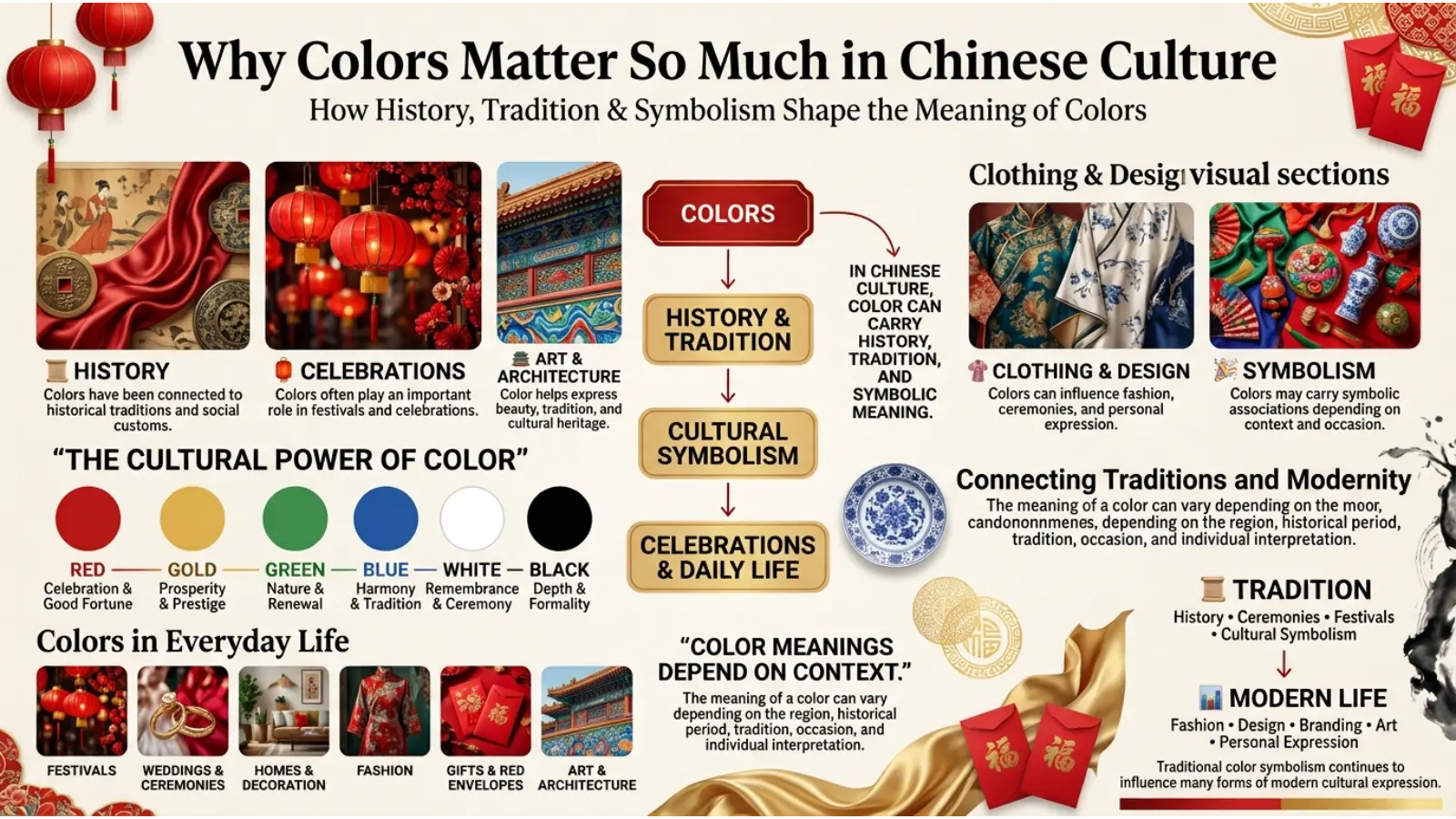
Color has carried deep meaning throughout Chinese history. It appears in festivals, weddings, funerals, clothing, architecture, art, religion, and everyday life. However, understanding color meanings in Chinese culture requires more than learning a simple list of lucky and unlucky colors. The meaning of a color can change depending on history, region, religion, social status, and the occasion where it appears.
Red may represent happiness and celebration, for example, while white can symbolize purity in one setting but mourning in another. These traditions also continue to influence modern Chinese branding, fashion, packaging, and interior design.
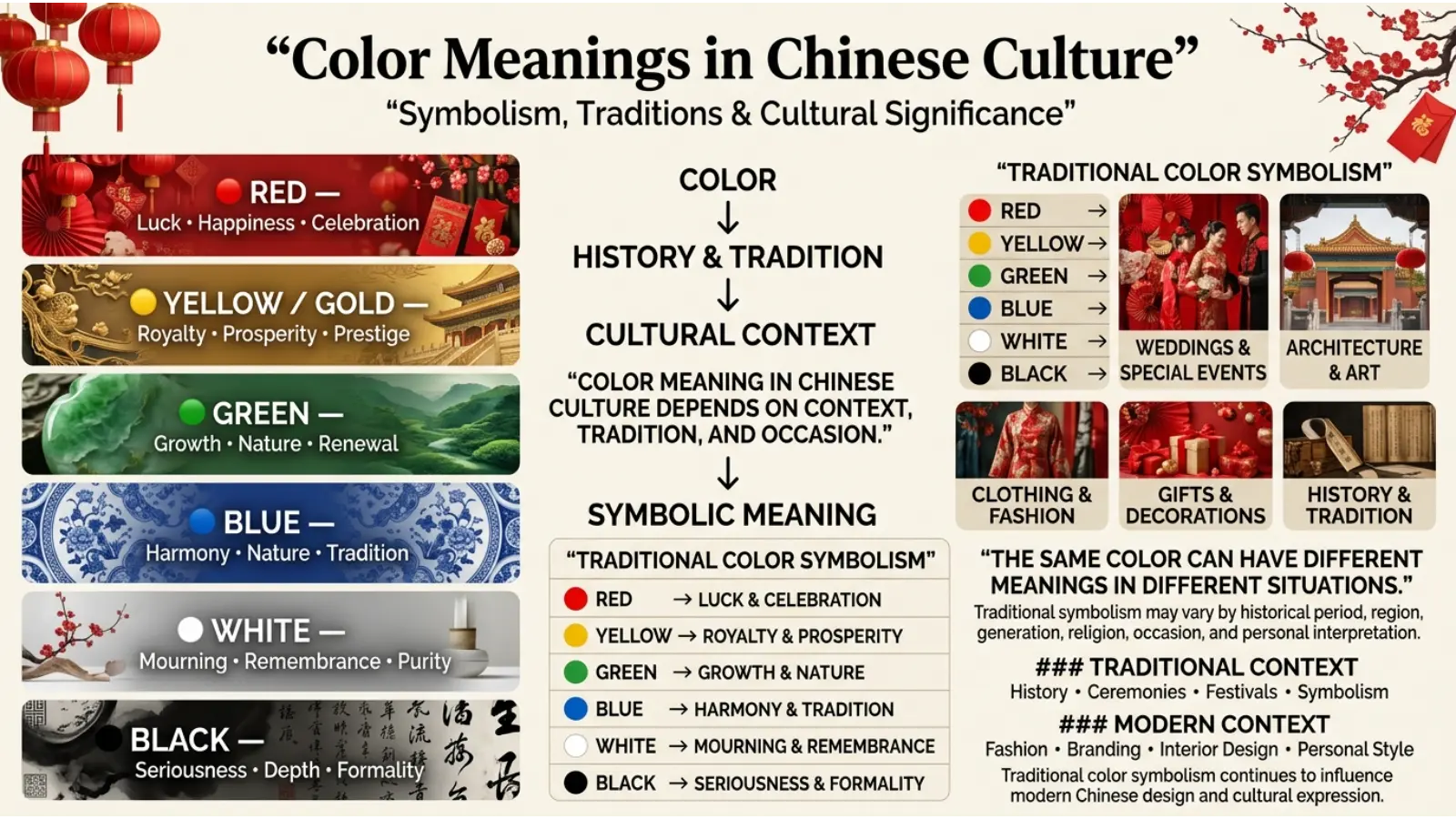
Quick Answer: In Chinese culture, red commonly represents luck and happiness, yellow has historical links with royalty and power, green can suggest growth and health, blue may represent calmness and immortality in traditional contexts, while white is strongly associated with mourning and funerals. Yet color meanings can change according to context.
A Quick Guide to Chinese Color Meanings
| Color | Traditional Associations | Common Modern Contexts |
|---|---|---|
| 🔴 Red | Luck, happiness, celebration, prosperity | Weddings, Lunar New Year, gifts |
| 🟡 Yellow | Royalty, power, earth, prestige | Traditional art, design, cultural symbolism |
| ⚪ White | Mourning, death, purity | Funerals, modern fashion |
| 🟢 Green | Growth, health, harmony | Nature, environmental design |
| 🔵 Blue | Calmness, immortality, healing associations | Art, fashion, modern design |
| ⚫ Black | Water, mystery, authority | Fashion, formal design |
| 🟣 Purple | Spirituality, dignity, mystery | Traditional symbolism and luxury design |
Why Colors Matter So Much in Chinese Culture
Chinese color symbolism developed through several influences rather than one single belief system.
One important influence comes from the traditional Chinese concept of the Five Elements, often associated with wood, fire, earth, metal, and water. These ideas influenced relationships between colors, directions, seasons, and natural forces.
At the same time, imperial history gave certain colors powerful social meanings. Some colors became connected with rulers and high status, while others appeared more frequently in ordinary clothing and daily objects.
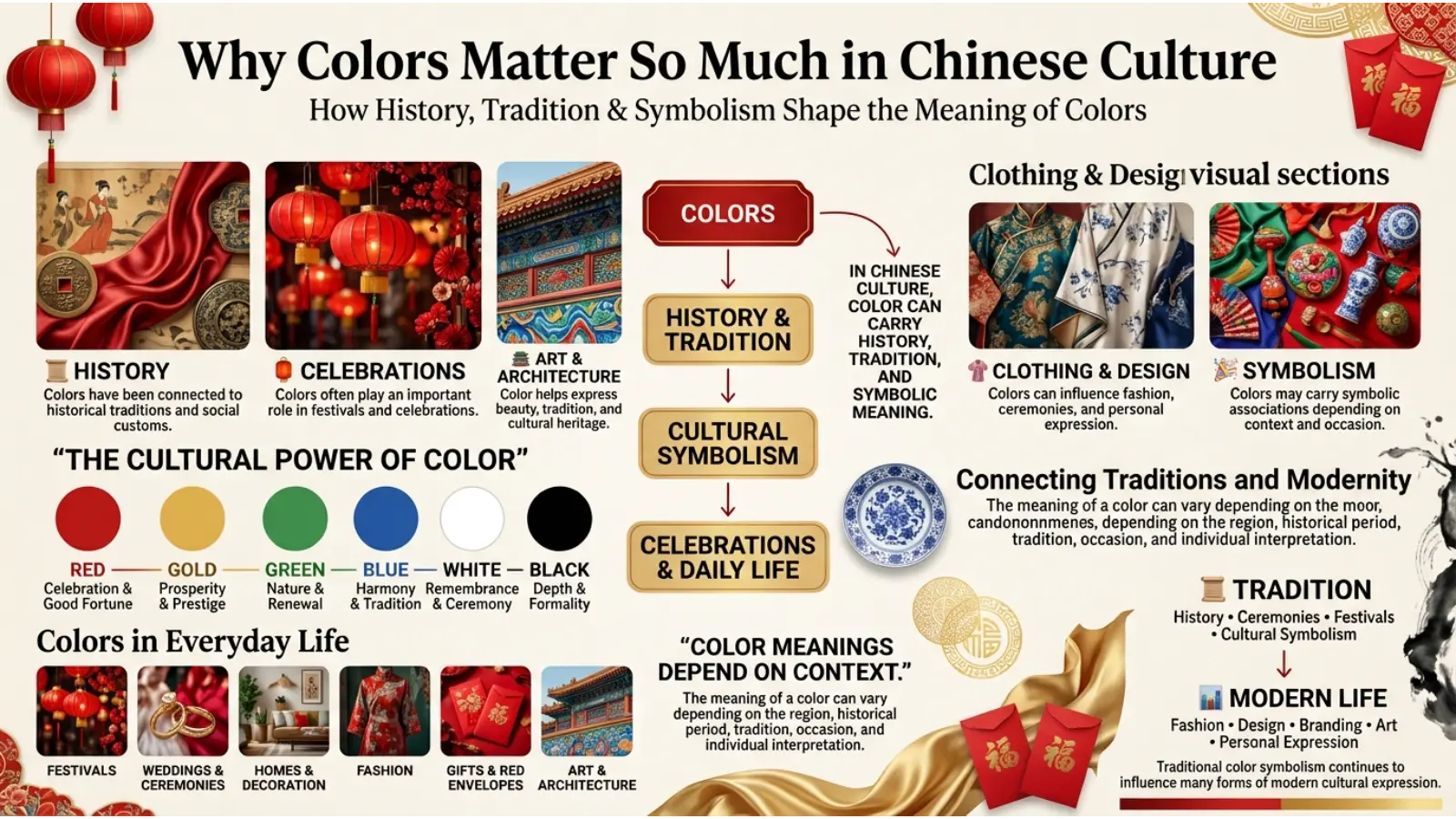
Therefore, Chinese color symbolism should not be treated as a fixed rulebook. A color’s meaning depends heavily on where, when, and how people use it.
🔴 Red Color Meanings in Chinese Culture
Red is one of the most recognizable and important colors in Chinese culture. It is widely associated with good fortune, happiness, celebration, prosperity, and positive energy.
This is why red appears prominently during Lunar New Year celebrations. The Red decorations, lanterns, banners, and envelopes are commonly used to create an atmosphere of celebration and to express hopes for good fortune.
Red and Chinese Weddings
Red traditionally plays a major role in Chinese weddings. The color represents happiness and is associated with joyful beginnings.
Brides may wear red clothing or include red elements in traditional wedding celebrations. Decorations and ceremonial objects can also feature the color.
However, modern Chinese weddings may combine traditional red with white dresses and Western wedding styles. As a result, contemporary wedding fashion often reflects both Chinese and international traditions.
Why Red Envelopes Are Important
The red color itself adds symbolic meaning to the gift. The envelope represents good wishes and positive intentions, making the presentation just as meaningful as the money inside.
Red in Modern Chinese Branding
Because red attracts attention and carries strong associations with celebration and prosperity, it remains popular in Chinese marketing and packaging.
However, successful branding depends on context. Too much bright red can create visual intensity, while carefully balanced red can communicate excitement, confidence, and cultural familiarity.
🟡 Yellow Color Meaning in Chinese Culture
Yellow has a long and complex history in Chinese culture. Traditionally, it has been associated with royalty, power, prestige, and the earth.
Historically, yellow held a particularly important position in imperial symbolism. Certain shades and uses of yellow became strongly connected with the emperor and the imperial court.
This connection gave yellow an elevated cultural status that still influences how people understand the color today.
Yellow and Imperial China
Yellow appeared in important imperial settings, including clothing and architecture. Its connection with authority helped distinguish rulers from ordinary members of society.
As a result, yellow became more than a decorative color. It could communicate hierarchy, political power, and social importance.
Yellow in Modern Design
Today, yellow can create feelings of warmth, energy, optimism, and visibility. In Chinese-inspired design, gold and yellow shades may also suggest wealth or traditional prestige.
Still, designers should consider the exact shade. Bright yellow, golden yellow, and muted earth tones can create very different impressions.
⚪ White Color Meaning in Chinese Culture
White has one of the most misunderstood meanings in Chinese color symbolism.
This difference explains why color symbolism cannot simply be translated from one culture to another.
White in Funeral Traditions
White clothing and decorations may appear during mourning rituals and funeral ceremonies.
The exact practices can vary according to region, family traditions, religion, and modern customs. Nevertheless, the historical association between white and mourning remains culturally significant.
White in Modern Chinese Fashion
Modern fashion has changed the everyday meaning of white.
White clothing is now common in casual fashion, professional outfits, luxury design, and weddings influenced by global traditions. Therefore, seeing someone wear white does not automatically carry a negative meaning.
The situation matters. A white dress in a fashion setting and white clothing at a funeral can communicate completely different messages.
🟢 Green Color Meaning in Chinese Culture
Green is generally associated with nature, growth, renewal, health, and harmony.
Because green visually connects people with plants and natural landscapes, it often creates a feeling of freshness and development.
The Importance of Context
Green also demonstrates why cultural symbolism requires careful interpretation.
Certain expressions and cultural references involving green may carry meanings that do not apply to the color in general. For example, specific clothing items or phrases can have unique symbolic meanings based on language and social tradition.
Therefore, designers and travelers should avoid assuming that every use of green has the same meaning.
Green in Modern Branding
Modern businesses often use green to suggest environmental responsibility, natural ingredients, freshness, or growth.
However, green branding is not automatically trusted simply because the color suggests nature. Consumers increasingly examine whether a company’s actions support its environmental message.
🔵 Blue Color Meaning in Chinese Culture
Blue has historically carried several meanings in Chinese traditions and visual culture. Depending on the shade and context, it may be connected with calmness, healing, immortality, spirituality, and nature.
Traditional Chinese color systems did not always divide colors exactly the way modern English language categories do. For this reason, historical discussions of blue and green can sometimes overlap.
This linguistic difference is important when studying ancient color symbolism.
Blue in Chinese Art
Blue became visually important in ceramics and decorative arts. Blue-and-white porcelain, for example, became one of the most recognizable styles associated with Chinese artistic traditions.
The combination of blue decoration and white porcelain continues to influence interior design, fashion, and product packaging around the world.
Blue in Modern Psychology
Modern color psychology often associates blue with calmness, trust, and stability. However, these associations are not universal laws.
Individual experience, culture, brightness, and context can all influence emotional responses to blue.
⚫ Black Color Meanings in Chinese Culture
Black has historically been associated with water, depth, mystery, and authority within certain traditional Chinese symbolic systems.
In the Five Elements framework, black is commonly connected with water and the north.
However, black does not always have a negative meaning.
Black in Traditional and Modern Contexts
In some historical contexts, black represented seriousness and authority. Today, it is also widely used in fashion because it can create a sophisticated, formal, or powerful appearance.
A black luxury package may suggest elegance. A black uniform may suggest authority. Meanwhile, black used in entertainment design may create mystery or drama.
The meaning changes with the setting.
🟣 Purple Color Meaning in Chinese Culture
Purple is often associated with mystery, spirituality, dignity, and high status.
In traditional symbolism, purple has connections with important celestial and spiritual concepts. It may appear in historical references related to stars, heaven, and prestigious locations.
Because purple is less common in nature than colors such as green or blue, it can also create a sense of rarity and visual distinction.
Purple in Modern Chinese Design
Modern brands often use purple to communicate creativity, luxury, imagination, or uniqueness.
The effect depends greatly on the shade. Deep purple can appear elegant and dramatic, while light purple may feel softer and more romantic.
🟠 Orange and Gold Meanings in Chinese Culture
Orange and gold shades can communicate warmth, wealth, celebration, and abundance.
Gold especially carries strong visual associations with prosperity and value. For this reason, gold frequently appears alongside red during celebrations and festive design.
The red-and-gold combination has become especially recognizable because the colors create both visual contrast and symbolic richness.
Why Red and Gold Work Together
Red brings energy and celebration.
Gold adds a sense of value and prosperity.
The Five Elements and Traditional Chinese Color Symbolism
Traditional Chinese philosophy often connects colors with the Five Elements.
| Element | Common Color Association | Symbolic Connections |
|---|---|---|
| 🟢 Wood | Green or blue-green | Growth, spring, development |
| 🔴 Fire | Red | Energy, warmth, summer |
| 🟡 Earth | Yellow | Stability, balance, centrality |
| ⚪ Metal | White | Structure and traditional metal associations |
| ⚫ Water | Black | Depth, water, winter |
China has diverse regional cultures, religious traditions, and local customs. Modern interpretations may also differ from ancient symbolic systems.
The Historical Evolution of Color Meanings in Chinese Culture
Color meanings in Chinese culture have changed across centuries.
Ancient philosophical systems influenced early symbolism. Imperial governments later connected colors with social status and political authority. Religious traditions added further interpretations, while trade and technological developments introduced new dyes and artistic techniques.
As China became increasingly connected with global fashion and media, international color trends also influenced modern preferences.
Therefore, traditional symbolism and modern color use now exist side by side.
A red wedding decoration may follow an old custom, while the same celebration may include a white Western-style wedding dress. Both can coexist without contradiction.
How Chinese Festivals Use Color
Color becomes especially visible during festivals.
Lunar New Year Colors
Red dominates many Lunar New Year celebrations because of its strong connection with good fortune and happiness.
Gold is also widely used because it visually suggests prosperity and abundance.
Lantern Festival Colors
Colorful lanterns create a lively visual environment during celebrations.
Red remains especially important, although many other colors can appear for decorative purposes.
Colors and Family Celebrations
Color choices for birthdays, weddings, business openings, and other celebrations can communicate wishes for happiness, prosperity, and success.
The meaning often comes from the event itself as much as from the color.
Color Meanings in Chinese Weddings
Traditional Chinese weddings provide one of the clearest examples of cultural color symbolism.
🔴 Red: Happiness, celebration, and good fortune.
🟡 Gold: Prosperity and value.
⚪ White: Traditionally avoided in some ceremonial contexts because of its association with mourning, although modern wedding styles have changed this.
Modern couples often combine traditional and international fashion. Therefore, a Chinese wedding today may feature a traditional red outfit, a white wedding gown, gold decorations, or all three.
Color Meanings in Chinese Funeral Traditions
White has historically played an important role in mourning traditions.
Other colors may also appear depending on regional customs and family traditions.
The main lesson is simple: a color that represents celebration in one culture may represent mourning in another.
Chinese Color Symbolism and Spiritual Traditions
Spiritual interpretations of color exist across Chinese religious and philosophical traditions.
However, there is no single universal spiritual meaning for every color.
Buddhist traditions, Taoist traditions, folk beliefs, and philosophical systems can interpret colors differently.
For example, colors may be connected with:
- Balance
- Natural forces
- Spiritual transformation
- Protection
- Harmony
- Cosmic order
The Psychology Behind Color Meanings in Chinese Culture
Color psychology helps explain why colors can influence attention and emotional perception. However, science does not support the idea that one color produces exactly the same emotional reaction in every person.
Culture plays a major role.
For example, someone who grows up seeing red used during celebrations may develop different associations from someone who mainly sees red used for danger signs.
This demonstrates an important principle:
Color meaning is partly visual, partly psychological, and partly learned through culture.
How Context Changes Emotional Responses
A red envelope may feel generous and celebratory.
A red warning sign may create urgency.
Red dress may communicate confidence.
The color remains red, but the meaning changes because the situation changes.
Chinese Color Meanings and Personality
People sometimes believe that a person’s favorite color reveals their personality.
For example:
🔴 Red lovers may be described as energetic or confident.
🟢 Green lovers may be associated with balance and nature.
🔵 Blue lovers may be seen as calm or thoughtful.
🟣 Purple lovers may be linked with creativity.
These descriptions can be interesting, but they should not be treated as personality tests.
Color preference does not scientifically determine someone’s character. Personal experiences, fashion trends, culture, and changing tastes all influence favorite colors.
Color Meanings in Chinese Branding and Marketing
Color is a powerful part of brand communication.
In China, businesses often consider both traditional symbolism and modern consumer preferences.
Why Brands Use Red
Red can attract attention quickly and may create cultural connections with celebration, excitement, and prosperity.
Why Gold Suggests Luxury
Gold visually resembles precious metals and therefore often communicates:
- Value
- Premium quality
- Celebration
- Prosperity
When combined with red, gold can create an especially festive and luxurious appearance.
Green and Environmental Branding
Green often suggests nature and sustainability.
However, modern consumers may question environmental claims if the company’s actions do not match its branding. Therefore, green design works best when supported by genuine environmental practices.
Chinese Color Meanings in Interior Design
Traditional Chinese color symbolism can inspire modern interior spaces.
The best approach is not to fill an entire room with symbolic colors. Instead, use color intentionally.
Red in Interior Design
Red can create warmth and energy.
Small accents such as cushions, artwork, lanterns, or decorative objects can add cultural character without overwhelming the room.
Yellow and Gold
Golden tones can make a room feel warm and elegant.
Soft lighting can enhance these shades, while overly bright yellow may feel visually intense.
Green
Green works well in living rooms, gardens, and spaces designed to feel fresh.
Natural plants and green fabrics can create a connection with nature.
Blue
Blue can provide visual balance in a space with warmer colors.
Blue-and-white decorative patterns can create a classic appearance inspired by Chinese ceramics.
White
White can make modern interiors feel open and bright.
However, when designing for a culturally specific event, designers should consider whether the color carries additional ceremonial meaning.
Color Meanings in Chinese Culture in Fashion
Fashion allows traditional symbolism to meet personal expression.
Red Fashion
Red can create a bold appearance and remains popular during festivals and celebrations.
Deep red shades may feel elegant, while bright red often creates stronger visual energy.
Gold Accessories
Gold jewelry and accessories can add a sense of celebration and luxury.
When paired with red, gold becomes especially suitable for festive occasions.
White Fashion
White is widely accepted in modern Chinese fashion.
A white shirt may communicate simplicity and cleanliness, while a white formal dress can reflect international fashion trends.
Again, the occasion determines the meaning.
Black Fashion
Black remains popular for professional and formal clothing.
It can create a clean, powerful, and sophisticated appearance.
Color Combinations Inspired by Chinese Culture
🔴 Red + 🟡 Gold
Meaning: Celebration, prosperity, luxury.
Best for: Festivals, gift packaging, event design, traditional decorations.
🔵 Blue + ⚪ White
Meaning: Calmness, elegance, artistic tradition.
Best for: Ceramics, interior design, tableware, fashion patterns.
🟢 Green + 🟤 Earth Tones
Meaning: Nature, balance, growth.
Best for: Eco-friendly design, gardens, natural interiors.
⚫ Black + 🟡 Gold
Meaning: Luxury, authority, sophistication.
Best for: Premium packaging, fashion, restaurants, luxury branding.
🔴 Red + ⚫ Black
Meaning: Drama, strength, strong visual contrast.
Best for: Entertainment design, fashion, posters, modern interiors.
How Lighting Changes Chinese Color Symbolism
Lighting can dramatically change how a color appears.
A red fabric under warm lighting may look deep and luxurious. Under bright white lighting, the same fabric may appear sharper and more intense.
Gold surfaces can become more reflective under direct light.
Blue may appear softer in dim lighting.
Therefore, designers should always test colors under the actual lighting conditions where people will see them.
This is especially important for:
- Restaurants
- Retail stores
- Wedding venues
- Photography
- Product packaging
- Interior design
A color chosen on a computer screen may look different when printed or placed under artificial lighting.
How Age and Global Culture Influence Color Meanings
Color traditions continue to evolve.
Older generations may feel a stronger connection with certain traditional meanings. Younger consumers may also follow global fashion, entertainment, gaming, and social media trends.
As a result, modern color preferences can blend:
- Traditional Chinese symbolism
- International fashion
- Digital culture
- Personal identity
- Brand trends
This does not mean traditional symbolism is disappearing. Instead, old and new meanings often exist together.
Common Misconceptions About Color Meanings in Chinese Culture
Misconception: Red Always Means Luck
Red often represents good fortune and celebration, but context still matters.
Red can also appear in warnings, commercial advertising, fashion, and political imagery.
Misconception: White Is Always Unlucky
White has strong associations with mourning in traditional contexts, but modern Chinese people commonly wear white clothing and use white in contemporary design.
Misconception: Every Chinese Person Interprets Colors the Same Way
China is culturally diverse.
Regional traditions, family customs, religion, age, and personal experiences can influence interpretation.
Misconception: Traditional Color Meanings Never Change
Color symbolism evolves with fashion, technology, international communication, and social change.
Misconception: Color Alone Determines Consumer Behavior
Color influences attention and perception, but product quality, price, trust, culture, and personal preference also affect decisions.
Real-World Applications of Color Meanings in Chinese Culture
Business
Businesses can use culturally meaningful colors when designing advertisements, packaging, and festival campaigns.
However, companies should research the audience and avoid relying on stereotypes.
Marketing
Red and gold may work well for festive promotions, while green may support environmental messaging.
The strongest marketing strategy combines color with clear communication.
Art
Artists can use traditional color symbolism to create deeper meaning.
A red background may suggest celebration or intensity, while white can create emotional contrast depending on the subject.
Photography
Photographers can use color to guide attention.
Red clothing against a muted background can create a strong focal point. Blue and white combinations may produce a calmer composition.
Home Decoration
Small symbolic color accents can create cultural character without making a room feel overly themed.
Fashion
Traditional color symbolism can inspire clothing choices for festivals and special occasions.
At the same time, modern fashion allows individuals to create their own interpretations.
Entertainment
Movies, television, games, and stage design often use color to communicate emotion and cultural references quickly.
However, viewers may interpret those colors differently depending on their cultural background.
Why Color Meanings Change Across Cultures
Colors do not have one permanent meaning.
Human beings learn many color associations through:
- Family traditions
- Religion
- History
- Language
- Media
- Fashion
- Personal experiences
This is why red can represent celebration in one cultural context and danger in another.
Understanding cultural color symbolism helps designers, marketers, travelers, and artists communicate more effectively.
Frequently Asked Questions
What does red mean in Chinese culture?
Red is commonly associated with luck, happiness, celebration, prosperity, and positive wishes. It is especially visible during Lunar New Year and traditional weddings.
Is red considered a lucky color in China?
Yes, red is widely considered a lucky and auspicious color, particularly during celebrations. However, its meaning can still change depending on context.
What does yellow symbolize in Chinese culture?
Yellow has historical connections with royalty, power, prestige, and the earth. Its importance became especially strong through imperial traditions.
Why is white associated with death in Chinese culture?
White has historically been connected with mourning and funeral traditions in many Chinese communities. However, modern use of white in fashion and design is much broader.
Is white considered unlucky in Chinese culture?
Not always. White may carry mourning associations during certain ceremonies, but it is widely used in everyday clothing, architecture, fashion, and modern design.
What does green mean in Chinese culture?
Green is commonly associated with nature, growth, health, and renewal. Specific expressions or cultural references involving green may have additional meanings.
What does blue symbolize in Chinese culture?
Blue can have associations with calmness, nature, healing, and immortality in different traditional and artistic contexts. Historical color categories may not always match modern Western definitions.
What color represents wealth in Chinese culture?
Gold and golden yellow are commonly associated with wealth, prosperity, value, and luxury. Red and gold are often used together during celebrations.
What colors are commonly used for Chinese New Year?
Red and gold are among the most common colors because they are associated with celebration, prosperity, happiness, and good fortune.
Do Chinese color meanings still matter today?
Yes. Traditional color symbolism continues to influence festivals, weddings, design, packaging, fashion, and marketing. However, modern interpretations are also shaped by global culture and personal preference.
Final Thoughts
Color meanings in Chinese culture reveal how deeply color can connect history, philosophy, emotion, ceremony, and everyday life. Red remains closely linked with celebration and good fortune, yellow carries echoes of imperial prestige, white reflects important mourning traditions, and green, blue, black, and purple each have their own changing cultural associations.
The most useful lesson is that colors do not speak with one universal voice. Their meaning depends on context, history, language, tradition, and personal experience. A color used during a festival may communicate something completely different when used in fashion, interior design, or advertising.
Looking closely at Chinese color symbolism can therefore help us see color differently in everyday life. The next time you notice red decorations, gold packaging, blue-and-white patterns, or carefully chosen festival clothing, consider the cultural story behind the color—and how that story continues to evolve.

Emma Wilson is a dedicated comparison writer and product researcher at ColorMystiic.com. She specializes in creating unbiased product comparisons, detailed reviews, and helpful buying guides. Her goal is to help readers make smarter purchasing decisions with confidence.