Colors surround us every day. They influence the clothes we wear, the rooms we design, the brands we trust, and the emotions we experience. Many people search for color personality meanings because they want to understand what their favorite colors may represent about their feelings, style, and personal expression.
A person who loves blue may be attracted to calmness and stability, while someone who prefers red may enjoy energy, confidence, or excitement. However, color preferences do not scientifically define a person’s personality. Instead, colors are connected with shared human experiences, cultural symbolism, personal memories, and emotional responses.
This guide explores color personality meanings, including color psychology, emotional associations, spiritual interpretations, cultural symbolism, branding uses, fashion choices, interior design ideas, and practical ways to use colors in everyday life.
Quick Answer: What Are Color Personality Meanings?
Color personality meanings describe the emotions, traits, and symbolic qualities commonly associated with different colors. While colors can influence mood and perception, they do not determine someone’s personality. Personal experiences, culture, and context also shape how people respond to colors.
Color Personality Meanings Chart
| Color | Common Personality Associations | Emotional Meaning | Common Uses |
|---|---|---|---|
| Blue | Calm, loyal, thoughtful | Trust, peace, security | Corporate branding, offices |
| Red | Bold, passionate, energetic | Love, power, excitement | Fashion, advertising |
| Green | Balanced, natural, caring | Growth, renewal, harmony | Wellness, environment |
| Purple | Creative, imaginative, unique | Luxury, mystery, wisdom | Beauty, premium brands |
| Yellow | Optimistic, cheerful, curious | Happiness, energy, hope | Marketing, creative spaces |
| Orange | Social, adventurous, friendly | Warmth, enthusiasm | Food, entertainment |
| Black | Strong, elegant, serious | Power, mystery, sophistication | Luxury products, fashion |
| White | Clean, peaceful, simple | Purity, freshness, openness | Healthcare, minimal design |
| Pink | Gentle, romantic, caring | Love, kindness, softness | Beauty, lifestyle brands |
| Brown | Reliable, practical, grounded | Comfort, stability, nature | Furniture, natural products |
What Do Color Personality Meanings Represent?
Color symbolism is a way humans connect visual experiences with emotions and ideas. Across history, people have used colors to communicate identity, status, beliefs, and feelings.
For example, gold has often represented wealth and achievement because of its connection with precious metals. Green is frequently linked with nature because plants and forests are strongly associated with the color.
However, color meanings are not universal rules. The same color can communicate different messages depending on location, culture, situation, and personal memories.
A red dress may represent confidence and attraction in fashion, while a red warning sign may represent danger or urgency. Context changes the meaning.
Psychology of Color Personality Meanings
Color psychology studies how colors may influence human perception, emotions, and behavior. Researchers understand that colors can affect attention and feelings, but responses are not identical for everyone.
How Colors Influence Emotions
Colors can create emotional impressions because the human brain connects visual signals with experiences.
For example:
- Blue often creates feelings of calmness and reliability.
- Red can increase feelings of energy and attention.
- Green may remind people of nature and balance.
- Yellow can create a sense of brightness and optimism.
These reactions are influenced by personal experiences. Someone may associate a color with a happy memory, while another person may connect the same color with something negative.
Do Colors Reveal Personality?
Many people believe favorite colors reveal personality traits. Although this idea is popular, scientific evidence does not prove that a color choice can accurately predict personality.
Still, color preferences may reflect:
- Personal taste
- Cultural background
- Lifestyle choices
- Emotional memories
- Current mood
A person who chooses black clothing may not always be mysterious or serious. They may simply enjoy its elegance and versatility.
Spiritual Meaning of Color Personality Associations
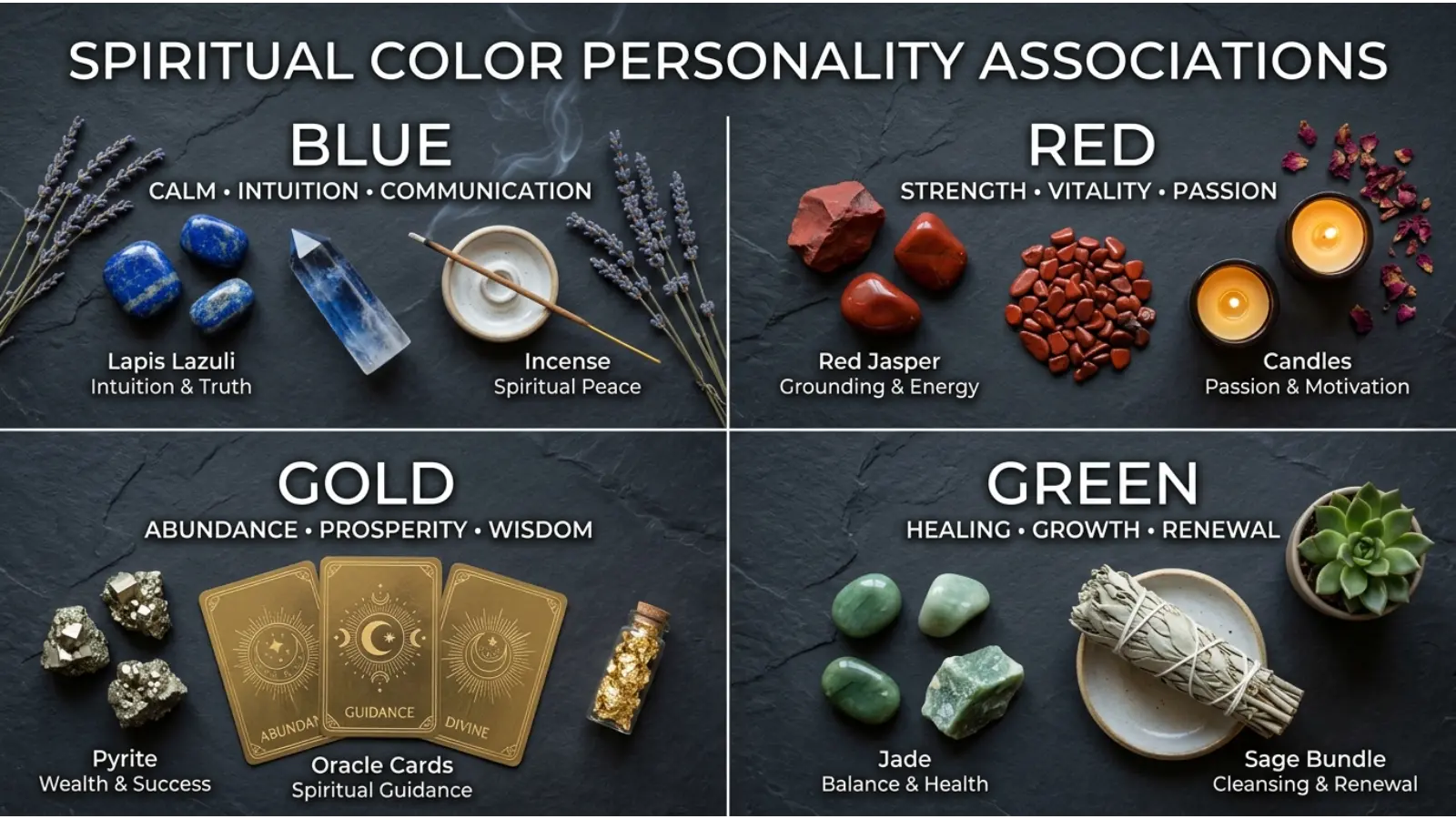
Colors have spiritual meanings in many traditions around the world. These interpretations often focus on energy, symbolism, and personal reflection rather than scientific measurement.
Blue Spiritual Meaning
Blue is often connected with:
- Peace
- Communication
- Wisdom
- Protection
- Inner calm
Many spiritual traditions associate blue with the sky and water, representing openness and emotional balance.
Green Spiritual Meaning
Green commonly symbolizes:
- Healing
- Growth
- Renewal
- Connection with nature
Because green appears throughout the natural world, many cultures view it as a symbol of life and restoration.
Purple Spiritual Meaning
Purple has frequently represented:
- Spiritual awareness
- Transformation
- Creativity
- Higher knowledge
Its historical connection with rare dyes also helped create associations with royalty and importance.
Spiritual meanings vary greatly between religions and cultures. A color’s meaning should always be understood within its specific tradition.
Cultural Meaning of Color Personality Associations
Colors communicate different ideas across societies. Understanding cultural differences helps prevent misunderstandings.
Western Color Meanings
In many Western cultures:
- White is often connected with weddings, cleanliness, and new beginnings.
- Black is associated with elegance, authority, and mourning.
- Red represents passion, love, and excitement.
Eastern Cultural Interpretations
In several Asian cultures:
- Red may symbolize luck, celebration, and prosperity.
- Gold can represent success and wealth.
- White may have connections with mourning in some traditions.
Middle Eastern and African Perspectives
Many cultures in these regions use colors in clothing, art, and ceremonies to express identity and beliefs.
Green, for example, may carry important symbolic meanings in Islamic cultures, while bright colors in African textiles often communicate heritage, celebration, and community.
Color meanings are shaped by history, religion, environment, and social traditions.
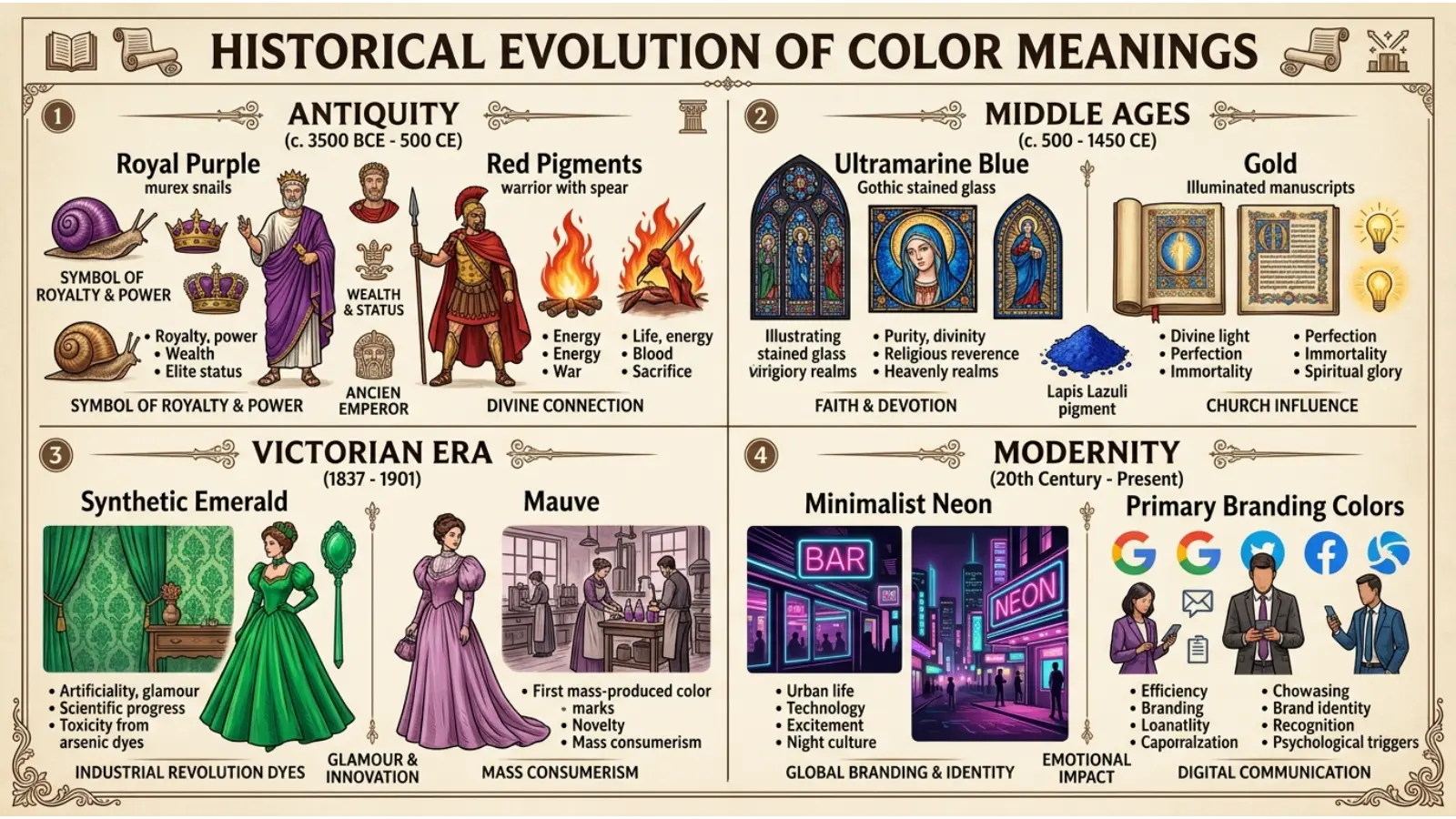
Historical Evolution of Color Meanings
Color symbolism has changed throughout human history.
Purple and Royal Power
Purple became associated with royalty because certain purple dyes were historically difficult and expensive to produce. This made purple clothing a sign of wealth and status.
Blue and Trust
Blue gradually became connected with reliability and authority. Today, many institutions use blue because it creates impressions of professionalism and stability.
Black and Fashion
Black evolved from being strongly associated with mourning in some societies to becoming a symbol of sophistication and modern style.
Colors gain meaning through human stories and cultural changes.
Personality Associations of Different Colors
People often connect colors with certain personality traits. These associations can be useful for self-expression but should not be treated as personality tests.
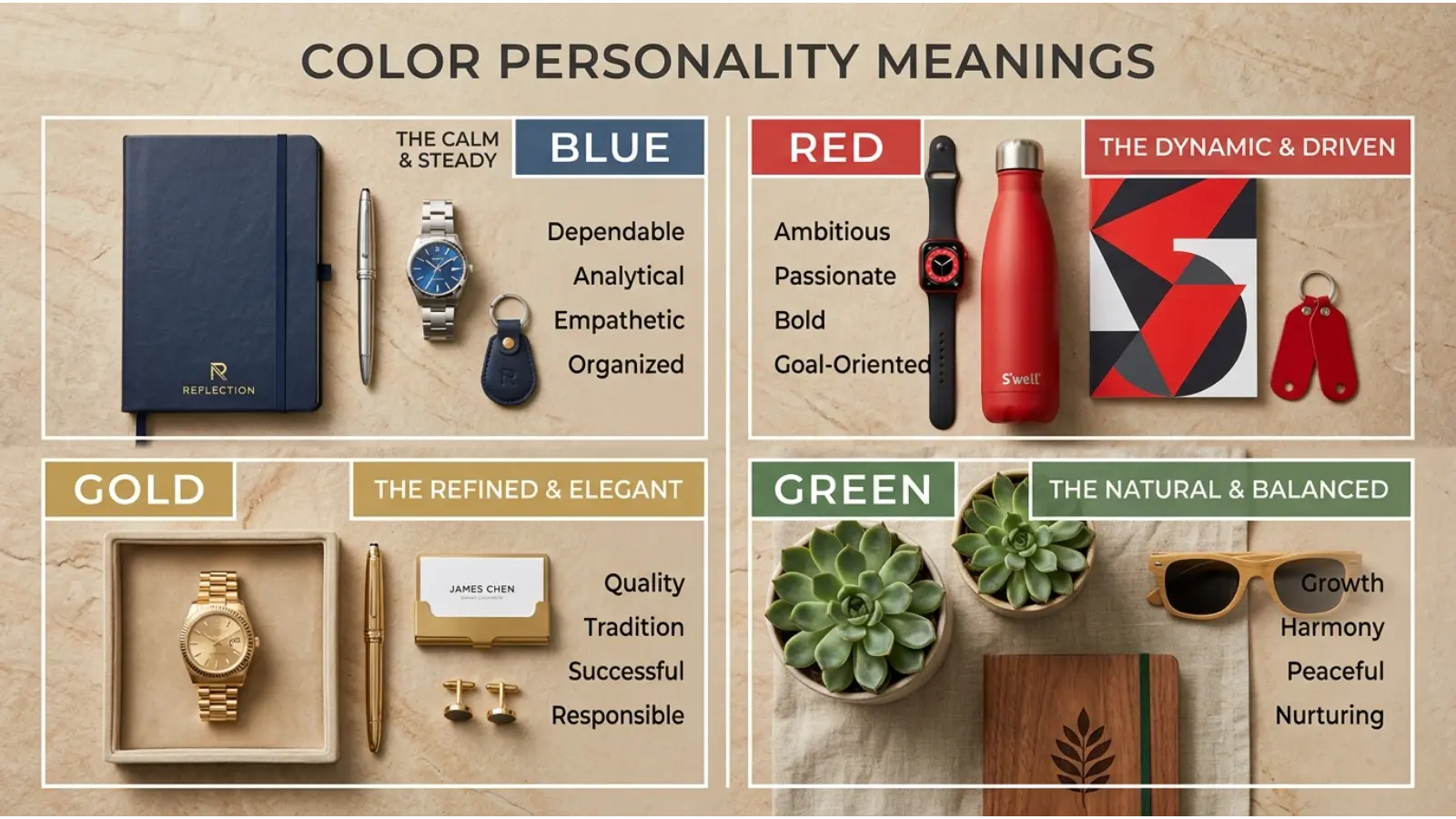
People Who Like Blue
Blue lovers are often described as:
- Calm
- Dependable
- Thoughtful
- Organized
Blue is popular among people who appreciate peaceful environments.
People Who Like Red
Red preferences are often linked with:
- Confidence
- Passion
- Leadership
- Energy
Red attracts attention, which is why it is commonly used in powerful designs.
People Who Like Green
Green lovers are often associated with:
- Balance
- Growth
- Compassion
- Nature appreciation
Again, these are symbolic associations, not guaranteed personality facts.
Color Personality Meanings in Branding and Marketing
Brands carefully select colors because visual identity affects customer perception.
Why Companies Use Blue
Blue is widely used by businesses because it often communicates:
- Trust
- Security
- Professionalism
Technology companies, financial organizations, and healthcare brands frequently choose blue designs.
Why Luxury Brands Use Black
Black creates impressions of:
- Premium quality
- Elegance
- Exclusivity
Luxury fashion often uses black packaging because it feels timeless.
Why Green Works for Natural Brands
Green connects strongly with:
- Sustainability
- Health
- Organic products
- Environmental awareness
However, companies must support these messages with real practices because customers increasingly recognize misleading branding.
Color Personality Meanings in Interior Design
Colors influence how spaces feel.
Living Room Colors
Warm colors like orange and yellow can create social energy.
Cool colors like blue and green may create relaxing environments.
Bedroom Colors
Soft shades often work well because they create peaceful surroundings.
Popular choices include:
- Light blue
- Lavender
- Soft green
- Neutral tones
Office Design
Workspaces often use colors that support focus.
Blue may create a professional atmosphere, while small amounts of yellow can add creativity.
Lighting also changes color appearance. A paint color may look different under sunlight compared with artificial lighting.
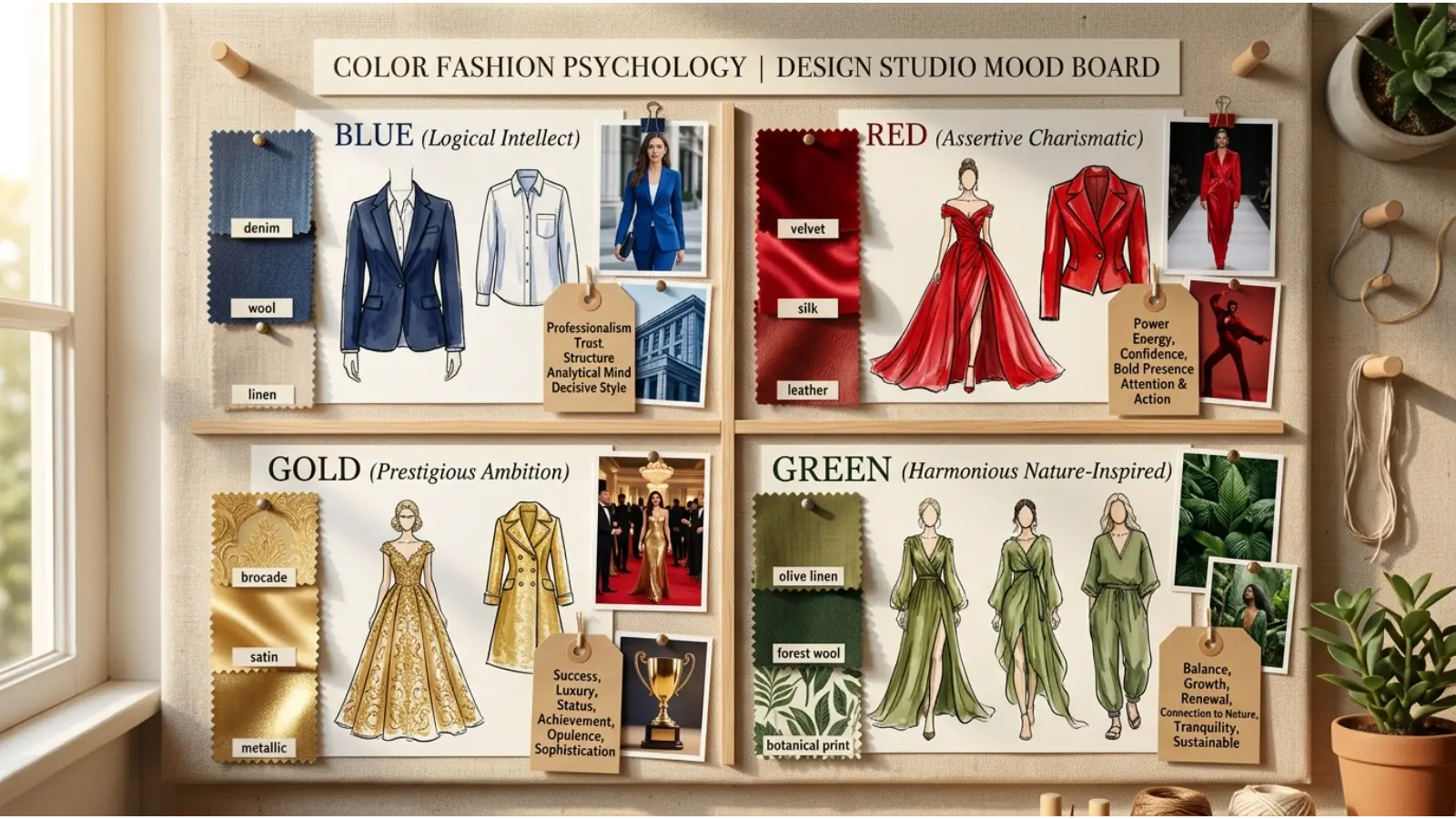
Color Personality Meanings in Fashion
Fashion uses colors to communicate identity without words.
Professional Clothing
Colors such as:
- Navy blue
- Black
- Gray
- White
often create impressions of confidence and professionalism.
Expressive Fashion Choices
Bright colors can communicate:
- Creativity
- Confidence
- Energy
- Individual style
Seasonal Color Choices
Many people choose lighter colors in spring and summer and deeper tones during autumn and winter. These choices are influenced by fashion trends and cultural expectations.
Best Color Combinations and Their Meanings
Blue and White
Creates a feeling of:
- Cleanliness
- Trust
- Freshness
Commonly used in healthcare and professional designs.
Green and Brown
Represents:
- Nature
- Stability
- Earth connection
Popular in environmental branding.
Purple and Gold
Suggests:
- Luxury
- Creativity
- Excellence
Often used for premium products.
Black and Gold
Communicates:
- Elegance
- Power
- High value
Common in luxury packaging.
Real-World Examples of Color Personality Meanings
Business Example
A technology company may choose blue because customers often connect it with reliability and security.
Fashion Example
A person wearing red at an important event may appear more confident because red naturally attracts visual attention.
Home Example
A bedroom decorated with soft green and natural materials may create a peaceful connection with nature.
Photography Example
Photographers use warm colors to create feelings of happiness and nostalgia, while cooler tones can create calm or dramatic moods.
Common Misconceptions About Color Personality Meanings
Myth: Your Favorite Color Defines Your Personality
Reality: Color preference can show taste or emotional connection, but it cannot fully describe someone’s character.
Myth: Every Color Has One Universal Meaning
Reality: Meanings change between cultures, generations, and situations.
Myth: Color Psychology Controls Human Behavior
Reality: Colors can influence impressions, but many factors affect decisions and emotions.
Frequently Asked Questions About Color Personality Meanings
What are color personality meanings?
Color personality meanings are symbolic connections between colors, emotions, and personality traits. They describe common associations rather than scientific personality measurements.
Can colors reveal someone’s true personality?
No. Colors may reflect preferences and moods, but they cannot accurately determine personality.
Which color represents confidence?
Red is often associated with confidence, energy, and attention. However, confidence can be expressed through many colors.
What color represents intelligence?
Blue and purple are commonly linked with wisdom, creativity, and knowledge in many symbolic traditions.
What color personality is considered calm?
Blue and green are often associated with calmness because they remind people of peaceful environments like oceans, skies, and forests.
Why do brands care about colors?
Brands use colors to create emotional connections and communicate qualities such as trust, excitement, luxury, or freshness.
Does culture change color meanings?
Yes. Cultural traditions strongly influence how people interpret colors.
Why do colors look different in different places?
Lighting, surroundings, materials, and screen settings can change how a color appears.
What is the most popular personality color?
Blue is one of the most commonly preferred colors worldwide, often because of its connection with trust and calmness.
Final Thoughts on Color Personality Meanings
Color personality meanings offer a fascinating way to understand symbolism, emotions, design choices, and cultural traditions. Colors influence how we experience the world, from the clothes we wear to the spaces we create.
Although colors do not define who we are, they can help express feelings, communicate messages, and shape memorable experiences. The meaning of a color depends on more than the shade itself. History, culture, personal memories, and context all play important roles.
The next time you choose a color, consider not only how it looks but also what message it communicates. A simple color choice can become a powerful form of self-expression.
Emma Wilson is a dedicated comparison writer and product researcher at ColorMystiic.com. She specializes in creating unbiased product comparisons, detailed reviews, and helpful buying guides. Her goal is to help readers make smarter purchasing decisions with confidence.