Colors in the Middle Ages were much more than decoration. Every shade carried meaning that people understood immediately. Clothing, banners, church paintings, stained glass windows, manuscripts, and royal robes all used colors to communicate wealth, religion, loyalty, social rank, and emotion.Many people search for medieval color meanings because they want to understand historical artwork, fantasy stories, medieval fashion, heraldry, or European history.
However, the meaning of a color was not always the same everywhere. Symbolism often depended on religion, geography, available dyes, and social traditions.This guide explains how medieval people viewed colors, why those meanings mattered, and how those ideas continue to influence art, branding, fashion, and modern culture.
Quick Answer:
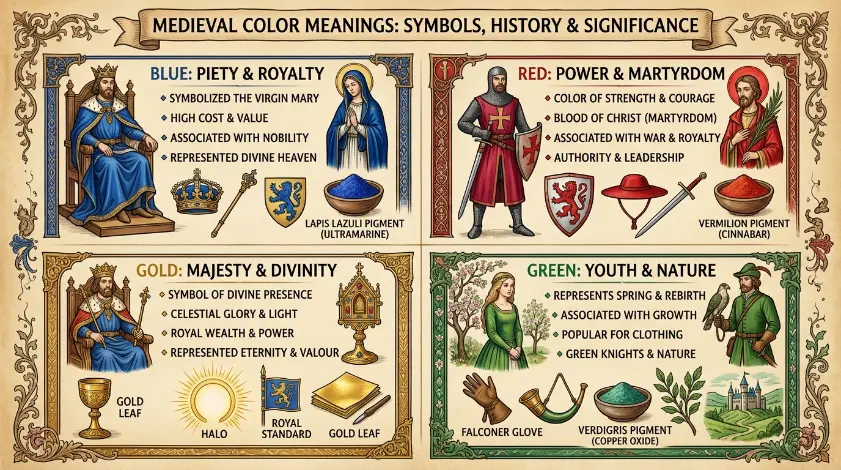
Medieval color meanings reflected religion, social status, morality, political power, and identity. Blue symbolized heavenly devotion, purple represented royalty, red stood for courage and sacrifice, green suggested life and youth, black conveyed authority or mourning, while white symbolized purity. Meanings varied by region, period, and context.
What Are Medieval Color Meanings?
Unlike today, medieval Europeans rarely chose colors simply because they liked them. Color often carried a public message.
A noble’s cloak, a knight’s shield, or a bishop’s robe could reveal wealth, profession, loyalty, or religious beliefs before a single word was spoken.
Several factors shaped medieval color symbolism:
- Religious teachings
- Cost and rarity of dyes
- Royal laws regulating clothing
- Local customs
- Artistic traditions
- Heraldry
- Literature and poetry
As a result, colors became a visual language understood across medieval society.
Medieval Color Meanings Chart
| Color | Main Medieval Meaning | Common Uses |
|---|---|---|
| Blue | Heaven, loyalty, faith | Virgin Mary’s robes, noble clothing |
| Red | Courage, sacrifice, power | Kings, soldiers, churches |
| Purple | Royal authority, luxury | Monarchs, bishops |
| Green | Nature, youth, hope | Clothing, gardens, literature |
| White | Purity, innocence, holiness | Weddings, saints, ceremonies |
| Black | Authority, mourning, wisdom | Clergy, judges, nobility |
| Gold | Divine glory, wealth | Crowns, manuscripts, churches |
| Silver | Truth, honor, purity | Heraldry, ceremonial objects |
| Yellow | Light or betrayal (depending on context) | Art, clothing, symbolism |
| Brown | Humility, simplicity | Monks’ robes, everyday garments |
The Symbolism of Medieval Colors
Blue Color Meaning in the Middle Ages
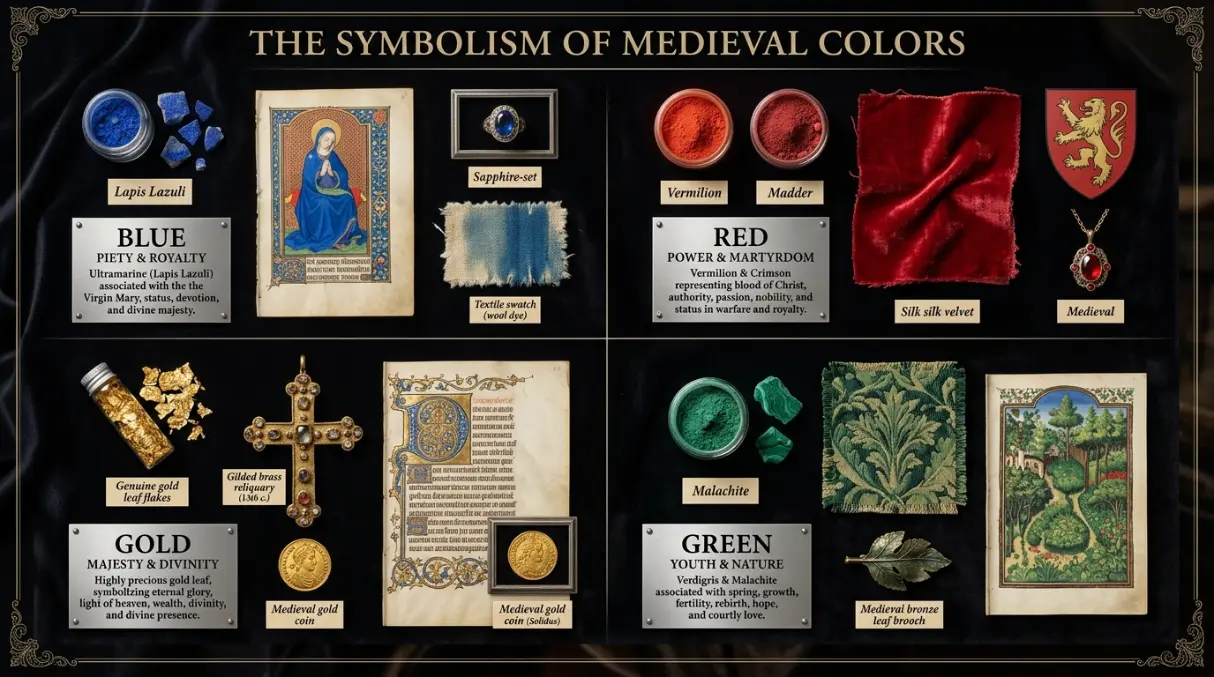
Blue gradually became one of the most respected colors in medieval Europe.
Artists often painted the Virgin Mary wearing brilliant blue robes. Because blue pigments like ultramarine were extremely expensive, they reflected both spiritual importance and material wealth.
Blue symbolized:
- Loyalty
- Faithfulness
- Protection
- Heaven
- Truth
- Peace
Eventually, European royalty also embraced blue as a symbol of noble authority.
Red Color Meaning
Red attracted attention immediately.
Knights carried red banners into battle, while churches used red to represent Christ’s sacrifice and the Holy Spirit.
Red commonly represented:
- Courage
- Strength
- Passion
- Leadership
- Sacrifice
- Victory
However, excessive red could also warn of anger, violence, or temptation.
Purple Color Meaning
Purple remained one of the rarest colors because purple dye was expensive.
Only wealthy rulers, bishops, and important nobles could regularly wear purple garments.
Purple symbolized:
- Royal power
- Nobility
- Prestige
- Wisdom
- Sacred authority
- Luxury
This association still influences modern luxury branding.
Green Color Meaning
Green represented the natural world.
Medieval literature often connected green forests with adventure, romance, renewal, and youthful energy.
Green symbolized:
- Growth
- Hope
- Spring
- Fertility
- Good fortune
- New beginnings
Yet, in some stories, unusual shades of green also represented mystery or the supernatural.
White Color Meaning
White reflected cleanliness and spiritual perfection.
Religious ceremonies frequently used white garments to symbolize holiness and new life.
White represented:
- Purity
- Innocence
- Light
- Peace
- Virtue
- Baptism
White also appeared in medieval weddings among noble families.
Black Color Meaning
Black held several meanings depending on context.
Although people associate black mainly with death today, medieval society also viewed it as a sign of seriousness, dignity, learning, and authority.
Black symbolized:
- Mourning
- Wisdom
- Discipline
- Authority
- Humility
- Justice
Many scholars and clergy wore black robes.
Gold Color Meaning
Gold was not simply a color—it represented divine light.
Churches covered halos, crowns, manuscripts, and sacred objects with gold leaf to reflect heavenly glory.
Gold symbolized:
- God’s presence
- Eternal life
- Wealth
- Victory
- Kingship
- Divine wisdom
Yellow Color Meaning
Yellow carried mixed symbolism.
Bright yellow suggested sunlight, joy, and harvests.
However, darker yellow sometimes represented envy, deceit, or betrayal in medieval art.
Context determined its meaning more than the color itself.
Psychology Behind Medieval Color Meanings
Although medieval people did not study color psychology as modern scientists do, they clearly understood that colors influenced emotion and perception.
For example:
- Bright colors attracted attention.
- Dark colors suggested seriousness.
- Expensive colors inspired respect.
- Religious colors encouraged devotion.
- Royal colors reinforced authority.
Modern psychology supports the idea that colors affect attention and emotional responses, even though medieval symbolic meanings were shaped mainly by culture rather than scientific evidence.
Medieval Colors in Religion
Religion strongly influenced medieval color symbolism.
Churches carefully selected colors for paintings, stained glass, robes, and ceremonies.
Examples include:
- Blue for heavenly devotion.
- White for holiness.
- Red for Christ’s sacrifice.
- Gold for divine light.
- Purple for spiritual authority.
- Black for repentance during certain observances.
Interpretations varied across Christian traditions and changed over time.
Medieval Color Meanings in Art
Artists used colors to tell stories before many people could read.
A viewer could identify:
- Saints
- Kings
- Angels
- Villains
- Martyrs
- Religious events
simply by recognizing traditional color symbolism.
Gold backgrounds represented heaven.
Blue robes identified holy figures.
Red emphasized sacrifice or courage.
These visual shortcuts made religious art easier to understand.
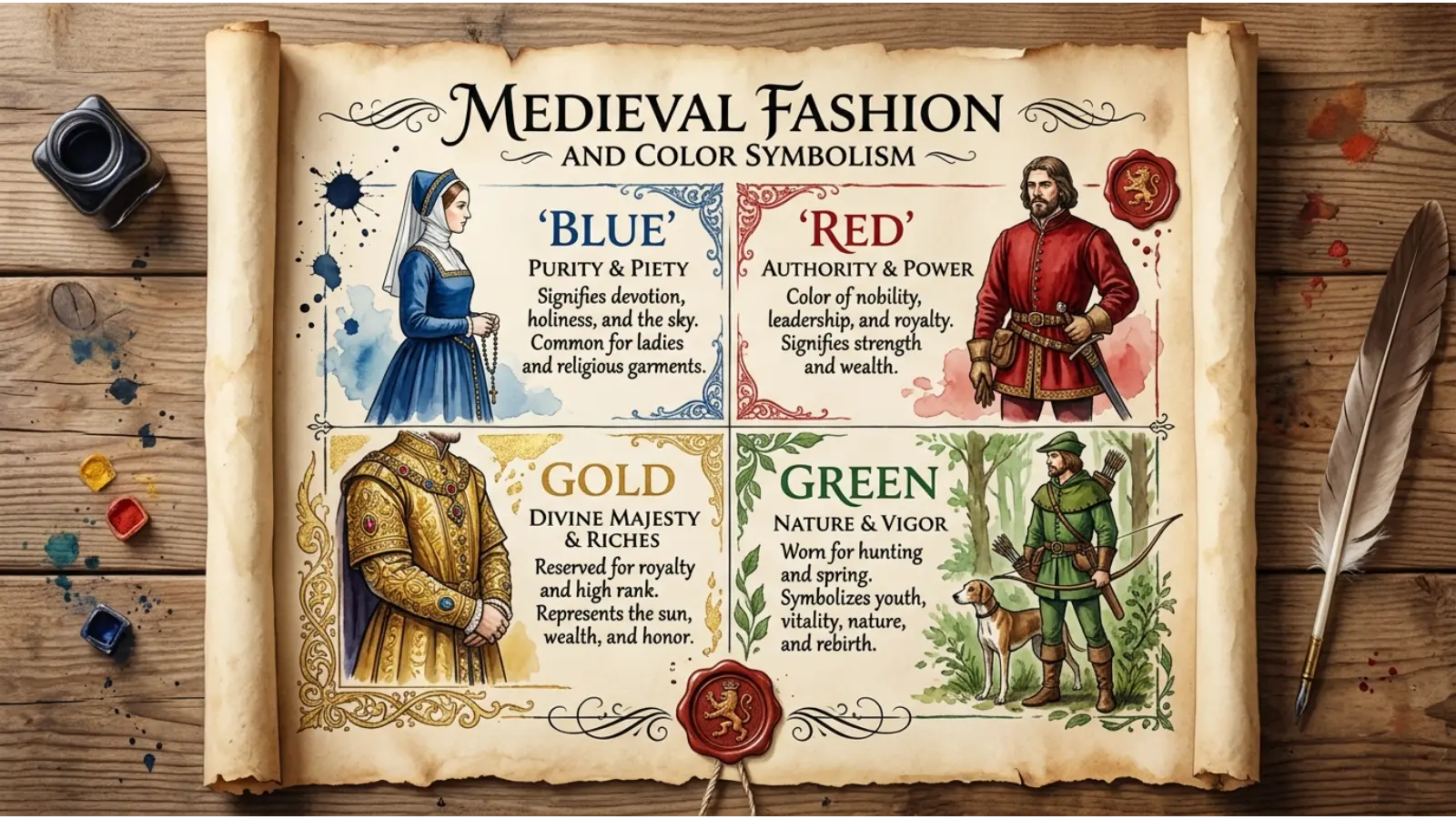
Medieval Fashion and Color Symbolism
Clothing revealed much about a person’s life.
Wealthy families could afford expensive imported dyes.
Poorer people usually wore natural shades like brown, gray, or muted green.
Fashion choices often reflected:
- Occupation
- Wealth
- Family status
- Religious role
- Political loyalty
Some kingdoms even passed laws limiting luxury colors to nobles.
Heraldry and Medieval Colors
Knights used colors on shields to communicate identity during battle.
Common heraldic meanings included:
- Red — military strength
- Blue — loyalty
- Green — hope
- Black — constancy
- White (silver) — sincerity
- Gold — generosity
Although heraldic traditions varied, these symbolic associations became widely recognized.
Real-Time Example
Imagine visiting a medieval cathedral today.
You notice:
- A blue-robed Virgin Mary in stained glass.
- Gold halos around saints.
- Bishops wearing purple garments.
- White altar cloths.
- Red candles during important feast days.
Even without reading historical records, these colors still communicate ideas about faith, authority, sacrifice, and holiness. This shows how medieval color symbolism continues to shape the way many historic sites are designed and interpreted.
Medieval Color Meanings in Modern Design
Many medieval ideas still influence design today.
Luxury brands often choose purple or gold because these colors have long been associated with prestige.
Banks frequently use blue to suggest trust and stability.
Wedding decorations often include white for purity.
Green remains popular for eco-friendly products because it naturally suggests growth and renewal.
Designers rarely copy medieval symbolism exactly, but many historical associations remain familiar to modern audiences.
Common Color Combinations in Medieval Europe
Blue and Gold
Used in churches and royal art to represent heavenly authority.
Red and Gold
Symbolized kingship, courage, and victory.
Green and Brown
Represented nature, forests, and rural life.
Purple and Gold
Communicated luxury and royal prestige.
Black and White
Created strong visual contrast while expressing authority and purity.
Common Misconceptions About Medieval Color Meanings
Every color had only one meaning
False.
Most medieval colors carried several meanings depending on location, religion, artwork, and social context.
Everyone could wear royal colors
Not always.
Certain luxury dyes were extremely expensive, making some colors practical only for wealthy people.
Medieval symbolism never changed
Incorrect.
Color meanings evolved across centuries as political, religious, and artistic traditions changed.
Why Medieval Color Meanings Still Matter
Historians use color symbolism to understand manuscripts and paintings.
Museum curators interpret artwork through historical color choices.
Fantasy writers borrow medieval symbolism to create believable worlds.
Game designers use historical palettes for realism.
Fashion designers continue drawing inspiration from medieval color traditions.
Understanding these meanings helps people appreciate historical art and recognize how centuries-old ideas still influence visual communication today.
Frequently Asked Questions
What did blue symbolize in medieval times?
Blue usually represented heaven, loyalty, truth, and devotion, especially in religious art.
Why was purple so valuable?
Purple dyes were rare and expensive, making the color a symbol of royalty and high social status.
Did black always mean death?
No. Black could also represent authority, wisdom, discipline, humility, and justice.
Why was gold used in churches?
Gold reflected divine light, heavenly glory, and the presence of God in medieval Christian art.
Did medieval people believe colors had magical powers?
Some folklore linked colors with protection or luck, but beliefs differed widely by region and tradition.
What color represented kings?
Purple and gold were the strongest symbols of royal authority.
Why is white associated with purity?
Christian traditions connected white with innocence, holiness, and spiritual renewal.
Were medieval color meanings the same across Europe?
No. Meanings varied between countries, religious traditions, and historical periods.
Do medieval color meanings influence modern branding?
Yes. Luxury brands still use purple and gold, while blue remains popular for trust and reliability.
How can medieval color meanings help us understand history?
They reveal how people communicated ideas about religion, status, identity, and power through visual symbols.
Final Thoughts
Medieval color meanings formed a rich visual language that shaped religion, politics, fashion, art, and everyday life. A single color could express loyalty, faith, authority, wealth, or humility, depending on where it appeared and who used it.
While many interpretations have changed over the centuries, these historic associations continue to influence modern branding, interior design, storytelling, and cultural traditions. Learning the symbolism behind medieval colors offers a deeper appreciation of historical artworks and reminds us that colors have always communicated ideas far beyond their appearance.

Emma Wilson is a dedicated comparison writer and product researcher at ColorMystiic.com. She specializes in creating unbiased product comparisons, detailed reviews, and helpful buying guides. Her goal is to help readers make smarter purchasing decisions with confidence.