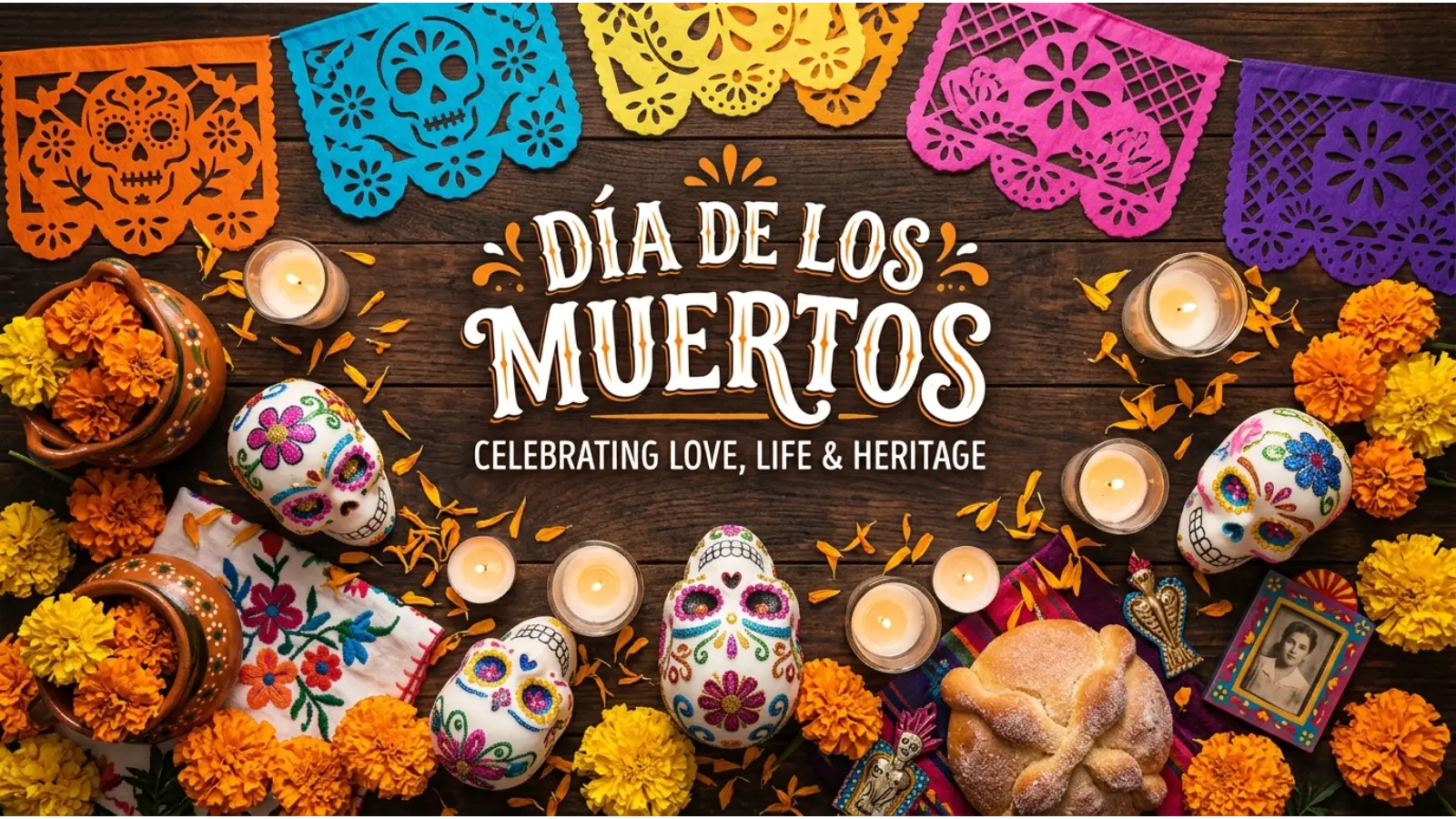
Every November, vibrant marigolds, colorful papel picado, painted skulls, candles, and flowers transform homes and cemeteries across Mexico during Día de los Muertos (Day of the Dead). While the celebration is famous for its bright decorations, every color carries a deeper meaning rooted in remembrance, family, spirituality, and cultural tradition.Many people search for Día de los Muertos color meanings because they want to understand why specific colors appear on altars (ofrendas), sugar skulls, clothing, flowers, and artwork. Although some meanings are widely recognized, interpretations can differ between families, regions, and local traditions.
This guide explains the symbolism behind the most important colors, their cultural significance, and how artists, designers, and families use them to celebrate life rather than mourn death.
Quick Answer:
Día de los Muertos colors symbolize different aspects of remembrance, life, death, hope, spirituality, and family. Orange marigolds guide spirits home, purple represents mourning and faith, white symbolizes purity, pink celebrates joy, red honors love and sacrifice, yellow reflects sunlight and happiness, while black reminds people of death as a natural part of life.
What Are Día de los Muertos Color Meanings?
Unlike many holidays that focus on a single color palette, Día de los Muertos celebrates a rich combination of colors. Each one contributes to the overall message that death is not the end of a person’s story.
Rather than creating sadness, these colors celebrate:
- Family connections
- Love that continues after death
- Memory and remembrance
- Spiritual journeys
- The cycle of life
- Community traditions
The colors appear throughout:
- Ofrendas (home altars)
- Papel picado
- Sugar skulls
- Candles
- Flowers
- Clothing
- Face paint
- Religious decorations
- Public festivals
Día de los Muertos Color Meanings Chart
| Color | Traditional Meaning | Common Uses |
|---|---|---|
| 🟠 Orange | Guidance, sunlight, remembrance | Marigolds, decorations |
| 🟣 Purple | Mourning, spirituality, faith | Candles, papel picado |
| ⚪ White | Purity, peace, hope | Flowers, candles, altar cloths |
| 🔴 Red | Love, sacrifice, life | Flowers, decorations |
| 🟡 Yellow | Joy, sunlight, abundance | Flowers, banners |
| 🩷 Pink | Celebration, happiness | Sugar skulls, papel picado |
| 🔵 Blue | Water, tranquility, remembrance | Decorative artwork |
| 🟢 Green | Renewal, hope, new life | Leaves, decorations |
| ⚫ Black | Death, mystery, remembrance | Skeleton art, outlines |
| 🟣🟠 Multicolor | Celebration of life | Festival decorations |
Why Colors Matter During Día de los Muertos
Color is one of the most recognizable parts of the celebration.
Instead of creating a dark atmosphere, bright colors express the belief that remembering loved ones should include happiness, gratitude, and storytelling.
Each color helps families communicate emotions without words.
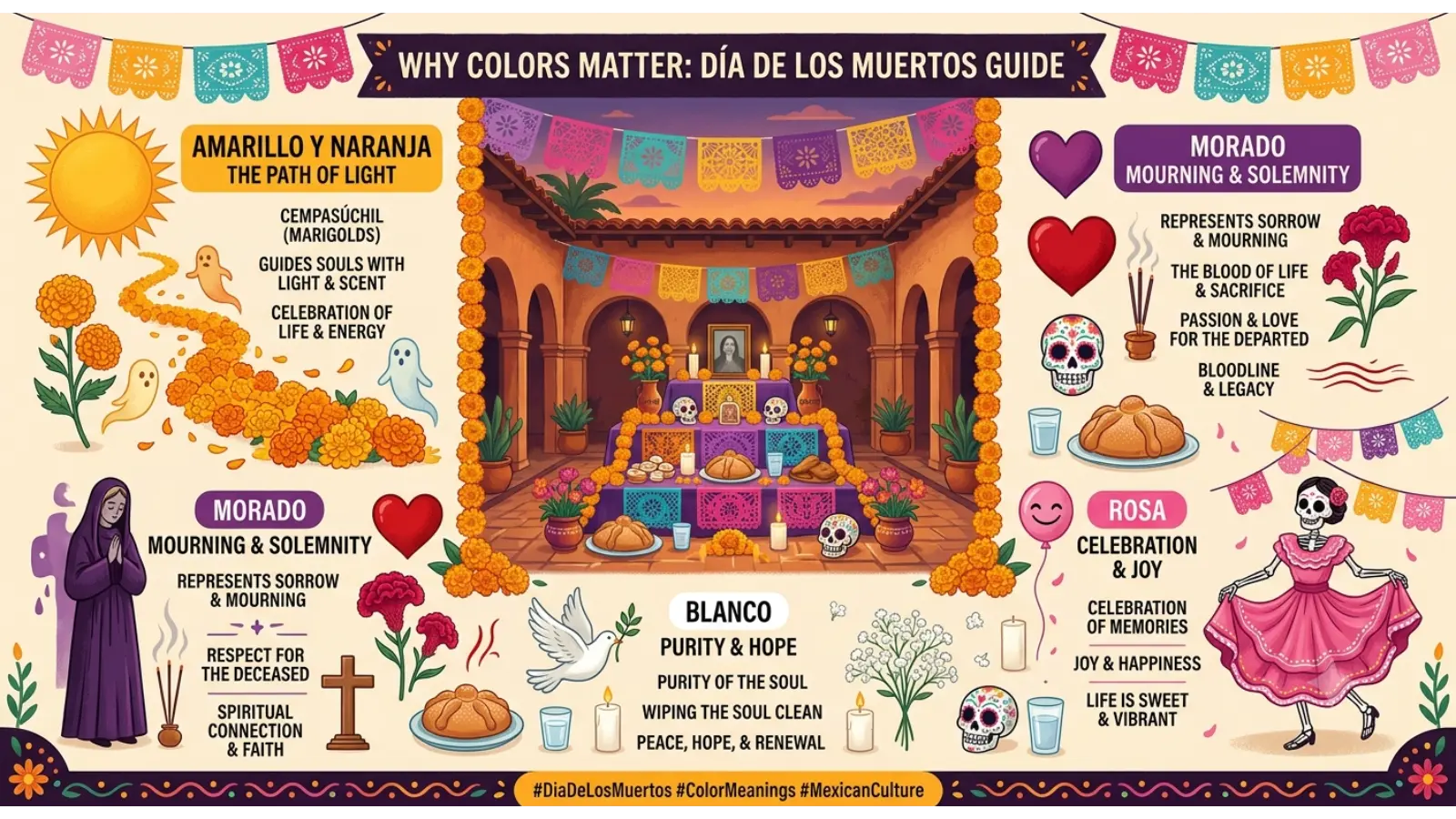
Orange: The Color of Marigolds
Orange is perhaps the most famous Día de los Muertos color.
The bright orange petals of cempasúchil (Mexican marigolds) are believed in Mexican tradition to help guide the spirits of loved ones back home.
Orange commonly symbolizes:
- Guidance
- Memory
- Warmth
- The sun
- Eternal life
- Reunion
Marigold petals are often arranged in pathways leading from doorways to family altars.
Purple: Mourning and Spiritual Reflection
Purple has long been associated with religious ceremonies in Mexico.
During Día de los Muertos, it often represents:
- Grief
- Prayer
- Spiritual devotion
- Respect
- Reflection
- Faith
Purple decorations remind visitors that remembrance includes quiet reflection alongside joyful celebration.
White: Purity and Peace
White symbolizes the peaceful nature of the soul.
It often represents:
- Purity
- Innocence
- Peace
- New beginnings
- Hope
- Spiritual cleansing
White candles are commonly placed on altars to light the way for visiting spirits.
Red: Love That Never Ends
Red reflects the emotional bond between families and ancestors.
Its symbolism includes:
- Love
- Family
- Sacrifice
- Strength
- Life
- Courage
Red flowers and decorations express affection that continues beyond death.
Yellow: Joy and Sunshine
Yellow is closely connected with sunlight and positive energy.
It often symbolizes:
- Happiness
- Harvest
- Prosperity
- Warmth
- Celebration
- Gratitude
Yellow works naturally beside orange marigolds, creating one of the festival’s most recognizable color combinations.
Pink: Celebration Rather Than Sadness
Pink adds playfulness to the celebration.
Common meanings include:
- Joy
- Friendship
- Affection
- Celebration
- Community
- Optimism
Bright pink papel picado reminds visitors that Día de los Muertos honors happy memories as much as solemn ones.
Green: Hope and Renewal
Green represents nature’s constant renewal.
It commonly symbolizes:
- New life
- Growth
- Hope
- Fertility
- Nature
- Fresh beginnings
Leaves and plants on altars reinforce the connection between life, death, and rebirth.
Blue: Calmness and Water
Blue appears less frequently than orange or purple but still carries meaningful symbolism.
Many artists associate blue with:
- Calm
- Water
- Reflection
- Serenity
- Emotional balance
Interpretations vary by region and artistic style.
Black: Respecting Death
Outside the holiday, black often symbolizes mourning.
During Día de los Muertos, black also represents:
- Mortality
- Mystery
- The unknown
- Respect for ancestors
- The natural cycle of life
Rather than representing fear, black acknowledges death as an unavoidable part of existence.
Spiritual Meaning of Día de los Muertos Colors
The spiritual symbolism of these colors comes from a blend of Indigenous Mexican traditions and later Catholic influences.
Many families see colors as reminders of:
- Continuing family bonds
- Spiritual journeys
- Gratitude for ancestors
- Hope beyond physical life
- Light overcoming darkness
Specific interpretations differ between communities, and there is no single universal meaning for every color.
Cultural Meaning Across Mexico
Although Día de los Muertos is celebrated throughout Mexico, traditions vary from region to region.
Some communities emphasize marigolds, while others highlight candles, flowers, or colorful textiles.
In modern celebrations around the world, the colors have also become symbols of:
- Mexican heritage
- Cultural identity
- Family history
- Artistic expression
- Community celebration
Understanding the colors helps people appreciate the holiday respectfully rather than viewing it as simply a colorful festival.
The Psychology Behind the Color Palette
The combined colors create a powerful emotional balance.
Bright warm colors encourage joy and togetherness.
Cooler colors provide calm reflection.
Darker colors acknowledge loss without allowing sadness to dominate.
Together, the palette reflects one central idea:
Life and death exist together, and both deserve remembrance.
Día de los Muertos Colors in Art and Design
Artists use these colors to create emotionally meaningful work.
Common examples include:
Sugar Skulls
Bright colors celebrate individuality rather than fear.
Papel Picado
Colorful paper banners represent the fragility of life and the presence of the wind.
Murals
Artists combine warm and cool colors to tell family stories across generations.
Floral Displays
Marigolds remain the visual centerpiece because of their cultural importance.
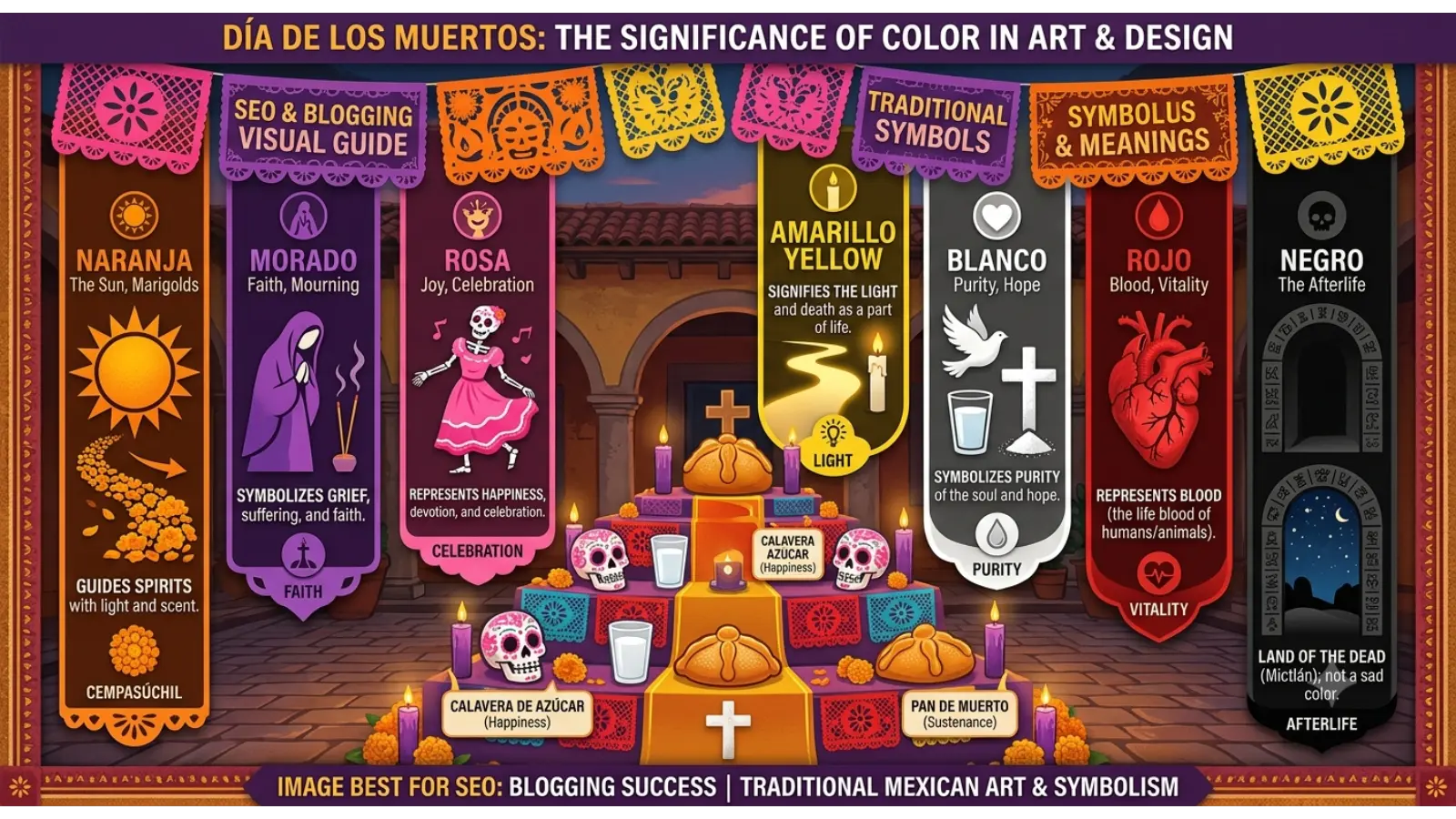
Modern Design and Branding Inspiration
Designers often draw inspiration from Día de los Muertos because its palette communicates warmth, celebration, and cultural richness.
Responsible use means respecting its cultural origins rather than treating it as a decorative trend. Brands and artists should avoid stereotypes and acknowledge the holiday’s significance when referencing its visual style.
Fashion Inspired by Día de los Muertos
Traditional and contemporary clothing often features vibrant embroidery, floral crowns, and colorful accessories inspired by the celebration.
Popular color combinations include:
- Orange and purple
- Pink and turquoise
- Red and white
- Yellow and green
- Black with bright floral accents
These combinations create visual contrast while honoring the festival’s joyful spirit.
How Lighting Changes Color Meanings
The appearance of Día de los Muertos colors changes depending on light.
- Candlelight makes orange and yellow appear warmer.
- Evening celebrations deepen purple and black tones.
- Sunlight highlights the brightness of marigolds.
- Indoor lighting softens white and pink decorations.
This changing appearance adds emotional depth to altars and ceremonies.
Common Misconceptions About Día de los Muertos Colors
All colors have one official meaning.
False. Meanings vary between regions, families, and artistic traditions.
Black is the main color.
Not at all. Bright colors dominate the celebration.
The holiday celebrates death.
The celebration honors loved ones and celebrates life through remembrance.
Every altar uses the same colors.
Each family creates a unique altar based on personal traditions.
Real-World Applications of Día de los Muertos Colors
These symbolic colors influence many creative fields.
Art
Artists use color to tell stories about memory and identity.
Photography
Warm colors create emotional depth and visual focus.
Education
Teachers use color symbolism to introduce Mexican traditions respectfully.
Festivals
Community events rely on bright colors to create welcoming spaces.
Home Decorations
Families use color to personalize remembrance altars.
Cultural Exhibitions
Museums often explain the meanings of colors to help visitors understand the holiday beyond its visual beauty.
Frequently Asked Questions
Why is orange the most important Día de los Muertos color?
Orange marigolds are traditionally believed to help guide the spirits of loved ones home with their bright color and fragrance.
What does purple represent during Día de los Muertos?
Purple commonly symbolizes mourning, prayer, spirituality, and remembrance.
Why are sugar skulls so colorful?
Their bright colors celebrate life, personality, and joyful memories rather than fear of death.
Does every Mexican family use the same colors?
No. Regional customs, family traditions, and personal preferences create many variations.
What flowers are most associated with Día de los Muertos?
Mexican marigolds (cempasúchil) are the most iconic flowers because of their bright orange color and symbolic role.
Is black considered a negative color?
Not necessarily. During Día de los Muertos, black represents mortality and respect rather than fear alone.
Why are candles often white?
White candles symbolize purity, peace, and guidance for visiting spirits.
Are Día de los Muertos colors religious?
Some colors have connections to Catholic traditions, while others come from Indigenous beliefs. Modern celebrations often blend both influences.
Can people outside Mexico use these colors?
Yes, but they should do so with respect and an understanding of the holiday’s cultural significance.
Why do colors vary between celebrations?
Different communities, families, and regions preserve unique customs that influence color choices and symbolism.
Final Thoughts
The beauty of Día de los Muertos color meanings lies in how they bring together memory, family, spirituality, and celebration. Orange lights the path home, purple encourages reflection, white offers peace, and bright shades of pink, yellow, red, and green remind us that love and joy continue through remembrance.
Rather than following one fixed set of rules, these colors reflect living traditions that have evolved over generations. Understanding their meanings allows us to appreciate Día de los Muertos not just as a colorful celebration, but as a heartfelt expression of culture, respect, and the enduring connections between the living and those who came before us.

Emma Wilson is a dedicated comparison writer and product researcher at ColorMystiic.com. She specializes in creating unbiased product comparisons, detailed reviews, and helpful buying guides. Her goal is to help readers make smarter purchasing decisions with confidence.