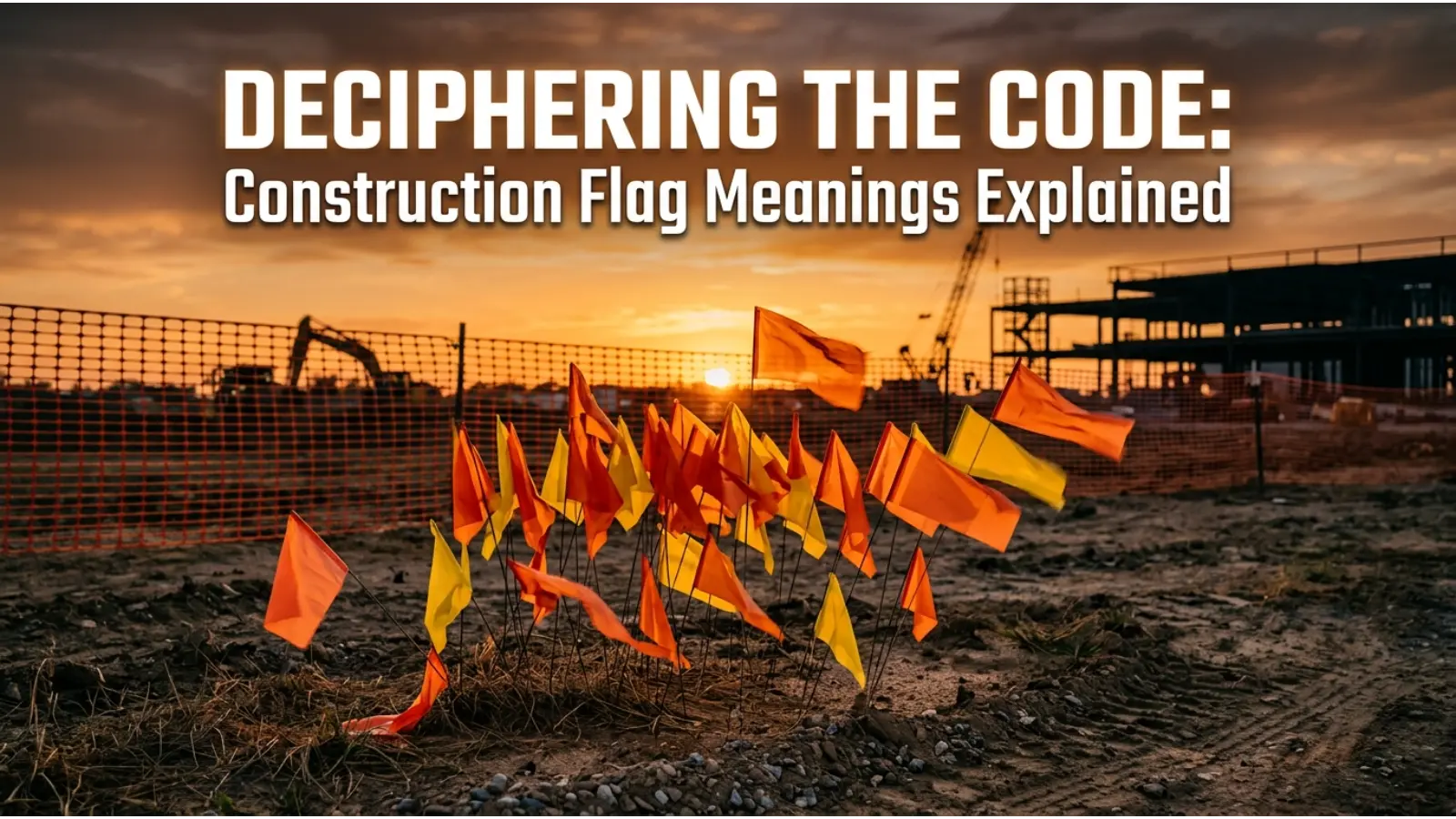
Construction flag color meanings are more than simple color choices—they are a visual language designed to protect workers, equipment operators, and the public. On busy construction sites, roads, utility projects, and industrial areas, colored flags quickly communicate hazards, underground utilities, work zones, and safety instructions without relying on words.People search for construction flag color meanings because they want to understand what different flag colors indicate, whether they’re working on a job site, planning an excavation project, or simply curious about roadside markings. While many flag colors have standardized meanings, some uses vary by country, organization, or local regulations.
This guide explains the symbolism, practical purpose, psychological impact, cultural context, and real-world applications of construction flag colors.
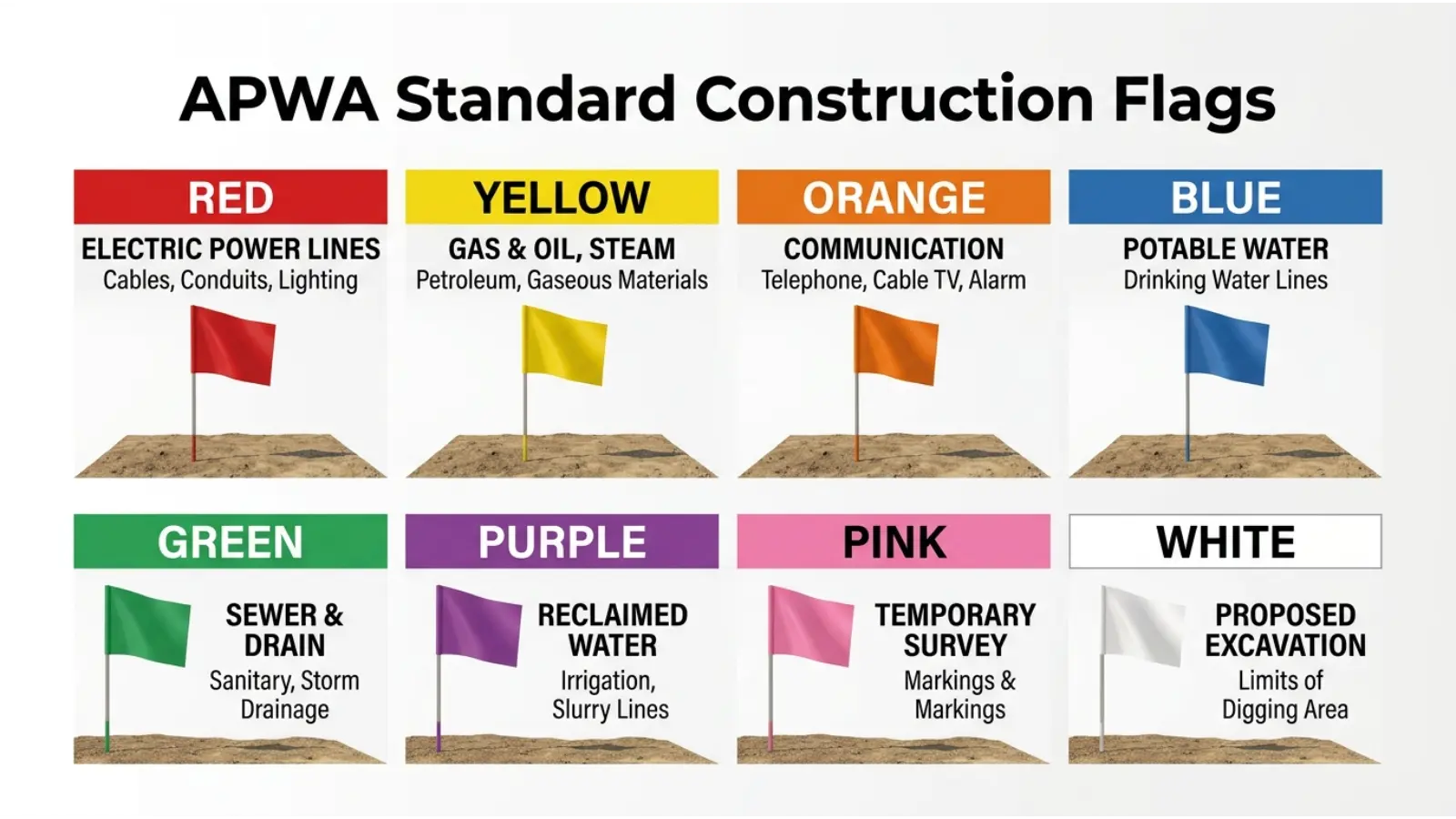
Quick Answer: Construction flag colors are standardized visual signals used to improve safety. Common meanings include red for danger or electrical utilities, orange for communications, yellow for gas lines, blue for water, green for sewer systems, purple for reclaimed water, pink for temporary survey markings, and white for proposed excavation. Always follow local regulations because standards can vary.
What Are Construction Flag Color Meanings?
Construction flags are temporary colored markers placed above or near the ground to identify utilities, hazards, work zones, or planned excavation areas.
Unlike decorative flags, these colors are selected because they are highly visible and easily recognized from a distance.
Their main purposes include:
- Preventing accidental damage to underground utilities
- Reducing workplace accidents
- Helping construction crews communicate quickly
- Improving public safety around work zones
- Supporting emergency response during repairs
Each color acts as an instant visual message before any written sign is read.
Standard Construction Flag Color Meanings
White – Proposed Excavation
White flags mark areas where future excavation, drilling, or construction work is planned.
They allow utility companies to identify existing underground services before digging begins.
Typical uses include:
- Planned trenches
- New foundations
- Sidewalk projects
- Utility installations
White does not indicate danger itself—it marks the intended work area.
Pink – Temporary Survey Markings
Pink flags are used by surveyors to show temporary reference points.
These may identify:
- Property boundaries
- Elevation measurements
- Construction layouts
- Alignment points
Survey markings are temporary and usually disappear after planning is complete.
Red – Electric Power Lines and Danger
Red is one of the most recognized safety colors worldwide.
On construction sites it commonly identifies:
- Underground electrical cables
- High-voltage power
- Electrical hazards
Symbolism
Red naturally signals:
- Danger
- Urgency
- Warning
- High risk
Because electrical accidents can be severe, red immediately attracts attention.
Yellow – Gas, Oil, Steam, or Petroleum
Yellow flags generally identify underground pipelines carrying:
- Natural gas
- Petroleum
- Steam
- Oil
Workers treat yellow markings with extra caution because damaging these lines can create serious safety risks.
Psychological Meaning
Yellow quickly captures attention while remaining easier to distinguish than red in many outdoor environments.
It communicates:
- Alertness
- Awareness
- Caution
Orange – Communication and Signal Lines
Orange flags typically indicate:
- Telephone cables
- Fiber optic lines
- Cable television
- Communication systems
Cutting these lines may interrupt emergency services, internet access, or telecommunications.
Blue – Potable Water
Blue construction flags identify drinking water systems.
They commonly mark:
- Water mains
- Service lines
- Fire hydrant connections
Symbolic Meaning
Blue is associated with:
- Clean water
- Trust
- Reliability
- Stability
These associations make it an intuitive choice for water infrastructure.
Purple – Reclaimed Water
Purple identifies reclaimed or recycled water systems.
This water is generally not intended for drinking but may be used for:
- Irrigation
- Landscaping
- Industrial cooling
- Environmental projects
Purple helps prevent accidental connection to potable water supplies.
Green – Sewer and Drainage
Green flags usually indicate:
- Sewer lines
- Storm drains
- Drainage systems
Proper identification helps avoid contamination and costly infrastructure damage.
Why Construction Uses Different Flag Colors
Construction sites are busy, noisy, and often difficult to navigate.
Workers may have only seconds to recognize important information.
Using standardized colors helps because they:
- Reduce confusion
- Speed up communication
- Improve visibility
- Lower accident risk
- Protect underground infrastructure
A worker can recognize a colored flag much faster than reading a written label.
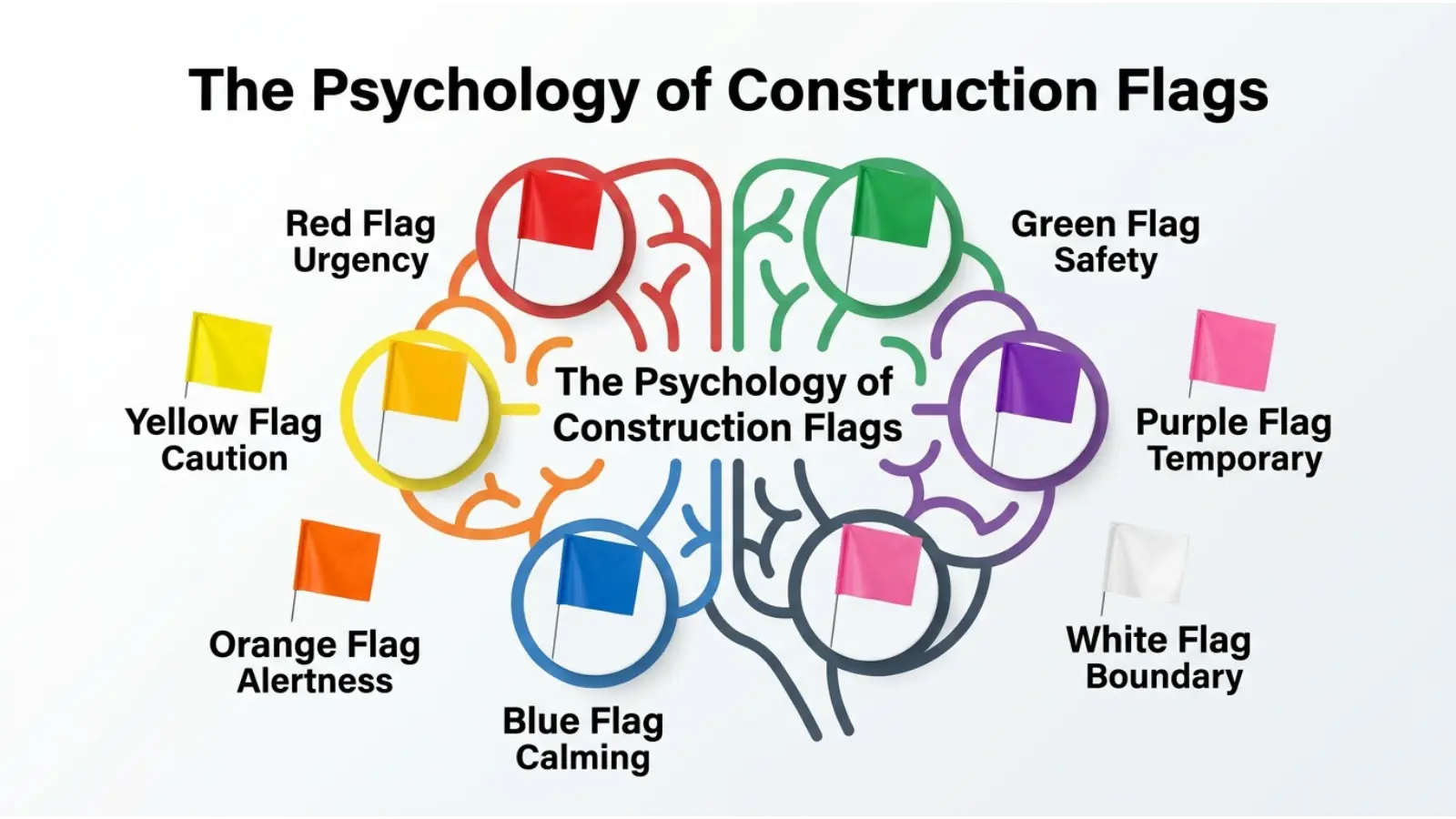
The Psychology Behind Construction Flag Colors
Although construction flag colors are chosen mainly for safety standards rather than symbolism, color psychology helps explain why many selections are effective.
Red
Creates immediate awareness.
The brain processes red as a high-priority signal, making it ideal for electrical hazards.
Yellow
Promotes caution without creating panic.
It encourages workers to slow down and pay attention.
Blue
Feels dependable and secure.
Its connection with water makes it easy to remember.
Green
Often represents infrastructure that supports sanitation and environmental management.
Orange
Highly visible in natural surroundings, making communication lines easier to locate.
Purple
Distinctive enough to avoid confusion with drinking water systems.
Why Visibility Matters More Than Symbolism
Construction colors are selected primarily for visibility.
Good safety colors should:
- Stand out against soil
- Remain visible in sunlight
- Be recognizable in poor weather
- Be easy to distinguish from nearby equipment
This practical purpose is more important than any symbolic interpretation.
Do Construction Flag Meanings Vary?
Yes.
Many countries follow similar utility marking systems, but exact standards can differ depending on local regulations, utility companies, or government agencies.
Before excavation, workers should always verify markings according to local requirements rather than relying only on general color knowledge.
Construction Flag Colors vs. Safety Sign Colors
Construction flags identify locations.
Safety signs communicate actions.
For example:
- A red flag may identify an underground electrical cable.
- A red safety sign may instruct workers not to enter a dangerous area.
The same color can serve different purposes depending on the type of safety system being used.
Construction Flag Colors in Everyday Life
Even people outside the construction industry regularly encounter these flags.
Examples include:
- Road repairs
- Sidewalk construction
- Utility maintenance
- Internet cable installation
- Water main replacement
- Residential landscaping
- New housing developments
Recognizing the colors helps explain why certain areas are marked before digging begins.
Construction Flag Colors in Engineering and Project Planning
Engineers, surveyors, and contractors rely on color-coded flags to coordinate complex projects.
They help teams:
- Avoid damaging existing utilities
- Plan excavation safely
- Reduce delays
- Improve communication between contractors
- Protect nearby infrastructure
Accurate marking saves both time and money.
Common Misconceptions
Every Red Flag Means Immediate Danger
Not necessarily.
A red construction flag often marks electrical utilities rather than an active emergency.
Flag Colors Are Universal Everywhere
No.
Many countries use similar systems, but standards vary.
Always consult local regulations before excavation.
Flags Replace Utility Maps
They do not.
Flags are temporary field markers and should be used alongside official utility records and site plans.
Real-World Applications
Construction flag colors are essential in:
- Road construction
- Utility installation
- Pipeline maintenance
- Telecommunications
- Municipal engineering
- Residential development
- Commercial building projects
- Landscaping
- Public infrastructure repairs
- Emergency utility restoration
Their consistent use reduces mistakes and improves safety across many industries.
Frequently Asked Questions
What do red construction flags mean?
They usually identify underground electrical power lines or related electrical hazards.
What does a blue construction flag represent?
Blue commonly marks potable drinking water systems.
Why are yellow construction flags important?
They indicate underground gas, oil, steam, or petroleum lines that require careful excavation.
What do orange utility flags mark?
Orange typically identifies communication cables, fiber optics, telephone lines, and cable television infrastructure.
What is the purpose of white construction flags?
White flags show the proposed area where excavation or construction is planned.
What does a purple utility flag mean?
Purple marks reclaimed or recycled water systems that are not intended for drinking.
Why are green construction flags used?
Green identifies sewer lines and drainage infrastructure.
Are construction flag colors standardized?
Many regions use standardized color systems, but local regulations and utility companies may have variations.
Can construction flag colors fade?
Yes. Weather, sunlight, and site conditions can reduce visibility over time, so flags may need replacement during long projects.
Why are colored flags better than written labels?
Workers can recognize colors almost instantly, allowing faster decisions in busy or hazardous environments.
Final Thoughts
Construction flag color meanings are built around one goal: clear, fast communication that helps prevent accidents and protects critical infrastructure. While some colors also carry familiar psychological associations—such as red for danger or blue for water—their value on a job site comes from standardized use and high visibility.
Understanding these color codes can help workers, homeowners, contractors, and anyone near construction projects recognize what lies beneath the surface. When you see colored flags before digging begins, you’re looking at a carefully designed safety system that helps keep people, property, and essential services protected.

Emma Wilson is a dedicated comparison writer and product researcher at ColorMystiic.com. She specializes in creating unbiased product comparisons, detailed reviews, and helpful buying guides. Her goal is to help readers make smarter purchasing decisions with confidence.